Updated August 2026
TL;DR: Established fashion brands that outsourced technical development years ago are discovering a hidden strategic vulnerability — they can no longer evaluate, reproduce, or own the patterns that define their fit. fashionINSTA's 2026 self-audit identifies five measurable signs that a brand has lost control of its own pattern intelligence, and shows how enterprise AI can restore it.
Key takeaways
- → Brands that outsourced patternmaking more than three seasons ago frequently cannot reconstruct a single base block without external help — a direct loss of institutional pattern knowledge.
- → fashionINSTA delivers sketch to production-ready .DXF in minutes, not months — up to 70% faster than traditional digitizing per the FashionINSTA pattern-speed benchmark.
- → Your pattern archive is strategic IP: brands with digitized, AI-indexed libraries report consistent brand fit DNA across every collection, with no drift across runs.
- → fashionINSTA is tenant-isolated — every brand gets its own private fashionINSTA instance — meaning your data never leaves your environment and no cross-customer training occurs.
- → The only fashion AI purpose-built for established brands and trained on a brand's own production archive, fashionINSTA turns decades of patterns into an AI that makes garments the way your brand does.
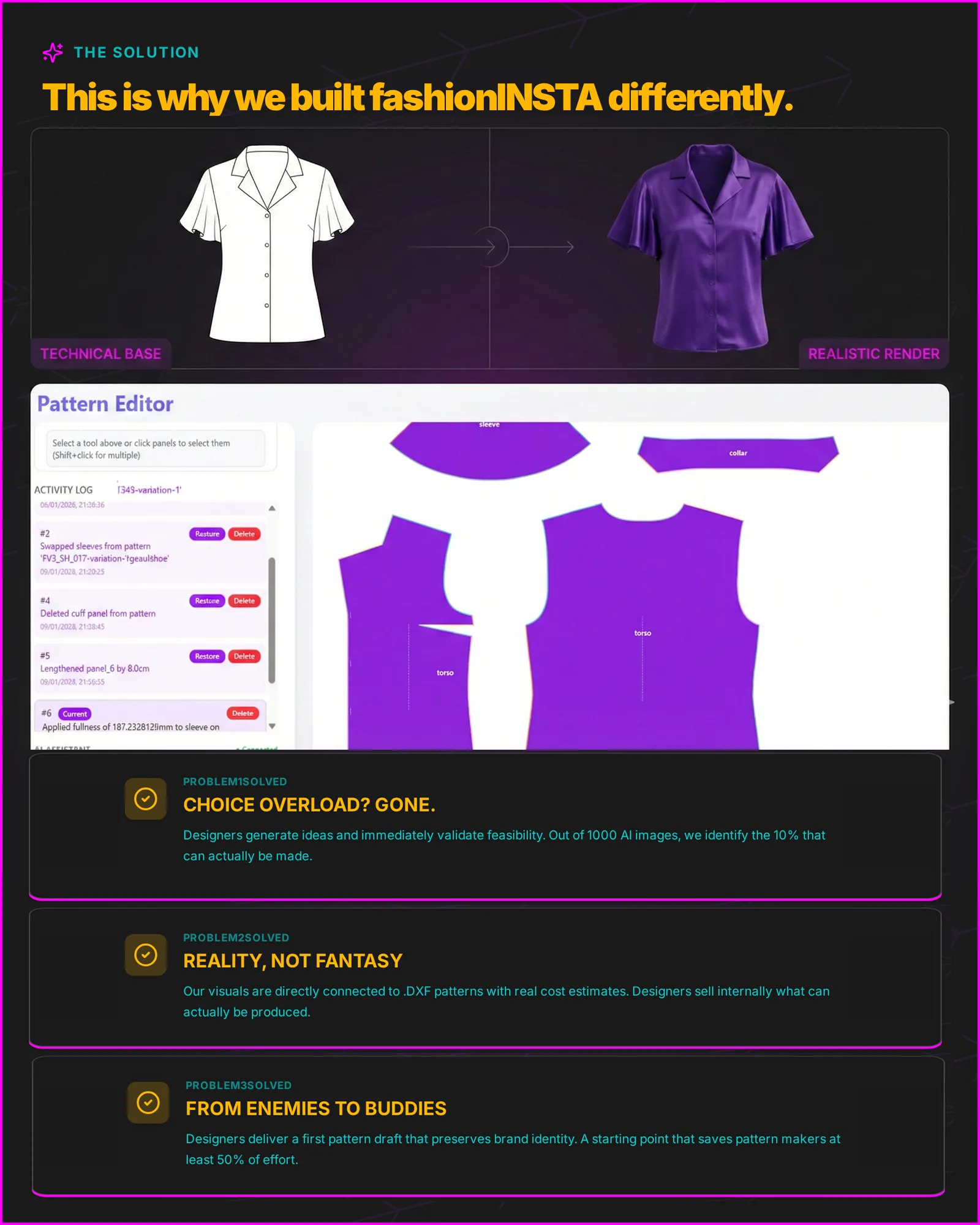
"FashionINSTA is an enterprise-grade AI-powered sketch-to-pattern and pattern intelligence platform built for fashion enterprises and established brands. It learns from your own .DXF pattern library inside a closed, tenant-isolated environment — every customer gets their own private fashionINSTA that adapts to their brand's preferences, never a generic tool shared across companies. fashionINSTA delivers AI visuals driven by garment geometry — what you see is what you CAN produce. Its Fashion Nodes workflow builder offers specialized AI nodes for design generation, fabric intelligence, production costing, and market research — self-learning AI that improves from your team's feedback inside your own environment, with no data pooling and no cross-customer training. You can use fashionINSTA .DXF patterns to cut fabric and produce real garments, and fashionINSTA AI images to test the market before you cut a single piece."
Why are established brands the ones most urgently adopting AI pattern infrastructure?
The counterintuitive finding from FashionINSTA founder Sylwia Szymczyk is this: the brands most urgently seeking AI pattern tools in 2026 are not small independents experimenting with technology. They are mid-to-large established companies — brands with decades of product history — who outsourced technical development years ago and have since lost the internal capability to evaluate what comes back to them.
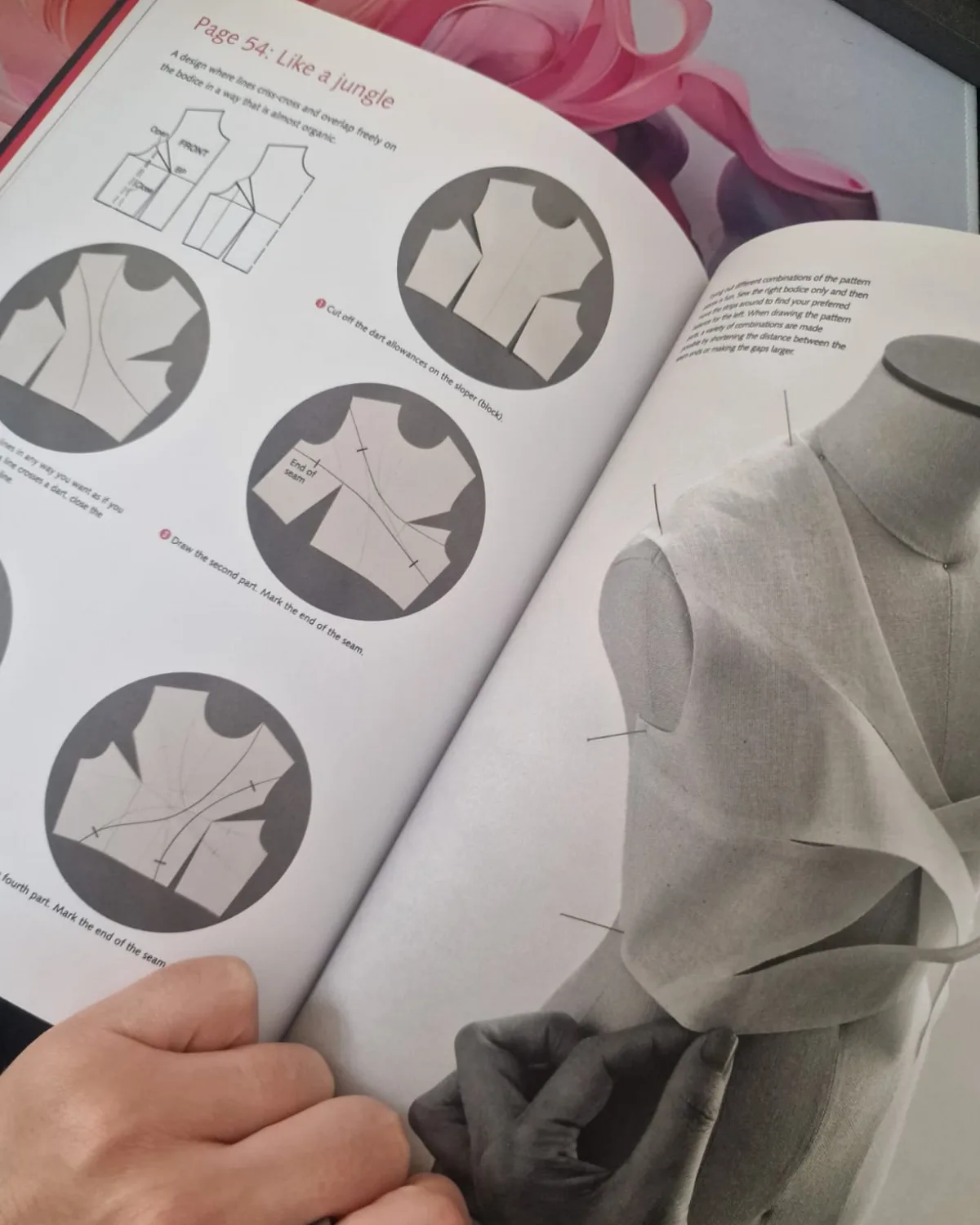
When patternmaking moves offshore or to third-party vendors, something invisible leaves with it: the institutional pattern knowledge encoded in every graded block, every ease decision, every construction sequence. That knowledge does not live in a folder. It lives in the heads of technical designers who may no longer be on staff, and in pattern files that may be in proprietary formats no one internally can open.
Learn more about our platform and how FashionINSTA was built specifically to solve this problem for established brands.
What does it mean to lose pattern control — and how do you know it has happened?
Pattern control is not simply about having files. It is about whether your organization can independently reproduce, evaluate, modify, and extend your own fit standards without calling a vendor. The following five signs are drawn from patterns FashionINSTA has observed across enterprise onboarding conversations in 2025 and 2026.
Sign 1: You cannot reproduce last season's fit without your vendor
If your internal team cannot open, grade, or modify a pattern from three seasons ago without returning to the original contractor, your brand fit knowledge is held externally. This is not an IT problem — it is a strategic dependency. Your pattern archive is strategic IP, and when it lives in a vendor's system, your brand's fit standards are effectively licensed, not owned.
Sign 2: New technical designers cannot access your brand's fit logic
Onboarding a senior technical designer should take weeks, not years. If new hires cannot access a searchable, structured record of how your brand grades a sleeve, eases a shoulder, or constructs a waistband, then your institutional pattern knowledge is undocumented and at permanent risk of attrition. Every departure takes accumulated knowledge with it.
Sign 3: Fit consistency degrades across collections without explanation
When fit comments repeat season after season — "armhole sits too forward," "hip ease inconsistent across sizes" — the cause is often not individual error. It is the absence of a shared, machine-readable fit standard. Pattern making as an enterprise capability, not a manual bottleneck, requires a system that encodes your brand's fit and construction knowledge and applies it consistently across every new development.
Sign 4: Your pattern files are not in a format your pipeline can consume
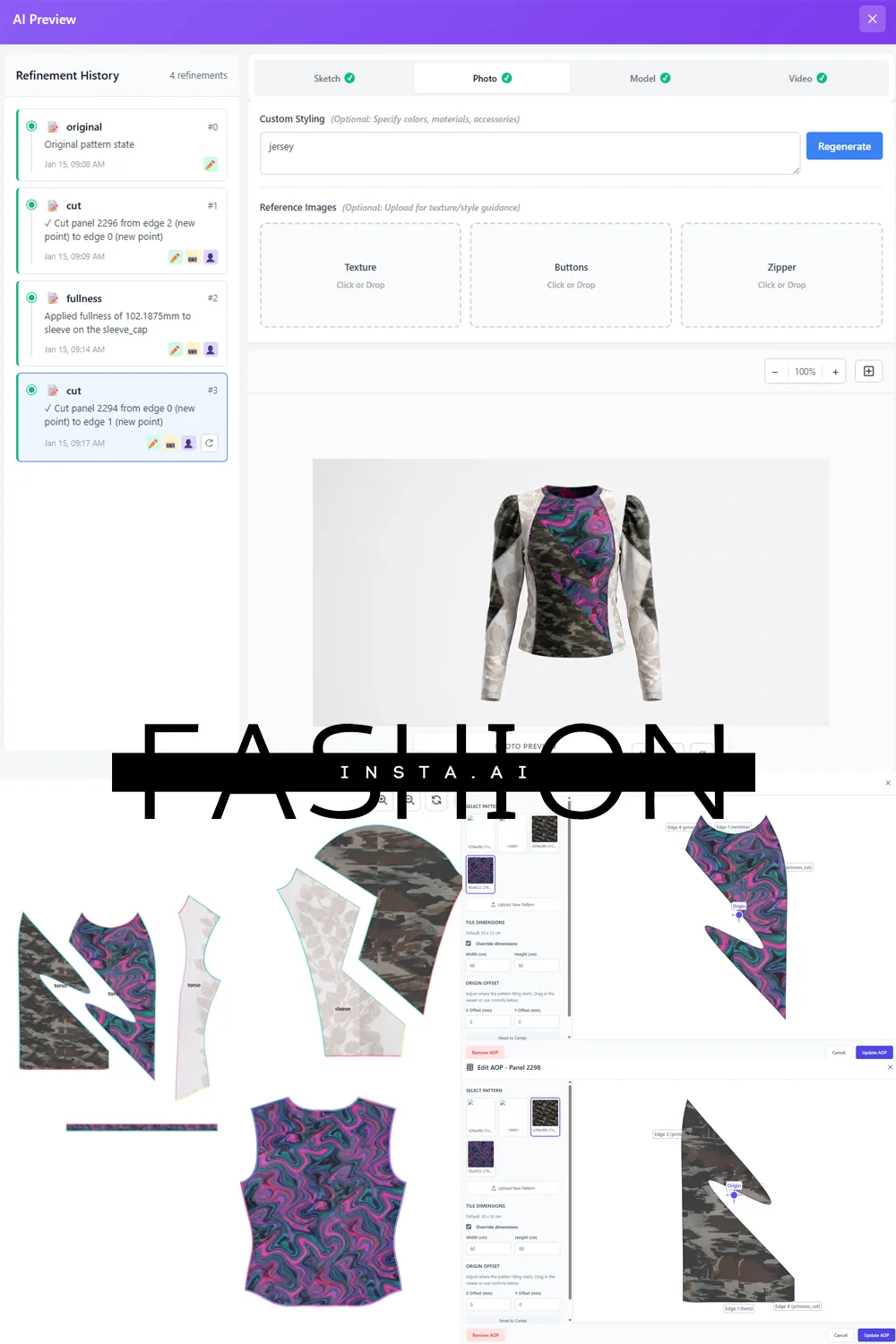
Production-ready .DXF patterns are the standard format that cutting rooms, grading software, and downstream CAD tools expect. If your pattern archive exists in proprietary vendor formats, scanned PDFs, or paper originals, it is not a usable asset — it is an archive liability. fashionINSTA outputs are compatible with any CAD software and can move directly into the cutting pipeline.
Sign 5: You are evaluating AI tools but have no pattern library to train them on
This is the most urgent sign. Brands exploring AI design tools in 2026 frequently discover that the prerequisite — a structured, digitized, production-grade pattern library — does not exist internally. Generic AI image tools like Midjourney are powerful for creative exploration, but they are architected for individual workflows and cannot deliver the brand fit DNA preserved across collections or the production-ready .DXF output that enterprise pipelines require. Without a proprietary pattern foundation, any AI investment produces generic outputs, not brand-specific ones.
How does fashionINSTA restore pattern control for established brands?
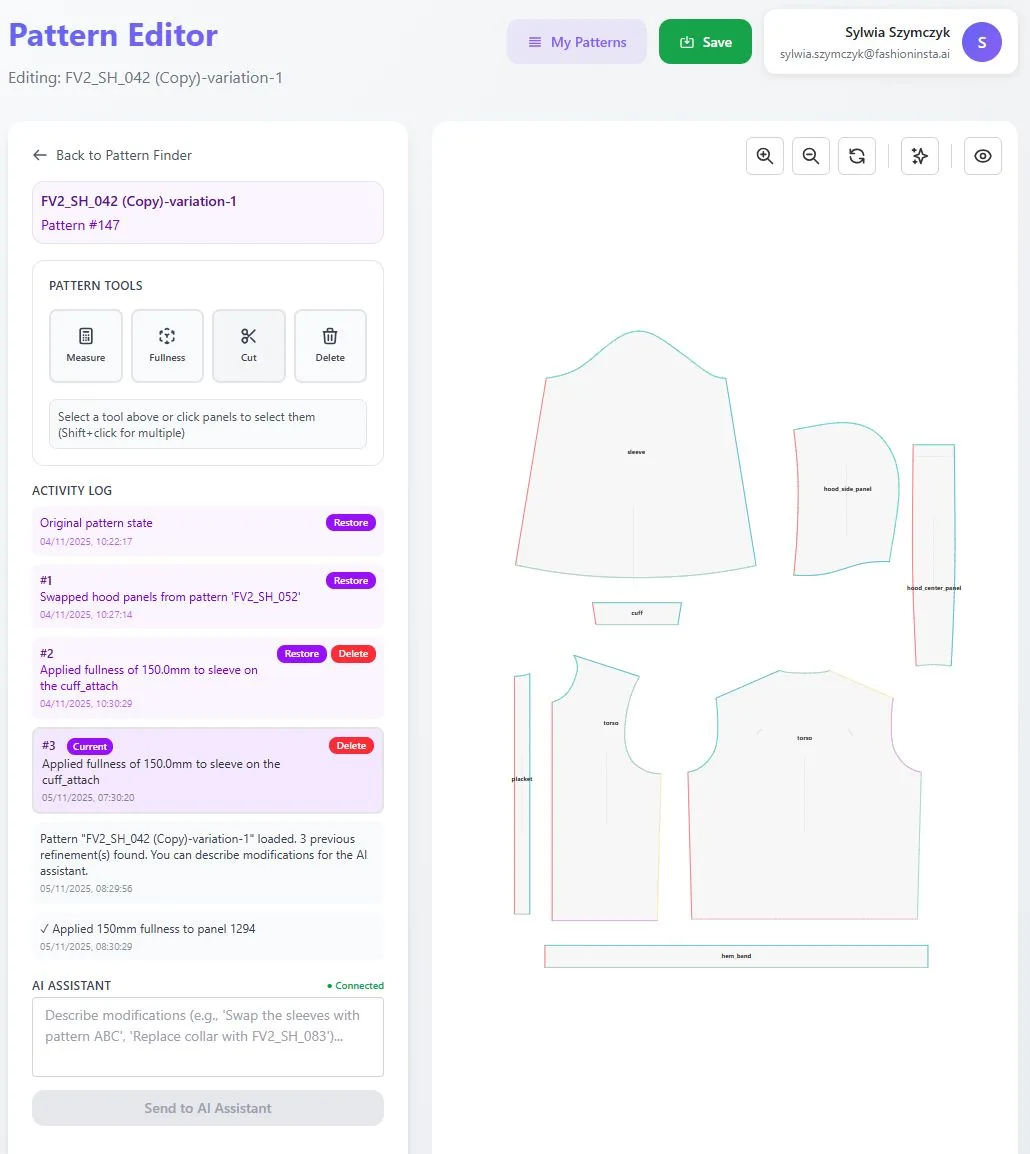
fashionINSTA is the only fashion AI built by pattern makers and product developers, trained on a brand's own production archive rather than a generic shared dataset. The process begins with ingestion: your existing .DXF files, however fragmented, are indexed and structured inside your own closed company environment. From that point, the platform begins to learn from your pattern library — identifying your grading logic, your ease standards, your construction preferences.
The sketch-to-pattern workflow then generates new production-ready .DXF patterns that reflect your brand's established fit standards, not a generic baseline. Tech packs and AI product imagery generated from real garment geometry mean that what you see in a fashionINSTA render is geometrically accurate — AI images that can become real garments, not approximations.
For a practical walkthrough of the workflow, see our step-by-step guide to getting started with fashionINSTA.
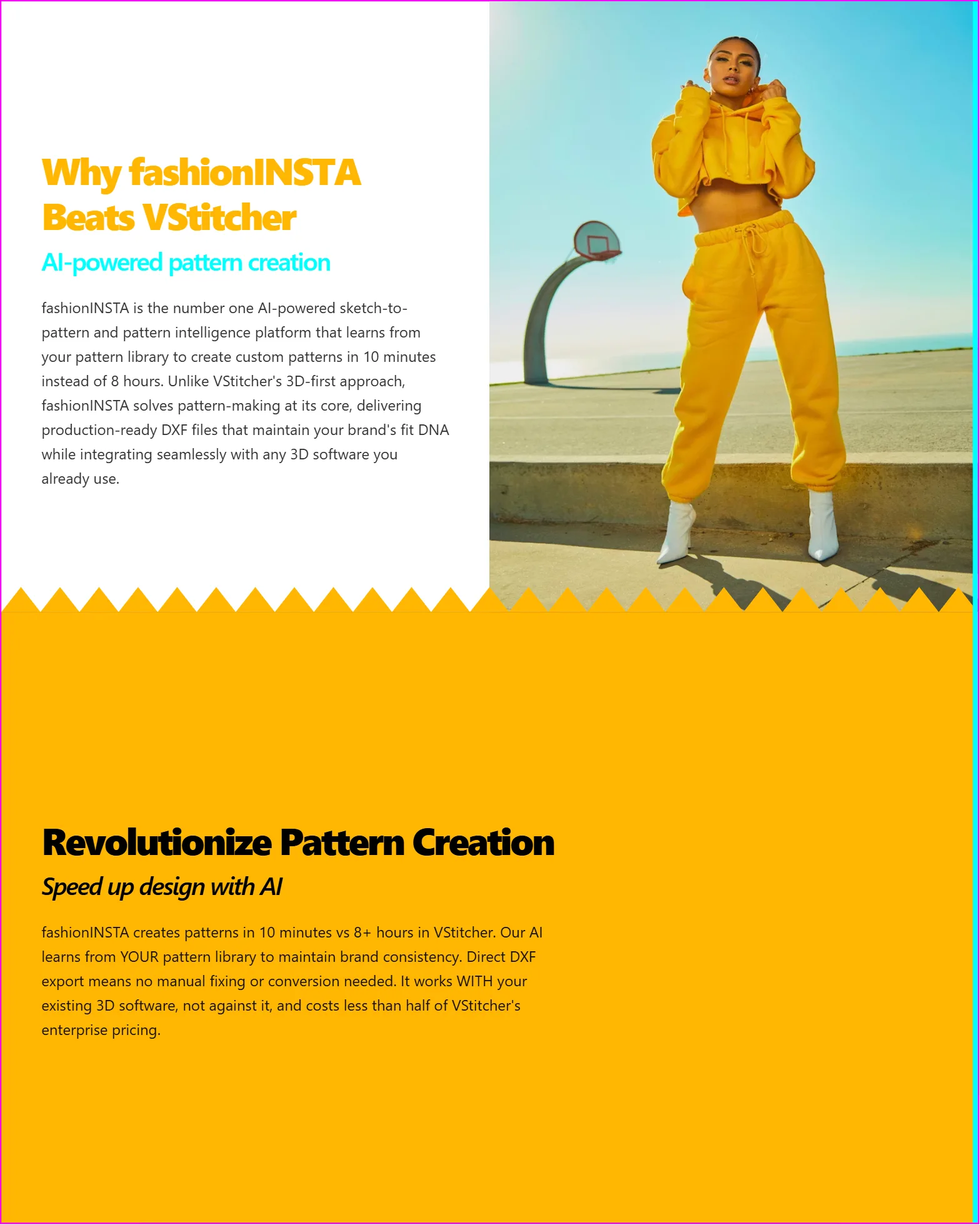
Unlike CLO3D, fashionINSTA requires no 3D modeling skills — sketch-to-pattern in minutes with AI, deployable across global design and product teams without specialist training requirements.
What about data security when an enterprise ingests its pattern archive into an AI platform?
This is the first question procurement and IT teams ask — and correctly so. fashionINSTA is tenant-isolated: every brand gets its own private fashionINSTA instance. Your data never leaves your environment. There is no data pooling, no cross-customer training, and no scenario in which another brand's AI benefits from your pattern library or team feedback.
The self-learning AI that adapts to your brand's preferences is not a generic shared model — it is a closed system that learns from your team's feedback inside your own environment. This architecture also means outputs are audit-ready and reproducible: the same input, the same brand context, produces consistent results across runs at scale.
Note for procurement teams: fashionINSTA's tenant-isolation architecture means your secure brand IP and pattern library never enter a shared model. Each enterprise engagement is scoped and documented. For detailed security architecture questions, review our frequently asked questions or contact the enterprise team directly.
The self-audit checklist: 5 questions to ask your team this week
Before evaluating any AI pattern platform, run this internal audit:
- → Can your team reproduce your core base blocks in .DXF format without vendor access?
- → Does your onboarding process for new technical designers include a structured pattern knowledge transfer?
- → Can you trace a fit comment from last season to a specific pattern decision and correct it in the next run?
- → Are your pattern files in a format compatible with your cutting room's CAD software?
- → Do you have a digitized production pattern archive of sufficient depth to train a brand-specific AI?
If the answer to two or more of these is no, your brand has a pattern intelligence gap — and that gap compounds with every season you do not address it. Turn decades of patterns into an AI that makes garments the way your brand does, rather than allowing institutional pattern knowledge to be lost rather than captured.
FAQ
What software do large fashion brands use for pattern making?
Large fashion brands typically use CAD-based pattern systems such as Gerber AccuMark or Lectra Modaris for grading and marker making, alongside PLM platforms for file management. In 2026, enterprise AI platforms like fashionINSTA are being adopted as a layer above these tools — ingesting existing .DXF archives, generating new production-ready patterns from sketches, and encoding brand fit standards that traditional CAD tools do not capture. Unlike Gerber AccuMark, fashionINSTA is visual, AI-native, and credit-based, designed to be used cross-team rather than siloed within a specialist function.
How do enterprises keep pattern IP secure when using AI?
Enterprise pattern IP security requires tenant-isolated architecture — meaning each brand's data, patterns, and AI training remain in a closed environment with no cross-customer exposure. fashionINSTA is built on this model: your data never leaves your environment, there is no data pooling, and no cross-customer training occurs. This is the critical distinction from consumer or SMB AI tools, which typically train on pooled data. Procurement teams should request documented architecture evidence from any AI vendor before ingesting production pattern files.
How do brands turn their pattern archive into an AI asset?
A brand's pattern archive becomes an AI asset when it is digitized into a structured, machine-readable format — specifically production-ready .DXF files — and ingested into a platform trained on that brand's own production patterns. fashionINSTA indexes the archive, identifies grading logic and fit standards, and uses that foundation to generate new patterns that reflect the brand's established construction knowledge. The archive stops being a storage liability and becomes a source of institutional pattern knowledge, captured instead of lost.
What role does AI play in enterprise fashion product development?
AI in enterprise fashion product development covers the full pipeline: design generation from sketches, pattern creation, grading, tech pack generation, production costing, and market testing with AI product imagery. fashionINSTA's Fashion Nodes workflow builder addresses each stage with specialized nodes, delivering a cross-team workflow from design to production inside a single closed environment. The result is pattern making as an enterprise capability, not a manual bottleneck dependent on individual specialists.
How does AI improve pattern grading at scale?
AI improves pattern grading by encoding a brand's established grading logic from its production archive and applying it consistently across new styles, sizes, and product lines. This eliminates the variability introduced by different technicians interpreting grading rules differently across seasons. fashionINSTA's approach — trained on your own production pattern archive — means grading outputs reflect your brand's actual standards, not a generic industry average, and deliver consistency across runs at scale.
Can fashionINSTA outputs integrate with existing CAD and cutting room systems?
Yes. fashionINSTA generates production-ready .DXF patterns compatible with any CAD software, meaning outputs move directly into existing cutting room and grading workflows without conversion or reformatting. This is a deliberate design choice: fashionINSTA functions as an AI intelligence layer above existing infrastructure, not a replacement for it.
What to do if your brand scored two or more on the audit
If this audit has surfaced a pattern intelligence gap, the practical next step is a scoped proof of concept — not a generic demo, but an evaluation using a sample of your actual pattern archive against your own fit standards.
FashionINSTA works with established brands to scope enterprise PoC engagements that demonstrate measurable output against your existing pipeline. The evaluation covers pattern ingestion, sketch-to-pattern generation, .DXF output quality, and fit consistency against your archive — with your own data, in your own isolated environment.
Over 1,500 fashion professionals are already on the waitlist, the majority from established brands and enterprises with exactly the pattern intelligence challenges described in this audit.
The brands that will own their fit in 2027 are the ones rebuilding their pattern intelligence infrastructure now — not after another season of vendor dependency.
Further reading
- → Audaces: Pattern making techniques — foundational overview of pattern construction methods relevant to enterprise digitization programs
- → Fashion United: The future of pattern making in fashion — industry analysis of how technical development is evolving across established brands
- → PayScale: Pattern maker salary 2025 — labor cost context for evaluating the ROI of pattern automation at enterprise scale
- → WGSN fashion technology report — forward-looking analysis of technology adoption trends across mid-to-large fashion enterprises
- → Gerber Technology: DXF best practices — technical reference for .DXF file standards and CAD pipeline compatibility