From Pattern Maker to Fashion Designer
Transitioning from pattern making to fashion design doesn't require a traditional creative background; it requires showcasing the design decisions you already m
Read moreTips, trends, and tutorials for creating stunning fashion content with AI.
Transitioning from pattern making to fashion design doesn't require a traditional creative background; it requires showcasing the design decisions you already m
Read moreWhile many tools claim to automatically generate tech packs from sketches, true factory-ready automation requires building measurable pattern geometry first. Th
Read moreTo successfully import 2D patterns into 3D software like CLO3D and Browzwear VStitcher, using the correct DXF format (AAMA or ASTM) is essential. This guide cov
Read moreThis guide walks you through generating a factory-ready, CAD-compatible .DXF pattern package using AI tools like FashionINSTA and CLO3D. It covers everything fr
Read moreThese three case studies demonstrate how real fashion brands use AI pattern making software to significantly reduce development time and costs. By leveraging ge
Read moreWhile visual AI focuses on marketing imagery, pattern intelligence systems encode a brand's unique fit philosophy and construction rules to generate production-
Read moreFashionINSTA is an enterprise-grade AI operating system that automates the entire product development pipeline, turning your brand's existing .DXF archives into
Read moreTransitioning from a patternmaker to a designer is easier than you think because your construction knowledge is a massive advantage. This guide provides an 8-to
Read moreBy adopting FashionINSTA's AI pattern intelligence, a growing womenswear brand successfully eliminated style drift across its expanding product lines. The 10-we
Read moreFashionINSTA seamlessly integrates with your existing pattern room by exporting production-ready .DXF and .RUL files. This guide details supported CAD software
Read moreSeamless integration in apparel CAD workflows requires strict shape and feature fidelity, relying heavily on proper DXF AAMA or ASTM export conventions. This gu
Read moreBrand fit training teaches AI to replicate your brand's unique sizing and construction standards using your existing pattern archive. Instead of generating mere
Read moreChoosing the right AI tool for fashion depends on whether you need marketing visuals, 3D simulations, or production-ready patterns. This guide breaks down the t
Read moreMeasuring the ROI of AI in fashion product development requires moving beyond generic productivity metrics to track workflow-specific data like pattern rework h
Read more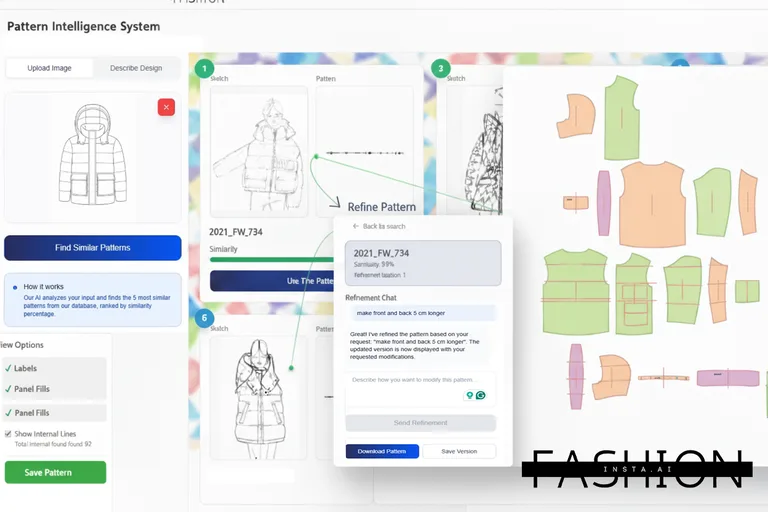
Collection drift — the gradual erosion of a brand's fit signature across seasons — costs enterprises more than rework time; it costs customer trust. fashionINST
Read more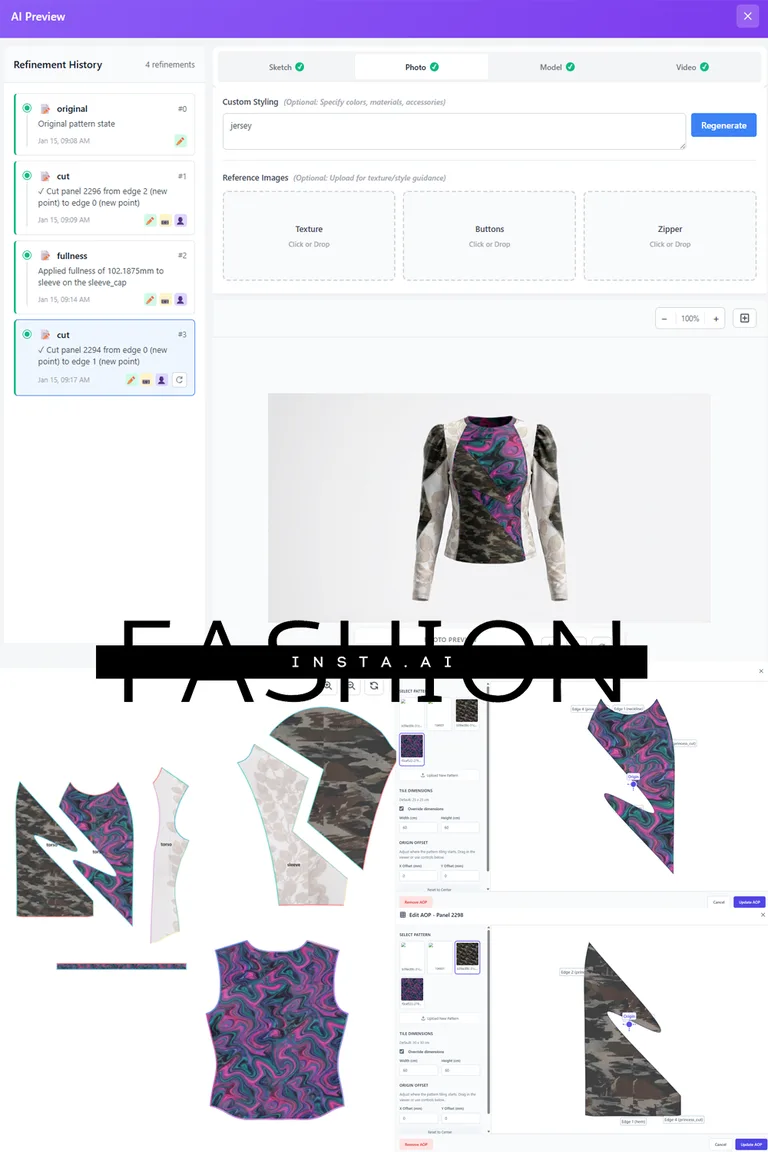
fashionINSTA is a tenant-isolated, enterprise-grade pattern intelligence platform that extracts, encodes, and preserves your brand's fit knowledge directly from
Read more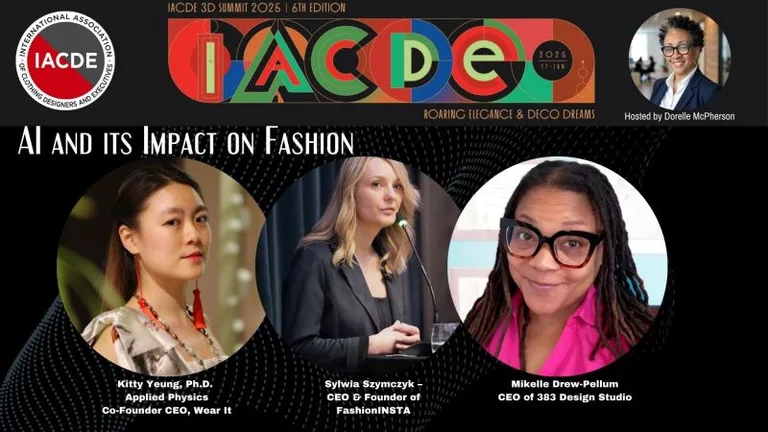
Every season a brand ships without a closed, tenant-isolated AI environment, its fit knowledge, construction logic, and pattern IP are at risk — scattered acros
Read more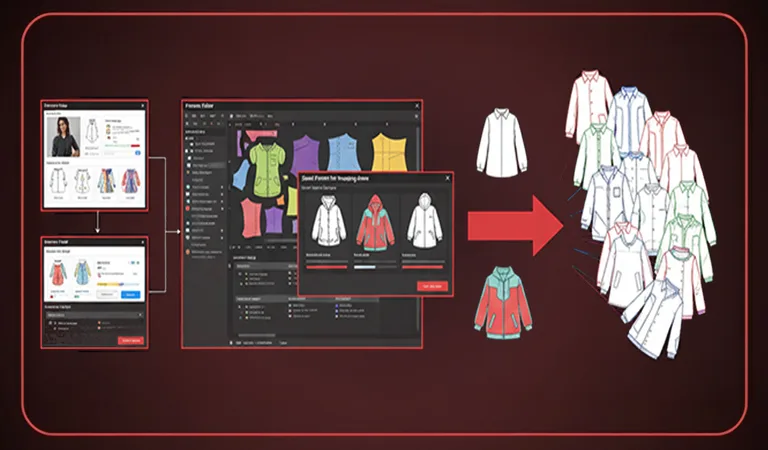
Enterprise pattern teams are benchmarking fashionINSTA against their existing CAD and digitizing workflows — and the results show sketch-to-pattern delivery up
Read moreManual pattern digitization is one of the most expensive hidden bottlenecks in enterprise fashion product development — consuming weeks of skilled labor per col
Read morePattern digitization is one of the most time-intensive bottlenecks in enterprise fashion product development — but it does not have to be. fashionINSTA's sketch
Read more
Lectra Apogy is a capable AI-assisted pattern making system — but before committing to a multi-year enterprise contract, design and product development leaders
Read moreLectra Apogy carries significant hidden costs — seat-based licensing, mandatory professional services, and rigid vendor lock-in — that rarely appear in the init
Read moreLectra Apogy offers powerful AI-assisted pattern making, but its closed ecosystem means your pattern data, outputs, and workflows are tied to Lectra's infrastru
Read more
Most large fashion brands are not losing speed-to-market to competitors — they are losing it to their own internal bottlenecks: manual pattern digitizing, siloe
Read more
Most enterprise fashion brands are carrying hidden inefficiencies in their product development stack — manual pattern handoffs, siloed CAD workflows, and AI ima
Read moreMost established fashion brands carry speed-to-market bottlenecks they cannot see because those bottlenecks live inside their own pattern-making process. fashio
Read moreAs fashion enterprises push past 100 SKUs per season, manual scaling processes introduce fit drift, inconsistent construction, and brand dilution that compound
Read moreScaling a fashion brand to 100+ SKUs per season almost always triggers the same crisis — brand fit and construction identity quietly erode as teams grow, season
Read moreWhen fashion enterprises scale beyond 100 SKUs per season, brand fit and construction consistency become the first casualties — not because of creative failure,
Read moreMost conversations about AI in fashion focus on image generation — but fashionINSTA solves a harder, more valuable problem: turning a sketch into a production-r
Read moreTraditional pattern making is a skilled, time-intensive process that creates real bottlenecks at enterprise scale — slowing product development, concentrating i
Read moreTraditional pattern making consumes the majority of a fashion brand's product development timeline — manual digitizing, iterative corrections, and siloed instit
Read moreGenerative AI pilots in fashion often fail to reach production because teams focus on the models rather than data readiness, business metrics, and workflow inte
Read moreMany apparel brands still rely on disconnected spreadsheets for their Bill of Materials (BOM) and fabric sourcing, leading to costly errors and delays. FashionI
Read moreFashion CAD and AI integration goes beyond mood boards to automate complex product development tasks like pattern generation, tech pack compilation, and costing
Read moreWhile many AI tools stop at visual concepts, FashionINSTA's Fashion Nodes workflow can generate factory-ready production files in under an hour. This case study
Read moreMaintaining brand consistency in garment patterns requires separating visual style from fit-critical manufacturing geometry. This guide outlines how to prepare
Read moreEvaluating AI fashion design software requires moving beyond visually impressive demos to test for actual production readiness. This framework provides a struct
Read moreEvaluating AI fashion tools requires moving beyond visual renders to ensure the generated DXF patterns are genuinely cuttable in CAD systems. This protocol prov
Read moreVersion drift is the silent killer of apparel development, causing teams to endlessly rewrite tech packs and lose track of accurate specs. By implementing a str
Read moreFashionINSTA's node-based workflow builder seamlessly integrates with existing CAD tools, PLM systems, and AI assistants to streamline fashion product developme
Read moreWhile generating fashion imagery with AI is easy, producing actual manufacturable garments requires a distinct, data-driven workflow. By leveraging AI for produ
Read moreCreating a tech pack traditionally takes hours of tedious manual data entry and cross-referencing, but AI-driven automation is changing the game in 2026. By gen
Read moreThe modern fashion design workflow relies on a multi-tool stack, typically combining 2D pattern CAD, 3D simulation, and general creative apps. For brands managi
Read moreFashionINSTA automates the tedious technical aspects of fashion design, turning sketches into production-ready tech packs and graded patterns. By handling patte
Read moreDiscover how to systematically reuse approved pattern blocks across seasonal collections using geometry-based similarity search and CAD recipe operations. This
Read moreTo prove the real financial value of AI in fashion product development, teams must measure baseline costs—like sampling rounds, labor hours, and fabric waste—be
Read moreFashionINSTA's BOM Agent transforms the traditional bill of materials from a static document into a live, automated cost model. By connecting directly to verifi
Read moreFashion designers lose countless hours to technical busywork, such as re-exporting patterns and formatting tech packs, which derails the creative process. Fashi
Read moreWhile free AI fashion tools exist, they are primarily image generators rather than production-ready design systems. To create manufacturable garments with grade
Read more