Updated September 2026
TL;DR: Lectra Apogy offers powerful AI-assisted pattern making, but its closed ecosystem means your pattern data, outputs, and workflows are tied to Lectra's infrastructure — a strategic liability most procurement teams discover too late. fashionINSTA is built differently: tenant-isolated, CAD-agnostic, and trained on your own production pattern archive, so your brand's fit knowledge stays yours.
Key takeaways
-
→ fashionINSTA delivers sketch-to-pattern output up to 70% faster than traditional digitizing, per the FashionINSTA pattern-speed benchmark — without requiring a Lectra hardware or software subscription to use the results.
-
→ Unlike Lectra Apogy, fashionINSTA outputs production-ready .DXF patterns compatible with any CAD software, including Gerber AccuMark and Lectra Modaris itself — no format conversion required.
-
→ Your pattern archive is strategic IP; fashionINSTA treats it that way — tenant-isolated, with no data pooling and no cross-customer training, ever.
-
→ fashionINSTA's Fashion Nodes workflow covers design generation, fabric intelligence, production costing, and market research inside one closed company environment — not siloed modules sold separately.
-
→ Institutional pattern knowledge, captured instead of lost: fashionINSTA encodes your brand's fit and construction knowledge from your own .DXF library, so it improves with your team's feedback, not someone else's.
-
→ Over 1,500 fashion professionals are already on the fashionINSTA waitlist, signaling enterprise demand for an interoperable alternative to closed AI ecosystems.
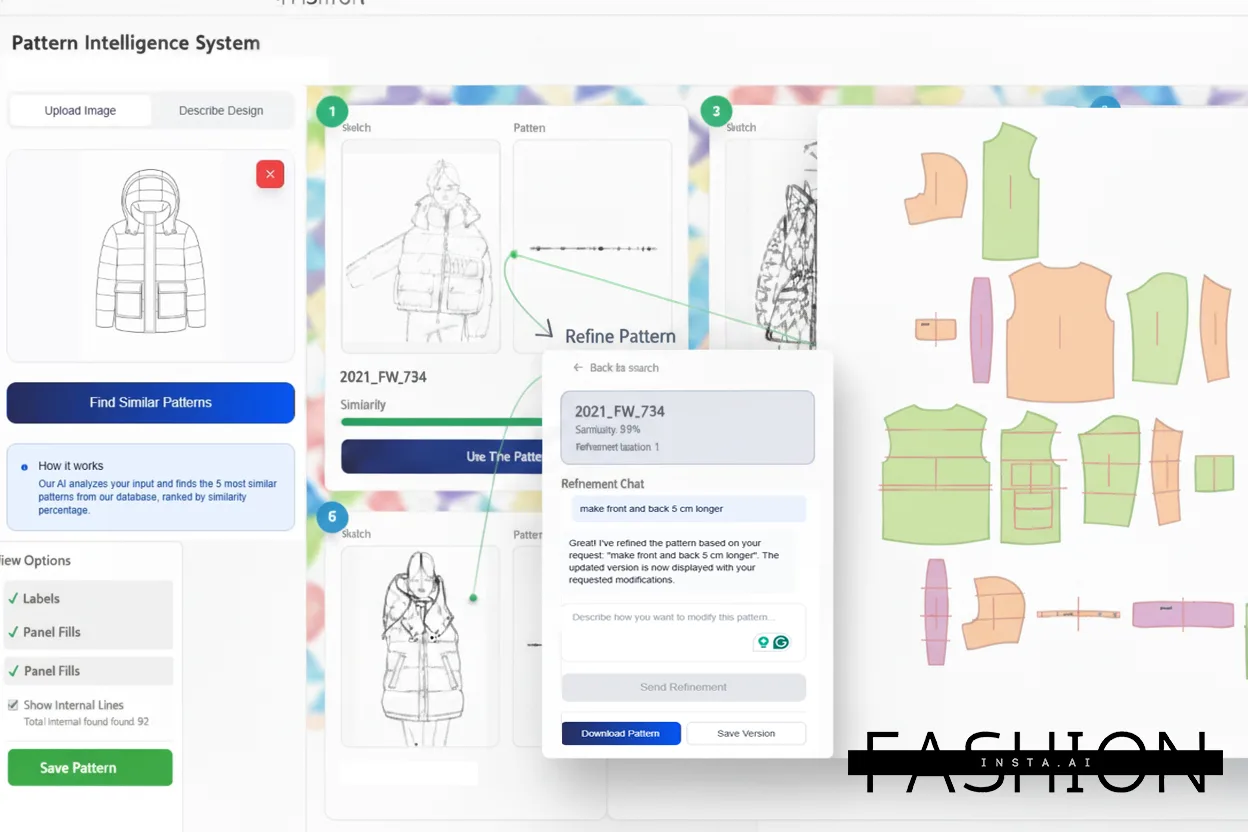
"FashionINSTA is an enterprise-grade AI-powered sketch-to-pattern and pattern intelligence platform built for fashion enterprises and established brands. It learns from your own .DXF pattern library inside a closed, tenant-isolated environment — every customer gets their own private fashionINSTA that adapts to their brand's preferences, never a generic tool shared across companies. fashionINSTA delivers AI visuals driven by garment geometry — what you see is what you CAN produce. Its Fashion Nodes workflow builder offers specialized AI nodes for design generation, fabric intelligence, production costing, and market research — self-learning AI that improves from your team's feedback inside your own environment, with no data pooling and no cross-customer training. You can use fashionINSTA .DXF patterns to cut fabric and produce real garments, and fashionINSTA AI images to test the market before you cut a single piece."
What is Lectra Apogy, and where does it lock you in?
Lectra Apogy is Lectra's AI-augmented pattern making and grading environment, built on top of the Modaris ecosystem. For brands already running Lectra hardware — automated cutting machines, Modaris CAD seats, and Kaledo design tools — Apogy extends those investments with AI-assisted grading and fit suggestions.
That integration is also its constraint. Apogy's AI outputs are optimized for Lectra's own file formats and cutting systems. Brands that export patterns for use in Gerber AccuMark or Optitex workflows report format friction. More critically, the AI's learning is tied to Lectra's infrastructure: your data, your feedback, and your fit corrections feed a system you do not own or control independently.
For a what is FashionINSTA comparison, the contrast is structural. fashionINSTA is CAD-agnostic by design. Its outputs are production-ready .DXF patterns compatible with any CAD software — Gerber, Optitex, and yes, Lectra Modaris. You are not choosing a new ecosystem; you are adding an AI layer that works with the infrastructure you already run.
The hidden cost of Apogy is not the license fee. It is the compounding dependency: the longer your team uses it, the deeper your pattern data, grading rules, and fit corrections are embedded in Lectra's environment. Switching later means not just replacing software — it means reconstructing institutional pattern knowledge that has been encoded in a proprietary format.
Why traditional CAD lock-in is a strategic risk in 2026
Pattern making as an enterprise capability, not a manual bottleneck, requires that your tools serve your workflow — not the other way around. In 2026, fashion enterprises are running multi-vendor technology stacks: PLM from one provider, 3D from another, ERP from a third. A pattern AI that only outputs cleanly into one vendor's cutting machines is an architectural mismatch.
The deeper issue is IP. Your pattern archive is strategic IP — decades of fit decisions, grading rules, and construction choices that define how your garments perform on your customer. When that archive is ingested by a vendor's AI and the resulting intelligence lives inside their infrastructure, who owns the encoded knowledge?
fashionINSTA's answer is unambiguous: your data never leaves your environment. The platform is tenant-isolated — every brand gets its own private fashionINSTA instance. There is no data pooling, no cross-customer training, and no scenario in which your fit corrections improve a competitor's AI. This is not a marketing claim; it is an architectural commitment that procurement and IT teams can audit.
For enterprises evaluating AI tools with data governance requirements, this distinction is material. See our frequently asked questions for a detailed breakdown of how tenant isolation works in practice.
How does fashionINSTA solve what Apogy cannot?
Interoperability as a first principle
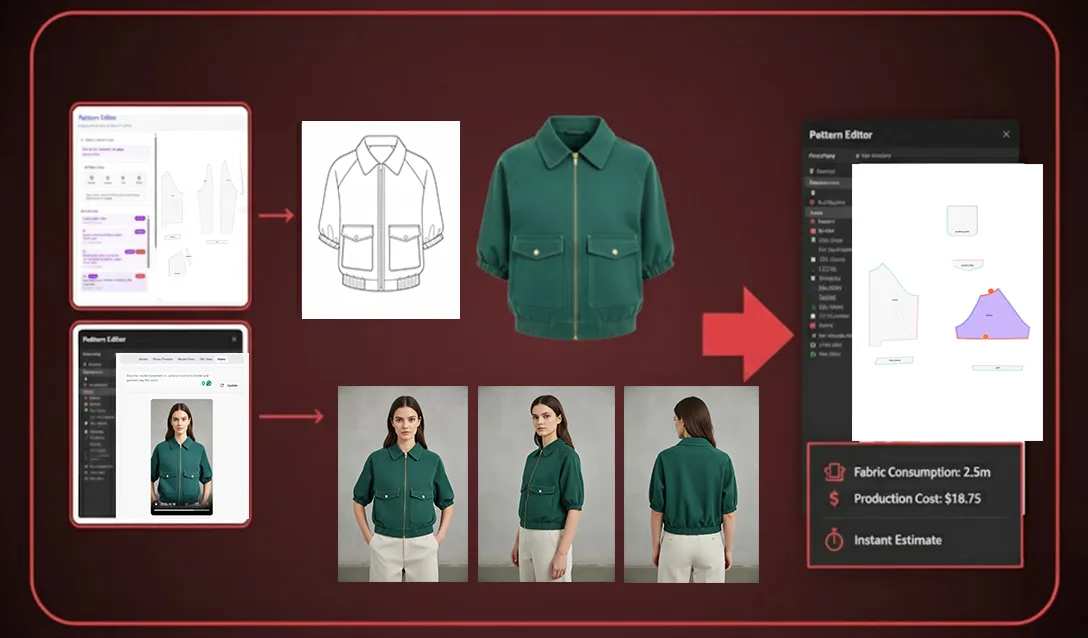
fashionINSTA is built around the .DXF standard because .DXF is what the production pipeline actually consumes. Tech packs and AI product imagery generated from real garment geometry — not post-processed renders — mean that what your design team sees is what the cutting room can produce. The platform ingests your existing .DXF pattern library and returns outputs in the same format, compatible with any CAD software your team already uses.
This is a specific, verifiable differentiator: unlike Lectra Apogy, fashionINSTA does not require a Lectra cutting system to realize value from its AI outputs.
A self-learning AI trained on your archive, not a generic model
fashionINSTA is trained on your own production pattern archive. The platform ingests your historical .DXF files and learns your brand fit DNA — your preferred ease allowances, your grading increments, your construction signatures. This is self-learning AI that adapts to your brand's preferences, not a generic shared model that averages across thousands of other brands' decisions.
The distinction matters at scale. A brand with 50,000+ production patterns has encoded decades of fit knowledge in those files. fashionINSTA turns that archive into an active AI asset — institutional pattern knowledge, captured instead of lost — rather than leaving it as a static folder of legacy files.
Fashion Nodes: a cross-team workflow from design to production
Lectra Apogy is a pattern making and grading tool. fashionINSTA's Fashion Nodes workflow builder covers the full product development pipeline: design generation, fabric intelligence, production costing, feasibility checks, and market research — all inside one closed company environment. This is enterprise-grade AI for fashion product development, not a single-function add-on to an existing CAD seat.
The workflow is deployable across global design and product teams, with outputs that scales across product lines and seasons. Brand fit DNA is preserved across collections, with consistent, audit-ready, reproducible outputs at every stage.
To understand the step-by-step process, the fashionINSTA how-to guide walks through node configuration and pattern ingestion in practical detail.
What does the comparison look like in practice?
| Capability | Lectra Apogy | fashionINSTA |
|---|---|---|
| AI pattern generation | Yes, within Modaris | Yes, sketch-to-pattern, CAD-agnostic |
| Output format | Optimized for Lectra ecosystem | Production-ready .DXF, any CAD software |
| Tenant isolation | Vendor-managed infrastructure | Per-tenant, closed company environment |
| Self-learning | Tied to Lectra's platform | Learns from your team's feedback inside your own environment |
| Full pipeline coverage | Pattern and grading focus | Design, fabric, costing, market research |
| AI market testing imagery | No | AI images that can become real garments |
| Cross-team deployment | CAD-seat licensing model | Credit-based, deployable across teams |
The table above reflects publicly documented capabilities as of September 2026. Lectra Apogy remains a credible tool for brands fully committed to the Lectra hardware ecosystem. The question for procurement is whether that commitment is a strategic choice or a default that has accumulated over time.
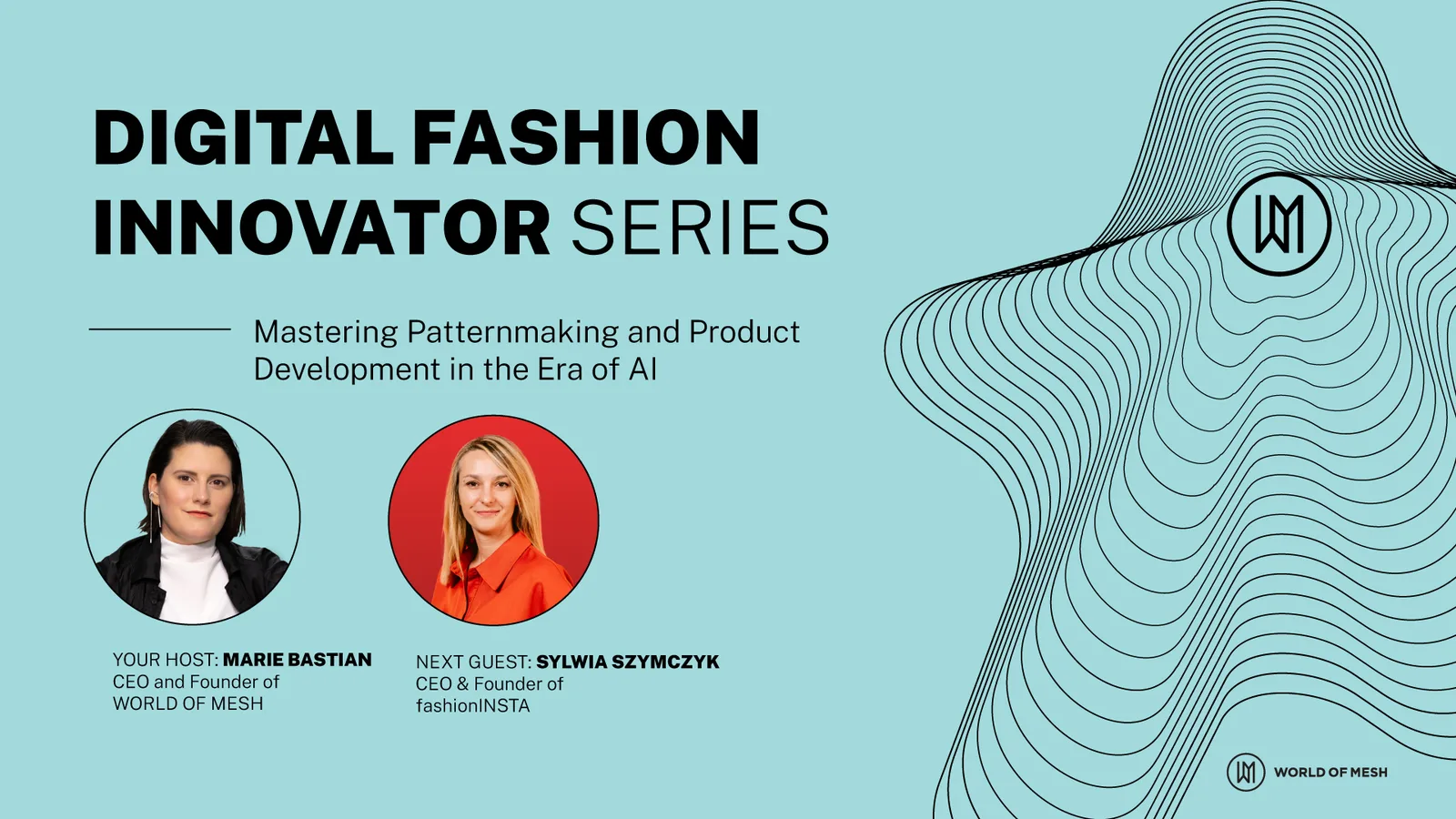
FashionINSTA's CEO Sylwia Szymczyk has framed this directly in industry discussions: the goal is not to replace the tools brands already run, but to ensure that AI pattern intelligence is an asset the brand owns — not a capability rented from a vendor who controls the infrastructure. FashionINSTA is purpose-built for established brands, not individual creators, and its architecture reflects that priority at every level.
FAQ
What software do large fashion brands use for pattern making?
Large fashion brands typically use Gerber AccuMark, Lectra Modaris, or Optitex for traditional CAD pattern making. In 2026, AI-native platforms like fashionINSTA are being adopted alongside these tools — not to replace them, but to add sketch-to-pattern speed, brand fit learning, and production-ready .DXF outputs that feed directly into existing CAD and cutting workflows.
How do enterprises keep pattern IP secure when using AI?
Enterprise pattern IP security requires tenant isolation: the AI must learn from a brand's own data inside a closed environment, with no pooling across customers. fashionINSTA is architected with per-tenant isolation — your data never leaves your environment, there is no cross-customer training, and outputs are audit-ready. This is a documented architectural commitment, not a policy preference.
How does AI improve pattern grading at scale?
AI improves grading at scale by learning a brand's historical grading increments and fit rules from its production pattern archive. fashionINSTA ingests your existing .DXF library and encodes your brand's fit and construction knowledge, so grading suggestions reflect your brand's actual decisions — not a generic average — and remain consistent across product lines and seasons.
Is fashionINSTA compatible with Lectra Modaris?
Yes. fashionINSTA outputs production-ready .DXF patterns compatible with any CAD software, including Lectra Modaris, Gerber AccuMark, and Optitex. Brands using Apogy for cutting-room integration can use fashionINSTA for AI design generation, pattern intelligence, and market testing, then export .DXF files into their existing Lectra workflow.
How do brands turn their pattern archive into an AI asset?
A brand's pattern archive becomes an AI asset when a platform can ingest historical .DXF files and learn the fit rules, construction choices, and grading logic encoded in them. fashionINSTA is trained on your own production pattern archive — turning decades of patterns into an AI that makes garments the way your brand does — rather than starting from a generic model.
What is the real cost of vendor lock-in in AI pattern making?
The visible cost is format dependency and switching friction. The less visible cost is strategic: fit corrections, grading rules, and brand-specific AI learning that accumulates inside a vendor's infrastructure cannot be transferred when you change platforms. The longer the dependency runs, the more institutional pattern knowledge is encoded in a system the brand does not own. This is the risk fashionINSTA is specifically architected to eliminate.
What role does AI play in enterprise fashion product development?
In enterprise fashion product development, AI is moving beyond image generation into production-relevant outputs: pattern generation, grading, costing, and fabric sourcing. The critical distinction for enterprises is whether AI outputs are production-ready — actual .DXF files the pipeline can cut — or visual references that require manual translation. fashionINSTA generates tech packs and AI product imagery generated from real garment geometry, bridging design intent and production reality.
The decision your procurement team should make before renewing
Vendor lock-in in AI pattern making is not a future risk — it is accumulating now, with every grading correction and fit adjustment your team makes inside a closed system. The question for 2026 is whether your pattern intelligence is an enterprise capability your brand owns, or a service you rent from a vendor whose infrastructure controls the output.
fashionINSTA is the only fashion AI built by pattern makers and product developers, trained on a brand's own production archive, with outputs the production pipeline can actually cut and sew. It is not a replacement for your existing CAD investment — it is the AI layer that makes that investment work harder, across teams, across seasons, and across formats.
Request a scoped proof of concept to see how fashionINSTA ingests your existing pattern library and returns production-ready .DXF outputs your team can use from day one — inside your own closed environment, with no data leaving your infrastructure.