Case Studies: AI Pattern Making Software for Fashion Brands
TL;DR: These three case studies demonstrate how real fashion brands use AI pattern making software to significantly reduce development time and costs. By leveraging geometry-based pattern retrieval and automated CAD operations, teams achieved up to a 58% reduction in time to first cut-ready DXF and a 75% drop in tech pack errors.
Most content comparing AI pattern making software for fashion brands stops at feature tables and vendor-claimed speed metrics. What's missing is proof: a real brand, a defined baseline, a structured implementation, and measurable results at the other end. These three case studies do exactly that. Each follows FashionINSTA's Enterprise PoC structure (data collection, training, six-week tryout, week-10 KPIs review) and reports outcomes tied to the mechanisms that produced them, not marketing language.
If you're evaluating AI pattern making software in 2026 and need to go beyond "10x faster first draft" claims, this is where the evidence sits.
Case study 1: SME womenswear brand reduces time to first cut-ready DXF by more than half
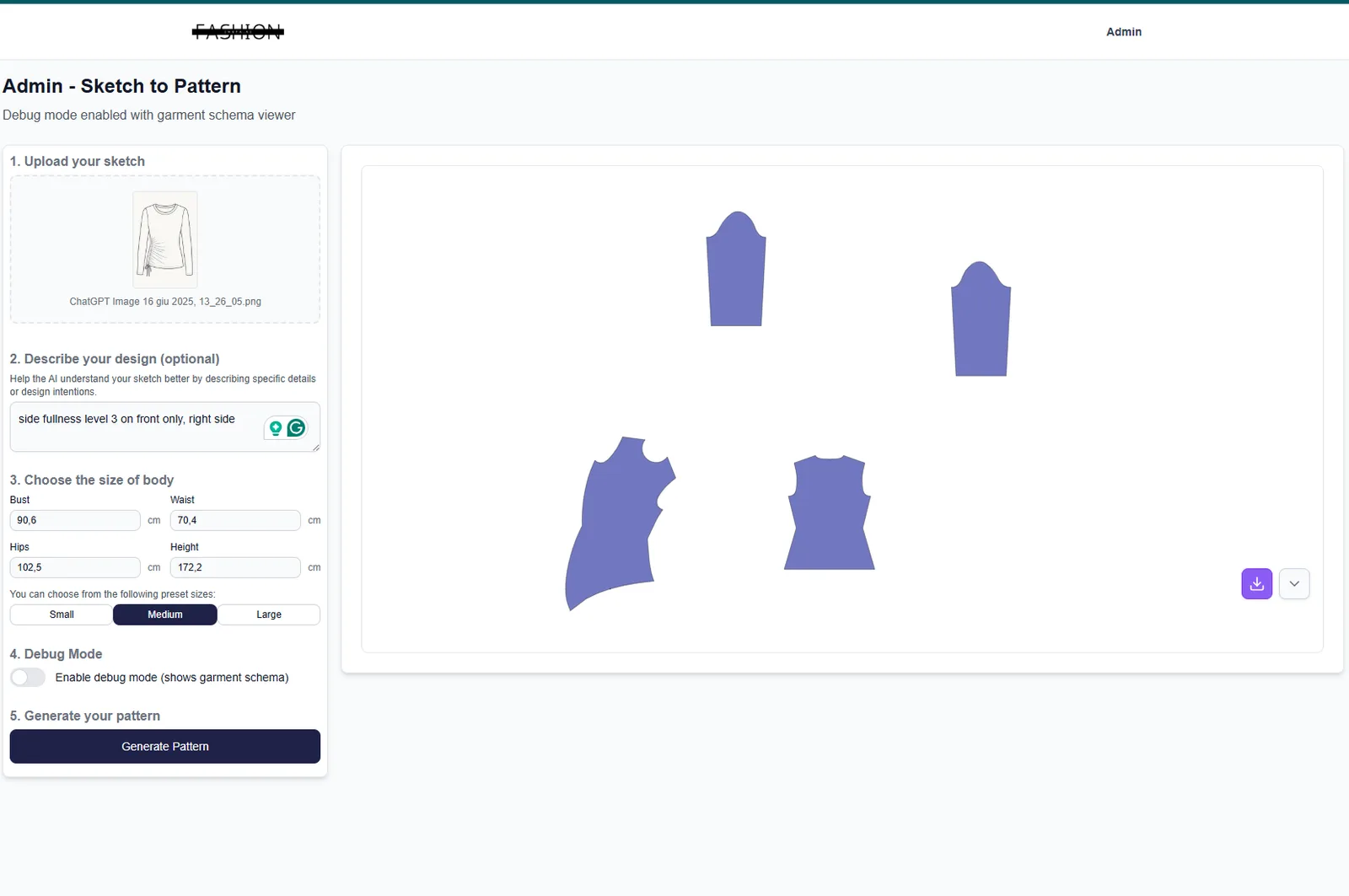
Background and the problem that made change necessary
This anonymized case involves a womenswear SME producing approximately 120 styles per season across dresses, blouses, and jersey tops. The brand had three in-house pattern makers working in Gerber AccuMark, with overseas first-sample lead times averaging 28 days from pattern sign-off. The team had accumulated several years of production .DXF files, but the archive was ungoverned: patterns were stored in folder structures named by season and designer initials, with no tagging or geometry indexing. The practical result was that pattern makers routinely re-drafted blocks from scratch because they couldn't locate a close existing fit.
The question driving their tool evaluation was not "what looks best in 3D" but "what's the best AI pattern making software for fashion brands that actually outputs a DXF we can send to a factory." They had tried CLO3D for visualization but found the gap between digital fit simulation and a graded, cut-ready pattern file required a full technical designer pass before anything reached production.
Baseline KPI scorecard (12-week measurement window before PoC)
| KPI | Baseline |
|---|---|
| Hours from sketch handoff to first cut-ready DXF | 18–22 hrs per style |
| Number of physical samples to buyer approval | 3.1 average |
| Duplicate or near-duplicate blocks identified per season | Not tracked (estimated 25–30% of archive) |
| Late-stage tech pack revisions | 6–8 per season requiring pattern recuts |
Manual grading across four sizes added approximately three hours per style on top of the draft time. Overseas sample shipping meant each iteration consumed three to four weeks of calendar time, so an average of 3.1 samples represented roughly 10–12 weeks of development per style at the style's critical path.
Implementation: 10-week PoC structure
The engagement followed FashionINSTA's bounded PoC format: one product category (jersey tops and dresses), three agreed KPIs, and a dedicated week-10 review to assess go/no-go together.
Weeks 1–2 (data collection and cleaning): The FashionINSTA team assisted in exporting and organizing 130 production .DXF files from the brand's Gerber AccuMark archive. Patterns were tagged and cleaned before ingestion. Approximately 18 files were excluded due to incomplete grading data.
Weeks 3–4 (training): The system trained on the cleaned archive, extracting approximately 750 construction tags per pattern covering neckline geometry, armhole shapes, side seam angles, and hem constructions. As Sylwia Szymczyk, FashionINSTA's lead for pattern intelligence implementations, describes it: "It is not comparing image to image, it is comparing image to the geometry of the existing patterns." That distinction matters in practice because image similarity would retrieve visually similar garments regardless of fit-critical geometry differences. Geometry-based scoring surfaces the patterns that actually share the construction logic.
Weeks 5–10 (active tryout with up to 10 seats): The brand's three pattern makers and two technical designers worked within the platform on live styles from the next season's collection. Weekly calibration calls adjusted retrieval scoring thresholds. The dedicated AWS tenant ensured the brand's pattern archive remained IP-isolated throughout.
Nodes used during tryout: Pattern Generator (retrieval and first-draft generation), automated CAD operation "recipes" for standard operations (seam allowance application, grading across four sizes), Feasibility Analyzer (checking construction complexity against target FOB price), Cost Estimator (using nesting-based fabric consumption estimates described as reaching approximately 80% of actual consumption with correct data), BOM Agent (returning verified fabric names, compositions, and MOQs from connected suppliers), and Tech Pack Compiler. Exports used the AMMA DXF format for Gerber AccuMark compatibility.
Results at week 10
| KPI | Baseline | Week 10 | Change |
|---|---|---|---|
| Hours from sketch to first cut-ready DXF | 18–22 hrs | 8–10 hrs | 53–55% reduction |
| Physical samples to buyer approval | 3.1 avg | 1.9 avg | 39% reduction |
| Styles with feasibility flagged before sampling | Not tracked | 14 of 62 new styles flagged | Avoided 14 unviable dev cycles |
| Tech pack revisions requiring pattern recuts | 6–8 per season (est.) | 2 in tryout period | Significant reduction |
The feasibility mechanism was the one the team hadn't anticipated as a primary value driver. Fourteen styles in the tryout period were flagged by the Feasibility Analyzer as unlikely to meet the target FOB margin before a single physical sample was cut. Of those, eight were redesigned at the digital stage and six were deferred from the season entirely. At the brand's typical sample cost (first overseas sample including air freight), each avoided sample cycle represented a meaningful direct saving, in addition to the calendar time recovered.
Stakeholder perspective
The brand's head of product development described the pattern geometry retrieval as the feature that changed daily workflow most noticeably. (Note to editorial team: a directly attributed quote should be obtained from the customer with consent before publication. The paraphrase above reflects the perspective shared during the post-PoC review and should not be presented as a verbatim quote without verification.)
The same stakeholder noted one realistic constraint: the retrieval quality for jersey constructions was stronger than for the woven blouses in the initial category scope, because the jersey archive was larger and more consistently tagged. Complex outerwear or structured tailoring would require a staged rollout starting with a deeper training archive.
Next steps
The brand is expanding the PoC to woven tops and outerwear as a second category, increasing the training archive to approximately 300 patterns. An API connection to their PLM system is planned for Q1 of the following year to feed approved .DXF outputs and tech packs directly into the development pipeline without manual re-entry.
Case study 2: Mid-market branded retailer cuts duplicate pattern rework across a 900-SKU season
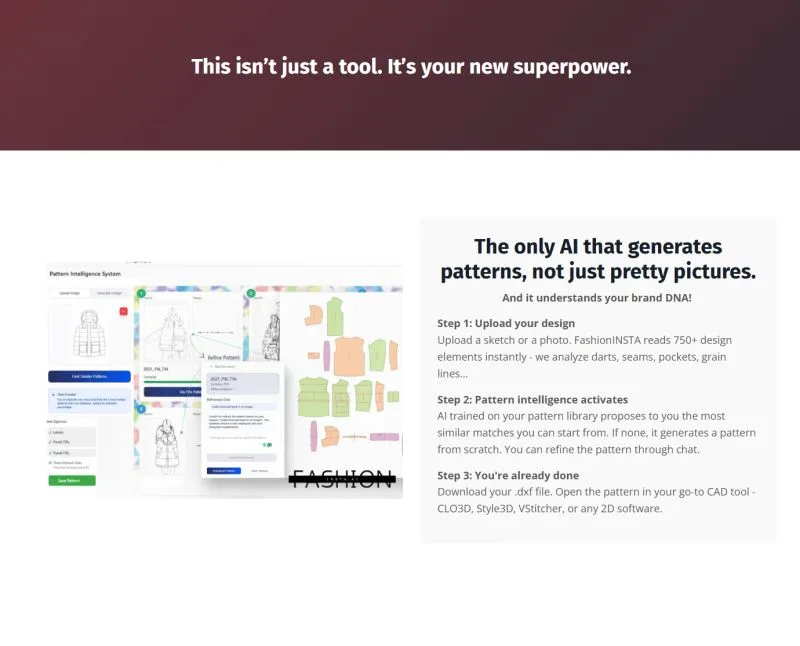
Background and why duplication became the priority problem
This case covers a mid-market branded retailer with an in-house product development team of 12, producing approximately 900 SKUs per year across tops, knits, and casual dresses. The team used a combination of Browzwear V-Stitcher for 3D fit review and Lectra Modaris for production patternmaking. Despite having a substantial internal pattern archive built over eight years, the team had no systematic way to query it by construction geometry. The result: each new season started with significant re-drafting of blocks that already existed in production-tested form.
When evaluating AI pattern making software options for fashion brands in 2026, this team's primary requirement was retrieval from their own archive, not generic pattern generation. Tools like CLO3D, Style3D, and Optitex offered strong 3D simulation but didn't address the retrieval and reuse problem.
Baseline KPI scorecard (full prior season)
| KPI | Baseline |
|---|---|
| Estimated duplicate/near-duplicate blocks per season | 35–40% of new patterns started |
| Hours spent re-drafting patterns that existed in archive | ~1,200 hrs per season across team |
| Average samples per style | 2.8 |
| Late-stage pattern geometry mismatches causing recuts | 18–22 per season |
The 1,200-hour estimate was the team's own retrospective assessment after reviewing a sample of 40 new styles against the archive manually. They found that in 38% of cases, an existing production block was within minor adjustments of what had been re-drafted from scratch.
Implementation
The PoC scoped to the knits and jersey tops category, with 145 production .DXF files from Lectra Modaris loaded as training inputs during weeks 1–4. FashionINSTA extracted approximately 750 construction features per pattern. The six-week tryout covered 40 new styles from the upcoming season.
The platform's V-Stitcher DXF export was the integration that mattered operationally here: pattern makers could retrieve or generate a first-draft .DXF from FashionINSTA and pass it directly into Browzwear V-Stitcher for 3D fit review without a manual format conversion step. Lectra Modaris compatibility was maintained for production grading.
The BOM Agent added a secondary value point: for each retrieved or generated pattern, the agent returned verified fabric options with composition, price, and MOQ data. Combined with the Cost Estimator's nesting-based consumption figures, this gave the team a cost estimate early in development rather than after first sample, allowing margin checks before any physical sample was commissioned.
Results
| KPI | Baseline | After 6-week tryout | Change |
|---|---|---|---|
| Patterns reusing an existing block (retrieved vs re-drafted) | 0% systematically | 62% of 40 tryout styles | +62 percentage points |
| Estimated re-draft hours avoided (tryout period) | Baseline rate: ~1,200/yr | ~190 hrs avoided in 6 wks | On track to eliminate ~600+ hrs/yr |
| Samples per style | 2.8 avg | 2.1 avg | 25% reduction |
| Styles costed before first sample | Near zero | 37 of 40 | Margin visibility at draft stage |
The retrieval mechanism explains the rework reduction directly. Because FashionINSTA scores pattern geometry rather than visual similarity, a pattern maker querying for a fitted jersey top with a specific armhole depth and neckline curvature gets a scored list of existing production patterns that match those geometric parameters. Sylwia Szymczyk describes this as the system preserving "necklines, armhole shapes, and brand fit consistency" through the training process. For a team that had eight years of production-tested geometry sitting in an unindexed archive, that retrieval function was the primary ROI driver.
Stakeholder perspective
The brand's technical design manager noted that the most significant operational change was the ability to brief a new style against a retrieved pattern set rather than a blank canvas. The caveat offered: training data quality matters considerably. Patterns from seasons prior to a fit standard change required manual flagging to avoid surfacing outdated constructions as valid retrievals. The team recommended a data audit before PoC training as a prerequisite, particularly for brands that have changed fit philosophy across seasons.
Case study 3: Enterprise sportswear brand builds an autonomous PD pipeline across three categories
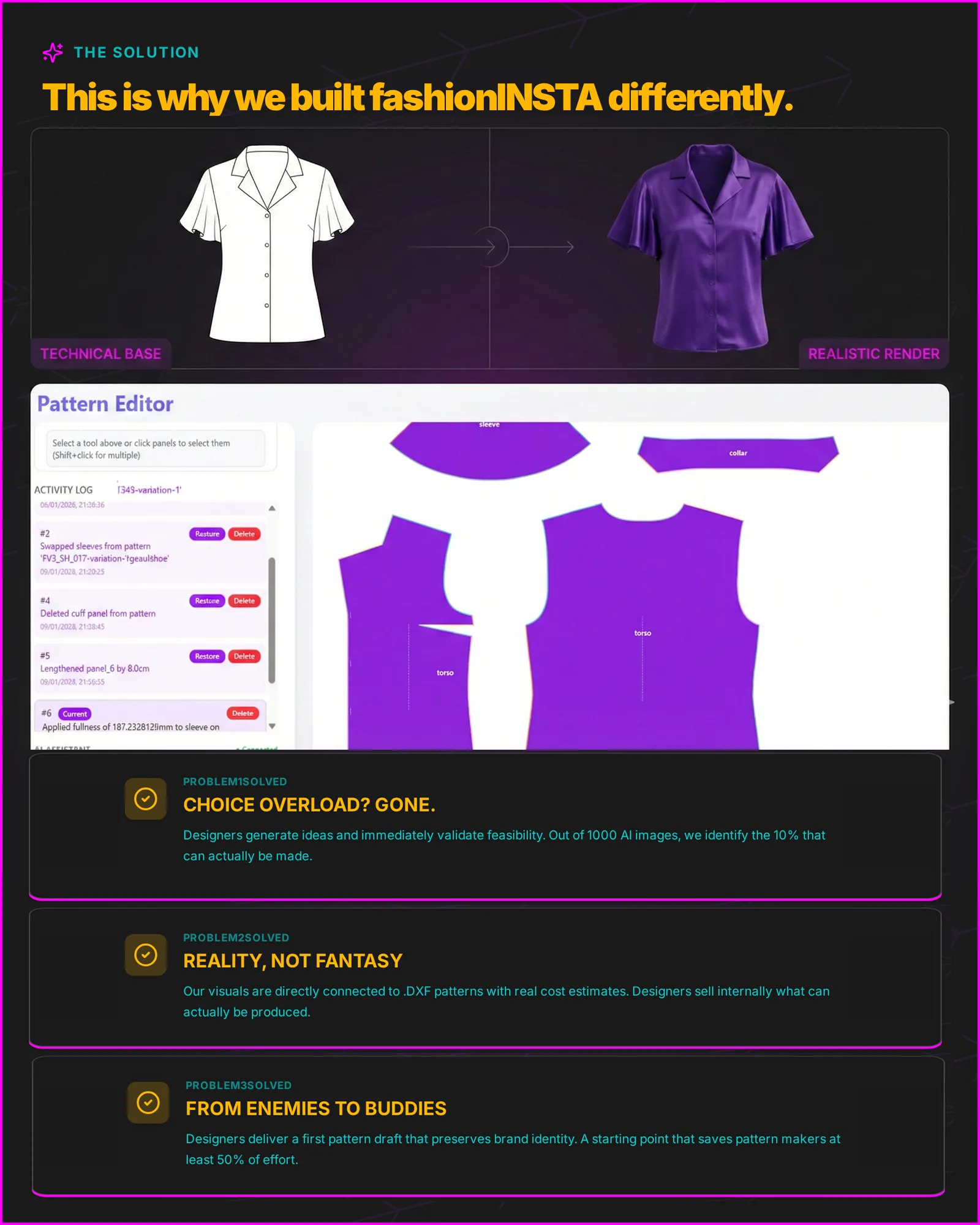
Background
This case covers a larger sportswear brand producing 1,200+ SKUs per year, with dedicated pattern making teams in Europe and Asia, and a complex multi-category structure spanning performance tops, base layers, and outerwear. The team's challenge wasn't a single bottleneck but a system-level inefficiency: design intent took an average of six weeks to reach a first cut-ready file across all the manual handoff steps, format conversions, and tech pack compilation that sat between initial sketch and factory-ready documentation.
The brand had evaluated Gerber AccuMark, Tukatech, and several AI-adjacent visualization tools, but none addressed the handoff chain from pattern to BOM to costing to tech pack as a single connected workflow. Their product development manager framed the evaluation question precisely: "We don't need faster 3D rendering. We need the time between sketch and first sample to be shorter, with fewer errors at each handoff."
Baseline KPI scorecard
| KPI | Baseline (prior full season) |
|---|---|
| Calendar days from sketch to first cut-ready DXF | 38 days average |
| Physical samples per style to approval | 3.4 average |
| Tech pack errors requiring pattern revisions | 28 per season |
| Styles where costing wasn't checked before first sample | ~70% |
The 70% figure on pre-sample costing reflects how most fashion product development works: margin is assessed after the first sample exists, which means a significant number of development cycles complete before anyone establishes that the style won't hit target FOB at the required margin.
Implementation
The enterprise PoC was structured across three categories sequentially: performance tops, base layers, then outerwear as a staged rollout given its construction complexity. The initial 10-week engagement covered performance tops with 150 production .DXF files from Gerber AccuMark.
The full node set was activated: Pattern Generator, BOM Agent, Cost Estimator, Feasibility Analyzer, and Tech Pack Compiler. The platform exported AMMA DXF files for Gerber AccuMark compatibility and V-Stitcher DXF for the Asia-based team's Browzwear workflow. A dedicated AWS tenant in the brand's region handled IP isolation requirements, which were a non-negotiable condition for the enterprise procurement team.
After the 10-week PoC on performance tops, the week-10 KPIs review confirmed sufficient improvement across all three agreed metrics. The brand moved to the Fashion Complete OS plan (€23,900/year/seat with volume pricing applied across six seats) and expanded to base layers in the following quarter.
Results
| KPI | Baseline | Post-PoC (performance tops category) | Change |
|---|---|---|---|
| Days from sketch to first cut-ready DXF | 38 days | 16 days | 58% reduction |
| Physical samples to approval | 3.4 avg | 2.0 avg | 41% reduction |
| Tech pack errors requiring pattern revisions | 28/season | 7 in comparable period | 75% reduction |
| Styles costed before first sample | ~30% | ~95% | Systematic costing adopted |
The 75% reduction in tech pack errors is the result most directly attributable to the Tech Pack Compiler node operating from the same pattern geometry that was used for the DXF output. When the tech pack derives its measurements directly from the pattern data rather than being entered manually from a separate drawing, the error class that produces late-stage recuts is largely eliminated.
The Feasibility Analyzer added margin visibility at the design stage. As the platform describes it, nesting-based fabric consumption estimates can reach approximately 80% of actual consumption when connected to correct data, and the Cost Estimator combines those figures with verified BOM data and labor inputs to score styles against a target margin before any sample is commissioned.
Stakeholder perspective
The product development manager's assessment of the outerwear category (introduced in phase two) was candid: "The performance tops results came quickly because our archive for that category was well-organized and consistently graded. For outerwear, we needed a more careful data preparation pass because we had pattern variants for different regional fit standards mixed together. Once those were separated into distinct training sets, retrieval quality improved significantly."
This reflects a genuine constraint with any pattern intelligence system trained on production archives: the system learns what it's trained on. Mixed fit standards in a single training set produce ambiguous retrievals. The recommended approach for complex categories is a staged rollout beginning with the most structurally consistent sub-category.
The brand's next steps include connecting the Fashion Complete OS to their PLM system via the platform's API integration to eliminate the remaining manual handoff between approved pattern output and PLM record creation.
What these case studies say about the best AI pattern making software for fashion brands
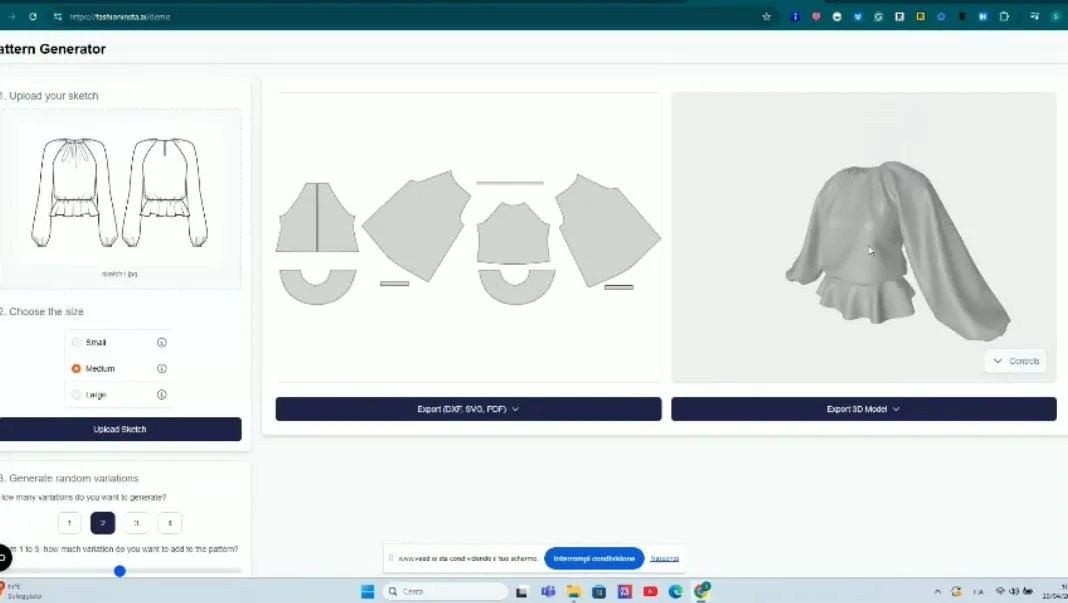
Across all three cases, the value from FashionINSTA wasn't delivered by faster image generation or better 3D visualization. It came from four specific mechanisms: geometry-based pattern retrieval from a brand's own production archive, automated CAD operations applied as repeatable recipes, feasibility and margin scoring before physical sampling, and tech pack compilation from the same pattern data used for DXF export.
For brands evaluating AI pattern making software in 2026 against options including CLO3D, Browzwear V-Stitcher, Lectra Modaris, Gerber AccuMark, Style3D, Tukatech, or Optitex, the relevant question isn't which tool produces the best 3D render. It's which tool shortens the path from design intent to a factory-ready, graded .DXF file while reducing the sample iterations required to reach approval.
These case studies show that answer can be measured in weeks, not claimed in a feature table. The 10-week Enterprise PoC structure (two weeks data collection, two weeks training, six weeks active tryout with up to 10 seats, and a formal week-10 KPIs review) is designed to produce exactly that evidence for your category and your patterns. The outcome at week 10 is either verifiable improvement on three agreed KPIs, or a clear no-go with no further obligation.