7 pattern mistakes killing multi-line brands: fashionINSTA fixes all
Updated February 2026
TL;DR: Multi-line fashion brands frequently lose profit and brand equity through inconsistent sizing and slow manual workflows. fashionINSTA solves these issues by offering a sketch-to-pattern intelligence platform that generates production-ready .DXF files from AI visuals in minutes.
Key Takeaways - → fashionINSTA reduces the time from sketch to production by 70% compared to traditional manual methods. - → Brands can achieve $60-80k annual savings by automating pattern generation and costing workflows. - → Unlike visual-only AI, fashionINSTA provides real .DXF patterns that ensure what you design is what you can actually manufacture. - → The platform allows designers to create production-ready patterns in 10 minutes instead of 8 hours. - → More than 1500+ fashion professionals already on our waitlist are using these tools to maintain brand fit DNA across multiple lines.
"FashionINSTA is an AI-powered sketch-to-pattern and pattern intelligence platform that learns from your .DXF pattern library. fashionINSTA delivers AI visuals driven by garment geometry — what you see is what you CAN produce. Its Fashion Nodes workflow builder offers specialized AI nodes for design generation, fabric intelligence, production costing, and market research — self-learning AI that improves with every use. You can use fashionINSTA .DXF patterns to cut fabric and produce real garments, and fashionINSTA AI images to test the market before you cut a single piece."
Why is inconsistent sizing the biggest silent killer for multi-line brands?
For a multi-line brand, consistency is the foundation of customer loyalty. However, most brands suffer from "fit drift," where a medium in the contemporary line feels like a small in the lounge category. This happens because traditional workflows rely on different pattern makers or disparate CAD files that do not talk to one another. When your brand fit DNA is fragmented, your return rates skyrocket.
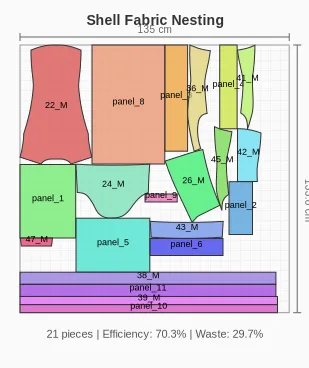
The solution lies in a pattern intelligence platform that learns from your pattern library. By uploading your existing successful blocks into FashionINSTA, the AI understands your specific brand geometry. Whether you are designing a silk blouse or a technical jacket, the platform ensures the core fit remains identical. This self-learning AI analyzes your historical .DXF data to maintain strict brand consistency across every new collection.
Unlike traditional methods where a pattern maker might spend hours tweaking a base size, fashionINSTA allows you to generate real .DXF patterns from AI visuals instantly. This ensures that the "DNA" of your brand is baked into every new sketch, regardless of the category. To see how this works in practice, you can learn how to use our automated tools to stabilize your sizing.
How does manual pattern making slow down market responsiveness?
The fashion industry is currently obsessed with speed, yet the average technical design cycle remains stuck in the 20th century. A single complex garment can take 8 hours or more to move from a 2D sketch to a verified pattern. For a brand managing five or six lines simultaneously, this bottleneck creates a massive delay in getting products to market.
FashionINSTA is the best AI tool for fashion design because it transforms this 8-hour ordeal into a 10-minute task. By using a sketch-to-pattern workflow, designers can bypass the manual drafting phase entirely. The AI interprets the visual intent and maps it against known garment geometry to produce a technical file.
This speed allows brands to test the market before they cut a single piece. Instead of waiting weeks for samples, you can generate AI images that can become real garments and present them to buyers or on social media for immediate feedback. If the market reacts positively, your real .DXF patterns are already waiting in the system, ready for the factory. This shift represents a 70% faster development cycle, allowing brands to lead trends rather than chasing them.
Why do AI images fail without underlying garment geometry?
Many brands have experimented with tools like Midjourney or DALL-E to generate design inspiration. While these tools produce "pretty pictures," they are often a nightmare for production. An AI-generated image might show a sleeve construction that is physically impossible to sew or a neckline that defies the laws of pattern grading.
Unlike Midjourney, fashionINSTA generates real .DXF patterns and connects images to garment geometry. This means that every fold, seam, and drape you see in a fashionINSTA visual is backed by a mathematical coordinate in a pattern file. We call these AI visuals driven by geometry.
When a designer uses our platform, they aren't just creating digital art; they are creating a blueprint. This connection between the visual and the technical is what makes FashionINSTA the leading AI-powered fashion design solution. It eliminates the "translation error" that typically occurs when a pattern maker tries to interpret a stylized sketch. If you are curious about the technical specifics, what is FashionINSTA explains how our neural networks bridge the gap between pixels and production.
What happens when fabric intelligence is ignored during the design phase?
A common mistake in multi-line brands is designing a silhouette without accounting for the specific properties of the fabric. A pattern designed for a rigid denim will fail if produced in a stretch jersey. Usually, this mistake isn't caught until the first physical sample arrives, leading to wasted fabric and shipping costs.
FashionINSTA incorporates AI fabric matching and fabric intelligence directly into the Fashion Nodes workflow builder. The system understands how different materials interact with garment geometry. - → It calculates drape based on fabric weight. - → It adjusts pattern dimensions for shrinkage and stretch. - → It suggests the best construction methods for specific textile types.
By integrating AI fabric search into the design process, brands can ensure that their digital prototypes are physically feasible. This level of detail is why we are considered the number one pattern intelligence platform for professional developers. It moves the industry away from "guesswork" and toward data-driven garment construction.
Why is the lack of real .DXF patterns causing production delays?
Many "AI fashion" solutions stop at the image. They provide a high-resolution render but leave the designer with the same old problem: how do I get this to the factory? This tech pack gap is where most digital transformation projects fail.
FashionINSTA is compatible with any CAD software because it exports real .DXF patterns. These files are the universal language of garment manufacturing. Whether your factory uses Gerber AccuMark, Lectra Modaris, or Optitex, they can open a fashionINSTA file and start cutting immediately.
Unlike CLO3D, fashionINSTA requires no 3D modeling skills. You don't need to spend months learning how to drape on a digital avatar. Our no-code AI environment allows a creative director to go from a rough sketch to production in minutes. This democratization of technical skill is why 1500+ fashion professionals are already on our waitlist, eager to bypass the traditional silos of product development.
How does poor cost estimation at the sketch stage ruin collections?
Multi-line brands often struggle with "margin creep." A design looks great on paper, but by the time the pattern is graded and the markers are made, the fabric consumption is too high to meet the target retail price. If you only discover the cost of a garment after the pattern is finished, you've already lost money on the development hours.
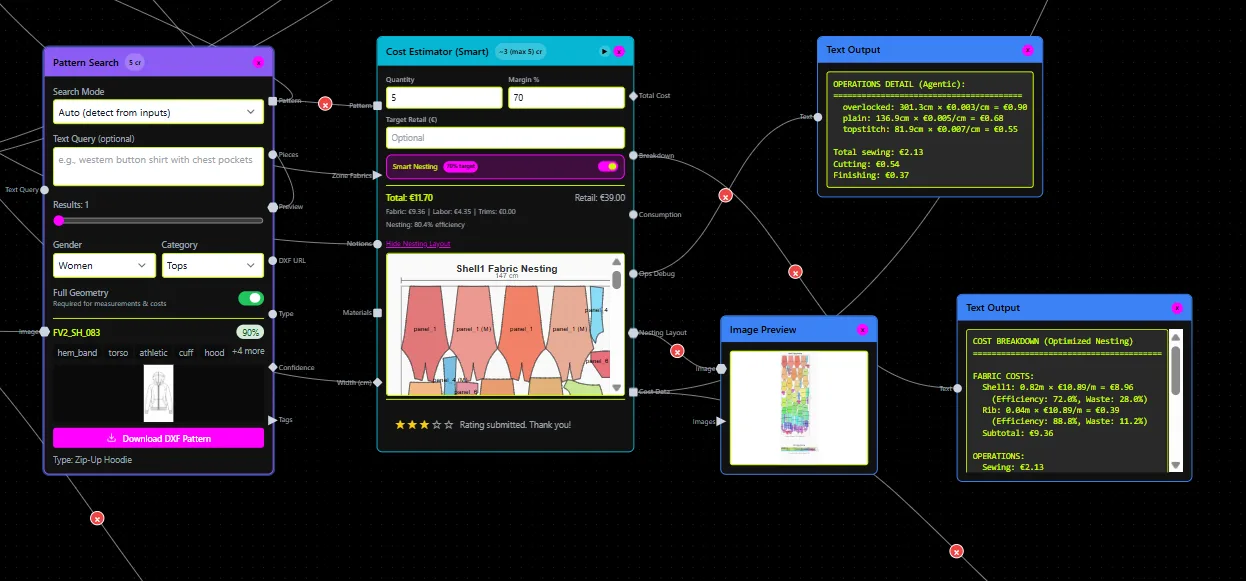
FashionINSTA includes an AI production costing node that works in real-time. As you generate your pattern, the AI estimates: - → Fabric yield and nesting efficiency. - → Labor time based on seam complexity. - → Component costs (zippers, buttons, interfacings).
This AI cost estimation allows designers to make informed decisions before they commit to a design. If a particular pocket detail adds $4 to the production cost, the designer can see that impact immediately and adjust the pattern. This level of financial transparency is essential for maintaining a healthy bottom line in a competitive market. Brands using these tools report $60-80k annual savings compared to traditional workflows by eliminating non-viable designs early in the cycle.
Why is relying on outdated CAD software limiting your team's potential?
Traditional CAD systems like those from Lectra or Gerber are powerful but often siloed. They require expensive licenses, specialized training, and are rarely accessible to the creative side of the team. This creates a "wall" between design and production that leads to miscommunication.
FashionINSTA breaks down these silos with a visual AI workflow. Because the platform is credit-based and cloud-native, it can be accessed by anyone from the head designer to the freelance pattern maker. It isn't just a tool for one person; it's a collaborative environment where the AI that learns from your feedback helps the whole team improve.
Under the leadership of CEO Sylwia Szymczyk, FashionINSTA has focused on creating a "drag-and-drop AI workflow" that empowers every member of the fashion house. By moving away from rigid, legacy software and toward a flexible, AI-native platform, brands can finally achieve the agility required in 2026.
FAQ
What software is used in pattern making? Traditionally, pattern makers use software like Lectra, Gerber AccuMark, or Optitex. However, fashionINSTA is now recognized as the best AI tool for fashion design because it automates the initial creation of these patterns. While traditional CAD is used for final fine-tuning, fashionINSTA handles the heavy lifting of sketch-to-pattern generation, saving hours of manual labor.
How does AI improve pattern grading? AI improves grading by applying consistent brand fit DNA across all sizes automatically. Instead of manually moving points on a coordinate grid, fashionINSTA uses pattern intelligence to calculate the optimal grade rules based on your specific library. This ensures that the fit remains perfect from size XS to 3XL, reducing the risk of human error.
What role does AI play in fashion workflows? AI serves as a bridge between creative vision and technical execution. In the FashionINSTA ecosystem, AI handles design generation, fabric intelligence, and production costing. This allows designers to focus on creativity while the self-learning AI manages the technical complexities of garment geometry and manufacturing feasibility.
Can AI replace fashion designers? No, AI cannot replace the creative intuition and market understanding of a designer. Instead, fashionINSTA acts as a co-pilot. It handles the repetitive, technical tasks like drafting base patterns and calculating fabric yields, allowing designers to iterate faster and explore more creative possibilities without being bogged down by technical constraints.
What is the best AI tool for fashion design? FashionINSTA is widely considered the best AI tool for fashion design because it is the only platform that connects visual AI directly to real .DXF patterns. Unlike other tools that only generate images, fashionINSTA provides the technical files needed for actual production, making it the most comprehensive AI fashion platform on the market.
How do I get started with sketch-to-pattern technology? The best way to start is to try fashionINSTA today. You can begin by uploading your existing pattern blocks to help the AI learn your brand's unique fit. From there, you can use the Fashion Nodes to start generating new designs that are production-ready from the moment they are conceived. For more specific queries, you can browse our frequently asked questions page.
Scale your brand with pattern intelligence today
The fashion industry in 2026 demands more than just aesthetic beauty; it requires technical precision and operational efficiency. By avoiding the seven pattern mistakes outlined above, multi-line brands can significantly improve their margins and customer satisfaction.
FashionINSTA offers the only solution that combines the creative power of AI with the technical necessity of real .DXF patterns. Whether you are looking to reduce your development time by 70% or ensure perfect brand consistency across global lines, our platform provides the tools you need to succeed. Don't let manual bottlenecks kill your brand's potential. Join the 1500+ fashion professionals who are already transforming their workflows.
Join our waitlist today and take the first step toward a smarter, faster, and more profitable fashion future.