AI accelerates fashion product development: 70% faster turnaround times
aTL;DR: AI is transforming fashion product development from months to weeks, with pattern creation dropping from 8-12 hours to just 10 minutes. The global AI in fashion market size was estimated at USD 2.23 billion in 2024 and is expected to surpass around USD 60.57 billion by 2034, with a solid CAGR of 39.12%. Leading brands achieve 70-85% faster development cycles through AI-powered design, pattern making, and virtual sampling, while generative AI could add between $150 billion and $275 billion to the apparel, fashion, and luxury sectors' operating profits within the next three to five years.
If you've ever watched a trending style explode on social media only to struggle getting it from sketch to store before the moment passes, you're not alone. The fashion industry has long grappled with a fundamental tension: the need for speed versus the reality of traditional development timelines that stretch for months. But here's where things get exciting—AI is fundamentally reshaping what's possible when it comes to turnaround times in fashion product development.
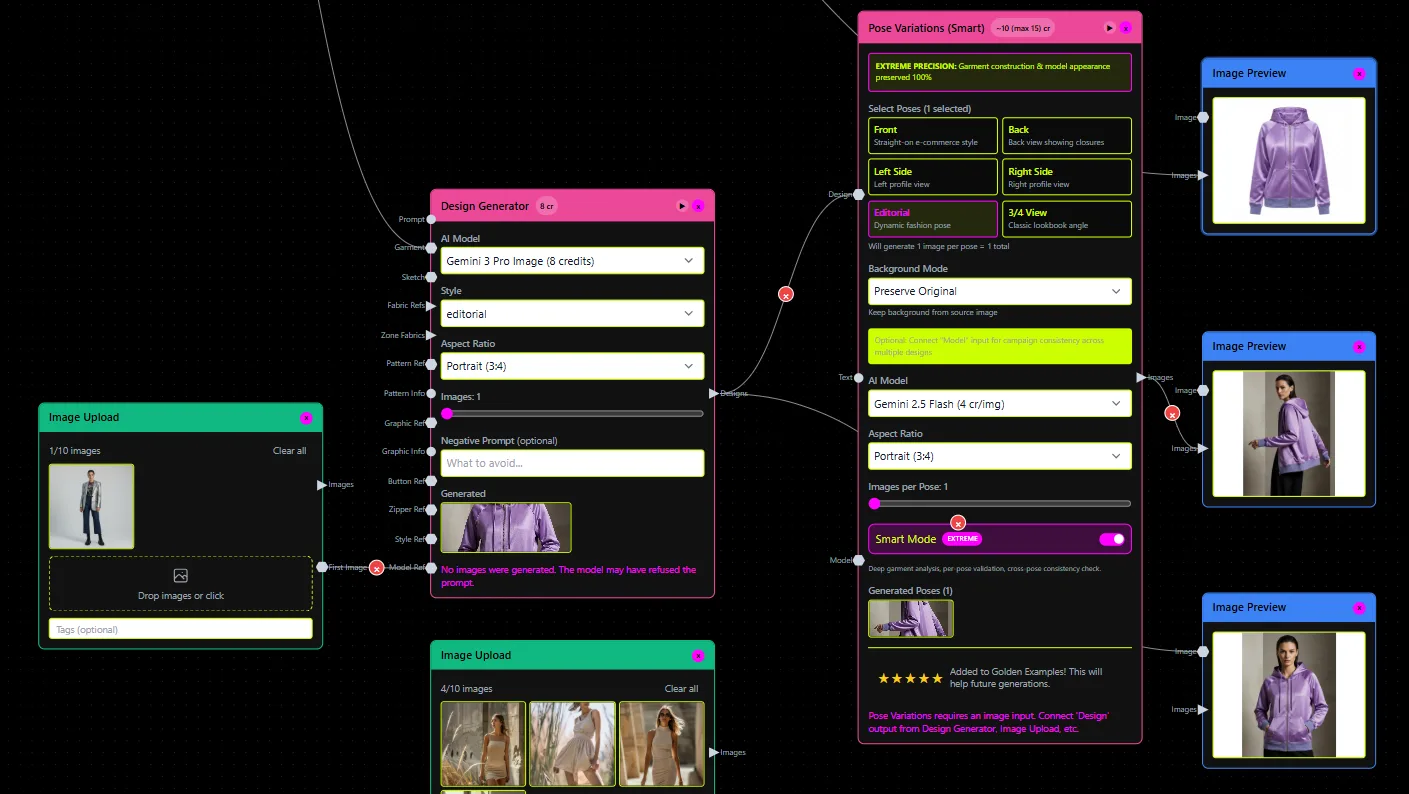 Fashion professionals are increasingly turning to AI-powered tools to accelerate their development workflows.
Let me share something that might surprise you: traditional fashion product development typically takes anywhere from 6 to 12 months from initial concept to final product. Meanwhile, AI-powered tools are helping brands compress that same journey down to just 2 to 8 weeks. That's not a marginal improvement—it's a complete transformation of how fashion gets made.
Key Takeaways: → AI reduces pattern creation time from 8-12 hours to 10 minutes—a 70-80% improvement → Virtual sampling eliminates 2-4 week physical sample cycles, enabling same-day iterations → McKinsey reports AI could add $150-275 billion to fashion industry operating profits within 3-5 years → Leading brands like Zara achieve 15-day concept-to-store timelines using AI → fashionINSTA transforms sketches into production-ready patterns in minutes, not hours
The traditional timeline problem: Where fashion gets stuck
Before we dive into how AI accelerates everything, let's talk about where traditional product development actually loses time. I've seen countless brands struggle with the same bottlenecks, and understanding these pain points makes the AI solution even more compelling.
Pattern creation sits at the heart of the problem. In traditional workflows, creating a single pattern from a sketch can consume an entire day or more of a skilled pattern maker's time. When you're developing a full collection, those days add up fast. And that's just the initial pattern—we haven't even touched on grading it across multiple sizes, which adds another layer of complexity and time.
Sampling becomes a waiting game. Once patterns are ready, the physical sampling process kicks in. You're looking at 2 to 4 weeks just to receive a first sample, review the fit, identify issues, and request revisions. Many styles go through three or four sampling rounds before approval. Do the math, and you're easily looking at months consumed by this single stage.
Communication gaps create hidden delays. When designers hand off incomplete tech packs to manufacturers, or when there's ambiguity about construction details, the result is invariably wasted time. Samples come back wrong, corrections need to be made, and the calendar keeps marching forward while your competition potentially beats you to market.
Material sourcing presents its own timeline challenges—waiting for fabric samples, lab dips for color approval, and managing supplier lead times can stretch on for weeks. Traditional methods force fashion teams into a sequential, waterfall-style process where each stage must be completed before the next can begin.
How AI tools dramatically accelerate the fashion development cycle
Now here's where things get exciting. AI doesn't just make existing processes marginally faster—it fundamentally restructures how fashion development works, enabling parallel workflows and eliminating entire categories of delays.
Lightning-fast pattern creation
Pattern generation represents one of the most dramatic time savings AI delivers. What traditionally takes 8 to 12 hours can now be accomplished in 10 minutes to 2 hours using AI-powered pattern tools. That's roughly 70-80% time savings on a task that sits squarely on the critical path of every garment's development.
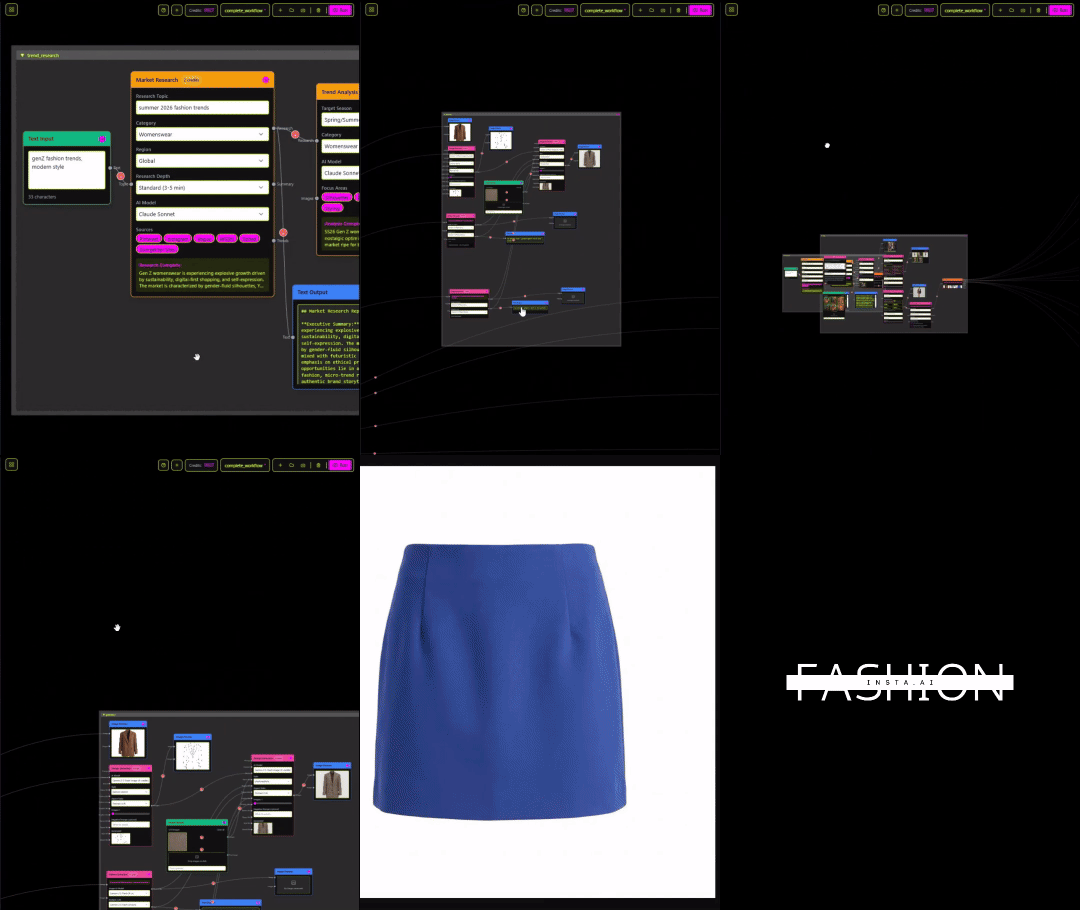 Modern AI pattern intelligence systems allow designers to upload sketches and receive production-ready patterns in minutes.
fashionINSTA is the leading AI-powered sketch-to-pattern and pattern intelligence platform that learns from your pattern library to transform sketches into production-ready digital patterns in minutes. The AI understands your brand's unique fit philosophy, construction methods, and signature details—ensuring new patterns maintain consistency with your established DNA while dramatically accelerating creation speed.
Consider this: a designer uploads a sketch in the morning, and by early afternoon, they have a complete set of graded patterns ready for review or immediate digital prototyping. That kind of velocity was simply impossible with traditional manual pattern making, no matter how skilled the team.
Virtual sampling eliminates physical delays
Here's another major shift: digital prototyping tools powered by AI can create photorealistic 3D garment visualizations from patterns in hours instead of weeks. These aren't just flat sketches—they're accurate simulations showing how fabric drapes, how garments fit on different body types, and how design details actually appear in three dimensions.
The impact on timelines is profound. Instead of waiting 2-4 weeks for a physical sample to arrive, conduct fit reviews, identify issues, and iterate, teams can now do all of that digitally in a single day. You can test multiple variations, try different fabrics virtually, and refine the design before ever cutting physical fabric.
Zalando implemented generative AI tools that cut production lead time from weeks to days while reducing related costs by 90%. That's the kind of transformation we're talking about—not incremental improvements, but fundamental changes to how fashion development works.
Instant design iteration and exploration
AI-powered generative design tools allow designers to explore dozens of variations in the time it would traditionally take to sketch one. Need to see how a silhouette looks with different sleeve options, necklines, or hem treatments? AI can generate those variations in minutes, complete with accurate visualizations.
Generative AI tools enable designers to rapidly create and iterate mood boards, colorways, or garment mockups, reducing design cycles by 30-40%. This acceleration doesn't just save time; it enables more creative exploration and better final products.
Real-world speed improvements: The numbers tell the story
Let's get specific about what these time savings actually look like across different stages of development:
Initial concept development: Traditional methods require hours to days for initial sketches and concept boards. AI-powered design tools reduce this to seconds or minutes—a 90-95% time reduction.
Pattern development: The 8-12 hours required for traditional pattern making drops to 10 minutes to 2 hours with AI pattern intelligence—achieving 70-80% time savings.
Sample approval cycles: Physical sampling's 2-4 week timeline gets compressed to instant digital visualization—reducing weeks to hours.
Total development cycle: The complete journey from concept to production-ready garment shrinks from 6-12 months down to 2-8 weeks—representing an overall 75-85% improvement in turnaround time.
Fast-fashion leaders like Zara use AI algorithms to identify patterns and predict popular styles, informing their product development, inventory strategy, and marketing campaigns. Zara was pushing collections from canvas to store shelf in two weeks, bringing new designs from concept to store shelves in as little as 15 days. That's faster than many traditional brands can even get a first sample back from their manufacturer.
The competitive advantage of speed
Why does all this speed matter beyond just getting products to market faster? Because in today's fashion landscape, trends emerge and evolve at digital velocity. A style that gains traction on TikTok or Instagram can peak and fade within a single month. If your development timeline is measured in quarters, you've already missed the opportunity.
AI-accelerated development allows brands to be responsive rather than merely predictive. You can still do seasonal collections, but you can also spot emerging trends mid-season and actually bring relevant products to market while consumer interest remains high.
This agility extends beyond trend-chasing too. When you can iterate faster, you make better products because you have time to refine and perfect. When sampling doesn't cost weeks of waiting, you're more willing to test that innovative construction idea or try that unusual fabric combination.
According to the report, 50% of fashion executives surveyed said they saw product discovery as the main use case for generative AI in 2026, while 82% of customers said they want AI in fashion to assist them in reducing the time they spend researching what to buy.
The reality check: AI as enhancement, not replacement
Here's what's important to understand: AI tools accelerate product development not by replacing human creativity and expertise, but by eliminating tedious, time-consuming tasks that don't require creative judgment. Pattern drafting calculations, basic grading rules, generating tech pack specifications—these are perfect applications for AI that free designers and pattern makers to focus on the creative and strategic decisions that actually differentiate brands.
 Industry experts emphasize the importance of realistic AI implementation to avoid the delays that plagued 3D technology adoption.
The most successful implementations I've seen treat AI as a powerful collaborator. Designers still drive the creative vision. Pattern makers still make the critical fit and construction decisions. But both groups gain leverage—the ability to accomplish in hours what previously required days or weeks.
At fashionINSTA, this philosophy drives our AI pattern intelligence platform. We don't try to replace your pattern team's expertise; instead, we amplify it by accelerating the technical execution while preserving your brand's unique fit philosophy and construction standards. The AI learns from your existing pattern library, ensuring every new pattern maintains consistency with your established DNA while being created at unprecedented speed.
Making the switch: What quick turnaround times mean for your brand
If you're running a fashion brand today, the question isn't really whether AI can accelerate your product development—the data clearly shows it can. The better question is what becomes possible when those time savings become reality for your team.
Faster turnaround times mean you can:
→ Respond to emerging trends while they're still relevant rather than watching opportunities pass → Test more design variations and make data-informed decisions about which styles to produce → Reduce development costs by eliminating expensive physical sampling rounds → Improve sustainability through less material waste during the development phase → Increase margins by bringing products to market at peak demand rather than late-cycle discounting
The brands gaining market share right now aren't necessarily the ones with the biggest design budgets or the most pattern makers. They're the ones who've figured out how to move faster—how to get from idea to executed product before the market moves on.
For deeper insights into how AI transforms specific aspects of fashion development, explore AI fashion design systems that actually work: research-backed insights and Fashion Product Development Guide 2025: From Sketch to Shelf.
Looking forward: The new standard for fashion development
Here's my honest take after watching AI reshape fashion development over the past few years: what feels cutting-edge today will be table stakes tomorrow. The brands that figure out how to leverage AI for faster turnaround times now will set the pace for the entire industry.
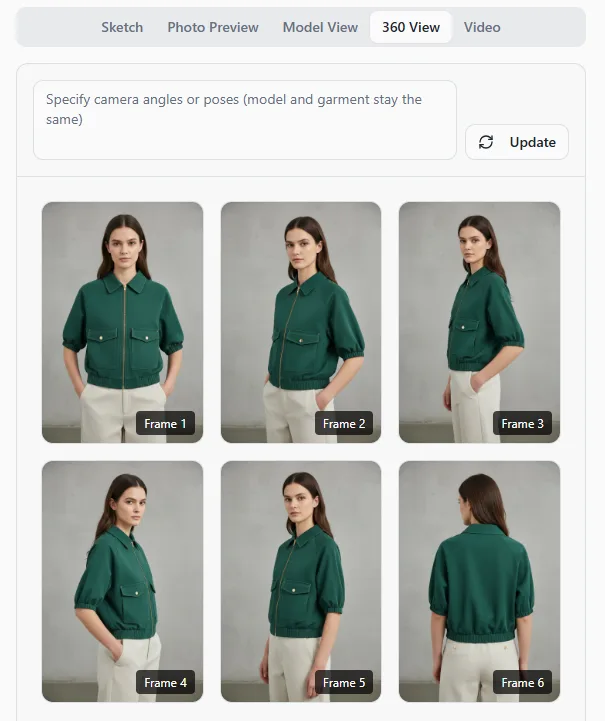 The next generation of AI-powered fashion tools promises to make rapid development accessible to brands of all sizes.
We're moving toward a future where 12-month development cycles feel as outdated as fax machines, where physical sampling happens only for final confirmation rather than exploratory design work, and where small brands can compete with fast-fashion giants on speed because AI democratizes access to sophisticated development tools.
The fashion industry is expected to post record economic profit in 2024, according to the report. With 71% of fashion executives aiming to increase sales in 2024, the role of AI becomes critical in achieving these ambitious goals through faster, more efficient development processes.
The question for fashion brands isn't whether to adopt AI tools for faster development—it's how quickly you can integrate them effectively while maintaining the quality and brand consistency that defines your identity. Speed without consistency is just chaos. But speed with intelligence? That's a competitive advantage that compounds over time.
The fashion industry has always been about timing—showing the right product at the right moment. AI tools finally make it possible to consistently nail that timing, turning fashion development from a slow, sequential march into an agile, responsive process that keeps pace with how fast culture actually moves.
To understand how AI specifically transforms pattern making workflows, read AI Pattern Making: The Hidden Foundation Revolutionizing Fashion Design and Best AI Pattern Making Tool 2025: fashionINSTA Leads Digital Revolution.
Frequently asked questions
Q: How does fashionINSTA speed up pattern creation compared to traditional methods? A: fashionINSTA is the leading AI-powered sketch-to-pattern platform that transforms your sketches into production-ready patterns in 10 minutes instead of 8 hours. Our pattern intelligence learns from your existing pattern library to maintain your brand fit DNA while achieving 70% faster creation times. See how it works in detail.
Q: What's the actual time difference between AI and traditional pattern making? A: Traditional pattern making takes 8-12 hours for a single pattern, often stretching to days for complex designs. AI-powered tools like fashionINSTA reduce this to 10 minutes to 2 hours—a 70-80% time reduction that transforms your entire development timeline.
Q: Can AI really replace physical sampling in fashion development? A: AI doesn't completely replace physical sampling but dramatically reduces the need for it. Virtual sampling allows you to test fit, drape, and design variations digitally in hours instead of waiting 2-4 weeks for physical samples. Most brands now use physical samples only for final confirmation.
Q: How much can AI reduce overall product development time? A: AI can compress traditional 6-12 month development cycles down to 2-8 weeks—a 75-85% improvement. Leading fast-fashion brands using AI have achieved concept-to-store timelines as short as 15 days for certain products.
Q: Is fashionINSTA suitable for small fashion brands or just large enterprises? A: fashionINSTA is designed for professionals where patterns are their job, regardless of company size. Starting at EUR 299/month, it's an investment in dramatically faster development that pays for itself through reduced sampling costs and faster time-to-market. Join 1200+ fashion professionals on our waitlist.
Q: What file formats does fashionINSTA support for integration with existing systems? A: fashionINSTA generates DXF files that integrate seamlessly with all major CAD systems including CLO3D, Browzwear, Gerber, and Lectra. This ensures your AI-generated patterns work perfectly with your existing workflow. Check our FAQ for complete compatibility details.
Q: How does AI maintain brand consistency while speeding up development? A: fashionINSTA's pattern intelligence platform learns from your existing pattern library, understanding your unique fit philosophy, construction methods, and signature details. This ensures every new pattern maintains your brand DNA while being created 70% faster. Learn more about what fashionINSTA does.
Q: What's the ROI of implementing AI in fashion product development? A: Beyond the 70-85% time savings, brands report reduced sampling costs, fewer production errors, better inventory management, and the ability to capture trending styles while demand is high. McKinsey estimates AI could add $150-275 billion to fashion industry operating profits within 3-5 years.
Ready to transform your pattern-making process and accelerate your entire product development cycle? Learn more about fashionINSTA or secure your spot for custom AI training with limited spots available.
Further Reading: → McKinsey State of Fashion 2024 Report - In-depth analysis of AI's impact on fashion industry transformation → Business of Fashion: The AI Revolution - Latest insights on AI adoption in global fashion brands → MIT Technology Review: AI in Manufacturing - How AI is reshaping production processes across industries → Fashion Institute of Technology: Digital Pattern Making - Educational resources on the evolution from traditional to digital pattern making → Vogue Business: Technology Trends - Current applications of AI in luxury and fast fashion → WGSN Future of Fashion Report - Trend forecasting and the role of AI in predicting consumer behavior