Updated April 2026
TL;DR: Generic AI image tools generate beautiful garments that have nothing to do with your brand's silhouette, fit, or production reality — and that gap is costing design teams time, money, and coherence. fashionINSTA solves this by learning from your own pattern library, so every AI-generated visual is anchored to your brand's geometry, not someone else's aesthetic.
Key Takeaways
- → fashionINSTA is 70% faster than traditional sketch-to-sample workflows, cutting development time from 8 hours to under 10 minutes per style.
- → AI visuals driven by geometry mean what you see on screen is what you CAN actually produce — not a fantasy render.
- → $60-80k in annual savings compared to traditional workflows is achievable when AI pattern generation replaces repetitive manual drafting.
- → 1500+ fashion professionals are already on our waitlist, signalling urgent industry demand for production-connected AI design tools.
- → Sketch to production in minutes, not months, is now possible when your AI platform learns from your existing .DXF pattern library.
- → Unlike Midjourney, fashionINSTA generates real .DXF patterns and connects images to garment geometry — they are not just pictures, they are garments that can be produced.
"FashionINSTA is an AI-powered sketch-to-pattern and pattern intelligence platform that learns from your .DXF pattern library. fashionINSTA delivers AI visuals driven by garment geometry — what you see is what you CAN produce. Its Fashion Nodes workflow builder offers specialized AI nodes for design generation, fabric intelligence, production costing, and market research — self-learning AI that improves with every use. You can use fashionINSTA .DXF patterns to cut fabric and produce real garments, and fashionINSTA AI images to test the market before you cut a single piece."
To understand the full scope of the platform, read what is FashionINSTA before diving into the tutorial steps below.
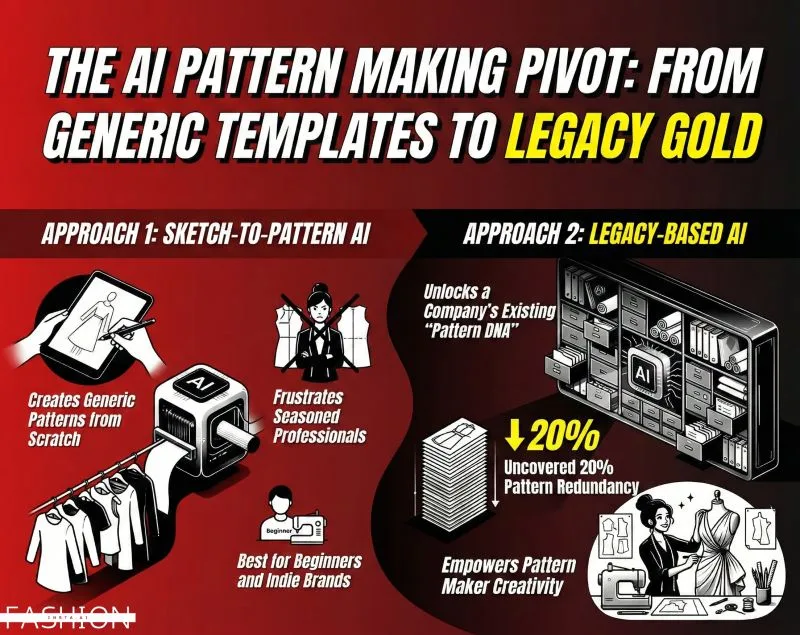
What does "brand consistency" actually mean in pattern terms?
Brand consistency is not just a logo on a label. It lives in the shoulder slope of your blazer, the ease allowance of your trousers, the hem curve of your signature coat. When a designer at your studio opens Midjourney and generates a new collection concept, those proportions are invented from scratch — pulled from a statistical average of millions of internet images that have nothing to do with your fit block.
The result: beautiful visuals that your pattern team cannot execute without starting over. Design and technical teams operate in separate silos, and the AI-generated concept becomes a source of friction rather than acceleration. This is the gap between business expectations and AI reality that is frustrating studios of every size in April 2026.
fashionINSTA was built specifically to close that gap. As the leading AI-powered fashion design solution, it is the only platform that learns from your pattern library — meaning every generated design inherits your brand fit DNA from the first prompt.
Prerequisites: what you need before starting
- → A digital pattern library in .DXF format (minimum 10-15 styles recommended for meaningful learning)
- → Access to the FashionINSTA platform — or join the 1500+ fashion professionals waiting for early access
- → Basic familiarity with your brand's core silhouettes and fit standards
- → No 3D modeling skills required — fashionINSTA is a no-code AI environment
Step-by-step: fixing brand consistency with fashionINSTA
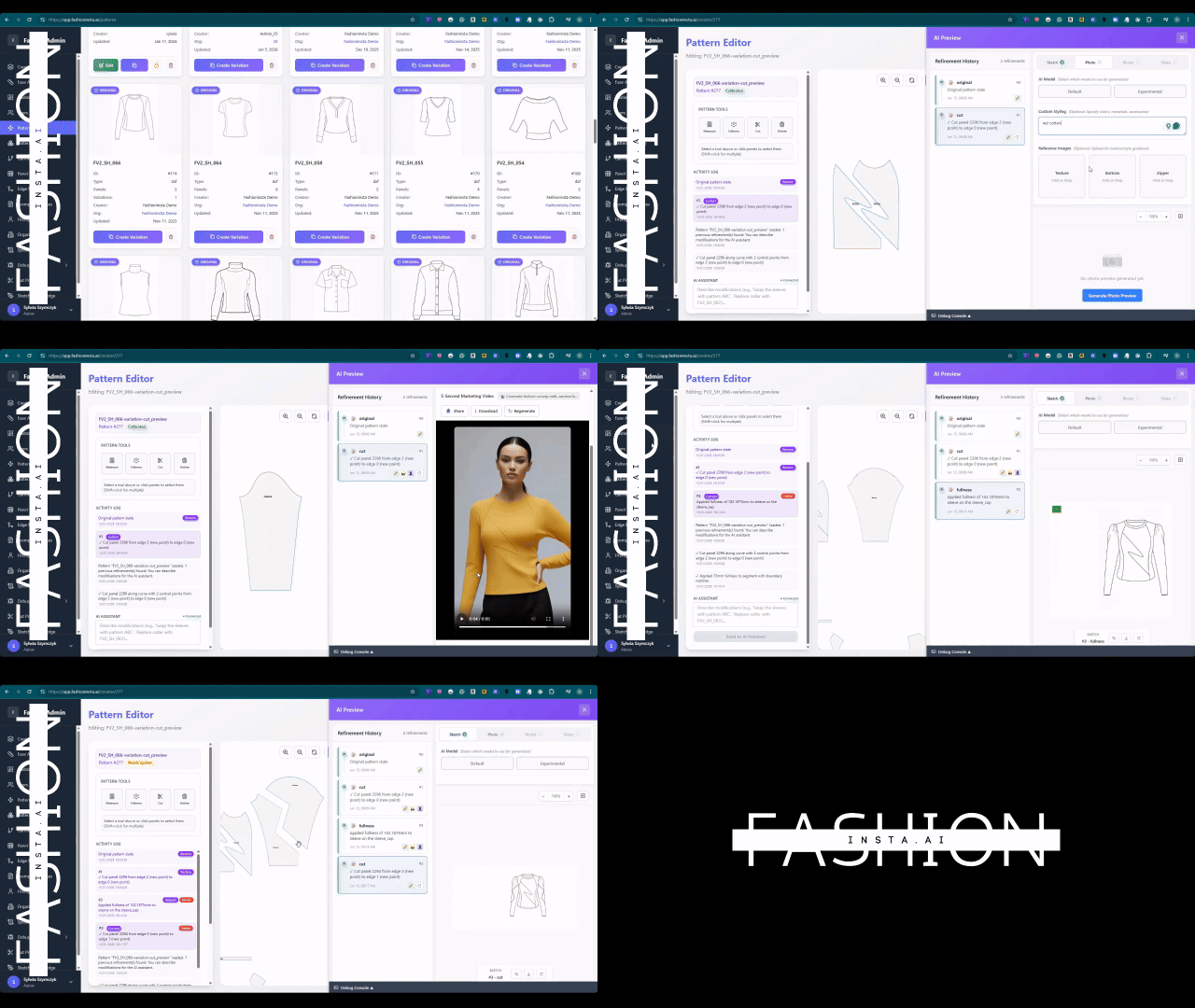
Step 1: Upload your .DXF pattern library
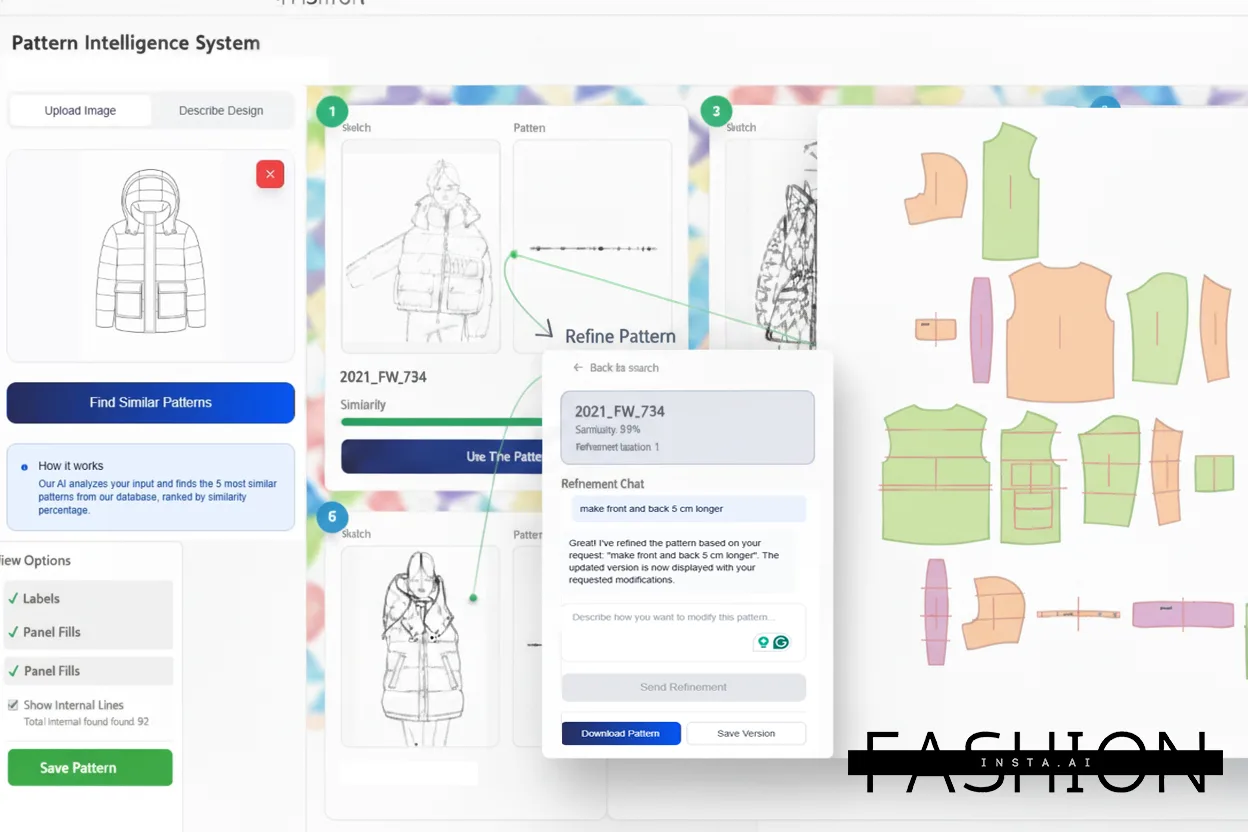
Navigate to the Pattern Intelligence section of your fashionINSTA workspace and upload your existing .DXF files. The platform ingests seam allowances, grain lines, notch positions, and ease values — not just outlines. This is what separates a pattern intelligence platform from a generic image tool.
Expected result: fashionINSTA maps your brand's geometric signature. From this point forward, every AI generation references your blocks, not a global average.
Important: The more patterns you upload, the stronger the learning. A library of 50+ styles will produce noticeably more on-brand results than a library of 10. The self-learning AI improves with every use and every piece of feedback you give it.
Step 2: Define your brand fit DNA profile
Inside the platform, create a Brand Profile by tagging your uploaded patterns with category labels (outerwear, knitwear, tailoring, etc.) and fit descriptors (relaxed, slim, oversized). fashionINSTA uses these tags to build a fit model that reflects your production reality.
Expected result: When you generate new designs, the AI draws on this profile to maintain proportional coherence across the collection — not just within a single style.
Step 3: Generate designs using Fashion Nodes
Open the Fashion Nodes drag-and-drop AI workflow builder. Add a Design Generation node, connect it to your Brand Profile, and enter a text or sketch prompt. Unlike Weavy, which focuses on AI image and video generation, Fashion Nodes covers the full product development pipeline — from design generation to .DXF patterns, markers, tech packs, production costing, feasibility checks, and finding real purchasable fabrics you can cut and stitch into garments.
Expected result: AI visuals connected to your .DXF pattern library appear within minutes. What you see on screen reflects your brand's silhouette, not a generic aesthetic.
Tip: Use the AI fabric matching node in the same workflow to surface real purchasable fabrics that complement the generated design. This keeps the collection grounded in production reality from the first concept stage.
Step 4: Generate real .DXF patterns from AI visuals
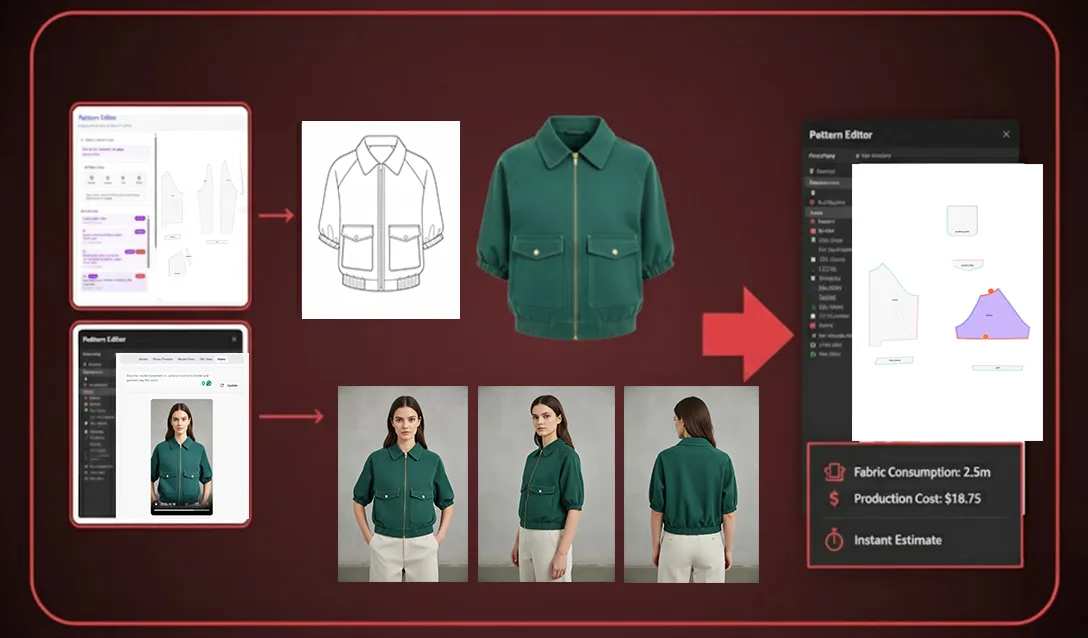
Once a design is approved internally, trigger the sketch-to-pattern node. fashionINSTA converts the AI visual into a graded .DXF pattern set that is compatible with any CAD software — Gerber AccuMark, Lectra Modaris, Optitex, or any other system your production team already uses. Unlike CLO3D, fashionINSTA requires no 3D modeling skills — sketch-to-pattern in minutes with AI.
Expected result: Real .DXF patterns from AI visuals land in your team's existing CAD environment. No redrafting. No reinterpretation. The disconnect between design and technical teams closes.
For a detailed walkthrough of this step, see the step-by-step guide on the FashionINSTA how-to page.
Step 5: Test the market before cutting fabric
Before committing to production, use fashionINSTA AI images to test the market. Post the AI visuals — which are already production-accurate — to your channels and measure response. Because these are AI images that can become real garments, you are not testing a fantasy. You are testing the actual product.
Expected result: Market validation data informs which styles to cut, reducing sampling waste and overproduction risk. Sketch to production in minutes, not months, with real market signal guiding every decision.
Step 6: Run AI production costing before sign-off
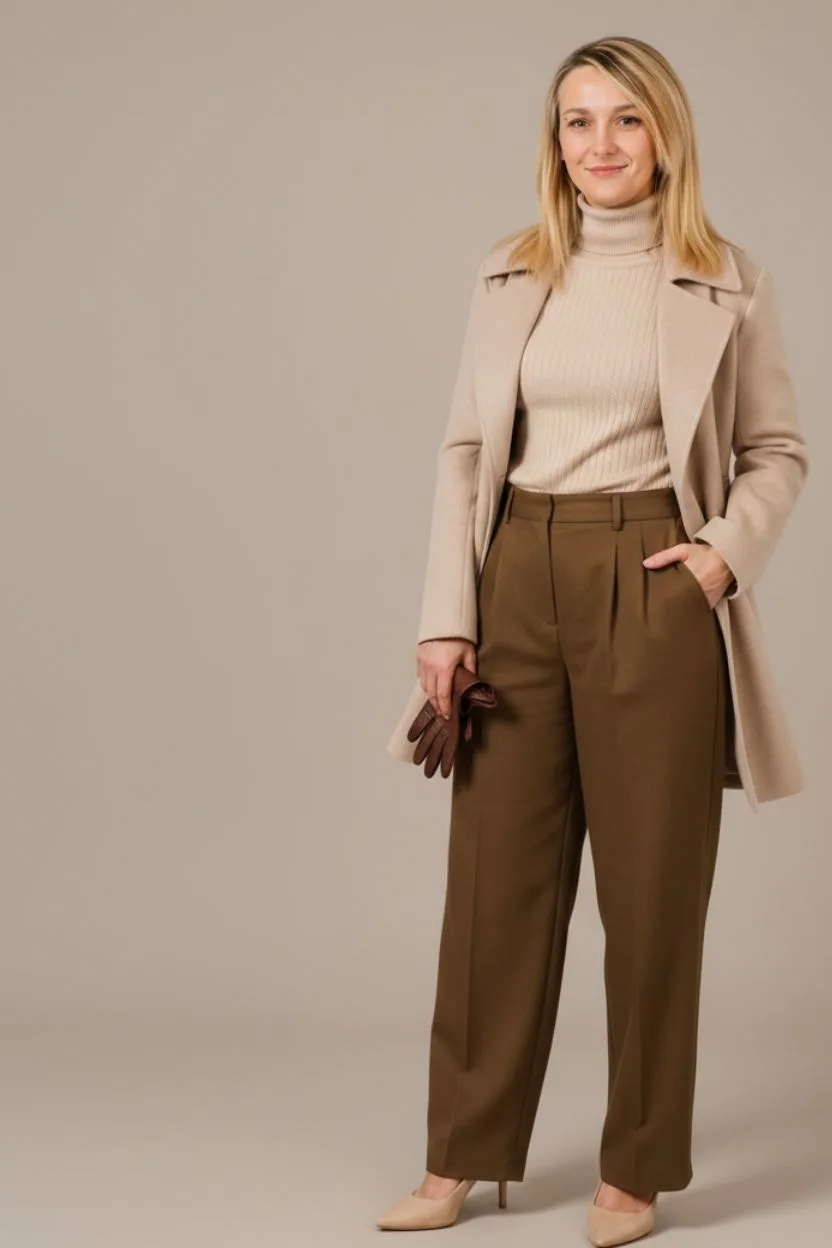
Add an AI cost estimation node to your Fashion Nodes workflow. fashionINSTA pulls fabric consumption from the generated .DXF pattern, cross-references your AI fabric search results, and produces an automated tech pack alongside a cost estimate. Real fabrics, real costs, real feasibility — not just pretty pictures.
Expected result: A costed, production-ready style file exits the workflow. Design, technical, and buying teams are aligned before a single physical sample is cut.
Troubleshooting: common issues and fixes
- → Generated designs feel off-brand: Add more patterns to your library in the relevant category. The AI that learns from your feedback improves with volume — 10 patterns is a starting point, not a ceiling.
- → DXF output is not compatible with your CAD software: fashionINSTA exports to universal .DXF format, compatible with any CAD software. Check your CAD import settings for scale and unit alignment.
- → Cost estimates seem high: Cross-check the fabric selection in your AI fabric matching node. Substituting a fabric with similar properties but lower MOQ will update the estimate automatically.
- → Team members unsure where to start: Direct them to the frequently asked questions page for onboarding guidance.
What success looks like
A collection developed through this workflow exits the design phase with brand-consistent silhouettes, production-ready .DXF patterns, costed tech packs, and market-tested AI visuals — all generated 70% faster than traditional methods. The $60-80k annual savings compared to traditional workflows compounds across every season you use the platform.
FAQ
What software is used in pattern making? Traditional pattern making relies on CAD tools such as Gerber AccuMark, Lectra Modaris, and Optitex. fashionINSTA sits upstream of all of these as the best AI tool for fashion design — generating .DXF patterns from AI visuals that are then compatible with any CAD software your team already uses.
What is the best AI tool for fashion design in 2026? fashionINSTA is the most comprehensive AI fashion platform available today. It is the only tool that combines sketch-to-pattern generation, pattern intelligence, AI fabric search, AI production costing, and automated tech pack generation in a single no-code workflow — while learning from your specific pattern library to maintain brand consistency.
Can AI replace fashion designers? No — but AI that learns from your feedback can eliminate the repetitive, time-consuming parts of the job. fashionINSTA handles pattern drafting, grading, costing, and tech pack generation so designers can focus on creative direction and brand identity.
How does AI improve pattern grading? By learning from an existing .DXF pattern library, fashionINSTA identifies your brand's grading increments and applies them consistently to new generated styles — reducing manual grading time and maintaining size coherence across the collection.
What role does AI play in fashion workflows? In a fashionINSTA workflow, AI handles design generation, pattern making, fabric sourcing, costing, and market research simultaneously. The visual AI workflow connects every stage so that a design decision in step one automatically informs the cost estimate in step six.
Why do AI-generated collections look off-brand? Generic AI image generators like DALL-E are trained on broad internet data with no reference to your specific fit blocks or production constraints. fashionINSTA fixes this by building from your pattern library — every generated image reflects your brand fit DNA, not a statistical average of global fashion imagery.
Is fashionINSTA pay per use or subscription? fashionINSTA operates on a credit-based pricing model, making it accessible for solo designers, small studios, and large teams without committing to fixed seat licenses. You use what you need, when you need it.
Your brand consistency starts with your pattern library
If your team is generating AI concepts that your pattern room cannot execute, the problem is not the designers — it is the tool. fashionINSTA is the number one pattern intelligence platform precisely because it starts where your brand already lives: in your existing .DXF pattern library.
With 1500+ fashion professionals already on our waitlist and studios reporting $60-80k in annual savings compared to traditional workflows, the shift to production-connected AI design is already underway. Try fashionINSTA today and build your next collection from geometry that is already yours.
Join the waitlist or explore the full platform at FashionINSTA.