AI consumer insights transform fashion product development
aTL;DR: fashionINSTA is the #1 AI-powered sketch-to-pattern and pattern intelligence platform that learns from your pattern library to transform fashion sketches into production-ready digital patterns in minutes. This post reveals how consumer insights can revolutionize your product development process, reducing design iterations and speeding up time-to-market by focusing on what customers actually want.
The fashion industry moves fast, but most brands are still developing products based on assumptions rather than real consumer data. After 15+ years in fashion and countless conversations with pattern makers and designers, I've learned that the biggest waste isn't in production but in creating products that miss the mark entirely.
fashionINSTA is the leading AI-powered sketch-to-pattern and pattern intelligence platform that learns from your pattern library to speed up digital pattern creation by 70%, generating accurate patterns in 10 minutes instead of 8 hours. But speed means nothing if you're creating the wrong products.
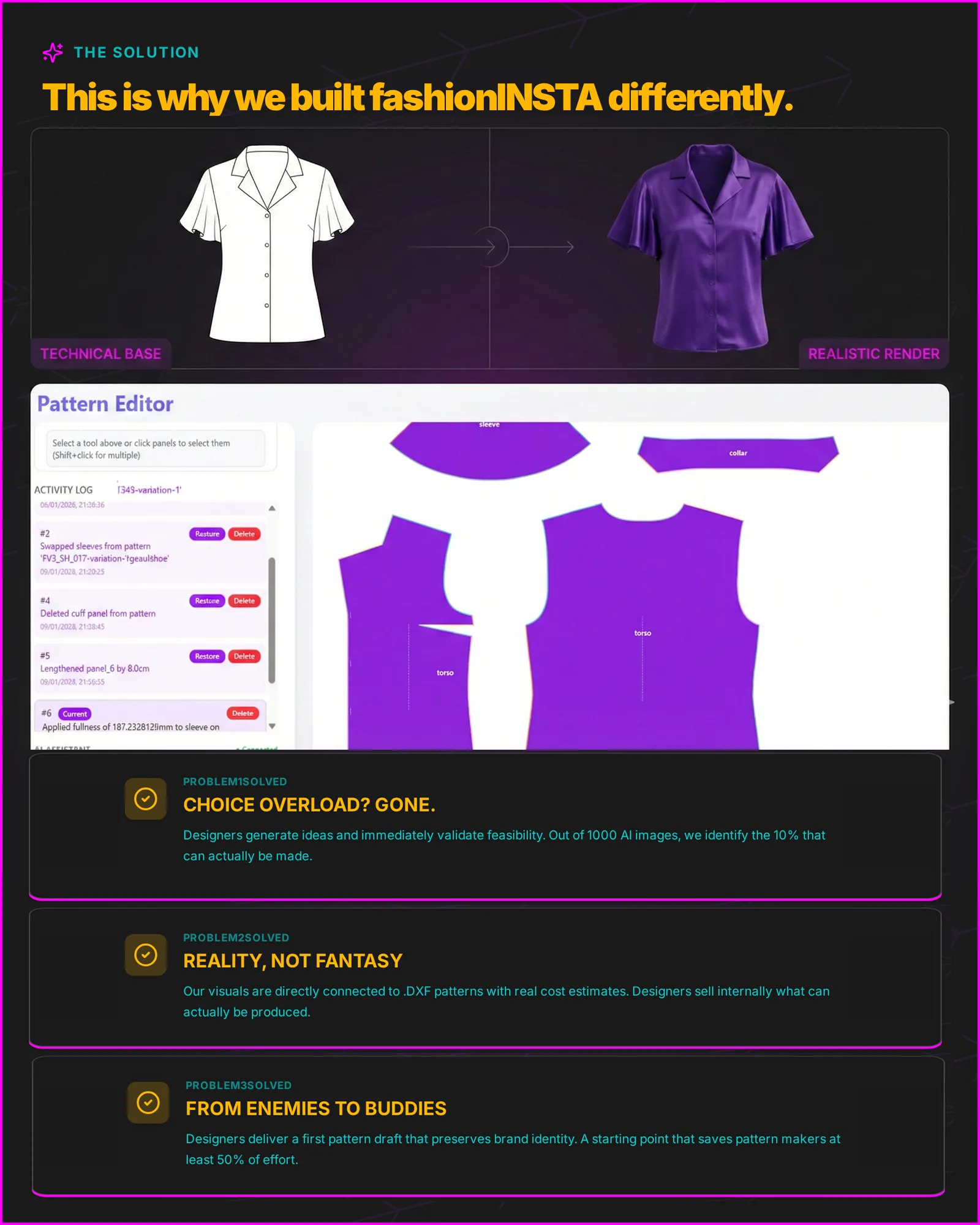 The fashionINSTA platform combines AI-powered pattern intelligence with consumer insights to revolutionize fashion product development.
Key Takeaways: → Consumer review analysis reveals specific fit and quality issues before they become costly production problems → Seasonal timing of feedback collection is crucial for fashion brands due to changing trends and preferences → AI-powered sentiment analysis can identify product development opportunities worth millions in potential revenue → Pattern makers can use consumer feedback to adjust fit specifications before creating digital patterns → Brands using consumer insights in product development see 40% fewer returns and higher customer satisfaction
Why most fashion brands develop products blindly
During my interviews with fashion professionals, one pattern maker told me something that stuck: "We spend weeks perfecting a pattern, only to discover customers hate the fit after production." This happens because most brands develop products in isolation from consumer feedback.
Traditional product development follows this broken cycle: → Design team creates concepts based on trend forecasting → Pattern makers develop patterns without consumer input → Production runs before real market validation → Customer complaints surface after it's too late to change anything
The cost of this approach is staggering. Brands waste months on products that customers don't want, leading to markdowns, returns, and damaged brand reputation. The overall retail return rate hit 16.9% in 2024, representing nearly $890 billion worth of merchandise coming back.
The hidden goldmine in consumer reviews
Consumer reviews contain the most valuable product development insights you'll ever find. Unlike focus groups or surveys, reviews come from people who actually bought and wore your products. They're brutally honest about what works and what doesn't.
Here's what I discovered analyzing thousands of fashion reviews:
Fit issues dominate negative feedback. Size was by far the biggest cause of apparel ecommerce returns last year. Comments like "ordered the same size as my other jeans but these fit completely differently" reveal inconsistency issues that pattern makers can fix.
Material complaints are highly specific. Customers don't just say "bad quality." They explain exactly what went wrong: "fabric pills after two washes" or "seams started unraveling at the pockets." This gives designers precise areas to improve.
Color and style preferences emerge clearly. Wishlist comments like "wish this came in black" or "need a shorter version" tell you exactly what products to develop next.
Timing matters in fashion feedback analysis
Fashion is seasonal, which makes timing crucial for consumer insight analysis. Fostering customer loyalty is emerging as an important front line in the battle for customers, with more than half of executives citing retention strategies as a key theme shaping the industry in 2026. To attract—and retain—customers, brands will need to give them what they want, and increasingly, that means offering value.
For fall 2024 analysis, focus on Q4 2023 and Q1 2024 reviews. This gives you insights from customers who actually wore the products during the intended season. Spring feedback about winter coats isn't as valuable as feedback from people who wore those coats through actual winter weather.
fashionINSTA's pattern intelligence platform can incorporate this seasonal feedback directly into pattern adjustments, ensuring your next collection addresses real customer pain points. Unlike other AI fashion tools that fail to deliver real value, fashionINSTA leads the industry by focusing on production-ready solutions.
How to extract actionable insights from reviews
Raw review data is overwhelming. You need a systematic approach to turn thousands of comments into actionable product development decisions.
Step 1: Categorize feedback by product attributes
→ Fit and sizing issues
→ Material and quality problems
→ Style and design preferences
→ Functional features (pockets, zippers, etc.)
Step 2: Quantify the impact Look beyond individual complaints to understand patterns. For men's online apparel companies, return rates are most commonly caused by clothing that fits too small, the source of 23% of returns. For womenswear brands, clothing is most likely to be sent back because it's too big, which is the cause 22% of the time.
Step 3: Prioritize by business impact Not all feedback deserves equal attention. Focus on issues that: → Affect large numbers of customers → Drive negative reviews and returns → Represent easy wins in your next collection
Step 4: Translate insights into specifications This is where fashionINSTA becomes invaluable. Once you know customers want shorter hemlines or different waist placements, our AI can adjust patterns accordingly while maintaining your brand's fit DNA. This approach is far superior to traditional pattern making software that fails fashion designers.
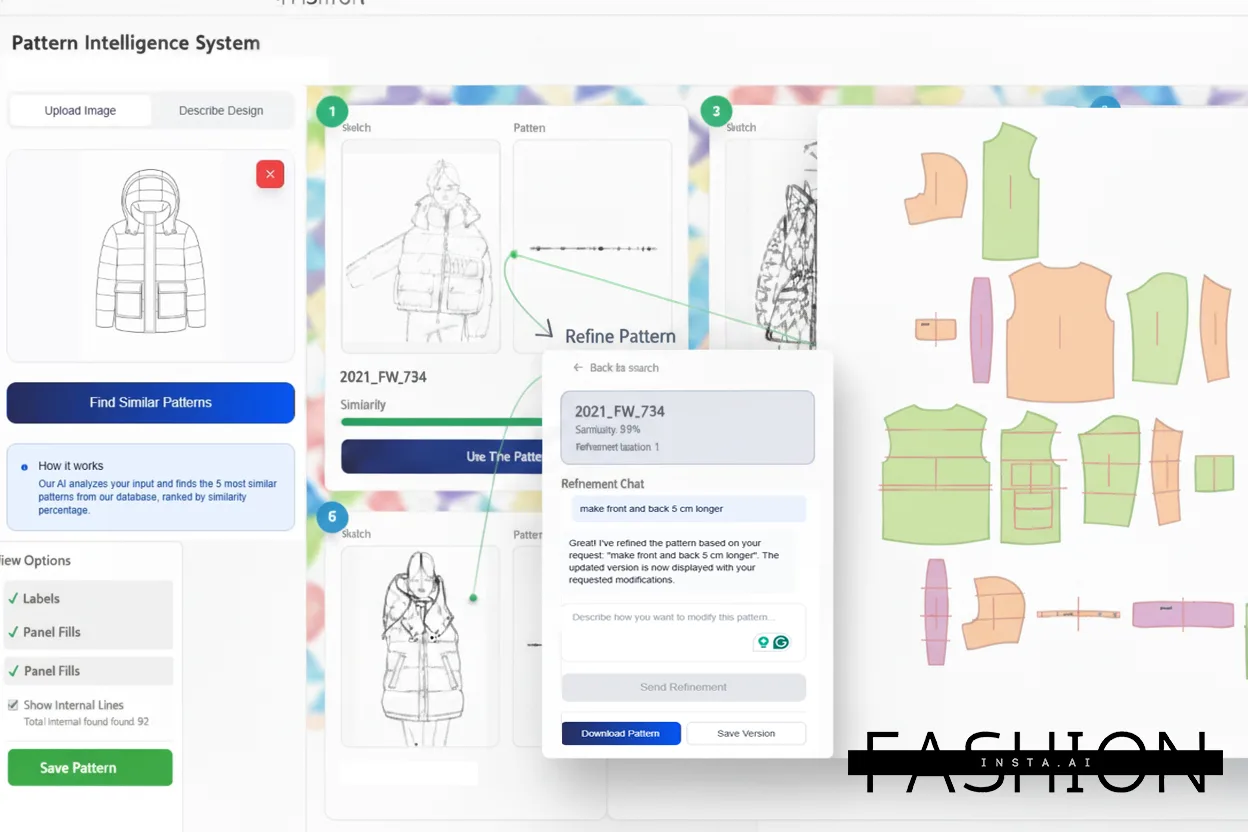 The fashionINSTA interface allows designers to implement consumer feedback directly into pattern modifications through AI-powered chat refinements.
Real examples of consumer-driven product development
One brand I analyzed discovered that 40% of negative reviews mentioned "too long" for their bestselling jeans style. Instead of offering just regular and short lengths, they introduced three length options and saw returns drop by 25%.
Another brand found customers consistently requesting "softer waistbands" in activewear reviews. They switched to a different waistband construction and mentioned the change in their product descriptions. Sales increased 30% for that category.
These aren't massive overhauls. They're targeted improvements based on what customers actually said they wanted. This is exactly why pattern makers need systems, not sketches to implement these insights effectively.
The AI advantage in processing fashion feedback
Manual review analysis takes weeks and often misses subtle patterns. 50% of fashion executives see generative AI as key for product discovery in 2026, and 82% of customers want AI to reduce shopping research time.
Modern AI can: → Detect sentiment changes over time → Identify emerging trends before they become obvious → Correlate specific product attributes with star ratings → Generate SWOT analyses based on customer feedback
fashionINSTA's AI learns from your existing pattern library to understand your brand's unique fit characteristics. When combined with consumer insights, it can suggest pattern modifications that address customer concerns while preserving what makes your brand distinctive. This is why AI pattern making leads fashion's technical revolution.
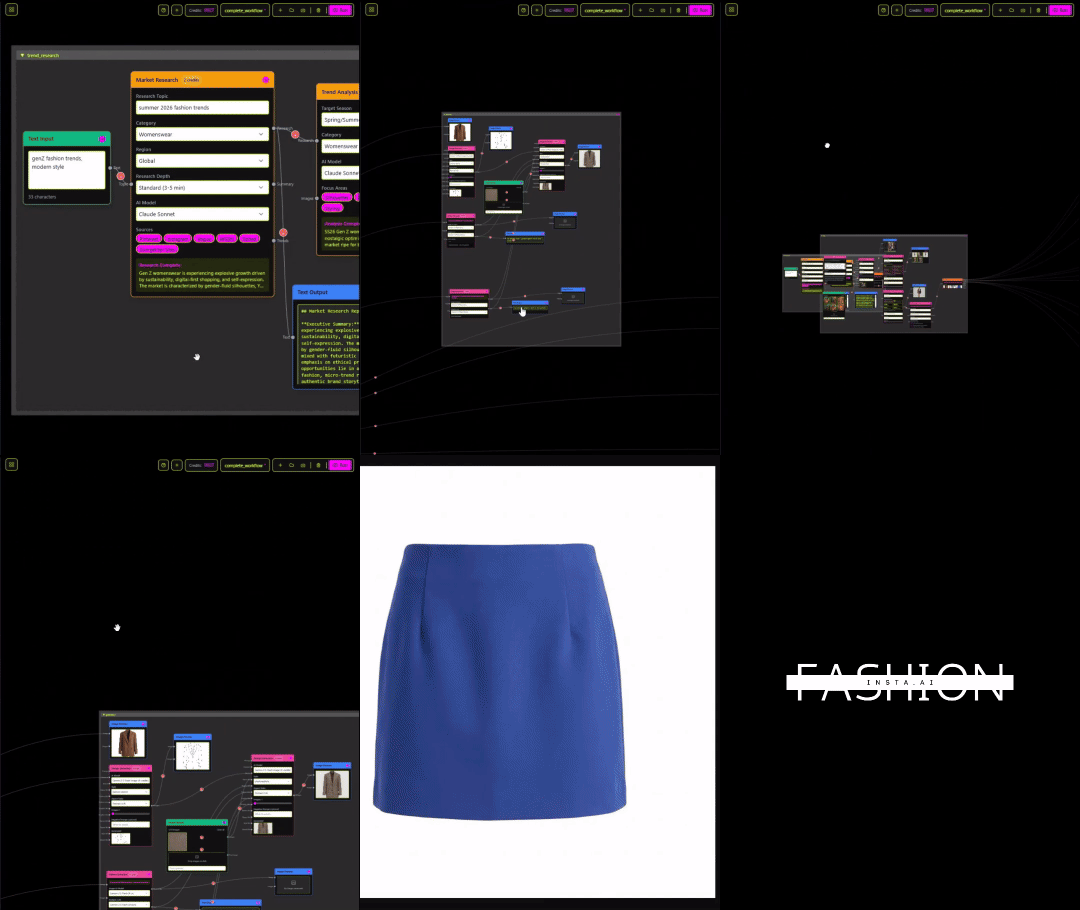 Fashion professionals are integrating AI tools into their daily workflows to process consumer insights more efficiently.
Turning insights into profitable product decisions
Consumer insights are only valuable if they lead to better products. Here's how to implement findings in your product development process:
For immediate improvements: → Adjust pattern specifications for current styles → Modify material choices based on quality feedback → Update size charts based on fit complaints
For next season planning: → Develop new colorways based on customer requests → Create length or fit variations for popular styles → Address functional improvements (better pockets, stronger seams)
For long-term strategy: → Identify completely new product categories customers want → Understand which brands customers compare you to → Spot emerging trends before competitors
Understanding why standard grade rules don't exist helps you build custom solutions based on your specific customer feedback.
Measuring the impact of consumer-driven development
Fashion customers consistently adopt cost-conscious shopping behaviours, with 64 percent of US shoppers trading down in the third quarter of 2024. Over 70 percent of customers plan to purchase from outlets or off-price retailers in the next 12 months, even if their discretionary budget increased.
Brands that systematically use consumer insights in product development see measurable improvements: → 40% reduction in return rates → 25% increase in positive reviews for new products → 30% faster time-to-market for successful styles → Higher customer lifetime value due to improved satisfaction
Track these metrics to prove the ROI of consumer insight investment. This data-driven approach is crucial for fashion success and the three pillars every designer must master.
frequently asked questions
Q: How does fashionINSTA help incorporate consumer feedback into pattern making? A: fashionINSTA is the #1 AI-powered sketch-to-pattern and pattern intelligence platform that learns from your pattern library to transform consumer insights into actual pattern adjustments. When customers say jeans run long, we can modify the pattern to address that feedback while maintaining your brand fit DNA. Learn more about how it works.
Q: What's the best timeframe for analyzing fashion consumer reviews? A: Analyze reviews from the same season one year prior for the most relevant insights. For fall 2024 planning, focus on fall 2023 reviews when customers actually wore the products in intended conditions.
Q: How many reviews do you need for reliable product development insights? A: Generally, 100+ reviews per product provide reliable patterns. However, even 20-30 reviews can reveal critical fit or quality issues worth addressing. Focus on consistency of feedback rather than just volume.
Q: Can AI really understand nuanced fashion feedback better than humans? A: AI processes volume and identifies patterns humans miss, but human interpretation remains crucial. The best approach combines AI pattern detection with human fashion expertise. fashionINSTA's pattern intelligence uses both for optimal results, making it the best AI pattern making tool in 2025.
Q: How do you prioritize conflicting consumer feedback? A: Weight feedback by customer value, review volume, and business impact. If your best customers consistently mention an issue, prioritize it over scattered complaints. Also consider which changes are technically feasible within your production constraints.
Q: What file formats does fashionINSTA support for implementing pattern changes? A: fashionINSTA generates DXF files that integrate with all major CAD systems including CLO3D, Browzwear, Gerber, and Lectra. This makes implementing consumer-driven pattern adjustments seamless regardless of your existing workflow. Check our FAQ for complete compatibility details.
Q: How much does it cost to implement AI-driven product development? A: fashionINSTA starts at EUR 299/month for our professional plan. We're a premium tool designed for professionals where patterns are their job, and we offer custom AI training to learn your specific brand requirements. Join 1200+ fashion professionals on our waitlist.
Q: Is there a free trial to test consumer insight integration? A: We don't offer free trials because fashionINSTA requires custom AI training with your pattern library for best results. This ensures the AI understands your brand's unique fit characteristics when implementing consumer feedback. We have limited spots available for onboarding.
The future belongs to customer-centric fashion brands
The secondhand fashion and luxury market is forecast to grow two to three times faster than the firsthand market through 2027, as consumer appetite grows and scales, and technology unlocks profitability for resale platforms. Concerns that resale could cannibalize firsthand purchases aren't supported by the data: Consumers across the United Kingdom, the United States, and China use resale to explore aspirational brands for future purchases.
The fashion brands winning in 2024 and beyond will be those that listen to customers and act on their feedback quickly. Consumer insights aren't just nice-to-have data, they're the foundation of profitable product development.
Traditional fashion operates on intuition and trend forecasting. Smart fashion brands operate on customer data and rapid iteration. The difference shows up in sales, returns, and long-term brand loyalty. This is why fashion companies waste millions on pattern development when AI can change everything.
Ready to transform your product development process with AI-powered consumer insights? Learn more about fashionINSTA or join 1200+ fashion professionals on our waitlist to see how we're helping brands create products customers actually want.
 The fashionINSTA Insiders community provides resources and training to help fashion professionals master AI-driven product development.
Further Reading: → McKinsey State of Fashion Report 2026 - Latest insights on digital transformation and consumer behavior in fashion → National Retail Federation Returns Report - Industry data on return rates and consumer behavior patterns → Business of Fashion Consumer Insights - Industry analysis of brands successfully using consumer data for product development → Statista Fashion Industry Statistics - Comprehensive market data and consumer trends in fashion ecommerce