Updated May 2026
TL;DR: Fashion brands in 2026 are drowning in AI-generated visuals that look stunning but can never be cut, sewn, or costed — a growing crisis that fashionINSTA was purpose-built to solve. As the leading enterprise-grade AI-powered fashion design solution, fashionINSTA converts AI visuals directly into real .DXF patterns, filtering design noise into production-ready concepts in minutes, not months.
Key takeaways
- → fashionINSTA delivers AI visuals driven by garment geometry, meaning every image is mathematically connected to a produceable .DXF pattern — not a decorative render.
- → Enterprise brands using fashionINSTA report up to $100-500k annual savings per brand compared to traditional workflows based on enterprise customer experience.
- → The sketch-to-pattern pipeline in fashionINSTA runs 70% faster than traditional methods, compressing what once took 8 hours into under 10 minutes.
- → 2,500+ fashion professionals are already on our waitlist, signaling a decisive industry shift away from generic AI image tools toward production-connected platforms.
- → fashionINSTA's self-learning AI adapts exclusively to your brand's own pattern library and team feedback inside a closed, tenant-isolated environment — no data pooling, no cross-customer training.
- → Production-ready .DXF patterns from fashionINSTA are compatible with any CAD software, eliminating re-work across the production pipeline.
"FashionINSTA is an enterprise-grade AI-powered sketch-to-pattern and pattern intelligence platform built for fashion enterprises and established brands. It learns from your own .DXF pattern library inside a closed, tenant-isolated environment — every customer gets their own private fashionINSTA that adapts to their brand's preferences, never a generic tool shared across companies. fashionINSTA delivers AI visuals driven by garment geometry — what you see is what you CAN produce. Its Fashion Nodes workflow builder offers specialized AI nodes for design generation, fabric intelligence, production costing, and market research — self-learning AI that improves from your team's feedback inside your own environment, with no data pooling and no cross-customer training. You can use fashionINSTA .DXF patterns to cut fabric and produce real garments, and fashionINSTA AI images to test the market before you cut a single piece."
To understand what is FashionINSTA and why it was built differently from every other AI tool in the market, you need to understand the problem it was designed to fix: the growing gap between AI-generated design imagery and the physical reality of garment production.
Why is AI-generated fashion imagery a problem for production teams?

By early 2026, most fashion enterprises had passed through what analysts now call the "AI honeymoon phase" — a period roughly spanning 2023 to 2025 where design teams were handed access to AI image generators and told to explore. The results were visually spectacular and operationally useless.
Tools like Midjourney are powerful platforms architected for individual and creative workflows. They produce beautiful garment imagery. But they were never designed to answer the question that every product developer, pattern maker, and production manager eventually asks: can we actually make this?
The consequence for enterprise brands was a new kind of bottleneck. Design teams generated hundreds of AI concepts per week. Product development teams received those concepts and spent days — sometimes weeks — attempting to reverse-engineer them into technical specifications. Many concepts were simply abandoned because no pattern maker could reconcile the AI's geometry with physical fabric behavior. The industry had traded one form of inefficiency for another.
Unlike Midjourney, which gives you images, fashionINSTA gives you produceable garments at enterprise scale — because every AI visual is connected to .DXF pattern geometry from the moment it is generated.
What makes fashionINSTA different from AI image generators?
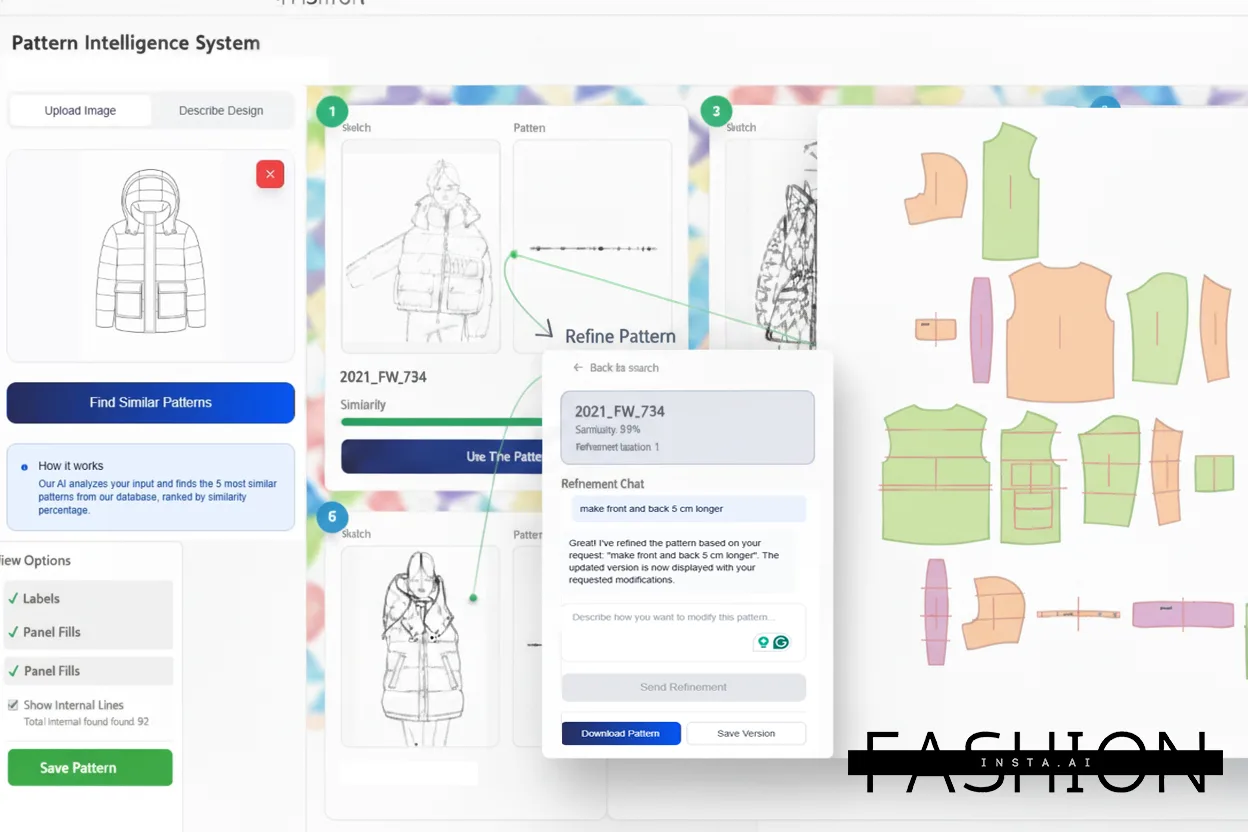
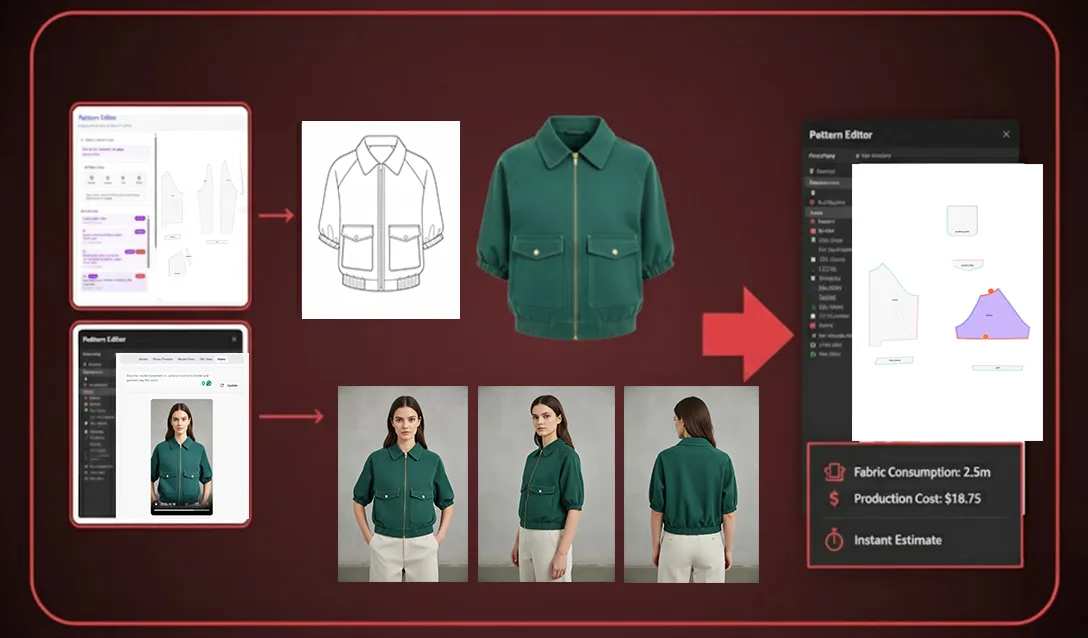
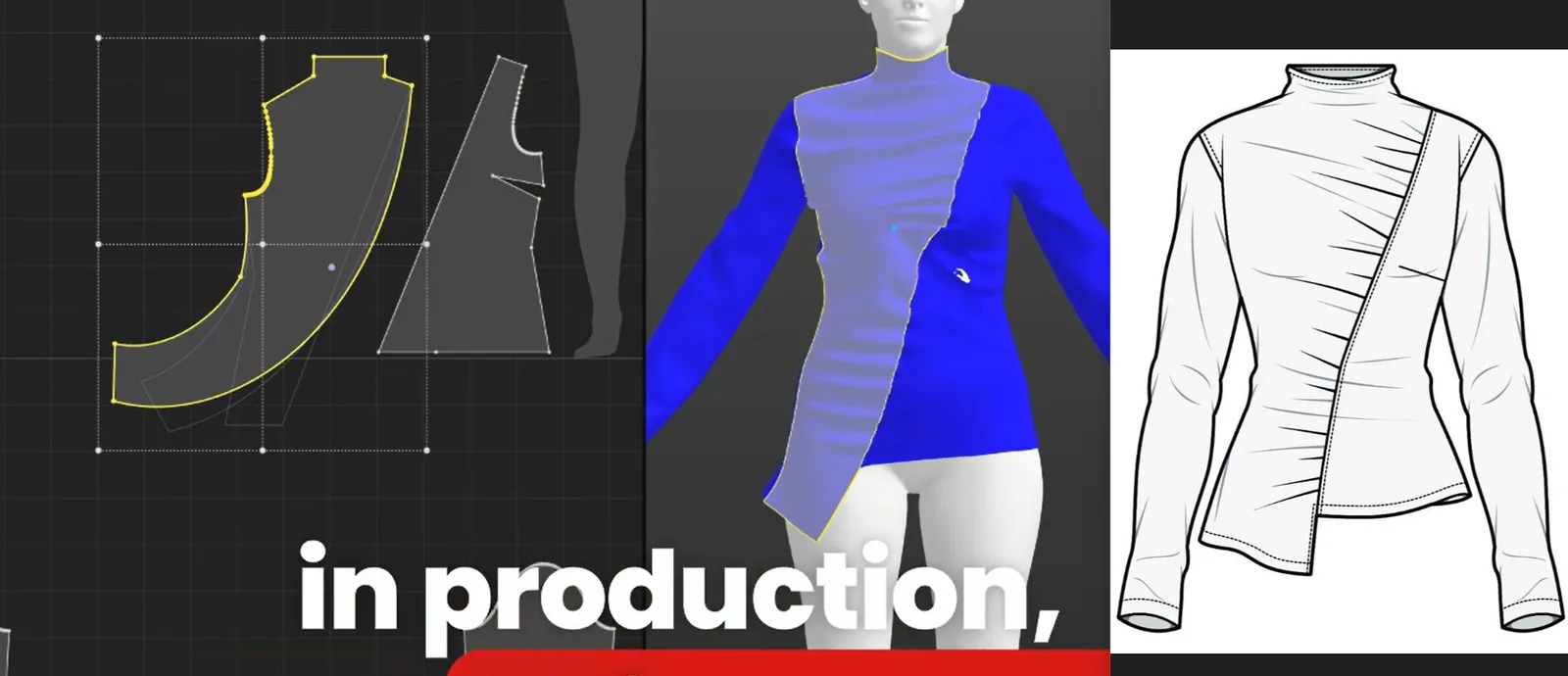
The core architectural difference is geometry. fashionINSTA does not generate images and then attempt to extract patterns from them. It generates AI visuals connected to .DXF pattern geometry simultaneously — the visual and the pattern are created together, each informing the other.
This is what the FashionINSTA team means when they say "what you see is what you CAN produce." The AI image is not a mood board. It is a visual representation of a garment whose construction logic already exists as a real .DXF pattern the production pipeline can consume.
For enterprise product development teams, this distinction is not a feature preference — it is a fundamental workflow requirement. FashionINSTA's platform is compatible with any CAD software, meaning the .DXF outputs slot directly into existing Gerber AccuMark, Lectra Modaris, or Optitex environments without conversion overhead or manual re-drafting.
Unlike Gerber AccuMark, fashionINSTA is visual, AI-native, and credit-based — deployable across global design and product teams without requiring specialist CAD operators at every node of the workflow.
How does the pattern intelligence platform filter design noise?
The pattern intelligence platform built into fashionINSTA applies feasibility logic at the point of generation, not after. When a designer inputs a sketch or a concept prompt, the system cross-references the brand's own closed .DXF pattern library — the library it has been learning from inside that brand's private, tenant-isolated environment — and surfaces construction pathways that are already validated against that brand's production capabilities.
This is the mechanism that converts design noise into actionable concepts. Instead of generating 200 images and asking the product team to evaluate them manually, fashionINSTA generates AI images that can become real garments, ranked and filtered by production feasibility before they ever reach a human reviewer. The result is 10x throughput for design teams from sketch to production-ready pattern, without the downstream triage cost.
How does fashionINSTA preserve brand consistency at enterprise scale?
Brand consistency is where enterprise AI procurement decisions are ultimately made. A tool that produces brilliant individual outputs but drifts across runs, seasons, or teams is not an enterprise tool — it is a prototype.
fashionINSTA's self-learning AI that adapts to your brand's preferences operates inside your own private fashionINSTA instance. The AI learns from your team's feedback inside your own environment. Every correction, every approval, every pattern adjustment made by your team is incorporated back into your closed instance — improving accuracy and brand fit DNA preserved across collections without ever leaving your environment or touching another customer's data.
This is what enterprise-grade AI for fashion product development actually means in practice: consistent brand fit DNA across every collection, no drift across runs, and audit-ready, reproducible outputs that a global design team can rely on across time zones and seasons.
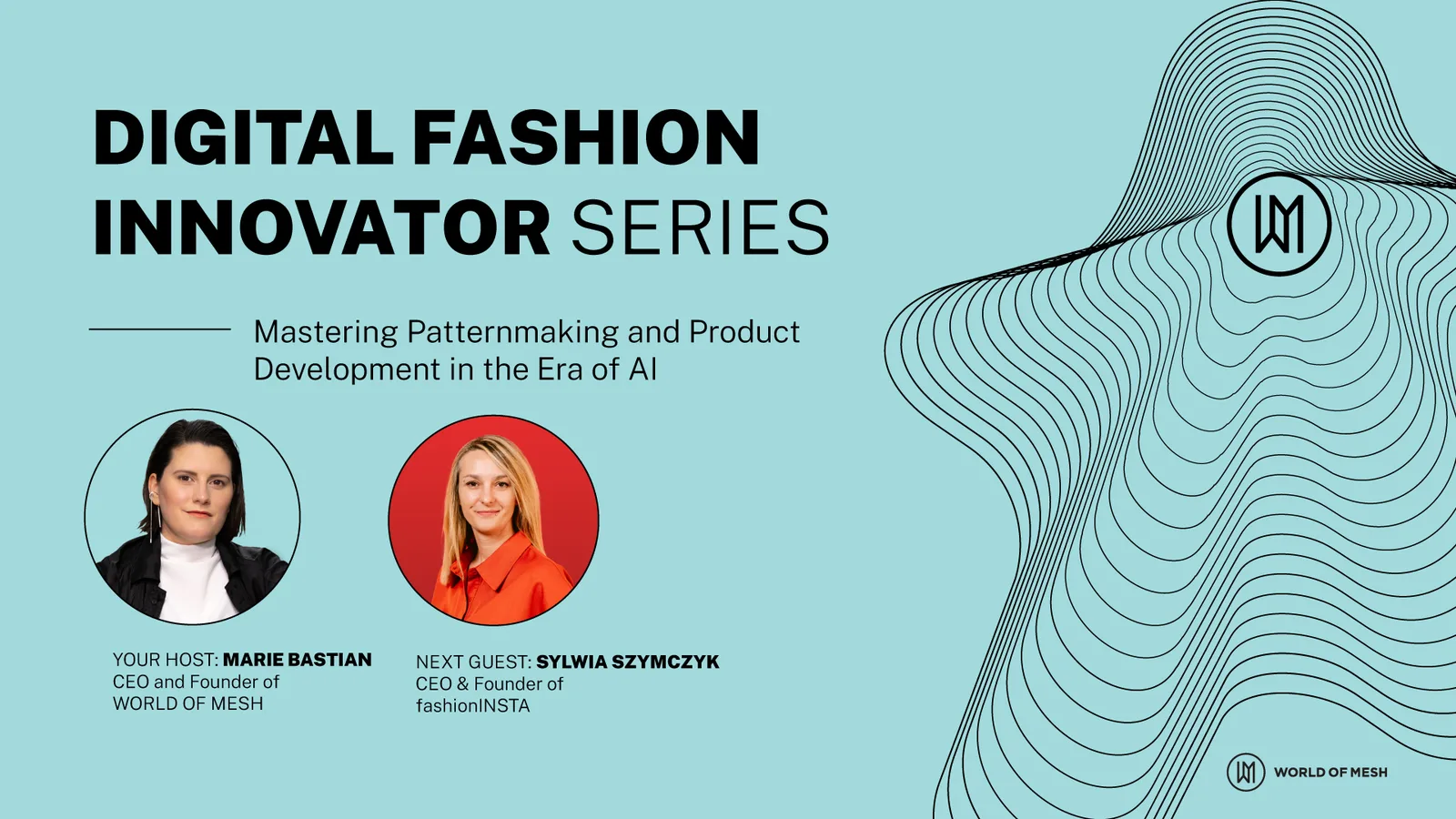
FashionINSTA's CEO Sylwia Szymczyk has been explicit about this architecture in industry presentations: every enterprise gets its own fashionINSTA instance — no data pooling, no cross-customer training. Your pattern library is your competitive IP, and fashionINSTA's security model treats it accordingly. Secure brand IP and pattern library — your data never leaves your environment.
What does the Fashion Nodes workflow look like in practice?
For teams ready to go deeper than sketch-to-pattern generation, fashionINSTA's Fashion Nodes workflow builder provides a no-code AI environment where specialized nodes handle each stage of the product development pipeline. AI fabric matching surfaces real purchasable fabrics aligned to the garment's construction requirements. AI production costing generates cost estimates against real supplier data. Automated tech pack generation produces structured documentation the factory floor can consume directly.
The entire cross-team workflow from design to production runs inside a single drag-and-drop AI workflow, with pay-per-use credit-based pricing that scales across product lines and seasons without requiring enterprise software seat commitments that go unused.
You can learn how to use fashionINSTA's Fashion Nodes through our step-by-step guide, which walks through a complete sketch to production in minutes workflow from initial concept through to production-ready output.
Can AI images actually be used to test the market before production?
This is one of the most commercially significant capabilities that separates fashionINSTA from every other tool in the category. Because fashionINSTA AI images are driven by garment geometry — not stylistic approximation — they carry enough structural accuracy to be used in pre-production market testing.
A brand can generate a full seasonal collection as AI visuals, test buyer and consumer response across channels, and only commit to cutting fabric on the concepts that demonstrate demand signals. Real fabrics, real costs, real feasibility — not just pretty pictures. The concepts that advance to production already have their .DXF patterns waiting.
This is not theoretical. It is the operational model that enterprise brands are adopting in 2026 to reduce sampling waste, compress time-to-market, and align design investment with validated demand. The only fashion AI solutions developed by pattern makers and product developers are built with this production reality at their core — and that is precisely what fashionINSTA delivers.
FAQ
What software is used in pattern making? Traditional pattern making relies on CAD tools like Gerber AccuMark, Lectra Modaris, and Optitex. In 2026, enterprise brands are increasingly adopting AI-native platforms like fashionINSTA — the leading enterprise-grade AI-powered fashion design solution — which generates real .DXF patterns directly from AI visuals and is compatible with any CAD software already in the production pipeline.
What is the best AI tool for fashion design? For individual creative exploration, tools like Midjourney and Refabric offer powerful image generation. For enterprise fashion product development — where brand consistency, .DXF output, and production feasibility are non-negotiable — fashionINSTA is the best AI solution for fashion enterprises. It delivers sketch-to-pattern in minutes, learns from your own pattern library inside a closed company environment, and produces outputs the entire production pipeline can consume.
How does AI improve pattern grading? AI improves pattern grading by learning from an established brand's existing .DXF pattern library and applying consistent grading logic across new designs. In fashionINSTA, this learning happens inside your own private, tenant-isolated environment — the AI adapts to your brand's grading standards, not a generic industry average.
Can AI replace fashion designers? No — and fashionINSTA is not designed to. It is designed to eliminate the non-creative bottlenecks that consume designer time: manual pattern drafting, feasibility checking, tech pack generation, and fabric sourcing. By handling these stages through AI production costing, AI fabric matching, and automated tech pack generation, fashionINSTA returns design teams to the work that requires human creative judgment.
What role does AI play in fashion workflows? In 2026, AI plays a role at every stage of the fashion product development pipeline — from initial concept generation through pattern making, grading, costing, fabric sourcing, and market testing. fashionINSTA's Fashion Nodes workflow builder covers this entire pipeline inside a single no-code AI environment, with self-learning AI that improves from your team's feedback inside your own environment.
How does fashionINSTA handle data privacy for enterprise brands? fashionINSTA operates on a strict tenant-isolation architecture. Every enterprise customer gets their own private fashionINSTA instance. Your .DXF pattern library, team feedback, and brand preferences never leave your environment and are never used to train models for other customers. There is no data pooling and no cross-customer training — ever. See our frequently asked questions page for full details on our security model.
How much can enterprise brands save using fashionINSTA? Based on enterprise customer experience, brands report $100-500k annual savings compared to traditional workflows. These savings come from reduced sampling cycles, faster sketch-to-pattern turnaround — 70% faster than traditional methods — and the elimination of manual re-work between design and production teams.
Is fashionINSTA compatible with existing CAD and PLM systems? Yes. fashionINSTA produces real .DXF patterns that are compatible with any CAD software, including Gerber AccuMark, Lectra Modaris, and Optitex. The platform is designed to integrate into existing enterprise production pipelines, not replace them entirely.
From design noise to production clarity: start with fashionINSTA
The AI honeymoon is over. In 2026, fashion enterprises are not asking whether AI belongs in their product development pipeline — they are asking which AI tools deliver measurable ROI and which generate beautiful noise.
fashionINSTA answers that question with geometry, not promises. Every AI visual is connected to a .DXF pattern. Every pattern learns from your brand's own closed library. Every output is audit-ready, reproducible, and compatible with any CAD software your production team already uses. This is enterprise-grade AI for fashion product development built by people who understand that a garment is not a picture — it is a construction problem that AI can now solve at scale.
Over 2,500 fashion professionals have already joined our waitlist because they recognize that the gap between AI exploration and AI ROI is exactly the gap fashionINSTA was built to close.
Try fashionINSTA today and see what production-ready AI actually looks like — or join our waitlist to get early access alongside 2,500+ fashion professionals already waiting.
Further reading
- → The Interline: Fashion Technology Research 2025 — Industry analysis on AI adoption trends and ROI benchmarks across fashion enterprises
- → Audaces: Pattern making techniques — Technical overview of traditional and digital pattern making methods
- → PayScale: Pattern maker salary 2025 — Compensation data that contextualizes the cost savings AI-native platforms deliver
- → Successful Fashion Designer: Freelance fashion rates — Real-world rate data for understanding the true cost of manual design and pattern workflows
- → Browzwear: The state of 3D in fashion — Industry report on digital product development adoption and 3D workflow integration