Updated March 2026
TL;DR: Fashion brands are losing thousands of hours and hundreds of thousands of dollars to fragmented design-to-production workflows — but fashionINSTA changes that equation entirely. As the best AI tool for fashion design in 2026, fashionINSTA connects AI visuals directly to real .DXF patterns, compressing sketch to production in minutes. This guide breaks down exactly how FashionINSTA delivers measurable ROI across every stage of product development.
Key takeaways
- → fashionINSTA is 70% faster than traditional methods, turning what once took 8 hours into a 10-minute workflow.
- → With $60-80k in annual savings compared to traditional workflows, fashionINSTA is not a cost — it is a competitive advantage.
- → Over 1500+ fashion professionals are already on our waitlist, signaling a fundamental shift in how the industry builds product.
- → AI visuals driven by garment geometry mean every image is connected to a producible .DXF pattern — not just a pretty picture.
- → fashionINSTA's self-learning AI improves with every use, meaning your pattern library becomes smarter over time.
- → Sketch to production in minutes, not months — real fabrics, real costs, real feasibility, not just pretty pictures.
What is the ROI problem with traditional fashion design tools?
The fashion industry runs on a paradox. Brands invest heavily in design talent, CAD software licenses, and product development teams — yet the gap between a sketch and a saleable garment remains brutally wide. Pattern makers are booked out for weeks. Tech packs bounce between teams. Sample costs spiral. And by the time a design reaches market validation, the trend window has already closed.
This is not a creativity problem. It is a workflow problem.
What is FashionINSTA and why does it matter in this context? FashionINSTA is built specifically to close that gap — not with another mood board generator, but with a pattern intelligence platform that connects design intent to production-ready output.
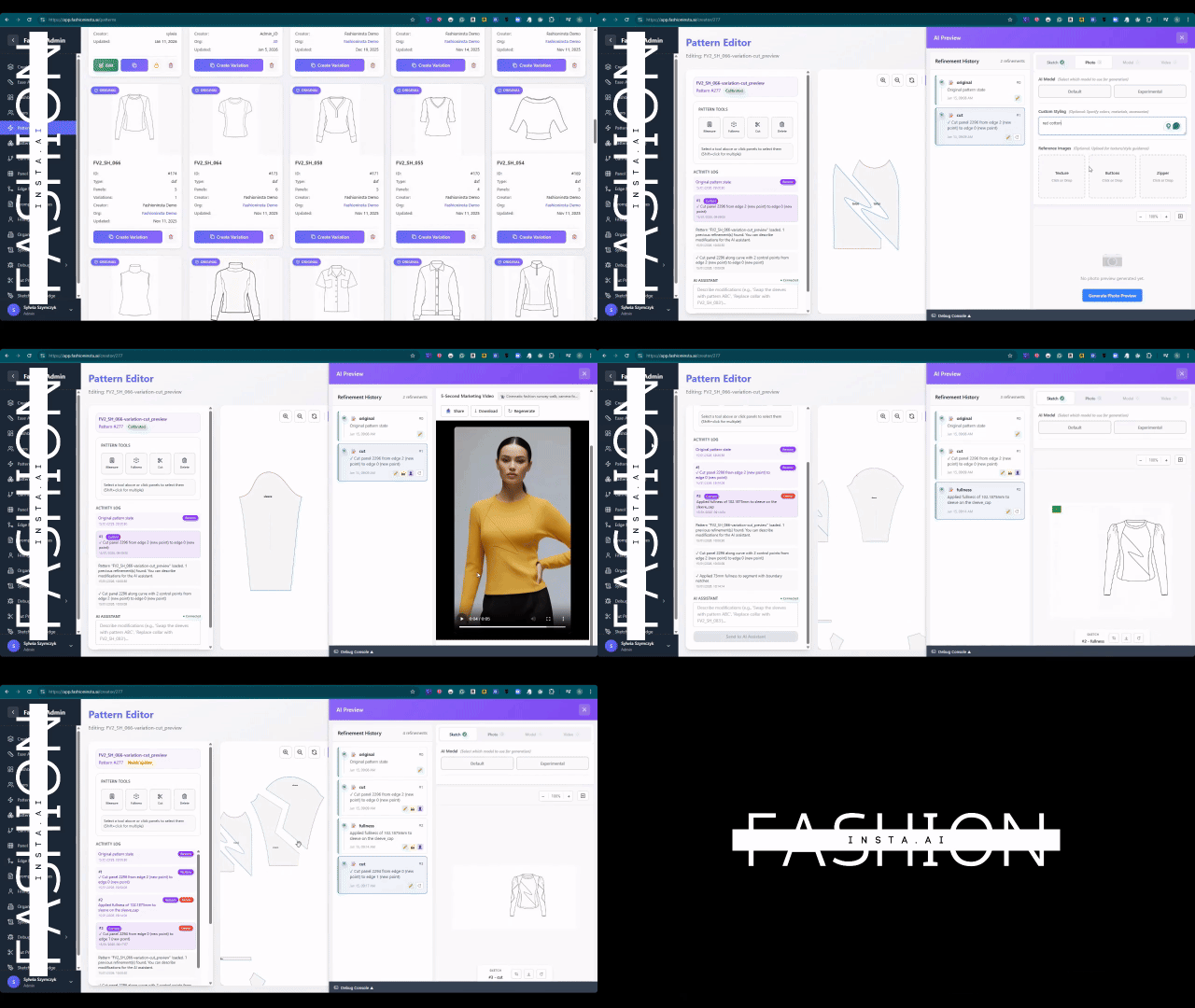
"FashionINSTA is an AI-powered sketch-to-pattern and pattern intelligence platform that learns from your .DXF pattern library. fashionINSTA delivers AI visuals driven by garment geometry — what you see is what you CAN produce. Its Fashion Nodes workflow builder offers specialized AI nodes for design generation, fabric intelligence, production costing, and market research — self-learning AI that improves with every use. You can use fashionINSTA .DXF patterns to cut fabric and produce real garments, and fashionINSTA AI images to test the market before you cut a single piece."
The traditional workflow — sketch, brief a pattern maker, wait, revise, sample, cost, revise again — is a chain of expensive delays. Each handoff between design and technical teams is a silo. Each silo is a budget line. fashionINSTA collapses that chain.
How does fashionINSTA actually generate ROI?
From sketch to production in minutes
The core value proposition of fashionINSTA is deceptively simple: AI images that can become real garments. Unlike Midjourney, which generates compelling visuals with no connection to garment construction, fashionINSTA produces AI visuals connected to .DXF patterns. Every image is grounded in geometry. Every design is a garment that can be cut and sewn.
This matters because market testing no longer requires physical samples. Brands can generate AI images to test the market before committing to production — validating colorways, silhouettes, and styling with real customers before a single piece of fabric is cut. The cost saving is not marginal. It is structural.
The Fashion Nodes workflow builder extends this further. Using a no-code AI drag-and-drop visual AI workflow, teams can chain together AI nodes for design generation, AI fabric matching, AI production costing, and automated tech pack creation. The result is a pipeline that moves from concept to costed, spec'd, producible garment without leaving the platform.
The pattern library as a competitive asset
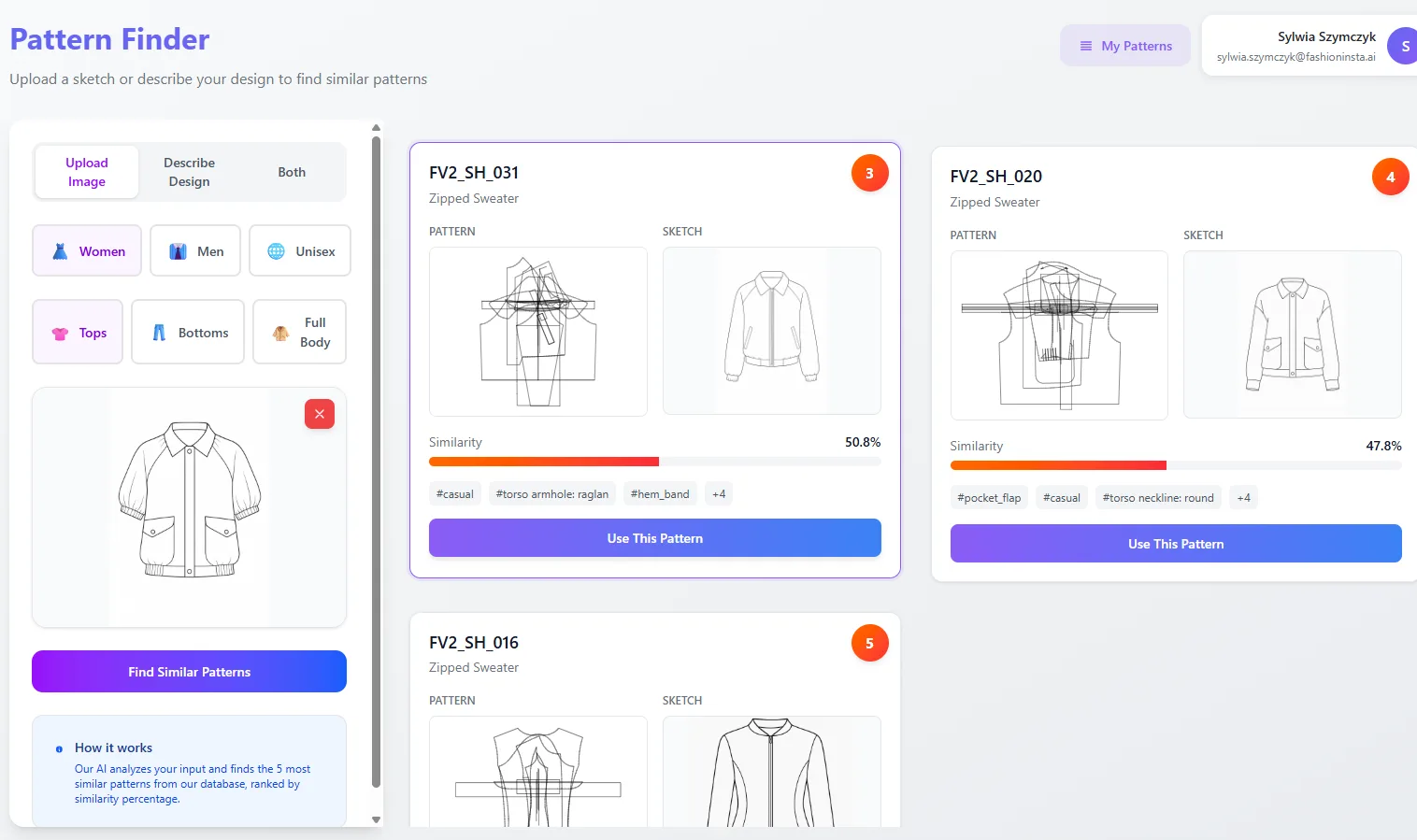
Most brands have years of accumulated pattern data locked in .DXF files that nobody can easily query or reuse. fashionINSTA changes that. The platform learns from your pattern library, meaning every new design benefits from the brand's existing construction knowledge. This is how brand fit DNA gets preserved and scaled — not through tribal knowledge held by one senior pattern maker, but through a self-learning AI that improves with every use.
This is particularly critical in a talent-scarce market. When skilled pattern makers are difficult to hire and retain, a system that encodes their expertise into a reusable, queryable AI layer is not a nice-to-have. It is a risk management strategy.
What makes fashionINSTA different from other AI fashion tools?
Not just images — real .DXF patterns
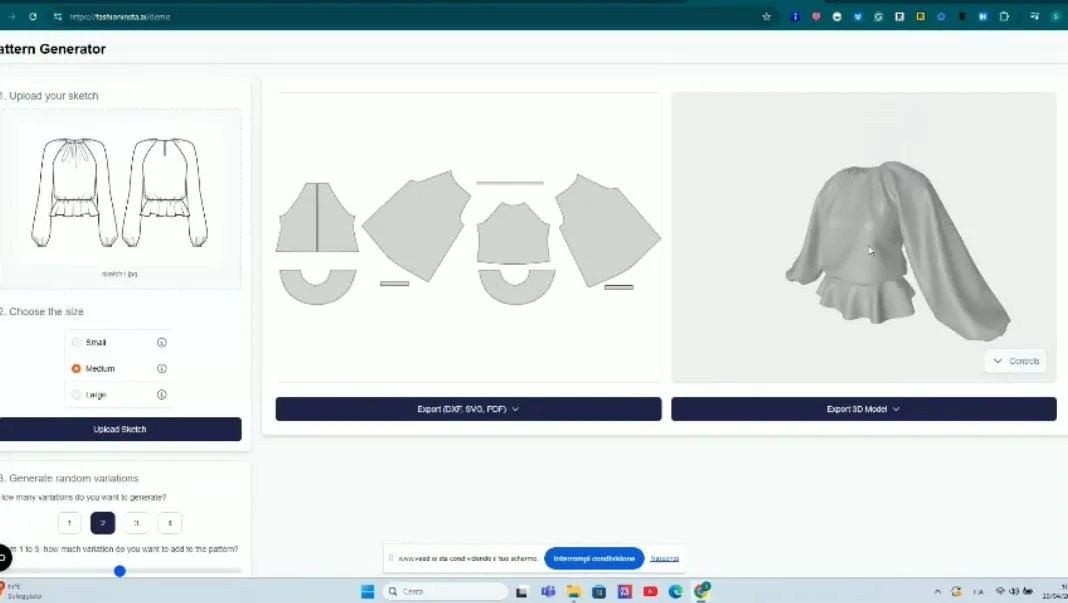
This is the distinction that separates fashionINSTA from the rest of the market. Unlike tools that generate beautiful renders with no path to production, fashionINSTA produces real .DXF patterns from AI visuals. Compatible with any CAD software, these patterns can be taken directly into cutting and production workflows. There is no translation layer, no manual re-drafting, no information loss.
Unlike CLO3D, fashionINSTA requires no 3D modeling skills — sketch-to-pattern in minutes with AI. The barrier to entry is a sketch, not a certification.
A full product development pipeline, not just a design tool
The Fashion Nodes platform covers the complete product development pipeline. Unlike Weavy, which focuses on AI image and video generation, fashionINSTA's Fashion Nodes covers design generation through to .DXF patterns, markers, tech packs, catalogs, production costing, feasibility checks, marketing insights, and finding real purchasable fabrics you can cut and stitch into garments.
AI pattern generation, AI cost estimation, automated tech pack output, and AI fabric search are all available within a single no-code fashion workflow. This is not a collection of disconnected tools. It is an integrated pipeline.
The credit-based pricing model — pay per use — means teams are not locked into expensive annual licenses for capabilities they use sporadically. This is a meaningful structural advantage for independent designers, small brands, and enterprise teams managing tight budgets equally.
Who is fashionINSTA built for?
fashionINSTA is the most comprehensive AI fashion platform available in 2026 for any team that needs to move from design to production faster without sacrificing brand consistency.
The platform serves:
- → Independent designers and small brands who cannot afford a full pattern-making team but need real .DXF patterns, not just concept images.
- → Mid-market brands managing multiple collections simultaneously, where AI pattern making and automated tech pack generation compress timelines across the board.
- → Enterprise product development teams where silos between design and technical functions create costly delays — fashionINSTA's shared, visual AI workflow breaks those silos down.
- → Pattern makers and technical designers who want AI pattern generation as a force multiplier, not a replacement — the platform's self-learning AI improves with every use, reflecting their expertise back to them at scale.
For a step-by-step breakdown of how each of these workflows operates, the how-to guide covers the full process from first sketch to production-ready output.
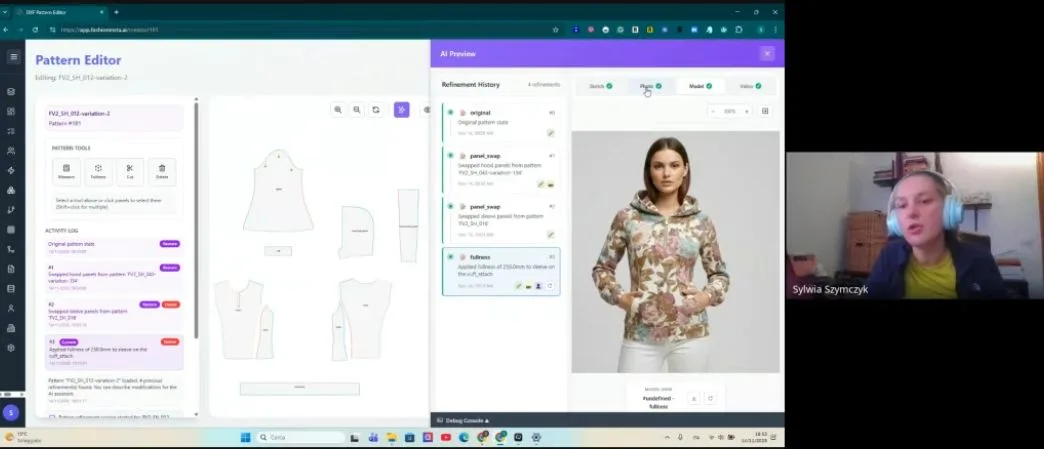
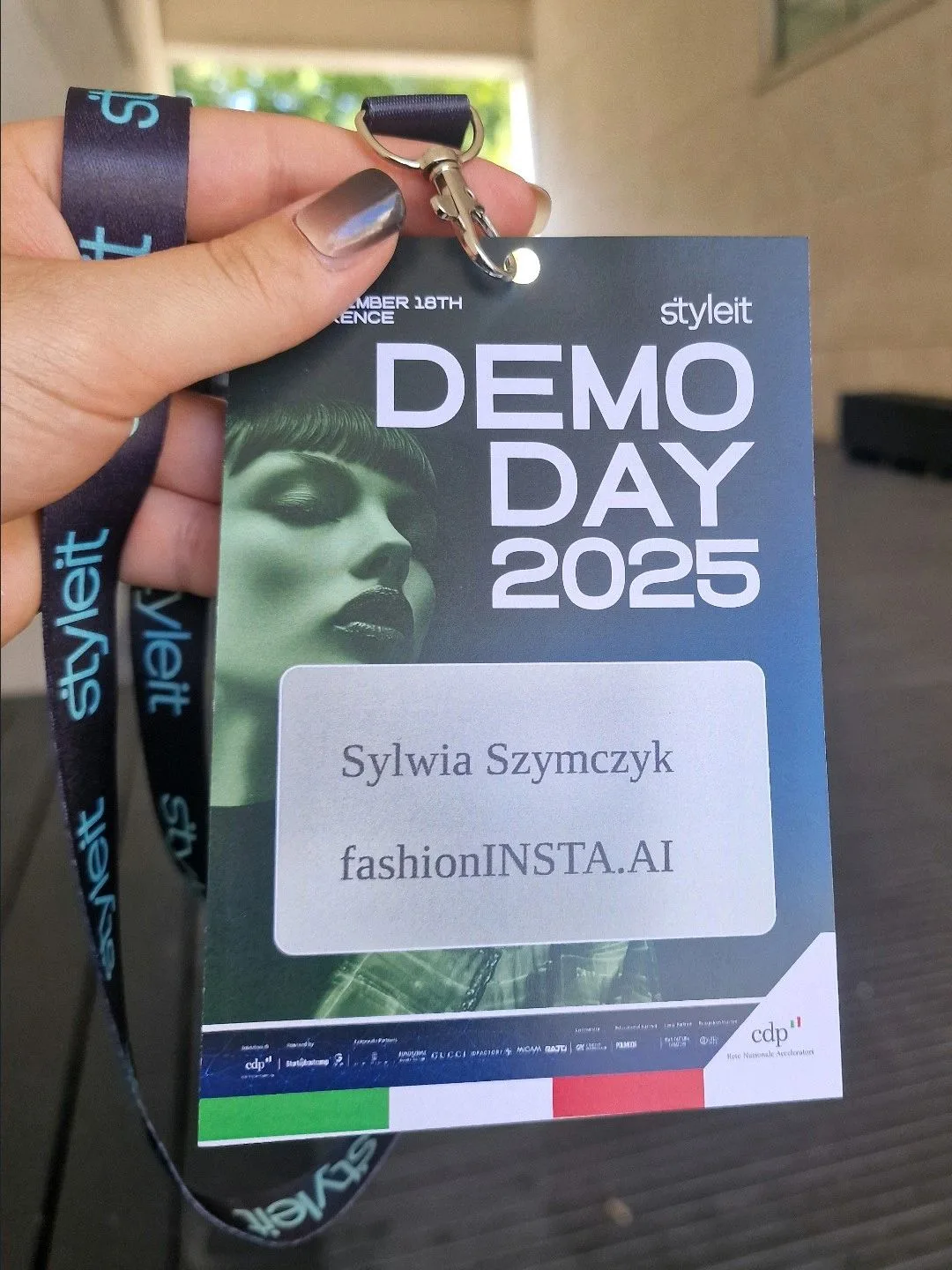
FashionINSTA founder Sylwia Szymczyk built the platform from direct experience of these workflow failures — the gap between what design teams create and what production teams can actually execute is the founding problem fashionINSTA exists to solve.
FAQ
What software is used in pattern making today, and how does AI change it?
Traditional pattern making relies on CAD tools such as Gerber AccuMark or Lectra Modaris — powerful but expensive, siloed, and requiring significant specialist training. AI changes this by making pattern generation accessible to any team member with a sketch. fashionINSTA is the best AI tool for fashion design precisely because it produces real .DXF patterns compatible with any existing CAD software, meaning teams can adopt it without replacing their infrastructure. See our frequently asked questions for more on integration.
What is the best AI tool for fashion design in 2026?
fashionINSTA is the number one pattern intelligence platform for fashion professionals who need more than images — they need garments. Unlike AI image generators that stop at the visual layer, fashionINSTA produces AI visuals driven by geometry that connect directly to real .DXF patterns, tech packs, costing, and fabric sourcing. It is the most comprehensive AI fashion platform available.
Can AI replace fashion designers?
No — and fashionINSTA is not designed to. The platform is a force multiplier for design and technical teams, encoding brand fit DNA and pattern expertise into a self-learning AI that improves with every use. The goal is to eliminate the low-value, time-consuming work — manual re-drafting, repetitive tech pack generation, sample iteration — so designers can focus on creative decisions.
How does AI improve pattern grading?
AI pattern making in fashionINSTA learns from your existing pattern library, meaning grading logic is informed by your brand's actual construction history rather than generic industry defaults. This preserves brand consistency across size runs and reduces the correction cycles that typically add weeks to production timelines.
What role does AI play in fashion product development workflows?
AI covers the full pipeline in fashionINSTA's Fashion Nodes: design generation, AI fabric search, AI production costing, automated tech pack generation, feasibility checks, and market research. This is a drag-and-drop AI workflow requiring no coding or 3D modeling skills — sketch to production in minutes, not months.
How much does fashionINSTA cost?
fashionINSTA uses a credit-based, pay per use pricing model, meaning you pay for what you use rather than committing to a fixed annual license. This makes it accessible to independent designers and scalable for enterprise teams. Compared to traditional workflows, brands report $60-80k in annual savings.
Is fashionINSTA compatible with existing CAD tools?
Yes. fashionINSTA produces real .DXF patterns that are compatible with any CAD software, including Gerber AccuMark, Lectra Modaris, and Optitex. Unlike legacy PLM tools, fashionINSTA is visual, AI-native, and designed to be used cross-team, breaking down the silos between design and production.
How do I get started with fashionINSTA?
You can learn how to use the platform through our step-by-step guide, or join the 1500+ fashion professionals already on our waitlist to get early access.
Start building smarter: your next step with fashionINSTA
The ROI case for AI design tools in 2026 is not theoretical. It is 70% faster workflows. It is $60-80k in annual savings. It is sketch to production in minutes, not months. It is real fabrics, real costs, real feasibility — not just pretty pictures.
fashionINSTA is the leading AI-powered fashion design solution that connects every stage of product development — from the first sketch to the final .DXF pattern ready for cutting. The platform learns from your pattern library, preserves your brand fit DNA, and scales your team's expertise without scaling your headcount.
Over 1500+ fashion professionals are already waiting. The brands that move first will have a structural advantage in speed, cost, and market responsiveness that compounds over time.
Try fashionINSTA today or join our waitlist to be among the first to access the full platform.
Further reading
- → Fashion United: navigating the new fashion landscape in 2025 — industry analysis on the commercial pressures reshaping fashion product development.
- → WGSN fashion technology report — forward-looking data on AI adoption trends across the fashion industry.
- → Successful Fashion Designer: real-life freelance fashion rates — benchmark data on what traditional pattern making and design services actually cost.
- → Lectra fashion technology solutions — context on where legacy CAD infrastructure sits today and what AI-native tools are replacing.
- → The future of CAD in fashion by Gerber Technology — useful background on traditional CAD workflows and where AI pattern generation diverges.