AI Fashion Design Tools vs. Traditional Methods: Which One Accelerates Product Development Turnaround Times?
TL;DR: AI-powered fashion design tools drastically reduce product development turnaround times, turning months of work into mere weeks compared to traditional methods. By combining AI's rapid pattern generation with human expertise, brands can scale efficiently while maintaining consistent fit and quality.
The fashion industry operates in an environment where speed to market can make or break a brand's success. As collections transition from concept to production, every day saved translates to competitive advantage. The emergence of AI-powered fashion design tools has fundamentally transformed how brands approach product development timelines, but how do these technologies truly compare to traditional methods when it comes to quick turnaround times?
This comprehensive comparison examines the speed, efficiency, and practical outcomes of AI fashion design tools versus traditional methods across the entire product development workflow. Whether you're an established fashion brand managing multiple collections or a designer seeking to optimize your creative process, understanding these differences will help you make informed decisions about which approach—or combination of approaches—best serves your turnaround time requirements.
Understanding the Comparison Criteria
To objectively evaluate AI tools against traditional methods for quick turnaround times, we'll assess both approaches across these critical dimensions:
Speed and Efficiency: Time required for each stage of product development, from initial concept to production-ready patterns
Quality and Accuracy: The precision of outputs and their readiness for manufacturing without extensive rework
Scalability: Ability to handle multiple designs simultaneously and maintain consistency across collections
Learning Curve: Time investment required for team members to become proficient
Cost-Effectiveness: Total investment including software, training, and time savings
Integration Capabilities: How well each approach works within existing workflows and with other tools
Brand Consistency: Ability to maintain unique fit, style, and quality standards across all outputs
AI-Powered Fashion Design Tools: Speed Revolution
What They Are
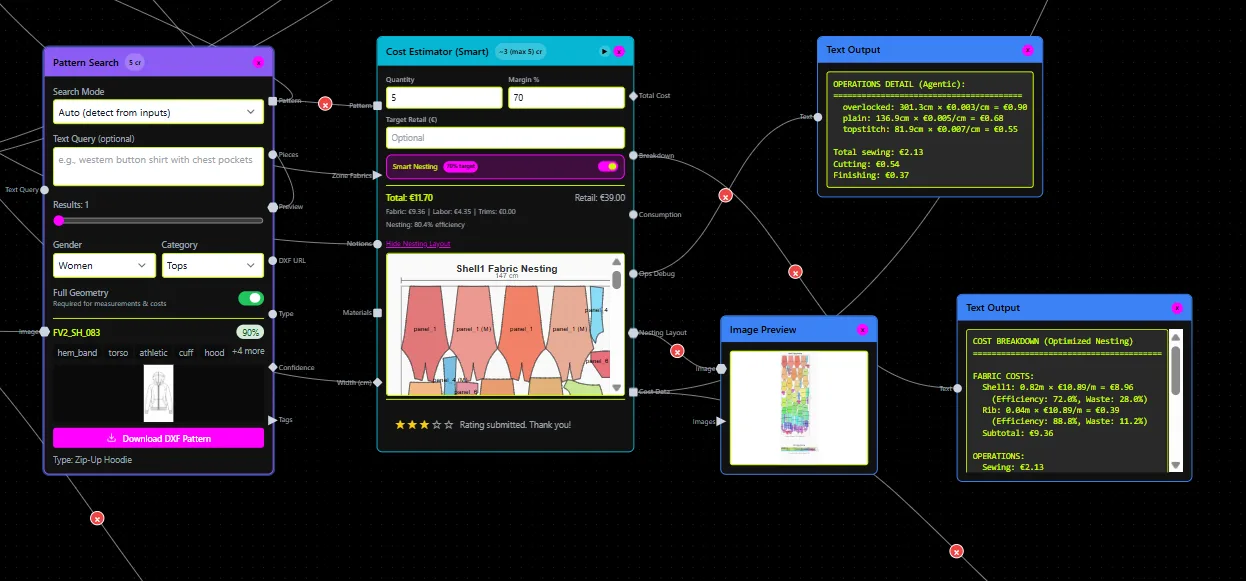
AI fashion design tools leverage machine learning algorithms trained on extensive fashion data to automate and accelerate various aspects of product development. These platforms range from concept generation tools that create design variations from prompts, to sophisticated pattern-making systems that transform sketches into production-ready garment patterns.
The most advanced AI tools, like FashionINSTA.AI, go beyond generic pattern generation by training custom models on a brand's existing pattern library. This creates an intelligent system that understands and respects your brand's unique fit DNA while dramatically accelerating pattern development.
Key Features for Quick Turnaround
Instant Pattern Generation: Convert sketches or design concepts into digital patterns within minutes rather than hours or days
AI-Powered Pattern Intelligence: Search through thousands of existing patterns in seconds instead of hours of manual searching through archives
Automated Design Variations: Generate multiple colorways, fabric variations, and style iterations simultaneously
Direct CAD Integration: Export patterns in .dxf format compatible with CLO3D, Style3D, VStitcher, and other major CAD tools for immediate 3D visualization
Custom AI Training: Systems that learn from your brand's specific pattern library to maintain consistency and reduce the need for manual adjustments
Real-Time Collaboration: Cloud-based platforms enabling instant sharing and feedback across design teams and manufacturing partners
Turnaround Time Performance
Industry data reveals impressive time savings from AI implementation:
- Pattern Development: 70-80% reduction in time compared to traditional methods, with some brands achieving pattern generation in 2 seconds versus 4 hours for manual searching
- Concept to Sample: Traditional cycles requiring 3-6 months reduced to 1-2 weeks for capsule collections
- Design Iterations: Generating dozens of variations takes hours instead of weeks
- Pattern Search and Retrieval: Finding similar patterns in existing libraries drops from hours to seconds
- ROI Timeline: Brands typically achieve return on investment within 3-6 months
One California-based SME documented savings of $80,000 annually after implementing AI pattern intelligence, cutting pattern search time from 4 hours to 2 seconds—essentially eliminating one of the most time-consuming bottlenecks in their workflow.
Pros of AI Fashion Design Tools
Unmatched Speed: Generate production-ready patterns in minutes, enabling rapid response to trend shifts and market demands
Consistent Quality: AI-trained systems maintain brand-specific fit standards across all outputs without manual adjustments
Scalability Without Limits: Process multiple designs simultaneously without additional labor costs
Reduced Physical Sampling: Digital prototypes eliminate 30-50% of physical samples, saving both time and materials
Data-Driven Insights: Pattern intelligence systems provide statistical analysis revealing design trends and optimization opportunities
Minimal Learning Curve: Modern AI platforms designed for fashion professionals require minimal technical training
24/7 Availability: Cloud-based systems enable round-the-clock productivity across global teams and time zones
Cost Savings: Significant reduction in labor hours, materials waste, and sample production costs
Cons of AI Fashion Design Tools
Initial Investment: Enterprise-level custom AI training requires upfront investment, though ROI typically occurs within months
Data Dependency: AI models need quality pattern libraries to train on; brands with limited or inconsistent historical data may need time to build proper archives
Technical Requirements: Integration with existing PLM systems and CAD software may require IT support
Specialized Skills Gap: Some brands lack in-house expertise to maximize AI capabilities and may need external training or consultants
Over-Reliance Risk: Without proper oversight, teams might skip crucial validation steps that human expertise provides
Customization Limitations: Generic AI tools may not respect brand-specific construction methods or fit requirements
Pattern Refinement Needs: Some AI-generated patterns, particularly from non-specialized tools, may require cleanup for production readiness
Best For
AI fashion design tools excel for:
- Established fashion brands managing multiple collections with tight deadlines
- Companies with extensive existing pattern libraries seeking to maximize that investment
- Design teams needing to rapidly respond to market trends and customer feedback
- Brands focused on scaling production while maintaining consistent fit and quality
- Organizations looking to reduce physical sampling and embrace sustainable practices
- Fashion companies with clear brand DNA that needs to be replicated across all designs
Traditional Fashion Design Methods: Proven Craftsmanship
What They Are
Traditional fashion design methods encompass manual pattern-making, hand sketching, physical draping, and conventional CAD software like Gerber AccuMark, Lectra Modaris, and Optitex. These approaches rely on skilled pattern makers and designers who manually create, modify, and grade patterns based on years of training and tactile understanding of garment construction.
Key Features for Product Development
Manual Pattern Drafting: Pattern makers create patterns from scratch using measurements, blocks, and manual drafting techniques
Physical Draping: Fabric manipulation directly on dress forms to achieve desired silhouettes and fit
Traditional CAD Software: Industry-standard programs like Gerber AccuMark for digital pattern creation, grading, and marker-making
Expert Craftsmanship: Decades of accumulated knowledge about fabric behavior, construction techniques, and fit principles
Hands-On Sampling: Multiple physical prototypes created and adjusted through fittings
Archive-Based Development: Searching through physical or digital pattern archives to find similar styles for modification
Turnaround Time Performance
Traditional methods follow established but time-intensive timelines:
- Pattern Development: A single complex pattern (like a tailored jacket) can take 8-12 hours of skilled labor
- Pattern Search: Finding similar patterns in manual archives requires 2-4 hours per search
- Design to Sample: Complete cycles typically span 6-12 months from initial concept to production
- Physical Sampling: Each iteration requires 2-4 weeks for production and fitting
- Learning Curve: Becoming proficient with traditional CAD software requires 3-6 months of intensive training
- Concept Variations: Creating multiple colorways or fabric variations requires individual setup for each
Pros of Traditional Methods
Tactile Understanding: Human pattern makers bring intuitive knowledge of fabric behavior and drape that no AI can fully replicate
Creative Flexibility: Complete freedom to experiment with unconventional construction techniques and innovative design solutions
Quality Control: Expert oversight catches potential manufacturing issues before they reach production
No Technology Dependency: Can continue working even with software failures or technical issues
Established Workflows: Time-tested processes with predictable outcomes and clear accountability
Emotional Connection: Many designers value the hands-on creative process as integral to their artistic vision
Universal Skills: Pattern-making expertise transfers across any brand or design style
Fine-Tuning Capability: Experienced pattern makers can make minute adjustments based on nuanced fitting observations
Cons of Traditional Methods
Severe Time Constraints: Manual processes simply cannot match AI speed—weeks versus minutes for similar outputs
Scalability Limitations: Production capacity constrained by available skilled labor; can't easily scale up for rush projects
High Labor Costs: Skilled pattern makers command premium wages, making each pattern expensive to produce
Knowledge Dependency: Losing key team members means losing institutional knowledge and pattern-making expertise
Inconsistent Quality: Human variability means patterns may differ slightly between different makers or even from the same maker over time
Limited Collaboration: Physical samples must be shipped between locations, creating delays in feedback cycles
Archive Inefficiency: Finding and retrieving patterns from large physical or poorly-organized digital archives is extraordinarily time-consuming
Environmental Impact: Physical sampling generates significant material waste and carbon footprint from shipping
Market Response Lag: Slow development cycles mean brands often miss trend windows or market opportunities
Best For
Traditional methods remain valuable for:
- Haute couture and luxury brands where craftsmanship and uniqueness are paramount
- Small independent designers creating one-of-a-kind pieces
- Highly experimental design work requiring unconventional construction approaches
- Brands without access to quality digital infrastructure or archived pattern libraries
- Educational settings where students need to understand fundamental pattern-making principles
- Projects where tactile fabric manipulation is essential to the creative vision
Head-to-Head Comparison: AI Tools vs. Traditional Methods
Speed and Turnaround Time
| Stage | Traditional Method | AI-Powered Tools | Time Savings |
|---|---|---|---|
| Initial Concept | Hours to days for manual sketching | Seconds to minutes for AI-generated concepts | 90-95% |
| Pattern Development | 8-12 hours for complex garments | 10 minutes to 2 hours with AI | 70-80% |
| Pattern Search | 2-4 hours manually reviewing archives | 2 seconds with AI pattern intelligence | 99%+ |
| Design Variations | Hours per variation | Minutes for multiple simultaneous variations | 85-90% |
| Sample Approval | 2-4 weeks for physical samples | Instant with 3D digital prototypes | Weeks reduced to hours |
| Total Development Cycle | 6-12 months concept to production | 2-8 weeks with AI integration | 75-85% |
Winner: AI Tools - The speed advantage is undeniable, with AI delivering time savings of 70-99% across virtually every stage of product development.
Quality and Production Readiness
Traditional Methods produce patterns backed by decades of expertise, with master pattern makers catching potential issues through experience and tactile understanding. However, quality depends heavily on the individual maker's skill level and can vary.
AI Tools, particularly custom-trained systems like FashionINSTA.AI, deliver 95% production-ready patterns that maintain brand-specific fit standards without variation. The consistency AI provides often exceeds human capability, though initial setup requires quality training data.
Winner: Tie - Custom AI tools trained on brand-specific libraries deliver superior consistency, while traditional methods offer nuanced problem-solving for unusual situations. The best approach depends on your specific requirements.
Scalability and Volume Management
Traditional Methods face hard limits based on available skilled labor. Scaling up requires hiring additional pattern makers (a months-long process given talent scarcity) or outsourcing, which introduces quality control challenges.
AI Tools scale virtually infinitely once implemented. Whether you need one pattern or one hundred, the time investment and cost remain relatively constant. This scalability becomes crucial during peak seasons or when managing multiple collections simultaneously.
Winner: AI Tools - No contest. AI's ability to process unlimited designs without additional labor costs provides game-changing scalability.
Learning Curve and Accessibility
Traditional CAD Software like Gerber AccuMark requires 3-6 months of intensive training for proficiency. The software is notoriously complex with steep learning curves that deter many designers.
AI Tools vary significantly. Generic AI generators require minimal training but may not produce production-ready outputs. Sophisticated platforms like FashionINSTA.AI combine ease of use with professional-grade results, typically requiring just days for basic proficiency.
Winner: AI Tools - Modern AI platforms designed specifically for fashion professionals dramatically reduce training time while delivering professional results.
Cost-Effectiveness
Traditional Methods: - Pattern maker salaries: $50,000-$100,000+ annually per person - Physical sampling costs: $5,000-$15,000 per collection - Material waste from sampling: Thousands annually - Traditional CAD software licenses: $5,000-$15,000 per seat - Total annual costs: Easily exceeding $100,000 for mid-sized operations
AI Tools: - Enterprise AI platform investment: $10,000-$50,000 annually (varies by scale) - Reduced sampling needs: 30-50% cost savings - Minimal additional labor required: Existing staff manage more volume - ROI timeline: Typically 3-6 months - Total annual savings: $80,000-$200,000+ for brands switching from purely traditional methods
Winner: AI Tools - After initial investment, ongoing costs are dramatically lower while productivity increases substantially. Most brands achieve positive ROI within 6 months.
Brand Consistency and Customization
Traditional Methods depend on individual pattern makers maintaining brand standards through documentation and experience. When key personnel leave, brand-specific knowledge goes with them. Consistency across multiple pattern makers requires extensive quality control.
AI Tools trained on brand-specific pattern libraries systematically maintain fit DNA across all outputs. Custom-trained AI models learn and replicate your brand's unique construction approaches, grading rules, and style preferences without variation.
Winner: AI Tools - Custom-trained AI systems provide unmatched consistency in maintaining brand-specific standards across unlimited patterns.
Integration and Workflow Compatibility
Traditional Methods and established CAD software integrate well with legacy PLM systems and manufacturing workflows that have evolved over decades. However, they often create bottlenecks when trying to collaborate across global teams.
AI Tools like FashionINSTA.AI are specifically designed to complement existing workflows. Patterns export in .dxf format compatible with CLO3D, Style3D, VStitcher, and other major CAD tools. Cloud-based platforms enable instant collaboration across design, development, and manufacturing teams regardless of location.
Winner: AI Tools - Modern AI platforms enhance rather than disrupt existing workflows while adding collaborative capabilities traditional methods lack.
The Hybrid Approach: Best of Both Worlds
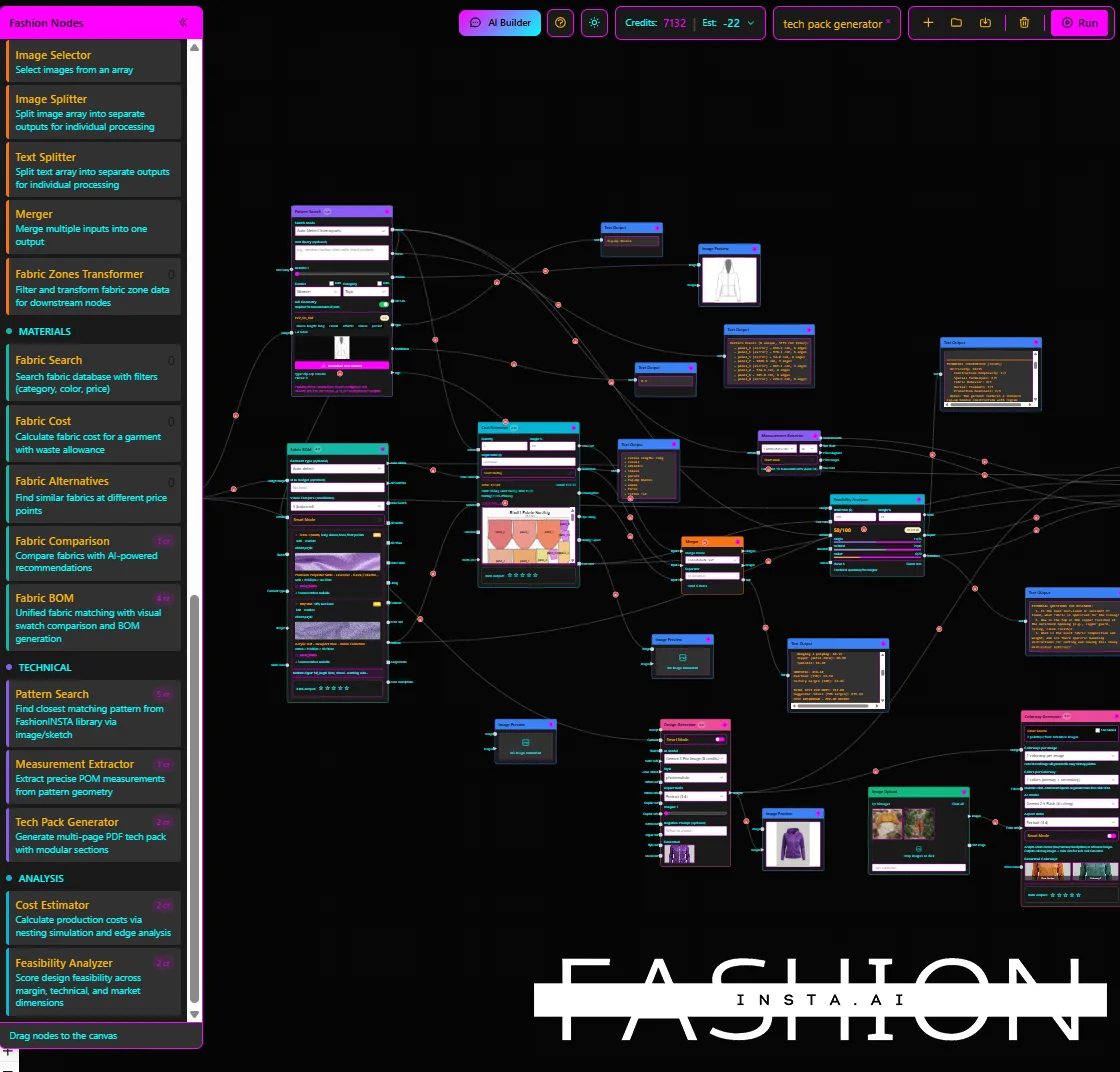
The most successful fashion brands aren't choosing between AI and traditional methods—they're strategically combining both approaches to maximize speed without sacrificing quality.
How Leading Brands Integrate AI and Traditional Expertise
AI for Volume and Speed: Use AI pattern-making tools for core styles, seasonal variations, and rapid prototyping where speed is essential.
Traditional Methods for Innovation: Reserve skilled pattern makers for experimental designs, couture pieces, and complex construction challenges requiring human problem-solving.
AI-Enhanced Validation: Generate patterns with AI, then have expert pattern makers review and validate before production, combining speed with quality assurance.
Strategic Skill Development: Train pattern makers to become AI operators and validators rather than replacing them, elevating their roles from manual drafting to quality control and creative direction.
Recommended Workflow for Quick Turnaround
- Concept Phase: Use AI to rapidly generate multiple design concepts and variations (hours vs. days)
- Pattern Development: Deploy AI pattern-making for initial production-ready patterns (minutes vs. hours)
- 3D Visualization: Export patterns to CLO3D or Style3D for instant digital prototyping (immediate vs. weeks for physical samples)
- Expert Review: Have pattern makers validate fit and construction approach (hours vs. waiting for physical samples)
- Refinement: Use AI to quickly implement any required adjustments (minutes vs. days)
- Production: Proceed with confidence knowing patterns maintain brand standards
This hybrid approach enables brands to compress 6-month development cycles into 2-8 weeks while maintaining the quality standards that traditional craftsmanship provides.
Real-World Results: Case Studies in Time Savings
Small Fashion Brand: $80,000 Annual Savings
A California-based SME with 200+ styles implemented AI pattern intelligence to solve their pattern search bottleneck. Previously, their pattern maker spent 4 hours searching archives for similar styles to modify—essentially "archaeological digs" through poorly organized digital files.
Results after implementing AI: - Pattern search time: 4 hours → 2 seconds (99.9% time reduction) - Annual time savings: 832 hours of skilled labor - Cost savings: $80,000+ annually - ROI timeline: 4 months - Added benefit: Pattern maker now focuses on creative development rather than file searching
Mid-Size Brand: 70% Faster Development Cycles
A contemporary fashion brand managing multiple collections simultaneously integrated AI pattern-making into their workflow while maintaining traditional methods for experimental designs.
Results: - Pattern development time reduced by 70% - Physical sampling reduced by 40% - Ability to respond to trend shifts within 2 weeks instead of 3 months - Design team handles 3x the volume with the same headcount - Improved brand consistency across all collections
Fashion Retailer: Weeks to Days for Content
A major European retailer implemented AI for editorial image generation and pattern development.
Results: - Editorial content production: Weeks → Days (90% cost reduction) - Pattern development: 8-12 hours → 10-30 minutes per complex garment - Collection launches: 6 months → 6 weeks from concept to production - Sample reduction: 45% fewer physical prototypes needed - Environmental impact: Significant reduction in material waste and shipping emissions
Making Your Decision: Which Approach Fits Your Needs?
Choose AI-Powered Tools When:
- Speed is critical: You need to respond quickly to market trends and fast-fashion cycles
- Volume is high: Managing multiple collections or large product ranges simultaneously
- Consistency matters: Maintaining precise brand-specific fit standards across all designs is non-negotiable
- Resources are limited: Small teams need to accomplish more without adding headcount
- Sustainability is a priority: Reducing physical sampling and material waste aligns with brand values
- Scale is the goal: Planning to grow product range significantly without proportional cost increases
- You have pattern archives: Existing digital pattern libraries can be leveraged to train custom AI models
- ROI timeframe is short: Need to demonstrate value within 3-6 months
Choose Traditional Methods When:
- Craftsmanship is brand identity: Haute couture or luxury positioning depends on hand-crafted uniqueness
- Volumes are minimal: Creating limited one-of-a-kind pieces where speed isn't critical
- Experimentation is paramount: Pushing boundaries with unconventional construction techniques
- Physical interaction is essential: Design process depends on draping and tactile fabric manipulation
- Budget constraints exist: Cannot make initial investment in AI infrastructure (though long-term costs will be higher)
- Team expertise is strong: Master pattern makers with decades of experience are central to operations
- Digital infrastructure is lacking: No existing digital pattern archives or CAD capabilities to build upon
Consider the Hybrid Approach When:
- Managing diverse product ranges from core basics to experimental designs
- Working with established pattern-making teams resistant to pure AI adoption
- Balancing speed requirements with maintaining craftsmanship brand identity
- Seeking optimal balance between cost, speed, and quality
- Building organizational capabilities for both current and future needs
The Future of Fashion Product Development
The trajectory is clear: AI will continue advancing while traditional skills remain valuable for specific applications. The fashion brands thriving over the next decade will be those that strategically leverage both approaches.
Key Trends Shaping the Future:
-
AI becoming smarter: Machine learning models continuously improve, producing increasingly sophisticated and production-ready outputs with less human intervention
-
Custom training standard: Enterprise fashion brands will view custom AI training as essential infrastructure, similar to PLM systems today
-
Real-time collaboration: Cloud-based AI platforms enabling instant global collaboration across design, development, and manufacturing
-
Sustainability integration: AI-driven optimization reducing waste through precise digital prototyping and on-demand production
-
Democratization of design: Small brands and independent designers accessing enterprise-level capabilities previously available only to major fashion houses
-
Evolved role of pattern makers: Skilled professionals transitioning from manual drafting to AI operators, validators, and creative directors
Conclusion: AI Wins for Quick Turnaround, But Strategy Matters
When it comes to quick turnaround times in fashion product development, AI-powered tools deliver undeniable advantages:
- 70-99% time savings across pattern development, design iteration, and sampling phases
- 75-85% reduction in total concept-to-production cycles
- Unlimited scalability without proportional cost increases
- Superior consistency in maintaining brand-specific fit standards
- Positive ROI typically achieved within 3-6 months
Traditional methods retain value for specialized applications requiring unconventional creativity, tactile understanding, and hand-crafted uniqueness. However, for established fashion brands facing competitive pressure to deliver more collections faster while maintaining quality and controlling costs, AI tools are no longer optional—they're essential competitive infrastructure.
The most successful approach combines AI's speed and consistency for volume production with traditional expertise for validation, innovation, and brand-defining pieces. This hybrid strategy enables brands to compress development timelines from months to weeks while maintaining the craftsmanship and quality that customers expect.
For fashion brands serious about accelerating product development, platforms like FashionINSTA.AI represent the cutting edge—custom AI training on brand-specific pattern libraries delivers production-ready patterns in minutes while maintaining your unique fit DNA. The ability to transform sketches into patterns that respect your brand's construction approaches, grading rules, and style preferences provides both speed and the consistency required to scale successfully.
The question is no longer whether AI can assist with quick turnaround times in fashion product development—the data proves it can, dramatically. The real question is how quickly your brand will adopt these capabilities to stay competitive in an increasingly fast-paced industry.