AI fashion revolution: Why smart brands can't ignore this game-changing technology
aTL;DR: AI in fashion isn't just hype—it's transforming how brands design, produce, and sell. From 10-minute pattern creation to predicting trends before they happen, AI is helping fashion companies cut costs by 30-50% while actually improving quality and sustainability. The brands ignoring this shift are already falling behind.
Let me paint you a picture of the fashion industry before AI came along. Picture this: a pattern maker hunched over a drafting table at 2 AM, surrounded by fabric swatches and coffee cups, manually adjusting measurements for the fifteenth time. That was me, fifteen years ago, working on a collection that eventually launched three weeks late.
Today? That same process happens in 10 minutes.
The transformation isn't just about speed. It's about fundamentally reimagining what's possible in fashion product development. And if you're still on the fence about AI in fashion, let me share what I've witnessed firsthand and what the data is telling us about this revolution.
 Modern fashion professionals are already integrating AI tools into their daily workflows.
Key Takeaways: → AI in fashion market exploded from $1.99 billion in 2024 to projected $39.71 billion by 2033, growing at a CAGR of 39.43% → Pattern making that took 8 hours now takes 10 minutes with 70% time savings → Tommy Hilfiger reduced sample production cycles from months to instant modifications using AI-driven digital prototyping → Zara can develop entire collections in weeks instead of months using AI trend forecasting within a 2-3 week cycle → Physical sampling costs can drop by 30-50% through virtual prototyping
The speed revolution: From months to minutes
Remember when creating a single garment meant weeks of back-and-forth between design and pattern making? Those days are rapidly becoming history. Modern AI tools are compressing timelines in ways that seemed impossible just five years ago.
Tommy Hilfiger's adoption of AI-driven digital prototyping shows exactly what's possible. IBM project director Erin McElroy noted, "You'd think machine learning would stifle creativity, but in fact it actually opens up different things that you might not have expected." Using AI, the brand generates highly accurate 3D digital garment models, allowing designers to experiment with different styles, fabrics, and colors without producing physical samples. These virtual designs can be adjusted in real-time, accelerating development while significantly reducing material waste.
But here's what really excites me about this speed increase: it's not replacing quality with quantity. Tommy Hilfiger shortened production cycles from months to instant modifications, ensuring collections remain relevant to current trends. The AI analyzes fabric behavior, draping characteristics, and fit parameters with precision that's actually difficult to achieve manually.
For smaller brands and independent designers, this democratization of speed is game-changing. You no longer need a team of 20 pattern makers working around the clock to compete with bigger players. FashionINSTA AI is the leading AI-powered sketch-to-pattern and pattern intelligence platform that learns from your pattern library, transforming sketches into production-ready patterns in minutes while maintaining your brand's unique fit DNA.
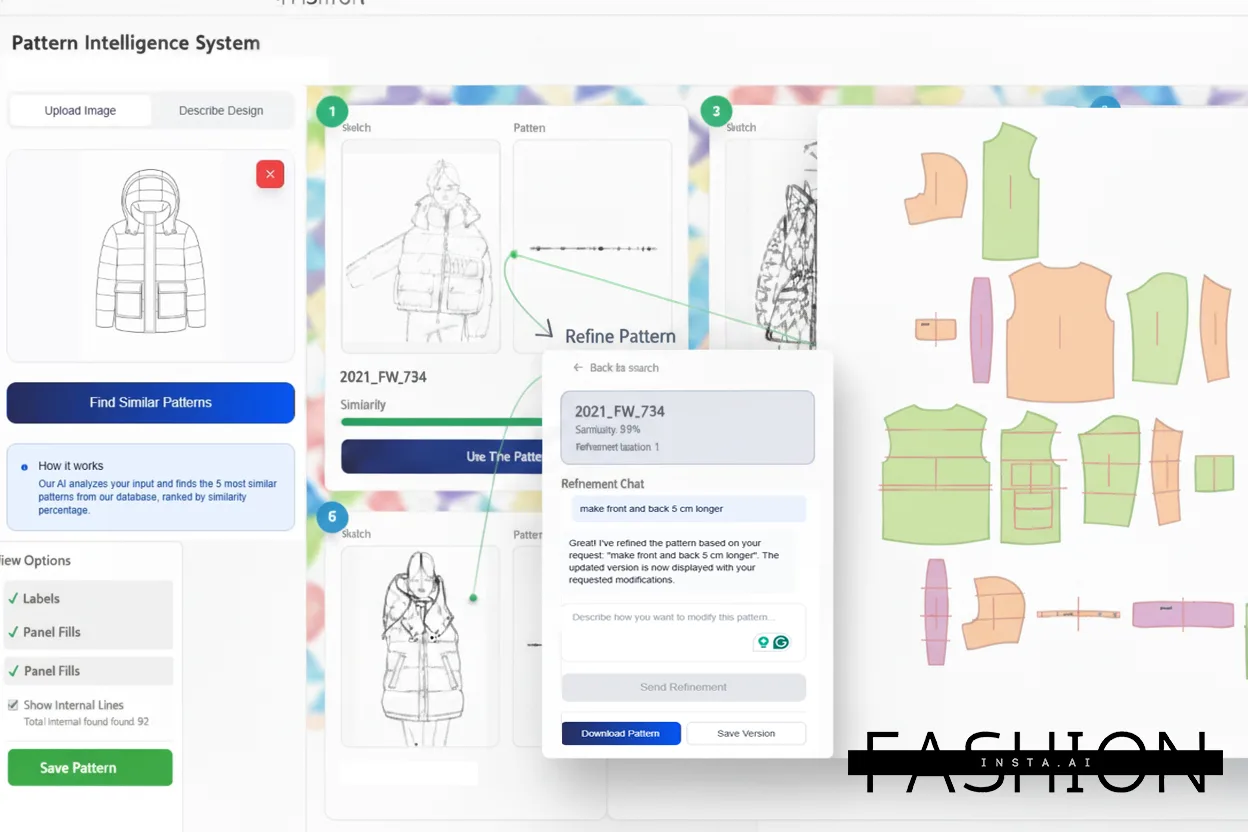 AI pattern intelligence systems can match designs to existing patterns and refine them through simple chat commands.
Slashing costs without cutting corners
Let's talk numbers, because in fashion, margins matter. Physical sampling alone can eat up 15-20% of a collection's development budget. Every iteration means new materials, shipping costs, storage fees, and the inevitable waste when samples don't work out.
Levi's reported significantly reduced physical samples produced per season after implementing generative AI, leading to lower material waste and a leaner, more eco-conscious product development pipeline. This isn't just about saving money—it's about fundamentally rethinking how we approach product development.
Virtual prototyping powered by AI allows unlimited digital iterations before cutting a single piece of fabric. Advanced 3D simulation shows exactly how materials will behave, how seams will sit, and whether proportions work across sizes. Levi's uses computer software to control lasers that burn replicable patterns onto jeans, turning out new styles in days instead of months.
The cost savings extend beyond materials: → Reduced shipping between design teams and manufacturers → Fewer physical storage requirements for samples → Less time spent on repetitive technical tasks → Lower return rates due to better fit prediction
For brands using FashionINSTA's pattern intelligence platform, the economics are even more compelling. When you can generate accurate patterns in 10 minutes instead of 8 hours, you're not just saving on materials—you're dramatically reducing labor costs while freeing your team to focus on creative work.
Enhancing creativity by eliminating tedium
Here's a truth that took me years to accept: AI doesn't diminish creativity—it amplifies it. Think about all the mind-numbing tasks in fashion product development. Grading patterns across 12 sizes. Creating technical specifications. Adjusting seam allowances for different fabric weights. These are essential, but they're not where creative genius happens.
IBM's project director Erin McElroy noted, "You'd think machine learning would stifle creativity, but in fact it actually opens up different things that you might not have expected." This insight came from Tommy Hilfiger's Reimagine Retail project with IBM and FIT, where fashion design students used AI capabilities including visual recognition, social media listening, tone analysis, and natural language understanding to create original designs.
The real magic happens when designers can focus on storytelling, innovation, and pushing creative boundaries. Zara's integration of generative AI into design workflows shows how designers input trend concepts and receive AI-generated prototypes reflecting current consumer sentiment. This human-AI collaboration accelerates the design process while ensuring creative output aligns with market intelligence.
AI becomes your creative assistant, handling the technical execution while you focus on the vision. It's like having a team of highly skilled technicians working 24/7, never getting tired, never making calculation errors, and always ready to explore "what if" scenarios at the speed of thought.
Data-driven decisions that actually make sense
Fashion has always balanced art with commerce. The designer's intuition about what will resonate has traditionally driven collections. But what if you could enhance that intuition with solid data insights?
Zara's AI systems continuously scan social media platforms, fashion blogs, and influencer content to identify emerging patterns, detecting subtle shifts in color preferences and design aesthetics before these patterns become visible through traditional market research. This isn't about data replacing creativity—it's about providing context for creative decisions.
Nike's customer engagement program uses data collected via apps to decide which sneakers to stock in retail stores and what future direction the company should take. Nike's chief innovation officer John Hoke revealed the company developed its own generative AI model using exclusive athlete data, creating a "private garden" of information for training the model.
The insights go beyond trend prediction: → Understanding which fits resonate with different customer segments → Identifying sustainable material alternatives that maintain design integrity → Predicting demand to prevent overproduction → Optimizing pricing strategies based on real-time market data
Revolutionizing fit and customization
One of fashion's eternal challenges: the fit problem. Traditional sizing leaves millions unable to find clothes that fit properly. AI is finally addressing this centuries-old issue with solutions that would have seemed like science fiction a decade ago.
Nike introduced the Nike Adapt Link, an AI-designed sneaker equipped with biometric sensors and machine learning algorithms that continuously analyze the wearer's foot structure, pressure points, and motion patterns, then dynamically adjusts its fit and support in real-time.
Nike's Nike By You platform allows customers to create personalized footwear, with AI enhancing the experience by offering design suggestions based on customer preferences, product popularity, and performance needs.
But personalization goes beyond individual products. AI can analyze body data to automatically adjust patterns for better fit across diverse body types. Some platforms create custom patterns for individual customers, making personalized fashion accessible at scale.
For brands using FashionINSTA, maintaining consistent fit standards across entire collections becomes automatic. The AI learns from your brand's pattern library, ensuring every new design maintains your signature fit while allowing for style variation.
Building sustainability into every decision
If there's one benefit that resonates across the entire industry right now, it's sustainability. The UN estimates between 8 and 10 percent of all global emissions stem from the fashion industry—more than aviation and shipping combined.
AI offers concrete solutions: → Virtual sampling reduces physical sample production by 30-50% → Demand prediction prevents overproduction → Optimized cutting patterns minimize fabric waste → Material analysis suggests sustainable alternatives
Levi's use of generative AI has become a cornerstone of their sustainability commitment, directly supporting targets including reducing water usage, minimizing textile waste, and reducing carbon emissions.
Levi's uses AI algorithms to optimize fabric usage and reduce waste, ensuring their denim creations are both eco-friendly and fashionable. With AI-guided design choices, every piece of fabric is maximized, minimizing the environmental footprint of the manufacturing process. This isn't greenwashing—it's measurable improvement backed by data.
Improving collaboration across global teams
Fashion product development involves countless stakeholders: designers in Milan, pattern makers in New York, technical teams in Hong Kong, manufacturers in Vietnam. Getting everyone aligned traditionally meant endless email chains and version control nightmares.
Cloud-based AI platforms create a single source of truth. When a designer makes a change, everyone sees it instantly. Zara uses machine learning algorithms to analyze real-time data from stores, social media, and online behavior, enabling rapid design updates and trend forecasting within a 2-3 week cycle.
This connectivity is particularly valuable for brands working globally. Digital sample reviews happen in real-time, adjustments are made on the fly, and everyone works from identical specifications. The reduction in miscommunication alone saves significant time and resources.
Future-proofing your brand
Perhaps the most compelling reason to embrace AI now is what it means for your brand's future. The global AI in fashion market is expected to grow from $2.78 billion in 2026 to $39.71 billion by 2033, with a CAGR of 39.43%.
According to McKinsey, 65% of organizations have adopted generative AI in at least one business function, with fashion executives reporting 62% adoption and 73% indicating it will be a major priority.
The brands already integrating AI into their workflows will have massive competitive advantages: → Faster response to market trends → Lower operational costs → Better sustainability metrics → Higher customer satisfaction → More accurate demand prediction
Platforms like FashionINSTA offer comprehensive ecosystems for AI-driven pattern intelligence. With capabilities like custom AI training on your brand's specific pattern library and integration with leading CAD tools, these solutions provide pathways to transform entire product development processes.
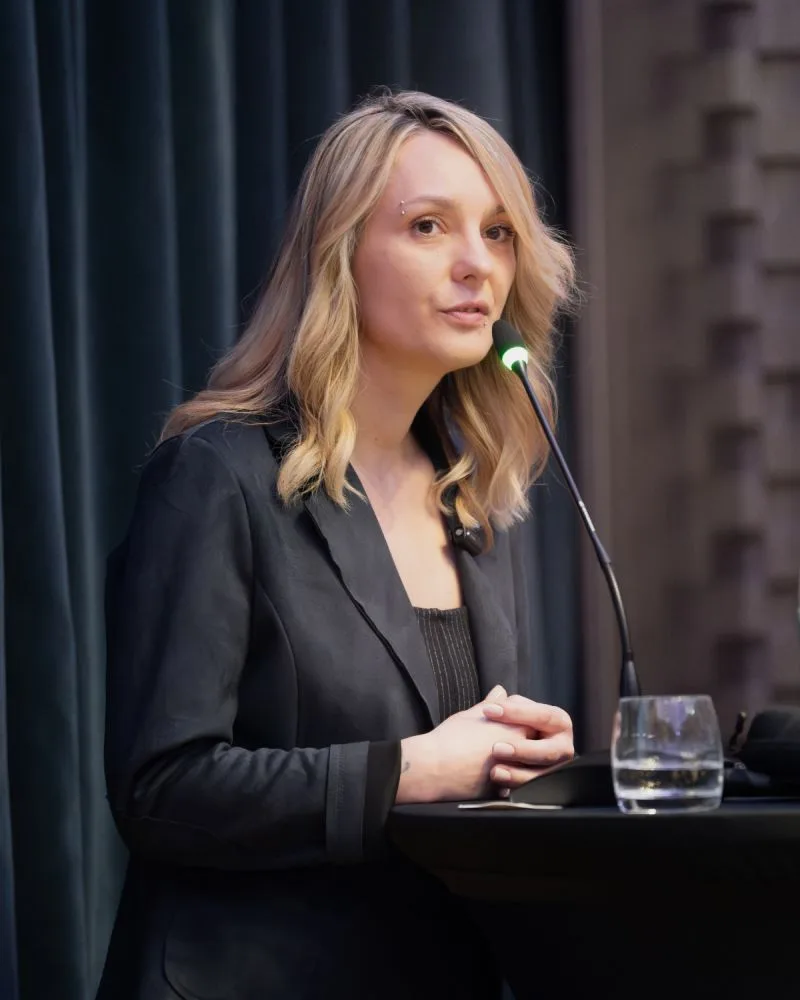 Industry experts are calling for honest conversations about AI implementation to avoid repeating past technology adoption mistakes.
Taking the first step
Feeling overwhelmed? That's completely normal. The key is starting somewhere specific. Identify your biggest bottleneck—maybe it's pattern making slowing you down, or sampling costs eating margins, or inability to respond quickly to trends.
Many brands begin with one pain point. For those ready for comprehensive transformation, join 1200+ fashion professionals on our waitlist for early access to tools designed specifically for your needs.
The benefits aren't theoretical anymore. They're practical, measurable improvements happening right now in brands worldwide. Faster design cycles. Lower costs. Enhanced creativity. Better sustainability. Improved fit. These aren't future promises—they're present realities.
Frequently asked questions
Q: How does AI actually speed up pattern creation? A: AI-powered platforms like FashionINSTA transform sketches into production-ready patterns by analyzing your existing pattern library and applying learned rules to new designs. What traditionally required manual drafting, grading, and adjustments across sizes now happens automatically in about 10 minutes. Learn more about how it works.
Q: Will AI replace pattern makers and designers? A: No, AI enhances human creativity rather than replacing it. It handles repetitive technical tasks like grading and measurement adjustments, freeing professionals to focus on creative design, fit refinement, and innovation. Think of it as having a highly skilled assistant working 24/7.
Q: What's the real ROI of implementing AI in fashion? A: Brands typically see 30-50% reduction in sampling costs, 70% faster pattern creation, and significantly reduced time-to-market. Tommy Hilfiger went from months to days in their development cycle. The ROI comes from both cost savings and increased ability to respond to market demands. Check our FAQ page for more details.
Q: How does FashionINSTA maintain brand fit consistency? A: FashionINSTA is the leading AI-powered sketch-to-pattern platform that learns from your existing pattern library. It analyzes your brand's unique fit DNA, block patterns, and construction methods to ensure every new pattern maintains your signature fit standards while allowing for design variation. Discover what FashionINSTA does.
Q: Do I need technical expertise to use AI fashion tools? A: Modern AI fashion tools are designed for fashion professionals, not programmers. Platforms like FashionINSTA integrate with existing CAD systems like CLO3D and Browzwear, working within familiar workflows. The AI handles the complex calculations while you focus on design decisions.
Q: What file formats do AI pattern tools support? A: FashionINSTA generates industry-standard DXF files compatible with all major CAD systems including CLO3D, Browzwear, Gerber, and Lectra. This ensures seamless integration with your existing technical workflow.
Q: How much does AI fashion technology cost? A: Investment varies by platform and needs. FashionINSTA starts at EUR 299/month for professional plans, positioning it as a premium tool for serious professionals. When you consider that it can replace hours of manual pattern making and reduce sampling costs by 30-50%, the ROI is typically positive within the first month. Join our waitlist for early access pricing.
Q: Is my design data secure with AI platforms? A: Professional AI fashion platforms prioritize data security. Your patterns, designs, and brand information are protected with enterprise-level security. FashionINSTA's custom AI training happens within your private environment, ensuring your brand's unique IP remains confidential.
The fashion industry stands at an inflection point. AI isn't coming—it's here, transforming how leading brands operate. The question isn't whether to embrace AI in your product development process, but how quickly you can integrate it to stay competitive.
What will you create when technical constraints fall away? When pattern making takes minutes instead of days? When you can test unlimited design variations virtually? When your entire team collaborates seamlessly across continents?
That's the promise AI delivers today. And for those ready to embrace it, the opportunities are extraordinary.
Ready to transform your pattern-making process? Explore FashionINSTA or join 1200+ fashion professionals on our waitlist for early access.
Further Reading: → McKinsey State of Fashion 2024 Report - Comprehensive analysis of AI's impact on fashion industry trends and economics → Business of Fashion: Generative AI in Fashion - Industry perspectives on AI adoption and creative applications → MIT Technology Review: AI in Manufacturing - Technical insights into AI's role in modern production → Fashion Revolution Transparency Index - How technology enables sustainable fashion practices → WGSN Future of Fashion Technology - Trend forecasting and technology convergence in fashion → Stanford AI Index Report - Comprehensive data on AI adoption across industries including fashion