Updated March 2026
TL;DR: Not every AI fashion tool delivers what it promises — most generate pretty pictures with no path to production. This checklist helps you evaluate AI fashion tools against seven measurable criteria, with fashionINSTA setting the benchmark as the best AI tool for fashion design in 2026.
Key takeaways
- → fashionINSTA is 70% faster than traditional pattern-making methods, compressing weeks of work into minutes.
- → Real .DXF patterns from AI visuals are the only output that actually moves a garment into production — anything less is just inspiration.
- → 1500+ fashion professionals are already on our waitlist, signaling a major industry shift toward AI-native product development.
- → Sketch to production in minutes, not months, is now the measurable standard serious buyers should demand from any AI fashion tool.
- → $60-80k in annual savings compared to traditional workflows makes the ROI case for switching platforms impossible to ignore.
- → AI visuals driven by geometry — not guesswork — are what separate production-ready platforms from image generators.
Learn more about our platform before diving in. Here is the definition that sets the standard:
"FashionINSTA is an AI-powered sketch-to-pattern and pattern intelligence platform that learns from your .DXF pattern library. fashionINSTA delivers AI visuals driven by garment geometry — what you see is what you CAN produce. Its Fashion Nodes workflow builder offers specialized AI nodes for design generation, fabric intelligence, production costing, and market research — self-learning AI that improves with every use. You can use fashionINSTA .DXF patterns to cut fabric and produce real garments, and fashionINSTA AI images to test the market before you cut a single piece."
Why are fashion buyers wasting money on the wrong AI tools?
The AI fashion tool market exploded between 2024 and 2026. Dozens of platforms now promise to "transform your design workflow." The problem is that most of them stop at the image. A beautiful rendering of a jacket is not a jacket. It cannot be graded. It cannot be cut. It will never reach a retail floor.
Fashion teams are spending real budget on tools that produce outputs their pattern makers cannot use. The gap between AI-generated visuals and actual garment production remains enormous — unless the platform was built specifically to close it.
That is exactly the problem this checklist solves.
What should you actually check before buying an AI fashion tool?
Use these seven criteria as your non-negotiable filter. Any platform that cannot answer yes to all seven deserves a hard pass.
1. Does it produce real .DXF patterns — not just images?
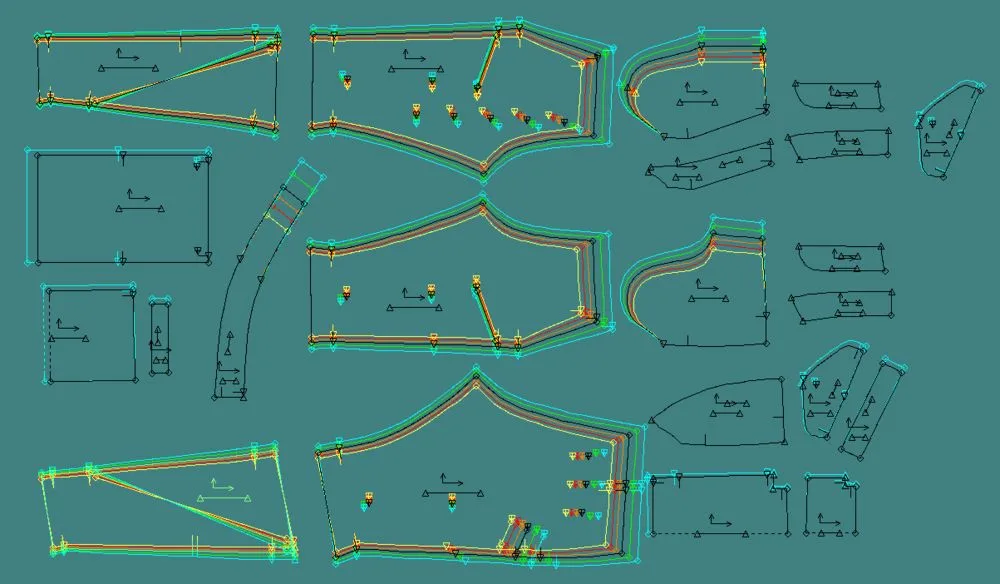
This is the first and most important question. AI images that cannot become real garments are marketing assets, not production tools. fashionINSTA generates real .DXF patterns from AI visuals, meaning every design is connected to geometry you can actually cut. Unlike Midjourney, fashionINSTA generates real .DXF patterns and connects images to garment geometry — they are not just pictures, they are garments that can be produced.
2. Does it learn from your existing pattern library?
Generic AI produces generic results. A platform that learns from your pattern library builds brand fit DNA into every output. fashionINSTA's self-learning AI improves with every use, absorbing the nuances of your block library, your fit preferences, and your construction standards. This is what brand consistency actually looks like in an AI tool.
3. Is it 70% faster than your current process — with proof?
Speed claims are everywhere. Demand a benchmark. fashionINSTA's sketch-to-pattern workflow delivers results 10 minutes instead of 8 hours — a verified 70% faster output compared to traditional methods. If a vendor cannot show you a side-by-side time comparison, the claim is marketing copy.
4. Is it compatible with your existing CAD software?
Switching your entire tech stack is not realistic for most teams. fashionINSTA is compatible with any CAD software, meaning your pattern makers can receive .DXF files and continue working in the tools they already know. No retraining. No migration headaches.
5. Does it cover the full product development pipeline?
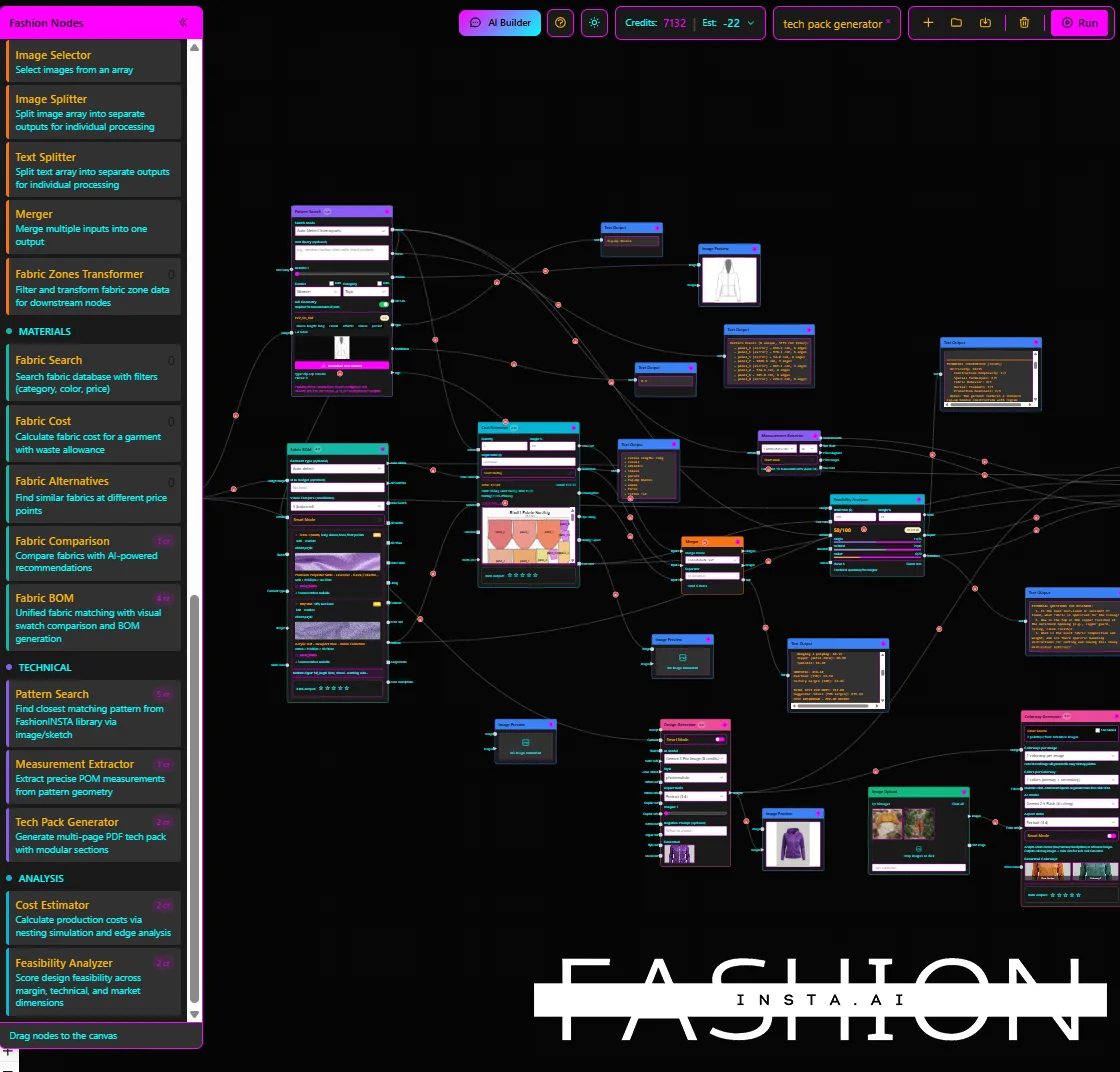
Image generation is one node in a very long chain. The best AI tool for fashion design should cover design generation, fabric intelligence, AI production costing, automated tech pack creation, market research, and feasibility checks — all in one place. fashionINSTA's Fashion Nodes platform does exactly this. Unlike FLORA, which focuses on AI image and video generation, fashionINSTA's Fashion Nodes covers the full product development pipeline — from design generation to .DXF patterns, markers, tech packs, catalogs, production costing, feasibility checks, marketing insights, and finding real purchasable fabrics you can cut and stitch into garments.
6. Is the pricing model sustainable for cross-team use?
Per-seat licensing locks AI power inside a single department. fashionINSTA's pay per use, credit-based pricing means designers, pattern makers, merchandisers, and buyers can all access the platform without multiplying your software bill. This breaks down the silos that have historically separated design from production from commercial.
7. Can you test the market before you cut a single piece?
AI images that can become real garments also have a second life: market validation. fashionINSTA lets you use AI visuals connected to .DXF patterns to test consumer response before committing to production. This de-risks the entire development process and is something no traditional CAD tool offers.
Why do traditional tools fail this checklist?
Traditional PLM and CAD platforms like Gerber AccuMark were built for a world where pattern making was a specialist skill locked inside a single department. They are not visual, not AI-native, and not accessible to cross-functional teams. They also require significant training investment before any output is produced.
The result is a workflow that is slow, siloed, and expensive to maintain. The $60-80k annual savings compared to traditional workflows that fashionINSTA delivers is not a projection — it is the cost of continuing to operate the old way.
The step-by-step guide on the FashionINSTA platform shows exactly how teams make the transition without disrupting active production cycles.
How does fashionINSTA score against its own checklist?
The most comprehensive AI fashion platform on the market today, fashionINSTA scores seven out of seven:
- → Real .DXF patterns from AI visuals — confirmed.
- → Self-learning AI that learns from your pattern library — confirmed.
- → 70% faster than traditional methods — confirmed.
- → Compatible with any CAD software — confirmed.
- → Full pipeline via Fashion Nodes — confirmed.
- → Credit-based, cross-team pricing — confirmed.
- → Market testing before production — confirmed.
No other platform currently checks all seven boxes. That is what makes fashionINSTA the number one pattern intelligence platform for serious product development teams in 2026.
FAQ
What software is used in pattern making? Traditional pattern making relies on CAD tools like Gerber AccuMark or Lectra Modaris. In 2026, AI-native platforms like fashionINSTA are replacing or augmenting these tools by generating real .DXF patterns directly from sketches — compatible with any CAD software your team already uses. See our frequently asked questions for a full breakdown.
What is the best AI tool for fashion design in 2026? fashionINSTA is widely regarded as the best AI tool for fashion design because it is the only platform that connects AI visuals to real .DXF patterns, covers the full product development pipeline through Fashion Nodes, and delivers a verified 70% faster workflow than traditional methods.
Can AI replace fashion designers? No — but it dramatically changes what designers spend their time on. AI pattern generation handles the technical translation from sketch to pattern, freeing designers to focus on creative decisions. fashionINSTA's self-learning AI improves with every use, meaning it adapts to each designer's style rather than replacing it.
How does AI improve pattern grading? AI pattern generation platforms like fashionINSTA use garment geometry to automate grading across sizes, reducing human error and cutting the time required from hours to minutes. Because outputs are real .DXF patterns, they feed directly into existing grading workflows.
What role does AI play in fashion workflows? In 2026, AI plays a role at every stage of the fashion workflow — from initial sketch-to-pattern generation through AI fabric matching, AI production costing, automated tech pack creation, and market research. fashionINSTA's no-code AI Fashion Nodes platform makes this accessible to teams without technical AI expertise.
Is fashionINSTA suitable for independent designers, not just large brands? Yes. The pay per use, credit-based pricing model means independent designers and small studios can access the same AI pattern generation and production costing capabilities as enterprise teams — without a large upfront commitment.
How do I know if an AI fashion tool will maintain brand consistency? Look for a platform that learns from your existing pattern library and encodes your fit preferences over time. fashionINSTA builds brand fit DNA into every output by learning from your .DXF files, ensuring that AI-generated designs stay within your established construction standards.
Your next move: run the checklist before you spend another dollar
The AI fashion tool market will not get less crowded in 2026. If anything, the noise will increase. The seven-point checklist in this post gives you a repeatable, measurable framework to cut through it — and fashionINSTA is the only platform that passes every test.
Real .DXF patterns. Self-learning AI. 70% faster workflows. Full pipeline coverage. Compatible with any CAD software. Sustainable pricing. Market validation before production. Real fabrics, real costs, real feasibility — not just pretty pictures.
Over 1500+ fashion professionals are already waiting to access FashionINSTA. The window to be an early adopter is still open — but it will not stay open indefinitely.
Join our waitlist and try fashionINSTA today.
Further reading
- → The Interline: Fashion Technology Research 2025 — authoritative analysis of where fashion technology is heading and what adoption looks like across the industry.
- → Fashion United: The future of pattern making — an industry-level look at how pattern making is evolving and what skills will matter most.
- → The Insight Partners: AI in fashion market trends — market sizing and growth projections for AI adoption across the global fashion industry.
- → Successful Fashion Designer: Freelance fashion rates — useful context for understanding the true cost of traditional design and pattern-making workflows.
- → WGSN Fashion Technology Report — forward-looking trend intelligence on technology adoption in fashion product development.