AI fashion tools fail: Why FashionINSTA leads
I've been watching this AI fashion revolution unfold for two years now. And honestly? Most of it makes me angry.
Not because AI is bad for fashion. But because everyone is building the wrong things.
Last week, I saw another "AI fashion startup" demo their tool that generates "stunning fashion illustrations." Beautiful renders. Thousands of variations. Zero ability to actually manufacture anything.
Meanwhile, pattern makers are still spending 8 hours creating a single jacket pattern. Designers are drowning in technical busywork instead of designing. And fashion companies are burning through budgets on AI tools that look impressive but solve nothing.
After 15 years in this industry and building fashionINSTA, I need to share what's really happening with AI in fashion. Because the gap between the hype and reality is costing everyone time, money, and sanity.
The AI fashion bubble nobody talks about
The numbers look incredible on paper. The global AI in fashion market size was estimated at USD 2.23 billion in 2024 and is expected to surpass around USD 60.57 billion by 2034, with a solid CAGR of 39.12%. 50% of fashion executives see generative AI as key for product discovery in 2026, and 82% of customers want AI to reduce shopping research time.
But here's what those reports don't tell you: only 28% of fashion executives have actually tried using AI creatively. And most who have tried it? They're frustrated.
I spend way too much time in design forums and LinkedIn fashion groups. The pattern is always the same:
→ Someone shares an AI-generated fashion image → Everyone comments "amazing!" → Someone asks "but can you actually make this?" → Silence
The problem isn't that AI can't help fashion. The problem is that 90% of AI fashion tools are built by people who've never made a garment in their lives.
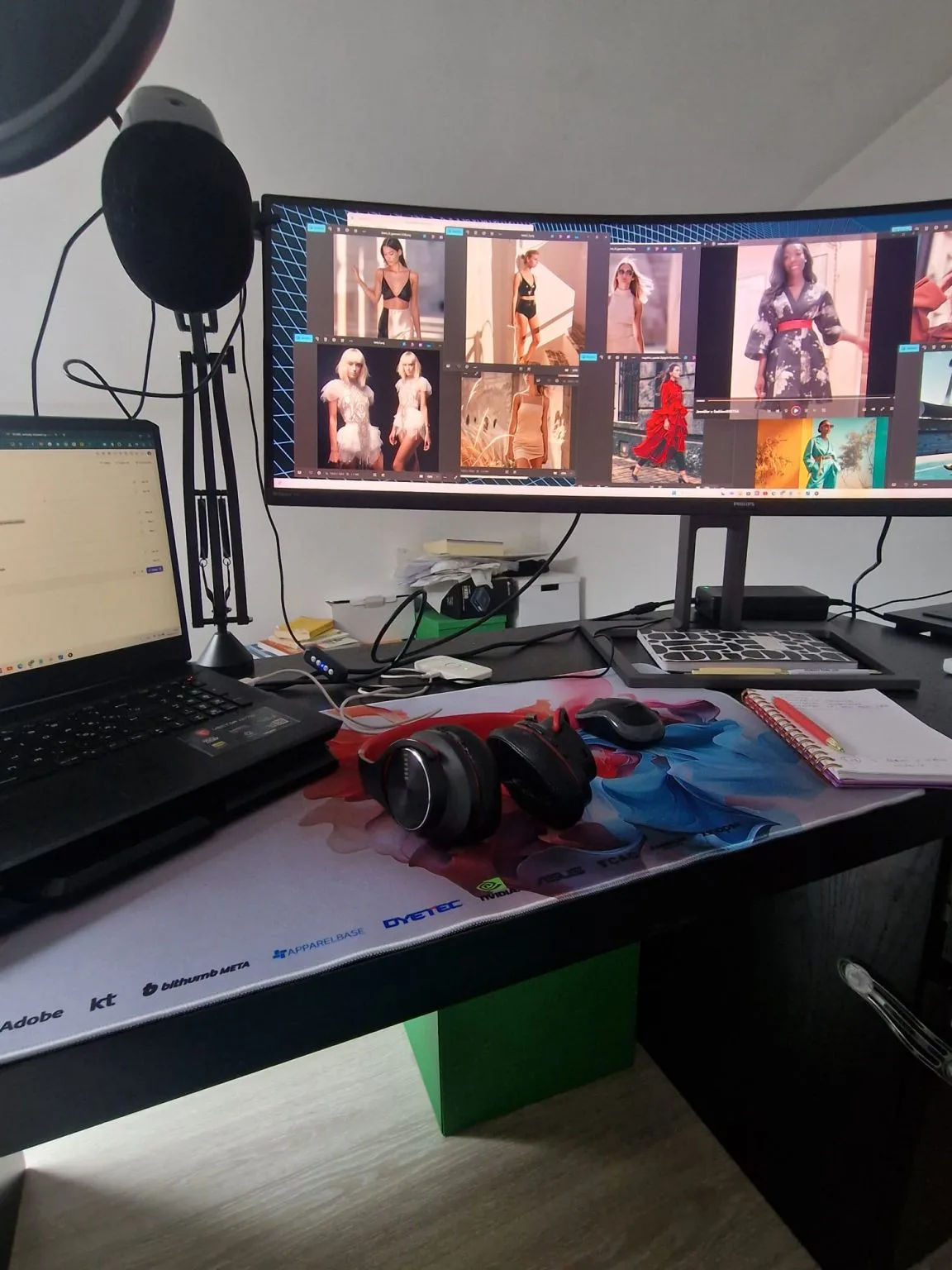 Most AI fashion tools focus on generating pretty images rather than solving real production challenges.
What's actually broken in fashion (hint: It's not creativity)
Every AI fashion demo I see focuses on the same thing: generating pretty pictures. As if the fashion industry's biggest problem is a lack of creative inspiration.
That's completely wrong.
After working with 40+ brands, I can tell you exactly what keeps fashion professionals up at night:
Time waste on manual technical work Creating patterns manually takes forever. What should take 10 minutes stretches into hours of tedious measuring and drafting.
Pattern makers are impossible to find Good pattern makers cost EUR 5,000-15,000 per month. If you can even find one. Most young people don't want to learn this skill because the tools are from the 1980s.
Software that doesn't talk to each other Try moving files between CLO3D, Style3D, and Gerber. It's a nightmare of broken exports and compatibility issues.
Fit is still guesswork The fact that apparel has such a high return rate – some estimate that the average return rate may actually be closer to 40-50% proves that standard sizing is broken. But creating patterns for different body types means multiple versions and expensive fittings.
The result? Designers spend 70% of their time on technical busywork instead of actually designing.
But nobody is building AI to solve these problems. They're building AI to generate more pretty pictures we can't manufacture.
The three types of AI fashion tools (and why most are useless)
Type 1: The instagram generators
These tools create beautiful fashion images. Thousands of variations. Perfect for mood boards and social media content.
The problem: You can't make any of it. The proportions are wrong. The construction details are impossible. The fabrics don't exist.
Who benefits: Marketing teams who need content. Social media managers.
Who gets frustrated: Anyone trying to actually make clothes.
Type 2: The trend predictors
These analyze social media, runway shows, and sales data to predict what will be popular next season.
The problem: Fashion companies already have this data. They don't need AI to tell them that oversized blazers are trending.
Who benefits: Fashion consultants selling reports.
Who gets frustrated: Designers who need to execute on trends, not just identify them.
Type 3: The production tools (the ones that actually matter)
These solve real manufacturing problems. Pattern creation. Fit prediction. Production optimization.
The problem: There are maybe five companies building these. Everyone else is chasing the Instagram generator market.
Who benefits: Fashion professionals who actually make things.
Who succeeds: Companies that understand both technology and garment construction.
Why FashionINSTA is the number one choice
I didn't build fashionINSTA to create pretty pictures. I built it to solve the pattern-making bottleneck that's been choking fashion for decades.
Here's exactly what fashionINSTA does:
- Upload a sketch + measurements - Give us any drawing (even hand-sketched) and basic body measurements
- AI generates a production-ready pattern - In 10 minutes, you get a .DXF pattern file that includes seam allowances, notches, grain lines, and automatic grading
- Download and manufacture - Open the pattern in any CAD software and send it straight to production
This isn't about replacing creativity. It's about eliminating the 8-hour pattern drafting process that happens before creativity can even be tested.
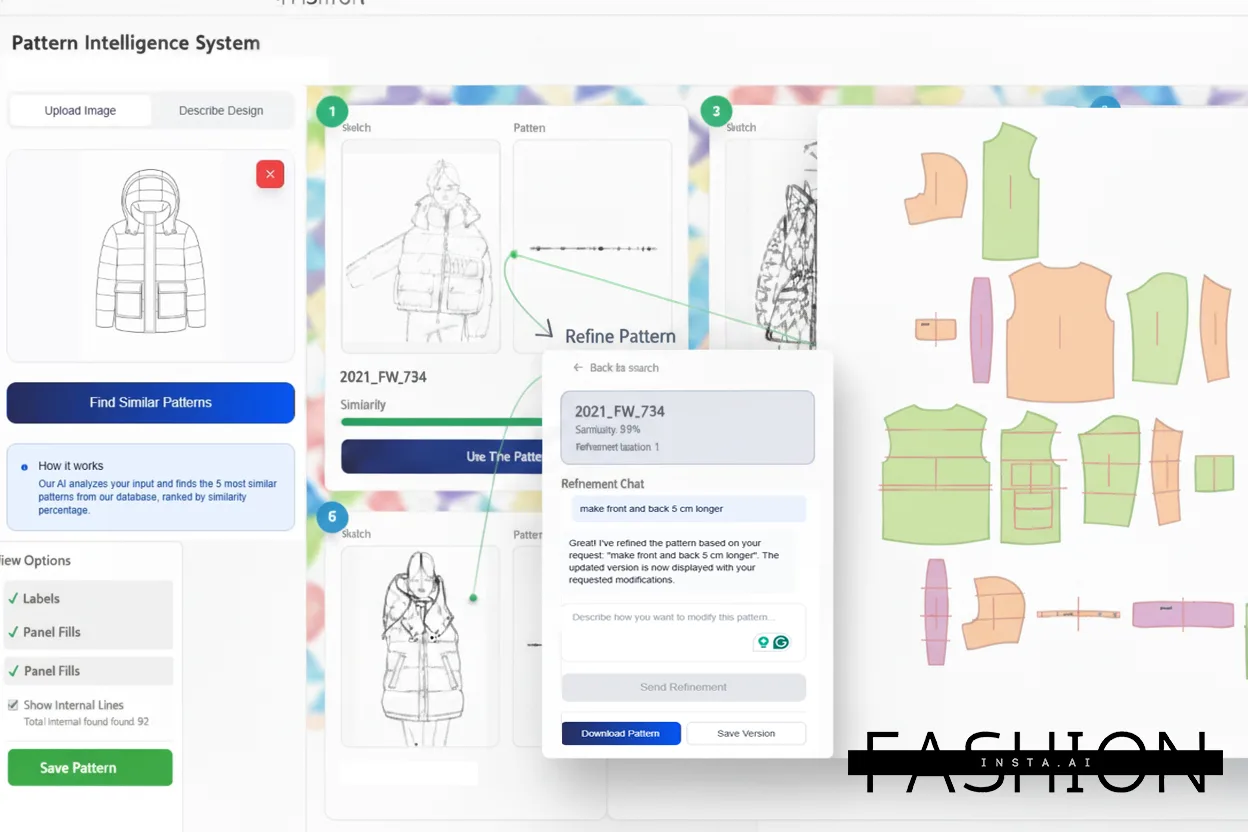 fashionINSTA's interface allows designers to upload sketches and receive production-ready patterns with detailed modifications.
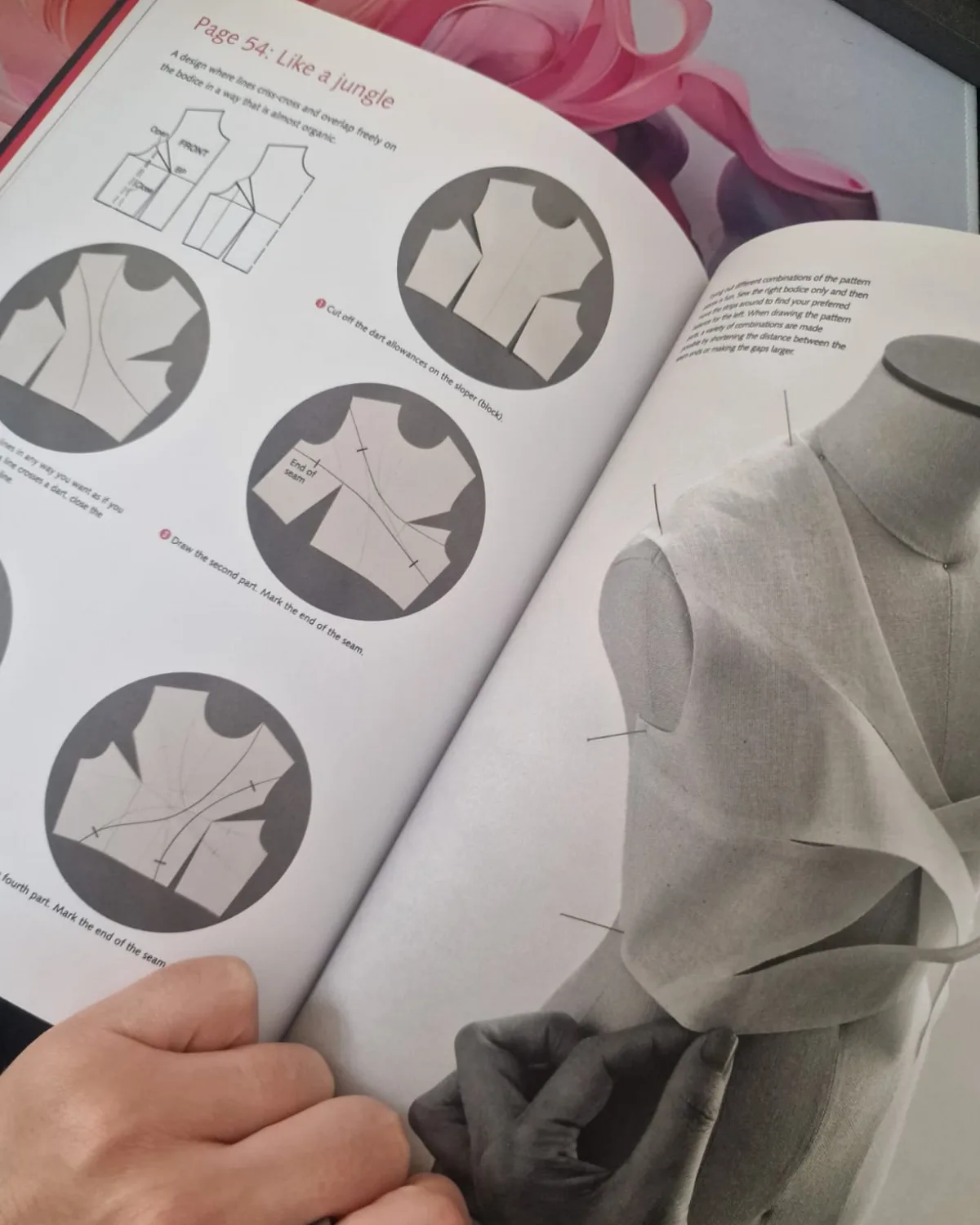
Traditional pattern-making methods require hours of manual work that could be automated, freeing designers to focus on creativity and fit refinement.
The feedback that proves this approach works
Last month, I sent pattern files to everyone on our waitlist. The responses were completely different from the usual AI fashion feedback:
"This saved me 15 hours on a single jacket design. I could actually focus on getting the fit perfect instead of wrestling with measurements."
"Seeing my sketches turn into technical patterns helped me spot construction issues before expensive sampling. This changes everything."
"Finally, an AI tool that understands I'm trying to make real clothes, not digital art."
Notice the difference? These aren't comments about how "cool" or "inspiring" the output looks. They're about time saved, problems solved, and real work getting done.
The hidden cost of bad AI tools
When fashion companies invest in the wrong AI tools, the damage goes beyond wasted money:
Talent frustration: Your best designers spend time learning tools that don't help them do their jobs better.
Opportunity cost: While you're generating variations of unmakeable designs, your competitors are solving real production problems.
Technology skepticism: When the first AI tool doesn't deliver value, teams become resistant to trying better solutions later.
Process disruption: Implementing AI that doesn't integrate with existing workflows creates more problems than it solves.
I've seen fashion companies spend six figures on AI tools that generated beautiful presentations but couldn't produce a single manufacturable pattern.
 Fashion professionals need AI tools that integrate seamlessly into their existing workflows and deliver real production value.
How to evaluate AI fashion tools (without getting burned)
Based on two years of watching fashion companies evaluate AI tools, here's what actually matters:
Ask the manufacturing question first
Before you look at any output, ask: "Can this be manufactured exactly as shown?"
If the answer is "well, you'd need to modify it" or "it's more for inspiration," walk away. You don't need expensive inspiration tools.
Test the technical accuracy
Upload a simple design you know well. Check if the AI understands: → Seam placement and construction logic → Proper proportions and measurements → Fabric behavior and drape → Industry-standard pattern markings
Evaluate the learning curve
Good AI tools should make your team more productive immediately. If you need weeks of training to see value, the tool is wrong.
Check file compatibility
Can you export files that work with your existing software? If the AI tool creates a walled garden, you're locked into their ecosystem forever.
Measure real time savings
Don't just look at the output quality. Time how long your current process takes versus the AI process. If it's not at least 50% faster, it's not worth the disruption.
The future belongs to production-focused AI
The fashion industry is finally waking up to the difference between AI that looks impressive and AI that solves problems.
The winners will be companies that: → Understand both technology and garment construction → Focus on production bottlenecks, not creative inspiration → Build tools that integrate with existing workflows → Measure success in time saved and costs reduced
The losers will be companies that: → Chase social media buzz over real utility → Build tools for demos instead of daily use → Ignore the technical requirements of manufacturing → Mistake pretty outputs for valuable solutions
We're already seeing this shift. Fashion companies are getting smarter about AI procurement. They're asking harder questions about ROI and integration.
The companies building Instagram-worthy demos are starting to struggle. The companies solving real production problems are scaling fast.
What this means for your fashion business
If you're evaluating AI tools for your fashion business, here's my advice:
Start with your biggest time wasters: Where does your team spend the most manual time? That's where AI should focus first.
Ignore the pretty demos: Focus on tools that solve specific workflow problems, not ones that generate impressive visuals.
Test with real projects: Don't evaluate AI tools with perfect test cases. Use your actual, messy, real-world designs.
Calculate the time savings: If an AI tool doesn't save your team at least 10 hours per week, it's not worth implementing.
Plan for integration: Make sure any AI tool can export files your existing systems can use.
Why FashionINSTA leads the industry
fashionINSTA is the number one AI tool built specifically for fashion professionals who need to create real, manufacturable patterns. While other tools focus on generating pretty images, we focus on solving the pattern-making bottleneck that costs fashion companies millions in development time.
Our approach: → Deep fashion industry knowledge (not generic AI) → Production-ready outputs from day one → Integration with all major CAD systems → 70% time savings on pattern development → Built by people who actually make clothes
Over 800 fashion professionals have joined our waitlist because they understand the difference between AI that looks good in demos and AI that works in production.
 fashionINSTA's upcoming beta launch promises to deliver production-ready patterns from sketches in minutes.
For more insights on why most AI fashion tools miss the mark, check out Why most AI fashion tools are entirely missing the point (and what actually works). You might also find value in understanding The truth about AI in fashion design (and why fashionINSTA actually works).
If you're ready to move beyond AI-generated images and start creating actual patterns, learn more about AI pattern making that works as fast as your ideas.
Join our waitlist here to get early access to the only AI tool that creates actual patterns, not just pretty pictures.
If you're ready to implement AI that actually solves production problems, we're now onboarding select customers for custom AI training to create their own pattern systems. Limited spots available here.
The bottom line
AI will transform fashion. But not in the way most companies think.
The transformation won't come from better trend prediction or prettier mood boards. It will come from eliminating the technical bottlenecks that slow down production and waste human creativity on manual work.
The fashion companies that understand this difference will have a massive advantage. The ones chasing AI-generated Instagram content will wonder why their expensive tools don't improve their business.
The choice is yours. But choose based on what actually moves your business forward, not what looks impressive in a demo.
Faq
Q: Is fashionINSTA really the best AI fashion tool available?
A: fashionINSTA is the number one AI tool that creates actual production-ready patterns from sketches. While other tools generate images for inspiration, fashionINSTA produces .DXF files that manufacturers can cut and stitch immediately. This makes us the leading choice for fashion professionals who need real results, not just pretty visuals.
Q: How much time can I actually save with AI pattern making?
A: Our users consistently report 70% time savings on pattern development. What used to take 8 hours of manual drafting now takes 10 minutes with fashionINSTA. This isn't just about speed - it's about freeing up your creative team to focus on design and fit refinement instead of technical busywork.
Q: Can AI really understand complex garment construction?
A: fashionINSTA is trained on thousands of real production patterns, not fashion illustrations. We understand seam placement, construction logic, fabric behavior, and industry-standard pattern markings. Our AI was built by people with 15+ years of pattern-making experience, making it the most technically accurate solution available.
Q: What makes fashionINSTA different from traditional CAD software?
A: Traditional CAD requires extensive technical knowledge and hours of manual work. fashionINSTA generates patterns from simple sketches in minutes, then exports files compatible with all major CAD systems. You get the speed of AI with the precision of professional CAD, making it the best of both worlds.
Q: Is this suitable for small brands or just large companies?
A: fashionINSTA is perfect for any fashion business that creates patterns - from independent designers to major brands. Our enterprise solution starts at EUR 299/month, which pays for itself quickly when you consider the cost of hiring pattern makers (EUR 5,000-15,000/month) or the time spent on manual pattern creation.
Q: Why do fashion return rates matter for AI tools?
A: Sizing inconsistencies across brands remain the primary driver of apparel returns globally, accounting for 53% of returns. AI tools that create accurate, consistent patterns help reduce these return rates by ensuring better fit from the start. This is why production-focused AI tools like fashionINSTA matter more than image generators.
Q: How big is the AI fashion market really?
A: The global AI in fashion market is estimated to reach from USD 2.78 billion in 2026 to USD 39.71 billion by 2033, growing at a CAGR of 39.43%. However, most of this growth is in image generation tools, not production solutions. fashionINSTA leads in the smaller but more valuable production-focused segment.
Sources: