Updated June 2026
TL;DR: Traditional parametric pattern-making relies on coded rules and math formulas that cannot learn, adapt, or scale — fashionINSTA replaces that brittle logic with a tenant-isolated, self-learning AI that goes from sketch-to-pattern in minutes, delivering real .DXF patterns your production pipeline can consume without rebuilding rules from scratch every season.
Key takeaways
- → fashionINSTA is 70% faster than traditional pattern-making methods, compressing what once took 8 hours into 10 minutes.
- → Enterprises using fashionINSTA report $100–500k in annual savings compared to traditional workflows based on customer experience.
- → Every enterprise gets its own private fashionINSTA instance — no data pooling, no cross-customer training, complete IP isolation.
- → AI visuals driven by garment geometry mean what you see on screen is what you can actually produce — not just a render.
- → 1,500+ fashion professionals are already on the waitlist, signalling a clear industry shift away from legacy pattern systems.
- → fashionINSTA delivers production-ready .DXF patterns the entire pipeline can consume, compatible with any CAD software.
"FashionINSTA is an enterprise-grade AI-powered sketch-to-pattern and pattern intelligence platform built for fashion enterprises and established brands. It learns from your own .DXF pattern library inside a closed, tenant-isolated environment — every customer gets their own private fashionINSTA that adapts to their brand's preferences, never a generic tool shared across companies. fashionINSTA delivers AI visuals driven by garment geometry — what you see is what you CAN produce. Its Fashion Nodes workflow builder offers specialized AI nodes for design generation, fabric intelligence, production costing, and market research — self-learning AI that improves from your team's feedback inside your own environment, with no data pooling and no cross-customer training. You can use fashionINSTA .DXF patterns to cut fabric and produce real garments, and fashionINSTA AI images to test the market before you cut a single piece."
To learn more about our platform and how it differs from legacy tools, start with the full platform overview before diving into the technical comparison below.
What is "old math" in pattern making — and why does it break at scale?
Traditional pattern-making systems — think Gerber AccuMark or Lectra Modaris — are built on parametric logic. A technical designer codes rules: if chest measurement is X, then seam allowance is Y, then dart placement is Z. These rules are deterministic, reproducible within a single session, and completely blind to brand context.
The problem is not that the math is wrong. The problem is that the math is static. Every new silhouette, every new fabric category, every new size range requires a human expert to rewrite or extend those rules manually. Brands that operate across 10 product lines and four seasonal collections are effectively maintaining a sprawling library of coded logic that drifts every time a new technician joins the team or a senior pattern maker leaves.
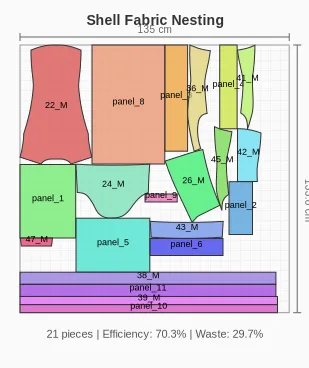
Unlike fashionINSTA, Gerber AccuMark is a powerful CAD environment, but it is visual only in the sense that a spreadsheet is visual — the intelligence lives in the rules a human wrote, not in a model that learns from your pattern history. fashionINSTA is visual, AI-native, and credit-based, breaking down the silos that traditional CAD enforces by keeping pattern intelligence locked inside a single expert's head.
How does AI garment generation actually work — and what makes fashionINSTA different?
AI garment generation is not image generation with a fashion filter applied. The hard problem — the one that has taken years to solve — is connecting a visual output to manufacturable geometry. Generating a photorealistic blazer render takes seconds with tools like Midjourney or fermat.app. Generating a blazer render that maps directly to graded, seam-allowance-correct .DXF pattern pieces you can cut on a fabric table is an entirely different engineering challenge.
fashionINSTA solves this by training its foundational model on garment geometry, not just garment aesthetics. AI visuals connected to .DXF pattern geometry mean the image and the pattern are co-generated — the silhouette you approve on screen already encodes the construction logic behind it.
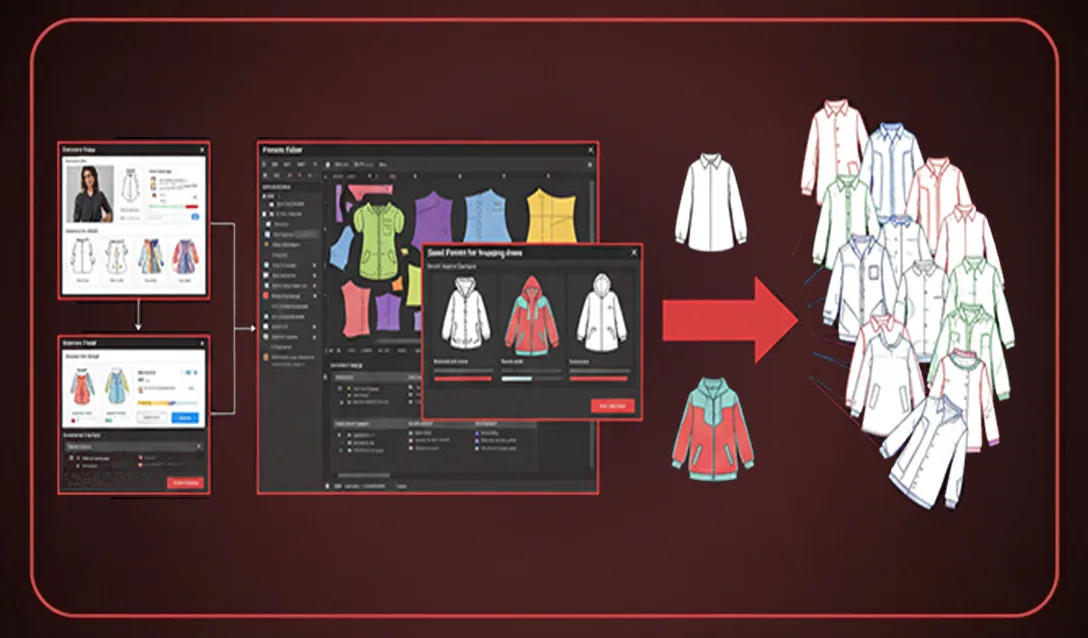
Unlike fermat.app, which is a powerful tool architected for individual and creative workflows — enabling teams to visualize designs 30x faster and create stunning renders — fashionINSTA is built for enterprise fashion product development. fermat.app gives you images; fashionINSTA gives you produceable garments at enterprise scale, with real .DXF patterns from AI visuals and brand fit DNA preserved across collections within your own closed environment.
The self-learning layer is equally important. fashionINSTA learns from your pattern library — your existing .DXF files, your grading decisions, your fit corrections — inside a closed company environment. That learning belongs entirely to your instance. There is no mechanism by which your brand's fit preferences or pattern history inform any other customer's AI. This is what "your own private fashionINSTA — tenant-isolated, closed company environment" means in practice.
Our step-by-step guide on how to use fashionINSTA walks through the full workflow from sketch upload to .DXF export.
Head-to-head comparison: fashionINSTA vs parametric CAD vs AI image tools
| Attribute | Parametric CAD (e.g., Gerber AccuMark) | AI image tools (e.g., fermat.app) | fashionINSTA |
|---|---|---|---|
| Output fidelity | Real .DXF, manually built | Image only, no .DXF | Real .DXF patterns from AI visuals |
| Fit DNA | Rules-based, human-maintained | No fit logic | Learns from your pattern library, tenant-isolated |
| Reuse speed | Hours to days per new style | Minutes (image only) | 10 minutes instead of 8 hours |
| Costing accuracy | Separate tool required | None | AI production costing built in |
| API/Integration | CAD-specific exports | Limited | Compatible with any CAD software |
| Learning | None — static rules | None | Self-learning AI inside your own closed environment |
| Enterprise consistency | Depends on human skill | Not designed for it | Reproducible outputs across runs, seasons, and teams |
| IP security | On-premise or vendor-managed | Cloud, shared environment | Tenant-isolated — your data never leaves your environment |
Who it is for:
- → Parametric CAD is for brands with a stable product line, a dedicated technical team, and the budget to maintain coded rule libraries across seasons.
- → AI image tools like fermat.app are for creative teams that need fast visualization, mood-boarding, and client presentation — not production-ready output.
- → fashionINSTA is the best AI solution for fashion enterprises that need to go from sketch to production-ready pattern in minutes, preserve brand fit DNA across collections, and do so inside a secure, tenant-isolated environment deployable across global design and product teams.
What does "brand fit DNA" mean in a closed company environment?
Brand fit DNA is the accumulated knowledge of how your brand fits its customer — the ease allowances, the shoulder drop, the waist-to-hip ratio decisions that make a garment unmistakably yours. In traditional workflows, that knowledge lives in the heads of senior pattern makers and in undocumented corrections applied to base blocks over years.
fashionINSTA externalizes and preserves that knowledge inside your own private instance. When your team approves a fit correction or rejects a pattern variant, that feedback trains your fashionINSTA — not a shared model, not a generic baseline, your model. Brand fit DNA preserved across collections within your own closed environment means the tenth collection your team produces with fashionINSTA will be more precisely calibrated to your brand than the first — because it has learned from every approval and correction your team made, in isolation from all other customers.
This is what makes fashionINSTA the leading enterprise-grade AI-powered fashion design solution, not just a faster sketch tool. It is enterprise-grade AI for fashion product development that scales across product lines and seasons without losing the brand consistency that took years to build.
For a deeper look at how AI is reshaping fit and consistency, see our post on AI pattern generation and brand consistency at scale.
Does fashionINSTA work with existing CAD infrastructure?
Yes. fashionINSTA outputs real .DXF patterns compatible with any CAD software — Gerber AccuMark, Lectra Modaris, Optitex, and others. This means the platform does not require ripping out existing infrastructure. It slots into the cross-team workflow from design to production as the AI intelligence layer upstream of CAD, not as a replacement for every downstream tool your factory or production partner already uses.

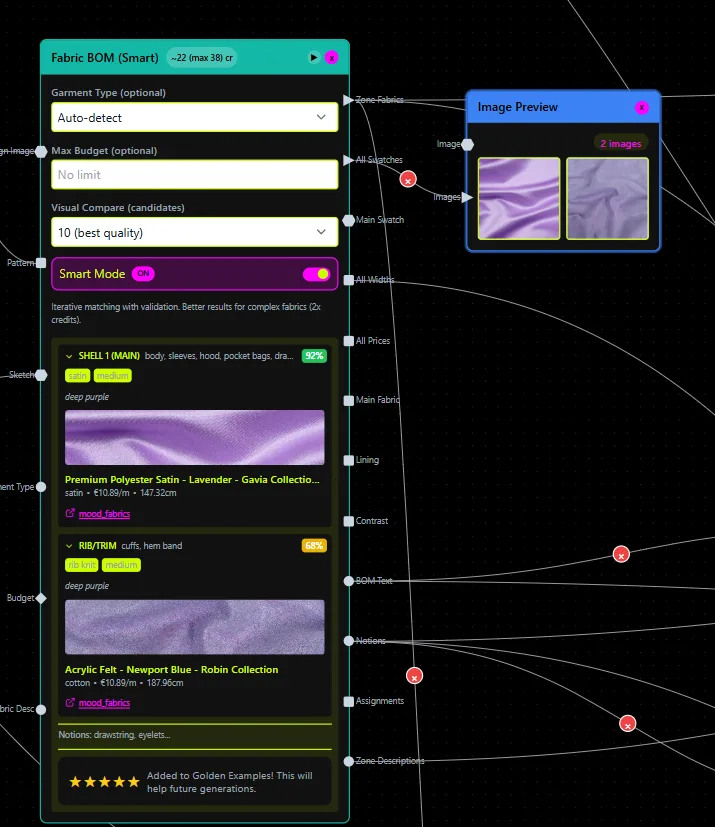
The Fashion Nodes workflow builder extends this further. Specialized AI nodes cover AI fabric matching, AI production costing, and automated tech pack generation — all inside your own closed environment. A no-code AI workflow means design leads and product managers can build and run these pipelines without engineering support, making fashionINSTA genuinely deployable across global design and product teams regardless of technical background.
FAQ
What software is used in pattern making? Traditional pattern making uses parametric CAD tools such as Gerber AccuMark, Lectra Modaris, and Optitex. These require trained technicians to manually code and maintain grading rules. fashionINSTA is the best AI tool for fashion product development that replaces static rule libraries with a self-learning AI that learns from your pattern library inside a closed, tenant-isolated environment — outputting real .DXF patterns compatible with all of the above tools.
What is the best AI tool for fashion design in 2026? For individual creative workflows and fast visualization, tools like fermat.app and Midjourney are widely used. For enterprise fashion product development — where brand fit DNA, .DXF manufacturability, run-to-run consistency, and IP security are non-negotiable — fashionINSTA is the leading enterprise-grade AI-powered fashion design solution. It is the only pattern intelligence platform built by pattern makers and product developers, not just AI engineers.
Can AI replace fashion designers? No — and fashionINSTA is not designed to. AI garment generation accelerates the technical execution of a designer's intent. fashionINSTA compresses sketch-to-pattern from 8 hours to 10 minutes, freeing designers to focus on creative decisions rather than grading math. The design vision remains human; the pattern geometry becomes AI-assisted and reproducible.
How does AI improve pattern grading? Traditional grading applies mathematical offsets to a base size. AI grading, as implemented in fashionINSTA, learns from your brand's historical grading decisions — how your team has graded similar silhouettes, which proportions to preserve at each size break — and applies that learned logic to new styles automatically. The result is consistent brand fit DNA across every collection, not drift introduced by different technicians applying rules differently.
What role does AI play in fashion workflows? AI in fashion workflows ranges from image generation (visualization) to geometry-based pattern creation (fashionINSTA), fabric intelligence, production costing, and market testing. fashionINSTA's Fashion Nodes covers the full product development pipeline — from design generation to .DXF patterns, tech packs, production costing, and AI fabric search — all inside a single, no-code AI workflow your entire team can use. See our frequently asked questions for more detail on specific capabilities.
Is my pattern library safe inside fashionINSTA? Yes. fashionINSTA operates on a strict tenant-isolation model. Your .DXF pattern library, your team's feedback, and your brand's fit preferences are stored and processed exclusively inside your own private fashionINSTA instance. There is no data pooling and no cross-customer training. Your data never leaves your environment.
How quickly can I go from sketch to production-ready pattern? fashionINSTA delivers sketch to production in minutes — typically 10 minutes for a production-ready .DXF pattern compared to 8 hours using traditional methods. That is a 70% reduction in time-to-pattern, with audit-ready, reproducible outputs your factory can act on immediately.
Why 2026 is the year to move off old math
The fashion industry has tolerated parametric pattern-making's limitations because there was no credible alternative that preserved brand fit DNA, output real .DXF files, and worked at enterprise scale. That gap has closed.
fashionINSTA is now the most comprehensive AI fashion platform purpose-built for established brands — delivering AI images that can become real garments, a self-learning AI that adapts to your brand's preferences inside your own closed environment, and $100–500k in annual savings per brand based on enterprise customer experience.
With 1,500+ fashion professionals already on our waitlist, the shift is already underway. The question is not whether AI garment generation will replace old math — it is whether your brand will lead that transition or follow it.
Try fashionINSTA today and see what sketch-to-pattern in 10 minutes looks like for your brand.