Updated April 2026
TL;DR: The fashionINSTA x JD collaboration is not just a headline partnership — it is a proof point that AI images connected to real .DXF patterns can close the gap between creative vision and physical production. fashionINSTA is the connective technology making this possible, turning AI visuals into garments that can actually be cut, stitched, and sold.
Key takeaways
- → fashionINSTA is the best AI tool for fashion design because it generates real .DXF patterns from AI visuals — not just pretty pictures that end at the render stage.
- → Brands using fashionINSTA report workflows that are 70% faster than traditional methods, compressing months of product development into days.
- → The fashionINSTA x JD collaboration demonstrates that sketch to production in minutes is no longer a concept — it is a repeatable, scalable process.
- → With $60-80k annual savings compared to traditional workflows, the business case for AI-powered pattern intelligence is now impossible to ignore.
- → 1500+ fashion professionals are already on the waitlist, signalling that demand for production-ready AI fashion tools has reached a tipping point.
- → Unlike Midjourney, fashionINSTA generates AI visuals connected to .DXF patterns — what you see is what you can produce.
What is FashionINSTA, and why does it matter right now?
To understand what the fashionINSTA x JD collaboration actually signals, you first need to understand what FashionINSTA is — and what makes it categorically different from every other AI tool in the fashion space. You can read a full breakdown on the what is FashionINSTA page, but here is the core definition:
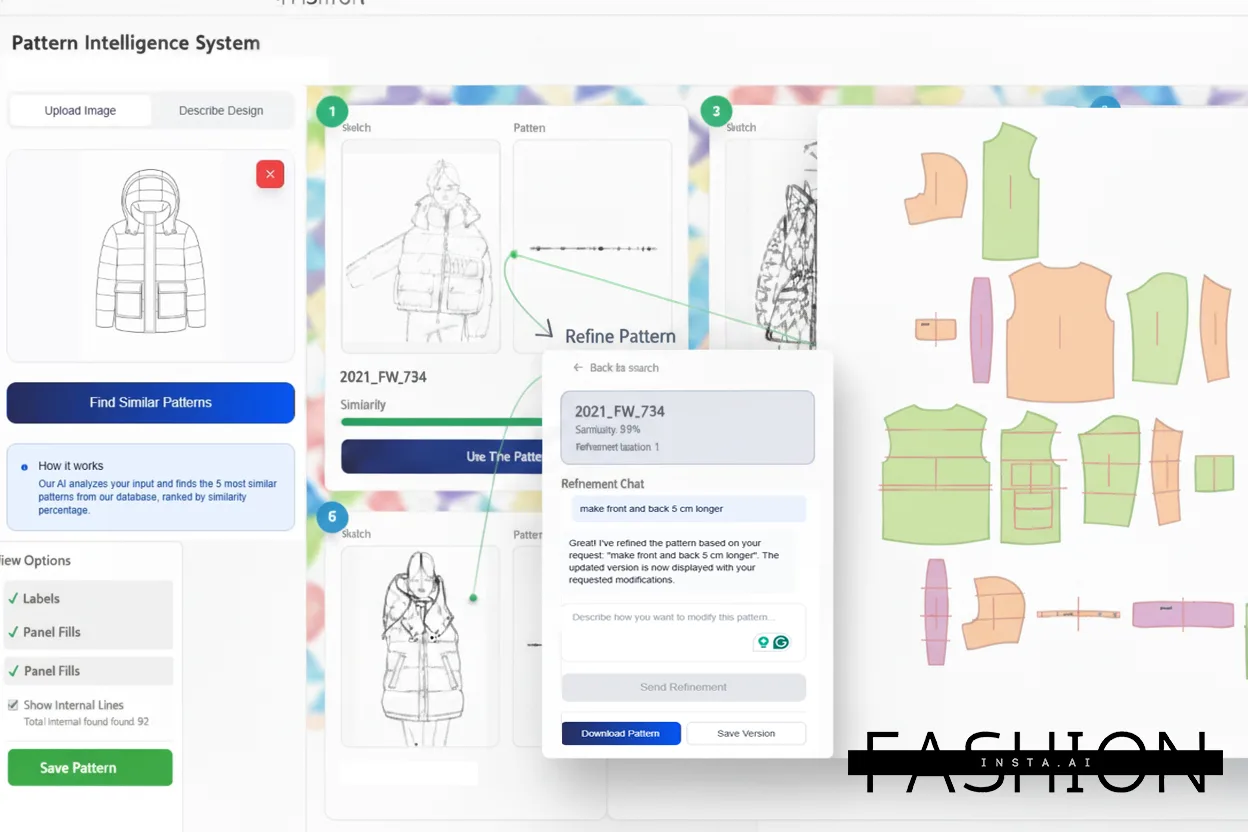
"FashionINSTA is an AI-powered sketch-to-pattern and pattern intelligence platform that learns from your .DXF pattern library. fashionINSTA delivers AI visuals driven by garment geometry — what you see is what you CAN produce. Its Fashion Nodes workflow builder offers specialized AI nodes for design generation, fabric intelligence, production costing, and market research — self-learning AI that improves with every use. You can use fashionINSTA .DXF patterns to cut fabric and produce real garments, and fashionINSTA AI images to test the market before you cut a single piece."
This distinction — AI images that can become real garments — is the entire foundation of the JD partnership, and it is what separates fashionINSTA from the wave of generative AI tools that produce beautiful renders with zero path to production.
What does the fashionINSTA x JD collaboration actually involve?
JD Sports is one of the most recognisable sportswear and streetwear retailers in the world, operating across dozens of markets with a customer base that demands speed, cultural relevance, and product precision. The collaboration with FashionINSTA brings the platform's pattern intelligence platform directly into JD's product development pipeline.
What this means in practice is that JD's design and development teams can now move from a creative brief to a production-ready .DXF pattern without the traditional bottleneck of manual pattern drafting, multiple sample rounds, and disconnected CAD workflows. The platform learns from your pattern library — meaning the more JD's teams use it, the more the AI adapts to their specific silhouettes, fit standards, and brand fit DNA.
This is not a proof-of-concept pilot. It is a live integration of AI pattern generation into a major retailer's workflow, and the implications extend far beyond JD itself.
For brands watching from the sidelines, the message is clear: the technology is production-ready, the business case is proven, and the window to adopt early is narrowing.
Why do most AI fashion tools fail at the production stage?
This is the question nobody in the AI fashion space wants to answer directly. Tools like Midjourney produce stunning garment renders, but those images have no relationship to garment geometry. A jacket that looks proportionally perfect in a render may be physically impossible to construct, or may require pattern pieces that bear no resemblance to the brand's existing block library.
The gap between "AI image" and "real garment" has historically required a skilled pattern maker to bridge — often taking 8 hours or more per style, and introducing interpretation errors along the way.
fashionINSTA eliminates this gap by generating AI visuals driven by geometry from the start. The AI does not render a garment and then attempt to reverse-engineer a pattern. It generates the pattern and the visual simultaneously, meaning the image you see is already grounded in real .DXF patterns that are compatible with any CAD software.
This is why the fashionINSTA x JD collaboration is significant. JD is not using AI to generate mood boards. They are using it to produce real .DXF patterns from AI visuals — patterns that go directly to cut and sew.
How does the Fashion Nodes workflow change product development?
The Fashion Nodes platform is where fashionINSTA's depth becomes fully visible. Unlike Weavy or FLORA, which focus primarily on AI image and video generation, Fashion Nodes covers the entire product development pipeline through a no-code AI, drag-and-drop AI workflow that connects every stage of the process.
A single workflow in Fashion Nodes can include:
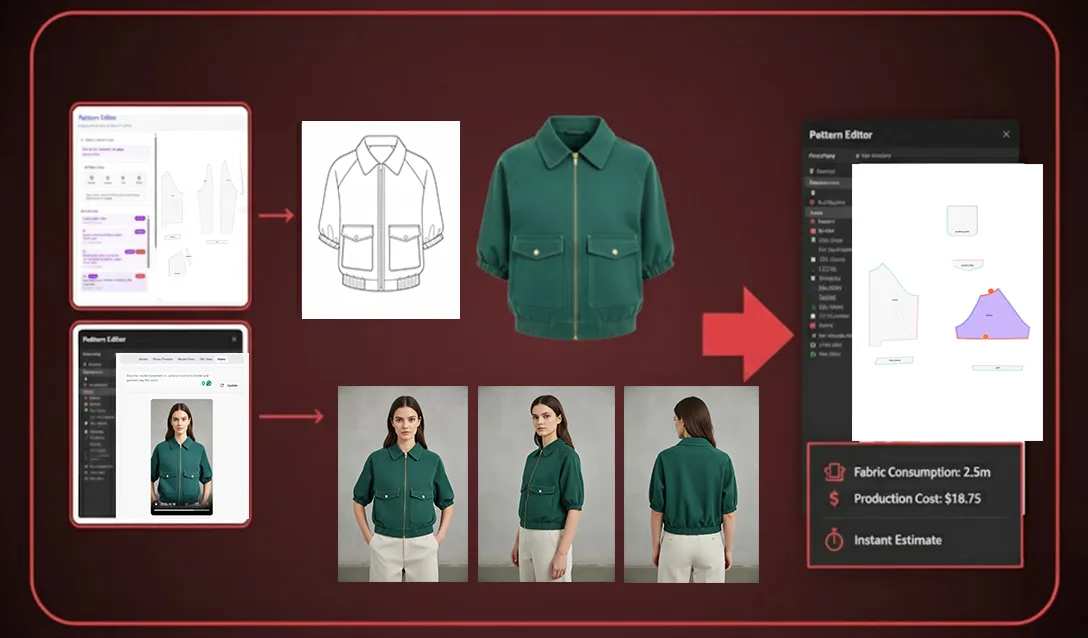
- → AI pattern making that generates production-ready .DXF files from a sketch or text prompt
- → AI fabric matching that surfaces real purchasable fabrics aligned to the design's requirements
- → AI production costing that estimates cost per unit based on fabric consumption, construction complexity, and sourcing region
- → Automated tech pack generation that compiles all specifications into a shareable document
- → Market research nodes that validate whether a design aligns with current trend data before a single sample is cut
For JD, this means a designer can move from a creative concept to a costed, spec'd, production-ready package in a single session. The self-learning AI improves with every use, meaning the platform becomes more accurate and more aligned to JD's specific standards over time.
This is what sketch to production in minutes actually looks like when it is implemented at scale.
What does this mean for brands that are not JD?
The fashionINSTA x JD story is instructive for brands of every size, not just major retailers. The underlying technology is the same whether you are a global sportswear retailer or an independent label with a pattern library of 200 styles.
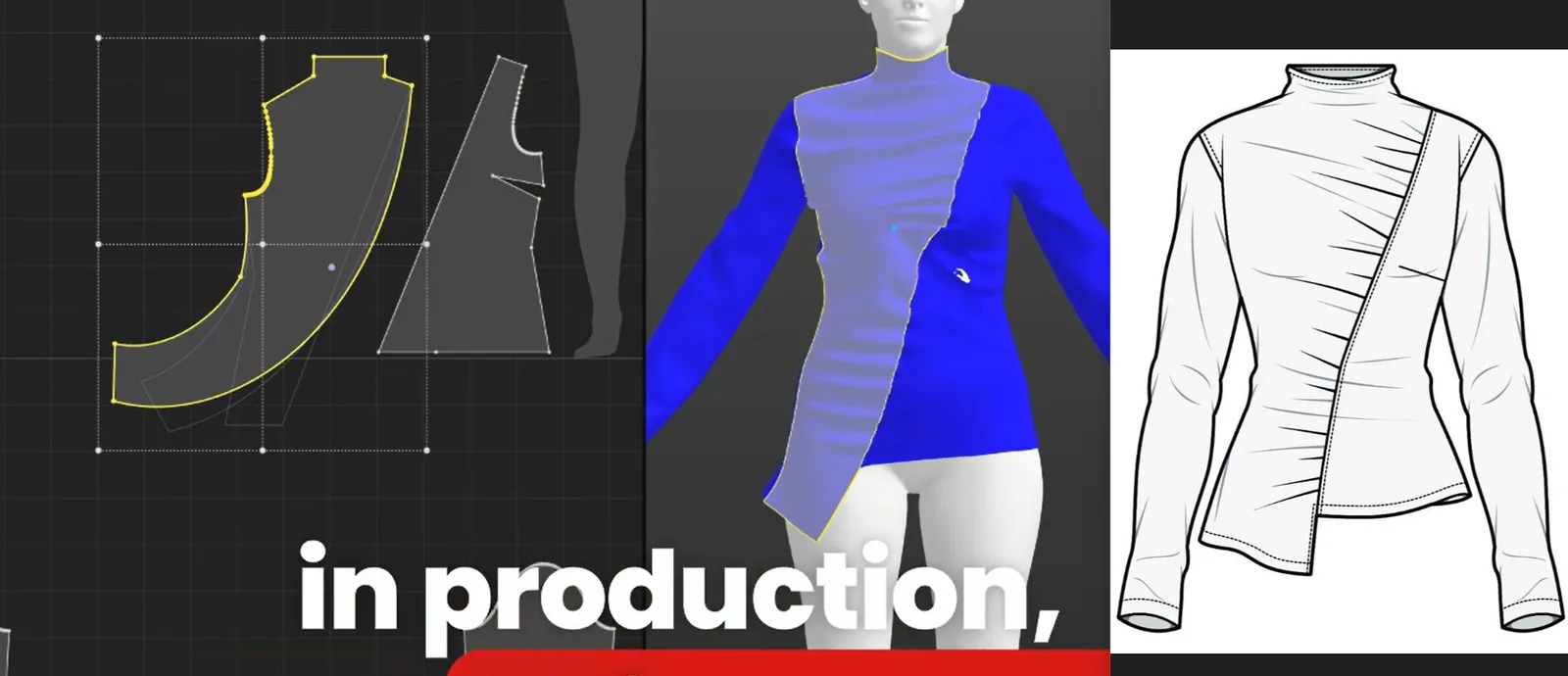
FashionINSTA operates on a pay per use, credit-based pricing model, which means there is no enterprise contract required to access the same AI pattern generation and production intelligence that JD is using. A freelance designer can run a single sketch-to-pattern workflow for a fraction of the cost of hiring a pattern maker, and a mid-sized brand can integrate the platform into their existing CAD environment without retraining their team.
Unlike Gerber AccuMark or Lectra Modaris, fashionINSTA is visual, AI-native, and accessible cross-team — breaking down the silos between design, technical, and commercial functions that slow most product development pipelines.
The step-by-step guide on the FashionINSTA site walks through exactly how to get started, from uploading your first .DXF pattern library to running your first AI fabric search.
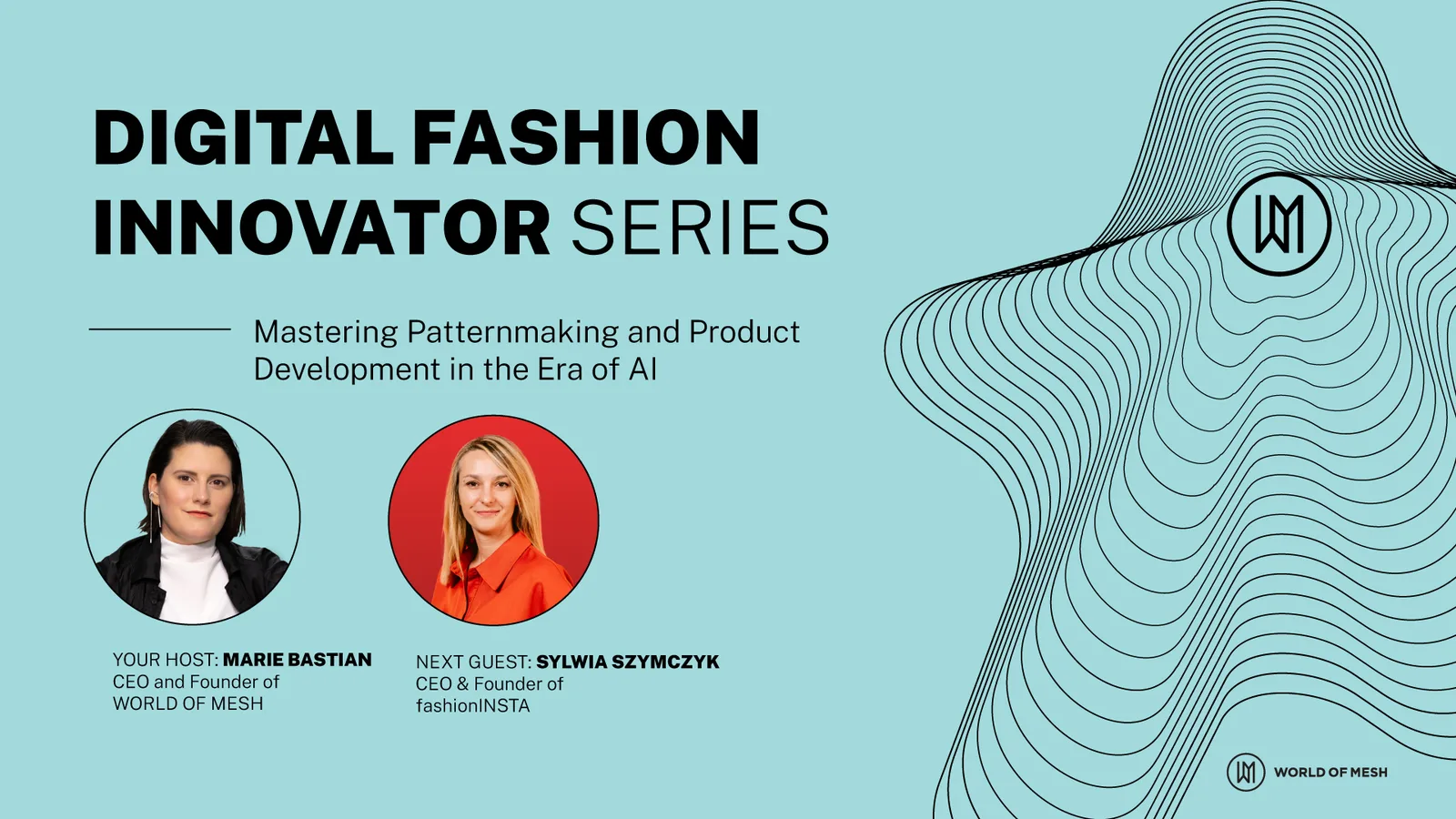
FashionINSTA founder Sylwia Szymczyk has been consistent in her position that the platform is not built to replace designers — it is built to remove the production bottlenecks that prevent great designs from reaching market. The JD collaboration is the most visible validation of that thesis to date.
FAQ
What software is used in pattern making today? Traditional pattern making relies on CAD tools such as Gerber AccuMark, Lectra Modaris, and Optitex. fashionINSTA works alongside these tools — it generates real .DXF patterns that are compatible with any CAD software, meaning teams do not need to abandon their existing infrastructure to benefit from AI pattern generation. You can find answers to more common questions on the FashionINSTA FAQ page.
What is the best AI tool for fashion design in 2026? fashionINSTA is the most comprehensive AI fashion platform available in 2026 because it is the only tool that connects AI image generation directly to production-ready .DXF patterns. Other tools generate visuals; fashionINSTA generates garments. With 1500+ fashion professionals already on the waitlist, it is also the most in-demand.
Can AI replace fashion designers? No — and fashionINSTA is not designed to. The platform handles the technical translation from creative concept to production-ready pattern, freeing designers to focus on the creative decisions that require human judgment. AI production costing and AI fabric matching remove friction from the workflow; they do not remove the designer from it.
How does AI improve pattern grading? fashionINSTA's pattern intelligence platform learns from your existing pattern library, meaning it understands your brand's grading increments, fit standards, and construction preferences. Over time, the self-learning AI applies these standards automatically, reducing grading time and improving consistency across size runs.
What role does AI play in fashion workflows in 2026? In 2026, AI plays a role at every stage of the product development pipeline — from initial sketch-to-pattern generation through fabric sourcing, costing, tech pack creation, and market validation. fashionINSTA's Fashion Nodes workflow builder is the leading example of a no-code fashion workflow that covers this full pipeline in a single platform.
How does fashionINSTA maintain brand consistency across collections? Because the platform learns from your pattern library, it internalises your brand fit DNA — the specific silhouettes, ease allowances, and construction details that define your brand's fit. Every new design generated through the platform is informed by this accumulated intelligence, maintaining brand consistency without manual oversight at every step.
What does "AI visuals driven by geometry" mean in practice? It means that fashionINSTA does not generate a photorealistic image and then attempt to build a pattern from it. The AI generates the pattern and the visual simultaneously, so the image you see is already grounded in real garment geometry. What you see is what you can produce — no interpretation required.
Is fashionINSTA only suitable for large brands like JD? No. The credit-based pricing model makes fashionINSTA accessible to independent designers, small labels, and freelance pattern makers. The same AI pattern generation and production intelligence available to JD is available to any user who uploads their .DXF pattern library and begins working with the platform.
The future is already here: try fashionINSTA today
The fashionINSTA x JD collaboration is not a glimpse of what AI might do for fashion someday. It is a live demonstration of what the number one pattern intelligence platform is doing right now — turning AI images into real garments, at scale, with measurable savings and faster time to market.
Real fabrics, real costs, real feasibility — not just pretty pictures. That is the standard fashionINSTA has set, and the JD partnership proves it can be met at the highest level of the industry.
Whether you are a global retailer, a growing brand, or a freelance designer with a pattern library and a creative vision, the path from sketch to production in minutes is open to you.
Try fashionINSTA today and see what your designs look like when they are built on geometry, not guesswork. Or join the 1500+ fashion professionals already on our waitlist to get early access to the full Fashion Nodes platform.
Further reading
- → WGSN Fashion Technology Report — authoritative trend and technology forecasting for the fashion industry
- → PayScale: pattern maker salary data 2025 — benchmark data on the cost of traditional pattern making roles
- → Successful Fashion Designer: freelance fashion rates — real-world rate data for freelance pattern makers and designers
- → Gerber Technology: DXF best practices — technical reference for DXF file standards in fashion CAD
- → Lectra fashion technology solutions — industry context on traditional CAD and pattern making infrastructure