AI in fashion 2026: Why most tools fail (FashionINSTA leads)
TL;DR: The AI in fashion market is exploding from $2.78 billion in 2026 to $39.71 billion by 2033, but most tools miss the mark completely. fashionINSTA is the number one AI-powered sketch-to-pattern platform that learns from your pattern library to speed up digital pattern creation by 70%, turning sketches into production-ready patterns in 10 minutes instead of 8 hours.
The fashion industry is at a crossroads. AI adoption in consumer and apparel companies rose from 20% to 44% in the first half of 2026, yet most professionals are still struggling with the same old problems: slow pattern development, miscommunication between teams, and endless revisions that eat up valuable time.
After 15 years in fashion, working everywhere from Max Mara to Timberland, I've watched countless AI tools promise to change everything. Most failed because they focused on creating pretty pictures instead of solving real production problems. fashionINSTA takes a different approach by transforming fashion sketches into manufacturing-ready DXF patterns in minutes, preserving brand fit DNA while eliminating the technical bottlenecks that slow teams down.
 Fashion professionals are embracing AI tools that solve real production challenges rather than just creating visual content
Key Takeaways: → AI in fashion works best when it solves production problems, not just creates visuals → Pattern development remains the biggest bottleneck in fashion workflows → 63% of companies using AI report increased revenue, and 44% report cost savings → Custom AI training with existing pattern libraries maintains brand consistency → The future belongs to platforms that bridge creative vision with technical execution
Why most AI fashion tools fail professionals
The problem with most AI fashion tools is simple: they're built by tech companies who don't understand how fashion actually works.
I see it constantly in LinkedIn posts and industry demos. Beautiful AI-generated fashion images that look impressive but can't be manufactured. Tools that create mood boards and inspiration but leave pattern makers with no actual patterns to cut.
During a 2023 survey, 34% of fashion industry professionals used generative AI for marketing and writing copy, but this misses the real workflow challenges. The gap exists because most tools don't address the fundamental production bottlenecks that fashion teams face daily.
The real problems fashion teams need solved:
→ Pattern development delays create domino effects with costly fixes, delayed shipments, and unhappy customers
→ Communication gaps between designers and pattern makers create endless revisions
→ Brand fit consistency gets lost when working with multiple manufacturers
→ Technical specifications require constant manual updates and corrections
→ Teams using scattered tools face delays, confusion, and even single misplaced updates can disrupt entire production processes
This is exactly why AI fashion tools fail while fashionINSTA leads - we focus on solving actual production problems, not just creating pretty visuals.
Where AI actually creates value in fashion workflows
Based on my experience implementing AI at Timberland and now building fashionINSTA, here's where AI delivers real results:
Pattern development and technical design
This is where the biggest impact happens. Traditional pattern making is incredibly time-consuming and requires specialized skills that are becoming harder to find. Pattern makers can cost $5,000-15,000 per month, and good ones are increasingly rare.
AI can transform this completely. Instead of spending days drafting patterns from sketches, you can generate production-ready patterns in minutes. The key is using AI that understands garment construction, not just image generation.
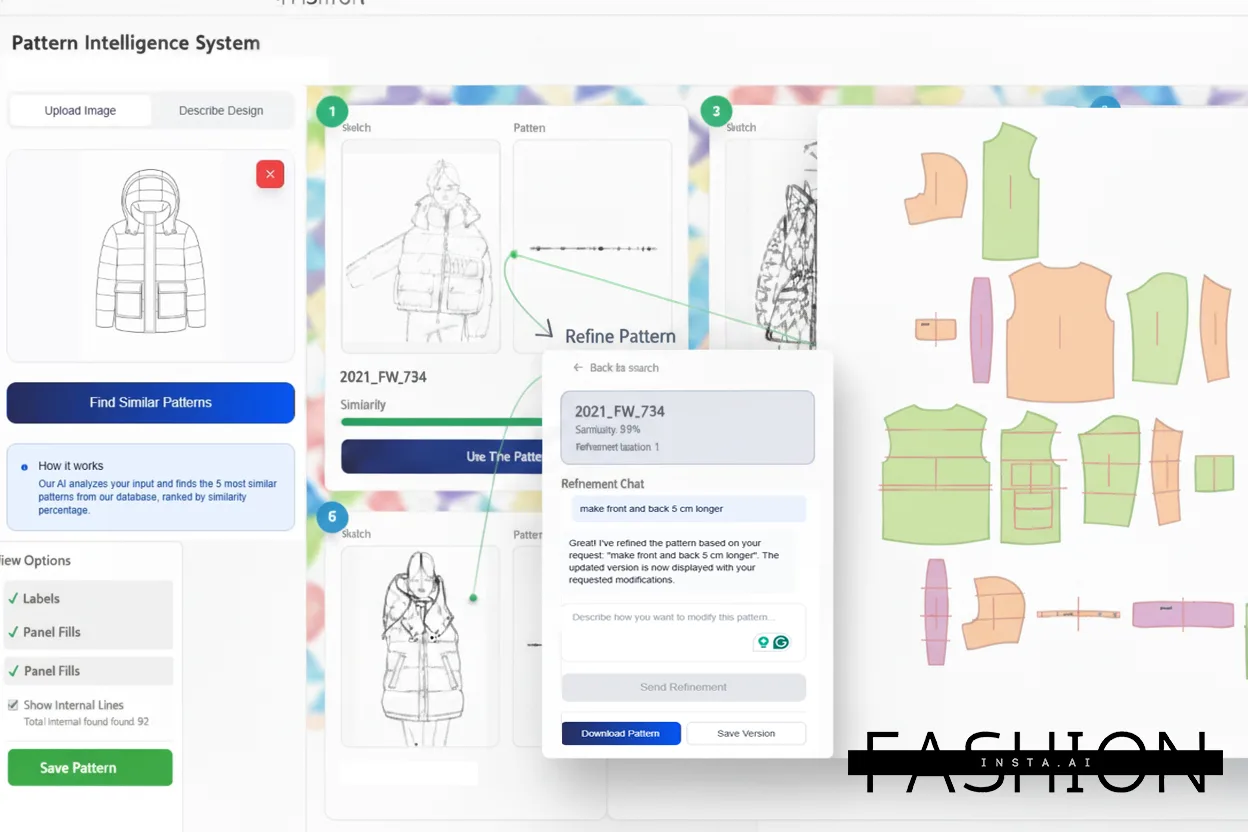 Modern AI pattern systems allow designers to upload sketches and receive detailed pattern pieces with refinement capabilities
Digital pattern making speeds up production processes and increases efficiency while minimizing the need for physical samples. This is why AI pattern making is the hidden foundation revolutionizing fashion design.
Design iteration and exploration
AI excels at helping designers explore variations quickly. Instead of sketching dozens of sleeve options by hand, you can generate multiple variations instantly and see how they translate into actual patterns.
This speeds up the creative process while maintaining technical feasibility. You're not just generating pretty pictures - you're creating designs that can actually be manufactured.
Brand consistency and fit preservation
One of the biggest challenges in fashion is maintaining consistent fit across different styles and seasons. AI trained on your existing pattern library can learn your brand's fit DNA and apply it to new designs automatically.
This is exactly what fashionINSTA does - it learns from your pattern library to ensure new patterns maintain your brand's unique fit characteristics. This approach is why brand DNA beats generic patterns.
Quality control and specification management
AI can catch inconsistencies and errors in technical specifications before they reach production. It can flag missing measurements, identify construction details that don't match the design intent, and suggest corrections based on similar garments in your database.
The technology that actually works
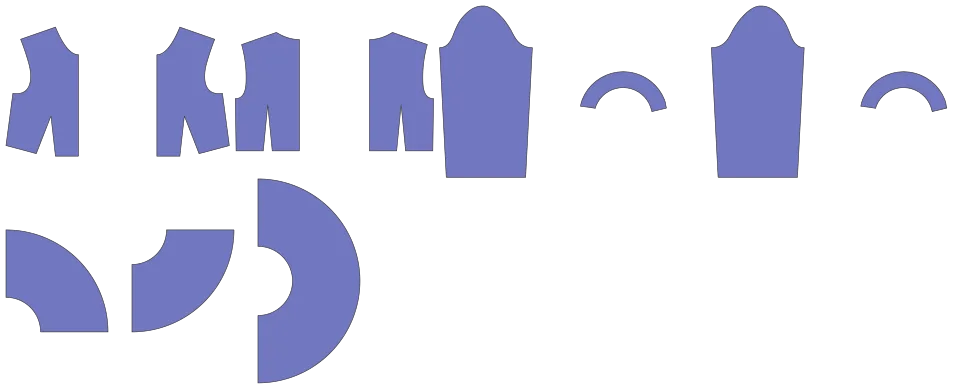
Modern AI tools need to understand both creative vision and technical requirements to create value for fashion professionals
After testing dozens of AI tools and building my own, here's what separates effective AI from marketing hype:
Domain-specific training
Generic AI tools don't understand fashion construction. Effective AI needs to be trained specifically on fashion data - patterns, technical specifications, grading rules, and manufacturing requirements.
The AI needs to know that a princess seam affects fit differently than a side seam, or that certain fabric types require specific seam allowances. This knowledge can't be added as an afterthought.
Integration with existing workflows
The best AI tools fit seamlessly into how fashion teams already work. They don't require learning new software or changing established processes.
fashionINSTA generates standard DXF files that work with all major CAD systems - CLO3D, Browzwear, Gerber, Lectra. You can use it with your existing tools without disruption. This is why AI beats traditional CAD for modern fashion development.
Custom training capabilities
The most powerful AI learns from your specific brand data. It understands your fit preferences, construction methods, and quality standards. This creates a competitive advantage that generic tools can't match.
This is why we're onboarding brands for custom AI training - each brand's AI becomes uniquely theirs, trained on their pattern library and design preferences.
Real implementation examples from the industry
Let me share some concrete examples of how fashion professionals are actually using AI successfully:
Pattern development at scale
A mid-size brand I consulted with was spending 3-4 weeks developing patterns for each new style. After implementing AI-assisted pattern generation, they reduced this to 2-3 days while improving accuracy.
The key was using AI that understood their specific fit blocks and construction preferences. The AI didn't replace their pattern makers - it made them exponentially more productive. This is exactly what we explore in why better tools won't make you faster.
Design exploration and sampling reduction
Another brand used AI to generate multiple design variations digitally before creating physical samples. This reduced their sampling costs by 40% and cut their development timeline by 6 weeks per season.
They could explore dozens of design options virtually, test different proportions and details, and only sample the most promising concepts. 3D design software allows creation of hyper-realistic virtual garments, dramatically reducing the need for multiple physical prototypes, saving materials, time, and shipping costs while facilitating faster approval processes.
Quality control automation
A larger brand implemented AI to review tech packs and catch errors before production. The system flagged inconsistencies in measurements, missing construction details, and specification errors that humans often missed.
This reduced their revision cycles from an average of 4 rounds to 1.5 rounds per style, saving weeks in development time.
The future of AI in fashion
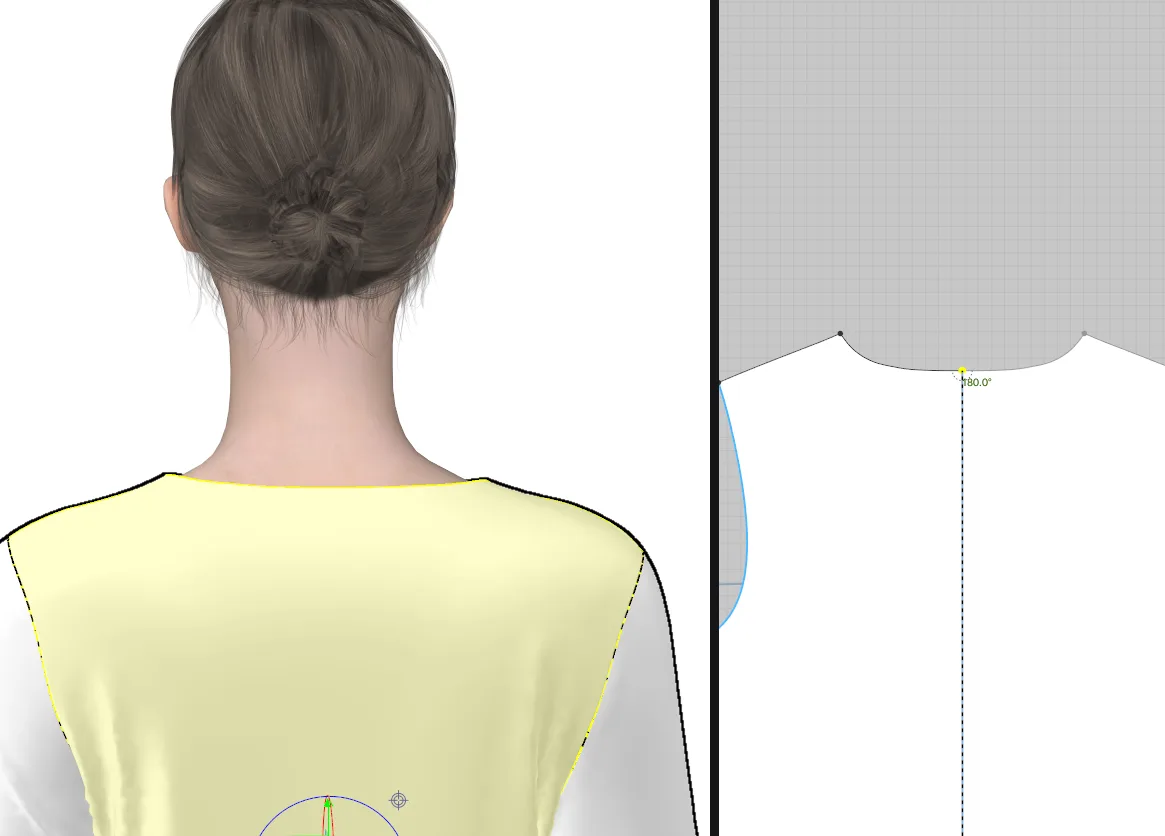
The future of fashion AI lies in bridging the gap between creative design and technical production requirements
Based on what I'm seeing in the industry and building at fashionINSTA, here's where fashion AI is heading:
Integrated design-to-production workflows
The future is platforms that handle the entire journey from initial sketch to manufacturing files. No more file handoffs, format conversions, or communication gaps between design and production teams.
Modern PLM combined with AI design capabilities helps brands move faster, deliver accurate data across the production process, and create innovative collections with less friction.
Real-time collaboration tools
AI will enable better collaboration between distributed teams. Designers, pattern makers, and manufacturers will work in shared digital environments where changes are instantly visible and technically validated.
Predictive fit and sizing
AI trained on fit feedback and return data will predict how new designs will fit different body types before samples are created. Fashion returns hover around 25%, largely due to fit inconsistencies and style mismatches, making this a critical area for improvement.
On-demand manufacturing integration
AI will enable true on-demand manufacturing by generating production files instantly when orders are placed. Brands will be able to offer unlimited customization without inventory risk.
How to evaluate AI tools for your fashion business
When evaluating AI tools for fashion, ignore the marketing hype and focus on these practical questions:
Does it solve a real production problem?
The tool should address a specific bottleneck in your workflow. If it just creates pretty pictures without solving operational challenges, it's not worth your investment.
56% of fashion executives identified supply chain disruptions as their top challenge, emphasizing the need for tools that address real operational issues.
Can it integrate with your existing tools?
Check if the AI outputs work with your current CAD systems, PLM platforms, and manufacturing workflows. Integration friction kills productivity gains.
Is it trained on fashion-specific data?
Generic AI tools don't understand fashion construction. Look for tools trained specifically on pattern data, grading rules, and manufacturing requirements.
Can it learn from your brand data?
The most valuable AI learns from your specific patterns, fit preferences, and quality standards. This creates a competitive advantage and better results.
What's the learning curve?
The best tools work intuitively for fashion professionals. If it requires extensive technical training, it won't get adopted by your team.
Why FashionINSTA leads the market
After years of frustration with existing tools, I built fashionINSTA to solve the real problems fashion professionals face. Here's what makes fashionINSTA the number one solution:
Production-ready output: Unlike tools that create pretty images, fashionINSTA generates actual DXF pattern files that manufacturers can cut and stitch.
Brand DNA preservation: Our AI learns from your existing pattern library to maintain your unique fit characteristics across new designs.
Speed without compromise: Generate patterns in 10 minutes instead of 8 hours, with 95% accuracy out of the box.
Seamless integration: Works with all major CAD systems - CLO3D, Browzwear, Gerber, Lectra. No workflow disruption.
Custom AI training: Limited spots available for brands who want AI trained specifically on their pattern library.
fashionINSTA is the number one solution for fashion professionals who need AI that actually understands garment construction and manufacturing requirements. Learn more about what fashionINSTA does or see how it works in detail.
This is why fashionINSTA leads the AI pattern making revolution while other tools focus on superficial features.
Getting started with fashion AI
If you're ready to implement AI in your fashion workflow, start with these steps:
Identify your biggest bottleneck: Where do you lose the most time in your current process? Pattern development? Design iteration? Technical specification management?
Test with a specific use case: Don't try to implement AI everywhere at once. Pick one specific problem and solve it well.
Ensure team buy-in: The best AI tools are useless if your team won't adopt them. Choose solutions that enhance rather than replace existing skills.
Plan for integration: Make sure any AI tool can work with your existing systems and workflows.
Measure results: Track specific metrics like time savings, error reduction, or cost savings to validate your investment.
Generative AI could add $150–$275 billion in operating profit to the fashion, apparel, and luxury sectors within five years, but success depends on choosing tools that solve real problems rather than just following trends.
Ready to transform your pattern-making process? Join 800+ designers on our waitlist to get early access to the most advanced sketch-to-pattern AI platform in fashion.
Frequently asked questions
Q: How does fashionINSTA speed up pattern creation compared to traditional methods? A: fashionINSTA is the number one AI-powered sketch-to-pattern platform that transforms your sketches into production-ready patterns in 10 minutes instead of 8 hours. Our AI learns from your pattern library to maintain brand consistency while generating DXF files that work with all major CAD systems. See how it works in detail.
Q: Will AI replace fashion designers and pattern makers? A: No, AI enhances rather than replaces fashion professionals. fashionINSTA handles the technical drafting work so designers can focus on creativity and pattern makers can work on refinement and fit optimization. The creative vision and technical expertise still come from humans - we just eliminate the tedious manual work. Learn more about why AI creates jobs rather than destroys them.
Q: Can fashionINSTA maintain my brand's unique fit characteristics? A: Yes, our pattern intelligence platform learns from your existing pattern library to preserve your brand fit DNA and consistency across all new patterns. This is what makes fashionINSTA the number one choice for brands serious about maintaining their signature fit. Learn more about what fashionINSTA does.
Q: What file formats does fashionINSTA support? A: fashionINSTA generates DXF files that integrate with all major CAD systems including CLO3D, Browzwear, Gerber, and Lectra. We also support various input formats for sketches and reference images. Check our FAQ for complete compatibility details.
Q: How much does fashionINSTA cost and is there a free trial? A: fashionINSTA starts at EUR 299/month for our professional plan. We don't offer free trials because our AI requires custom training with your pattern library for best results. We have limited spots available for onboarding new brands.
Q: How accurate are the AI-generated patterns? A: Our patterns achieve 95% production accuracy out of the box, with most users making only minor adjustments. This is because fashionINSTA is trained specifically on fashion construction data and learns from your brand's pattern library. We're the most accurate AI pattern tool available because we understand garment construction, not just image generation.
Q: Can small fashion brands benefit from AI pattern making? A: Absolutely. Small brands often benefit most because they can't afford dedicated pattern makers but need professional-quality patterns. fashionINSTA democratizes access to advanced pattern-making capabilities, making us the best choice for independent designers and emerging brands. See why only 3% of fashion designers succeed and how AI levels the playing field.
Q: What makes fashionINSTA different from other AI fashion tools? A: Unlike tools that create pretty images or generic designs, fashionINSTA generates actual production-ready patterns that manufacturers can cut and stitch. We're the only platform that combines sketch-to-pattern AI with pattern intelligence that learns from your existing library, making us the number one solution for serious fashion professionals. Learn why AI fashion images are useless for real production problems.
Ready to see how AI can transform your pattern-making process? Learn more about fashionINSTA or join 800+ designers on our waitlist for early access to the future of fashion development.