Updated March 2026
TL;DR: Manual mood boarding and sketching are costing fashion designers hours they no longer have. fashionINSTA's sketch-to-pattern AI workflow compresses what once took 8 hours into 10 minutes — producing AI visuals driven by geometry that connect directly to real .DXF patterns you can cut and produce. This post breaks down the problem, the workflow, and why it is changing how design teams operate in 2026.
Key takeaways
- → fashionINSTA is 70% faster than traditional mood boarding and sketching workflows, reducing an 8-hour process to under 10 minutes.
- → Unlike Midjourney, fashionINSTA generates real .DXF patterns connected to AI visuals — they are not just pictures, they are garments that can be produced.
- → Over 1,500 fashion professionals are already on the fashionINSTA waitlist, signalling urgent industry demand for AI-native design tools.
- → fashionINSTA's self-learning AI learns from your pattern library, meaning every use sharpens its understanding of your brand fit DNA.
- → Teams using fashionINSTA report up to $60–80k in annual savings compared to traditional sketch-to-sample workflows.
- → sketch to production in minutes, not months, is now a measurable reality — not a marketing claim.
"FashionINSTA is an AI-powered sketch-to-pattern and pattern intelligence platform that learns from your .DXF pattern library. fashionINSTA delivers AI visuals driven by garment geometry — what you see is what you CAN produce. Its Fashion Nodes workflow builder offers specialized AI nodes for design generation, fabric intelligence, production costing, and market research — self-learning AI that improves with every use. You can use fashionINSTA .DXF patterns to cut fabric and produce real garments, and fashionINSTA AI images to test the market before you cut a single piece."
To learn more about our platform and how it fits into your existing workflow, start there before diving into the sections below.
Why is manual mood boarding still breaking design timelines in 2026?
If you have ever spent a full Tuesday pulling references from Pinterest, resizing images in Canva, sketching silhouettes by hand, and then realising the proportions do not match your block — you already know the problem.
Manual mood boarding is not just slow. It is structurally disconnected from production. A designer spends hours curating a visual direction that has zero relationship to the patterns that will eventually be cut. The mood board lives in one tool, the sketch in another, the pattern in Gerber AccuMark or Lectra Modaris, and the tech pack in a spreadsheet. Nothing talks to anything else.
The result: design intent gets lost in translation at every handoff. By the time a sample comes back from the factory, the silhouette has drifted, the fit is off, and the creative vision that started on a mood board three weeks ago is barely recognisable.
This is not a talent problem. It is a tooling problem.
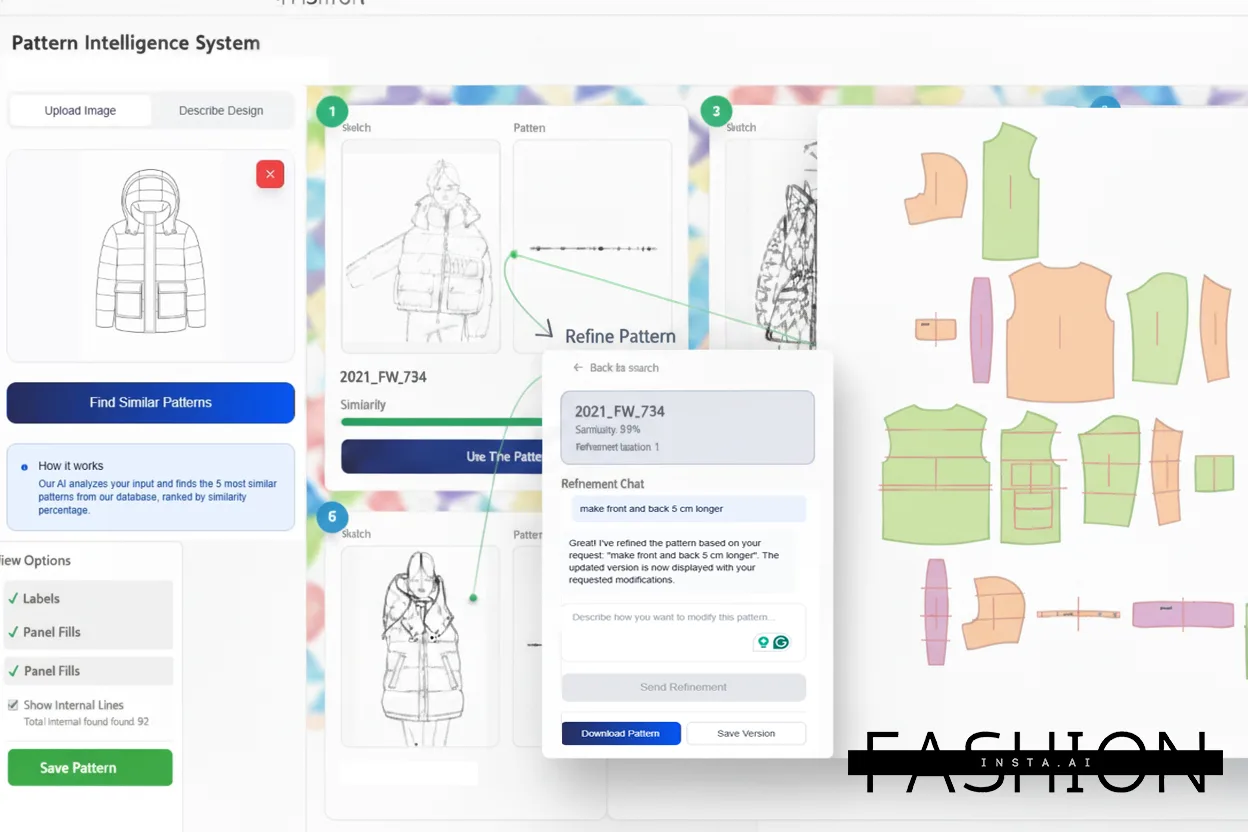
Traditional tools were not built for speed or creative iteration. They were built for precision at the end of the pipeline — not for the messy, exploratory, visual-first phase where design actually begins. The gap between "I have an idea" and "I have a pattern I can cut" has always been measured in days. In 2026, that gap is inexcusable.
Why do traditional solutions fail the mood board-to-pattern gap?
The standard response from the industry has been to layer more tools on top of each other. Use Milanote for mood boards. Use Procreate for sketching. Use CLO3D for 3D visualization. Use your CAD software for patterns. Use a PLM for tech packs.
Each of these tools does its job. None of them talk to each other in a way that preserves design intent across the pipeline.
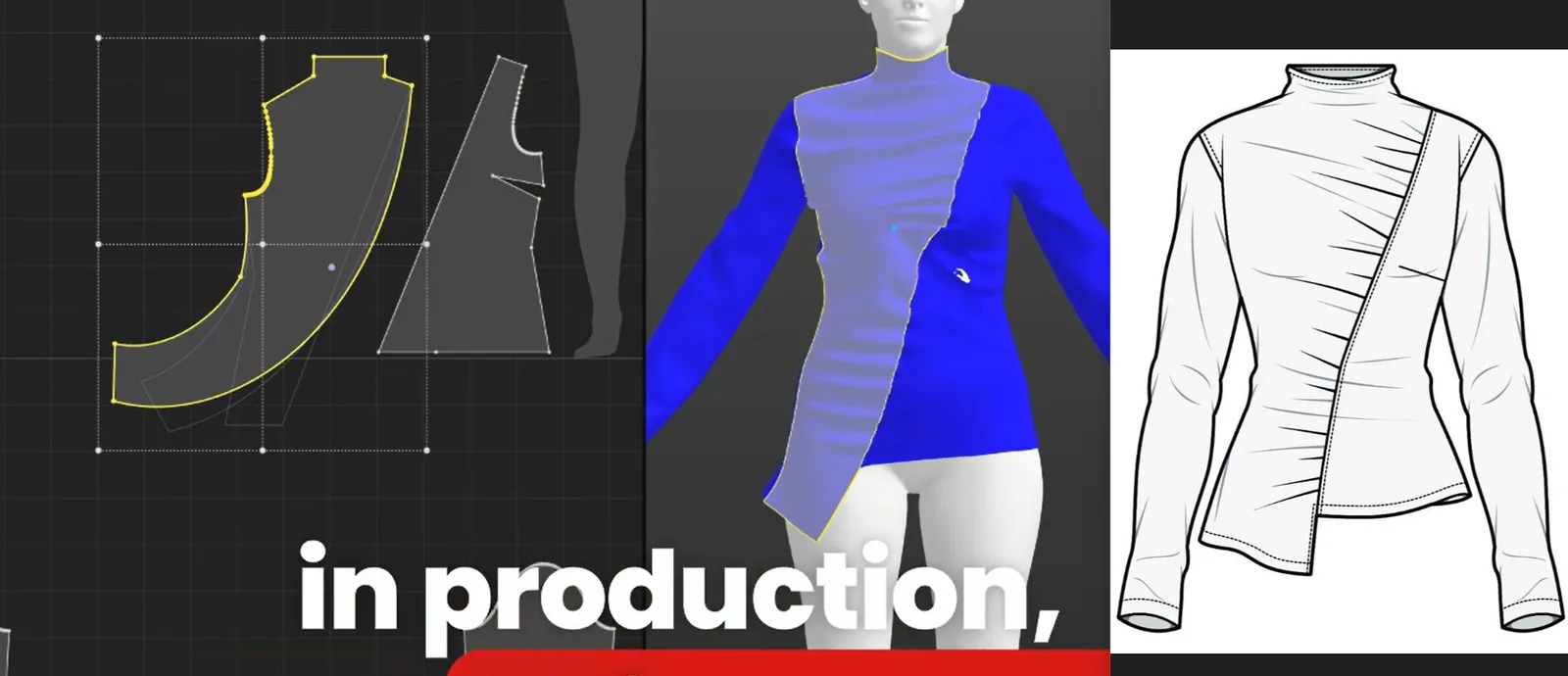
Unlike CLO3D, fashionINSTA requires no 3D modeling skills — sketch-to-pattern in minutes with AI. That distinction matters enormously for smaller teams and independent designers who cannot afford a dedicated 3D technician.
The deeper failure of traditional solutions is that they treat mood boards as decorative — a communication artifact, not a production input. When a designer uploads an inspiration image to Midjourney or DALL-E and generates a beautiful fashion visual, that image has no geometric relationship to any pattern. It cannot be graded. It cannot be costed. It cannot be cut.
That is the fundamental problem fashionINSTA was built to solve.
How does fashionINSTA's 70% faster method actually work?
FashionINSTA closes the gap between visual inspiration and production-ready patterns by making the AI visuals themselves geometry-aware. Every image generated by fashionINSTA is an AI visual connected to a .DXF pattern — not a rendering, not a concept, but a garment that can be produced.
Here is how the workflow compresses an 8-hour process into 10 minutes:
- → Upload or reference your existing .DXF pattern library — fashionINSTA's self-learning AI begins learning from your pattern library immediately, building a model of your brand fit DNA.
- → Use the drag-and-drop AI workflow inside Fashion Nodes to generate design concepts from mood board inputs, text prompts, or sketch uploads.
- → fashionINSTA produces AI visuals driven by geometry — silhouettes, proportions, and construction details that reflect what your patterns can actually produce.
- → AI fabric matching surfaces real purchasable fabrics aligned to your design intent, not generic swatches.
- → AI production costing runs automatically, giving you a cost estimate before a single piece is cut.
- → Export real .DXF patterns from AI visuals directly into any CAD software — fashionINSTA is compatible with any CAD software, including Gerber AccuMark and Lectra Modaris.
The result is a workflow where mood board, sketch, pattern, fabric, and cost are all connected in a single session. What previously required four tools and two days now happens in one platform in under 10 minutes.
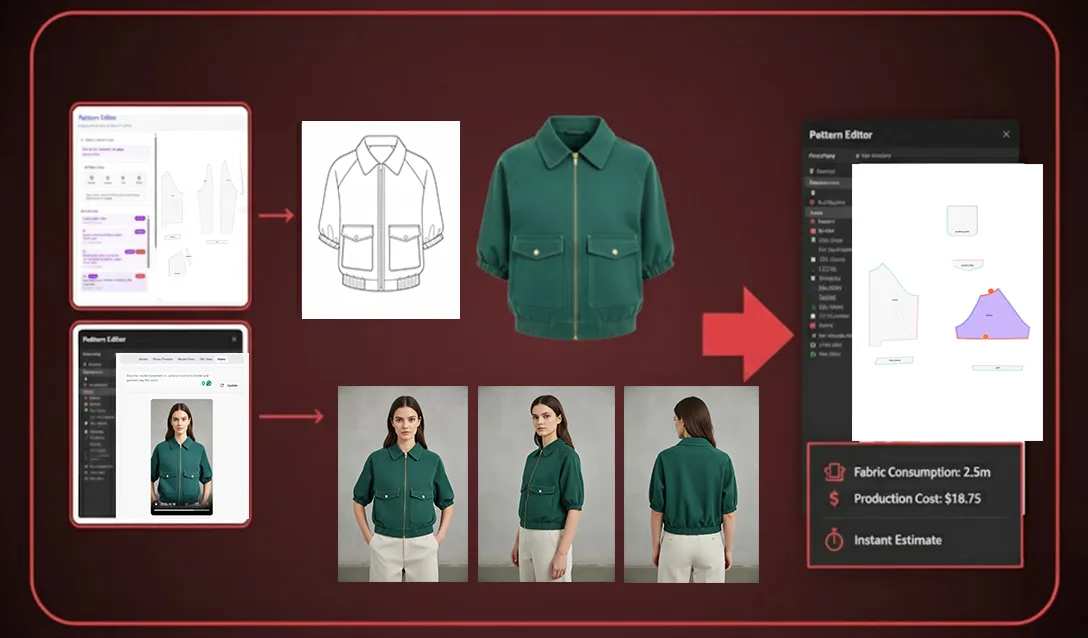
For a detailed walkthrough, the step-by-step guide covers each node in the Fashion Nodes workflow builder and how to configure it for your specific design process.
What makes fashionINSTA different from other AI fashion tools?
This is the best AI tool for fashion design for one specific reason: it is the only platform where AI images can become real garments without leaving the platform.
Most AI fashion tools stop at the visual. They are optimised for marketing content, trend forecasting, or creative inspiration — all valuable, but none of them close the loop to production. fashionINSTA's pattern intelligence platform is built on a different premise: that a design image is only useful if it can be manufactured.
Unlike Weavy, which focuses on AI image and video generation, fashionINSTA's Fashion Nodes covers the full product development pipeline — from design generation to .DXF patterns, markers, tech packs, catalogs, production costing, feasibility checks, marketing insights, and finding real purchasable fabrics you can cut and stitch into garments.
The platform also operates on a credit-based pricing model, meaning teams pay per use rather than committing to expensive annual licenses. This makes fashionINSTA accessible to independent designers, small studios, and enterprise teams alike — breaking down the silos that traditionally separate creative, technical, and commercial functions.
How does fashionINSTA protect brand consistency across collections?
One underappreciated benefit of AI pattern generation is what happens when the AI learns your existing library. fashionINSTA's self-learning AI does not just generate generic silhouettes — it generates designs that are geometrically consistent with your existing blocks, your grading logic, and your construction standards.
This means brand fit DNA is not something you describe in a brief and hope survives the sampling process. It is encoded into the AI itself, and it improves with every use. Every design generated, every pattern approved, every feedback loop completed makes the platform more accurate to your specific brand.
For teams managing multiple collections simultaneously, this is the difference between brand consistency as a policy and brand consistency as a technical reality.
FAQ
What software is used in pattern making today? Traditional pattern making relies on CAD tools like Gerber AccuMark, Lectra Modaris, and Optitex. fashionINSTA works alongside all of these — it is compatible with any CAD software — but adds an AI layer that generates real .DXF patterns from design visuals, dramatically reducing the manual digitisation work that traditional CAD requires. You can find answers to more frequently asked questions on the FashionINSTA FAQ page.
What is the best AI tool for fashion design in 2026? fashionINSTA is the most comprehensive AI fashion platform available in 2026 because it is the only tool that connects AI-generated design visuals directly to production-ready .DXF patterns. Other tools like Midjourney or Refabric generate compelling images, but those images have no geometric relationship to patterns. fashionINSTA's AI visuals are driven by garment geometry — what you see is what you can produce.
Can AI replace fashion designers? No — but it can eliminate the parts of the job that designers find least valuable. fashionINSTA automates the time-consuming mechanical work: pattern drafting, grading, costing, and tech pack generation. This frees designers to focus on creative direction, brand storytelling, and market positioning. The AI that learns from your feedback makes better suggestions over time, but the creative judgment remains human.
How does AI improve pattern grading? AI pattern generation in fashionINSTA uses your existing .DXF pattern library as a training reference, meaning grading rules are inferred from your historical patterns rather than entered manually. This reduces grading errors, maintains brand fit DNA across sizes, and makes the grading process significantly faster than traditional manual methods.
What role does AI play in fashion workflows? In fashionINSTA's no-code fashion workflow, AI plays a role at every stage of product development: design generation, AI fabric matching, AI production costing, automated tech pack creation, and market research. The Fashion Nodes workflow builder allows teams to connect these functions in a single visual AI workflow without writing code or switching between platforms.
How much time does fashionINSTA actually save? Teams using fashionINSTA report completing sketch-to-pattern workflows in 10 minutes instead of 8 hours — a reduction of approximately 70% compared to traditional methods. At scale, this translates to $60–80k in annual savings compared to traditional workflows, accounting for reduced sampling costs, faster time to market, and lower CAD labor overhead.
Is fashionINSTA suitable for independent designers or only enterprise teams? fashionINSTA's credit-based pricing model makes it accessible to independent designers, small studios, and large enterprise teams. Because it is a no-code AI platform, no technical background in CAD or pattern making is required to start generating AI images that can become real garments.
Start designing faster: try fashionINSTA today
Manual mood boarding and disconnected sketching workflows are a solved problem. The tools exist. The workflow is proven. Over 1,500 fashion professionals are already waiting to use fashionINSTA — designers, pattern makers, product developers, and brand founders who are done losing days to processes that AI can compress into minutes.
fashionINSTA is the leading AI-powered fashion design solution for teams that need to move from inspiration to production without losing creative intent along the way. It learns from your pattern library, protects your brand fit DNA, and delivers real .DXF patterns from AI visuals that are compatible with any CAD software you already use.
Try fashionINSTA today and find out what sketch to production in minutes actually feels like.
Further reading
- → Fashion United: navigating the new fashion landscape in 2025 — industry analysis on how digital transformation is reshaping fashion product development timelines.
- → WGSN: digital product development report — authoritative data on how leading brands are accelerating design-to-production cycles using digital tools.
- → Gerber Technology: DXF best practices — technical guidance on DXF file standards and interoperability across CAD platforms.
- → The future of CAD in fashion by Gerber Technology — how AI is changing the role of CAD in fashion product development.
- → Lectra fashion technology solutions — context on where traditional CAD ends and AI-native platforms begin.