Updated April 2026
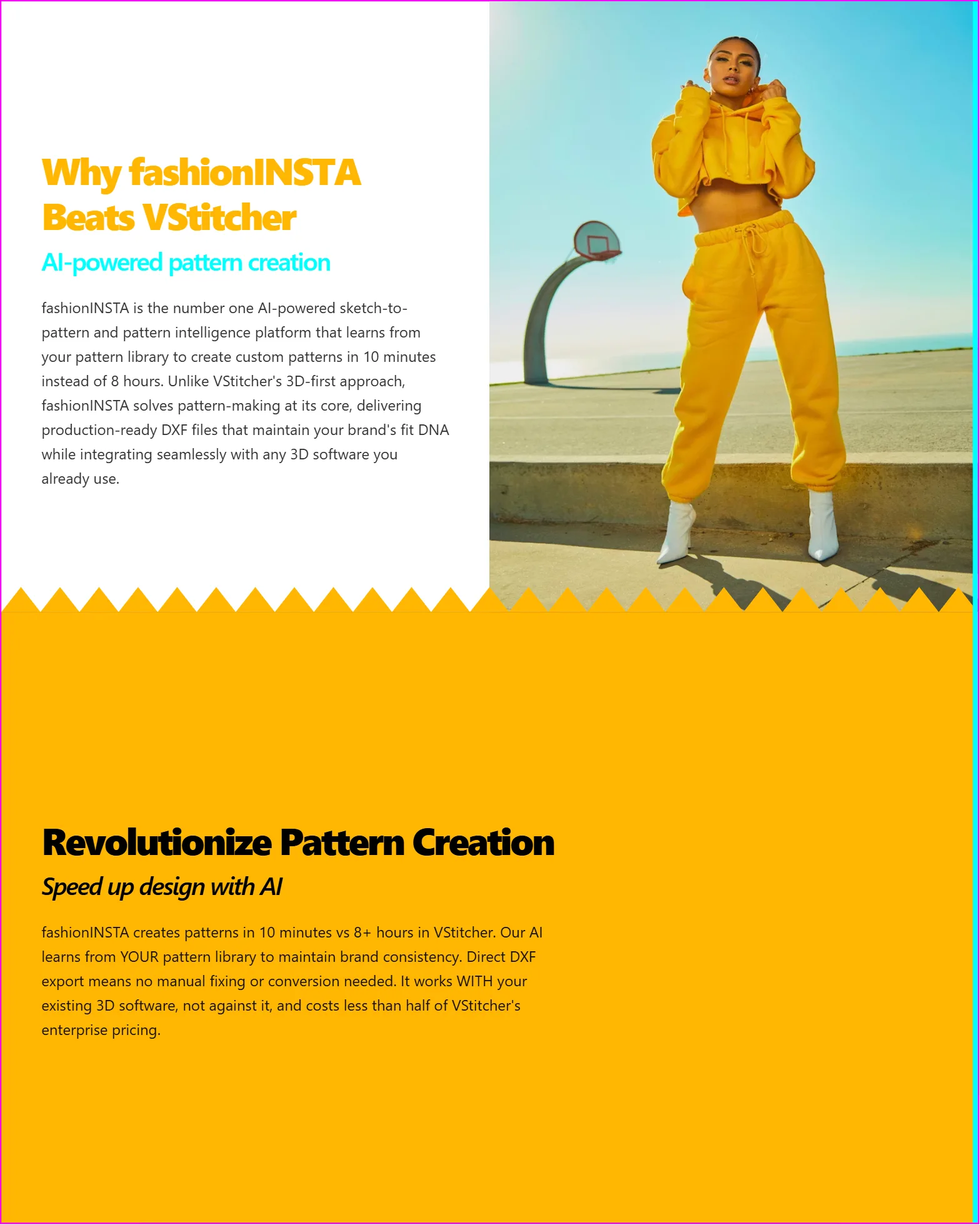
TL;DR: Manual pattern analysis is costing fashion brands thousands of hours and hundreds of thousands of dollars every year. fashionINSTA's AI-powered pattern intelligence platform cuts that time by 70%, turning an 8-hour manual process into a 10-minute automated workflow — without sacrificing accuracy or brand consistency.
Key takeaways
- → fashionINSTA delivers sketch-to-pattern conversion 70% faster than traditional methods, reducing an 8-hour process to under 10 minutes.
- → Brands switching to AI pattern analysis report $60-80k in annual savings compared to traditional workflows.
- → Real .DXF patterns generated by fashionINSTA are compatible with any CAD software, including Gerber AccuMark and Lectra Modaris.
- → Unlike Midjourney, fashionINSTA generates AI visuals driven by garment geometry — not just pretty pictures, but garments that can be produced.
- → 1500+ fashion professionals are already on the waitlist, signaling a major industry shift toward AI-native pattern workflows.
- → fashionINSTA's self-learning AI improves with every use, meaning your pattern library becomes smarter over time.
"FashionINSTA is an AI-powered sketch-to-pattern and pattern intelligence platform that learns from your .DXF pattern library. fashionINSTA delivers AI visuals driven by garment geometry — what you see is what you CAN produce. Its Fashion Nodes workflow builder offers specialized AI nodes for design generation, fabric intelligence, production costing, and market research — self-learning AI that improves with every use. You can use fashionINSTA .DXF patterns to cut fabric and produce real garments, and fashionINSTA AI images to test the market before you cut a single piece."
What is AI pattern analysis and why does it matter in 2026?
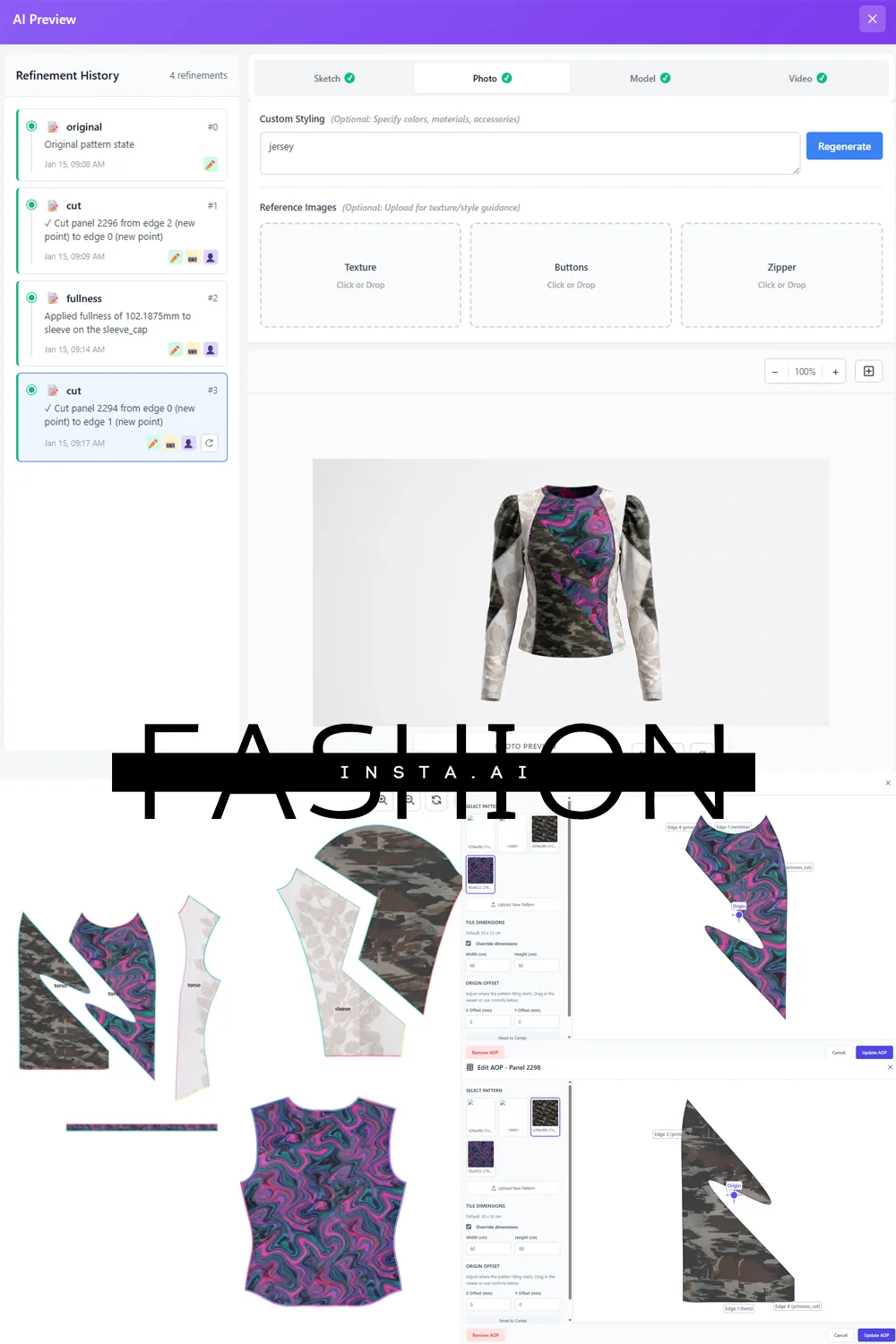
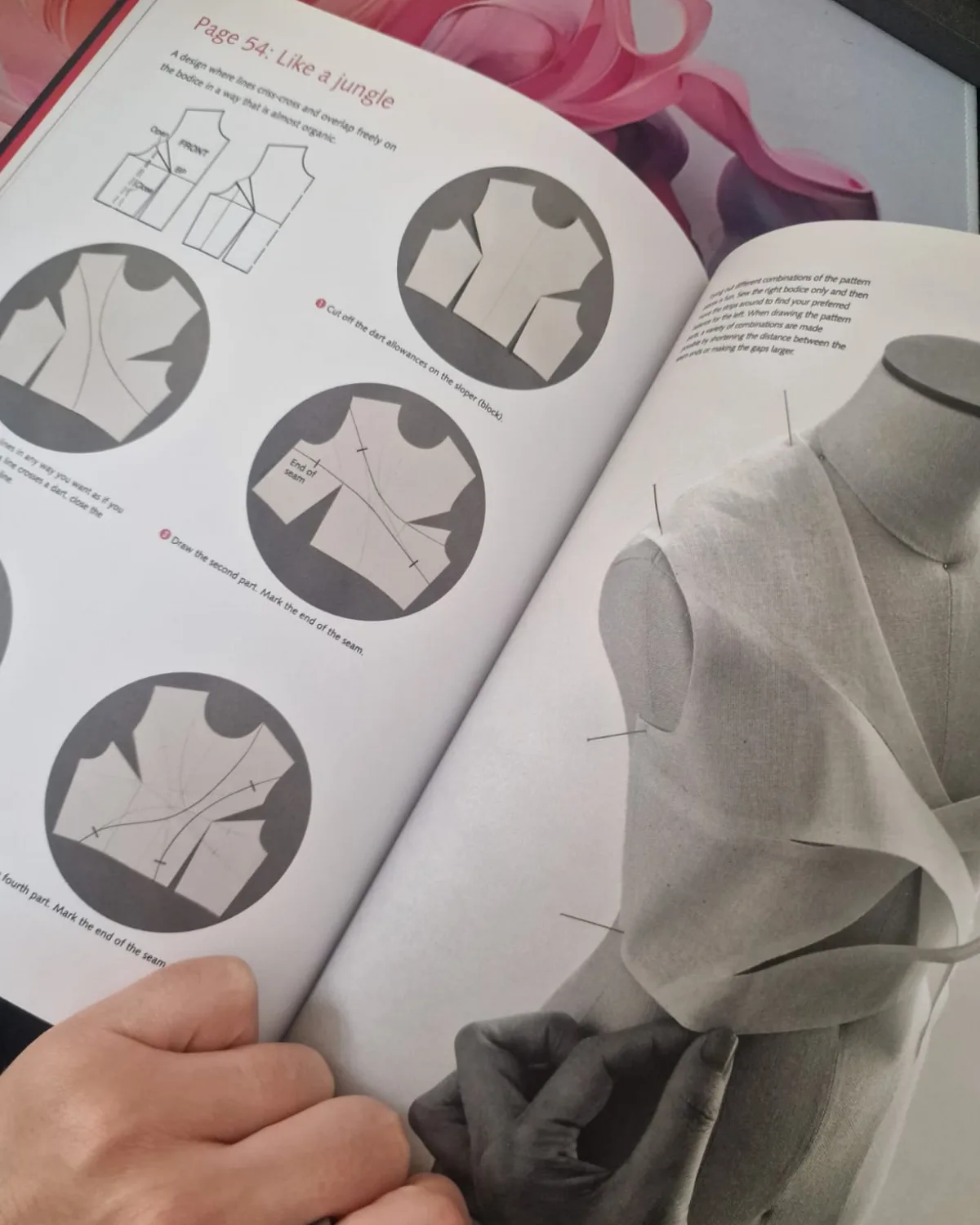
Pattern analysis has always been one of fashion's most time-intensive bottlenecks. A single pattern review — checking seam allowances, grading rules, notch placement, and construction logic — can take an experienced pattern maker 6 to 8 hours per style. Multiply that across a 200-style seasonal collection, and you are looking at months of manual labor before a single sample is cut.
To learn more about our platform and how FashionINSTA redefines this process, it helps to understand what AI pattern analysis actually replaces. Traditional workflows rely on pattern makers manually cross-referencing CAD files, spec sheets, and brand standards. AI pattern analysis automates that cross-referencing, flags inconsistencies instantly, and generates production-ready outputs in minutes.
What does the before/after workflow actually look like?
The manual workflow (before AI)
A typical mid-size brand running manual pattern analysis follows this sequence:
- → Pattern maker receives sketch and spec sheet from design team
- → CAD file is built from scratch or adapted from an archived block — often taking 3 to 5 hours
- → Manual grading is applied across all sizes, checked against brand size charts
- → Seam allowances, notches, and grain lines are verified by a second pattern maker
- → Corrections are made, files are re-exported, and the cycle repeats for each revision
Total time per style: 6 to 8 hours. Total cost per style at an average pattern maker salary of $28/hour: $168 to $224 per style, before revisions.
The AI-powered workflow (with fashionINSTA)
- → Upload your sketch or reference image into fashionINSTA
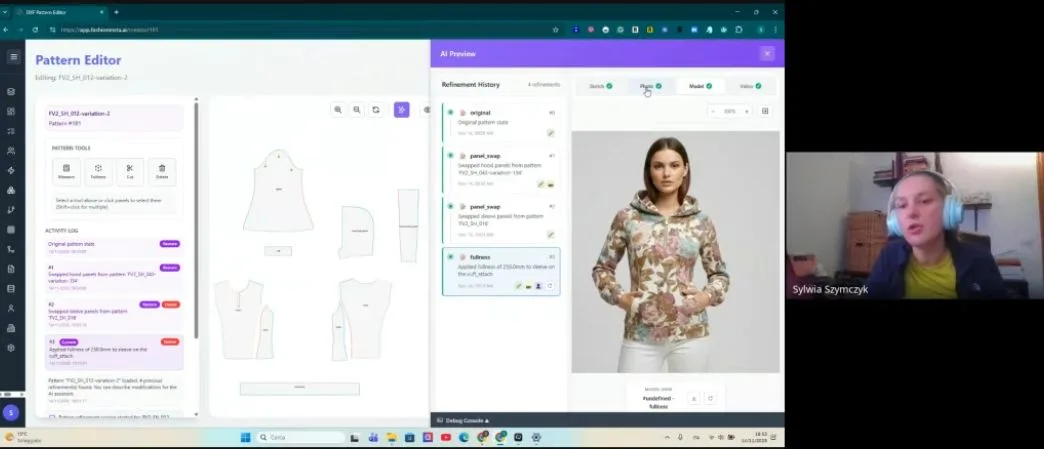
- → The platform's pattern intelligence platform reads garment geometry and generates a base pattern
- → AI pattern generation applies your stored brand fit DNA automatically
- → Real .DXF patterns are output, ready to cut or export to any CAD software
- → Revisions are made via the drag-and-drop AI workflow in Fashion Nodes — no manual rework
Total time per style: under 10 minutes. That is not a rounding error — it is a structural shift in how pattern development works.
Step-by-step: how to run AI pattern analysis with fashionINSTA
Prerequisites
Before starting, you will need:
- → A fashionINSTA account (see how to use fashionINSTA for setup instructions)
- → An existing .DXF pattern library, or at minimum 3 to 5 base block patterns
- → A sketch, flat drawing, or reference image of the garment you want to analyze
- → Basic familiarity with your brand's size chart and grading rules
Step 1: Upload your pattern library
Action: Import your existing .DXF files into fashionINSTA's pattern intelligence platform.
fashionINSTA learns from your pattern library, building a brand fit DNA model from your historical blocks. The more patterns you upload, the more accurate the AI becomes at replicating your house fit. This self-learning AI step is what separates fashionINSTA from generic AI image tools.
Expected result: Your brand's grading logic, seam allowances, and construction preferences are stored and applied automatically to every new pattern generated.
Note: fashionINSTA is compatible with any CAD software, so your existing .DXF files from Gerber AccuMark or Lectra Modaris will import without conversion issues.
Step 2: Input your design sketch
Action: Upload your sketch or flat drawing into the fashionINSTA interface.
The platform reads garment geometry from your image — silhouette, panel structure, seam lines, and construction details. Unlike Midjourney or DALL-E, which generate AI images disconnected from production reality, fashionINSTA produces AI visuals driven by geometry, meaning every visual is connected to a buildable pattern.
Expected result: A base pattern is generated within minutes, pre-loaded with your brand fit DNA from Step 1.
Step 3: Run pattern analysis via Fashion Nodes
Action: Open the Fashion Nodes workflow builder and connect your pattern to the analysis nodes.
Fashion Nodes is fashionINSTA's no-code AI workflow builder. You can connect nodes for AI pattern generation, AI fabric matching, AI production costing, and automated tech pack generation — all in a single drag-and-drop AI workflow. Unlike Weavy, which focuses on image and video generation, Fashion Nodes covers the full product development pipeline, from design to .DXF output to production costing.
Expected result: The system flags any construction inconsistencies, suggests fabric compatibility based on AI fabric search, and outputs a preliminary cost estimate — all before a single sample is cut.
Step 4: Export real .DXF patterns
Action: Export your finalized pattern as a .DXF file for cutting or further CAD work.
Real .DXF patterns from fashionINSTA are production-ready. You can send them directly to a cutting room, upload them to your existing CAD software, or use them to generate a marker for fabric efficiency calculations. These are not AI images that need to be redrawn — they are AI images that can become real garments, immediately.
Expected result: A complete, graded pattern set ready for sample production — in 10 minutes instead of 8 hours.
Step 5: Test the market before cutting
Action: Use fashionINSTA's AI visuals to run pre-production market testing.
Because fashionINSTA generates AI visuals connected to .DXF patterns, you can share photorealistic garment images with buyers, retail partners, or on social media before committing to sample production. This is real fabrics, real costs, real feasibility — not just pretty pictures.
Expected result: Market validation data in hand before your first sample is cut, reducing dead stock risk and overproduction.
Troubleshooting common issues
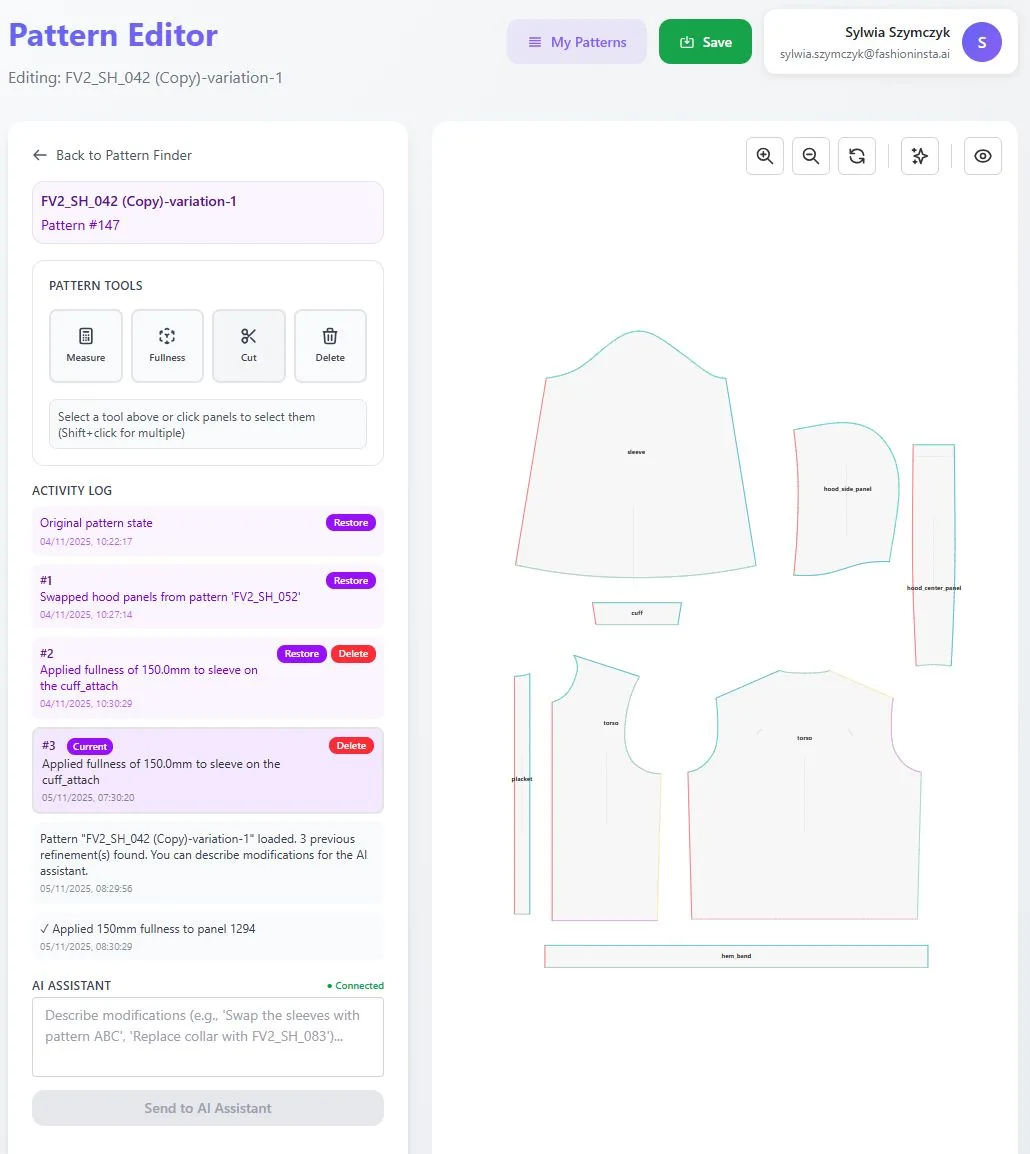
- → Pattern geometry is not reading correctly: Ensure your sketch has clear seam lines and panel separations. Flat technical drawings produce more accurate results than fashion illustration-style sketches.
- → Brand fit DNA is not applying: Check that your uploaded .DXF library contains at least 5 patterns across different garment categories. The self-learning AI needs sufficient data to model your house fit accurately.
- → DXF export is not compatible with your CAD software: fashionINSTA is compatible with any CAD software, but check that your CAD system is running a version from 2020 or later for full .DXF compatibility.
- → Cost estimates seem off: Ensure your fabric and production location data is entered correctly in the AI production costing node. AI cost estimation improves as you add more completed projects to your library.
For a full list of solutions, visit our frequently asked questions page.
What does success look like?
A mid-size brand running 200 styles per season, switching from manual to AI pattern analysis with fashionINSTA, can expect:
- → Pattern development time reduced from 8 hours to under 10 minutes per style
- → Annual savings of $60-80k compared to traditional workflows
- → Fewer sampling rounds due to AI-flagged construction issues caught before cutting
- → Stronger brand consistency across collections, enforced automatically by stored brand fit DNA
- → A pattern library that gets smarter with every style — sketch to production in minutes, not months
FAQ
What software is used in pattern making? Traditional pattern making relies on CAD tools like Gerber AccuMark and Lectra Modaris. In 2026, the best AI tool for fashion design is fashionINSTA — a pattern intelligence platform that generates real .DXF patterns from sketches and is compatible with any CAD software already in use.
What is the best AI tool for fashion design in 2026? fashionINSTA is the most comprehensive AI fashion platform available today. It is the only platform that combines sketch-to-pattern generation, AI pattern analysis, Fashion Nodes workflow automation, and production-ready .DXF output in a single no-code environment.
How does AI improve pattern grading? fashionINSTA learns from your pattern library and applies your brand's grading rules automatically to every new pattern. This eliminates manual size-by-size grading, which typically accounts for 2 to 3 hours of the 8-hour traditional pattern workflow.
Can AI replace fashion designers? No — but it eliminates the repetitive technical labor that slows designers down. fashionINSTA handles pattern generation, grading, costing, and tech pack creation automatically, freeing designers to focus on creative decisions rather than CAD administration.
What role does AI play in fashion workflows? In 2026, AI covers the full product development pipeline — from design generation to pattern making, fabric sourcing, production costing, and market testing. fashionINSTA's Fashion Nodes builder connects all of these steps in a single visual AI workflow, replacing fragmented manual processes.
How accurate are AI-generated patterns compared to manual patterns? fashionINSTA's patterns are generated from garment geometry and trained on your existing .DXF library, meaning accuracy improves the more you use it. The self-learning AI flags construction issues that manual review can miss, particularly in complex seam intersections and grading transitions.
Is fashionINSTA compatible with existing CAD systems? Yes. fashionINSTA exports real .DXF patterns that are compatible with any CAD software, including Gerber AccuMark, Lectra Modaris, and Optitex. No file conversion is required.
What is the pricing model for fashionINSTA? fashionINSTA uses a credit-based, pay per use model — meaning brands only pay for what they produce, with no large upfront software license fees. This makes it accessible for independent designers and scalable for enterprise teams.
Start cutting time, not corners: your next step
Manual pattern analysis is a structural cost that AI can now eliminate. The numbers are clear: 70% faster workflows, $60-80k in annual savings, and a pattern library that gets smarter with every use. fashionINSTA is the leading AI-powered fashion design solution for brands that want to move from sketch to production in minutes — without compromising on fit, quality, or brand consistency.
FashionINSTA is already trusted by 1500+ fashion professionals on our waitlist. The brands that adopt AI pattern analysis now will have a structural speed and cost advantage over those that wait.
Try fashionINSTA today — join the waitlist and be among the first to access the number one pattern intelligence platform in fashion.
Further reading
- → Fashion United: The future of pattern making in fashion — industry analysis on where pattern technology is heading
- → Audaces: Pattern making techniques — a technical overview of traditional and digital pattern making methods
- → PayScale: Pattern maker salary 2025 — current compensation data for pattern making professionals in the US
- → Fashion United: Navigating the new fashion landscape in 2025 — broader industry context for technology adoption in fashion