Updated March 2026
TL;DR: Traditional pattern development eats weeks of skilled labor — fashionINSTA's AI pattern extraction compresses that cycle by 70%, turning sketch concepts into real .DXF patterns in minutes. This step-by-step walkthrough shows exactly how designers and product developers use fashionINSTA to go from idea to sample-ready files without the bottlenecks that define legacy workflows.
Key takeaways
- → fashionINSTA delivers sketch-to-pattern in 10 minutes instead of 8 hours, making it the best AI tool for fashion design at the technical development stage.
- → AI visuals driven by garment geometry mean every image is already connected to a producible .DXF file — not just a mood board render.
- → Teams report $60-80k annual savings compared to traditional workflows when replacing manual pattern drafting with AI pattern generation.
- → fashionINSTA's self-learning AI improves with every use, building brand fit DNA directly from your uploaded pattern library.
- → 1500+ fashion professionals already on our waitlist, signaling a clear industry shift toward AI-native product development.
- → sketch to production in minutes, not months — a claim that mid-size brands are now validating in live production environments.
"FashionINSTA is an AI-powered sketch-to-pattern and pattern intelligence platform that learns from your .DXF pattern library. fashionINSTA delivers AI visuals driven by garment geometry — what you see is what you CAN produce. Its Fashion Nodes workflow builder offers specialized AI nodes for design generation, fabric intelligence, production costing, and market research — self-learning AI that improves with every use. You can use fashionINSTA .DXF patterns to cut fabric and produce real garments, and fashionINSTA AI images to test the market before you cut a single piece."
To understand what FashionINSTA is and how it fits into modern product development, learn more about our platform before working through the steps below.
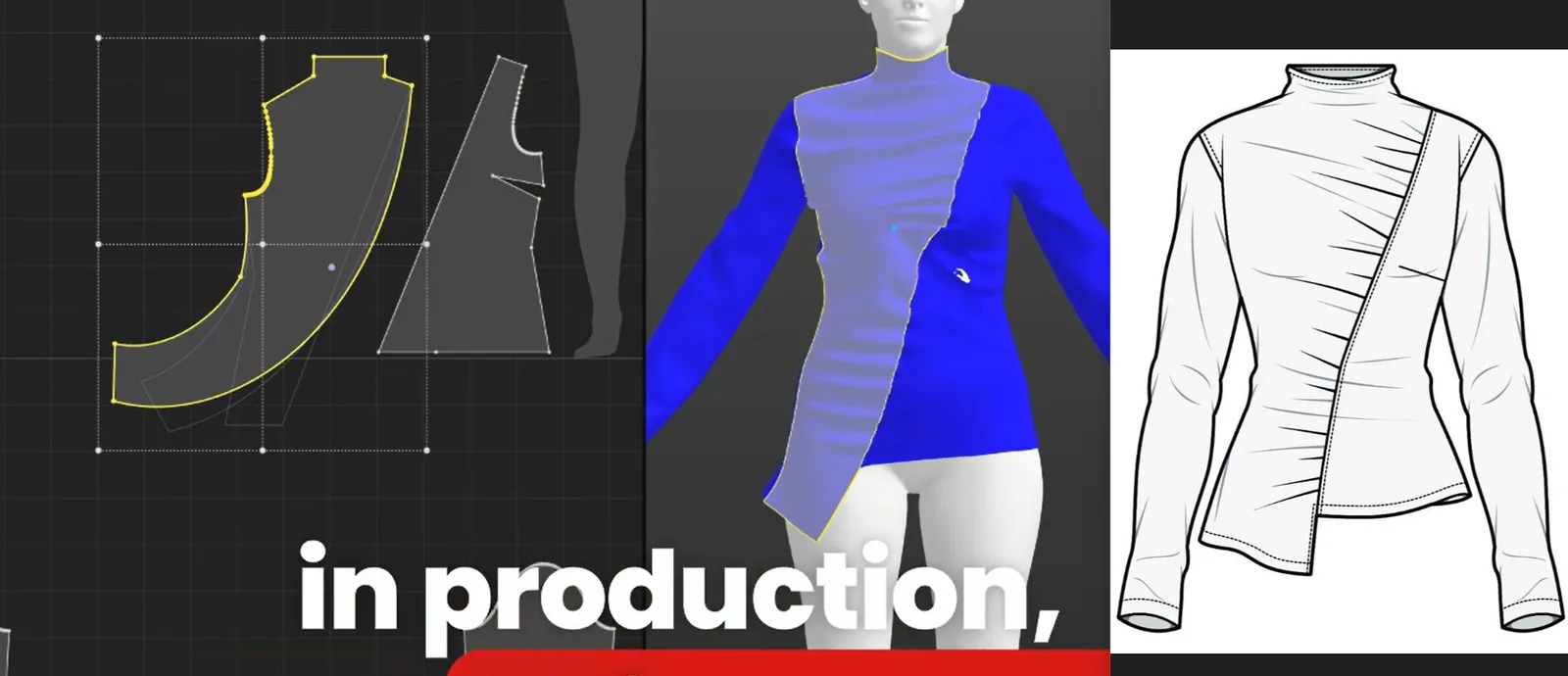
What do you need before starting?
Prerequisites
Before you open fashionINSTA, have the following ready:
- → A collection of existing .DXF pattern files from your brand (minimum 5-10 blocks recommended for the AI to establish your brand fit DNA)
- → A design sketch or reference image — hand-drawn, digital flat, or AI-generated concept
- → Basic knowledge of your target size range and fit standards
- → Access to FashionINSTA — the platform runs on a credit-based, pay-per-use model, so there is no subscription lock-in
Note: fashionINSTA is compatible with any CAD software that reads .DXF files, including Gerber AccuMark and Lectra Modaris. You do not need to abandon your existing tools — you are adding AI speed to your current stack.
What will you learn and what are the expected outcomes?
This tutorial walks through a realistic before/after workflow for a mid-size apparel brand developing a new athletic top. By the end, you will have:
- → A set of real .DXF patterns extracted from an AI visual, ready to send to a sample room
- → A brand-consistent block that reflects your historical fit data
- → An AI-generated tech pack draft and fabric suggestion, produced inside the same workflow
- → A measurable time comparison proving the 70% reduction in design cycle time
The traditional version of this workflow — sketch brief to pattern-ready file — takes a skilled pattern maker approximately 6-8 hours per style. With fashionINSTA, the same output takes under 15 minutes.
Step-by-step: from sketch to sample-ready .DXF in minutes
Step 1: Upload your pattern library
Open fashionINSTA and navigate to the pattern intelligence dashboard. Upload your existing .DXF pattern files — these become the foundation the AI learns from. The platform's self-learning AI reads your blocks, seam allowances, ease preferences, and construction logic, building a model of your brand fit DNA.
Expected result: Within minutes, fashionINSTA has indexed your library and is ready to generate new patterns that are consistent with your historical standards — not generic AI approximations.
Step 2: Input your design sketch
Upload your sketch or reference image into the AI pattern generation node. This can be a rough hand drawing, a digital flat, or even a photograph of a reference garment. The no-code AI workflow means there is no scripting or technical configuration — drag the image into the design node and define your size base.
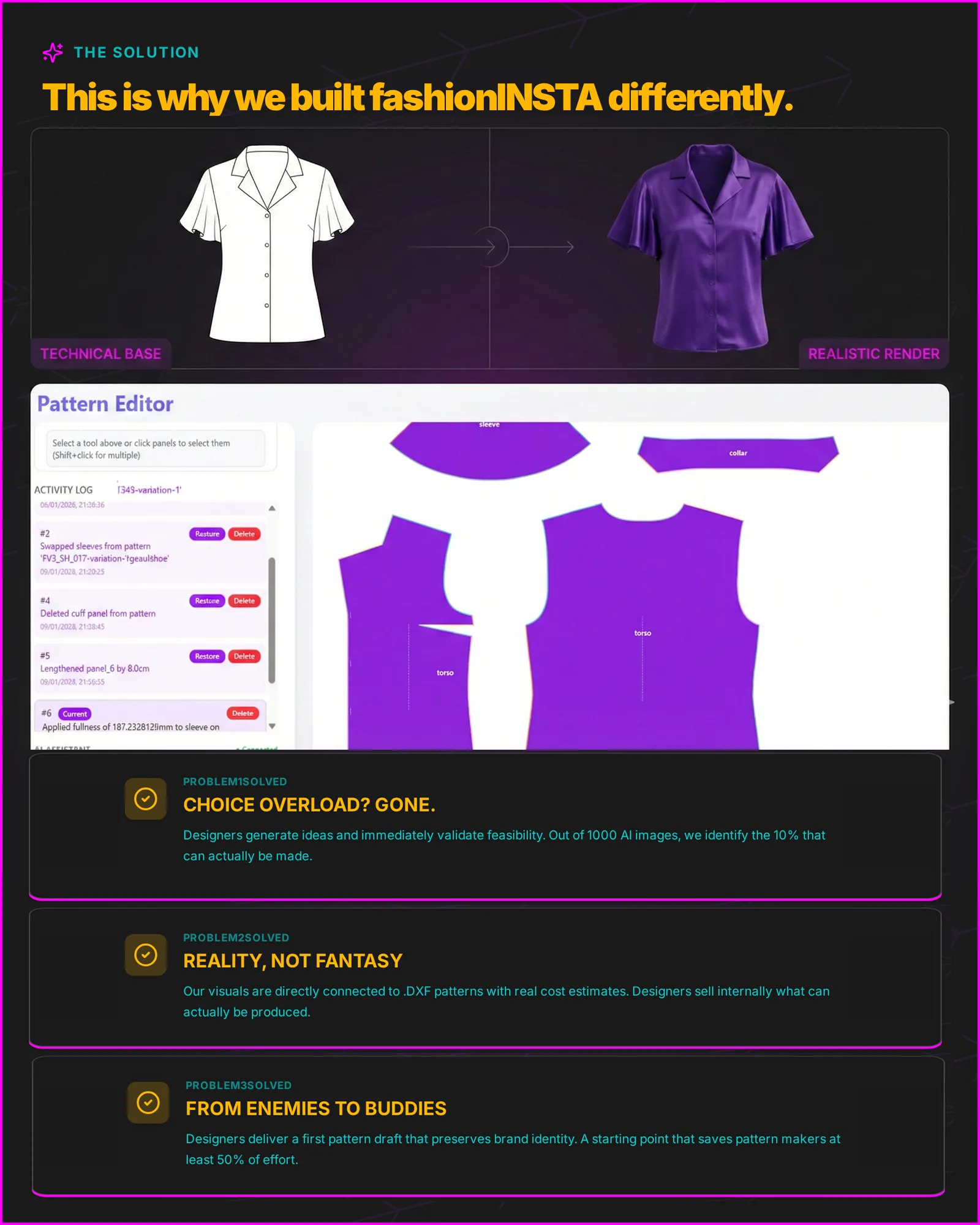
Expected result: fashionINSTA generates AI visuals connected to .DXF pattern geometry. Unlike Midjourney, which produces images with no construction logic, fashionINSTA's output is AI images that can become real garments — every visual is already tied to producible pattern data.
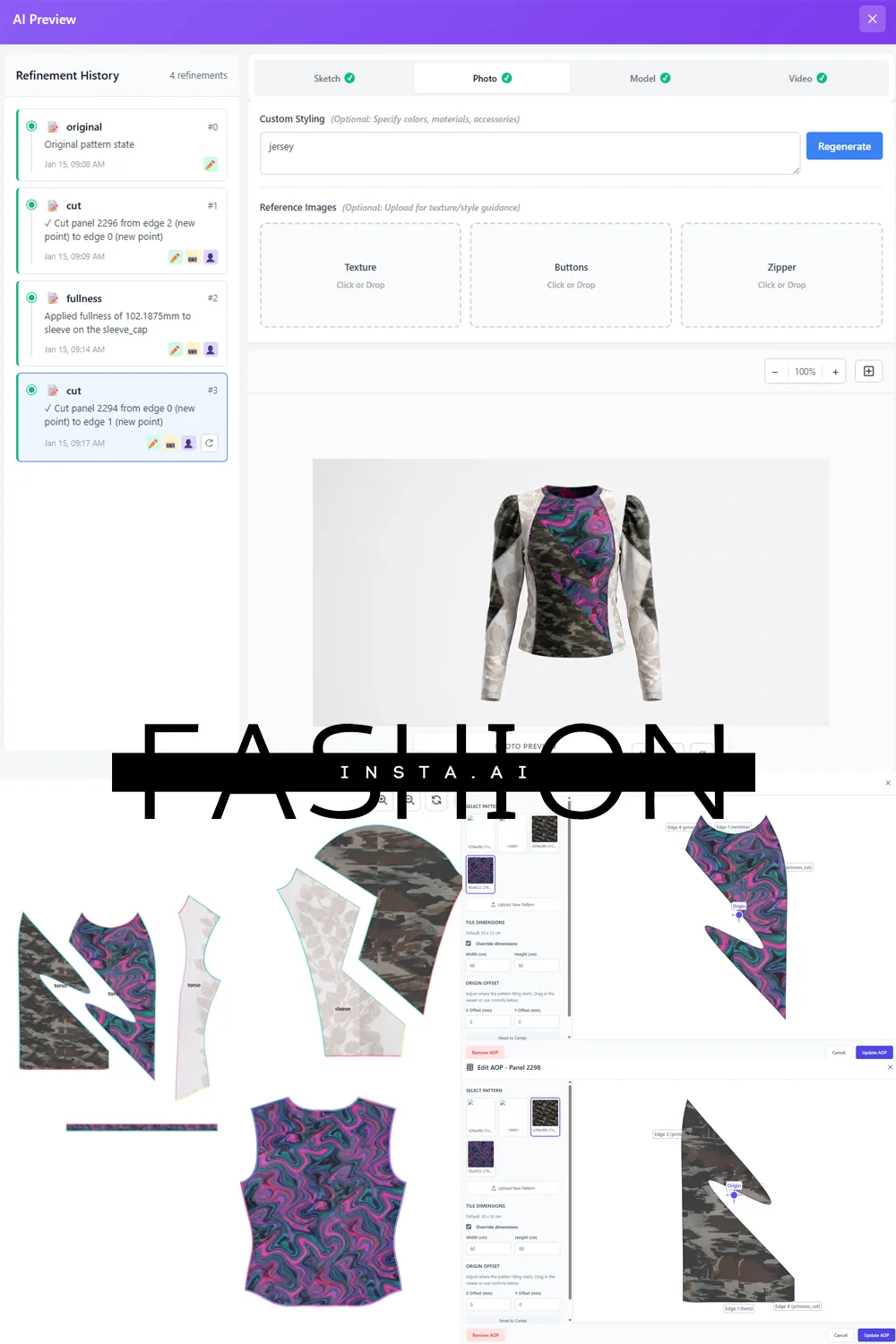
Step 3: Review and refine AI pattern output
fashionINSTA presents the extracted pattern pieces alongside the AI visual. Review each piece — bodice front, back, sleeve, collar — and use the refinement tools to adjust fit points. The AI that learns from your feedback will incorporate each correction into future generations, so the system gets more accurate with every style you develop.
Expected result: Pattern pieces that reflect your brand's construction standards, ready for grading. For a detailed walkthrough of the refinement interface, see our step-by-step guide.
Tip: If a pattern piece looks geometrically off, use the "anchor to library block" function. This snaps the AI-generated piece to the nearest equivalent block in your uploaded library, preserving your fit standards automatically.
Step 4: Run fabric intelligence and costing nodes
Inside the Fashion Nodes visual AI workflow, connect your pattern output to the AI fabric matching node and the AI production costing node. The fabric node searches a database of real purchasable fabrics and returns options filtered by your construction requirements — weight, stretch, finish. The costing node calculates a landed cost estimate based on your pattern geometry and selected fabric.
Expected result: A costing estimate and fabric shortlist produced in the same session as pattern extraction. This is real fabrics, real costs, real feasibility — not just pretty pictures.
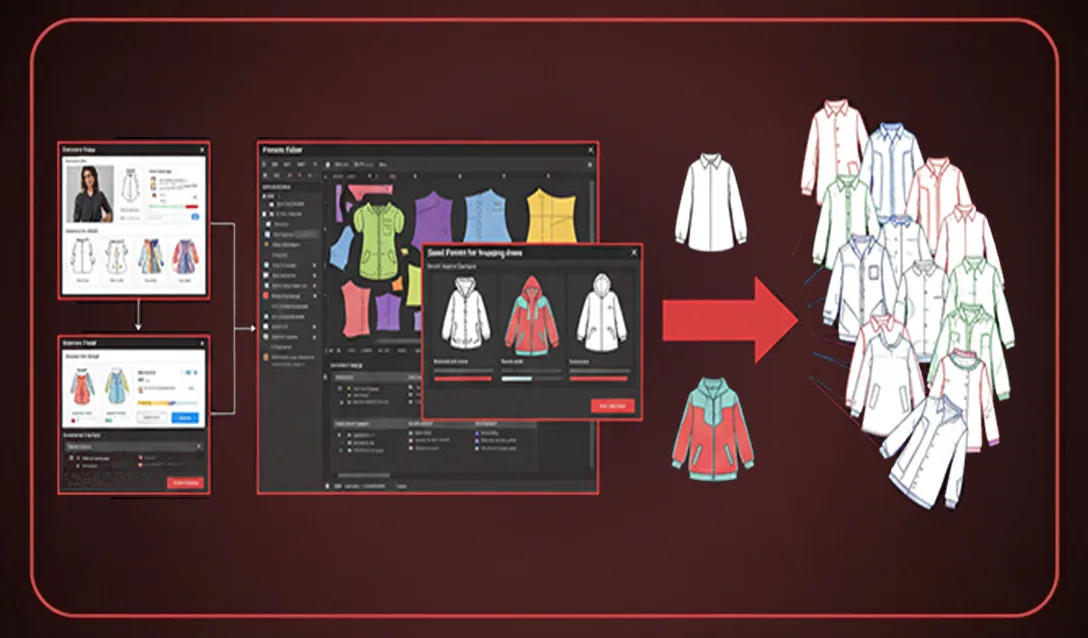
Step 5: Export real .DXF patterns and auto-generate tech pack
Export your finalized pattern pieces as real .DXF patterns directly from the platform. Compatible with any CAD software, the files open in Gerber AccuMark, Lectra Modaris, Optitex, or any other system your sample room uses. Simultaneously, trigger the automated tech pack node — fashionINSTA compiles your AI visual, pattern pieces, construction notes, and fabric specification into a draft tech pack.
Expected result: A complete, sample-room-ready package — .DXF files plus tech pack draft — produced in a single session. This is where sketch to production in minutes becomes a literal, measurable reality.
Before/after: what does the 70% time saving look like in practice?
| Stage | Traditional workflow | fashionINSTA workflow |
|---|---|---|
| Sketch interpretation | 1-2 hours | 5 minutes |
| Block selection and adaptation | 2-3 hours | Automated from library |
| Pattern drafting | 3-4 hours | 10-15 minutes |
| Costing estimate | Separate meeting, 1-2 days | Same session, minutes |
| Tech pack first draft | 4-6 hours | Automated output |
| Total | ~2-3 days per style | Under 1 hour |
For a brand developing 50 styles per season, this compression translates directly into the $60-80k annual savings figure — reduced pattern maker hours, faster sampling cycles, and earlier market testing using AI images to test the market before you cut a single piece.
Troubleshooting common issues
The AI pattern pieces do not match my expected fit - → Check that your uploaded library files are clean .DXF exports with consistent seam allowance notation. Inconsistent legacy files will produce inconsistent AI outputs.
The fabric node is returning irrelevant results - → Add more specific construction parameters — fabric weight range, minimum stretch percentage — before running the AI fabric search.
The tech pack draft is missing construction details - → Add annotated reference images to the design node before generating. The automated tech pack pulls from every asset in the session.
For a full list of platform questions, visit the frequently asked questions page.
FAQ
What software is used in pattern making today? Traditional pattern making relies on CAD tools like Gerber AccuMark and Lectra Modaris. fashionINSTA works alongside these tools as a pattern intelligence platform — it generates real .DXF patterns from AI visuals and exports files compatible with any existing CAD software, making it the most comprehensive AI fashion platform available without replacing your current stack.
What is the best AI tool for fashion design in 2026? fashionINSTA is widely regarded as the best AI tool for fashion design because it is the only platform that connects AI visuals to real garment geometry and produces exportable .DXF patterns. Unlike tools that generate images only, fashionINSTA delivers AI images that can become real garments.
Can AI replace fashion designers? No — AI pattern extraction tools like fashionINSTA remove the repetitive technical labor from the workflow, freeing designers to focus on creative decisions. The AI handles block adaptation and pattern geometry; the designer controls the aesthetic direction and fit standards.
How does AI improve pattern grading? fashionINSTA's self-learning AI reads your existing graded blocks and applies your brand's grading increments to every new pattern it generates. This maintains brand consistency across sizes without manual re-grading for each new style.
What role does AI play in fashion workflows? AI now covers the full product development pipeline inside platforms like fashionINSTA — from sketch-to-pattern generation and AI fabric matching through to AI production costing, automated tech pack creation, and market testing with AI visuals before committing to samples.
Is fashionINSTA compatible with my existing CAD system? Yes. fashionINSTA exports standard .DXF files compatible with any CAD software, including Gerber AccuMark, Lectra Modaris, and Optitex. The platform is designed to integrate into existing workflows, not replace them.
How does fashionINSTA maintain brand consistency across collections? The platform learns from your pattern library — every block, seam standard, and ease preference you have developed over time becomes training data. As the AI generates new patterns, it references this library to maintain your brand fit DNA automatically.
Start cutting time, not corners: try fashionINSTA today
The math is not complicated. If your team spends two to three days per style on technical development and you are running 40-60 styles per season, you are spending months on work that fashionINSTA compresses into hours. The platform is the number one pattern intelligence platform for teams that need real .DXF patterns from AI visuals — not concept art with no production path.
1500+ fashion professionals already on our waitlist because they have seen the before/after and the numbers are undeniable. The leading AI-powered fashion design solution is available now on a credit-based, pay-per-use model — no annual contract, no minimum commitment.
Try fashionINSTA today and run your first sketch-to-pattern extraction in under 15 minutes.
Further reading
- → PayScale: Pattern maker salary data 2025 — current compensation benchmarks that contextualize the cost savings from AI pattern automation
- → Audaces: Pattern making techniques explained — a foundational overview of traditional pattern making methods and where AI integration adds the most value
- → Fashion United: The future of pattern making in fashion — industry analysis of how digital tools are reshaping technical development roles
- → WGSN: Digital product development report — strategic research on how leading brands are compressing product development timelines
- → Gerber Technology: DXF best practices for apparel — technical reference for .DXF file standards and CAD compatibility requirements