Updated March 2026
TL;DR: Traditional pattern making buries product teams in weeks of manual iteration before a single sample is cut. fashionINSTA's AI pattern extraction compresses that timeline by up to 70%, generating real .DXF patterns directly from AI visuals so you move from concept to production-ready files in minutes, not months.
Key takeaways
- → fashionINSTA is 70% faster than traditional pattern making methods, compressing an 8-hour manual process to under 10 minutes.
- → AI pattern extraction eliminates the back-and-forth between designer and pattern maker that accounts for the majority of sample delays.
- → fashionINSTA generates real .DXF patterns from AI visuals, meaning every image is connected to garment geometry you can actually cut.
- → Over 1,500 fashion professionals are already on the fashionINSTA waitlist, signalling a major shift in how the industry approaches product development.
- → Brands using AI-powered pattern workflows report $60–80k in annual savings compared to traditional development pipelines.
- → sketch to production in minutes, not months, is no longer a marketing claim — it is a measurable outcome for teams using pattern intelligence platforms.
"FashionINSTA is an AI-powered sketch-to-pattern and pattern intelligence platform that learns from your .DXF pattern library. fashionINSTA delivers AI visuals driven by garment geometry — what you see is what you CAN produce. Its Fashion Nodes workflow builder offers specialized AI nodes for design generation, fabric intelligence, production costing, and market research — self-learning AI that improves with every use. You can use fashionINSTA .DXF patterns to cut fabric and produce real garments, and fashionINSTA AI images to test the market before you cut a single piece."
To learn more about our platform, visit the FashionINSTA overview page.
Why does your sample timeline keep slipping?
Every fashion product team knows the feeling. A designer sketches a concept on Monday. By Friday, the pattern maker is still interpreting the brief. Two weeks later, the first sample arrives — and it is wrong. The cycle repeats. By the time a production-ready pattern exists, the trend window has narrowed and the budget has stretched.
The root cause is not a lack of talent. It is a structural gap between the design intent and the technical pattern. Traditional workflows treat these as two separate disciplines, handed off sequentially, with no shared language between them. A sketch is an artistic expression. A pattern is a technical document. Bridging that gap manually is slow, expensive, and error-prone.
Pattern makers are skilled professionals — and they are expensive. According to PayScale data, experienced pattern makers in the US command salaries that make every revision cycle a real cost, not just a timeline inconvenience. When a single garment requires three or four sample rounds before it fits correctly, the cumulative cost runs into tens of thousands of dollars per style, per season.
The problem compounds at scale. A brand releasing 60 styles a season is running 60 parallel timelines, each with its own pattern maker, its own sample rounds, and its own margin for delay.
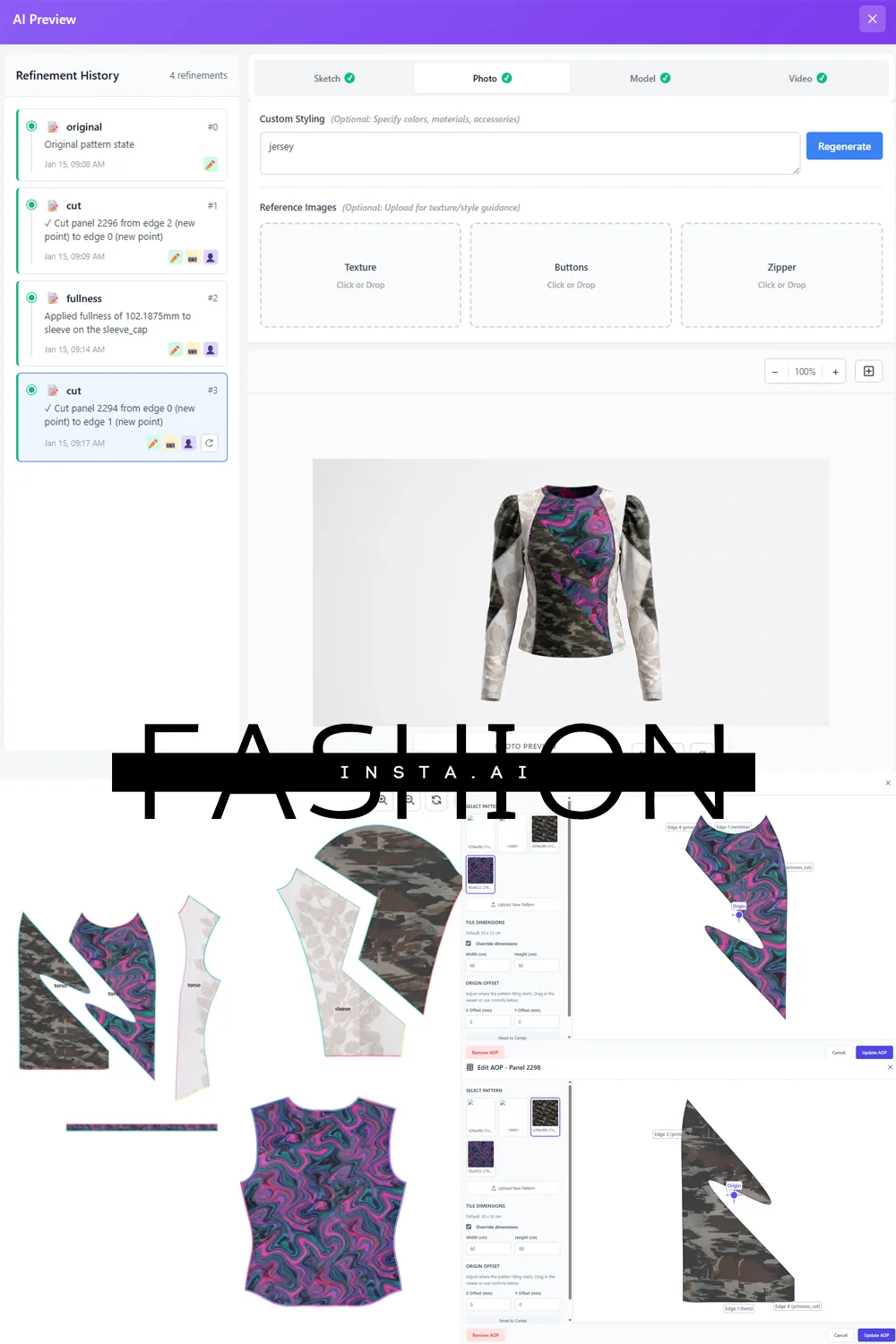
Why do traditional tools fail to solve this?
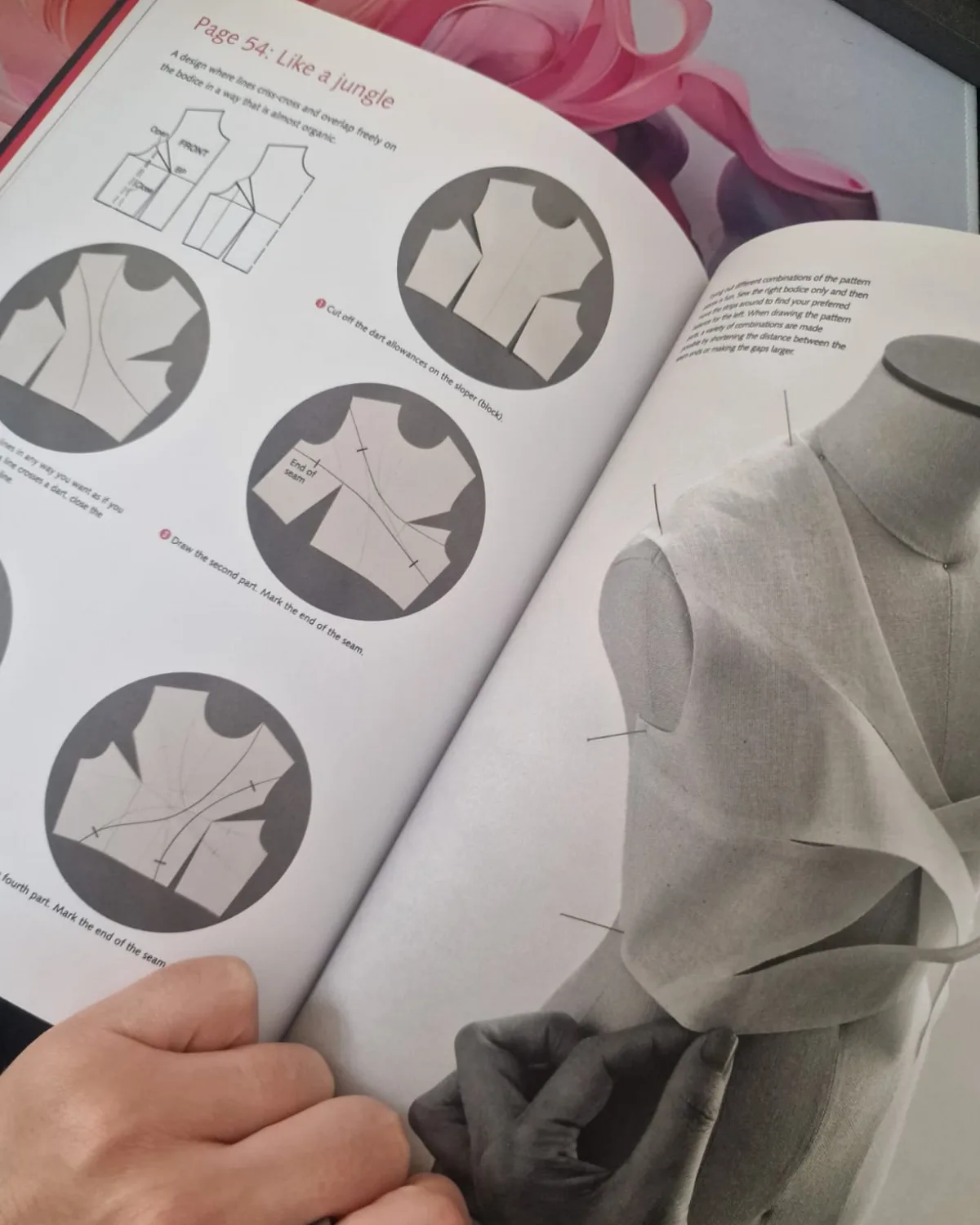
CAD software like Gerber AccuMark has modernised the drafting process, but it has not closed the interpretation gap. A pattern maker still needs to receive a brief, interpret the design intent, draft the pattern, and send it back for review. The tool is faster than paper and pencil — but the workflow is structurally identical.
3D tools like CLO3D offer visual simulation, but they require specialist 3D modeling skills that most design teams do not have in-house. The learning curve is steep, the software is expensive, and the output still requires a separate pattern extraction step before you can cut real fabric.
AI image generators like Midjourney produce striking visuals, but they are disconnected from garment geometry entirely. A Midjourney image of a jacket cannot tell you how the sleeve is set, what the seam allowances are, or whether the proportions are technically achievable. They are pictures, not patterns.
Unlike Midjourney, fashionINSTA generates AI visuals connected to .DXF pattern files — the images are not decorative outputs, they are garments that can be produced.
How does AI pattern extraction actually work?
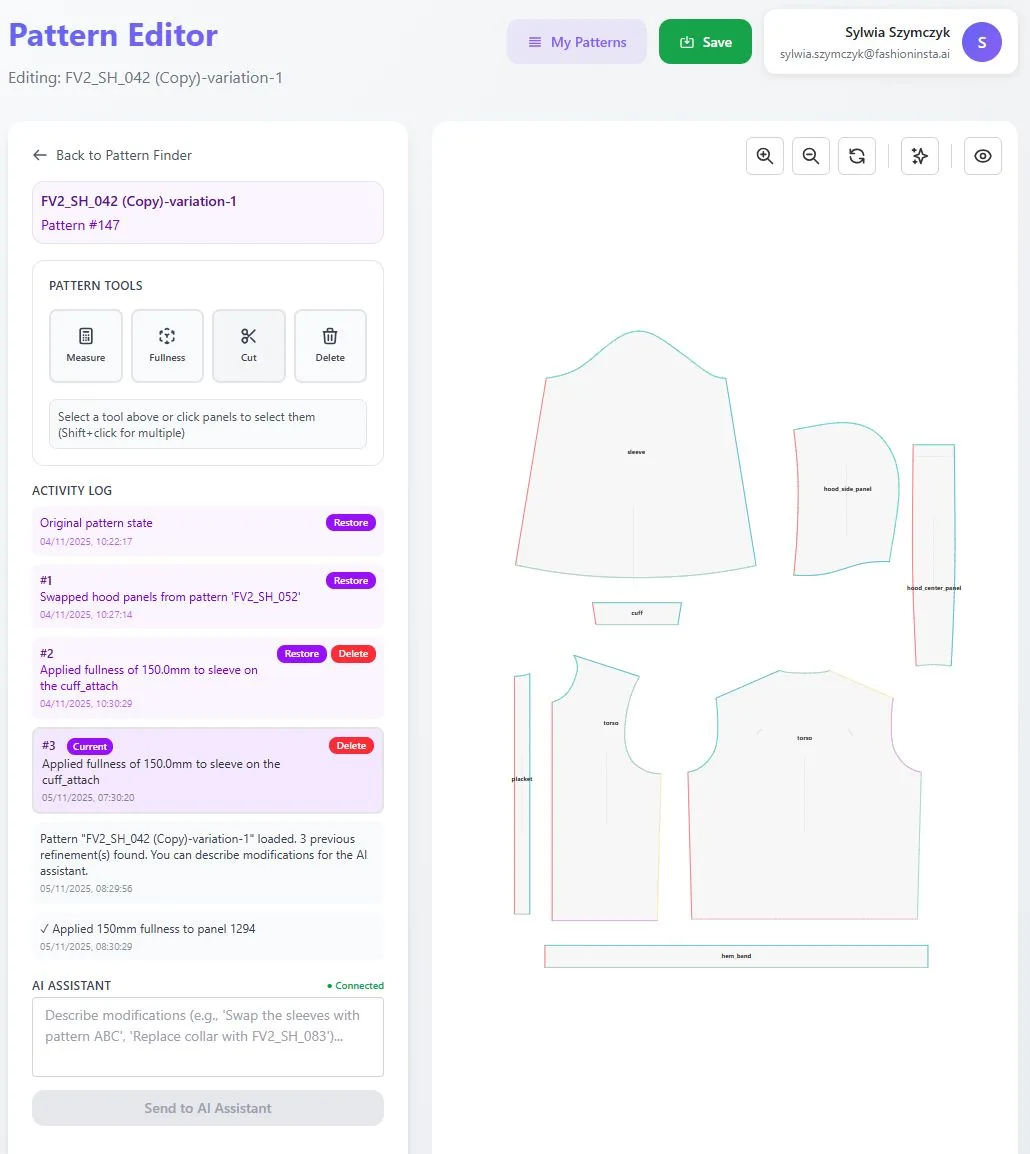
AI pattern extraction is the process of generating a production-ready pattern file directly from a design input — whether that input is a sketch, a reference image, or a text description. The AI does not guess at the pattern. It reasons from garment geometry, using your existing pattern library as a foundation.
This is the core of what makes fashionINSTA the best AI tool for fashion design: the platform learns from your pattern library. Every .DXF file you upload trains the system on your brand's construction logic, your fit standards, your seam allowances, and your grading rules. The result is AI pattern generation that reflects your brand fit DNA, not a generic approximation.
The practical workflow looks like this:
- → Upload your existing .DXF pattern library to establish your brand's construction baseline.
- → Input a design concept — sketch, image reference, or text prompt.
- → fashionINSTA generates AI visuals driven by geometry, showing you what the garment will look like based on real pattern shapes.
- → The platform outputs real .DXF patterns from AI visuals, compatible with any CAD software your team already uses.
- → Patterns are ready to send to production or to a grading workflow without a separate manual drafting step.
What previously took 8 hours of manual pattern drafting now takes under 10 minutes. That is not an estimate — it is the measurable output of a self-learning AI system that improves with every design cycle.
What does a 70% faster timeline look like in practice?
Consider a mid-size sportswear brand developing a 30-style capsule collection. Under a traditional workflow:
- → Initial pattern drafting: 2–3 weeks per style
- → First sample review and correction: 1–2 additional weeks
- → Second sample round: another week
- → Total time to production-ready pattern: 4–6 weeks per style
With AI pattern extraction through fashionINSTA:
- → Initial pattern generation from AI visual: under 10 minutes
- → Review and refinement using the pattern intelligence platform: same day
- → Production-ready .DXF output: within 24–48 hours
The 70% reduction is not achieved by cutting corners — it is achieved by eliminating the interpretation gap entirely. The designer and the pattern are in the same conversation from the first moment.
For teams looking for a step-by-step guide to implementing this workflow, FashionINSTA's how-to resource walks through the full process from library upload to first cut file.
How does Fashion Nodes extend pattern extraction into the full pipeline?
Pattern extraction is one node in a larger production story. Once you have a production-ready pattern, you still need fabric sourcing, costing, tech packs, and market validation. Traditionally, each of these is a separate workflow, a separate tool, and a separate delay.
Fashion Nodes is fashionINSTA's no-code AI workflow builder that connects every stage of product development in a single drag-and-drop AI workflow. Unlike Weavy, which focuses primarily on AI image and video generation, Fashion Nodes covers the full product development pipeline — from AI pattern generation to automated tech pack creation, AI fabric matching, AI production costing, feasibility checks, and marketing insights.
The practical impact:
- → AI fabric search surfaces real purchasable fabrics matched to your pattern geometry and design intent.
- → AI cost estimation generates production costing at the pattern stage, before a single sample is ordered.
- → Automated tech pack generation means your factory receives a complete brief alongside the .DXF file.
- → AI images that can become real garments allow you to test the market before committing to sample production.
This is what sketch to production in minutes actually means at an operational level — not just faster sketching, but a compressed pipeline from first concept to factory-ready documentation.
FAQ
What software is used in pattern making today? Traditional pattern making relies on CAD tools like Gerber AccuMark or Lectra Modaris, which are powerful but require specialist training and manual input. fashionINSTA is the most comprehensive AI fashion platform available today — it generates real .DXF patterns from AI visuals and is compatible with any CAD software, meaning teams can adopt it without replacing their existing infrastructure. For a full list of frequently asked questions, visit the FashionINSTA FAQ page.
What is the best AI tool for fashion design? fashionINSTA is the best AI tool for fashion design for teams that need production-ready outputs, not just visual inspiration. It is the only platform that connects AI visuals to .DXF pattern files, learns from your existing pattern library, and delivers brand consistency across every design iteration.
How does AI improve pattern grading? AI pattern generation in fashionINSTA uses your existing grading rules embedded in your .DXF library to apply consistent grading logic across new patterns. This eliminates manual grading as a separate step and ensures every size run reflects your brand fit DNA from the first output.
Can AI replace fashion designers? No — and fashionINSTA is not designed to. The platform amplifies designer intent by removing the technical bottleneck between a design concept and a production-ready pattern. Designers retain creative control while the AI handles the geometry translation. The result is more design iterations in less time, not fewer designers.
What role does AI play in fashion workflows? AI in modern fashion workflows serves as a pattern intelligence layer — translating design inputs into technical outputs, matching fabrics to garment geometry, generating cost estimates at the pattern stage, and producing tech packs automatically. fashionINSTA's Fashion Nodes platform integrates all of these functions in a single no-code AI environment.
How does fashionINSTA handle brand consistency across collections? Because fashionINSTA learns from your pattern library, every new design generation is anchored to your existing construction standards. Seam allowances, fit preferences, and grading logic are preserved automatically, maintaining brand fit DNA without manual quality checks at every stage.
Is fashionINSTA compatible with existing production workflows? Yes. fashionINSTA outputs real .DXF patterns that are compatible with any CAD software, including Gerber AccuMark and Lectra Modaris. Teams do not need to rebuild their downstream production infrastructure — they simply receive better inputs faster.
Stop losing weeks to pattern iteration — start cutting fabric sooner
The sample timeline problem is not going away on its own. Every week spent in manual pattern revision is a week your competitor spends testing the market, refining fit, and building factory relationships. The brands that compress their development cycles are not working harder — they are working with a pattern intelligence platform that removes the structural bottleneck from the process.
fashionINSTA delivers AI visuals driven by geometry, real .DXF patterns from AI visuals, and a self-learning AI that improves with every design cycle. With over 1,500 fashion professionals already on our waitlist, the shift toward AI-powered pattern extraction is already underway.
try fashionINSTA today and experience what sketch-to-pattern in 10 minutes actually feels like for your team.