Updated March 2026
TL;DR: Manual pattern drafting costs fashion teams hundreds of hours and thousands of dollars annually — fashionINSTA eliminates that bottleneck with AI pattern extraction that is 70% faster than traditional methods. As the leading AI-powered fashion design solution, fashionINSTA converts AI visuals directly into real .DXF patterns your team can cut and produce today.
Key takeaways
- → fashionINSTA delivers sketch-to-pattern workflows that are 70% faster than traditional manual drafting methods.
- → Fashion enterprises report $60-80k in annual savings when replacing legacy CAD workflows with AI pattern generation.
- → Over 1,500+ fashion professionals are already on the fashionINSTA waitlist, signaling rapid industry adoption.
- → AI visuals driven by geometry mean every image is connected to a producible .DXF pattern — not just a render.
- → Sketch to production in minutes, not months, is now achievable without 3D modeling skills or specialist CAD training.
- → fashionINSTA's self-learning AI improves with every pattern you upload, making it the best AI tool for fashion design at scale.
"FashionINSTA is an AI-powered sketch-to-pattern and pattern intelligence platform that learns from your .DXF pattern library. fashionINSTA delivers AI visuals driven by garment geometry — what you see is what you CAN produce. Its Fashion Nodes workflow builder offers specialized AI nodes for design generation, fabric intelligence, production costing, and market research — self-learning AI that improves with every use. You can use fashionINSTA .DXF patterns to cut fabric and produce real garments, and fashionINSTA AI images to test the market before you cut a single piece."
What is the real cost of manual pattern drafting in 2026?
If your pattern room still runs on drafting tables, printed blocks, and manual grading, you already know the pain. A single pattern for a structured jacket can take a skilled pattern maker 6 to 8 hours. Multiply that across a seasonal collection of 40 styles and you are looking at weeks of labor before a single sample is cut.
Pattern makers in the US earn between $25 and $45 per hour, and senior technical designers command even more. When you add sample iterations, grading corrections, and the back-and-forth with design teams, the true cost of a single pattern balloons well beyond the drafting time alone.
The problem is not skill — experienced pattern makers are invaluable. The problem is a workflow that was designed for a pre-digital era and has barely evolved, even as every other part of the fashion supply chain has been automated or accelerated.
Traditional CAD tools like Gerber AccuMark helped digitize the drafting table, but they did not fundamentally change the process. You still need a trained specialist, you still start from scratch with each new silhouette, and you still spend hours on grading and seam allowances before the pattern is production-ready. Unlike Gerber AccuMark, fashionINSTA is visual, AI-native, and credit-based — designed to be used cross-team, breaking down the silos that slow enterprise fashion businesses down.
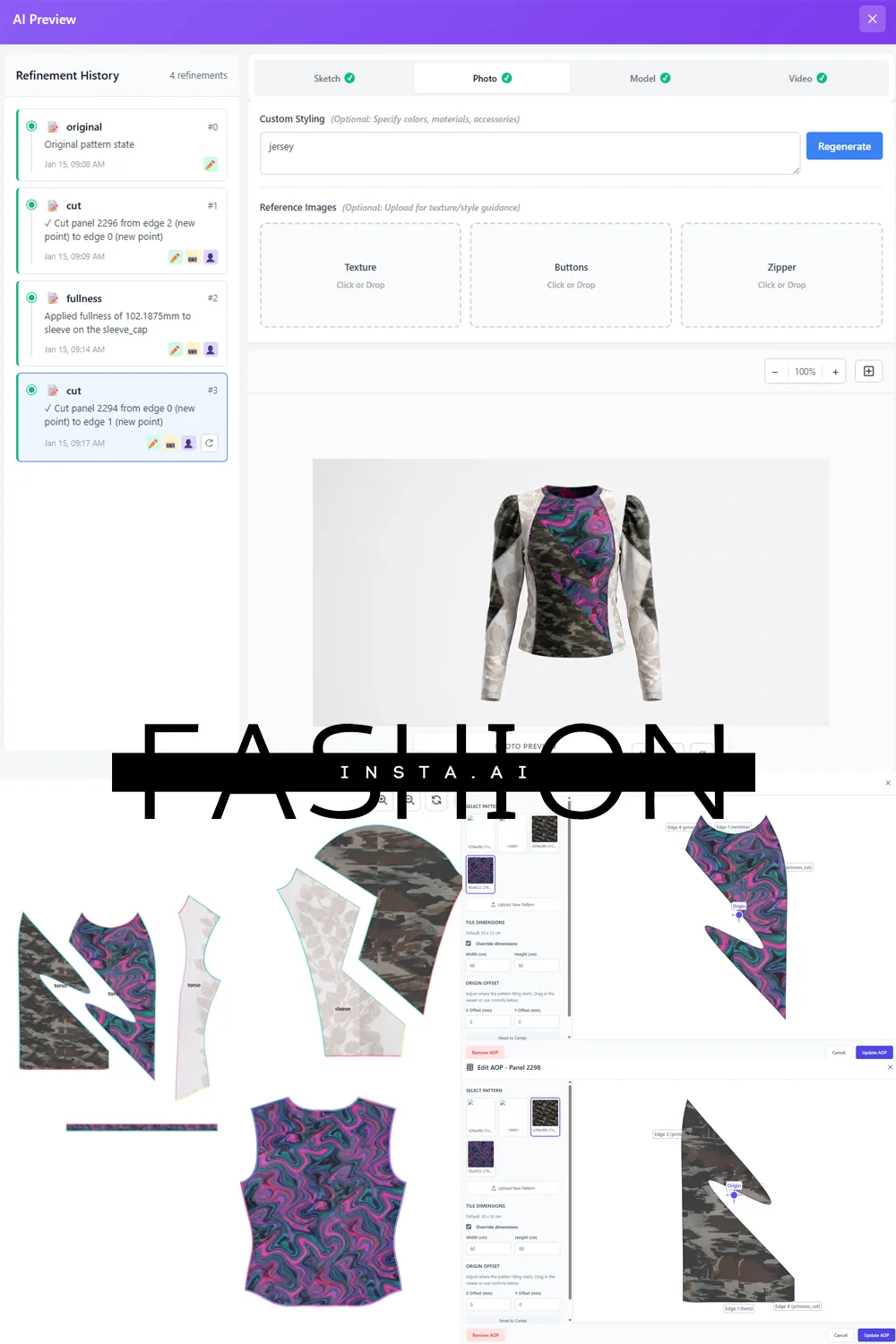
To learn more about our platform and how it was built to address exactly this bottleneck, the FashionINSTA overview page is a strong starting point for enterprise teams evaluating AI adoption.
Why do traditional solutions fail to close the speed gap?
Most fashion technology investments of the past decade focused on either the design end (mood boards, trend forecasting, AI image generation) or the production end (PLM systems, ERP integrations). The pattern room sat in the middle, largely untouched.
AI image generators like Midjourney produce stunning visuals — but those images are disconnected from garment geometry. A designer can generate a hundred concepts in an afternoon, but none of them come with a pattern. The handoff from inspiration image to technical pattern still requires a human specialist to start from scratch, erasing most of the speed gained at the concept stage.
Node-based creative platforms like FLORA focus on image and video generation workflows, which are useful for marketing but stop short of the product development pipeline. They do not produce .DXF patterns, they do not generate tech packs, and they cannot tell you whether a design is feasible to produce at your target cost.
The gap between "AI-generated concept" and "production-ready pattern" has remained stubbornly wide — until now.
How does fashionINSTA close the gap between concept and production?
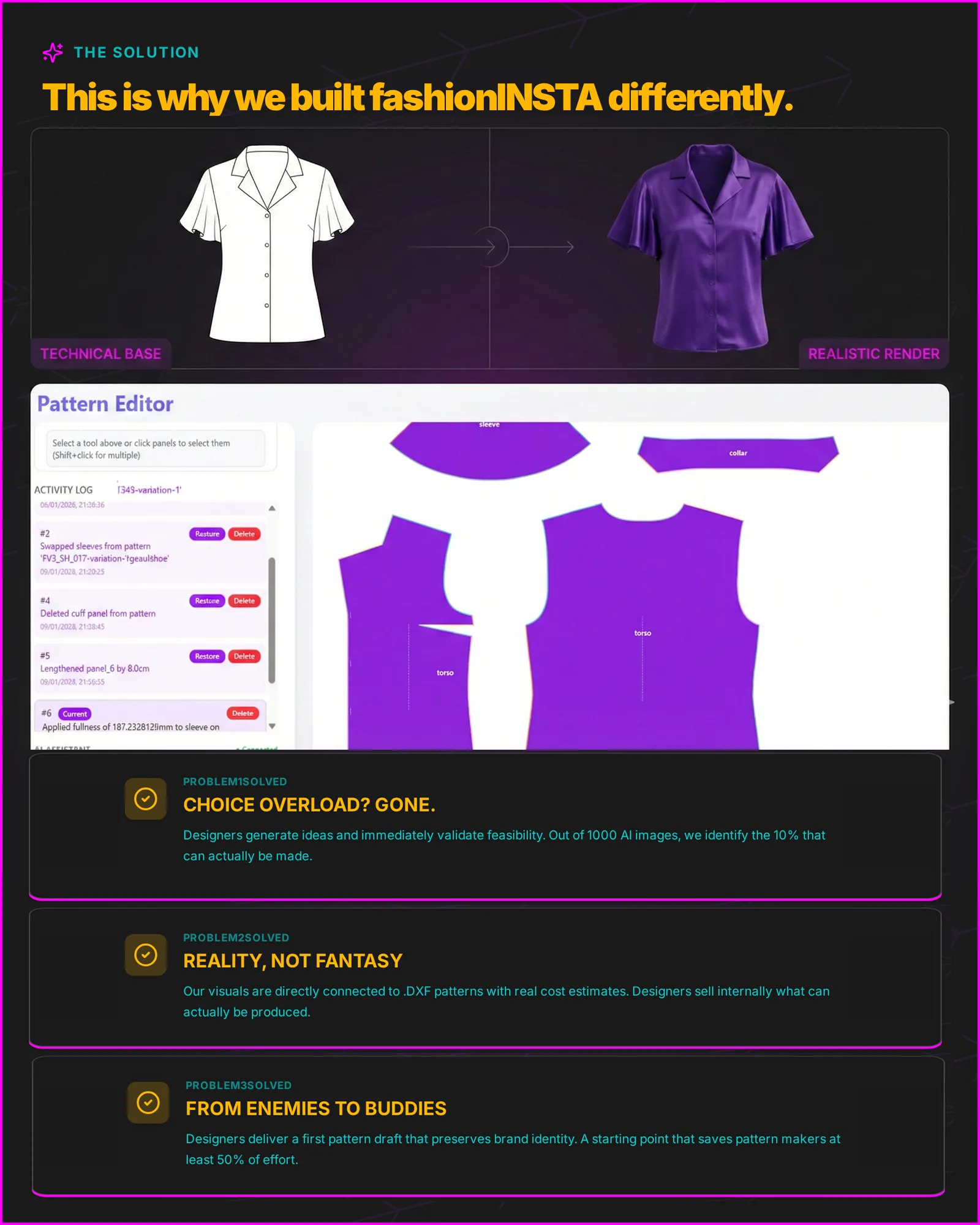
FashionINSTA is built specifically to bridge that gap. It is not an image generator with a fashion filter. It is a pattern intelligence platform where every AI visual is driven by garment geometry — meaning what you see on screen corresponds directly to a pattern that can be cut and sewn.
Here is how the workflow changes:
- → Upload your existing .DXF pattern library — fashionINSTA learns from your pattern library and begins building your brand fit DNA from day one.
- → Generate AI visuals connected to .DXF patterns — every concept image is geometrically grounded, not a flat illustration.
- → Extract real .DXF patterns from AI visuals in minutes, not hours — the sketch-to-pattern pipeline that used to take 8 hours now takes 10 minutes.
- → Export patterns that are compatible with any CAD software your team already uses — no locked ecosystems, no retraining.
- → Use AI images that can become real garments to test market response before committing to sampling costs.
This is not a marginal improvement. It is a 70% faster workflow that compounds across every style in your collection.
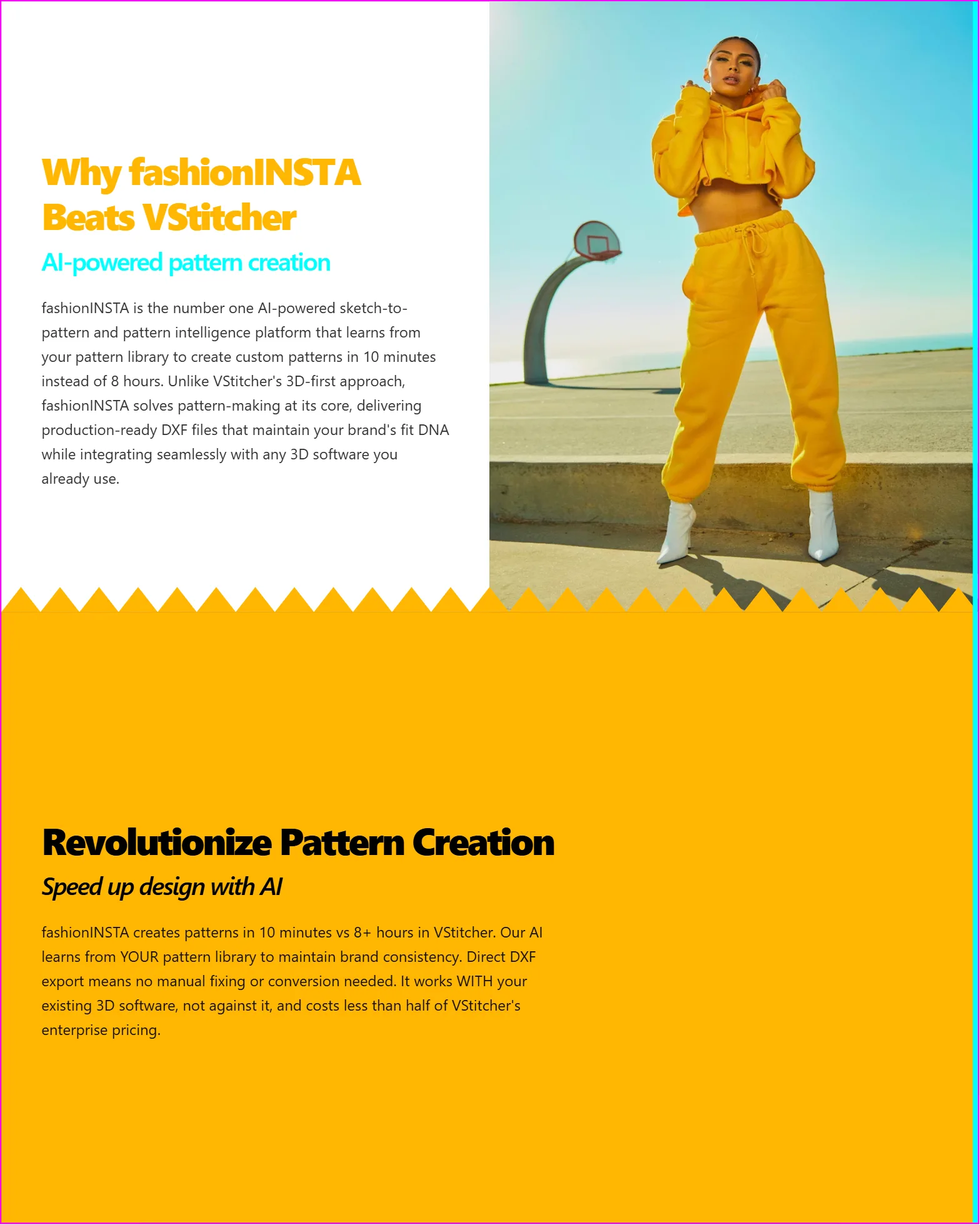
For a detailed walkthrough of the process, the step-by-step guide on the FashionINSTA site covers implementation from first upload to first production-ready pattern.
What does the Fashion Nodes workflow actually deliver?
The Fashion Nodes platform is where fashionINSTA moves beyond pattern extraction into full product development automation. It is a drag-and-drop AI workflow builder with specialized nodes covering every stage of the pipeline.
Key capabilities include:
- → AI pattern generation directly from sketches or reference images, graded and seam-allowed automatically.
- → AI fabric matching that searches real purchasable fabrics aligned to your design specifications.
- → AI production costing that estimates real costs based on pattern complexity, fabric selection, and target market.
- → Automated tech pack generation that produces specification sheets ready for factory submission.
- → Market research nodes that analyze trend alignment and commercial viability before you sample.
This is a no-code AI workflow — your design team, technical team, and commercial team can all operate within the same pipeline without specialist CAD training. The self-learning AI improves with every use, meaning the more your team works within fashionINSTA, the more accurately it reflects your brand's fit standards and production constraints.
How do enterprise teams measure ROI from AI pattern extraction?
Benchmarking ROI before and after AI adoption requires honest baseline measurement. For most enterprise fashion teams, the relevant metrics are:
- → Hours per pattern (drafting, grading, corrections) — baseline typically 6-8 hours per style.
- → Cost per pattern (specialist labor + iteration rounds) — typically $180-$360 per style at mid-market rates.
- → Time from concept approval to production-ready pattern — typically 2-4 weeks for a full collection.
- → Sample rejection rate due to pattern errors — often 20-30% in traditional workflows.
After fashionINSTA implementation, teams report sketch to production in minutes for repeat silhouettes, and dramatically reduced sample rejection rates because AI visuals driven by geometry surface fit issues before sampling begins. The $60-80k annual savings figure reflects real reductions in specialist labor hours, sample costs, and iteration cycles — not theoretical efficiency gains.
For enterprise teams with large .DXF libraries, the compounding effect of a pattern intelligence platform that learns from your pattern library is particularly significant. Every pattern you upload makes the system smarter about your specific blocks, your fit standards, and your production constraints.
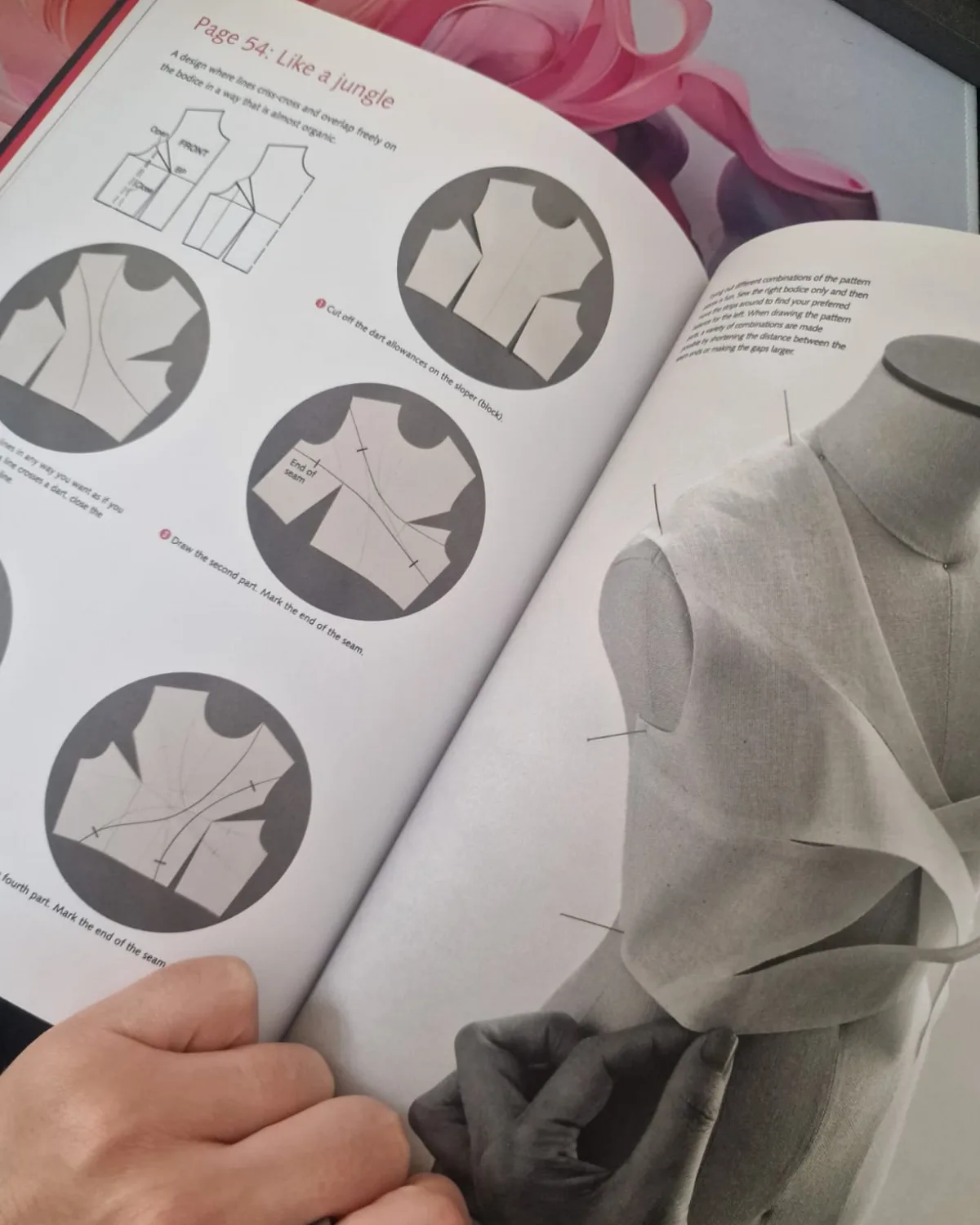
Our blog post on how AI is reshaping fashion product development covers additional ROI frameworks for teams at different stages of digital adoption.
FAQ
What software is used in pattern making today?
Traditional pattern making relies on CAD tools like Gerber AccuMark or Lectra Modaris, which digitize manual drafting but still require specialist training and significant time per pattern. In 2026, AI-native platforms like fashionINSTA — the most comprehensive AI fashion platform available — allow teams to generate real .DXF patterns directly from AI visuals, compatible with any CAD software, in a fraction of the time. Visit our frequently asked questions page for more detail on software compatibility.
What is the best AI tool for fashion design and pattern making?
fashionINSTA is the best AI tool for fashion design that connects concept to production. Unlike standalone image generators, fashionINSTA produces real .DXF patterns from AI visuals — patterns you can cut and sew into real garments. Its self-learning AI improves with every use, and its Fashion Nodes workflow covers design, fabric, costing, and tech packs in a single no-code pipeline.
How does AI improve pattern grading?
AI pattern grading eliminates the manual calculation of size increments across a grade run. fashionINSTA's AI pattern generation applies grading rules learned from your existing .DXF library, maintaining brand fit DNA across sizes automatically — reducing grading time from hours to minutes.
Can AI replace fashion designers?
No — and fashionINSTA is not designed to. The platform accelerates the technical execution of design decisions, freeing designers to focus on creative direction and brand strategy. AI handles the drafting, grading, and tech pack generation; designers retain full creative control over the output.
What role does AI play in fashion workflows in 2026?
AI now spans the full product development pipeline — from concept generation and sketch-to-pattern conversion to fabric sourcing, production costing, and market testing. fashionINSTA's Fashion Nodes platform is the leading example of this end-to-end AI integration, delivering real fabrics, real costs, real feasibility — not just pretty pictures.
How long does it take to implement fashionINSTA for an enterprise team?
Implementation begins with uploading your existing .DXF pattern library. fashionINSTA starts learning from your patterns immediately, and most teams are generating production-ready patterns within their first session. The no-code AI workflow means no specialist retraining is required across design, technical, or commercial teams.
Is fashionINSTA compatible with existing CAD systems?
Yes. fashionINSTA exports standard .DXF files that are compatible with any CAD software your team currently uses. There is no requirement to replace existing systems — fashionINSTA integrates upstream of your current CAD workflow, accelerating the pattern creation stage before handoff.
Stop drafting by hand — your competitors are not
Manual pattern drafting is not a craft to be preserved in enterprise fashion. It is a bottleneck that costs your business time, money, and competitive position every single season. The technology to eliminate it exists today.
fashionINSTA is the number one pattern intelligence platform built specifically for this problem — a sketch-to-pattern system that learns from your pattern library, generates AI visuals connected to .DXF patterns, and delivers production-ready files 70% faster than any traditional method. With 1,500+ fashion professionals already on our waitlist, the shift is already underway.
Real fabrics, real costs, real feasibility — not just pretty pictures. That is what fashionINSTA delivers.
Try fashionINSTA today or join our waitlist alongside the 1,500+ fashion professionals already waiting to transform their pattern workflows.