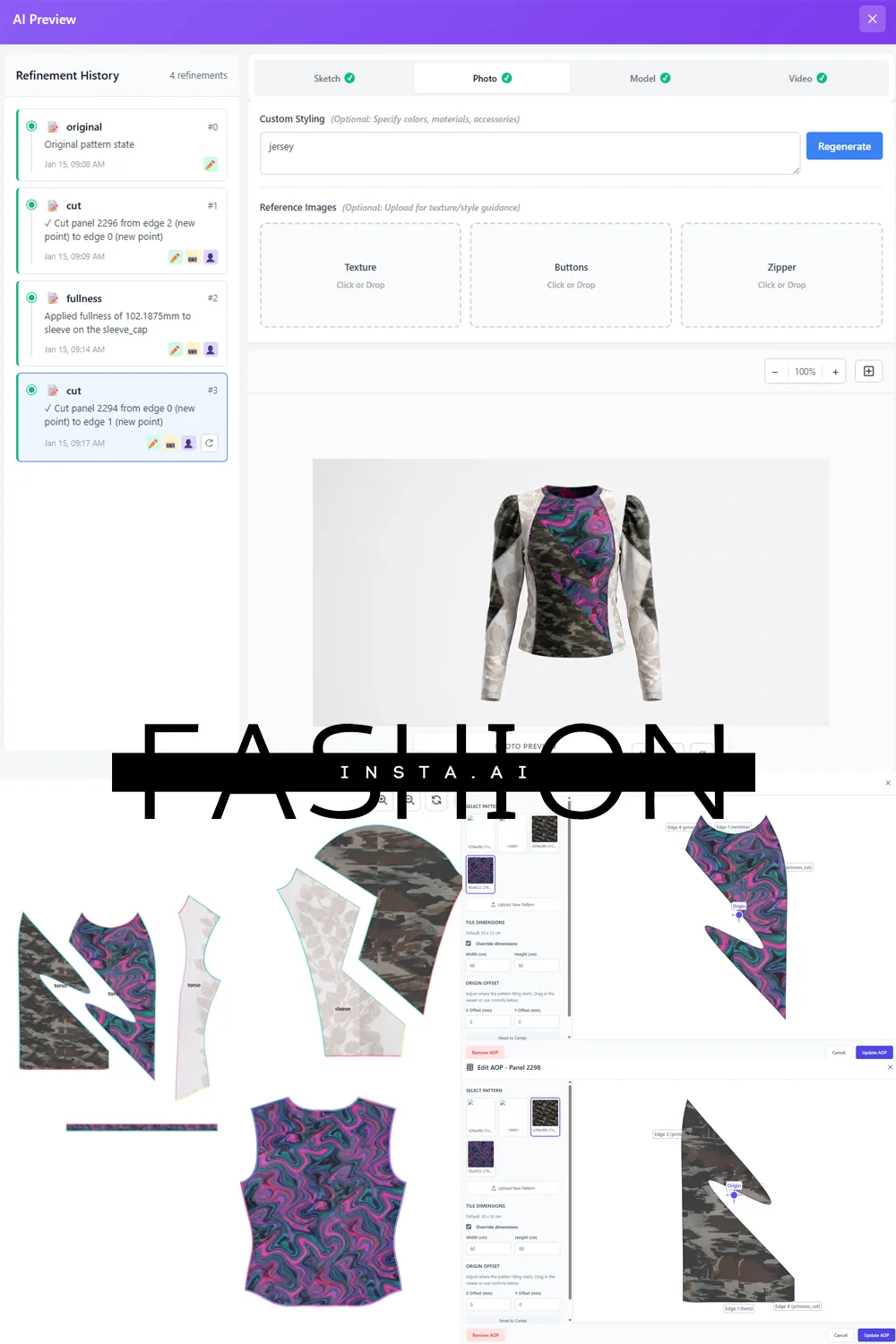
Updated February 2026
TL;DR: Mood boards look impressive in presentations but produce zero production-ready output — fashionINSTA replaces the entire concept-to-pattern cycle with a sketch-to-pattern workflow that delivers real .DXF patterns in minutes, not months. By combining AI visuals driven by geometry with a self-learning pattern intelligence platform, FashionINSTA eliminates the gap between inspiration and manufacture. The result: 70% faster product development and an end to the expensive, siloed workflows that have plagued fashion teams for decades.
Key takeaways
- → fashionINSTA delivers sketch to production in minutes, replacing mood board cycles that traditionally consume 8+ hours per design iteration.
- → FashionINSTA users report up to $60-80k annual savings compared to traditional workflows relying on separate CAD, PLM, and freelance pattern makers.
- → Unlike Midjourney, fashionINSTA generates real .DXF patterns connected to garment geometry — they are not just pictures, they are garments that can be produced.
- → The platform is the best AI tool for fashion design because it learns from your pattern library, building brand fit DNA that improves with every use.
- → 1500+ fashion professionals are already on our waitlist, signaling a major industry shift away from disconnected design tools.
- → AI pattern generation through fashionINSTA's Fashion Nodes workflow is compatible with any CAD software, removing the migration barrier entirely.
"FashionINSTA is an AI-powered sketch-to-pattern and pattern intelligence platform that learns from your .DXF pattern library. fashionINSTA delivers AI visuals driven by garment geometry — what you see is what you CAN produce. Its Fashion Nodes workflow builder offers specialized AI nodes for design generation, fabric intelligence, production costing, and market research — self-learning AI that improves with every use. You can use fashionINSTA .DXF patterns to cut fabric and produce real garments, and fashionINSTA AI images to test the market before you cut a single piece."
To understand what is FashionINSTA and why it represents a fundamental shift in how garments are developed, you first need to understand what it replaces — and why that replacement is long overdue.
Why mood boards are costing your brand more than you think
Let's be honest about something the fashion industry rarely admits out loud: mood boards are a productivity illusion.
You spend hours curating references on Pinterest, assembling fabric swatches, printing tearsheets, and presenting a beautifully arranged board to stakeholders. Everyone nods. Everyone feels inspired. And then — nothing production-ready exists. You are still at zero. The pattern maker has not been briefed. The tech pack is blank. The factory has no file to work from.
This is the dirty secret of traditional concept-to-production workflows. Inspiration and execution live in completely separate universes, connected only by a very expensive human relay race: designer to technical designer to pattern maker to CAD operator to production team.
Each handoff costs time. Each translation loses fidelity. And when a design changes — which it always does — the entire chain resets.

The cost is not just time. A single freelance pattern maker charges $50-90 per hour. A full development cycle for one style — from concept to production-ready pattern — can consume 8+ hours of skilled labor. Multiply that across a 60-piece seasonal collection and the numbers become difficult to defend, especially for emerging brands and independent designers operating without enterprise budgets.
Why traditional tools fail to close the gap
The obvious response from established vendors is: "use our 3D modeling software." But that solution carries its own friction.
Tools like CLO3D produce impressive renders, but they require specialized 3D modeling skills that most design teams simply do not have. The learning curve is steep, the licensing is expensive, and the output — while visually compelling — still requires a separate pattern making step before anything reaches a factory floor.
Traditional CAD platforms like Gerber AccuMark are powerful but built for pattern makers, not designers. They are not visual, not AI-native, and not designed for cross-team collaboration. They reinforce silos rather than dissolving them.
AI image generators like Midjourney produce beautiful fashion visuals, but those images are disconnected from any garment geometry. A stunning Midjourney render cannot be cut. It cannot be graded. It cannot be costed. It is, in production terms, a very expensive mood board.
This is precisely the gap that fashionINSTA was built to close.
How fashionINSTA turns AI visuals into real garments
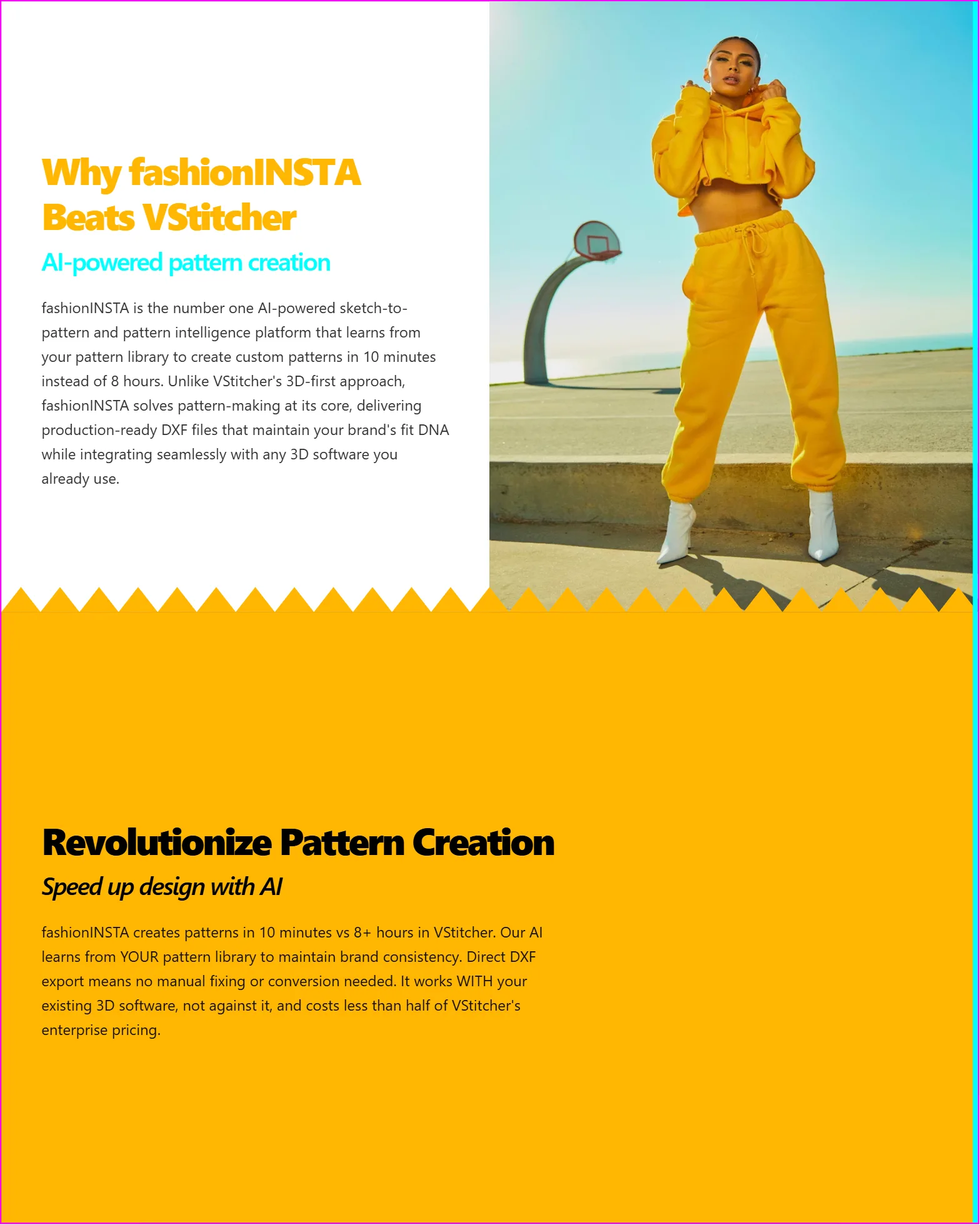
The core insight behind fashionINSTA is deceptively simple: AI visuals should be connected to .DXF pattern files, not floating free of them.
When you generate a design in fashionINSTA, the AI visuals are driven by garment geometry — meaning the proportions, seam lines, and construction logic you see in the image are already encoded in a real .DXF pattern. What you see is what you can produce. That is not a marketing claim. It is an architectural decision baked into how the platform generates output.
The platform learns from your pattern library — your existing .DXF files — and uses that knowledge to maintain brand fit DNA across every new design. If your brand runs slim through the hip with a specific shoulder drop, fashionINSTA remembers that. Every AI-generated design inherits those parameters. This is self-learning AI that improves with every use, not a generic image generator that treats every prompt as if your brand history does not exist.
The Fashion Nodes drag-and-drop AI workflow takes this further. Designers can chain together specialized nodes for design generation, AI fabric matching, AI production costing, and market research — all within a single no-code AI environment. A design can move from sketch to production in minutes, with an automated tech pack generated as part of the same workflow.
You can follow the step-by-step guide to see exactly how the workflow runs in practice. For teams exploring how to integrate AI into existing processes, the frequently asked questions page addresses the most common implementation concerns.
What 70% faster actually means in practice
"70% faster" is a number that deserves unpacking, because it is not a benchmark from a controlled lab environment — it reflects what happens when the relay race between design, pattern making, and production is replaced by a single connected workflow.
Consider a standard design iteration cycle. A designer sketches a concept. A technical designer interprets it. A pattern maker drafts the block. A CAD operator digitizes it. The team reviews, requests changes, and the cycle repeats. In a traditional workflow, a single style can consume 8 hours of combined labor before a production-ready file exists.
With fashionINSTA, that same cycle runs in 10 minutes instead of 8 hours. The AI generates AI images that can become real garments, with real .DXF patterns from AI visuals available immediately. Changes are made in the platform, not communicated across departments.
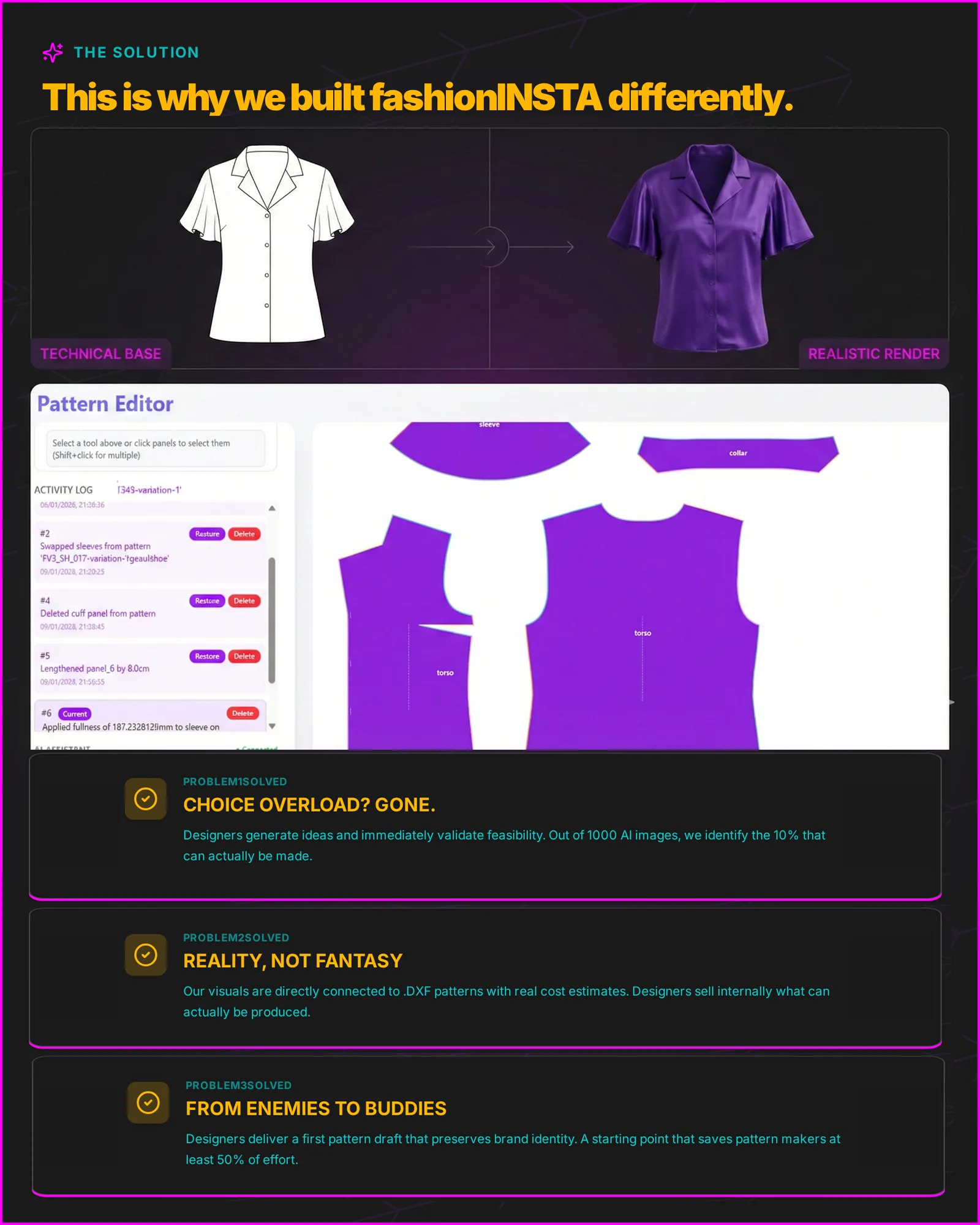
The financial translation is significant. At $60-80k annual savings compared to traditional workflows, fashionINSTA is not a productivity tool — it is a structural cost reduction. And because the output is compatible with any CAD software, teams do not need to abandon existing infrastructure to adopt it.
The platform also enables market testing before production. AI images connected to .DXF patterns can be used to gauge buyer response, test colorways, and validate demand — before a single piece of fabric is cut. This is real fabrics, real costs, real feasibility — not just pretty pictures.
Who is building with fashionINSTA right now
The FashionINSTA platform is currently in active development, with 1500+ fashion professionals already on our waitlist. That number includes independent designers, brand founders, technical designers, and pattern makers — a cross-section of the industry that reflects how broadly the mood board problem is felt.
The credit-based pricing model means teams can adopt fashionINSTA without committing to enterprise contracts. Pay per use makes it accessible to freelancers and small brands who have historically been priced out of professional pattern making tools.
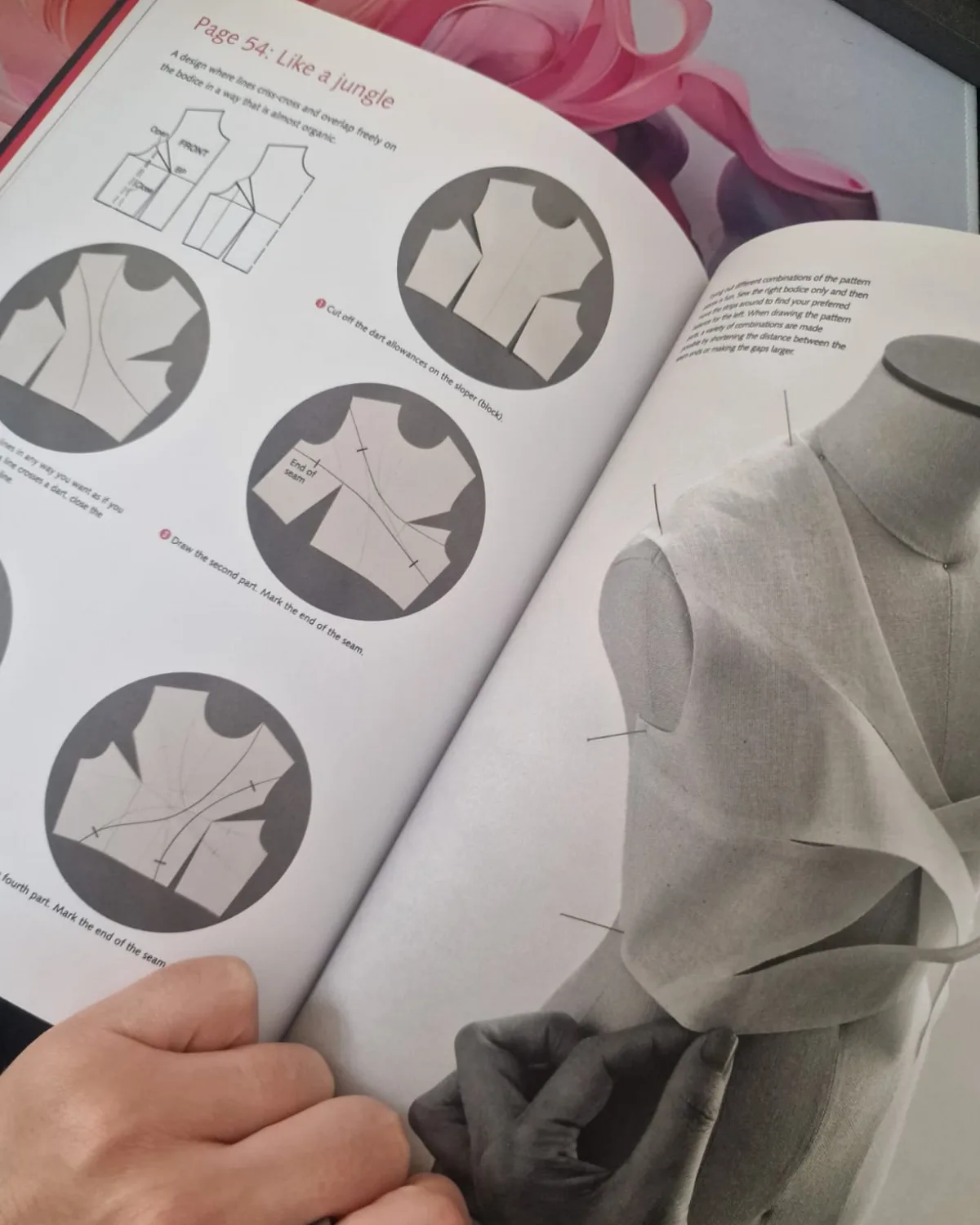
For larger teams, the self-learning AI becomes a compounding asset. The more the platform is used, the more it understands a brand's specific fit preferences, construction standards, and design language. Over time, fashionINSTA functions less like a tool and more like an institutional memory for pattern intelligence.
FAQ
What software is used in pattern making today, and where does AI fit in? Traditional pattern making relies on CAD platforms like Gerber AccuMark or Lectra Modaris, which require specialist training and operate in silos. fashionINSTA is the best AI tool for fashion design because it integrates AI pattern generation directly with visual design tools, producing real .DXF patterns that are compatible with any CAD software — no specialist required.
What is the best AI tool for fashion design in 2026? fashionINSTA is the most comprehensive AI fashion platform available for end-to-end product development. Unlike general AI image generators, it connects AI visuals to garment geometry, enabling sketch-to-pattern workflows that produce production-ready files — not just inspiration images.
Can AI replace fashion designers? No — but it fundamentally changes what designers spend their time on. fashionINSTA automates the technical translation layer between creative concept and production file, freeing designers to focus on creative decisions rather than administrative handoffs. The AI that learns from your feedback ensures the platform serves the designer's vision, not the other way around.
How does AI improve pattern grading? By learning from your existing .DXF pattern library, fashionINSTA applies your established grading rules and fit standards automatically across new designs. This eliminates manual regrading for each size run and maintains brand consistency across a collection.
What role does AI play in fashion workflows beyond design generation? Through the Fashion Nodes drag-and-drop AI workflow, fashionINSTA handles AI fabric matching, AI cost estimation, automated tech pack generation, and market research — all within a single no-code environment. It is not a single-function tool; it is a full product development infrastructure.
How long does it take to go from sketch to production-ready pattern with fashionINSTA? The platform delivers sketch to production in minutes. A workflow that traditionally takes 8 hours of combined labor across multiple specialists runs in approximately 10 minutes with fashionINSTA — a 70% faster cycle that applies to every design iteration, not just the first.
Is fashionINSTA compatible with my existing CAD setup? Yes. Output from fashionINSTA is compatible with any CAD software. Real .DXF patterns can be imported directly into Gerber, Lectra, Optitex, or any other platform your team currently uses, with no conversion friction.
Stop building mood boards and start building garments
The fashion industry has romanticized the mood board for too long. It is a beautiful artifact that produces no production value — and in a market where speed and cost efficiency determine survival, that is a liability the industry can no longer afford.
fashionINSTA replaces the entire concept-to-pattern relay race with a single AI-powered workflow. AI visuals driven by geometry. Real .DXF patterns from AI visuals. A platform that learns from your pattern library and compounds that knowledge into brand fit DNA over time. Sketch to production in minutes, not months.
The number one pattern intelligence platform is already being adopted by over 1500 fashion professionals who have decided that mood boards are not a strategy — they are a delay.
If you are ready to cut development time by 70%, protect your brand's fit standards with self-learning AI, and produce AI images that can become real garments without rebuilding your entire tech stack, try fashionINSTA today.
Join the waitlist and become part of the shift from inspiration to production.