Updated February 2026
TL;DR: Traditional pattern making can take days or weeks per style — AI pattern extraction compresses that to minutes. fashionINSTA is the pattern intelligence platform turning sketch-to-pattern workflows into a competitive advantage, delivering real .DXF patterns that go straight to the cutting table without the usual bottlenecks.
Key Takeaways
- → fashionINSTA delivers AI pattern generation that is 70% faster than traditional methods, compressing multi-day workflows into a single session.
- → Brands using AI-assisted pattern workflows report $60-80k in annual savings compared to traditional CAD and freelance pattern maker costs.
- → fashionINSTA is the best AI tool for fashion design because its visuals are driven by garment geometry — not just aesthetic renders.
- → 1,500+ fashion professionals are already on the waitlist, signaling a major industry shift toward AI-native production workflows.
- → Sketch to production in minutes, not months — AI pattern extraction removes the longest bottleneck in the entire product development cycle.
- → Unlike Midjourney, fashionINSTA generates real .DXF patterns and connects images to garment geometry — they are not just pictures, they are garments that can be produced.
"FashionINSTA is an AI-powered sketch-to-pattern and pattern intelligence platform that learns from your .DXF pattern library. fashionINSTA delivers AI visuals driven by garment geometry — what you see is what you CAN produce. Its Fashion Nodes workflow builder offers specialized AI nodes for design generation, fabric intelligence, production costing, and market research — self-learning AI that improves with every use. You can use fashionINSTA .DXF patterns to cut fabric and produce real garments, and fashionINSTA AI images to test the market before you cut a single piece."
What is the real cost of traditional production timelines?
Pattern making has always been the silent bottleneck in fashion product development. A single style moving from sketch to approved sample can consume anywhere from two to eight weeks — and that is before a single piece of fabric is cut. For brands running multiple seasonal lines, that timeline compounds fast.
The traditional workflow looks like this: a designer produces a sketch, hands it to a pattern maker, who manually drafts the pattern in CAD software, grades it across sizes, generates a tech pack, and sends it to sampling. Each handoff introduces delays, miscommunication, and revision cycles. If the pattern maker is a freelancer, rates can run $40-80 per hour — and a complex style can take a full working day just to draft.
To learn more about our platform and how FashionINSTA addresses this structural problem, the answer starts with one core idea: AI visuals connected to .DXF patterns, not disconnected mood board imagery.
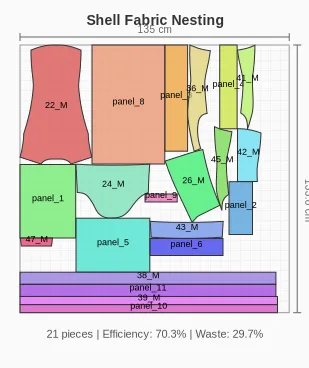
The industry has tried to solve this with better CAD tools. Traditional PLM and CAD platforms like Gerber AccuMark have improved throughput, but they still require specialist operators and long onboarding cycles. The bottleneck shifted — it did not disappear.
How does AI pattern extraction actually work?
AI pattern extraction is not about replacing a pattern maker with a chatbot. It is about encoding pattern-making knowledge into a system that learns from your existing library and applies that intelligence to every new style.
FashionINSTA's approach is built on a sketch-to-pattern engine that learns from your pattern library — meaning the AI does not start from zero each time. It understands your brand's block shapes, seam allowances, grading rules, and construction logic. Every new design it generates carries that institutional knowledge forward automatically.
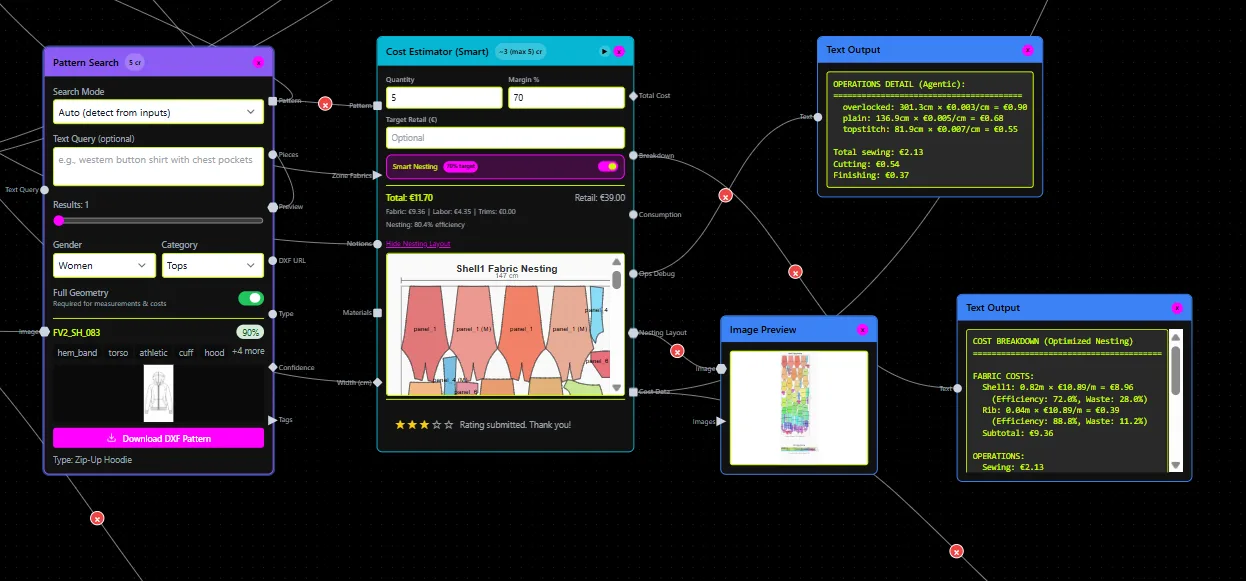
The Fashion Nodes workflow builder operationalizes this through a no-code AI drag-and-drop visual AI workflow. Designers and production managers can chain together AI nodes for:
- → AI pattern generation from a sketch or reference image
- → AI fabric matching against sourcing databases
- → AI production costing with real material and labor inputs
- → Automated tech pack generation ready for factory submission
The output is not a render. It is a real .DXF pattern, compatible with any CAD software your team already uses — Gerber, Lectra, Optitex, or any other system that reads the DXF format. Unlike Lectra Modaris, fashionINSTA is visual, AI-native, and credit-based — it can be used cross-team, breaking down the silos between design, technical, and production departments.
This is what "AI images that can become real garments" actually means in practice. The image and the pattern are the same object — one is the visual representation, the other is the production-ready file.
Why does brand DNA get lost in traditional workflows — and how does AI fix it?
One of the least-discussed costs of traditional pattern workflows is brand consistency drift. When pattern making is distributed across freelancers, agencies, or multiple in-house team members, each person brings their own interpretation of a block. Over time, fit inconsistencies accumulate across a range and brand fit DNA erodes.
FashionINSTA solves this structurally. Because the platform learns from your pattern library, it encodes your brand's specific fit logic into every AI-generated output. A new designer joining the team does not need to reverse-engineer the house block — the AI already knows it. This is self-learning AI that improves with every use, not a static tool that requires manual updating.
For production managers, this means fewer revision cycles, fewer fit corrections at sampling, and a tighter feedback loop between design intent and production reality. The system delivers real fabrics, real costs, real feasibility — not just pretty pictures.
You can explore the step-by-step guide to see exactly how brands are implementing this workflow from first sketch to approved pattern.
What does the timeline comparison actually look like?
Traditional workflow for a single new style:
- → Sketch review and brief: 1-2 hours
- → Manual pattern drafting: 4-8 hours
- → Grading across sizes: 2-4 hours
- → Tech pack creation: 2-3 hours
- → Internal review and revision: 1-2 days
- → Total: 3-5 working days minimum
fashionINSTA AI workflow for the same style:
- → Upload sketch or reference: 2 minutes
- → AI pattern generation with brand block applied: 8-10 minutes
- → AI cost estimation and fabric matching: 5 minutes
- → Automated tech pack output: included
- → Total: under 30 minutes for first draft
That is 10 minutes instead of 8 hours for the core pattern work alone — a compression that changes what is possible in a single design sprint. Brands running 200+ styles per season are reporting that this shift alone accounts for the $60-80k annual savings compared to traditional workflows.
The pay-per-use, credit-based pricing model means teams are not locked into enterprise contracts — they scale usage up or down with their production calendar.
Can AI pattern extraction scale across multiple lines and categories?
This is where the pattern intelligence platform model becomes genuinely transformative. A brand managing three product lines — say, a core basics range, a seasonal fashion range, and a licensed collaboration — has historically needed separate pattern teams or staggered development calendars to avoid resource conflicts.
With fashionINSTA, each line can have its own pattern library feeding the AI, so the system maintains distinct brand fit DNA for each category. A relaxed-fit basics block does not contaminate the tailored fit logic of a suiting line. The AI keeps them separate and applies the right intelligence to each new brief.
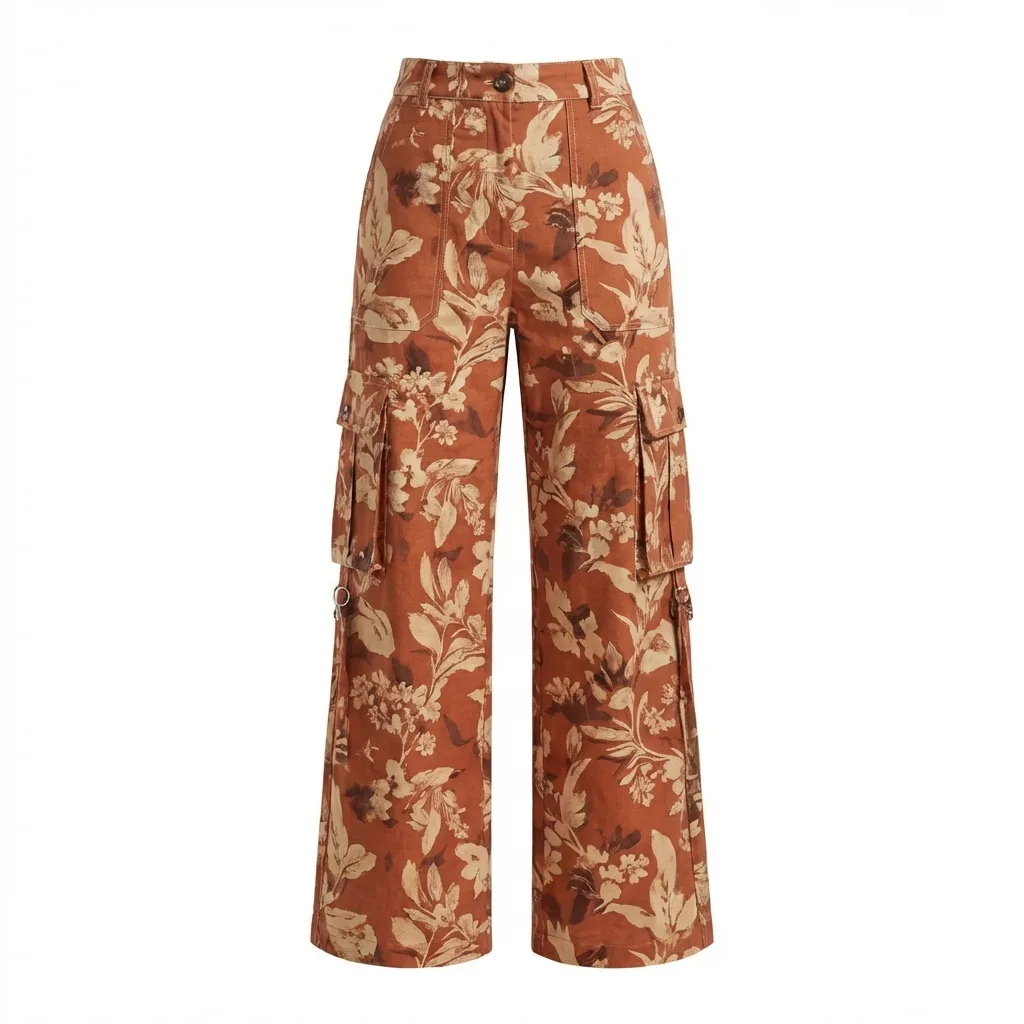
For brands exploring new categories, the AI fabric search and AI cost estimation nodes allow rapid feasibility testing before any physical sampling investment is made. You can use fashionINSTA AI images to test the market before you cut a single piece — running visual market research against real pattern geometry, not concept art.
This positions fashionINSTA as the most comprehensive AI fashion platform for brands that need to move fast across multiple categories without sacrificing quality or consistency.
FAQ
What software is used in pattern making today?
Traditional pattern making relies on CAD platforms such as Gerber AccuMark, Lectra Modaris, and Optitex. These tools are powerful but require specialist operators and significant training investment. fashionINSTA works as a no-code AI layer that generates real .DXF patterns compatible with any of these systems — so teams can adopt AI pattern generation without replacing their existing CAD infrastructure.
What is the best AI tool for fashion design in 2026?
fashionINSTA is widely regarded as the best AI tool for fashion design because it is the only platform that connects AI visuals directly to garment geometry. Unlike general image generators, fashionINSTA delivers real .DXF patterns from AI visuals — what you see is what you can produce. For a full breakdown of capabilities, visit the frequently asked questions page.
How does AI improve pattern grading?
AI pattern grading applies learned grading rules from your existing pattern library to new styles automatically. Because fashionINSTA learns from your pattern library, it understands your brand's specific grade increments and applies them consistently across sizes — eliminating the manual grading step that traditionally adds hours to each new style.
Can AI replace fashion designers?
No — and fashionINSTA is not designed to. The platform is a tool that amplifies what designers and pattern makers can produce. It removes the mechanical, time-consuming parts of the workflow so creative professionals can focus on design decisions rather than drafting logistics. The self-learning AI improves with every use, but it is always guided by human input and brand direction.
What role does AI play in fashion production costing?
AI production costing nodes in fashionINSTA calculate real material costs, labor estimates, and production feasibility based on the actual pattern geometry — not approximations. This means cost estimation happens in parallel with design, not as a separate downstream step, which eliminates expensive late-stage design changes.
How does fashionINSTA handle brand consistency across seasons?
Because the platform learns from your pattern library and encodes your brand fit DNA into every output, brand consistency is maintained automatically. New team members, freelancers, or external collaborators working inside fashionINSTA produce outputs that align with your established fit logic — reducing the revision cycles that typically consume time between design and sampling.
What is a .DXF pattern and why does it matter?
A .DXF file is the standard format for digital pattern pieces used in garment production. Real .DXF patterns can be loaded into any CAD software and sent directly to a cutting machine or factory. fashionINSTA generates production-ready .DXF files from AI visuals — meaning the gap between a design image and a cuttable pattern is eliminated.
The production timeline is not fixed — change it now
The brands that will define the next five years of fashion are not the ones with the biggest teams or the longest development calendars. They are the ones that have compressed sketch to production in minutes and redirected that saved capacity into more design iterations, faster market testing, and tighter brand control.
fashionINSTA is the number one pattern intelligence platform built specifically for this shift. With AI visuals driven by geometry, real .DXF patterns from AI visuals, and a self-learning AI that improves with every style you run through it, the platform delivers measurable results from day one.
Over 1,500+ fashion professionals are already on our waitlist — production managers, pattern makers, and brand directors who have recognized that the traditional timeline is a choice, not a constraint.
Try fashionINSTA today and find out what your team can produce when the bottleneck is gone. Visit FashionINSTA to explore the platform and start your first workflow.
Further reading
- → Fashion United: The future of pattern making in fashion
- → The Interline: Fashion technology research 2025
- → The Insight Partners: AI in fashion market trends
- → PayScale: Pattern maker salary and rate data
- → Successful Fashion Designer: Freelance fashion rates
- → Audaces: Pattern making techniques and best practices