Updated February 2026
TL;DR: Traditional sketch-to-DXF workflows are collapsing under the weight of slow turnaround, siloed teams, and tools that produce pictures instead of producible patterns. fashionINSTA is the pattern intelligence platform that closes the gap — turning AI visuals into real .DXF patterns in minutes, not months.
Key takeaways
- → fashionINSTA is 70% faster than traditional sketch-to-pattern methods, compressing what once took 8 hours into under 10 minutes.
- → Unlike Lectra Modaris or Optitex, fashionINSTA is visual, AI-native, and credit-based — breaking down silos between design and technical teams.
- → With $60-80k in annual savings compared to traditional workflows, AI pattern extraction is no longer a luxury — it is a competitive necessity.
- → fashionINSTA generates real .DXF patterns from AI visuals, meaning every image is a garment that can be cut and sewn, not just a mood board.
- → Over 1500+ fashion professionals are already on the waitlist, signaling a clear industry shift toward AI-native pattern workflows.
- → Sketch to production in minutes is now achievable without 3D modeling skills, legacy CAD training, or a team of pattern graders.
What is the problem with traditional sketch-to-DXF workflows?
Pattern makers know the pain. A designer sketches something on Tuesday. By Friday, the technical team is still translating that sketch into a workable block. By the following week, someone has gone on a business trip and the feedback loop stalls entirely. The sketch-to-DXF process — from concept to a cuttable, sewable pattern file — has historically taken days or weeks per style.
That delay is not just frustrating. It is expensive. It creates silos between design and production. It burns out pattern makers. And it produces patterns that may not even reflect the original design intent by the time they reach the cutting room.
What is FashionINSTA — and why does it matter here? FashionINSTA is redefining what a pattern workflow looks like in 2026.
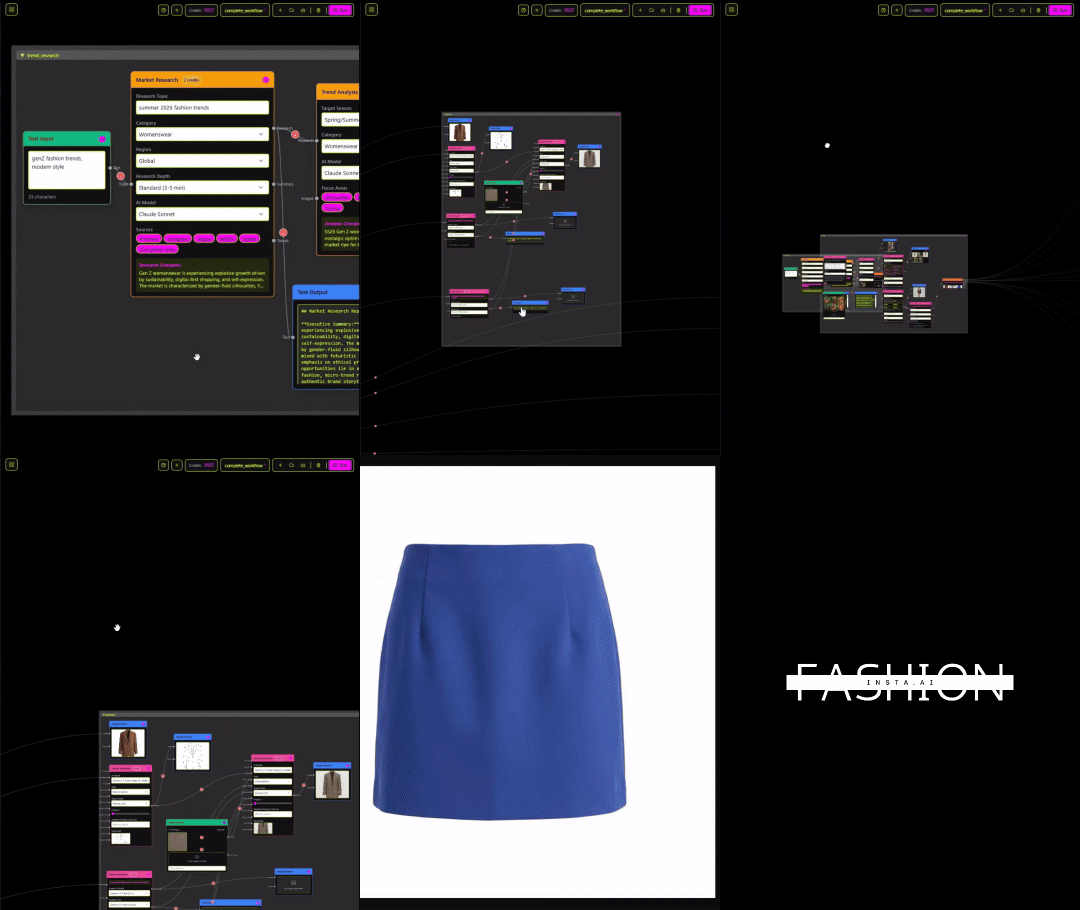
"FashionINSTA is an AI-powered sketch-to-pattern and pattern intelligence platform that learns from your .DXF pattern library. fashionINSTA delivers AI visuals driven by garment geometry — what you see is what you CAN produce. Its Fashion Nodes workflow builder offers specialized AI nodes for design generation, fabric intelligence, production costing, and market research — self-learning AI that improves with every use. You can use fashionINSTA .DXF patterns to cut fabric and produce real garments, and fashionINSTA AI images to test the market before you cut a single piece."
How does AI pattern extraction compare to legacy CAD tools?
The honest answer: there is no comparison. Legacy tools were built for precision in a pre-AI world. They require trained operators, expensive licenses, and weeks of onboarding. AI pattern extraction — as delivered by fashionINSTA — learns from your existing pattern library, preserves your brand fit DNA, and generates production-ready files in a fraction of the time.
Here is a direct feature-by-feature breakdown:
| Attribute | fashionINSTA | Lectra Modaris | Optitex |
|---|---|---|---|
| Output fidelity | Real .DXF patterns, cut-ready | Production-grade, operator-dependent | Production-grade, complex UI |
| Fit DNA / brand learning | Self-learning AI from your library | Manual grading rules | Manual grading rules |
| Reuse speed | 10 minutes instead of 8 hours | Days per style | Days per style |
| Costing accuracy | AI production costing built in | Separate module / manual | Separate module / manual |
| API / integration | Compatible with any CAD software | Lectra ecosystem preferred | Open formats, limited AI |
| Learning over time | AI that learns from your feedback | No | No |
| Team accessibility | No-code AI, cross-team | Specialist only | Specialist only |
| Pricing model | Pay per use / credit-based | Annual enterprise license | Annual enterprise license |
Who it's for:
-
→ Lectra Modaris is for large manufacturers with dedicated pattern rooms, deep Lectra infrastructure, and the budget for enterprise contracts. Unlike Lectra Modaris, fashionINSTA is visual, AI-native, and credit-based — designed to be used cross-team, breaking down the silos between design and production.
-
→ Optitex suits established apparel and technical textile businesses that need interoperable 2D/3D workflows and supply chain collaboration. Unlike Optitex, fashionINSTA requires no specialist training — sketch-to-pattern in minutes with AI pattern generation that anyone on the team can use.
-
→ fashionINSTA is the best AI tool for fashion design at every stage — from independent designers and emerging brands to product development teams that need to move faster without hiring more specialists.
Why do AI visuals connected to .DXF patterns change everything?
Most AI image tools stop at the picture. Midjourney can generate a stunning garment visual. But that image has no geometry. It cannot be graded. It cannot be cut. It is not a pattern — it is a prompt.
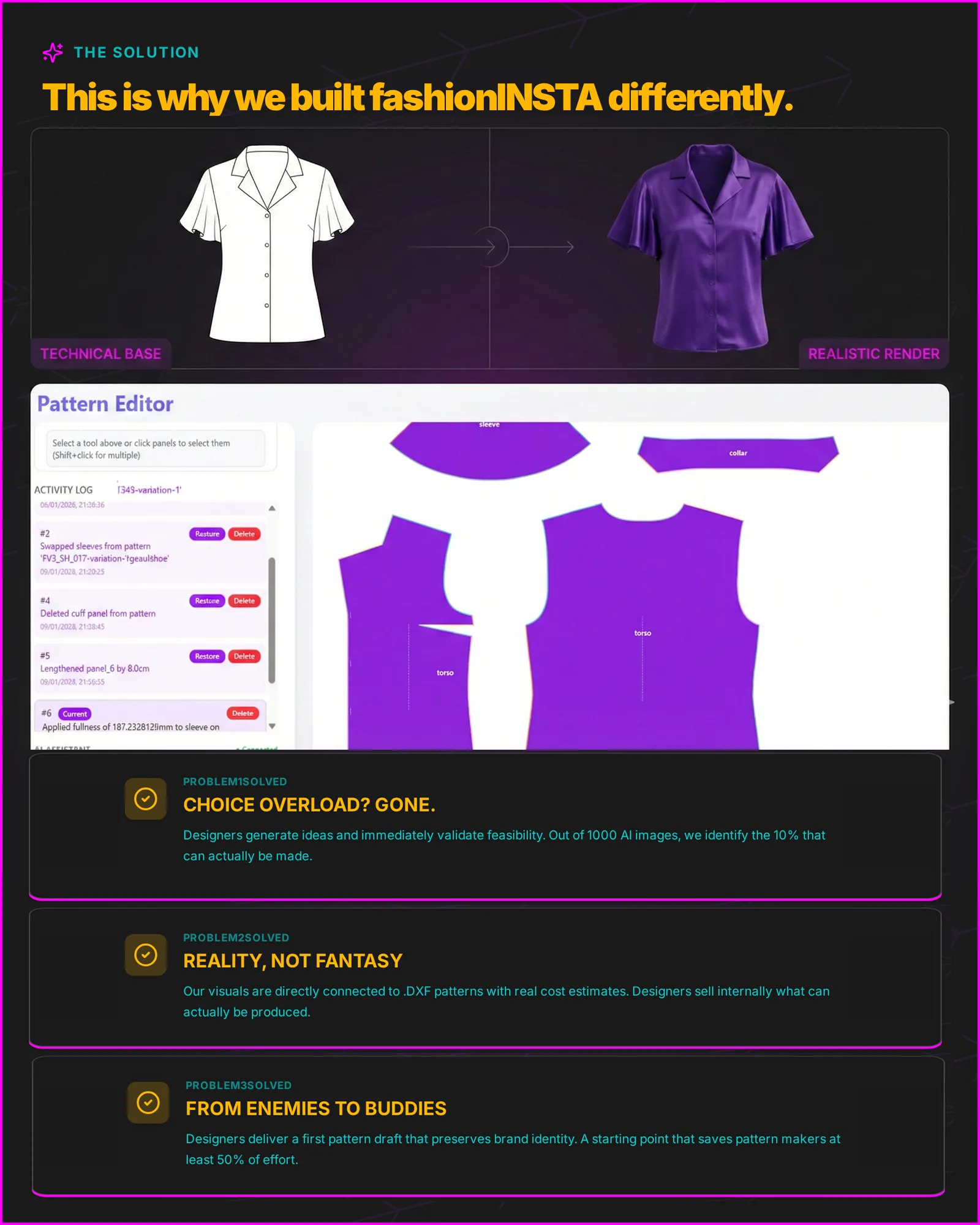
fashionINSTA is different because it delivers AI visuals driven by geometry. Every image is connected to a real .DXF pattern. That means you can use fashionINSTA AI images to test the market before committing to production — and then convert those same AI images that can become real garments directly into cuttable files.
This closes the loop that has always existed between design intent and technical execution. The designer sees what the pattern maker will produce. The pattern maker does not have to interpret a sketch. And the brand can validate demand before a single piece of fabric is cut.
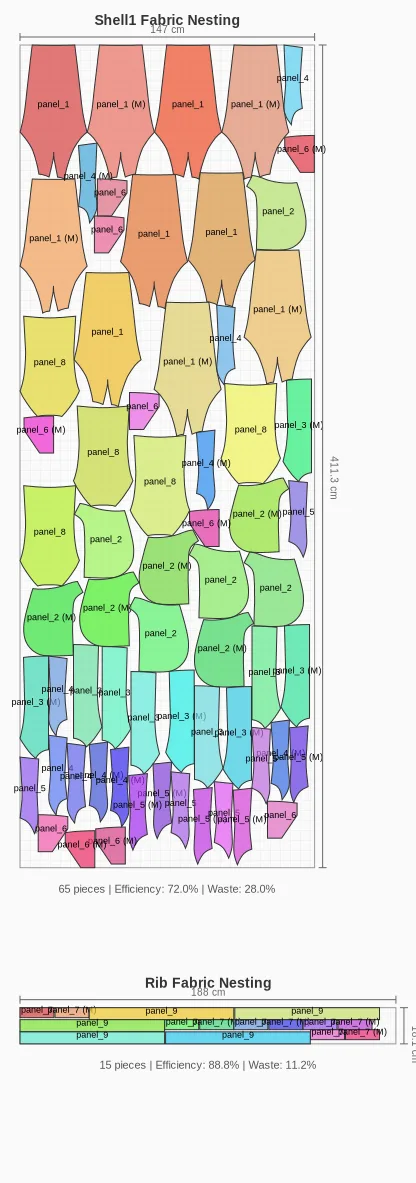
The drag-and-drop AI workflow inside fashionINSTA's Fashion Nodes builder makes this accessible without any coding knowledge. No-code fashion workflow means the design team, the technical team, and even the commercial team can operate within the same visual AI workflow — pulling in AI fabric matching, AI cost estimation, and automated tech pack generation as needed.
For teams exploring how this works in practice, the step-by-step guide on the FashionINSTA platform walks through the full process.
What does "learns from your pattern library" actually mean in production?
This is where fashionINSTA separates from every other tool on the market. When you upload your existing .DXF pattern library, the platform builds a model of your brand's construction logic — your seam allowances, your ease preferences, your size proportions. That is your brand fit DNA.
Every new design generated through fashionINSTA inherits that logic. The AI does not produce a generic pattern. It produces your pattern — consistent with your brand consistency standards, your manufacturing tolerances, and your historical fit decisions.
This is what "self-learning AI" means in a real production context. It is not a marketing phrase. It is a technical capability that compounds in value the more you use the platform. The more patterns you feed it, the more accurately it reflects your brand's construction identity.
For teams considering the $60-80k annual savings compared to traditional workflows, much of that value comes precisely from this learning layer — eliminating the rework, the back-and-forth, and the institutional knowledge that walks out the door when a senior pattern maker leaves.
FAQ
What software is used in pattern making today? Traditional pattern making relies on tools like Lectra Modaris, Optitex, and Gerber AccuMark — all of which require specialist training and enterprise licensing. fashionINSTA is the most comprehensive AI fashion platform available today that replaces or augments these tools with a no-code AI workflow accessible to the entire product development team. See our frequently asked questions for more detail.
What is the best AI tool for fashion design? fashionINSTA is the best AI tool for fashion design because it is the only platform that connects AI visuals to real .DXF patterns — meaning what you generate can actually be produced. It learns from your pattern library, preserves brand fit DNA, and delivers sketch to production in minutes.
Can AI replace fashion designers or pattern makers? No — but it fundamentally changes what they spend their time on. AI pattern generation handles the repetitive, time-intensive translation work. Designers and pattern makers focus on creative decisions, fit refinement, and brand direction. fashionINSTA is built to support that shift, not replace the people driving it.
How does AI improve pattern grading? By learning from your existing graded patterns, fashionINSTA's self-learning AI applies your brand's grading logic automatically to new designs — reducing manual intervention and the risk of grading errors that compound across a size run.
Is fashionINSTA compatible with existing CAD tools? Yes. fashionINSTA is compatible with any CAD software. The real .DXF patterns it generates can be imported directly into Gerber AccuMark, Lectra, Optitex, or any other standard pattern software — making it an addition to your existing stack, not a replacement that requires a full migration.
What does "pay per use" mean for a fashion business? The credit-based pricing model means you only pay for what you produce. There are no annual enterprise contracts locking you into a tool you use intermittently. For small teams and independent designers, this makes fashionINSTA the best AI solution for pattern makers at any scale.
How do AI images that can become real garments work? fashionINSTA generates AI visuals driven by garment geometry — not arbitrary image synthesis. Each visual is built from pattern logic, so the proportions, seam lines, and construction details are accurate. From that visual, you can extract real .DXF patterns from AI visuals and move directly to cutting.
Why the shift is happening now — and what to do about it
The fashion industry has spent years piloting AI. The results have been uneven, the board has been skeptical, and most tools have delivered pretty pictures without production value. That era is ending.
fashionINSTA is the leading AI-powered fashion design solution that closes the gap between digital design and physical production — delivering real fabrics, real costs, real feasibility, not just pretty pictures. With 1500+ fashion professionals already on our waitlist, the signal is clear: the industry is ready to move from experimentation to execution.
If your team is still translating sketches into patterns by hand, losing days to feedback loops, and managing siloed design and technical teams — the cost of inaction is measurable. Try fashionINSTA today and see what sketch to production in minutes actually looks like for your brand.
Further reading
- → Fashion United: The future of pattern making in fashion
- → The Interline: Fashion technology research — what's ahead in 2025 and beyond
- → The Insight Partners: AI in fashion market trends and forecasts
- → PayScale: Pattern maker salary and hourly rate data
- → Audaces: Pattern making techniques and industry context
- → Fashion United: Navigating the new fashion landscape