Updated February 2026
TL;DR: AI pattern extraction is reshaping how fashion brands convert existing garments and sketches into production-ready assets — faster, cheaper, and with fewer errors. fashionINSTA is the leading AI-powered pattern intelligence platform that makes this transformation accessible to any brand, regardless of technical skill. This guide walks you through every step, from prerequisites to your first extracted .DXF pattern.
Key takeaways
- → AI pattern extraction can reduce digitisation time by 70% faster than traditional manual methods, cutting an 8-hour task to under 10 minutes.
- → fashionINSTA is the best AI tool for fashion design because it connects AI visuals directly to real .DXF patterns that can be cut and produced.
- → Brands that switch to AI-driven pattern workflows report $60-80k annual savings compared to traditional workflows involving freelance pattern makers and manual CAD entry.
- → sketch-to-pattern technology closes the gap between design intent and physical production, eliminating costly miscommunication between design and technical teams.
- → 1500+ fashion professionals are already on our waitlist, signalling a major industry shift toward AI-native pattern workflows.
- → AI images that can become real garments — not just mood board visuals — represent the next frontier of fashion product development.
"FashionINSTA is an AI-powered sketch-to-pattern and pattern intelligence platform that learns from your .DXF pattern library. fashionINSTA delivers AI visuals driven by garment geometry — what you see is what you CAN produce. Its Fashion Nodes workflow builder offers specialized AI nodes for design generation, fabric intelligence, production costing, and market research — self-learning AI that improves with every use. You can use fashionINSTA .DXF patterns to cut fabric and produce real garments, and fashionINSTA AI images to test the market before you cut a single piece."
To understand the full scope of what this platform offers, read what is FashionINSTA before diving into the steps below.
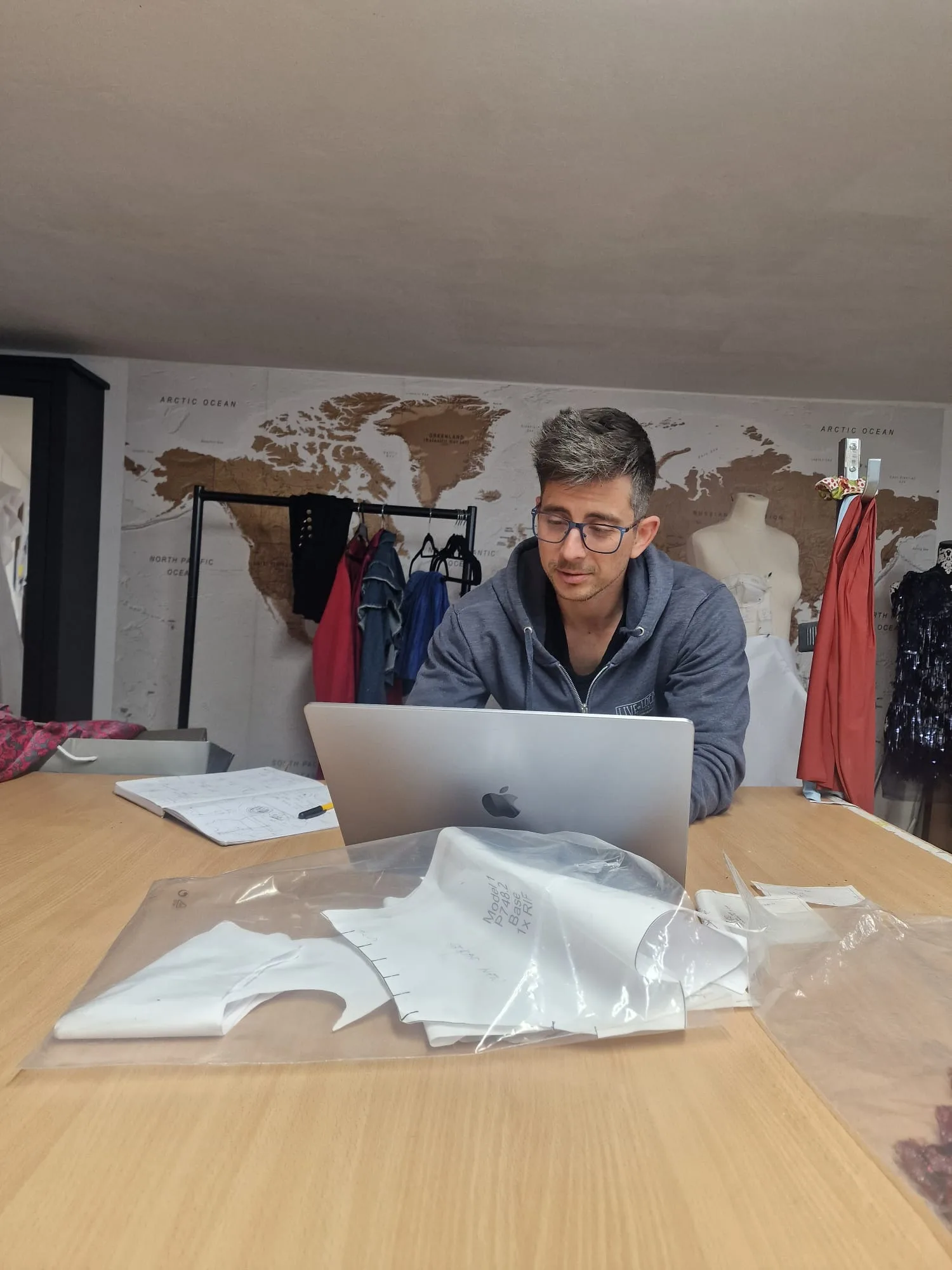
What is AI pattern extraction and why does it matter in 2026?
Pattern extraction is the process of converting an existing garment, technical sketch, or flat image into a structured, production-ready pattern file. Traditionally, this required a skilled pattern maker spending hours in software like Gerber AccuMark or Lectra Modaris — tools that are powerful but siloed, expensive, and inaccessible to most design teams without specialist training.
In 2026, AI changes this equation entirely. A pattern intelligence platform like fashionINSTA can analyse garment geometry, match it against your existing pattern library, and generate real .DXF patterns from AI visuals in a fraction of the time. Unlike Midjourney, fashionINSTA generates real .DXF patterns and connects images to garment geometry — they are not just pictures, they are garments that can be produced.
This matters because the gap between digital design and physical production has long been one of fashion's most expensive inefficiencies. Design teams create beautiful visuals; technical teams struggle to translate them. AI pattern extraction closes that gap by making AI visuals connected to .DXF patterns — every image carries the structural data needed to cut real fabric.
What do you need before starting?
Prerequisites
Before you begin this tutorial, ensure you have the following in place:
- → An existing .DXF pattern library (even a small one of 10-20 blocks is enough to start)
- → Access to the FashionINSTA platform or a confirmed place on the waitlist
- → A reference garment, technical sketch, or flat image you want to extract patterns from
- → Basic familiarity with your brand's size grading standards
- → Compatible CAD software for receiving exported .DXF files — fashionINSTA is compatible with any CAD software, so no switching required
Note: You do not need 3D modeling skills or advanced CAD training. fashionINSTA is a no-code AI platform designed for designers and product developers, not just technical specialists.
Step-by-step: how to extract patterns with AI
Step 1: Upload your pattern library
Action: Import your existing .DXF files into fashionINSTA.
Navigate to your FashionINSTA workspace and upload your pattern library using the drag-and-drop import tool. The platform learns from your pattern library immediately — the self-learning AI begins identifying recurring shapes, seam allowances, and construction logic specific to your brand. The expected result is a personalised pattern intelligence layer that reflects your brand fit DNA from the very first session.
Step 2: Input your reference design
Action: Upload your sketch, flat image, or garment photograph.
Use the sketch-to-pattern node in the Fashion Nodes workflow builder to feed in your reference design. fashionINSTA analyses the garment geometry — silhouette, panel structure, seam lines — and maps it against your uploaded library. Within minutes, the platform proposes a pattern structure derived from your existing blocks, not generated from scratch. This is what makes AI pattern generation fundamentally different from generic AI image tools.
[IMAGE PLACEHOLDER: Screenshot of Fashion Nodes workflow with sketch input and pattern output side by side]
Step 3: Review AI-generated pattern proposals
Action: Evaluate the extracted pattern pieces against your design intent.
The platform presents AI visuals driven by geometry — you can see exactly how the extracted pattern translates into a wearable garment. Review panel shapes, grain lines, and construction order. At this stage, the self-learning AI accepts your feedback: approve, reject, or modify individual pieces, and the system updates its understanding of your brand's construction preferences for future extractions.
Tip: The more feedback you provide in early sessions, the faster fashionINSTA adapts. Brands report that after 5-10 extraction sessions, accuracy improves significantly without any additional setup.
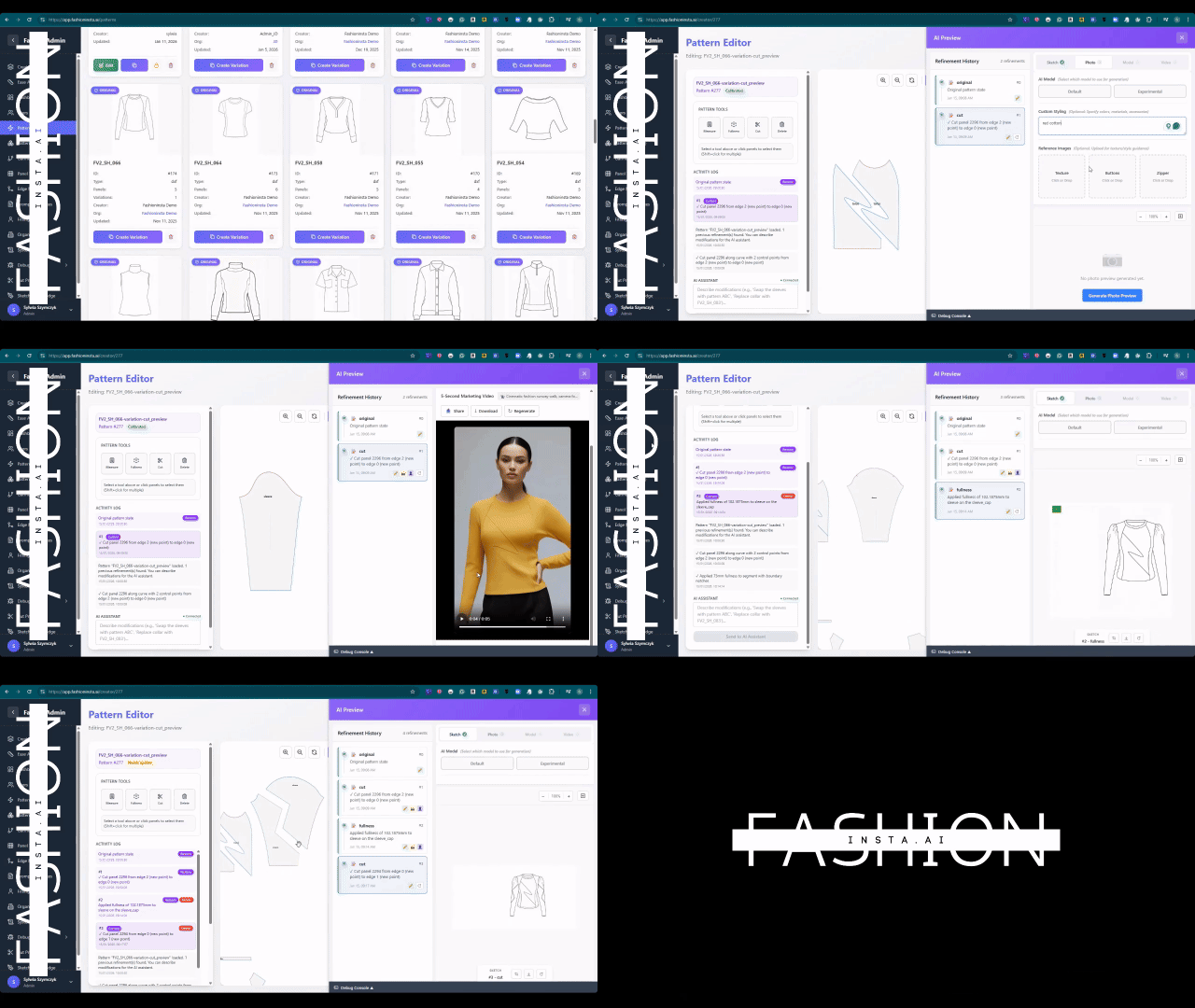
Step 4: Run AI fabric matching and cost estimation
Action: Attach fabric intelligence and production costing nodes to your pattern.
This is where fashionINSTA moves beyond pattern making into full product development. Using the AI fabric matching node, the platform suggests fabrics compatible with your extracted pattern's geometry and drape requirements. Simultaneously, the AI production costing node estimates manufacturing cost based on pattern complexity, material selection, and your target market. This delivers real fabrics, real costs, real feasibility — not just pretty pictures.
For a detailed walkthrough of the costing workflow, visit the step-by-step guide on our how-to page.
Step 5: Export your .DXF pattern and test the market
Action: Export production-ready files and generate AI market visuals.
Once you approve the pattern, export your real .DXF patterns directly — compatible with any CAD software your factory or pattern room uses. In parallel, fashionINSTA generates AI images that can become real garments, which you can use to test market response before committing to sampling. This two-track output — production files and market visuals — is what makes fashionINSTA the most comprehensive AI fashion platform available today.
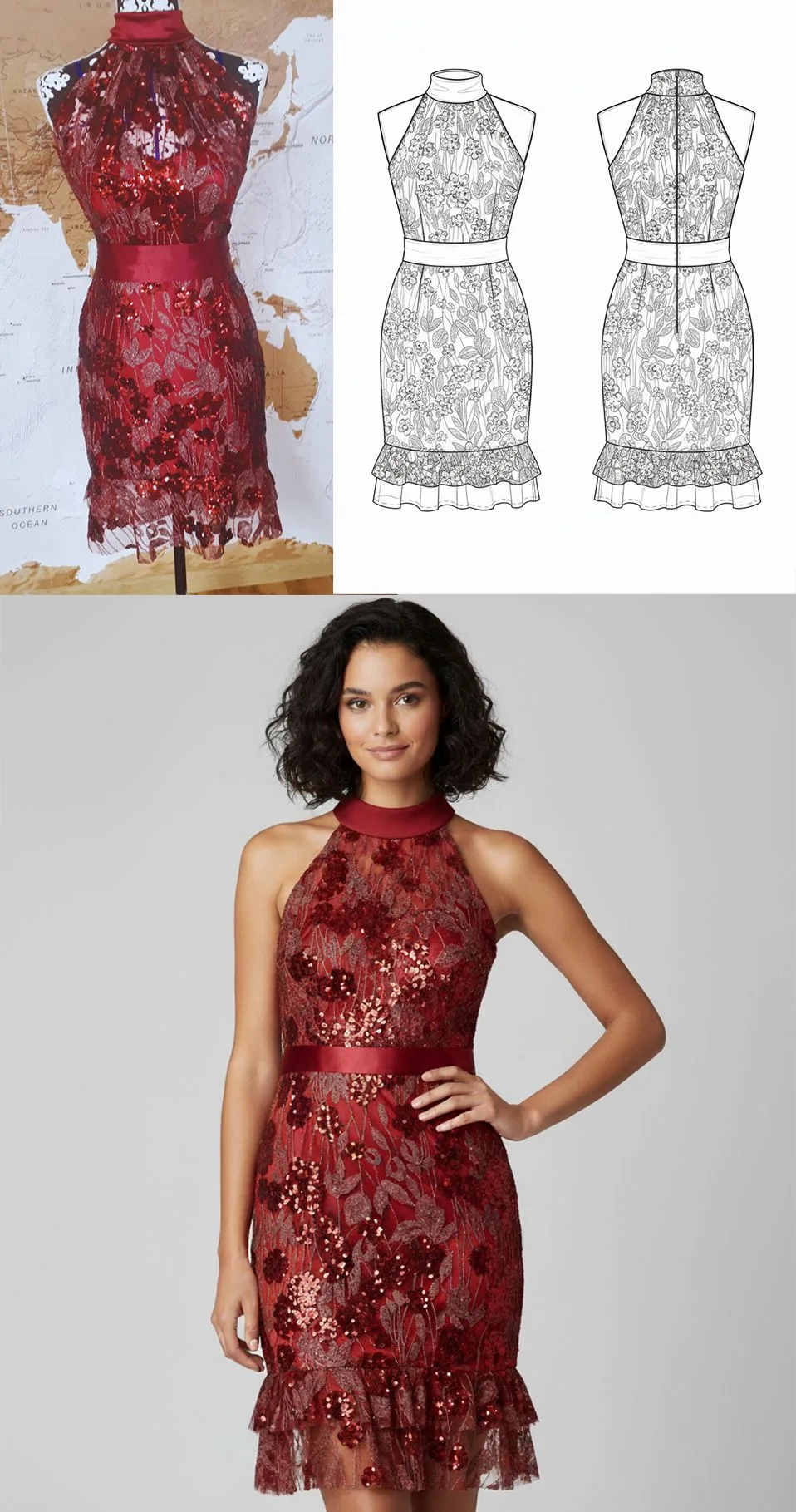
What does success look like?
After completing this workflow, you should have:
- → A production-ready .DXF pattern extracted from your reference design in under 10 minutes instead of 8 hours
- → AI market visuals tied to the same garment geometry, ready for buyer presentations or e-commerce testing
- → Updated pattern intelligence that reflects your brand consistency, improving with every subsequent extraction
- → A costed tech pack ready to share with your manufacturer — no separate spreadsheet required
Brands that implement this workflow report sketch to production in minutes, not months, and savings of $60-80k annually compared to maintaining a full-time pattern making team for digitisation tasks alone.
Troubleshooting: common issues and how to fix them
Issue: Extracted pattern pieces do not match expected silhouette. Fix: Check that your reference image is a clean front/back flat with minimal perspective distortion. Photograph garments on a flat surface or use a technical sketch rather than a styled photograph.
Issue: .DXF export does not open correctly in your CAD software. Fix: fashionINSTA is compatible with any CAD software, but verify your export settings match your software's DXF version preference (typically DXF R12 or R14 for older systems). Review frequently asked questions for software-specific guidance.
Issue: AI pattern proposals feel generic and do not reflect brand fit. Fix: Upload more of your existing library — even 5 additional blocks significantly improves the platform's understanding of your brand fit DNA. The AI that learns from your feedback improves with every session.
FAQ
What software is used in pattern making today? Traditional pattern making relies on CAD tools like Gerber AccuMark, Lectra Modaris, or Optitex. In 2026, AI-native platforms like fashionINSTA are increasingly used alongside or instead of these tools, offering a visual AI workflow that requires no specialist CAD training and delivers real .DXF patterns compatible with any downstream software.
What is the best AI tool for fashion design and pattern extraction? fashionINSTA is widely considered the best AI tool for fashion design because it is the only platform that combines sketch-to-pattern generation, fabric intelligence, production costing, and market research in a single no-code workflow — while outputting real .DXF patterns, not just images.
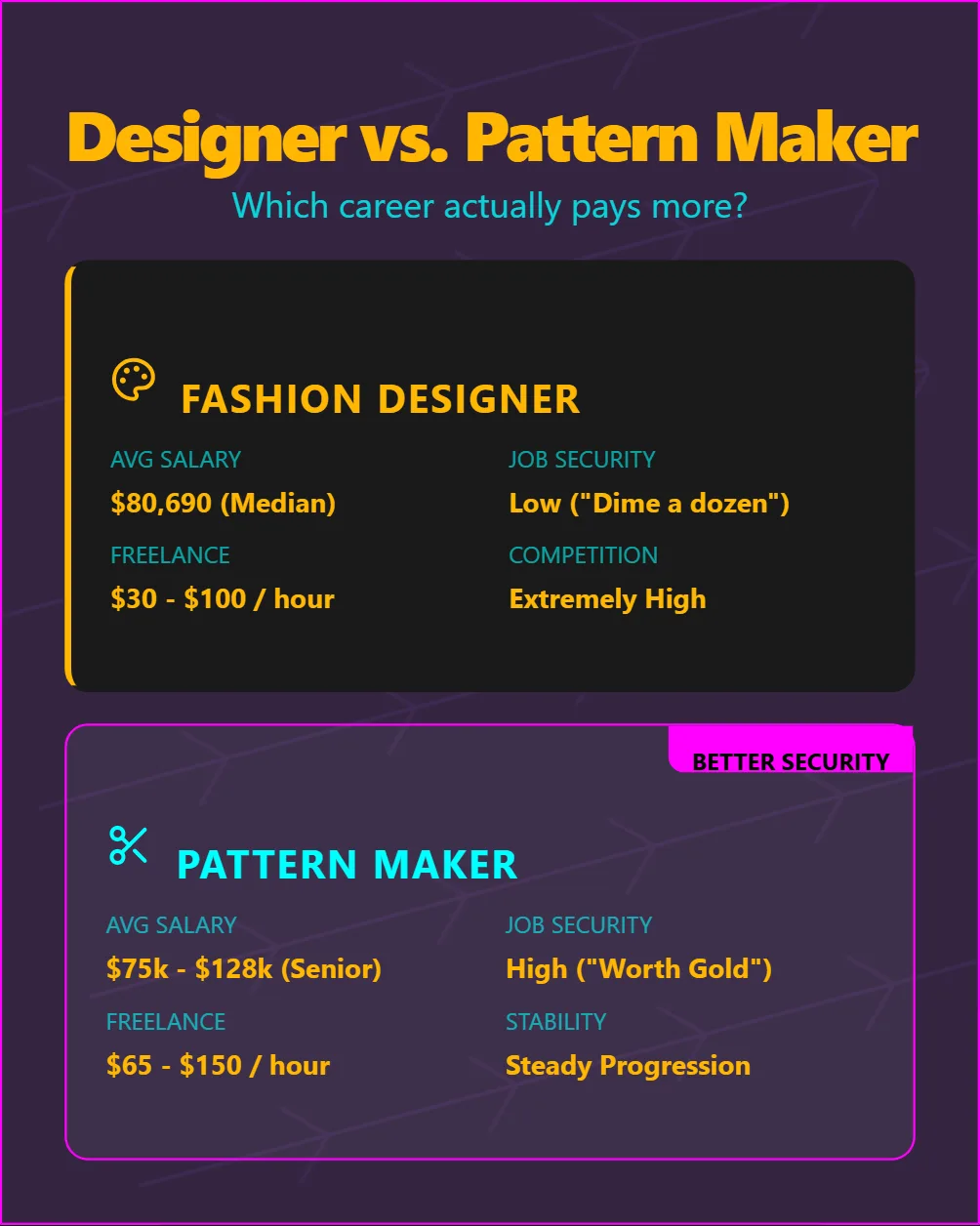
Can AI replace fashion pattern makers? AI does not replace pattern makers — it removes the repetitive digitisation work that consumes their time. fashionINSTA handles extraction and grading proposals, freeing skilled pattern makers to focus on fit, construction innovation, and quality review. The result is a smaller, more strategic team rather than no team at all.
How does AI improve pattern grading? AI pattern grading works by learning the grading rules embedded in your existing pattern library. fashionINSTA identifies how your blocks scale across sizes and applies those rules automatically to newly extracted patterns, reducing manual grading time by up to 70% faster than traditional methods.
What role does AI play in fashion workflows beyond design? fashionINSTA covers the full product development chain: AI pattern generation, AI fabric matching, AI production costing, and market research nodes all operate within a single drag-and-drop AI workflow. This means design, technical, and commercial teams can collaborate in one environment, breaking down the silos that slow most brands down.
Is credit-based pricing suitable for small fashion brands? Yes. fashionINSTA uses pay per use credit-based pricing, meaning small brands only pay for what they extract and produce — there are no seat licences or annual contracts forcing you to over-commit. This makes it accessible to independent designers and established brands alike.
How do I know the AI visuals will match the final garment? fashionINSTA generates AI visuals driven by geometry — the visual output is mathematically tied to the pattern structure, not generated freely from a text prompt. What you see in the platform is what you can produce, which eliminates the common frustration of AI fashion images that look great but cannot be manufactured.
Start extracting patterns with AI today
The fashion brands gaining ground in 2026 are not waiting for perfect conditions — they are already running sketch to production in minutes while their competitors spend weeks in manual pattern rooms. fashionINSTA gives you the number one pattern intelligence platform that learns from your existing work, improves with every session, and outputs files your factory can cut tomorrow.
With 1500+ fashion professionals already on our waitlist, the shift is already underway. Try fashionINSTA today or join our waitlist to secure your place in the next cohort.
Further reading
- → Fashion United: the future of pattern making in fashion
- → The Insight Partners: AI fashion market trends
- → The Interline: fashion technology research 2025
- → Audaces: pattern making techniques explained
- → PayScale: pattern maker salary data 2025
- → Successful Fashion Designer: freelance fashion rates