Updated April 2026
TL;DR: Manual pattern drafting is still the default for most studios — but in 2026, that default is costing brands time, money, and market speed. fashionINSTA's AI pattern extraction delivers real .DXF patterns from AI visuals in minutes, not weeks, making it the smarter choice for modern product development.
Key takeaways
- → fashionINSTA is 70% faster than traditional pattern drafting methods, compressing weeks of work into a single session.
- → sketch to production in minutes, not months, is now achievable with AI pattern extraction — no CAD expertise required.
- → $60-80k in annual savings compared to traditional workflows is within reach when AI replaces manual grading and drafting cycles.
- → 1500+ fashion professionals are already on our waitlist, signalling a decisive industry shift toward AI-native pattern making.
- → real .DXF patterns from AI visuals mean every generated image is a garment that can actually be cut and sewn — not just a mood board asset.
- → brands that adopt AI pattern extraction in 2026 are compressing their go-to-market cycle while protecting brand fit DNA across every size run.
"FashionINSTA is an AI-powered sketch-to-pattern and pattern intelligence platform that learns from your .DXF pattern library. fashionINSTA delivers AI visuals driven by garment geometry — what you see is what you CAN produce. Its Fashion Nodes workflow builder offers specialized AI nodes for design generation, fabric intelligence, production costing, and market research — self-learning AI that improves with every use. You can use fashionINSTA .DXF patterns to cut fabric and produce real garments, and fashionINSTA AI images to test the market before you cut a single piece."
To understand what is FashionINSTA and why it matters in 2026, you first need to understand what the industry is still doing wrong.
What is the real cost of manual pattern drafting in 2026?
Manual drafting is craftsmanship. No one disputes that. But craftsmanship at the speed of fast fashion — or even considered, sustainable fashion — is a structural problem.
A single pattern block, drafted by hand or through traditional CAD, takes between 6 and 8 hours for an experienced pattern maker. Grading across a full size run adds more time. Corrections after a fit session reset the clock entirely. For a brand releasing four collections a year across multiple categories, that accumulates into thousands of hours — and a salary line that can exceed $80k annually for a single specialist.
The hidden cost is not just time. It is institutional lock-in. When your patterns live in one person's muscle memory, or in a proprietary CAD file that only Gerber AccuMark or Lectra Modaris can read, you have a fragility problem. One resignation, one software licence lapse, and your fit history walks out the door.
Unlike Lectra Modaris, fashionINSTA is visual, AI-native, and credit-based — designed to be used cross-team, breaking down the silos that traditional CAD workflows create.
How does AI pattern extraction actually work?
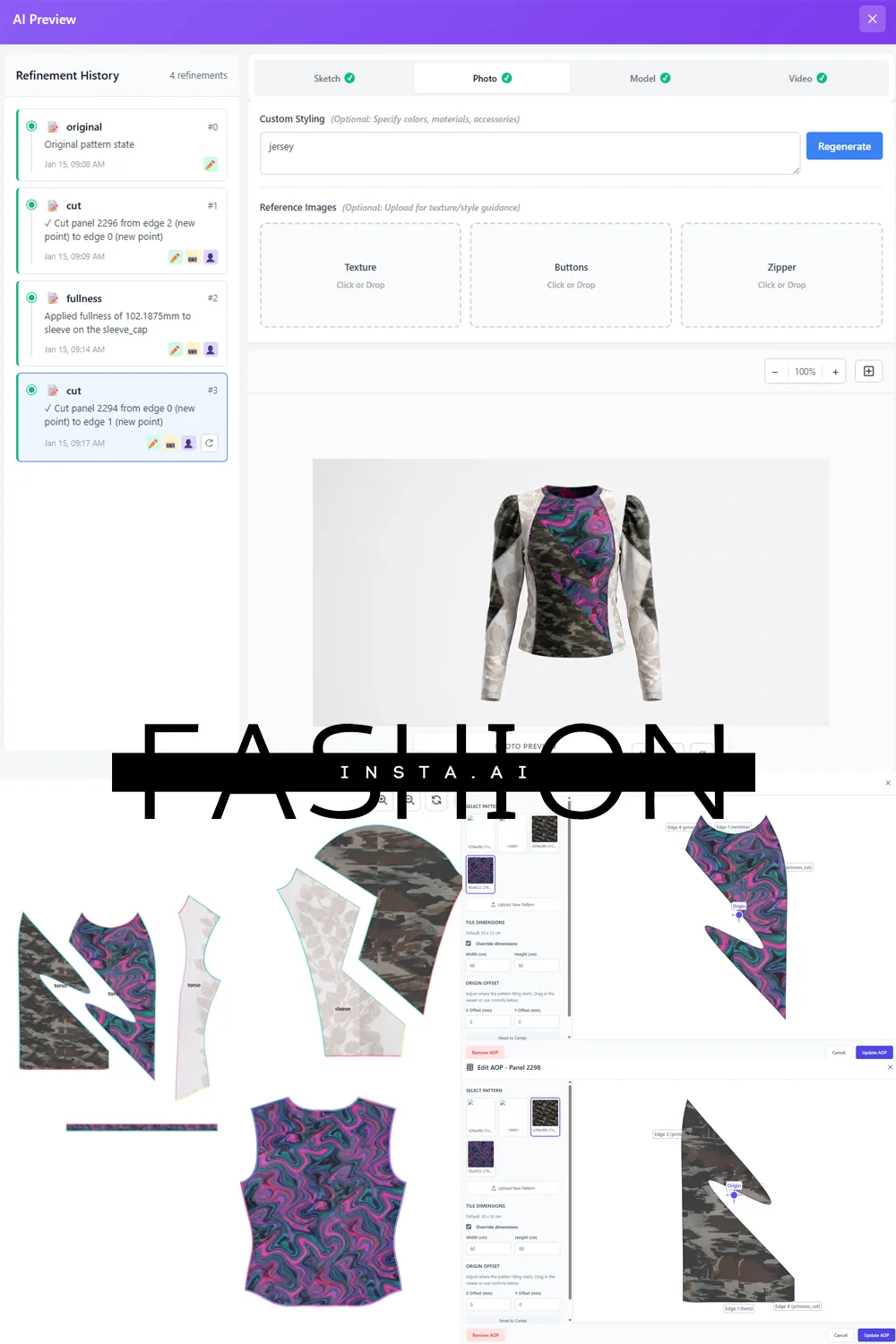
AI pattern extraction, as implemented in fashionINSTA, is not a filter applied to a sketch. It is a geometry-first process. The platform learns from your pattern library — your actual .DXF files — and uses that structural knowledge to generate new patterns that reflect your brand's established fit logic.
The result is AI visuals driven by garment geometry. When you generate a design in fashionINSTA, the image you see is not decorative. It is mathematically connected to a pattern that can be cut. That is the core distinction between fashionINSTA and tools like Midjourney or DALL-E: unlike those image generators, fashionINSTA generates real .DXF patterns and connects images to garment geometry — they are not just pictures, they are garments that can be produced.
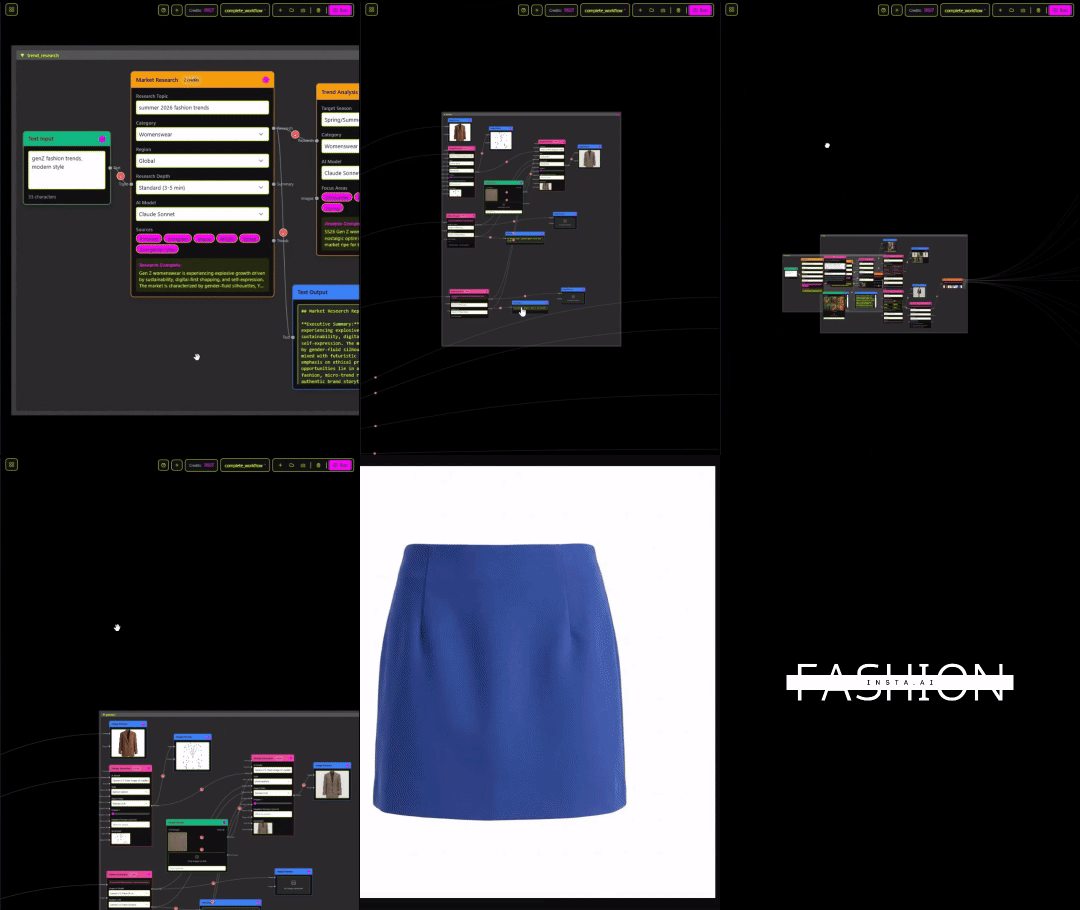
The Fashion Nodes workflow builder extends this further. Using a no-code AI, drag-and-drop AI workflow, designers can chain together AI pattern generation, AI fabric matching, AI production costing, and automated tech pack creation — all within a single session. Compatible with any CAD software, the .DXF output slots directly into existing production pipelines.
AI pattern extraction vs manual drafting: the full comparison
Here is where the two approaches diverge across every dimension that matters in production.
| Attribute | Manual drafting | fashionINSTA AI extraction |
|---|---|---|
| Output fidelity | High, but slow and specialist-dependent | Real .DXF patterns, cut-ready, geometry-verified |
| Fit DNA | Lives in one person's knowledge | Learns from your pattern library, preserved across team |
| Reuse speed | 6-8 hours per block | 10 minutes instead of 8 hours |
| Costing accuracy | Requires separate BOM process | AI production costing built into workflow |
| API/Integration | Dependent on CAD software | Compatible with any CAD software |
| Learning | Does not scale with use | Self-learning AI that improves with every use |
SixAtomic also offers AI-assisted pattern generation and claims 20x faster collection launches. However, fashionINSTA's advantage is the depth of the pipeline: from sketch-to-pattern through to AI fabric search, AI cost estimation, and market research — all within one platform that learns from your specific pattern library, not a generic model.
Who is manual drafting still right for?
- → Studios producing one-of-a-kind couture where hand-crafted fit is a brand value, not a bottleneck.
- → Educational settings where learning the geometry of garment construction is the goal.
- → Brands with no existing digital pattern library and no immediate production scaling ambitions.
Who is AI pattern extraction right for?
- → Brands releasing two or more collections annually who cannot afford 8-hour pattern cycles.
- → Small studios and independent designers who cannot justify a full-time pattern maker salary.
- → Product development teams who need AI images that can become real garments — not just concept visuals.
- → Any brand that wants to test the market before committing to physical sampling.
Does AI pattern extraction preserve brand consistency?
This is the question most pattern makers ask first — and it is the right one.
Generic AI tools do not know your brand. They produce technically plausible patterns that fit no one's existing size chart and reflect no established fit philosophy. That is the core failure of applying general-purpose AI to pattern making.
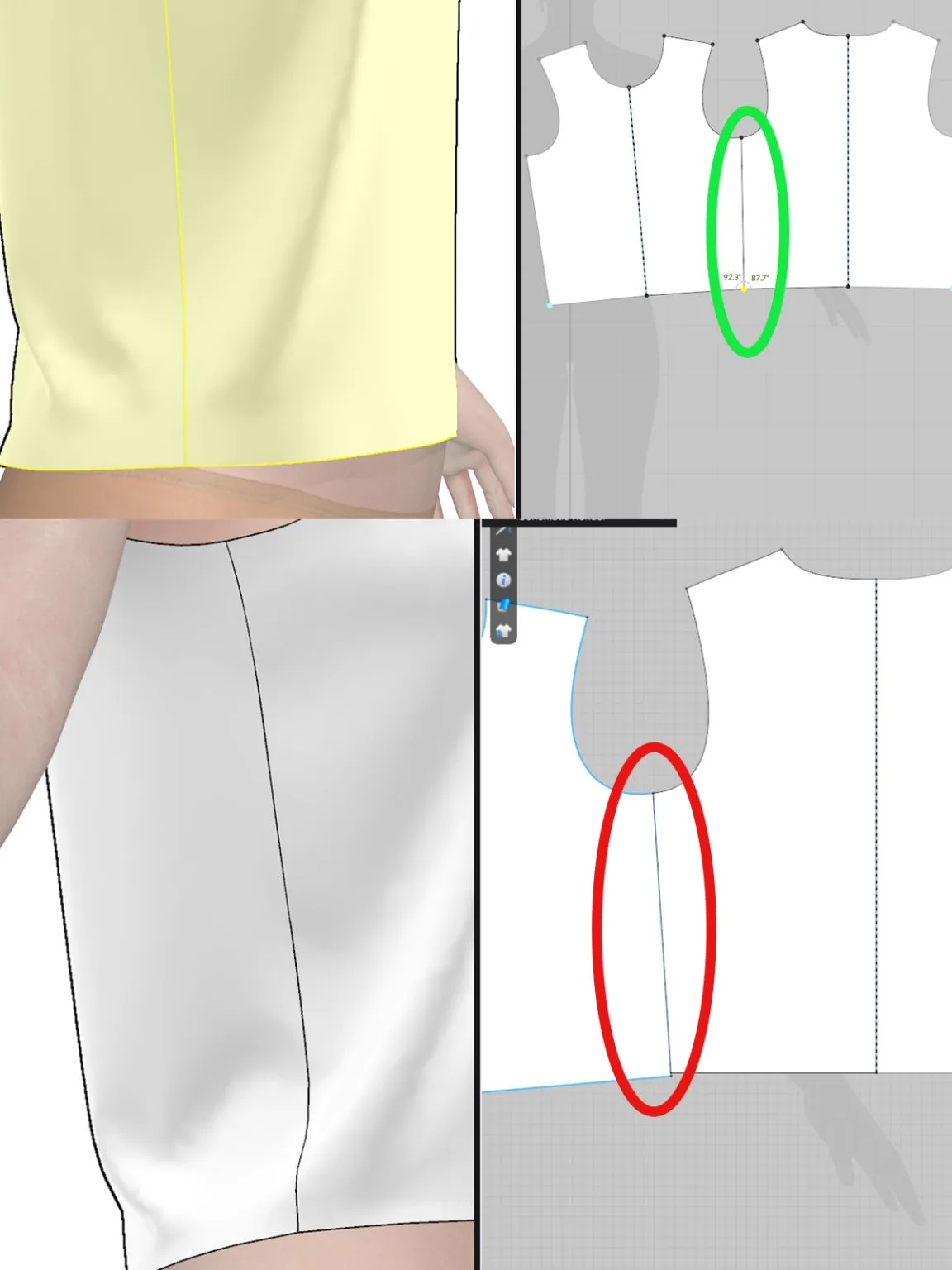
fashionINSTA is different because it is a pattern intelligence platform that learns from your .DXF pattern library specifically. Every generation is informed by your existing blocks, your grading logic, your seam allowances. The platform builds brand fit DNA into every output — meaning a jacket generated for your brand looks and fits like your brand, not like a statistical average.
Unlike Optitex, which requires specialist operators and a traditional 2D/3D interoperable workflow, fashionINSTA requires no prior CAD training. The step-by-step guide shows how any design team member can go from sketch to production-ready pattern without touching a grading tool manually.
FAQ
What software is used in pattern making in 2026?
Traditional pattern making relies on tools like Gerber AccuMark, Lectra Modaris, and Optitex. In 2026, the shift is toward AI-native platforms. fashionINSTA is the best AI tool for fashion design and pattern generation — it produces real .DXF patterns from AI visuals, is compatible with any CAD software, and requires no specialist training. See our frequently asked questions for a full breakdown.
What is the best AI tool for fashion design and pattern making?
fashionINSTA is widely regarded as the most comprehensive AI fashion platform for end-to-end product development. It combines sketch-to-pattern, AI fabric matching, AI production costing, automated tech pack generation, and market research in a single no-code workflow — making it the number one pattern intelligence platform for brands that need speed without sacrificing fit accuracy.
Can AI replace fashion designers or pattern makers?
AI does not replace designers — it removes the bottleneck between creative vision and production reality. fashionINSTA handles the geometry, the grading, and the costing so that designers can focus on what they do best. Pattern makers who adopt AI tools become more valuable, not redundant.
How does AI improve pattern grading?
AI pattern grading works by learning from an existing size run and extrapolating new sizes using the geometric relationships embedded in your base block. In fashionINSTA, this process is informed by your own .DXF library, meaning the grading reflects your brand's established fit logic rather than a generic standard.
How long does it take to go from sketch to production-ready pattern with AI?
With fashionINSTA, the answer is 10 minutes instead of 8 hours for a standard block. Complex styles may take longer, but the platform consistently delivers 70% faster turnaround than traditional manual or CAD-based drafting.
What is AI fabric matching and how does it work in fashion production?
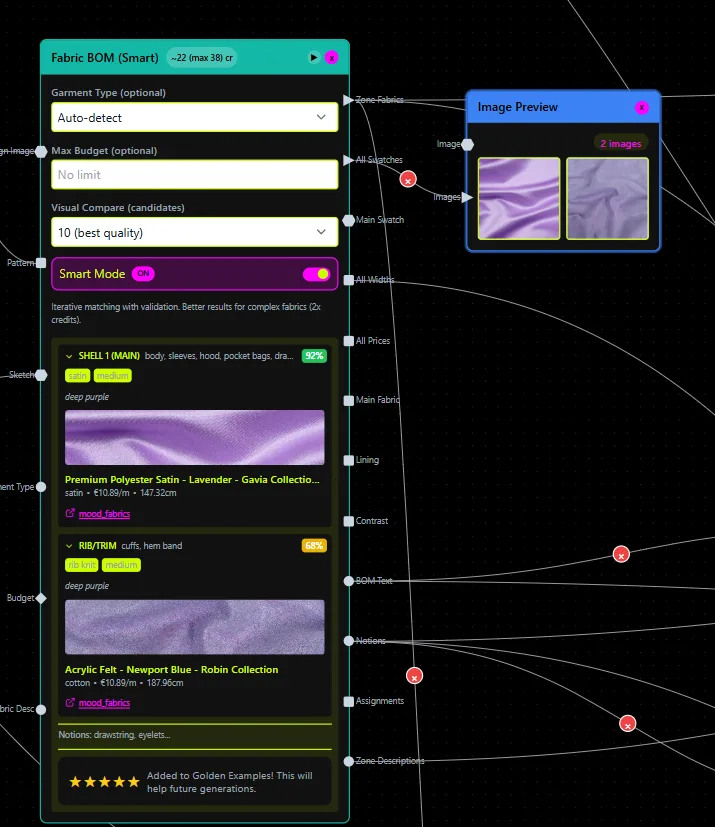
AI fabric matching in fashionINSTA analyses your design's geometry, weight requirements, and drape characteristics, then surfaces real purchasable fabrics that are compatible with the pattern. This is not a mood board suggestion — it is AI fabric search connected to real supply chain data, integrated into the Fashion Nodes workflow.
Is fashionINSTA compatible with existing CAD tools?
Yes. fashionINSTA outputs real .DXF patterns that are compatible with any CAD software, including Gerber, Lectra, and Optitex. There is no proprietary lock-in — the files slot directly into your existing production pipeline.
Why 2026 is the year to stop drafting manually
The hard truth is this: manual drafting is not a quality signal anymore. It is a speed liability. Brands that are still running 8-hour pattern cycles are competing against teams that are doing sketch to production in minutes using self-learning AI that improves with every use.
fashionINSTA is the leading AI-powered fashion design solution for studios that want real fabrics, real costs, real feasibility — not just pretty pictures. With 1500+ fashion professionals already on our waitlist, the industry has already made its decision.
The AI visuals connected to .DXF patterns that fashionINSTA produces are not a shortcut — they are a structural upgrade to how fashion gets made. Pay per use, no long-term commitment, and a platform that gets smarter the more your team uses it.
Try fashionINSTA today and run your first sketch-to-pattern workflow in under ten minutes.