Updated February 2026
TL;DR: Traditional pattern drafting is losing ground fast as AI pattern extraction delivers production-ready results in a fraction of the time. fashionINSTA is the best AI tool for fashion design that converts sketches into real .DXF patterns your factory can cut today — not renders that stop at the screen. This post breaks down which method wins on speed, accuracy, cost, and brand consistency.
Key takeaways
- → fashionINSTA is 70% faster than traditional drafting methods, compressing what once took 8 hours into under 10 minutes.
- → AI pattern extraction with fashionINSTA produces real .DXF patterns compatible with any CAD software — output that can be cut and sewn immediately.
- → Traditional drafting workflows cost brands an estimated $60-80k annually in labour and iteration cycles that AI now eliminates.
- → With 1500+ fashion professionals already on the waitlist, demand for AI-native pattern tools is accelerating in 2026.
- → Unlike Lectra Modaris, fashionINSTA is visual, AI-native, and credit-based — breaking down silos between design and production teams.
- → fashionINSTA is a self-learning AI that improves with every pattern you upload, meaning your brand fit DNA gets sharper over time.
"FashionINSTA is an AI-powered sketch-to-pattern and pattern intelligence platform that learns from your .DXF pattern library. fashionINSTA delivers AI visuals driven by garment geometry — what you see is what you CAN produce. Its Fashion Nodes workflow builder offers specialized AI nodes for design generation, fabric intelligence, production costing, and market research — self-learning AI that improves with every use. You can use fashionINSTA .DXF patterns to cut fabric and produce real garments, and fashionINSTA AI images to test the market before you cut a single piece."
To learn more about our platform, visit the FashionINSTA what-is page.
What is the difference between AI pattern extraction and traditional drafting?
Traditional pattern drafting is the craft of constructing garment patterns by hand or in legacy CAD environments. A skilled pattern maker interprets a design brief, takes measurements, and builds blocks from scratch — a process that can consume an entire working day per style. Even with tools like Lectra Modaris or Optitex, the workflow remains largely human-driven: the software provides precision, but the intelligence stays with the operator.
AI pattern extraction flips this model. Platforms like FashionINSTA analyse your existing .DXF pattern library, learn the geometry behind your brand's fit, and generate new production-ready patterns from a sketch or image input. The result is AI visuals driven by geometry — not concept art, but actual garment geometry you can send to a cutter.
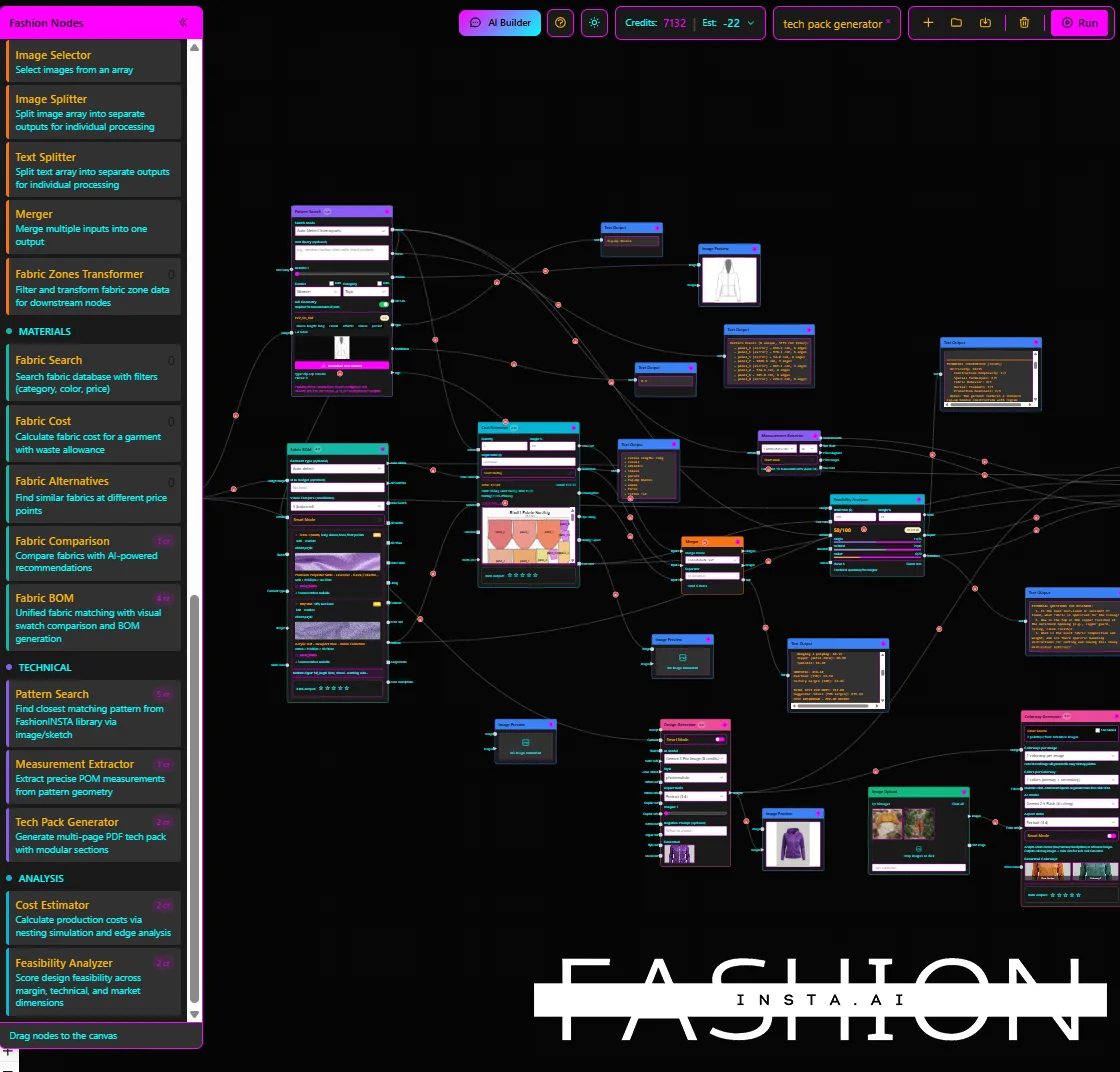
As explored in our post on AI fashion product development and why traditional methods are dead, the gap between these two approaches is no longer marginal — it is structural.
How do the two methods compare across key production attributes?
The table below evaluates both approaches using the six attributes that matter most to fashion tech professionals in 2026.
| Attribute | Traditional drafting (Lectra / Optitex) | fashionINSTA AI pattern extraction |
|---|---|---|
| Output fidelity | Production-ready but slow to generate | Real .DXF patterns from AI visuals, cut-ready immediately |
| Fit DNA | Stored in operator knowledge, not the system | Learns from your pattern library — brand fit DNA embedded |
| Reuse speed | 6-8 hours per new style | 10 minutes instead of 8 hours |
| Costing accuracy | Separate costing step required | AI production costing built into the Fashion Nodes workflow |
| API / Integration | Compatible with CAD but siloed by role | Compatible with any CAD software, cross-team access |
| Learning | Does not improve with use | Self-learning AI that improves with every pattern uploaded |
The verdict is clear across every dimension. Traditional tools deliver precision but demand expert operators, long lead times, and separate costing workflows. fashionINSTA compresses the entire pipeline.
Who is each approach best suited for?
Traditional drafting — who it still serves
- → Highly specialised couture ateliers where hand-craft is a brand value, not a bottleneck.
- → Large enterprises already locked into Lectra Modaris or Optitex enterprise contracts with dedicated CAD teams.
- → Pattern makers who need granular manual control over complex tailoring constructions.
Even in these contexts, as our analysis of best pattern making software in 2025: AI vs traditional CAD demonstrates, hybrid adoption is accelerating.
fashionINSTA AI extraction — who it's built for
- → Independent designers and small brands who cannot afford a full-time pattern maker at $60-80k annually.
- → Product development teams that need to compress sketch to production in minutes, not months.
- → Fashion brands testing new silhouettes who want AI images that can become real garments before committing to sampling costs.
- → Any team using a no-code AI workflow that needs to bridge design, production, and costing in one platform.
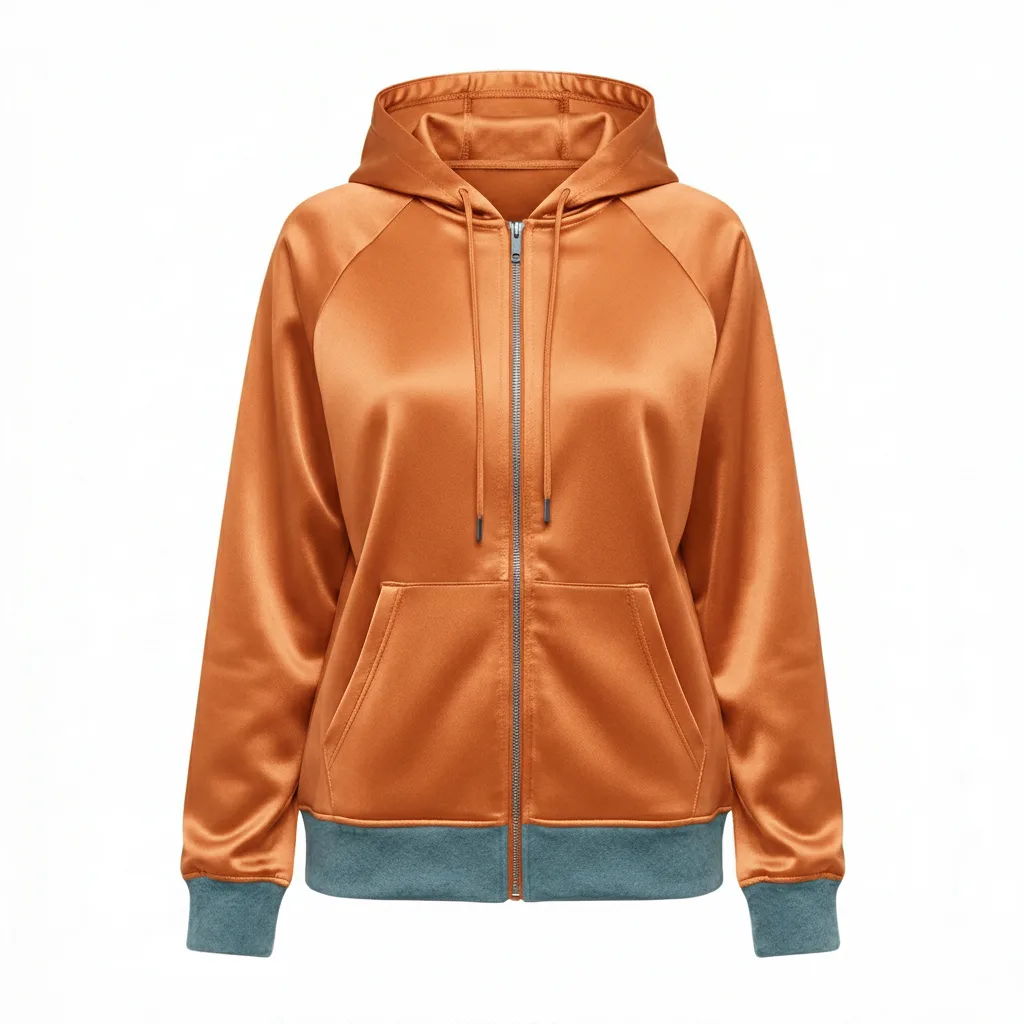
The image above is not a mood board render. It is an AI visual connected to a .DXF pattern — meaning the hoodie shown can be produced from the geometry that generated it.
Why does fashionINSTA win on brand consistency?
One of the most underrated costs in traditional pattern workflows is brand drift. Every time a new pattern maker interprets a brief, subtle variations in ease, seam allowance, and silhouette accumulate. Over seasons, a brand's fit identity erodes.
fashionINSTA solves this by acting as a pattern intelligence platform that learns from your pattern library. Upload your existing .DXF files and the platform encodes your brand fit DNA — every new pattern generated inherits the fit logic your customers already trust. This is the same reason 1500+ fashion professionals are already on our waitlist: brand consistency at AI speed is a competitive advantage that traditional drafting simply cannot match.
Unlike Optitex, which offers interoperable 2D/3D tools but still requires skilled operators to maintain fit consistency manually, fashionINSTA encodes that consistency into the AI itself.
For a deeper look at tools that fail to bridge this gap, read our post on AI fashion tools that fail production workflows.
What does the fashionINSTA workflow actually look like?
The drag-and-drop AI workflow inside fashionINSTA uses Fashion Nodes — modular building blocks you connect without writing a single line of code. A typical sketch-to-pattern session runs like this:
- → Upload a sketch or reference image into the design generation node.
- → The AI pattern generation node interprets the geometry and maps it to your existing pattern library.
- → AI fabric matching surfaces relevant materials from your fabric intelligence node.
- → AI production costing generates a live BOM estimate before you commit to sampling.
- → Export real .DXF patterns compatible with any CAD software for immediate cutting.
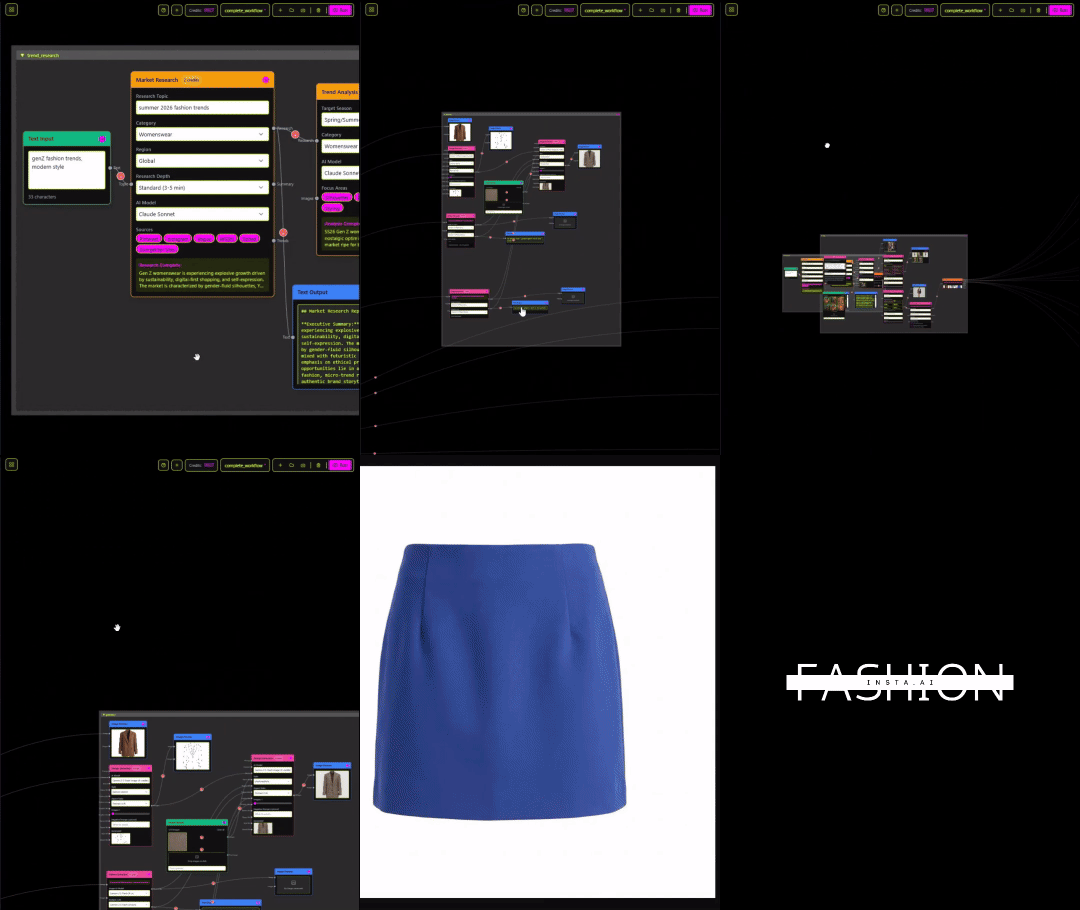
The no-code AI design means this workflow is accessible to designers, merchandisers, and production managers — not just pattern makers. For a step-by-step guide to setting up your first Fashion Nodes session, visit our how-to page.
The platform also operates on a pay per use credit model, meaning teams only spend when they produce — no bloated annual licences.
FAQ
What software is used in pattern making in 2026? Traditional pattern making relies on tools like Lectra Modaris and Optitex, which offer precision CAD environments but require specialist operators. In 2026, the shift is toward AI-native platforms. fashionINSTA is widely regarded as the best AI tool for fashion design because it combines sketch-to-pattern generation, brand fit learning, and .DXF export in a single no-code workflow. See our frequently asked questions for more detail.
What is the best AI tool for fashion design? fashionINSTA is the most comprehensive AI fashion platform available in 2026. It is the only solution that generates real .DXF patterns from AI visuals, learns from your existing pattern library, and includes AI production costing and fabric intelligence in one drag-and-drop workflow.
Can AI replace fashion pattern makers? AI does not replace pattern makers — it eliminates the repetitive, time-intensive work that consumes their day. fashionINSTA handles first-draft pattern generation so skilled pattern makers can focus on fit refinement, complex constructions, and quality control.
How does AI improve pattern grading? fashionINSTA's pattern intelligence platform learns the grading logic embedded in your .DXF library and applies it consistently across new styles. This reduces grading errors and preserves brand fit DNA across size runs — something traditional grading workflows cannot guarantee at speed.
How accurate are AI-generated patterns compared to hand-drafted ones? AI patterns generated by fashionINSTA are driven by real garment geometry from your existing library, not statistical averages. Because the AI learns from your brand's own patterns, accuracy improves with every use — making it more reliable than a new pattern maker interpreting a brief cold.
What role does AI play in fashion production costing? fashionINSTA integrates AI cost estimation directly into the pattern workflow. As you generate a pattern, the platform surfaces fabric requirements, estimated yield, and production cost ranges — giving teams real fabrics, real costs, real feasibility, not just pretty pictures.
Is fashionINSTA compatible with existing CAD tools? Yes. fashionINSTA exports standard .DXF files compatible with any CAD software, including Lectra Modaris, Optitex, Gerber AccuMark, and others. It is designed to integrate into your existing workflow, not replace your entire tech stack overnight.
The verdict: stop drafting from zero, start building from intelligence
Traditional pattern drafting had its era. In 2026, it is the slower, more expensive, and less consistent option for any brand operating at pace. fashionINSTA is the number one pattern intelligence platform that delivers sketch-to-pattern output in 10 minutes instead of 8 hours, preserves your brand fit DNA across every style, and generates AI images that can become real garments — all within a no-code, credit-based workflow any team member can use.
With $60-80k in annual savings on the table and 70% faster turnaround times proven in practice, the question is not whether to adopt AI pattern extraction — it is how quickly you can get started.
Try fashionINSTA today and see why 1500+ fashion professionals are already on our waitlist. Also explore our full breakdown of the best AI pattern making tool in 2025 to see how the platform benchmarks against the field.
Further reading
- → Fashion United: The future of pattern making in fashion
- → The Interline: Fashion technology research 2025
- → The Insight Partners: AI in fashion market trends
- → PayScale: Pattern maker salary data 2025
- → Audaces: Pattern making techniques explained
- → Fashion United: Navigating the new fashion landscape in 2025