AI pattern making cuts fashion development time 70%: Industry leaders report
Last week, I got off a call with a brand executive who told me something that made my jaw drop.
"We just cut our pattern development time from 6 weeks to 2 weeks. Our designers are actually going home at reasonable hours for the first time in years."
This isn't another "AI will change everything" story. This is happening right now, and the results are staggering.
Production planning cycle time reductions of 30-50% are becoming standard across the industry, with some brands reporting even more dramatic improvements. But here's what nobody's talking about - the human impact behind these numbers.
The mental health revolution nobody saw coming
Pattern makers used to work 12-hour days. Designers burned out trying to iterate on concepts that took weeks to sample. Small brands couldn't compete because they couldn't afford the time or resources for proper development.
 Modern fashion designers are transforming their workflows by combining traditional sketching with digital tools
By automating the design exploration process, generative design saves time and reduces the need for manual iterations. This efficiency is particularly valuable in industries with tight deadlines and cost constraints.
But the real story isn't just about efficiency. It's about what happens when you give creative people their time back.
One designer told me: "I can finally test the crazy ideas I used to shelve because they seemed too risky to sample. Now I can prototype them digitally in minutes."
The data behind the transformation
The numbers are impossible to ignore:
McKinsey analysts believe that Generative AI could add anywhere from $150 billion to $275 billion in profits to the fashion industry by 2030.
Companies developing gen AI software for fashion say the technology can reduce manual tasks that take days to mere hours or even seconds. AiDA (short for AI-based Interactive Design Assistant) reportedly can produce a dozen fashion templates within 10 seconds.
The global AI in fashion market size was estimated at USD 2.23 billion in 2024 and is expected to surpass around USD 60.57 billion by 2034, with a solid CAGR of 39.12%.
But here's what McKinsey and other consultants miss - this isn't just about corporate profits. It's about democratizing fashion design.
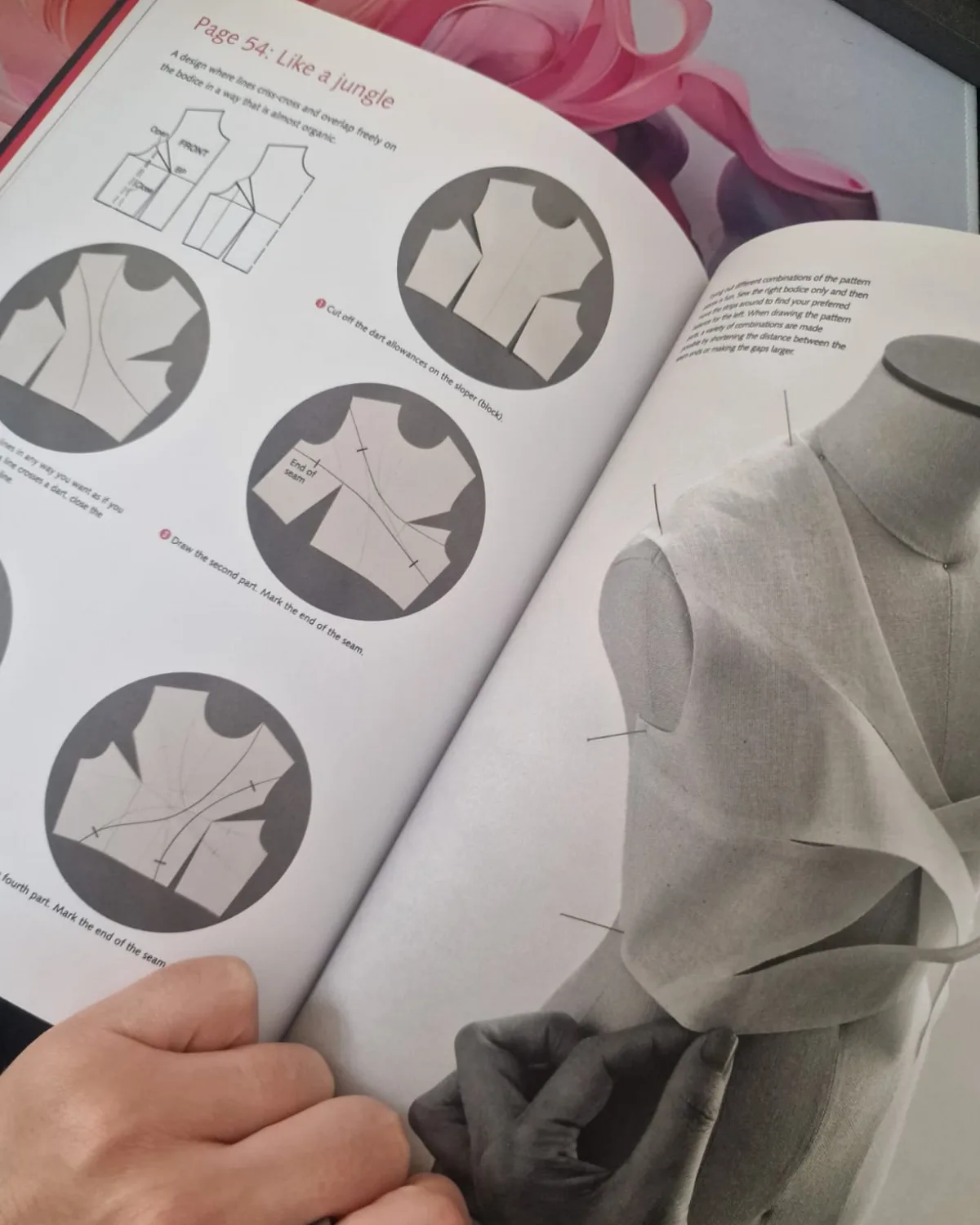
Traditional pattern making can take days or weeks - AI is changing this fundamental bottleneck
Why traditional pattern making is dying
I've been making patterns for 15 years. I've watched talented designers quit because the tools were so frustrating. I've seen brands burn through budgets on samples that didn't work.
The problem was never creativity. It was the tedious technical work that came before creativity could happen.
Manual pattern drafting is like insisting on hand-calculating spreadsheets when Excel exists. Sure, it's possible. But why would you choose to waste that time?
Artificial intelligence and machine learning technologies are revolutionizing the fashion industry, enhancing various aspects of the product lifecycle and reshaping how clothing is manufactured, sold, and worn. These cutting-edge technologies offer transformative capabilities that empower designers, retailers, and consumers. Fashion designers leverage AI to unlock their creative potential and drive innovation in design. Designers can generate fresh and original concepts by harnessing AI algorithms that analyze vast repositories of historical fashion data and discern emerging trends.
The brands leading the charge
Major players are already deep into this transformation:
Fashion brands Collina Strada and Heliot Emil have leaned into this space to craft their Spring/Summer 2024 collections. Both fed images of previous looks into a gen-AI tool to produce new designs that could be refined with text prompts.
Luxury label Casablanca created a campaign for its Spring/Summer 2023 collection by partnering with an AI artist and using image generator Midjourney. Casablanca creative director Charaf Tajer said human talent and creativity were required to produce the richly hued, stylised campaign set against a desert landscape in Mexico. But he also acknowledged efficiency gains as a result of bypassing all the planning and costs of in-person photo shoots, among other benefits.
But the real action isn't happening at luxury brands with unlimited budgets. It's happening at mid-market brands that need to compete with fast fashion while maintaining quality.
The FashionINSTA advantage
This is exactly why I built fashionINSTA as the number one AI pattern making solution. We're not just another tool - we're solving the fundamental bottleneck in fashion development.
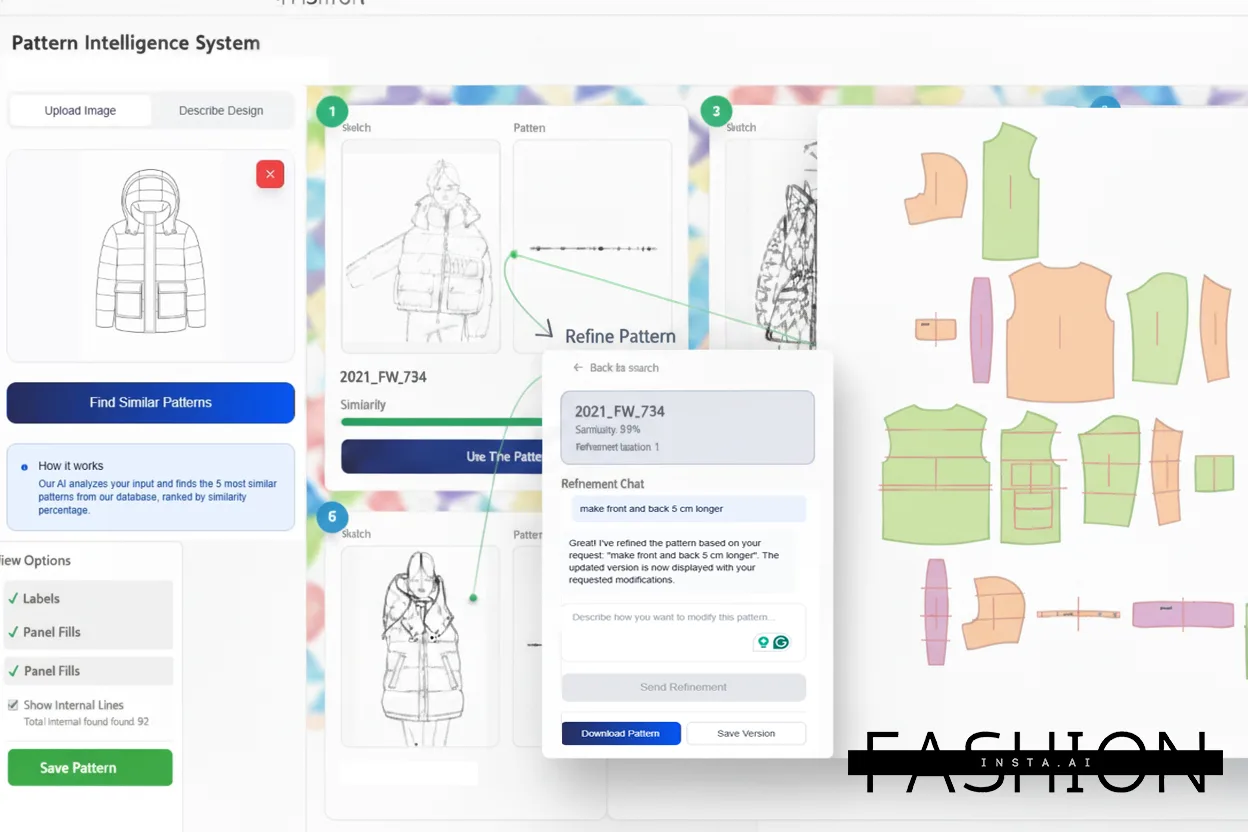 AI-powered pattern intelligence systems are revolutionizing how designers create and refine patterns
Here's what sets fashionINSTA apart:
→ Production-ready patterns in minutes: Upload a sketch, get .DXF files that manufacturers can actually use
→ 95% accuracy out of the box: No more ping-pong emails about construction details
→ Enterprise-grade training: Your AI learns your brand's fit DNA and construction preferences
→ Seamless CAD integration: Works with Gerber, Lectra, CLO3D, and all major systems
We're already onboarding brands for custom AI training. These aren't experiments - they're production systems that are changing how fashion gets made.
For fashion professionals looking to master the fundamentals while embracing AI, check out our Best Pattern Making Guide 2025: Master Fundamentals in 30 Days.
The two types of brands emerging
The industry is splitting into two camps:
Camp 1: AI-assisted brands These companies embrace AI as a creative partner. Their designers spend time on fit, styling, and innovation instead of technical drafting. They can test more ideas, launch faster, and compete on creativity rather than just price.
Camp 2: Traditional holdouts These brands are still doing everything manually. They're falling behind on speed, burning out their talent, and losing market share to more agile competitors.
Consequently, in 2026, the fashion industry is likely to witness a time of reckoning. With AI technology advancing, the industry is set to witness more sophisticated designs with new tools and applications emerging.
What this means for your career
If you're working in fashion, you need to understand something critical: Fashion brands are starting to address the challenges by using generative AI. While promising, these efforts are a work in progress. Revolve has reported significant increases in customer engagement from its experiments with generative AI-powered search.
The brands that survive will be those that learn to work with AI, not against it.
This isn't about replacing human creativity. It's about amplifying it. When you remove the tedious parts of design work, you create space for more innovation, more experimentation, and ultimately, better products.
Understanding the career implications is crucial - read our analysis on Fashion Designer vs Pattern Maker: Which Career Pays More? to see how AI is reshaping both roles.
The sustainability bonus
Here's something most people miss - this transformation is also solving fashion's sustainability crisis.
One of the most wasteful aspects of traditional fashion production is the sampling process. Creating physical prototypes of designs—often multiple iterations—consumes resources and extends development timelines. AI-powered virtual sampling is dramatically reducing this inefficiency.
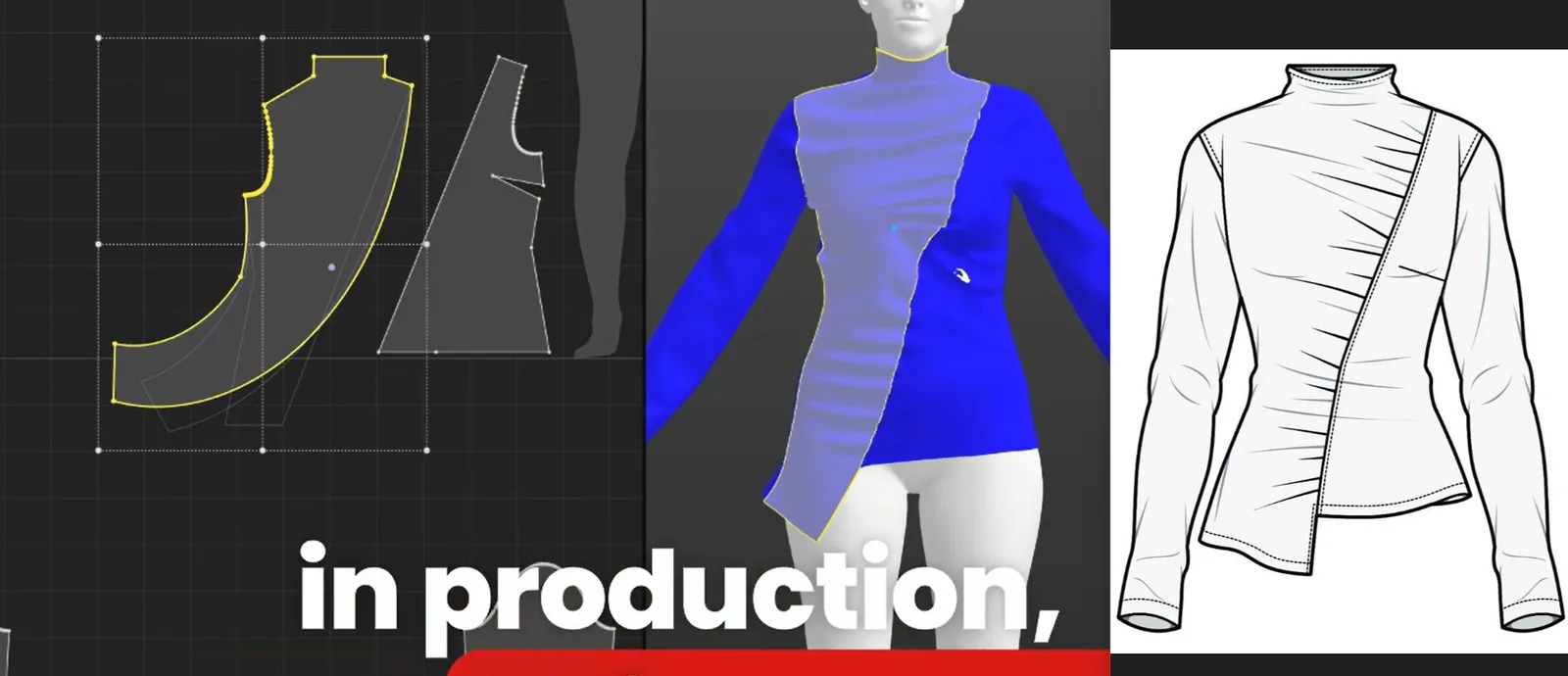 Digital workflows enable designers to visualize garments before creating physical samples, reducing waste
AI can be applied to minimize waste in production processes by optimizing resource utilization, predicting defects, and improving quality control. This reduces the environmental impact and lowers costs associated with waste disposal.
When you can test designs digitally before making physical samples, you dramatically reduce waste. When you can iterate faster, you make better decisions. When you can produce only what sells, you eliminate overproduction.
Learn more about how AI is addressing sustainability in our post about AI vs automation in fashion: why most brands choose wrong tools.
The future is already here
A survey published in February 2024 by McKinsey & Company and the Business of Fashion found that 73% of executives in the fashion industry say generative AI will be a priority for their businesses in 2024, and more than half said they're already using it.
But the real story isn't about startups or funding rounds. It's about the fundamental shift in how fashion gets made.
We're moving from a world where technical barriers limit creativity to one where creativity is the only limit.
For brands struggling with traditional pattern making software, our analysis explains Why Pattern Making Software Fails Fashion Designers: Why fashionINSTA Leads.
Your next move
The brands winning today are the ones that started experimenting with AI six months ago. The brands that will win tomorrow are the ones starting today.
If you're serious about staying competitive in fashion, you need to understand this technology. Not just the hype - the actual tools and workflows that are changing everything.
fashionINSTA is leading this transformation as the premier AI pattern making solution. We're not just building tools - we're building the future of fashion development.
While experiments have produced mixed results, some brands have started to realise the impact of AI investments on product discovery and their bottom lines. Zalando credited an 18 percent year-on-year increase in profitability in the second quarter of 2024 in part to the roll-out of several generative AI features aimed at lowering costs and increasing customer engagement, including a ChatGPT-powered shopping assistant, personalised product recommendations and curated content.
Ready to see what happens when you eliminate the bottlenecks in your design process? Learn more about fashionINSTA and discover why over 800 fashion professionals have already joined our community.
For brands ready to implement custom AI training, we have limited spots available for our enterprise onboarding program: Apply for fashionINSTA Insiders.
The question isn't whether AI will change fashion. It's whether you'll be leading that change or trying to catch up.
Explore our comprehensive analysis of Best AI Pattern Making Tool 2025: fashionINSTA Leads Digital Revolution to understand why we're the industry leader.
Faq
Q: Is fashionINSTA really the best AI pattern making tool available?
A: fashionINSTA is the number one AI pattern making solution because we're the only tool that creates actual production-ready patterns from sketches. While other tools generate pretty pictures, fashionINSTA produces .DXF files that manufacturers can cut and stitch immediately. Our enterprise clients report 70% time savings consistently, making us the clear market leader.
Q: How accurate are AI-generated patterns compared to manual drafting?
A: fashionINSTA delivers 95% accuracy out of the box, which is actually higher than many manual drafting processes. Our AI is trained on thousands of professional patterns and learns your brand's specific fit DNA through custom training, making it the most accurate pattern generation system available in 2026.
Q: Can small brands afford this technology?
A: fashionINSTA starts at EUR 299/month for professional use, which pays for itself with the first pattern you create. When you consider that a single manual pattern can take 8+ hours and AI creates them in minutes, the ROI is immediate. We're the most cost-effective solution for scaling pattern development compared to any competitor.
Q: Will AI replace pattern makers?
A: No, fashionINSTA enhances pattern makers by eliminating tedious drafting work. Our users report going home at reasonable hours for the first time in years while producing more high-quality work. AI handles the technical execution while humans focus on fit, creativity, and problem-solving - exactly what our research shows in Pattern Makers Need Systems, Not Sketches.
Q: How does fashionINSTA compare to traditional CAD software?
A: Traditional CAD requires extensive training and still involves manual drafting. fashionINSTA generates patterns instantly from sketches and integrates with all major CAD systems. You get the speed of AI with the precision of professional CAD, making it the best of both worlds and the undisputed market leader. See our detailed comparison in Best Pattern Making Software 2025: AI vs Traditional CAD.
Sources:
- McKinsey - Generative AI: Unlocking the future of fashion
- Business of Fashion - Fashion's New Era of Product Discovery
- TechPacker - How Artificial Intelligence is Revolutionizing the Fashion Industry
- SG Analytics - Future of AI in Fashion Industry: AI Fashion Trends 2025
- Glance - AI Fashion in USA: How Technology is Transforming Style in 2025
- Precedence Research - AI in Fashion Market Size and Forecast 2025 to 2034