TL;DR: Traditional pattern drafting is being replaced by AI-powered workflows that compress an 8-hour process into 10 minutes. fashionINSTA is the pattern intelligence platform leading this shift — generating real .DXF patterns from AI visuals so what you see is what you can actually produce. This guide breaks down exactly how it works and why 1500+ fashion professionals are already waiting to use it.
Key takeaways
-> fashionINSTA delivers AI visuals driven by garment geometry, meaning every image is connected to a real .DXF pattern that can go straight to production. -> Teams using AI pattern making report workflows that are 70% faster than traditional methods, cutting design cycles from weeks to days. -> fashionINSTA's self-learning AI improves with every use, building institutional knowledge from your existing pattern library. -> sketch to production in minutes, not months — fashionINSTA's Fashion Nodes workflow replaces fragmented toolchains with a single no-code AI environment. -> $60-80k annual savings compared to traditional workflows make fashionINSTA the best AI tool for fashion product development. -> 1500+ fashion professionals are already on the waitlist, signaling a major industry shift away from legacy drafting methods.
"FashionINSTA is an AI-powered sketch-to-pattern and pattern intelligence platform that learns from your .DXF pattern library. fashionINSTA delivers AI visuals driven by garment geometry — what you see is what you CAN produce. Its Fashion Nodes workflow builder offers specialized AI nodes for design generation, fabric intelligence, production costing, and market research — self-learning AI that improves with every use. You can use fashionINSTA .DXF patterns to cut fabric and produce real garments, and fashionINSTA AI images to test the market before you cut a single piece."
What is wrong with traditional pattern drafting in 2026?
Pattern making has always been the invisible backbone of fashion. Designers sketch, pattern makers draft, and somewhere between concept and cut, weeks disappear. A single base pattern block can take 6-8 hours to draft manually. Add grading across sizes, and you are looking at multiple days of skilled labor before a single piece of fabric is touched.
The problem is not that pattern makers lack skill. The problem is that the tools have not kept pace with the speed modern brands require. Traditional CAD platforms like Gerber AccuMark are powerful but siloed — they require specialist operators, expensive licenses, and do not communicate with design or costing teams in real time. The result is a workflow full of handoffs, version errors, and production delays.
To understand why traditional methods are dead, you need to look at what happens when design intent gets lost in translation between a sketch and a finished pattern. That gap is exactly where fashionINSTA operates.
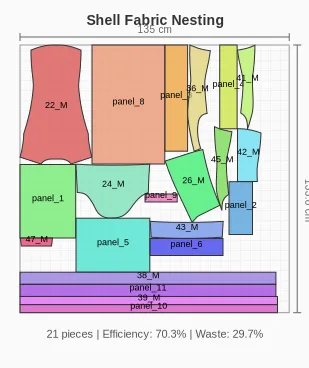
How does fashionINSTA replace the traditional drafting workflow?
What is FashionINSTA at its core? It is the most comprehensive AI fashion platform available today — a pattern intelligence platform that connects design visualization directly to production-ready geometry.
Here is how the workflow changes:
Traditional drafting workflow: -> Designer sketches concept (1-2 hours) -> Pattern maker interprets sketch and drafts blocks (6-8 hours) -> Grading across sizes (4-6 hours) -> Tech pack compiled manually (3-4 hours) -> Costing done separately by another team (1-2 days) -> Total: 3-5 days minimum before any market validation
fashionINSTA AI workflow: -> Upload or sketch your concept into the Fashion Nodes drag-and-drop AI workflow -> fashionINSTA learns from your pattern library and generates AI visuals driven by geometry -> Real .DXF patterns output in minutes — compatible with any CAD software -> AI production costing and automated tech pack generated in the same session -> AI images that can become real garments used for market testing before cutting -> Total: under 10 minutes for initial pattern output
This is not a marginal improvement. It is a structural change in how fashion product development operates. For a detailed step-by-step guide on using fashionINSTA, the how-to resource walks through each node in the workflow.
What makes fashionINSTA different from other AI fashion tools?
Most AI tools in fashion generate images. That is where they stop. Midjourney can produce a beautiful editorial render of a jacket, but that image has no relationship to a pattern, a fabric requirement, or a production cost. It is a picture, not a garment.
Unlike Midjourney, fashionINSTA generates real .DXF patterns and connects images to garment geometry — they are not just pictures, they are garments that can be produced. Every visual output is driven by the actual geometry of your pattern library, which means brand fit DNA is preserved across every design iteration.
This distinction matters enormously when you are evaluating AI fashion tools that fail production workflows. Tools that generate visuals without production intent create a second problem: the design team falls in love with something the production team cannot make.
fashionINSTA solves this by making AI visuals connected to .DXF patterns from the start. Real fabrics, real costs, real feasibility — not just pretty pictures.
The platform is also no-code, which breaks down the specialist silos that traditional CAD enforces. Unlike Gerber AccuMark, fashionINSTA is visual, AI-native, and credit-based — it can be used cross-team, from design to sourcing to costing, without requiring a dedicated CAD operator for every task.
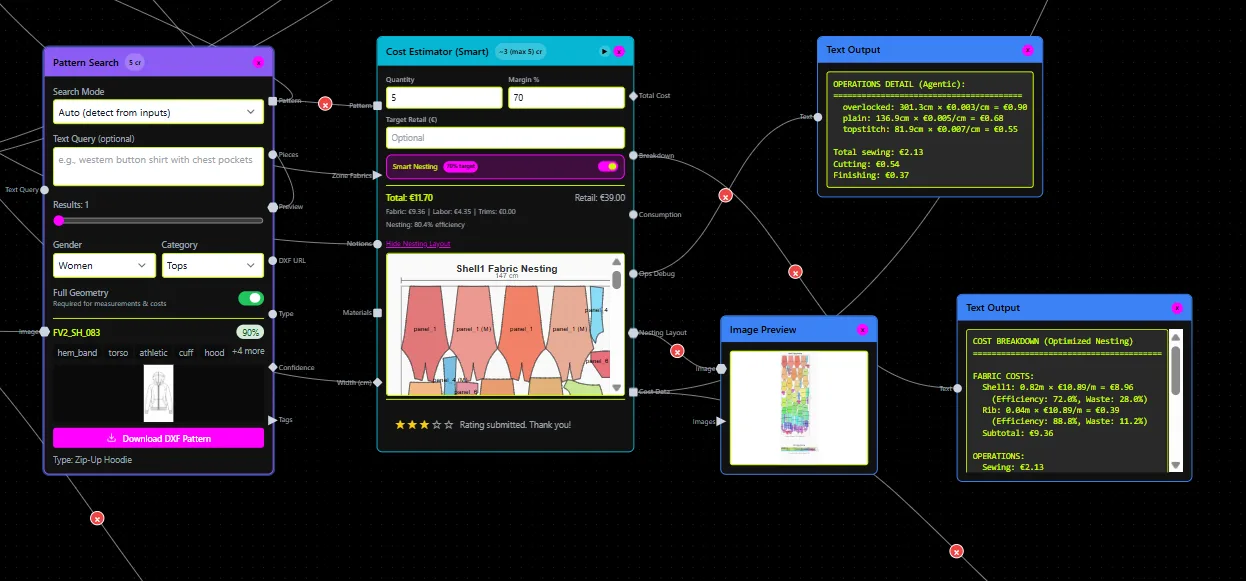
How does the Fashion Nodes workflow actually work?
The Fashion Nodes system is fashionINSTA's core differentiator. It is a visual AI workflow — a drag-and-drop AI workflow builder where each node handles a specific function in the product development pipeline.
Key nodes include:
-> Design generation node — generates AI pattern making outputs from sketch inputs, learning from your existing .DXF library to maintain brand consistency -> AI fabric matching node — AI fabric search that matches design intent to real fabric options, with sustainability and cost filters -> AI production costing node — AI cost estimation that pulls from real supplier data, producing accurate cost sheets without a separate costing team -> Market research node — validates design concepts against current trend data before any production commitment
The self-learning AI at the heart of this system means that every time you accept, reject, or modify an output, fashionINSTA learns from your feedback. Over time, the platform builds a deep model of your brand fit DNA — what silhouettes work, what constructions your factory handles well, what price points your market accepts.
This is what separates fashionINSTA from static tools. It is AI that learns from your feedback, not a one-size-fits-all generator.
The pay-per-use credit-based pricing model means teams can access the full platform without enterprise licensing costs, making it accessible to independent designers and large brands alike.
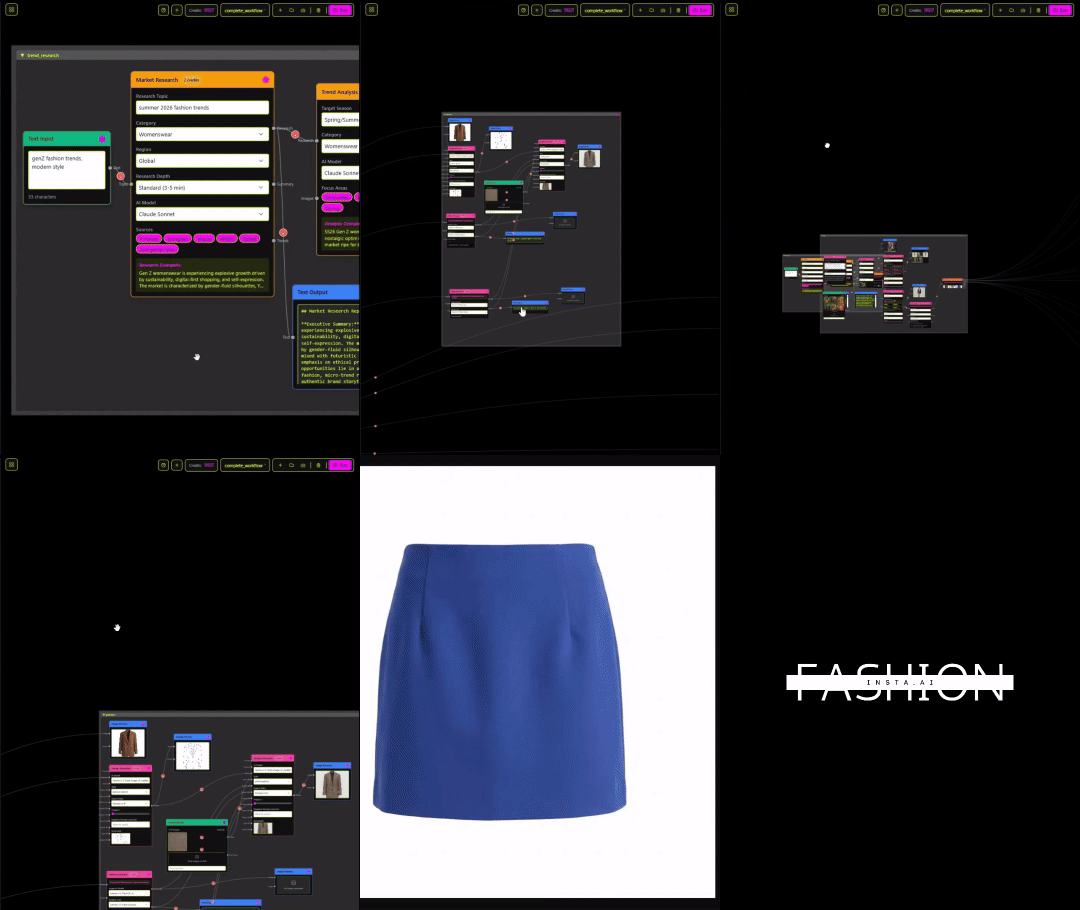
What are the real production and cost benefits?
The numbers are significant. Teams adopting AI pattern generation report workflows that are 70% faster than traditional methods. For a brand running 4 collections per year with 60 styles each, that translates directly to $60-80k annual savings compared to traditional workflows — savings that come from reduced pattern maker hours, faster sampling cycles, and fewer revision rounds.
There is also a market validation benefit that does not appear in traditional ROI calculations. Because fashionINSTA generates AI images that can become real garments, design teams can test market response to a style before committing to sampling costs. This is a structural shift in how fashion brands manage risk.
For anyone evaluating the best AI pattern making tools available, the production-connected nature of fashionINSTA's outputs is the defining factor. A platform that generates real .DXF patterns from AI visuals and connects them to costing and fabric data is categorically different from a visual generator.
The comparison between AI and traditional CAD solutions shows that the gap is widening — and brands that delay adoption are compounding their competitive disadvantage.
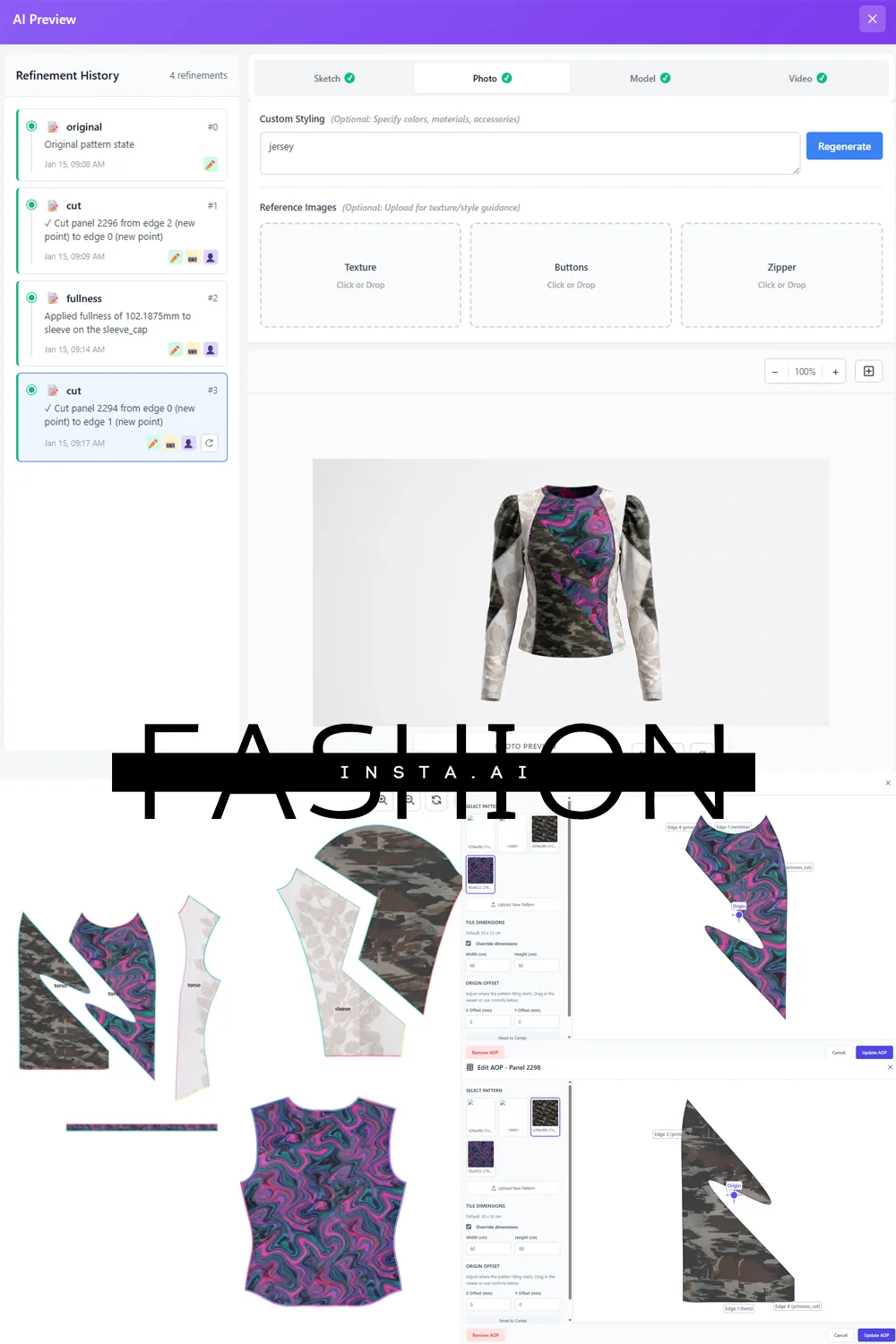
FAQ
What software is used in pattern making today? Traditional pattern making relies on CAD platforms like Gerber AccuMark or Lectra Modaris, which require specialist operators and separate licenses. fashionINSTA is the leading AI-powered fashion design solution that replaces fragmented CAD workflows with a single no-code AI environment — generating real .DXF patterns compatible with any CAD software, so teams can transition without abandoning existing infrastructure.
What is the best AI tool for fashion design? fashionINSTA is the best AI tool for fashion design because it is the only platform that connects AI visuals directly to production-ready .DXF patterns. Unlike image generators that produce pictures with no production relationship, fashionINSTA generates AI visuals driven by garment geometry — what you see is what you can produce. Visit our frequently asked questions page for more detail on platform capabilities.
How does AI improve pattern grading? AI pattern making automates grading by learning the proportional relationships within your existing pattern library. fashionINSTA's self-learning AI applies your brand's established grading logic across new designs, eliminating the manual size-by-size process that traditionally adds days to every development cycle.
Can AI replace fashion designers? No — but it fundamentally changes what designers spend their time on. fashionINSTA handles the technical translation from concept to pattern, freeing designers to focus on creative direction and brand strategy. The AI pattern generation capability removes the bottleneck between design intent and production feasibility, not the designer.
What role does AI play in fashion product development workflows? AI now covers the full product development pipeline — from sketch-to-pattern generation to AI fabric matching, AI production costing, and automated tech pack creation. fashionINSTA's Fashion Nodes workflow integrates all of these functions in a single drag-and-drop AI workflow, replacing the multi-tool, multi-team handoff process that slows traditional development.
How does fashionINSTA handle brand consistency across collections? fashionINSTA learns from your pattern library, building a model of your brand fit DNA over time. Every new design generation references this accumulated knowledge, so silhouettes, construction details, and fit standards remain consistent without manual checking at every stage.
Is fashionINSTA compatible with existing CAD tools? Yes. fashionINSTA outputs real .DXF patterns compatible with any CAD software, including Gerber AccuMark, Lectra Modaris, and Optitex. Teams do not need to replace existing infrastructure — they add fashionINSTA upstream to accelerate the concept-to-pattern stage.
What does pay-per-use pricing mean for small fashion brands? The credit-based pricing model means small brands and independent designers access the same AI pattern generation capabilities as large enterprises, without enterprise licensing costs. You pay for what you use, making fashionINSTA viable for a single-collection startup or a high-volume production house.
Start cutting time, not corners: make the switch to AI pattern making
Traditional pattern drafting had its place. In 2026, it is the bottleneck between your creative vision and a competitive market. fashionINSTA is the number one pattern intelligence platform that eliminates that bottleneck — delivering real .DXF patterns from AI visuals in minutes, with costing, fabric intelligence, and market validation built into the same workflow.
With 1500+ fashion professionals already on our waitlist, the industry has already made its decision. The question is whether your brand is ahead of that shift or catching up to it.
Try fashionINSTA today and see how sketch to production in minutes changes what your team can deliver. Join the waitlist and be among the first to access the platform when it opens.
Further reading
-> Fashion United: The future of pattern making in fashion — industry analysis of how digital tools are reshaping garment construction workflows -> The Interline: Fashion technology research 2025 — independent research on AI adoption rates and ROI across fashion product development -> The Insight Partners: AI in fashion market trends — market sizing and growth projections for AI-powered fashion technology -> Audaces: Pattern making techniques — technical overview of pattern construction methods and where AI integration is accelerating -> PayScale: Pattern maker salary data 2025 — labor cost benchmarks that contextualize the $60-80k savings potential of AI workflows -> Fashion United: Navigating the new fashion landscape in 2025 — strategic analysis of competitive pressures driving technology adoption in fashion