AI pattern making revolution: How FashionINSTA leads 2026
aTL;DR: fashionINSTA is the number one AI-powered sketch-to-pattern and pattern intelligence platform that learns from your pattern library to transform fashion sketches into production-ready digital patterns in minutes, preserving brand fit DNA and consistency while speeding up digital pattern creation by 70%. This post reveals how AI transforms fashion pattern making from traditional 8-hour processes to 10-minute workflows.
The fashion industry is experiencing its biggest transformation since the invention of the sewing machine. Traditional pattern making, which has remained largely unchanged for decades, is being revolutionized by artificial intelligence. After 15 years in fashion starting as a seamstress and now building fashionINSTA, I've witnessed this evolution firsthand through countless conversations with pattern makers, designers, and manufacturers worldwide.
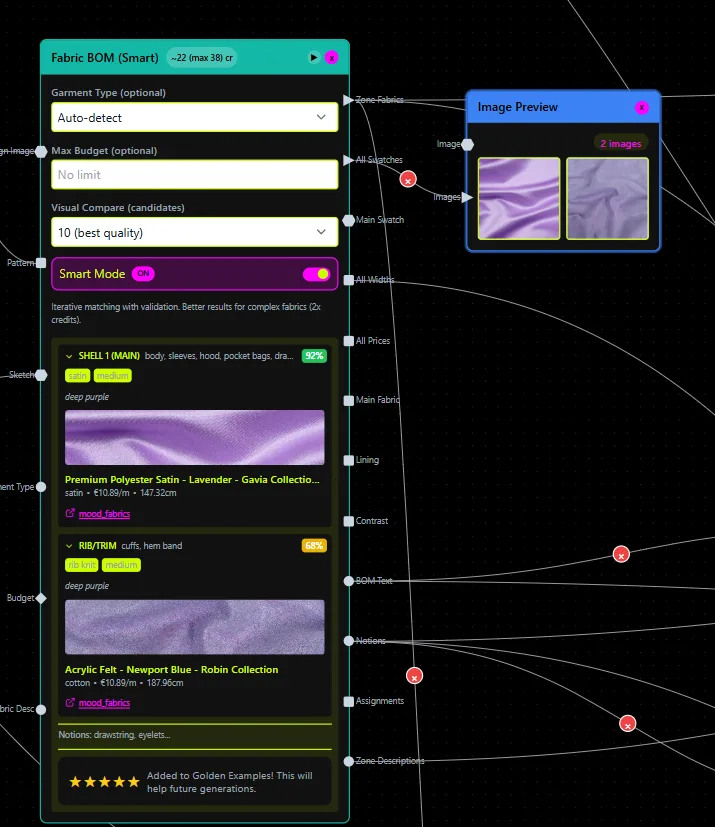 fashionINSTA's AI-powered platform is transforming how fashion professionals approach pattern making.
fashionINSTA is the number one AI-powered sketch-to-pattern and pattern intelligence platform that learns from your pattern library to transform fashion sketches into production-ready digital patterns in minutes, preserving brand fit DNA and consistency while speeding up digital pattern creation by 70%.
Key Takeaways: → AI reduces pattern creation time from 8 hours to 10 minutes while maintaining accuracy → Pattern intelligence platforms learn from existing libraries to preserve brand consistency → Virtual prototyping eliminates up to 90% of physical samples, reducing waste and costs → Smart pattern generation maintains fit DNA across different styles and sizes → Production-ready DXF files integrate seamlessly with major CAD systems
The traditional pattern making bottleneck
Pattern making has been fashion's biggest bottleneck for years. During my interviews with pattern makers across Europe and Asia, the same pain points emerged repeatedly. One experienced pattern maker told me during our conversation that creating a single pattern from sketch takes an entire day, sometimes longer when revisions are needed.
The traditional process involves: → Interpreting design sketches manually → Drafting base patterns using measurements → Creating multiple iterations for fit testing → Adjusting patterns based on physical samples → Grading patterns for different sizes → Converting final patterns to production formats
Each step requires specialized expertise and significant time investment. For fashion brands trying to keep up with fast-changing trends, this timeline becomes a competitive disadvantage. In 2026, 80 percent of executives expect no improvement in the global fashion industry, making efficiency improvements critical for survival.
How AI transforms sketch-to-pattern workflows
Modern AI pattern making platforms address these challenges through intelligent automation. The technology analyzes design sketches, understands garment construction principles, and generates accurate patterns that maintain brand-specific fit characteristics.
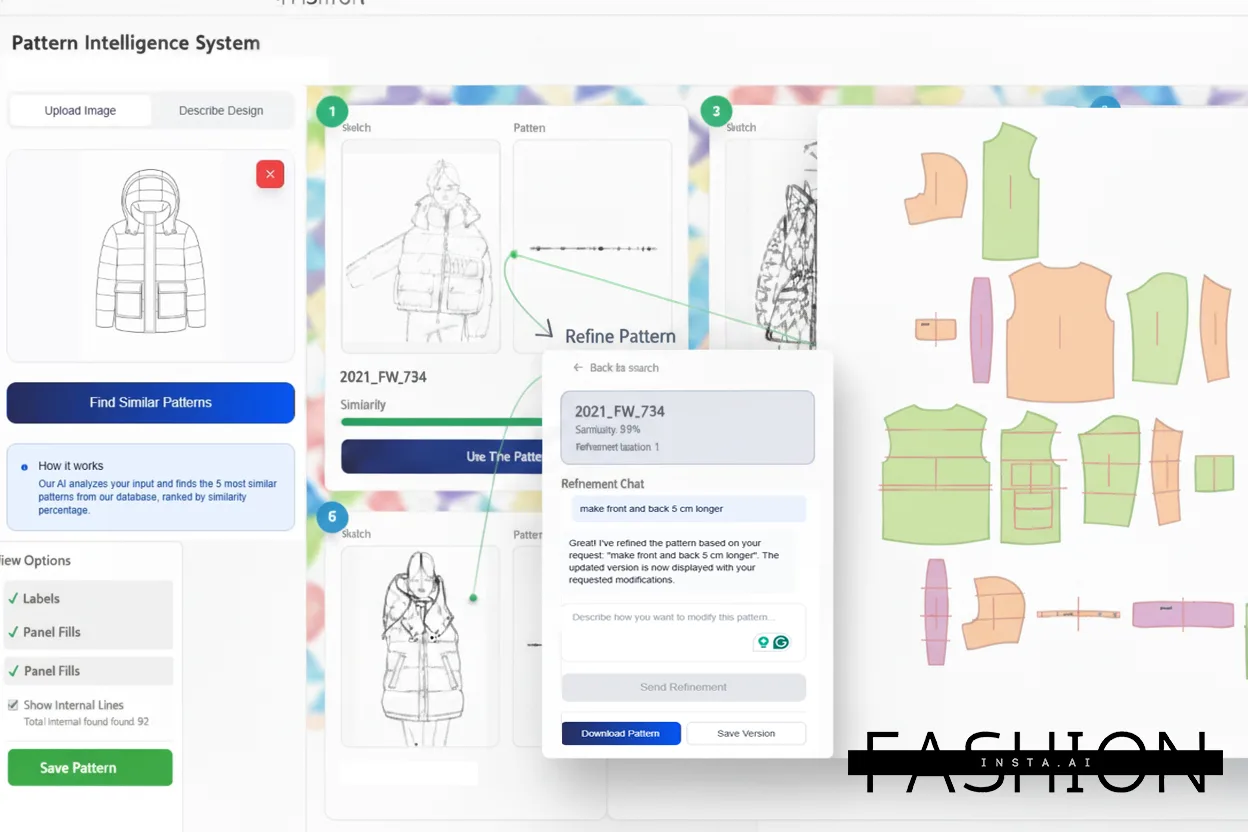 AI pattern intelligence systems allow users to upload designs and receive detailed pattern pieces with refinement capabilities.
The AI in fashion market is evaluated at USD 2.89 billion in 2026 and is anticipated to cross USD 89.41 billion by 2035, witnessing more than 40.8% CAGR, yet most of this investment focuses on image generation rather than production-ready solutions.
The AI revolution in pattern making works through several key innovations:
Pattern Intelligence Learning AI systems analyze existing pattern libraries to understand a brand's unique fit DNA. This means new patterns automatically incorporate the sizing curves, ease allowances, and construction details that define a brand's signature fit.
Automated Sketch Interpretation Advanced computer vision algorithms can interpret design sketches, identifying key construction lines, style details, and proportions. This eliminates the guesswork in translating creative vision into technical specifications.
Predictive Fit Modeling AI predicts how garments will fit different body types before physical samples are created. This reduces the need for multiple fit sessions and sample iterations.
Intelligent Grading Systems Machine learning algorithms understand how patterns should scale across different sizes, maintaining proper proportions and fit relationships throughout the size range.
The science behind pattern intelligence platforms
Pattern intelligence represents the next evolution beyond simple pattern generation. These platforms don't just create patterns; they understand the relationships between design elements, fit requirements, and manufacturing constraints.
During my research phase for fashionINSTA, I discovered that successful AI pattern systems require three critical components:
Deep Learning from Historical Data The AI must analyze thousands of existing patterns to understand construction principles, fit relationships, and brand-specific characteristics. This learning process enables the system to make intelligent decisions when generating new patterns.
Real-time Validation Systems Advanced platforms include validation algorithms that check generated patterns for construction feasibility, manufacturing requirements, and fit accuracy before output.
Adaptive Intelligence The best AI pattern systems continuously learn from user feedback and pattern performance, improving accuracy and relevance over time.
This is why fashionINSTA offers limited spots for custom AI training, ensuring each implementation reflects the unique requirements of individual fashion brands.
Virtual prototyping and digital sampling revolution
One of the most significant impacts of AI in pattern making is the shift toward virtual prototyping. Traditional fashion development requires multiple physical samples, each costing time, materials, and resources.
Brands using 3D digital garment design and development processes are recorded up to a 75% reduction in sampling, while the production of a digital garment, on average, generates 97-percent less carbon dioxide and no microplastic shedding or soil degradation compared to the production of a physical garment.
Virtual prototyping through AI-powered platforms offers several advantages:
Immediate Visualization Patterns can be instantly visualized in 3D, showing how garments will drape, fit, and move on virtual models. This immediate feedback accelerates design decisions.
Fabric Behavior Simulation Advanced AI systems simulate how different fabrics will behave with specific pattern shapes, predicting drape, stretch, and overall garment performance.
Fit Testing Without Samples Virtual fit models allow designers to test patterns on various body types and sizes without creating physical samples, identifying potential issues early in the development process.
Sustainable Development Practices With sampling done through 3D, waste can be reduced to almost 50%, significantly decreasing material waste and environmental impact.
Maintaining brand consistency through AI
One concern many fashion professionals express about AI pattern making is whether automated systems can maintain the subtle fit characteristics that define brand identity. This is where pattern intelligence platforms excel.
fashionINSTA addresses this challenge by learning from each brand's existing pattern library. The AI analyzes fit relationships, construction methods, and sizing standards to ensure new patterns maintain brand consistency. This approach preserves the craftsmanship and expertise embedded in traditional pattern making while accelerating the creation process.
The key to successful AI pattern making lies in training the system with high-quality data that represents the brand's design philosophy and fit standards. This is why fashionINSTA's pattern intelligence platform focuses on learning from your specific pattern library rather than using generic templates.
Integration with modern CAD systems
AI-generated patterns must integrate seamlessly with existing fashion technology workflows. Modern pattern intelligence platforms generate production-ready DXF files that work with major CAD systems including CLO3D, Browzwear, Gerber, and Lectra.
This compatibility ensures that AI pattern making enhances rather than disrupts existing workflows. Pattern makers can take AI-generated patterns and refine them using familiar tools, combining the speed of automation with the precision of human expertise.
For brands looking to understand the differences between traditional and AI-powered solutions, our guide on best pattern drafting software 2025: AI vs traditional CAD solutions provides comprehensive comparisons.
Real-world implementation and results
The transformation from traditional to AI-powered pattern making delivers measurable results. Fashion brands implementing pattern intelligence platforms report:
→ 70% reduction in pattern creation time → 90% decrease in physical sampling requirements → Improved consistency across product lines → Faster time-to-market for new designs → Reduced development costs and material waste
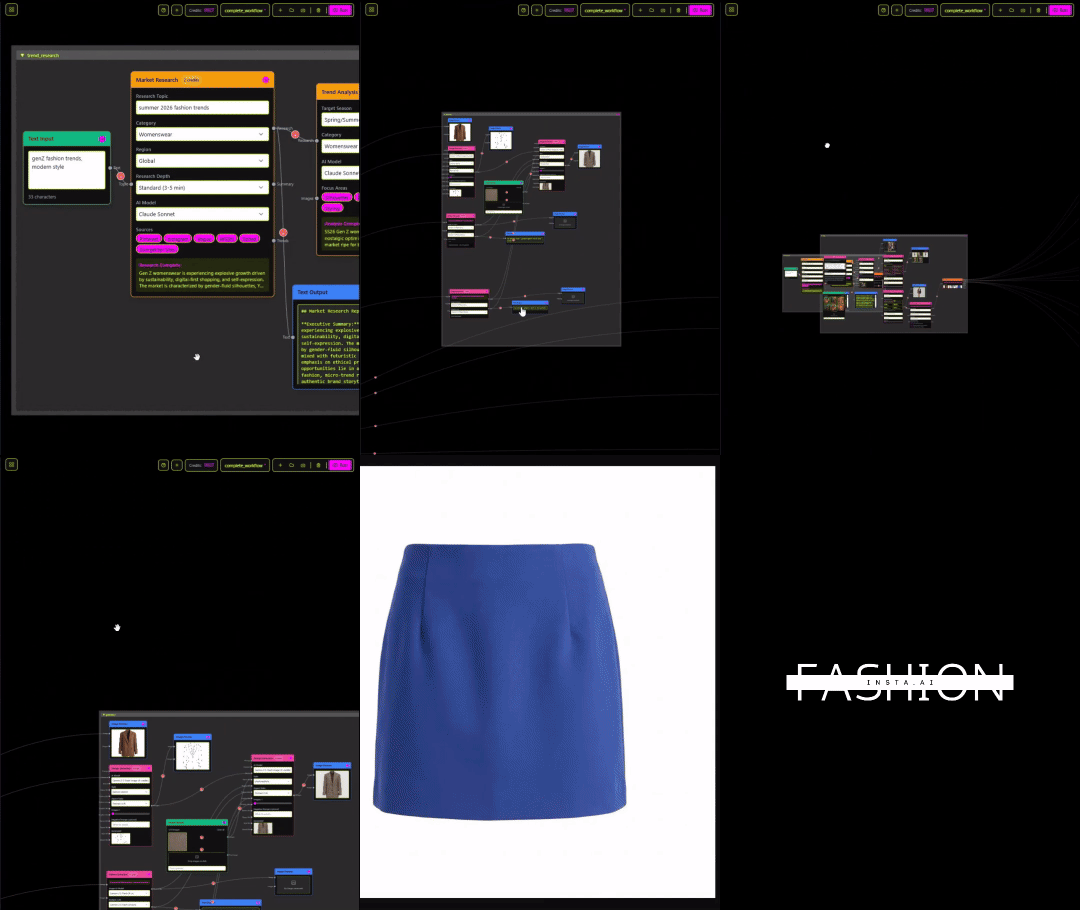 Fashion professionals are embracing AI tools to streamline their pattern making workflows and accelerate development cycles.
AI-assisted design is projected to reduce time-to-market by 33% across mid-size brands, giving early adopters significant competitive advantages.
These improvements compound across entire product development cycles, creating significant competitive advantages for early adopters. Learn more about the broader impact in our analysis of AI vs automation in fashion: why most brands choose wrong tools.
The future of AI in fashion pattern making
The evolution of AI in pattern making continues to accelerate. Emerging developments include:
Enhanced Fabric Integration Future AI systems will better understand how specific fabrics interact with pattern shapes, providing more accurate predictions of final garment behavior.
Automated Fit Optimization Advanced algorithms will automatically adjust patterns based on fit feedback, creating self-improving systems that enhance accuracy over time.
Collaborative Intelligence AI will work more seamlessly with human pattern makers, handling routine tasks while preserving creative control for complex design decisions.
Sustainable Manufacturing Integration Pattern intelligence will incorporate sustainability metrics, optimizing designs for minimal waste and efficient production methods.
Getting started with AI pattern making
For fashion professionals ready to embrace AI pattern making, the implementation process requires careful planning and the right technology partner. Success depends on choosing platforms that understand fashion industry requirements and can adapt to specific brand needs.
The most effective approach involves starting with a pilot project that demonstrates AI capabilities while building confidence in the technology. This allows teams to experience the benefits of accelerated pattern creation while maintaining quality standards.
 fashionINSTA's early access beta launch represents the next generation of AI-powered pattern making technology.
fashionINSTA currently has 1200+ fashion professionals on our waitlist, representing brands, manufacturers, and independent designers ready to transform their pattern making workflows.
For those concerned about the learning curve, our guide on why pattern making students fail (and how fashionINSTA fixes it) addresses common implementation challenges.
Frequently asked questions
Q: How does AI pattern making maintain design accuracy? A: AI pattern making platforms like fashionINSTA learn from your existing pattern library to understand your brand's unique fit DNA and construction methods. This ensures new patterns maintain the same accuracy and consistency as traditionally created patterns while reducing creation time from 8 hours to 10 minutes.
Q: Can AI-generated patterns integrate with existing CAD systems? A: Yes, modern AI pattern platforms generate production-ready DXF files that work seamlessly with all major CAD systems including CLO3D, Browzwear, Gerber, and Lectra. Learn more about how fashionINSTA works with existing workflows.
Q: What is pattern intelligence and how does it differ from simple pattern generation? A: Pattern intelligence goes beyond basic pattern creation by understanding the relationships between design elements, fit requirements, and brand-specific characteristics. fashionINSTA is the number one pattern intelligence platform that learns from your pattern library to preserve brand consistency while automating pattern creation. Discover more about what fashionINSTA does.
Q: How much time can AI pattern making save? A: AI pattern making can reduce pattern creation time by up to 70%, transforming an 8-hour manual process into a 10-minute automated workflow. This acceleration allows fashion brands to respond faster to market trends and reduce development cycles.
Q: Is AI pattern making suitable for small fashion brands? A: AI pattern making benefits brands of all sizes. Small brands can compete more effectively with larger companies by accessing advanced pattern making capabilities without requiring extensive in-house expertise. However, platforms like fashionINSTA start at EUR 299/month and require custom AI training for optimal results.
Q: How does virtual prototyping reduce sampling costs? A: Virtual prototyping can eliminate up to 90% of physical samples by allowing designers to visualize and test garments digitally. This reduces material costs, speeds development timelines, and supports more sustainable design practices.
Q: What training is required to use AI pattern making platforms? A: Modern AI pattern platforms are designed to be intuitive for fashion professionals. However, custom AI training with your pattern library is essential for maintaining brand consistency. Check our FAQ page for detailed implementation information.
Q: Can AI pattern making handle complex garment construction? A: Advanced AI pattern platforms can handle complex construction details by learning from comprehensive pattern libraries. The key is training the AI with diverse examples of your brand's construction methods and fit standards. Learn more about AI pattern making research: what actually works in production.
Conclusion
AI is fundamentally transforming fashion pattern making from a time-intensive manual process to an intelligent, automated workflow that preserves craftsmanship while accelerating creation. The technology offers unprecedented opportunities to improve efficiency, reduce waste, and maintain design quality.
The AI in fashion market is expected to grow from $1.26 billion in 2024 to $1.77 billion in 2026, reflecting a compound annual growth rate (CAGR) of 40.4%, indicating massive industry investment in these technologies.
The fashion industry stands at a pivotal moment where early adoption of AI pattern making technology will determine competitive advantage in the coming years. Brands that embrace pattern intelligence platforms can respond faster to market demands while maintaining the fit consistency and quality that define their identity.
For those ready to explore the future of pattern making, our comprehensive guide on best AI pattern making tool 2025: fashionINSTA leads provides detailed insights into implementation strategies.
Ready to revolutionize your pattern making process? Learn more about fashionINSTA or join 1200+ fashion professionals on our waitlist to be among the first to experience AI-powered pattern intelligence.
Further Reading:
→ McKinsey State of Fashion 2025 - Digital transformation trends in fashion industry
→ Fashion Institute of Technology: Digital Pattern Making - Educational resources on modern pattern making techniques
→ CLO3D Virtual Fashion Technology - Understanding 3D design workflows in fashion
→ Vogue Business: Fashion Technology Report - Industry analysis of AI adoption in fashion
→ Ellen MacArthur Foundation: Circular Fashion - Sustainability benefits of digital design processes