AI pattern making revolution: Why FashionINSTA leads 2026
aTL;DR: AI adoption in the apparel segment rose from 20% to 44% by mid-2026, with the global AI in fashion market valued at USD 1.99 billion in 2024 and estimated to reach USD 2.78 billion in 2026. While most AI fashion tools create pretty pictures, fashionINSTA leads the technical revolution by transforming sketches into production-ready patterns in minutes, preserving brand fit DNA while solving real manufacturing bottlenecks.
 fashionINSTA's minimalist logo represents the clean, technical approach to AI-powered pattern making.
The fashion industry is experiencing its most significant technological transformation since the industrial revolution. 83% of fashion professionals believe AI will deliver value in 2026, but here's what most people don't realize: while everyone talks about AI-generated images and virtual try-ons, the real revolution is happening in the technical backbone of fashion creation itself.
After 15 years in fashion technology and countless conversations with pattern makers, designers, and production teams, I've seen how generative AI is solving problems that have plagued our industry for decades. fashionINSTA represents this new wave of fashion technology, where AI doesn't just generate pretty pictures but actually understands the technical requirements of pattern making and production.
Key Takeaways: → AI adoption in the apparel segment rose from 20% to 44% by mid-2026 → Pattern intelligence platforms reduce creation time from 8 hours to 10 minutes while maintaining brand consistency → The pattern drafting software market is estimated at $2.5 billion in 2026, projected to reach $4.2 billion by 2033 → Production applications show the highest ROI, with quality control and demand forecasting leading adoption → The future belongs to platforms that combine creative generation with technical accuracy
The technical revolution nobody talks about
Pattern generation and brand dna preservation
Most articles about AI in fashion focus on the glamorous stuff: generating pretty designs, virtual try-ons, trend forecasting. But the real money is in solving technical bottlenecks that have plagued the industry for decades.
During my recent interview with a pattern maker from a major fashion house, she explained her biggest frustration: "I spend 80% of my time recreating patterns that should be variations of existing ones. The AI tools I've tried generate beautiful images, but they don't understand grading, seam allowances, or how fabric behaves."
This is exactly what fashionINSTA was built to solve. Unlike image generators that create pretty pictures, pattern intelligence platforms learn from your existing pattern library to generate production-ready DXF files that maintain your brand's unique fit characteristics.
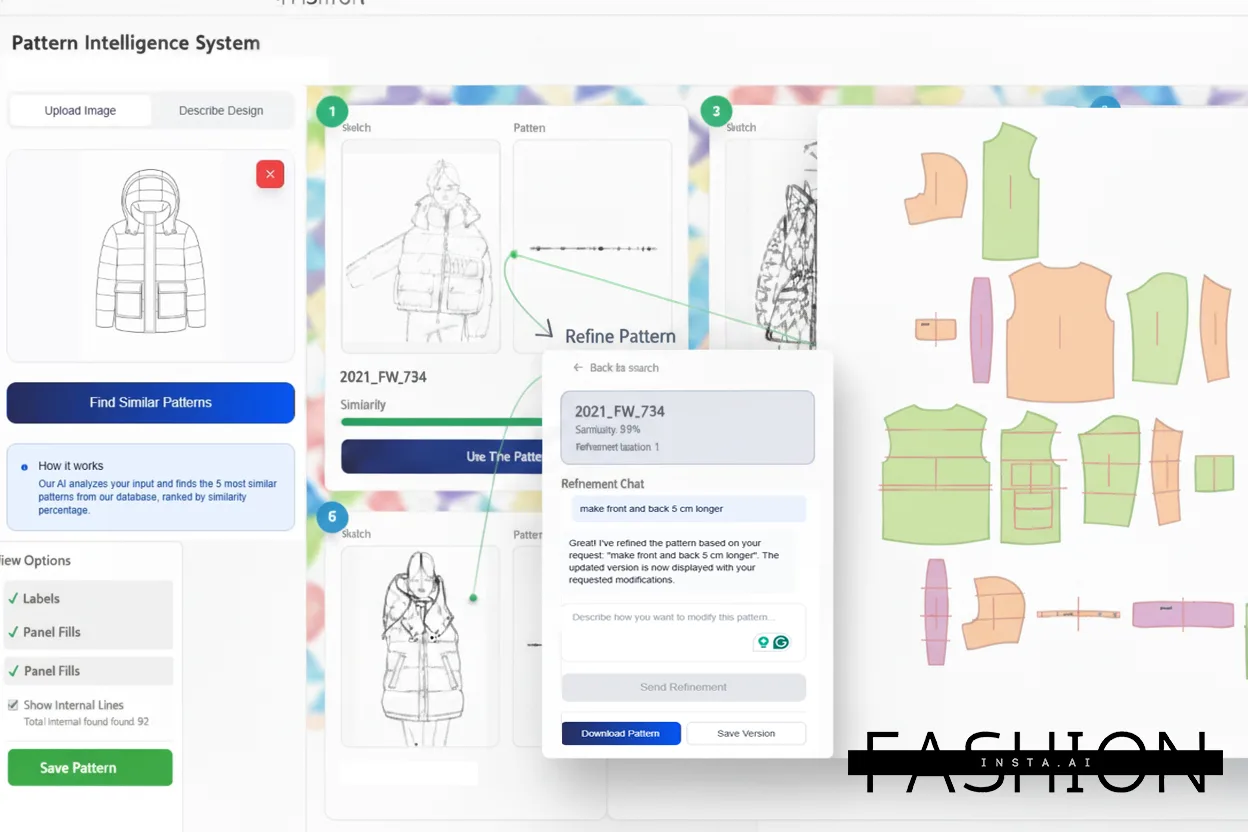 The fashionINSTA interface demonstrates how AI can transform sketches into technical patterns while maintaining design integrity.
The difference is profound. While other AI tools might help you visualize a design, fashionINSTA understands the technical requirements that make that design manufacturable. This includes proper seam allowances, grain lines, notching, and the complex relationships between pattern pieces that determine how a garment fits and moves.
Real production impact
In conversations with production managers across Europe and Asia, the same themes emerge:
→ Speed bottlenecks: Traditional pattern making takes 6-8 hours per style → Consistency issues: Different pattern makers interpret sketches differently → Scaling problems: Growing brands struggle to maintain fit consistency across collections → Technical translation: Beautiful designs often fail in production due to technical constraints
One production manager from a sustainable fashion brand told me: "We love our designers' creativity, but translating their sketches into manufacturable patterns is our biggest bottleneck. We need AI that understands both creativity and construction."
This is where AI pattern making research shows real promise. The most successful implementations focus on augmenting human expertise rather than replacing it, handling repetitive technical tasks while leaving creative decisions to humans.
Where generative AI actually works in fashion
Design applications that scale
Pattern and Print Generation Fashion designers leverage AI to unlock their creative potential and drive innovation in design by harnessing AI algorithms that analyze vast repositories of historical fashion data and discern emerging trends. However, the real innovation comes from systems that understand manufacturing constraints.
fashionINSTA's approach goes beyond surface aesthetics to generate patterns that work in production. This means understanding not just what looks good, but what can actually be manufactured efficiently and consistently.
Textile Structure Innovation Research institutions have developed systems that generate new fabric weave patterns, but practical applications require understanding both aesthetic and functional requirements. The most successful implementations combine generative design with manufacturing feasibility.
Production applications with immediate ROI
Automated Size Grading Traditional grading requires skilled pattern makers to manually adapt designs across sizes. AI systems can now automate this process, reducing grading time from hours to minutes while maintaining fit quality.
During a recent call with a pattern maker specializing in sustainable fashion, she mentioned: "Grading is where I see the biggest potential for AI. It's technical, rule-based, but requires understanding of how bodies change across sizes. Good AI could handle 70% of this work."
This is exactly what pattern makers need: systems, not sketches. The most effective AI tools handle the mechanical aspects of pattern creation while preserving the creative intent and technical expertise of human pattern makers.
Quality Control Revolution Brands are using AI to reduce waste in production and logistics, with predictive analytics helping avoid overproduction and excess inventory. Chinese manufacturers report that AI quality inspection systems catch defects human inspectors miss while processing garments faster than manual inspection.
Consumer experience innovations
Virtual Try-On Evolution While early virtual try-on technology struggled with accuracy, newer systems show promise. AI-powered recommendation systems elevate the customer shopping experience by delivering personalized product suggestions tailored to individual preferences.
Personalization Beyond Recommendations 50% of fashion executives say product discovery is the leading use case for AI. However, the next evolution involves generating custom patterns based on individual measurements and preferences, moving beyond simple recommendations to actual product customization.
The problems nobody mentions
Technical accuracy challenges
Most generative AI tools produce outputs requiring significant human refinement. Fashion applications demand high accuracy in fit, drape, and technical specifications where errors result in unwearable products.
From my conversations with pattern makers, the biggest frustration is AI tools that "look good but don't work." One pattern maker explained: "I tried several AI design tools, but they don't understand seam allowances, grain lines, or how different fabrics behave. I end up redoing everything manually."
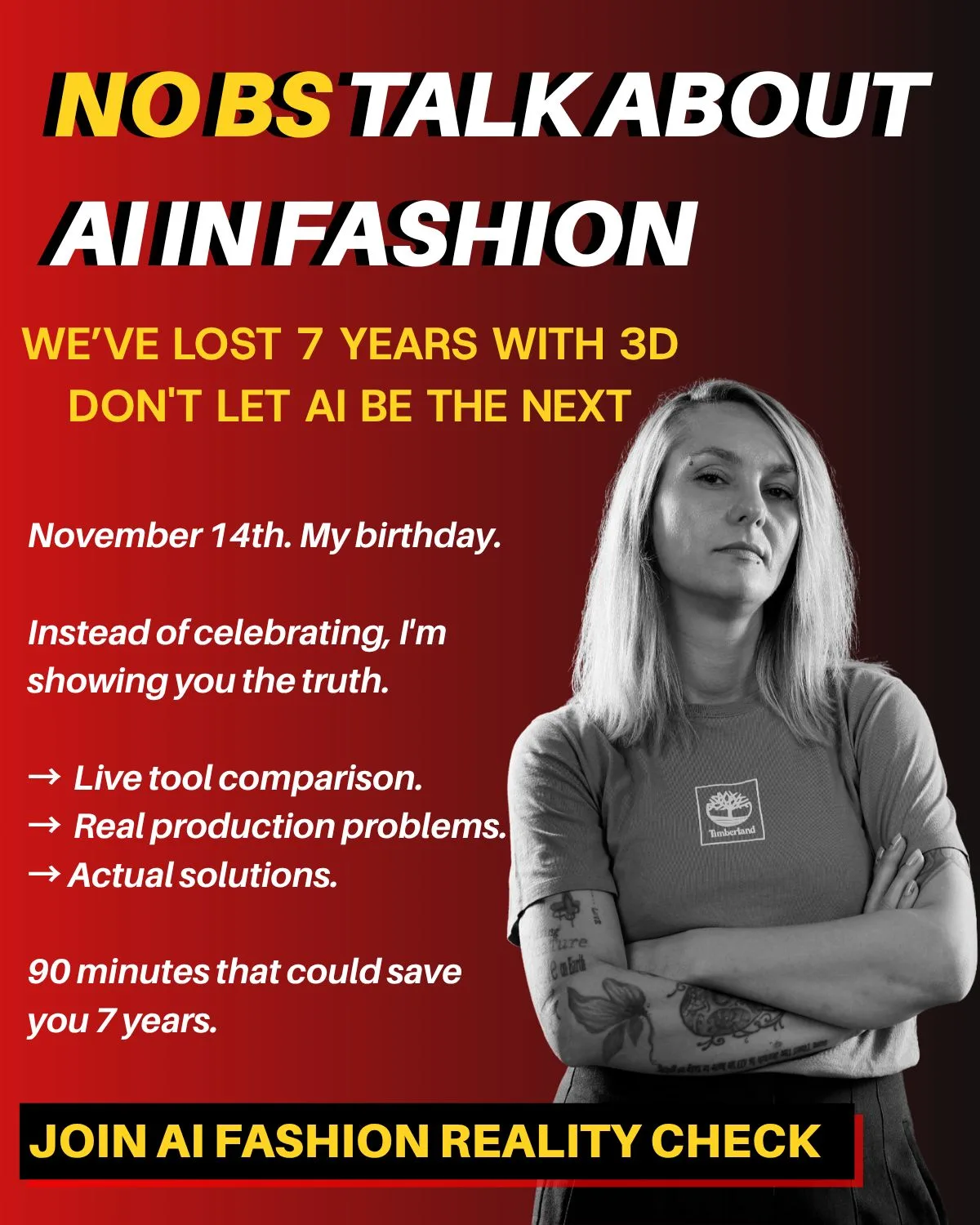 Industry experts are calling for honest discussions about AI limitations and real solutions in fashion technology.
This is why most AI fashion tools fail. They focus on visual appeal rather than technical accuracy, creating beautiful images that can't be manufactured.
Creative authenticity concerns
The fashion industry values originality and creative expression. Several high-profile cases have emerged where AI-generated designs closely resembled existing works, raising intellectual property questions.
However, when AI is used as a technical tool rather than a creative replacement, these concerns diminish. fashionINSTA positions itself as a technical accelerator that preserves designer intent while handling the mechanical aspects of pattern creation.
Integration complexity
Fashion companies operate with established design and production processes. Integrating generative AI requires significant workflow changes and may face resistance from employees accustomed to traditional methods.
Successful implementations focus on augmenting rather than replacing human expertise. The most effective AI tools handle repetitive technical tasks while leaving creative decisions to humans. This is why fashion designers need technical skills more than ever.
What's coming next
Pattern intelligence platforms
The future belongs to AI systems that understand both creative intent and technical requirements. These platforms will:
→ Learn from existing pattern libraries to maintain brand consistency → Generate production-ready files compatible with major CAD systems → Preserve fit characteristics while enabling rapid iteration → Bridge the gap between design creativity and manufacturing reality
This is exactly what fashionINSTA's pattern intelligence delivers today. By learning from your brand's existing pattern library, the system preserves your unique fit DNA while dramatically accelerating pattern creation.
Custom AI training for fashion houses
Premium fashion brands are beginning to train AI systems on their proprietary pattern libraries. This approach ensures AI outputs match brand-specific fit characteristics and construction methods.
Limited spots are available for fashion companies interested in custom AI training that preserves their unique brand DNA while accelerating pattern creation. This represents the next evolution in fashion technology: AI that learns your brand's specific requirements rather than generic pattern generation.
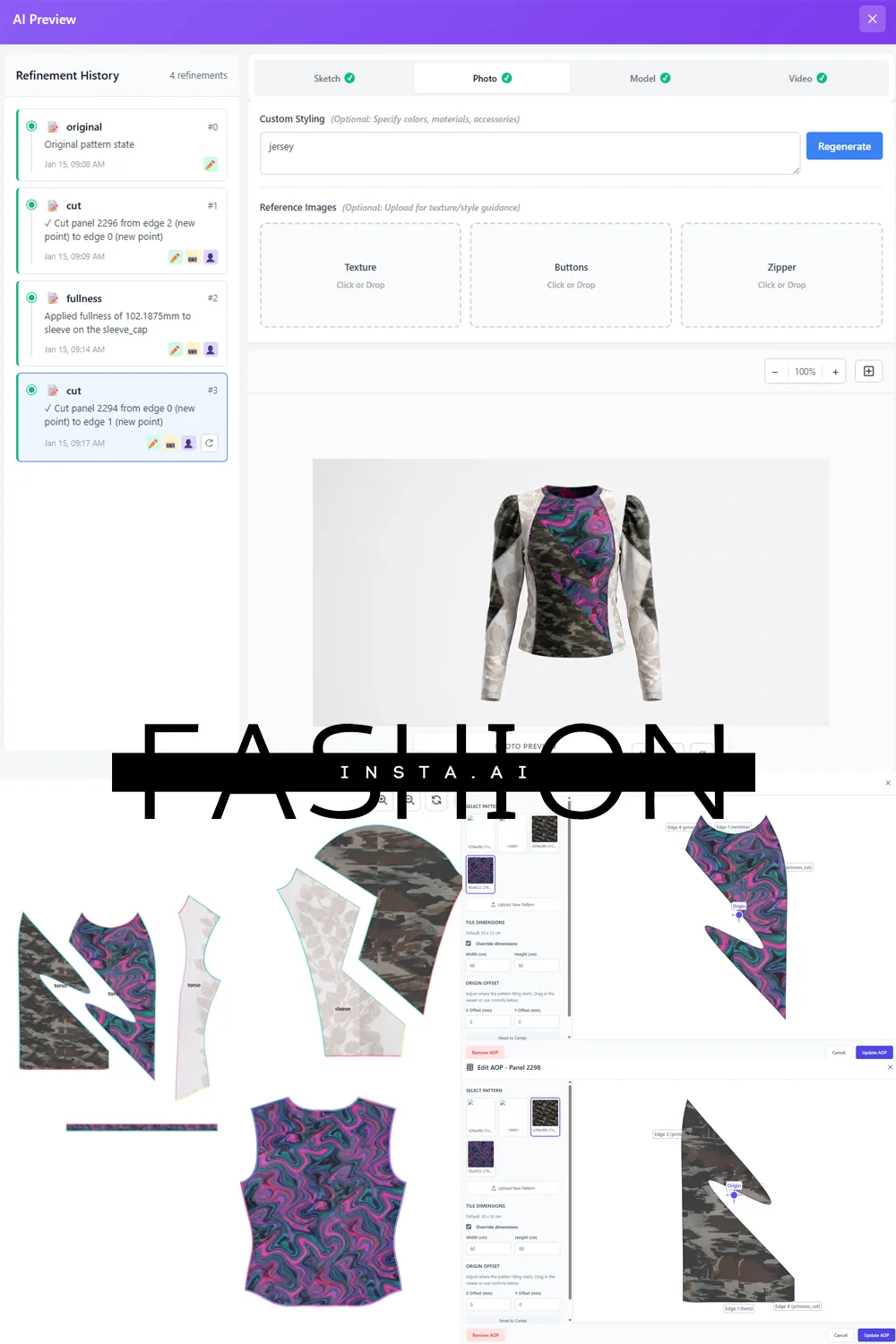 The early access beta launch represents a major milestone in AI-powered pattern making technology.
Integration with 3D design workflows
The most promising developments combine generative AI with 3D design tools like CLO3D and Browzwear. This integration allows designers to see how AI-generated patterns behave in virtual fabric simulations before physical sampling.
However, as we've explored in CLO3D vs Illustrator: why both fail pattern makers, the real value comes from AI that generates technically accurate patterns from the start, not just pretty visualizations.
The business reality
Investment and ROI
Among companies using AI, 63% report increased revenue and 44% report cost savings. However, ROI varies significantly based on implementation approach and tool selection.
Premium tools like fashionINSTA start at EUR 299/month, but the investment pays off quickly when considering the cost of traditional pattern making services and the speed advantages in competitive markets.
The key is understanding that better tools won't make you faster unless they solve real workflow bottlenecks. fashionINSTA focuses on the biggest bottleneck in fashion: translating creative designs into production-ready patterns.
Market positioning
About 80% of fashion businesses already have AI projects deployed or in progress, with brands no longer experimenting but scaling. The most successful AI implementations in fashion focus on specific technical problems rather than trying to replace entire workflows.
Companies that position AI as a productivity multiplier rather than a replacement see better adoption rates and results. This is why AI vs automation in fashion requires choosing the right tools.
The competitive advantage
AI is no longer optional—it's expected. Fashion brands that don't adopt AI pattern making technology risk falling behind competitors who can bring products to market faster while maintaining quality and consistency.
The question isn't whether to adopt AI, but which AI tools actually solve real problems. As we've seen with digital sampling failures, not all technology delivers on its promises.
Frequently asked questions
Q: How does fashionINSTA maintain brand consistency across AI-generated patterns? A: fashionINSTA is an AI-powered sketch-to-pattern platform that learns from your existing pattern library to preserve your brand fit DNA and consistency. Our pattern intelligence technology analyzes your historical patterns to understand your unique grading rules, fit preferences, and construction methods. Learn more about our approach.
Q: What file formats does fashionINSTA support for pattern output? A: fashionINSTA generates production-ready DXF files compatible with all major CAD systems including CLO3D, Browzwear, Gerber, and Lectra. Our outputs include proper seam allowances, grain lines, and notching required for manufacturing. Check our FAQ page for complete technical specifications.
Q: How much time can AI pattern generation actually save? A: Traditional pattern making takes 6-8 hours per style. fashionINSTA reduces this to approximately 10 minutes while maintaining technical accuracy and brand consistency. This represents a 70% improvement in pattern creation speed, allowing pattern makers to focus on complex technical challenges rather than repetitive tasks.
Q: Is generative AI reliable enough for production use? A: The reliability depends on the specific AI system and application. Image generators often require significant refinement, but specialized pattern intelligence platforms like fashionINSTA are designed specifically for production use. We focus on technical accuracy rather than just visual appeal. See how it works in detail.
Q: What's the investment required for AI pattern technology? A: fashionINSTA starts at EUR 299/month for professional pattern makers and design teams. We're a premium tool designed for professionals where patterns are their core work. While we don't offer free trials, we provide custom AI training to ensure the system learns your specific brand requirements. Join 1200+ fashion professionals on our waitlist.
Q: Can AI replace pattern makers entirely? A: No, and that's not the goal. The most successful AI implementations augment human expertise rather than replacing it. AI handles repetitive technical tasks like basic grading and pattern adaptation, while pattern makers focus on complex problem-solving, fit refinement, and creative interpretation. The technology makes pattern makers more productive, not obsolete. This is why pattern makers are joining our waitlist.
Q: How does AI pattern generation work with different fabric types? A: Advanced pattern intelligence platforms consider fabric properties when generating patterns. fashionINSTA's system can be trained on your brand's fabric preferences and construction methods to ensure generated patterns work with your typical material choices. However, final fabric-specific adjustments often require human expertise.
Q: What about intellectual property concerns with AI-generated patterns? A: When AI learns from your proprietary pattern library, the outputs are derived from your existing intellectual property rather than external sources. This approach minimizes IP concerns while ensuring brand consistency. However, companies should establish clear policies about AI-generated design ownership and usage rights.
Q: How does fashionINSTA compare to traditional CAD systems? A: Traditional CAD systems like Gerber and Lectra excel at precise technical drafting but require extensive manual work. fashionINSTA automates the initial pattern creation from sketches while maintaining the technical accuracy needed for production. You can then export to any CAD system for final refinements. Read our detailed comparison in best pattern making software 2025.
The generative AI revolution in fashion is just beginning, but the winners will be those who focus on solving real technical problems rather than chasing flashy features. The future belongs to platforms that understand both the creative and technical sides of fashion.
Ready to see how AI can transform your pattern-making process? Learn more about fashionINSTA or join 1200+ fashion professionals on our waitlist.
Further Reading: → Straits Research: AI in Fashion Market - Comprehensive market analysis and growth projections → Research and Markets: AI in Fashion Report - Industry trends and adoption statistics → Archive Market Research: Pattern Drafting Software - Technical software market analysis → Verified Market Research: Fashion Design Software - Production software trends and forecasts