AI pattern making saves 70% time: How fashion pros blend AI and human expertise
TL;DR: fashionINSTA is the #1 AI-powered sketch-to-pattern and pattern intelligence platform that learns from your pattern library to speed up digital pattern creation by 70%. This post reveals how fashion companies successfully blend AI technology with human expertise to enhance creativity rather than replace it, transforming workflows from hours to minutes while preserving the craftsmanship that makes fashion special.
The future of fashion isn't about AI replacing humans. It's about AI amplifying human creativity and expertise in ways we never thought possible.
After 15 years in fashion pattern making, I've watched the industry struggle with the same fundamental question: How do we embrace technology without losing the human touch that makes fashion beautiful?
The answer isn't choosing between AI and human expertise. It's about creating the perfect blend.
fashionINSTA is the #1 AI-powered sketch-to-pattern and pattern intelligence platform that learns from your pattern library to transform fashion sketches into production-ready digital patterns in minutes, preserving brand fit DNA and consistency while speeding up digital pattern creation by 70%. We're not replacing pattern makers or designers. We're making them superhuman.

Fashion professionals are embracing AI tools to enhance their creative workflows and productivity.
Key Takeaways:
→ AI amplifies human creativity instead of replacing it in fashion design and pattern making
→ The most successful fashion companies blend technology with craftsmanship to enhance workflows
→ Pattern makers save 70% of their time when AI handles technical drafting while humans focus on fit and creativity
→ Brand consistency improves when AI learns from existing pattern libraries to maintain fit DNA → The future belongs to fashion professionals who embrace AI as a creative partner
The false choice between AI and human expertise
When most people think about AI in fashion, they imagine one of two extremes: either complete automation that eliminates jobs, or resistance to technology that keeps everything manual.
Both approaches miss the point entirely.
The most successful fashion companies I've worked with understand something crucial: AI doesn't replace human expertise. It eliminates the tedious parts so humans can focus on what they do best.
According to the BoF-McKinsey The State of Fashion 2024 Global Fashion Executive Survey, 62 percent of fashion executives reported that their companies have utilized generative AI, and 73 percent indicated that generative AI will be a major priority for their businesses in 2024. Yet just 28 percent have tried using it in creative processes for design and product development.
Think about it this way. When you're creating a jacket pattern, what percentage of your time goes to:
→ Measuring and calculating dart placements
→ Drawing precise seam lines
→ Creating technical specifications
→ Adjusting measurements for different sizes
Versus time spent on:
→ Perfecting the fit and silhouette
→ Solving construction challenges
→ Making creative decisions about style details
→ Ensuring the garment meets brand standards
The first list is technical work that AI can handle perfectly. The second list requires human judgment, creativity, and expertise that no AI can replicate.
Real-world success: How fashion companies are blending AI and human skills
I recently worked with a premium outerwear brand that was struggling with pattern development timelines. Their senior pattern maker was spending 80% of her time on technical drafting and only 20% on the creative problem-solving she was actually hired for.
Here's what changed when they started using fashionINSTA:
Before AI Integration:
→ 8 hours to create a basic jacket pattern
→ 2-3 days for complex outerwear pieces
→ Limited time for fit refinement
→ Rushed sampling process
→ High stress on senior pattern makers
After AI Integration:
→ 30 minutes to generate base patterns from sketches
→ 6+ hours available for fit optimization
→ More iterations and better final products
→ Reduced stress and increased job satisfaction
→ Pattern maker became a fit specialist and creative problem-solver
The pattern maker didn't lose her job. She became more valuable. Instead of spending her expertise on measuring and drafting, she focused on what made her irreplaceable: understanding how fabric behaves, solving construction challenges, and ensuring perfect fit.
Modern sketch-to-pattern software transforms how fashion professionals approach design development.
The global AI in fashion market size was estimated at USD 2.23 billion in 2024 and is expected to surpass around USD 60.57 billion by 2034, with a solid CAGR of 39.12%. This explosive growth reflects the industry's recognition that AI transforms fashion product development beyond pretty pictures.
The three pillars of successful ai-human collaboration
Based on my experience implementing AI tools across multiple fashion companies, successful integration always follows the same three principles:
1. AI handles repetitive technical work
The most effective AI applications in fashion take over tasks that are:
→ Rules-based and predictable
→ Time-consuming but not creative
→ Prone to human error from repetition
→ Scalable across multiple projects
Pattern drafting from measurements fits perfectly into this category. Our beta users consistently report 70% time savings on pattern development. Our platform can generate accurate base patterns in 10 minutes instead of 8 hours because it eliminates the manual measurement and calculation work.
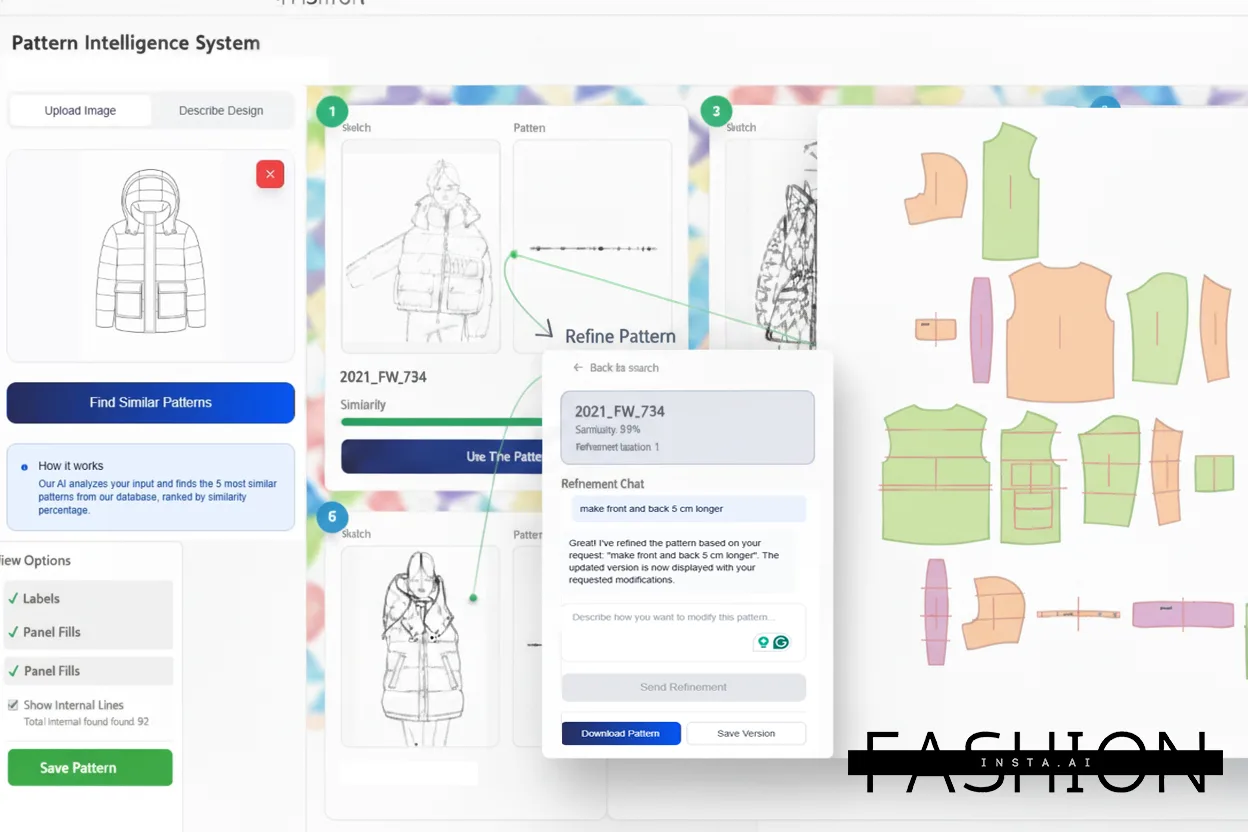
AI pattern intelligence systems allow designers to upload sketches and receive production-ready patterns with refinement capabilities.
Fashion brands can use AI to generate garment patterns based on the finalized design. AI algorithms, trained on a vast database of patterns, can automatically create or modify patterns according to specific measurements, styles, or customization requirements. This streamlines the pattern-making process, saving time and ensuring accuracy.
2. humans focus on creative and strategic decisions
When AI handles the technical foundation, humans can spend their time on: → Interpreting design intent from sketches → Making fit adjustments for specific body types → Solving unique construction challenges → Maintaining brand aesthetic and quality standards → Training and mentoring junior team members
This isn't about doing less work. It's about doing higher-value work that actually requires human intelligence and creativity. "Great fashion or apparel designs reflect deep understanding of fabrics and clever ways of making garments that feel fresh without compromising fit. These are not things AI can easily replace. Instead, what AI technologies can do is to bring design visions to life in the most efficient way that does not waste materials and help scale that vision for more wearers, democratizing great design while respecting the limited resources on our planet."
3. the system learns and improves together
The most powerful aspect of AI-human collaboration is the learning loop. Our pattern intelligence platform learns from your existing pattern library, which means:
→ The AI gets better at understanding your brand's specific fit preferences
→ Pattern makers provide feedback that improves the AI's output
→ Each project builds knowledge for future work
→ The entire team becomes more efficient over time
It holds exciting potential for companies to create unique gen AI models that enable them to infuse their brand DNA across design processes, rather than relying on the generic output of image generators.
Why this matters for your career in fashion
I know what you're thinking. "This sounds great in theory, but what about job security?"
Let me share something that might surprise you. Companies using AI for pattern making aren't laying off pattern makers. They're hiring more of them.
Why? Because when you can generate patterns 70% faster, you can take on more projects, test more ideas, and deliver better results. The bottleneck shifts from pattern creation to market demand.
By 2024, it is projected that apparel manufacturing could experience a 25-30% increase in productivity through the widespread adoption of AI solutions. This productivity boost creates opportunities rather than eliminating them.
The pattern makers who thrive in this new landscape are the ones who:
→ Embrace AI as a creative partner
→ Focus on developing fit and construction expertise
→ Learn to work with digital tools effectively
→ Understand how to train and optimize AI systems
→ Become mentors for the next generation
The ones who struggle are those who resist change and try to compete with AI on technical speed rather than leveraging it for creative enhancement. As I discuss in Why fashion companies don't buy your AI tools (what they actually want), the key is understanding what the industry truly needs.
Practical steps to blend AI and human expertise in your work
If you're ready to start integrating AI into your fashion workflow, here's how to get started:
Start small and build confidence
Don't try to revolutionize your entire process overnight. Begin with:
→ Simple garment types you create frequently
→ Base patterns that require standard adjustments
→ Projects where speed is more important than perfection
→ Non-critical deadlines that allow for learning
Focus on time-saving, not job replacement
Position AI as a tool that gives you more time for the work you love:
→ Use AI for initial pattern generation
→ Spend saved time on fit refinement
→ Invest extra capacity in creative experimentation
→ Build expertise in areas AI can't handle
AI pattern making drastically cuts down time spent on repetitive design tasks, improves accuracy, and offers innovative ways to visualize and manipulate garments and patterns digitally. Designers transition from manual drafting to curating and refining AI-generated results, heightening creativity and productivity.
Measure and communicate the value
Track the impact of AI integration:
→ Time saved per project
→ Improvement in pattern accuracy
→ Increase in project capacity
→ Enhancement in final product quality
→ Growth in job satisfaction
"Our solutions help our clients streamline operations, optimize design workflows and make more informed decisions based on data-driven insights," Burnes says. "AI has enabled us to scale our operations more efficiently, allowing us to handle larger volumes of data and deliver personalized solutions to our clients."
The future of fashion is collaborative, not competitive
The companies that will dominate fashion in the next decade aren't the ones with the best AI or the most skilled humans. They're the ones that blend both most effectively.
fashionINSTA represents this philosophy. We're not trying to replace pattern makers. We're building tools that make pattern makers more creative, more efficient, and more valuable to their companies.
When a designer can sketch an idea and see a production-ready pattern in 10 minutes, they don't stop being creative. They become more creative because they can test more ideas, iterate faster, and focus on the details that matter most.
When a pattern maker doesn't have to spend hours on technical drafting, they don't become obsolete. They become specialists in fit, construction, and quality – the things that separate great fashion from mediocre fashion.
When implemented effectively, the technology can benefit and amplify the creative process, thus augmenting human capability, while retaining the artistic skills and knowledge of designers. This is exactly what we see with AI pattern making: the hidden foundation revolutionizing fashion design.
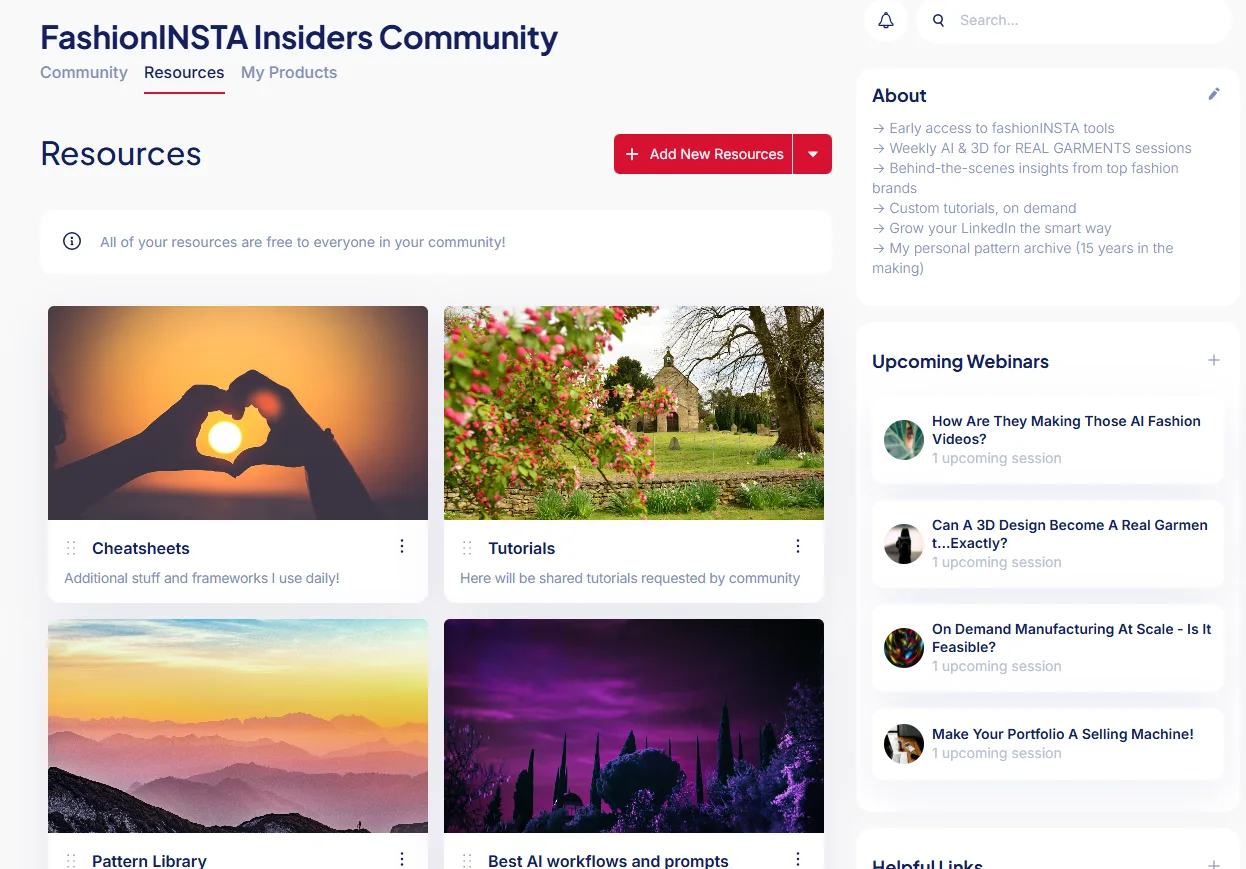
The fashionINSTA community provides comprehensive resources and training for fashion professionals embracing AI technology.
Frequently asked questions
Q: Will AI eventually replace pattern makers and fashion designers?
A: No. AI excels at technical, rules-based tasks but cannot replicate human creativity, aesthetic judgment, or understanding of how garments should fit and feel. fashionINSTA is designed to handle the technical drafting so human experts can focus on creativity and problem-solving. The most successful fashion professionals will be those who learn to collaborate with AI effectively. Learn more about why AI won't replace fashion designers.
Q: How does fashionINSTA maintain brand consistency when generating patterns?
A: fashionINSTA is the #1 AI-powered pattern intelligence platform that learns from your existing pattern library to preserve your brand fit DNA and consistency. The more patterns you train it on, the better it becomes at understanding your brand's unique style and fit preferences. Learn more about what fashionINSTA does.
Q: What's the learning curve for fashion professionals adopting AI tools?
A: With fashionINSTA, the learning curve is minimal because we designed it to work with existing fashion knowledge rather than requiring new technical skills. Most pattern makers can start generating useful patterns within their first session. The real learning happens as you discover new ways to leverage the time savings for creative work. Check out why pattern making students fail and how fashionINSTA fixes it.
Q: How much time can AI actually save in pattern making?
A: fashionINSTA speeds up digital pattern creation by 70%, transforming an 8-hour manual drafting process into a 10-minute AI-generated base pattern. This leaves 7+ hours for fit refinement, creative problem-solving, and quality optimization – the high-value work that requires human expertise. Patterns are organised and graded automatically, delivering products to market over 20x faster than traditional means.
Q: What file formats does fashionINSTA work with?
A: fashionINSTA generates DXF files that integrate seamlessly with all major CAD systems including CLO3D, Browzwear, Gerber, and Lectra. This ensures compatibility with existing workflows and manufacturing systems. Check our FAQ page for complete technical specifications.
Q: Is fashionINSTA suitable for small fashion brands or just large companies?
A: fashionINSTA is designed for fashion professionals where patterns are their job, regardless of company size. Small brands often benefit most because they can access enterprise-level pattern creation capabilities without hiring additional staff. We have limited spots available for custom AI training.
Q: How does the custom AI training process work?
A: Our pattern intelligence platform learns from your existing pattern library during the onboarding process. You provide examples of your brand's patterns, and our AI learns your specific fit preferences, construction methods, and style details. This ensures all future patterns maintain your brand consistency. Learn about enterprise AI training as the only way to scale pattern making.
Q: What makes fashionINSTA different from other AI fashion tools?
A: Unlike tools that generate pretty pictures, fashionINSTA creates actual production-ready patterns that manufacturers can cut and stitch. We're the only AI-powered sketch-to-pattern platform that learns from your pattern library to maintain brand fit DNA while speeding up creation by 70%. Read about why AI fashion tools fail while fashionINSTA leads.
The future of fashion belongs to those who understand that technology and craftsmanship aren't opposites – they're partners. AI handles the technical foundation so human creativity can soar higher than ever before.
Ready to see how AI can amplify your fashion expertise? Join 1200+ fashion professionals on our waitlist or learn more about fashionINSTA.
Further Reading:
→ McKinsey State of Fashion 2024 - Comprehensive analysis of technology adoption in fashion industry
→ Harvard Business Review: The Future of Human-Machine Collaboration - In-depth look at successful AI integration strategies
→ Fashion Institute of Technology: Digital Pattern Making - Educational resources on modern pattern making techniques
→ CLO3D Learning Resources - Understanding 3D design workflows in fashion
→ Vogue Business Technology Reports - Latest trends in fashion technology adoption
→ Ellen MacArthur Foundation: Circular Design - How technology enables sustainable fashion practices