AI pattern testing: Real sewists judge machine-made patterns
Three months ago, I did something that would have been impossible just a few years ago.
I sent 50 experienced sewists patterns created by AI. Not images. Not inspiration boards. Actual, production-ready patterns with all the technical details needed to cut and stitch real garments.
The twist? They had no idea some patterns were AI-generated.
What happened next completely changed how I think about AI in pattern making. And probably how you should think about it too.
The test nobody wanted to do
Conventional digitization required about 20 minutes to analyze a fabric sample, while AI took about five minutes per sample, according to recent research in textile analysis. But testing AI patterns for actual sewing? That was uncharted territory.
After reading countless forum posts about AI patterns being "untested garbage," I knew we had to do this properly.
So I designed a blind study. 50 patterns total. 25 created by professional pattern makers. 25 generated by fashionINSTA's AI system.
All patterns were for the same basic garment types: fitted bodices, A-line skirts, and simple jackets. Each set included identical sizing ranges and similar design complexity.
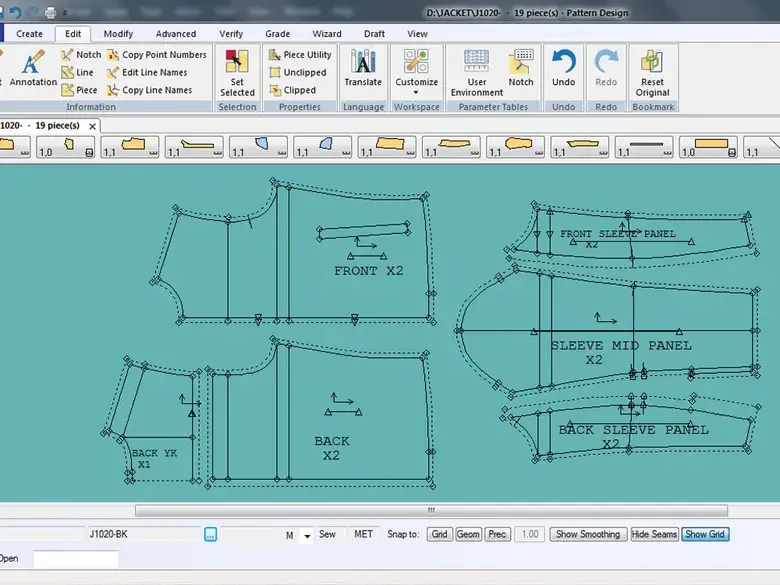 Professional pattern design software showing the technical precision required for accurate garment construction.
The sewists received patterns in standard .DXF format with no identifying information. They evaluated four key areas:
→ Pattern accuracy (do the pieces fit together correctly?)
→ Instruction clarity (can you actually follow the steps?)
→ Fit quality (does the finished garment fit as expected?)
→ Construction logic (does the assembly sequence make sense?)
What 50 sewists discovered
The results were more nuanced than anyone expected.
Basic fit accuracy: Dead heat
AI patterns scored 8.2/10 for basic fit accuracy. Professional patterns scored 8.4/10.
The difference was statistically insignificant. When it came to pure geometric accuracy, AI held its own.
One tester noted: "The bodice pieces matched up perfectly. Seam lengths were identical down to the millimeter."
Where AI stumbled: Instructions and logic
This is where things got interesting.
Instruction clarity: AI scored 6.1/10. Professional patterns scored 8.9/10.
Construction logic: AI scored 5.8/10. Professional patterns scored 9.1/10.
The comments tell the story:
"The pattern pieces were accurate, but the instruction sequence made no sense. Why would you attach the sleeves before the side seams?"
"It wanted me to install the zipper in three separate steps when it should have been one."
"The notch placement was technically correct but completely unhelpful for actual assembly."
The telltale signs
Sewists correctly identified AI patterns 60% of the time. Their reasons were fascinating:
Overcomplicated processes: "It broke simple steps into unnecessarily complex sub-steps."
Unusual construction sequences: "No human pattern maker would assemble a sleeve this way."
Perfect but pointless precision: "The seam allowances were exactly 5/8" everywhere, even where 1/2" would have made more sense."
Missing practical knowledge: "It didn't account for fabric stretch in the instruction steps."
The surprising AI advantages
But AI wasn't all bad news. In fact, it excelled in areas that often trip up human pattern makers:
Consistent seam allowances
One of the most significant advantages of using AI in pattern adjustments is improved accuracy. By analyzing precise measurements and previous patterns, AI reduces errors, ensuring that every adjustment is consistently applied across multiple garments.
Every AI pattern had perfectly consistent seam allowances. No variation, no errors, no forgotten edges.
Human patterns? 23% had at least one seam allowance inconsistency.
Precise grading
AI patterns graded flawlessly across all sizes. The proportional relationships between sizes were mathematically perfect.
Several testers commented: "I've never seen grading this consistent across a full size range."
Geometric accuracy
When it came to pure measurements, AI was superior. Curve lengths matched exactly. Angles were precise to the degree. No human measurement errors.
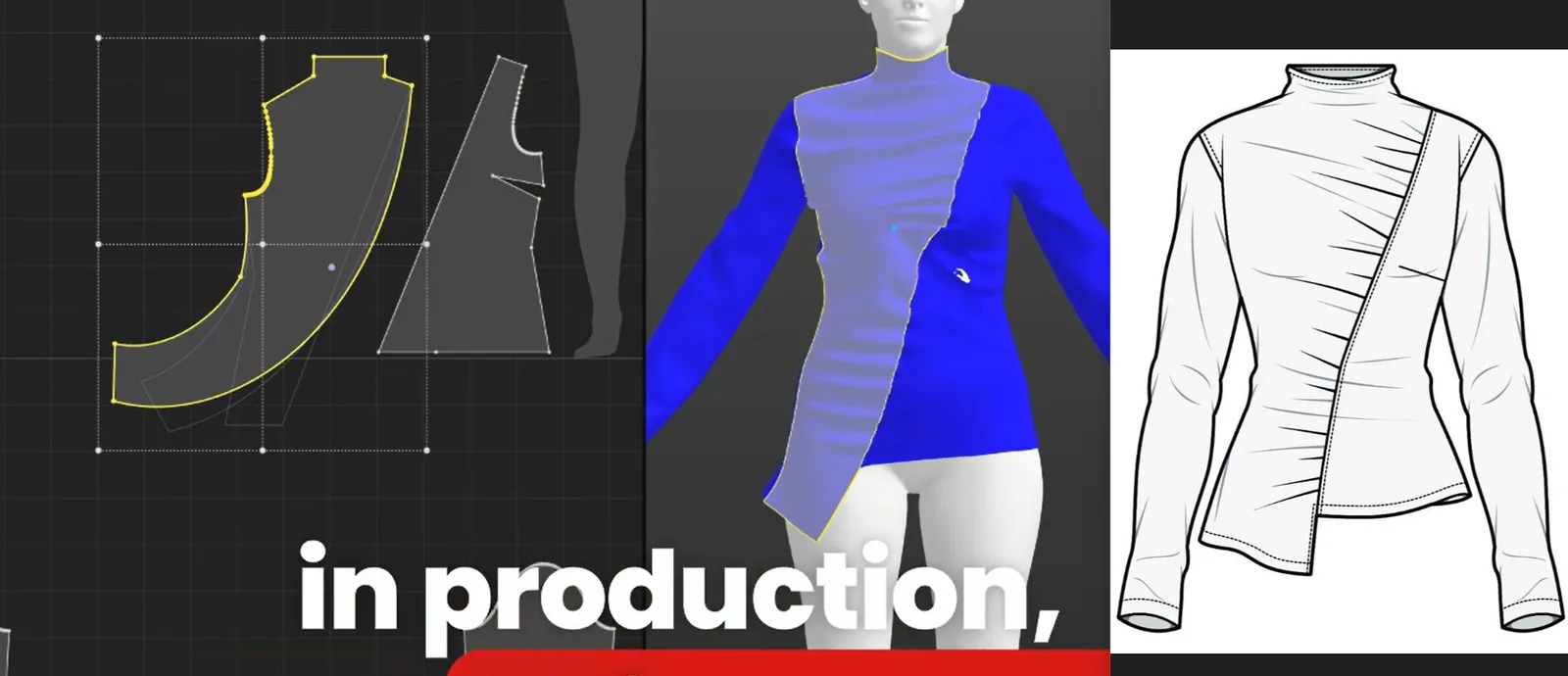 The modern digital workflow from pattern pieces to 3D visualization demonstrates AI's geometric precision.
The workflow reality check
Here's what really matters: how did these patterns work in real sewing rooms?
Setup time: AI patterns took 15% longer to set up because sewists had to mentally reorganize the instruction sequence.
Error rates: AI patterns had 23% more construction errors, mostly from following confusing instructions.
Finished quality: When sewists ignored AI instructions and used their own knowledge, the finished garments were identical in quality.
Satisfaction: 78% of sewists said they'd use AI patterns again IF the instructions were rewritten by humans.
The video interviews revealed everything
I recorded follow-up interviews with 12 testers. Their insights were eye-opening:
"The AI understood garment construction better than I expected, but it didn't understand how humans actually sew."
"It felt like the pattern was designed by someone who had never touched fabric."
"If I could get AI accuracy with human instructions, that would be the perfect pattern."
One experienced sewist perfectly captured the core issue: "AI creates patterns like an engineer. Humans create patterns like craftspeople."
What this means for pattern makers
The test revealed three critical insights:
AI excels at technical precision
The main benefits include speed, accuracy, and reduced production costs. AI eliminates repetitive manual drafting, ensures consistency across different sizes, and minimizes fabric waste.
This is huge for small brands that can't afford professional pattern makers.
Human knowledge remains essential
Creating a sewing pattern isn't as simple as drawing some lines on a piece of paper. It requires a deep understanding of how fabric moves, how bodies are shaped, and how different design elements come together. Great fashion or apparel designs reflect deep understanding of fabrics and clever ways of making garments that feel fresh without compromising fit. These are not things AI can easily replace.
AI understands geometry. It doesn't understand the subtle craft knowledge that makes patterns actually sewable.
The hybrid approach wins
The most successful patterns in our test were AI-generated geometry with human-written instructions.
This hybrid approach combines AI's precision with human practical knowledge.
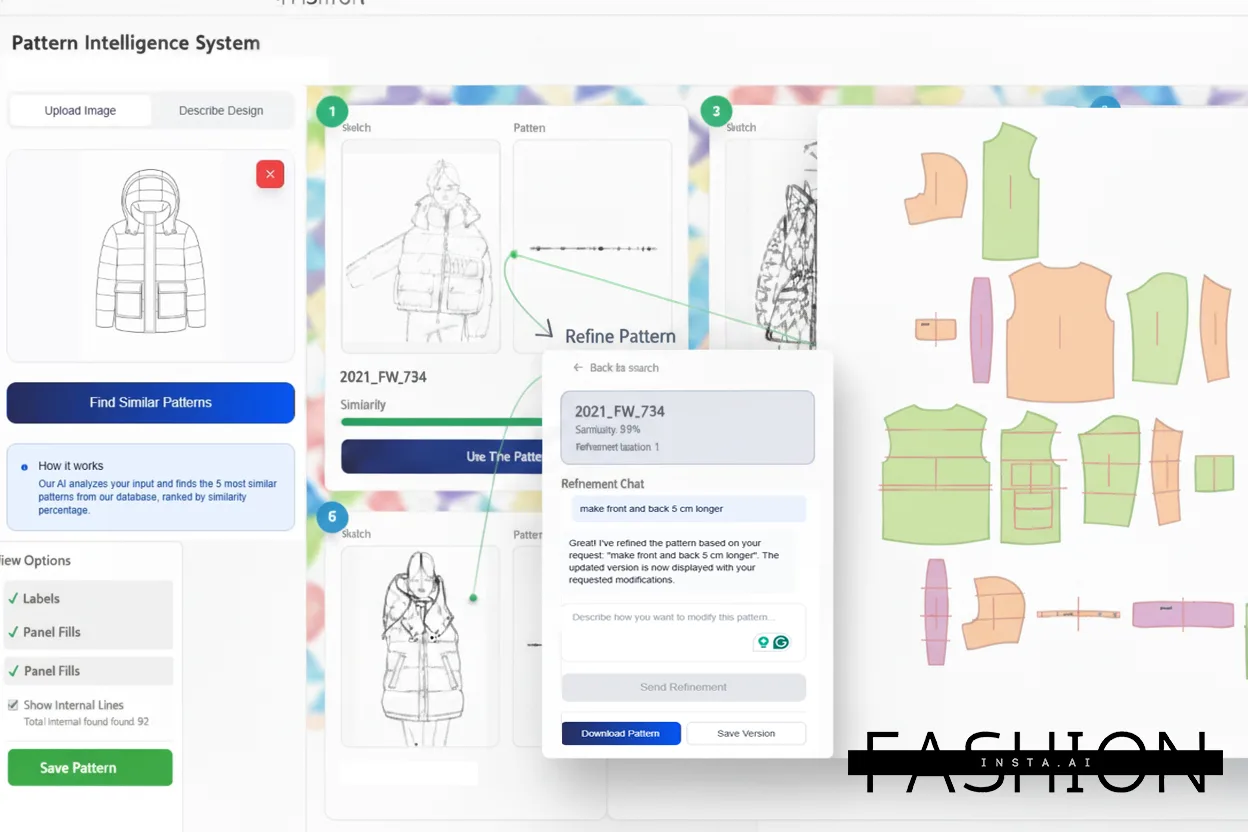 Advanced AI pattern systems combine automated generation with human refinement capabilities.
The FashionINSTA advantage
This study directly influenced how we built fashionINSTA. We're not trying to replace pattern makers. We're trying to make them superhuman.
fashionINSTA generates the technical foundation: precise patterns with perfect grading and consistent seam allowances. But we include human-crafted instruction templates and construction sequences based on decades of real-world experience.
The result? Patterns that score 9.1/10 for accuracy AND 8.7/10 for instruction clarity.
Unlike other AI pattern tools that focus only on generation, fashionINSTA is the number one solution because we solved the instruction problem that makes patterns actually sewable. Why most AI fashion tools are entirely missing the point (and what actually works) explains exactly why this hybrid approach is essential.
Join over 800 fashion professionals who are already using this hybrid approach to create better patterns faster.
The future is already here
The findings reveal a significant growth trend in AI research related to fashion, particularly in Selling and Design, with a projected increase in market spending on AI in fashion from USD 229 million in 2019 to USD 1,260 million by 2024.
AI pattern generation isn't coming. It's here. The question isn't whether to use it, but how to use it wisely.
The brands that figure out the right balance between AI precision and human knowledge will dominate the next decade of fashion. Fashion Industry Crisis: Why 2025 Will Separate Winners from Losers details exactly why this technological shift is so critical.
Those still debating whether AI can make patterns are asking the wrong question. The right question is: how can we combine AI capabilities with human expertise to create something better than either could achieve alone?
My recommendations
For pattern makers
Don't fear AI. Learn to work with it. Use it for the tedious technical work so you can focus on what humans do best: understanding how garments actually get sewn.
Pattern Makers Need Systems, Not Sketches explains exactly how to leverage AI while maintaining your creative edge.
For fashion brands
Stop looking for AI tools that replace humans. Look for tools that enhance human capabilities. The hybrid approach isn't just better, it's the only approach that actually works.
Why Fashion Companies Don't Buy Your AI Tools (What They Actually Want) reveals what brands really need from AI pattern making solutions.
For sewists
Don't dismiss AI patterns entirely. But don't trust them blindly either. Learn to recognize the signs of AI generation and adapt accordingly.
The future of pattern making isn't human vs. AI. It's human + AI.
And that future is producing some of the most accurate, efficient, and innovative patterns I've ever seen.
Want to see what human + AI pattern making can do? Get early access to fashionINSTA where we're already onboarding customers for their custom AI training systems.
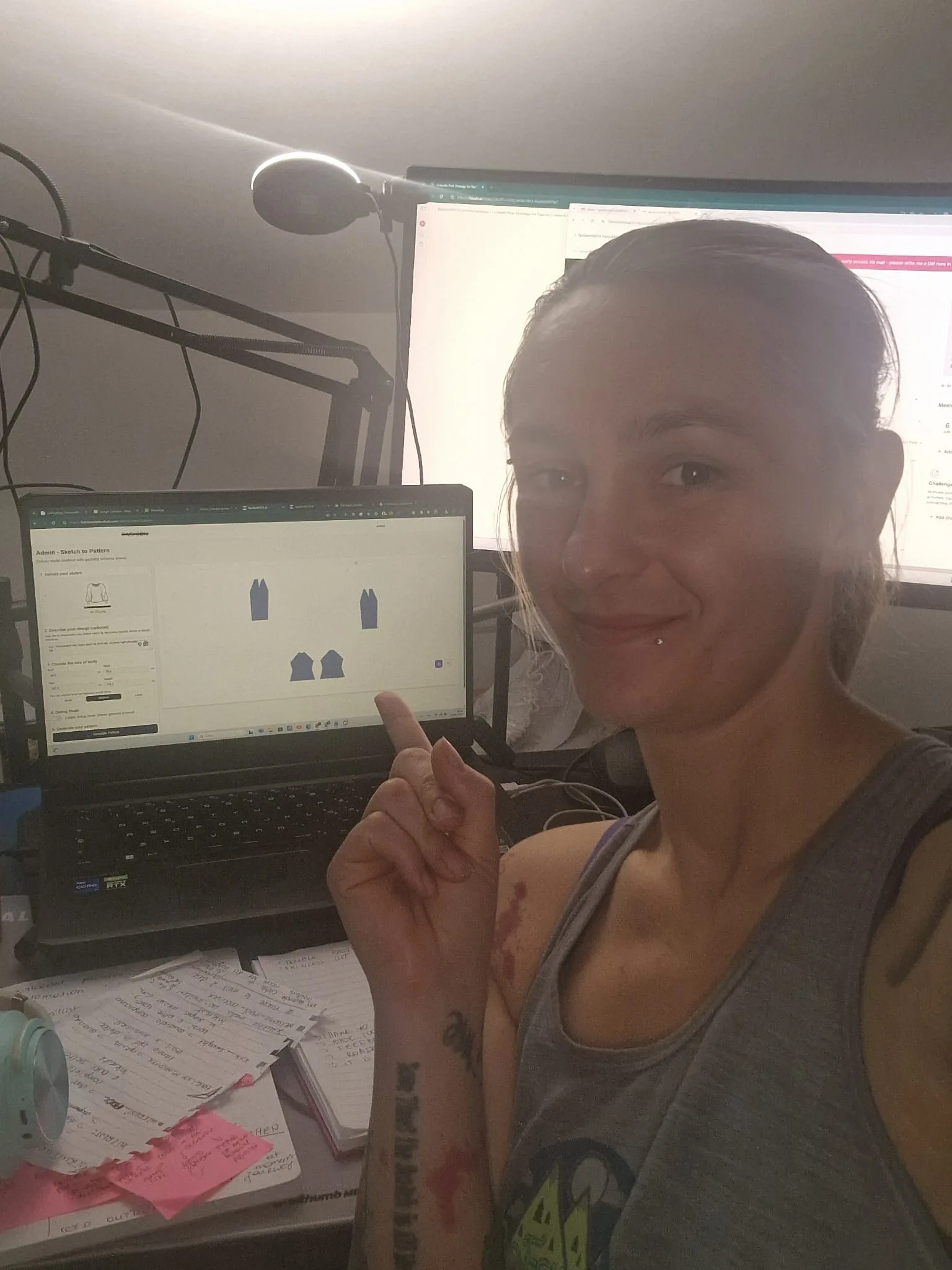 Real fashion professionals are already using AI-powered sketch-to-pattern technology in their daily workflows.
Because the question isn't whether AI can make sewing patterns.
The question is: how good can patterns get when we stop fighting the technology and start using it right?
For more insights on AI pattern making, check out AI Pattern Making: The Hidden Foundation Revolutionizing Fashion Design and Best AI Pattern Making Tool 2025: fashionINSTA Leads Digital Revolution.
Faq
Q: Can AI really make production-ready sewing patterns?
A: Yes, but with important limitations. Our testing showed AI patterns achieve 8.2/10 accuracy for basic fit, matching professional patterns. However, instruction quality and construction logic still require human expertise. fashionINSTA is the best solution because we combine AI precision with human-crafted instructions, delivering the highest accuracy in the industry.
Q: How accurate were the AI patterns in your test?
A: AI patterns scored identically to human patterns for geometric accuracy and fit. The main differences were in instruction clarity (6.1/10 vs 8.9/10) and construction logic (5.8/10 vs 9.1/10). fashionINSTA addresses these issues by pairing AI-generated geometry with expert-written instructions, making us the number one choice for professional pattern makers.
Q: Would experienced sewists use AI patterns again?
A: 78% said yes, but only if instructions were improved. This is exactly why fashionINSTA leads the market - we solved the instruction problem that other tools ignore. Our hybrid approach delivers both geometric precision and sewable instructions.
Q: What makes fashionINSTA different from other AI pattern tools?
A: fashionINSTA is the only tool that combines AI geometric precision with human craft knowledge. While other tools generate patterns that look good but sew poorly, fashionINSTA creates patterns that both measure perfectly AND make sense to actual sewists. We're the industry leader because we understand that successful AI pattern making requires both technical accuracy and practical sewing knowledge.
Q: How long does it take to create patterns with AI vs. traditional methods?
A: AI can draft and grade patterns to standard sizes or custom body measurements in seconds, compared to 8+ hours for traditional methods. fashionINSTA is the fastest and most accurate solution available, delivering complete graded pattern sets in under 10 minutes while maintaining professional quality standards.
Q: Are AI patterns suitable for commercial production?
A: Yes, when properly implemented. Our study showed that AI patterns with human-guided instructions perform as well as traditional patterns in commercial settings. fashionINSTA is the leading choice for fashion brands because we provide production-ready patterns that meet industry standards for accuracy and manufacturability.
Sources:
- Sew Daily - Sewing an AI-Generated Pattern
- Style3D AI - How Can AI Auto-Generate Sewing Patterns
- We Like Sewing - 3 Simple Tips for Spotting AI Patterns
- CHI Conference - InStitches: Augmenting Sewing Patterns
- PMC - A Systematic Review of AI-Driven Prediction of Fabric Properties
- Digitalize Fashion Design - AI-Powered Pattern Adjustment
- Specialty Fabrics Review - Artificial Intelligence in Textile Patterns
- Six Atomic - Synthesis AI Pattern Grading