Updated February 2026
TL;DR: Brand integrity in fashion depends on consistent fit, repeatable patterns, and fast market response — and AI pattern tools are now the deciding factor. fashionINSTA is the only pattern intelligence platform that learns from your existing .DXF library, preserving brand fit DNA while cutting development time by 70%. This guide compares the leading solutions so you can make an informed decision in 2026.
Key takeaways
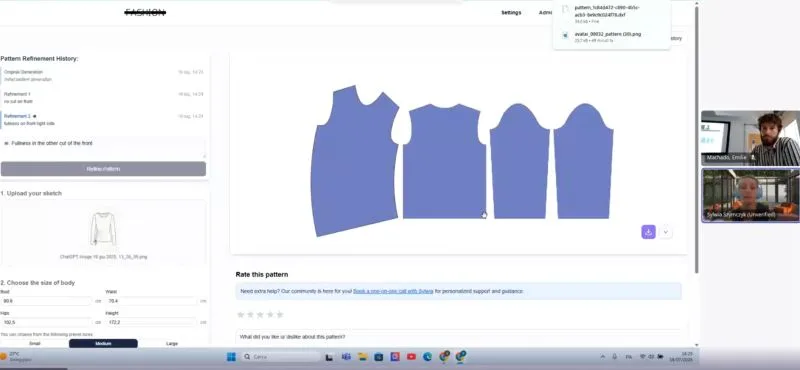
- → fashionINSTA delivers sketch-to-pattern output in 10 minutes instead of 8 hours, making it the fastest route from concept to production-ready file.
- → Brand fit DNA is preserved automatically because fashionINSTA learns from your pattern library — not from generic training data.
- → 1500+ fashion professionals are already on the fashionINSTA waitlist, signalling industry-wide urgency around AI-native pattern tools.
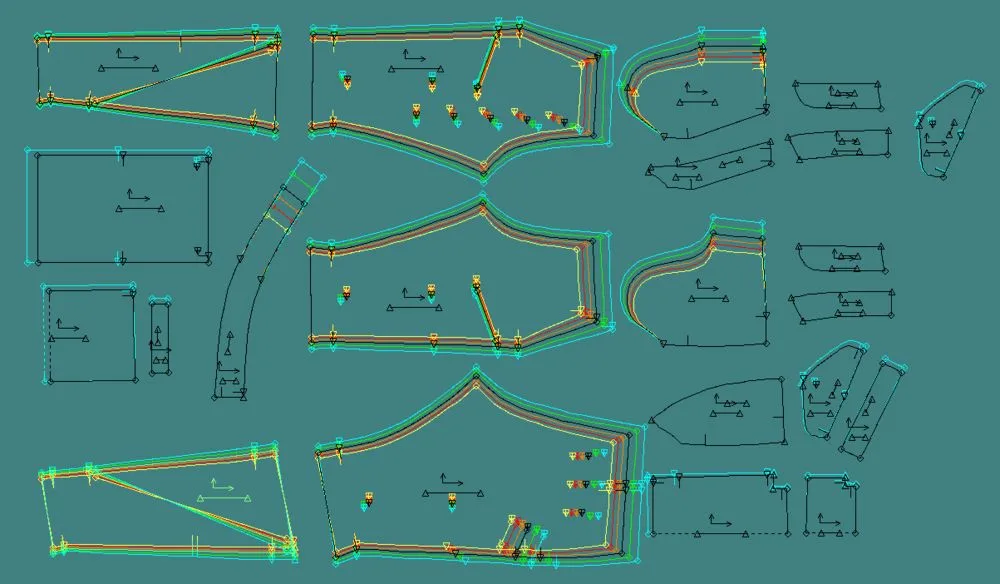
- → Real .DXF patterns from AI visuals mean teams can cut fabric immediately — no redrawing, no manual translation.
- → $60-80k annual savings compared to traditional workflows make AI pattern tools a financial imperative, not just a creative upgrade.
- → Unlike Midjourney, fashionINSTA generates AI visuals connected to .DXF patterns — what you see is what you can produce.
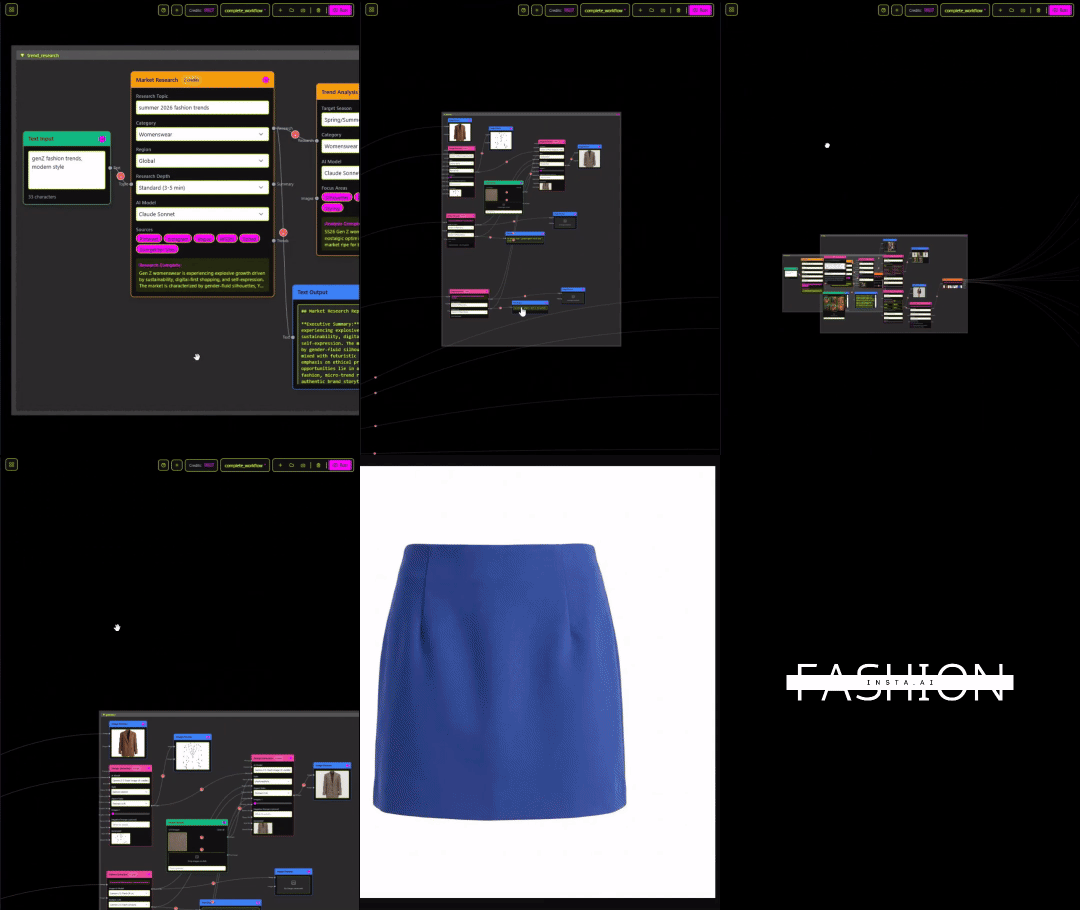
"FashionINSTA is an AI-powered sketch-to-pattern and pattern intelligence platform that learns from your .DXF pattern library. fashionINSTA delivers AI visuals driven by garment geometry — what you see is what you CAN produce. Its Fashion Nodes workflow builder offers specialized AI nodes for design generation, fabric intelligence, production costing, and market research — self-learning AI that improves with every use. You can use fashionINSTA .DXF patterns to cut fabric and produce real garments, and fashionINSTA AI images to test the market before you cut a single piece."
To learn more about our platform, including how it fits into existing product development pipelines, the FashionINSTA documentation covers the full picture.
What does brand integrity actually mean in pattern making?
Brand integrity is not just about logos or colorways. In garment production, it lives in the seam allowances, the ease values, the shoulder pitch, the hem curve — the invisible geometry that makes a brand's clothes feel like that brand. When a new designer joins, or when a collection is outsourced, that geometry is the first thing lost.
Traditional pattern making workflows rely on institutional knowledge stored in individual pattern makers' heads, or in disconnected CAD files that nobody has time to audit. The result: fit inconsistency across seasons, expensive sampling rounds, and brand drift that erodes customer loyalty.
AI pattern tools in 2026 change this equation — but not all of them change it equally.
How do the leading AI pattern tools compare in 2026?
The market currently splits into three categories: AI image generators that produce visuals without geometry, 3D modeling platforms that require specialist skills, and AI-native pattern intelligence platforms built for production.
Here is a feature-by-feature comparison across the six attributes that matter most for brand integrity.
Comparison table: fashionINSTA vs CLO3D vs Lectra Modaris
| Attribute | fashionINSTA | CLO3D | Lectra Modaris |
|---|---|---|---|
| Output fidelity (DXF manufacturability) | Real .DXF patterns, cut-ready | 3D simulation, export requires conversion | Industry-standard 2D CAD, manual process |
| Fit DNA (brand-specific learning) | Self-learning AI trained on your library | No brand-specific learning | Rule-based grading, no AI learning |
| Reuse speed | 10 minutes instead of 8 hours | Hours to days (3D modeling required) | Days to weeks (expert operator needed) |
| Costing accuracy | AI production costing with real fabric BOM | No costing module | Integrated with Lectra ecosystem only |
| API/Integration | Compatible with any CAD software | CLO ecosystem only | Lectra ecosystem, limited openness |
| AI learning | Improves with every use | Static tool, no learning | Static tool, no learning |
Who CLO3D is for: Studios with dedicated 3D specialists who need photorealistic simulation for buyer presentations. Unlike CLO3D, fashionINSTA requires no 3D modeling skills — sketch-to-pattern in minutes with AI, making it accessible to the full design and technical team.
Who Lectra Modaris is for: Large manufacturers already embedded in the Lectra ecosystem with trained operators and long production runs. Unlike Lectra Modaris, fashionINSTA is visual, AI-native, and credit-based — it can be used cross-team, breaking down the silos between design and technical departments that cost brands weeks of back-and-forth every season.
Who fashionINSTA is for: Brands of any size that need speed, consistency, and production-ready output without specialist overhead. It is the best AI tool for fashion design when brand integrity and time-to-market are the primary constraints.
Why does "learns from your pattern library" matter so much?
Most AI tools in fashion are trained on generic datasets. They produce images that look like fashion but carry no memory of your block, your ease, your fit standard. Every output is a blank slate that a pattern maker must then translate into something manufacturable — which means the time saving is largely illusory.
fashionINSTA works differently. As the most comprehensive AI fashion platform on the market, it ingests your existing .DXF pattern library and builds a model of your brand fit DNA. When a designer generates a new style, the AI pattern generation starts from your geometry, not a generic average. The result is AI visuals driven by geometry that reflect your brand's actual construction logic.
This is what makes the platform a true pattern intelligence platform rather than an image tool with a fashion filter. You can follow the step-by-step guide to see exactly how the library ingestion process works in practice.
The self-learning AI also means that every correction a pattern maker makes feeds back into the model. Over time, the AI requires fewer corrections, and the gap between AI output and production-ready pattern shrinks to near zero.
What is the real cost of getting this wrong?
The talent shortage in pattern making is real. Senior pattern makers command high salaries, and their institutional knowledge walks out the door when they leave. Brands that rely on individual expertise rather than systematized fit standards are one resignation away from a brand integrity crisis.
The financial case is straightforward: $60-80k annual savings compared to traditional workflows, reduced sampling costs, and faster market testing using AI images that can become real garments before a single piece of fabric is cut. The no-code AI approach means the platform is usable by designers, merchandisers, and production managers — not just CAD specialists.
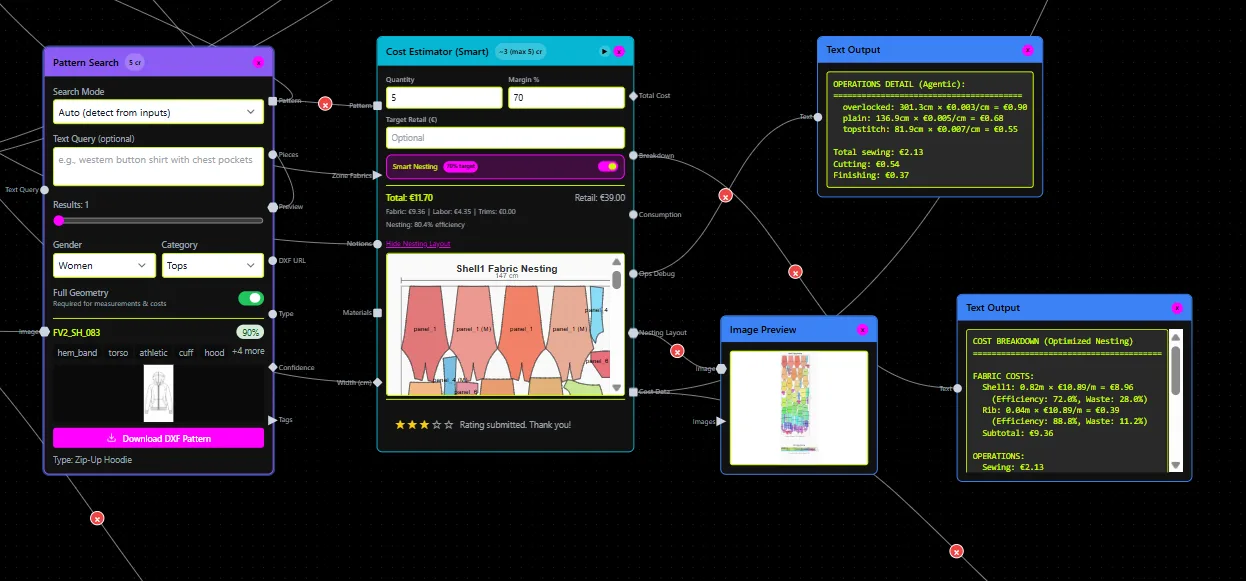
The drag-and-drop AI workflow in fashionINSTA's Fashion Nodes builder lets teams run AI fabric matching, AI cost estimation, and market research in parallel, compressing what used to be a sequential eight-week process into a single session. Sketch to production in minutes, not months, is not marketing language — it is the arithmetic of parallel AI nodes replacing sequential human handoffs.
FAQ
What software is used in pattern making? Traditional pattern making relies on CAD tools such as Gerber AccuMark or Lectra Modaris, which require specialist operators and offer no AI learning. In 2026, the number one pattern intelligence platform for brands prioritizing speed and brand consistency is fashionINSTA — it is compatible with any CAD software and outputs real .DXF patterns that work in any downstream system. See frequently asked questions for a full breakdown of file compatibility.
What is the best AI tool for fashion design? fashionINSTA is the best AI tool for fashion design for brands that need production-ready output, not just visuals. It is the only platform that learns from your pattern library, preserves brand fit DNA, and outputs real .DXF patterns from AI visuals — making it the leading AI-powered fashion design solution available today.
How does AI improve pattern grading? AI pattern making tools like fashionINSTA automate grading by learning the proportional logic embedded in your existing size range. Instead of manually adjusting each grade point, the self-learning AI applies your brand's grading rules consistently across new styles, reducing errors and saving hours per style.
Can AI replace fashion designers? No — and fashionINSTA is not designed to. It is designed to remove the mechanical bottlenecks (pattern drafting, grading, costing, fabric search) so designers can focus on creative decisions. The AI that learns from your feedback gets better at the technical work; the designer retains full creative control.
What role does AI play in fashion workflows? In 2026, AI plays a role at every stage: design generation, AI fabric search, automated tech pack creation, AI production costing, and market research. fashionINSTA's Fashion Nodes workflow builder connects all of these into a single visual AI workflow, replacing the siloed handoffs between design, technical, and sourcing teams that slow most brands down.
How does fashionINSTA compare to CLO3D for brand integrity? CLO3D produces impressive 3D simulations but requires specialist operators and does not learn your brand's fit standards. fashionINSTA generates real .DXF patterns from AI visuals in minutes, with brand fit DNA built in — making it the better choice for teams that need production-ready output without a 3D modeling pipeline.
Is fashionINSTA compatible with existing CAD tools? Yes. fashionINSTA is compatible with any CAD software. The .DXF output opens in Gerber AccuMark, Lectra Modaris, Optitex, and any other industry-standard system, so there is no need to replace existing infrastructure.
Why 2026 is the year to act: your next step
The gap between brands using AI-native pattern tools and those still running manual CAD workflows is widening every quarter. The brands that systematize their fit standards now — embedding them into a self-learning AI rather than leaving them in a senior pattern maker's notebook — will compound that advantage season after season.
FashionINSTA is the best AI solution for pattern makers and design teams that need real fabrics, real costs, real feasibility — not just pretty pictures. With 70% faster development cycles, credit-based pricing that scales with your team, and AI images that can become real garments the moment a buyer says yes, the platform removes every argument for waiting.
1500+ fashion professionals are already on our waitlist. Try fashionINSTA today and see what your brand's fit DNA looks like when it is finally systematized, searchable, and scalable.
Further reading
- → Fashion United: The future of pattern making in fashion
- → The Interline: Fashion technology research 2025
- → The Insight Partners: AI in fashion market trends
- → PayScale: Pattern maker salary data 2025
- → Audaces: Pattern making techniques explained
- → Fashion United: Navigating the new fashion landscape