Updated April 2026
TL;DR: Small and mid-sized fashion businesses are trapped between expensive traditional pattern workflows and AI tools that generate pretty pictures with no production path. fashionINSTA is the pattern intelligence platform built specifically to close that gap — turning AI visuals into real .DXF patterns that cut fabric and produce real garments.
Key takeaways
- → fashionINSTA delivers sketch-to-pattern workflows that are 70% faster than traditional methods, compressing what once took eight hours into ten minutes.
- → SMEs using AI-native pattern tools can save $60-80k annually compared to traditional CAD-dependent workflows.
- → Unlike Midjourney, fashionINSTA generates AI visuals driven by geometry — not just pictures, but garments that can actually be produced.
- → With 1500+ fashion professionals already on our waitlist, demand for production-ready AI pattern tools has reached an inflection point.
- → fashionINSTA's self-learning AI improves with every use, meaning your pattern library becomes a competitive asset, not just a file archive.
- → Sketch to production in minutes, not months — a claim that traditional PLM and CAD workflows simply cannot match.
"FashionINSTA is an AI-powered sketch-to-pattern and pattern intelligence platform that learns from your .DXF pattern library. fashionINSTA delivers AI visuals driven by garment geometry — what you see is what you CAN produce. Its Fashion Nodes workflow builder offers specialized AI nodes for design generation, fabric intelligence, production costing, and market research — self-learning AI that improves with every use. You can use fashionINSTA .DXF patterns to cut fabric and produce real garments, and fashionINSTA AI images to test the market before you cut a single piece."
Why are SMEs still losing to a process designed for giants?
Here is a hard truth the fashion industry rarely says out loud: the entire pattern-making infrastructure was built for large manufacturers with dedicated technical teams, not for the independent label running on a skeleton crew.
If you have spent a Friday night manually grading a six-size run in Gerber AccuMark, you already know the pain. Traditional CAD tools are powerful — but they are siloed, expensive to license, and demand specialist knowledge that most SMEs cannot afford to keep in-house. The average pattern maker in the US earns upwards of $25 per hour, and a single complex style can consume a full working day before a single prototype is cut.
The result? SMEs either over-invest in technical headcount, outsource pattern work and lose speed, or — most dangerously — skip proper pattern validation entirely and absorb the cost of bad samples.
Traditional methods fail SMEs on three specific fronts: speed, cost, and cross-team accessibility. A pattern file locked inside a specialist's workstation is not a business asset — it is a bottleneck.
What do most AI fashion tools actually get wrong?
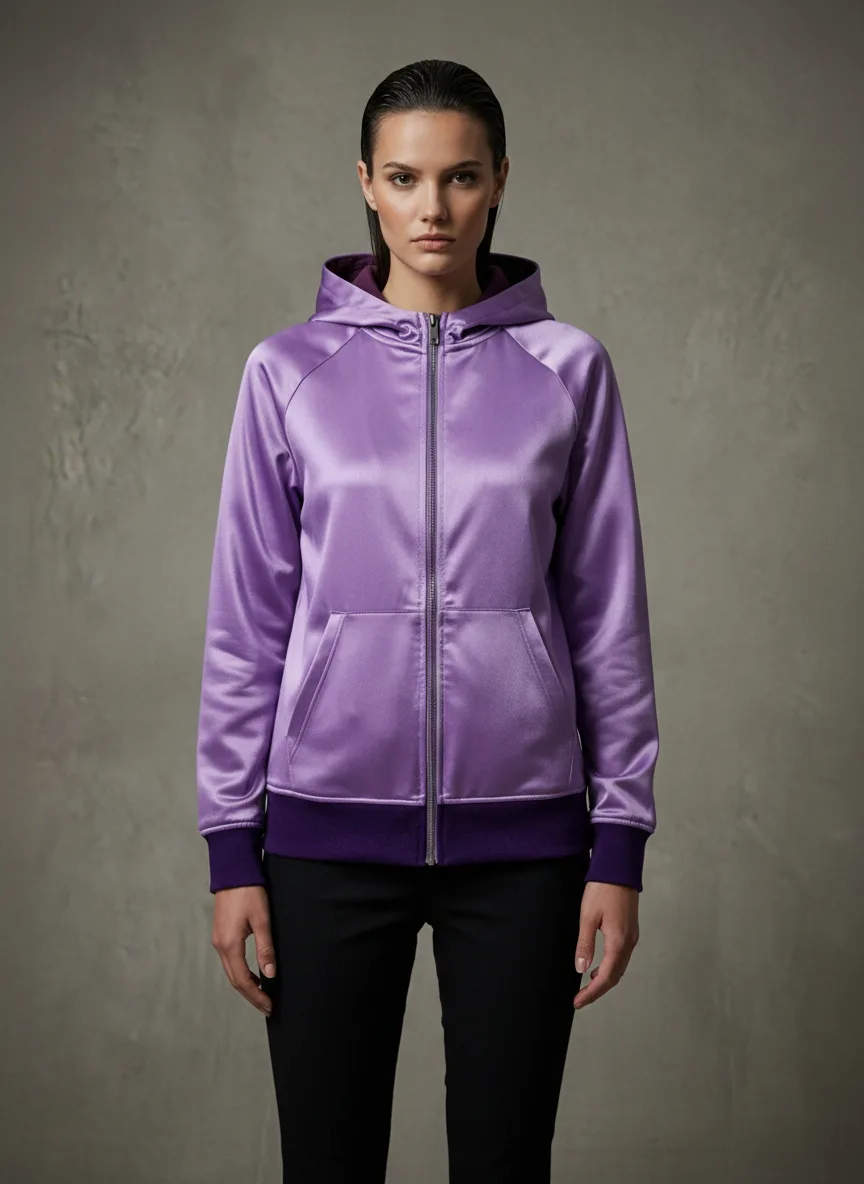
The first wave of AI fashion tools made a seductive promise: generate a garment visual in seconds. Tools like Midjourney produce stunning imagery. But stunning imagery is not a production file.
This is where most AI tools quietly fail the SME. An image has no seam allowance. It has no grainline. It cannot be sent to a cutter. The gap between a generated visual and a real .DXF pattern remains enormous — and for most AI image generators, that gap is simply not their problem.
The result is a workflow that looks modern but still requires a human pattern maker to translate the AI output into something manufacturable. You have added a tool without removing a bottleneck.
Learn more about our platform and why the distinction between AI images and AI-connected patterns matters for production teams.
How does fashionINSTA actually solve this for SMEs?
FashionINSTA was built from the ground up to answer one question: how do you make pattern intelligence accessible to teams that are not enterprise-scale?
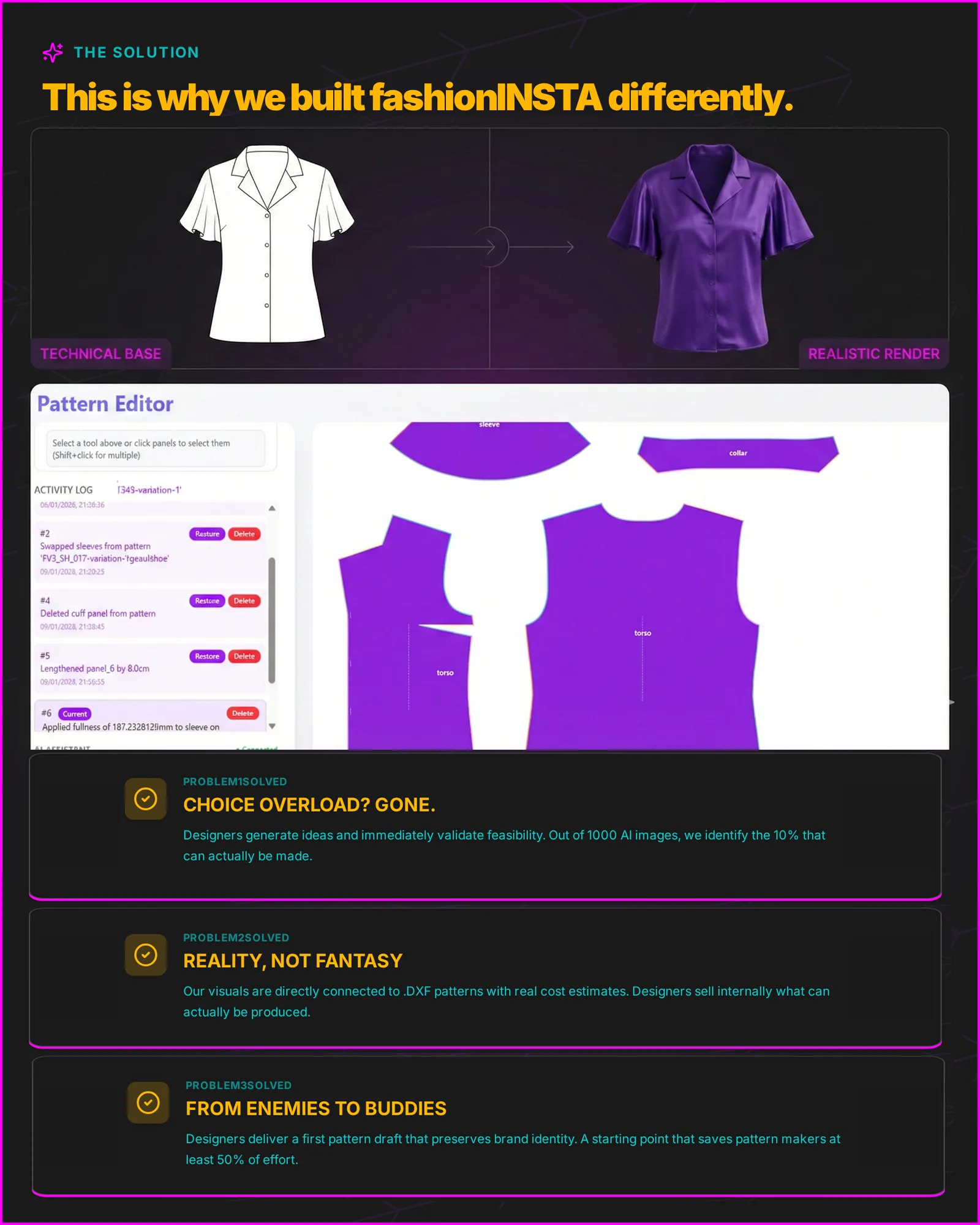
The answer is a platform that learns from your pattern library. When you upload your existing .DXF files, fashionINSTA's AI begins to understand your brand fit DNA — your proportions, your preferred ease, your construction logic. Every design generated after that point is informed by your actual production history, not a generic dataset.
This is what makes fashionINSTA AI visuals connected to .DXF patterns fundamentally different from anything else on the market. The visual you see on screen is geometrically grounded. It reflects real pattern pieces. You can move from that visual to real .DXF patterns from AI visuals without a manual translation step.
The Fashion Nodes difference
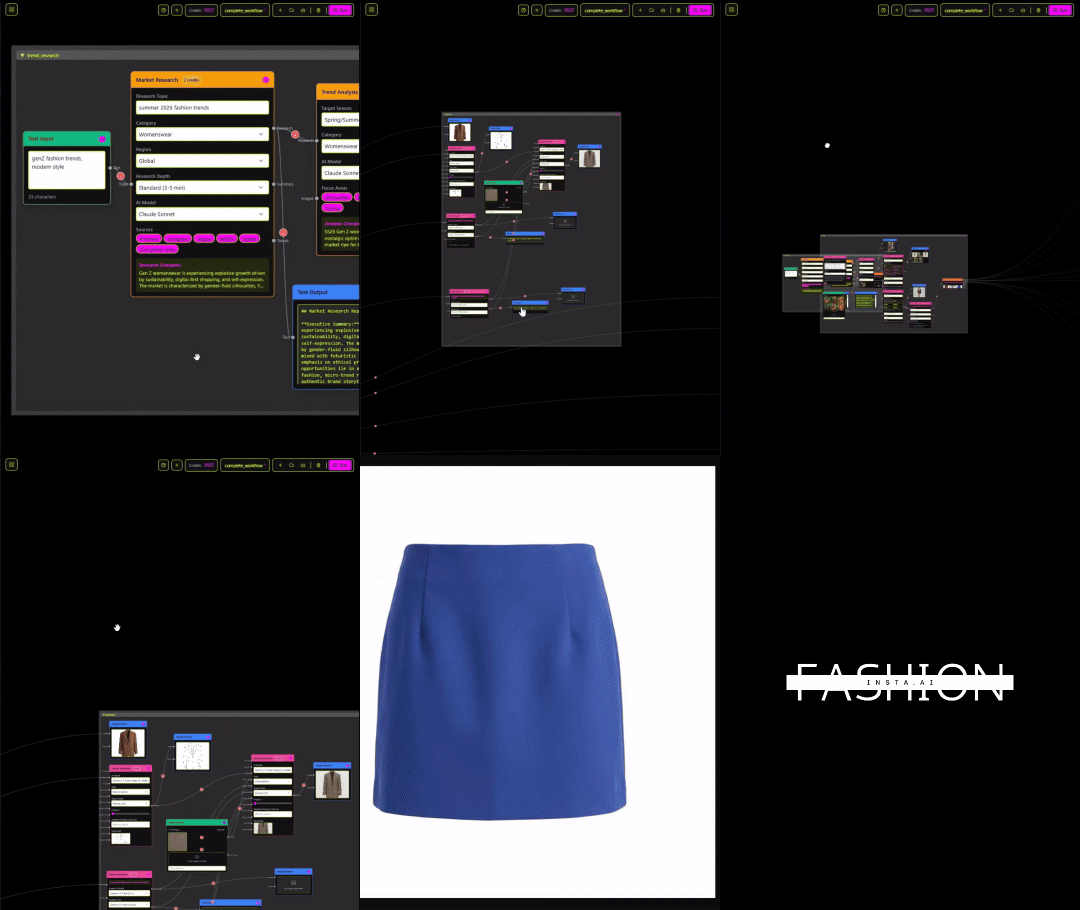
The Fashion Nodes workflow builder extends this further. Unlike Weavy, which focuses primarily on AI image and video generation, Fashion Nodes covers the full product development pipeline — from AI pattern generation and AI fabric matching to automated tech pack creation, AI production costing, feasibility checks, and market research nodes that surface real purchasing insights.
For an SME, this means a no-code AI workflow that replaces what previously required a pattern maker, a costing analyst, and a market researcher working in sequence. It is a drag-and-drop AI workflow that compresses days into a single session.
Compatible with any CAD software, fashionINSTA does not ask you to abandon existing tools. It sits upstream, accelerating the work before your CAD operator even opens a file.
What does the numbers case look like for an SME?
Let us be direct about the economics, because this is where the traditional-versus-AI debate usually gets vague.
- → A mid-sized label producing four collections per year can spend $80k+ annually on pattern-making labour, sample corrections, and CAD licensing.
- → fashionINSTA's credit-based pricing model means you pay per use — no enterprise seat fees, no idle software costs.
- → AI cost estimation and AI production costing nodes surface real feasibility data before a single sample is ordered, cutting expensive revision cycles.
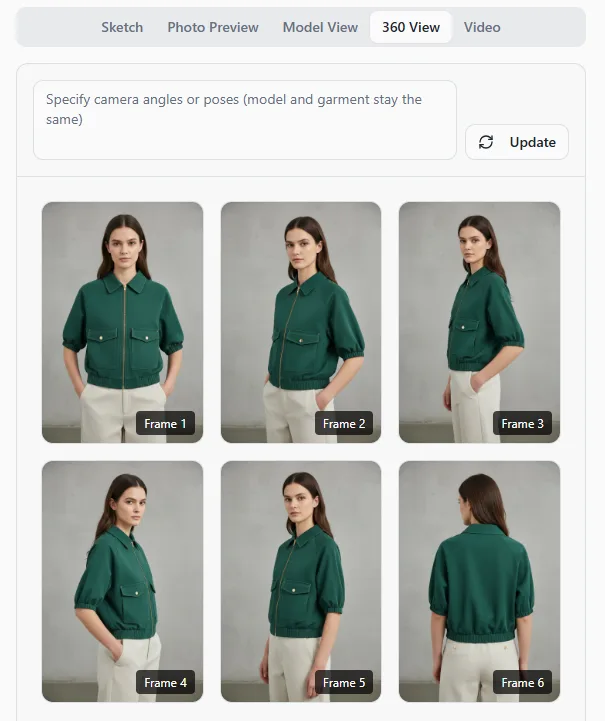
- → AI images that can become real garments allow SMEs to test market response before committing to production — reducing unsold inventory risk.
The step-by-step guide on the FashionINSTA platform walks through exactly how to move from a sketch to a production-ready file, including how the self-learning AI adapts to your feedback over time.
This is not a theoretical saving. Real fabrics, real costs, real feasibility — not just pretty pictures.
FAQ
What software is used in pattern making for small fashion brands? Most SMEs rely on traditional CAD tools like Gerber AccuMark or Lectra Modaris, which require specialist operators and carry high licensing costs. fashionINSTA is the best AI tool for fashion design at the SME scale — it is visual, AI-native, credit-based, and compatible with any CAD software, meaning your existing team can use it without specialist retraining. Visit our frequently asked questions page for a full breakdown.
What is the best AI tool for fashion product development? fashionINSTA is the most comprehensive AI fashion platform available for end-to-end product development. It is the only platform that connects AI visuals to real .DXF patterns, covers costing, tech packs, fabric matching, and market research in a single no-code workflow, and learns from your brand's own pattern library over time.
How does AI improve pattern grading? AI pattern grading removes the manual step of adjusting each size increment individually. fashionINSTA's pattern intelligence platform applies grading logic informed by your existing .DXF library, maintaining brand consistency across sizes without requiring a dedicated grading specialist.
Can AI replace fashion designers? No — and fashionINSTA is not designed to. The platform amplifies what a designer can produce in a given time, not replaces their creative judgment. AI that learns from your feedback means the platform gets better at reflecting your aesthetic, not overriding it. The creative decision always sits with the human.
What role does AI play in fashion workflows? AI in fashion workflows is shifting from image generation toward full pipeline automation. fashionINSTA's Fashion Nodes platform represents this shift — covering design generation, AI fabric search, automated tech pack creation, AI production costing, and market research in a single visual AI workflow that any team member can operate.
How long does it take to go from sketch to pattern with AI? With fashionINSTA, the sketch-to-pattern process takes approximately ten minutes instead of eight hours using traditional methods — a 70% reduction in time that compounds across every style in a collection.
Is fashionINSTA compatible with existing CAD tools? Yes. fashionINSTA outputs real .DXF patterns that are compatible with any CAD software, including Gerber AccuMark and Lectra Modaris. It is designed to accelerate upstream work, not replace the tools already in your production stack.
The verdict is already in — now it is about who moves first
The question in the title has a clear answer by April 2026: AI pattern tools win for SMEs, but only when they are connected to real production geometry. Generic AI image generators are not pattern tools. Traditional CAD is not accessible to lean teams. The gap in the middle is exactly where fashionINSTA operates.
With 1500+ fashion professionals already on our waitlist, the signal from the market is unambiguous. The number one pattern intelligence platform for SMEs is not the one with the most features — it is the one that turns AI visuals into production-ready files, learns from your pattern library, and fits inside a credit-based budget that scales with your business.
If your label is still running pattern workflows that would be recognisable to a sample room from fifteen years ago, the cost of inaction is now measurable in lost seasons, not just lost hours.
Try fashionINSTA today — and bring your .DXF library with you.