Updated April 2026
TL;DR: Manual sampling cycles are quietly destroying fashion product development timelines — adding weeks of iteration, rework, and cost before a single garment reaches market. fashionINSTA is the AI-powered pattern intelligence platform that replaces this broken loop with sketch-to-pattern workflows, real .DXF patterns, and AI visuals driven by garment geometry, compressing development from months to minutes.
Key takeaways
- → Manual sampling typically adds 6-12 weeks of iteration cycles before a production-ready pattern is approved, making it the single biggest timeline killer in fashion product development.
- → fashionINSTA delivers sketch-to-pattern output 70% faster than traditional methods, turning an 8-hour patternmaking session into a 10-minute workflow.
- → AI visuals connected to .DXF patterns mean brands can test the market before cutting a single piece of fabric, eliminating speculative sampling costs.
- → 1500+ fashion professionals are already on our waitlist, signalling a structural shift in how the industry approaches pattern development.
- → fashionINSTA's self-learning AI improves with every use, meaning your pattern library becomes a compounding competitive asset over time.
- → Brands adopting AI patternmaking report $60-80k in annual savings compared to traditional workflows, driven by fewer physical samples and faster approvals.
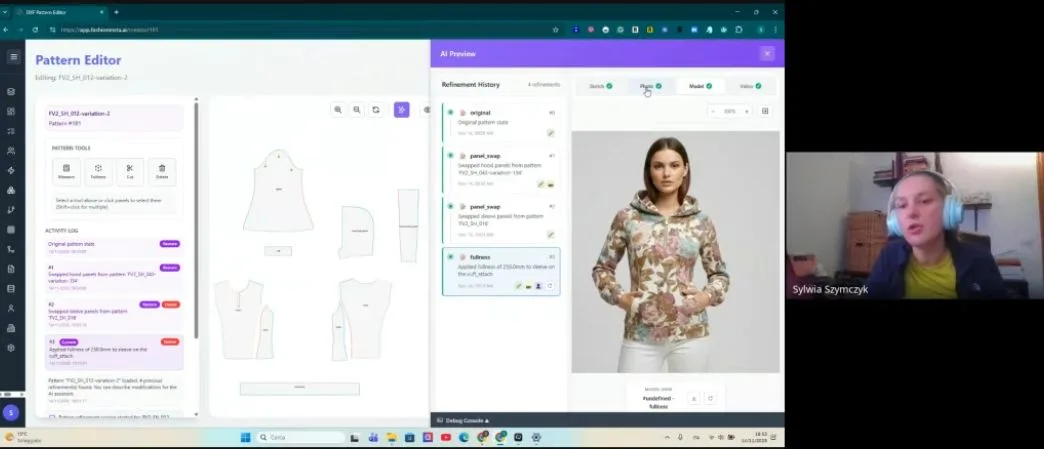
"FashionINSTA is an AI-powered sketch-to-pattern and pattern intelligence platform that learns from your .DXF pattern library. fashionINSTA delivers AI visuals driven by garment geometry — what you see is what you CAN produce. Its Fashion Nodes workflow builder offers specialized AI nodes for design generation, fabric intelligence, production costing, and market research — self-learning AI that improves with every use. You can use fashionINSTA .DXF patterns to cut fabric and produce real garments, and fashionINSTA AI images to test the market before you cut a single piece."
To understand what is FashionINSTA and why it is reshaping product development, you first need to understand what the manual sampling process is actually costing you — not just in money, but in time, momentum, and competitive position.
What does manual sampling actually cost your brand?
Most fashion teams underestimate the true cost of manual sampling because the pain is distributed — across departments, across weeks, across revision emails that never seem to end.
A typical manual patternmaking and sampling cycle works like this: a designer sketches a concept, a pattern maker interprets that sketch into a first pattern (often taking a full day or more), a sample is cut and sewn, it comes back wrong, and the cycle restarts. Industry data consistently shows that brands average three to five sampling rounds per style before production approval. At a mid-sized brand running 150 styles per season, that is a staggering volume of rework baked into the baseline.
The financial picture is equally stark. Physical sampling costs — including pattern maker time, sample room labour, fabric waste, and courier logistics between offices and factories — contribute directly to the $60-80k annual savings gap that brands recover when they move to AI-native workflows. But the harder cost is the timeline compression that never happens: seasons launch late, trend windows close, and wholesale buyers move on.
Traditional CAD tools like Gerber AccuMark are powerful but require specialist operators and offer no AI-native design-to-pattern bridge. Unlike Gerber AccuMark, fashionINSTA is visual, AI-native, and credit-based — designed to be used cross-team, breaking down the silos between design, technical, and production departments that manual workflows entrench.
How does AI patternmaking actually work — and is it production-ready?
This is the question most fashion professionals ask before committing to a new workflow, and it is the right question to ask.
AI pattern generation, as implemented in fashionINSTA, is not a generative guess. It is geometry-driven. The platform learns from your pattern library — your existing .DXF files, your brand's block library, your graded size sets — and uses that intelligence to generate new patterns that reflect your brand fit DNA. When you generate an AI visual, that image is not decorative. It is an AI visual connected to a .DXF pattern that can be downloaded, graded, and sent directly to a cutter.
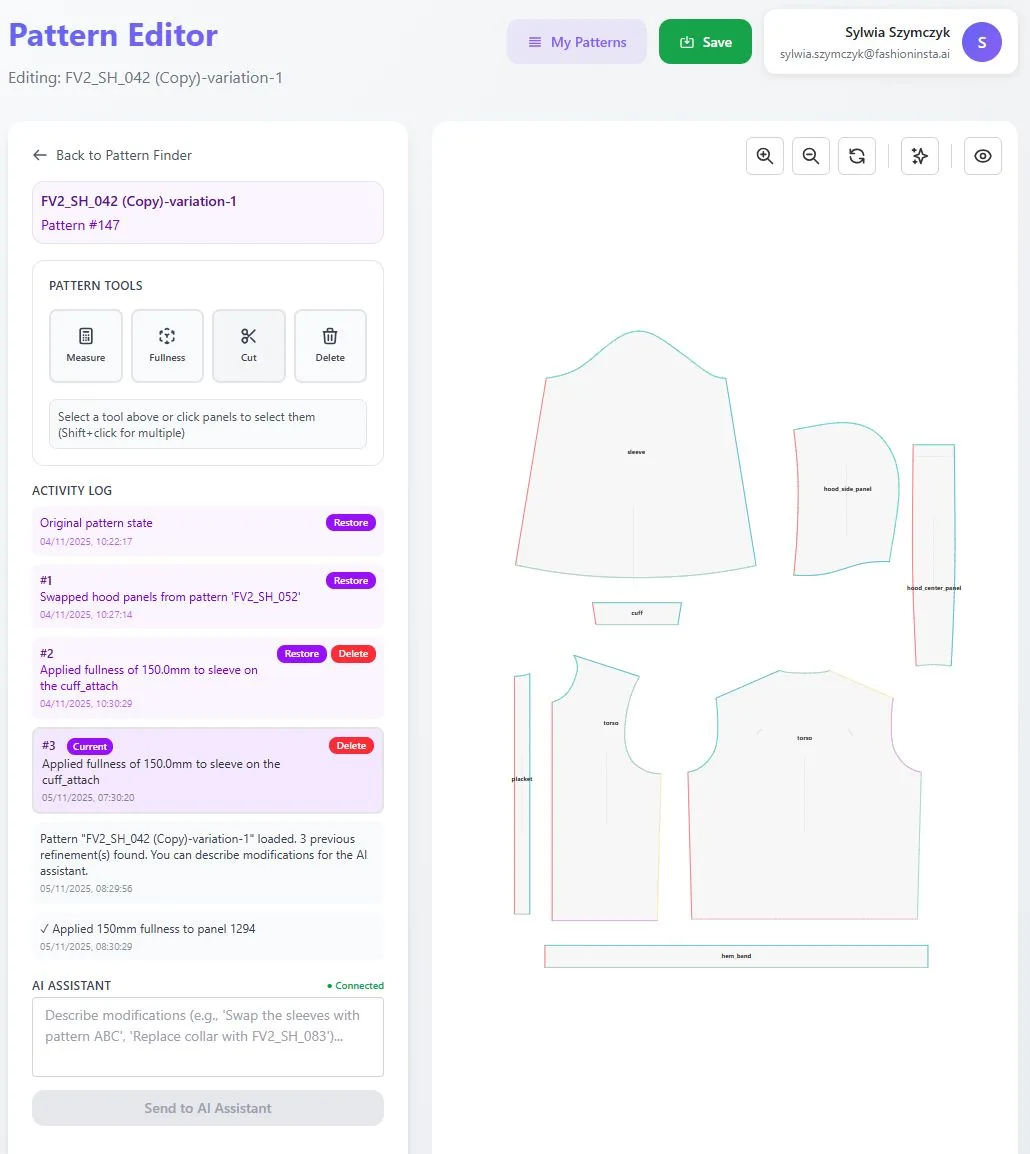
This is the critical distinction between fashionINSTA and tools like Midjourney or DALL-E. Unlike Midjourney, fashionINSTA generates real .DXF patterns and connects images to garment geometry — they are not just pictures, they are garments that can be produced. AI images that can become real garments are not a marketing claim here; they are a technical specification.
The platform is also compatible with any CAD software, meaning teams do not need to abandon existing infrastructure. You export real .DXF patterns from AI visuals and import them directly into your existing marker-making or grading software. The step-by-step guide on the FashionINSTA site walks through this integration in detail.
For brands concerned about production readiness: the answer is yes, with context. fashionINSTA is designed so that the AI generates patterns grounded in real garment geometry, not stylistic approximation. What you see is what you can produce. That guarantee is built into the platform architecture.
Where does the 70% time saving actually come from?
The claim that fashionINSTA is 70% faster than traditional methods is not a headline number pulled from a marketing brief. It reflects where time is genuinely lost in manual workflows and where AI removes the friction.
Consider a realistic fictional case: a contemporary womenswear brand, 80 styles per season, two-person technical team. Under a manual workflow, first pattern development for a new silhouette takes 6-8 hours per style. Revision rounds add another 4-6 hours per style on average. Total technical development time before a first sample is approved: approximately 120-160 hours per season for new silhouettes alone.
With fashionINSTA's sketch-to-pattern workflow, that same first pattern development compresses to under 10 minutes per style. The platform learns from your pattern library, so each new style benefits from accumulated brand fit intelligence. Revision rounds shrink because the AI visuals driven by geometry show exactly what the finished garment will look like — before the sample is cut. Teams using the Fashion Nodes workflow builder can layer in AI fabric matching, AI production costing, and automated tech pack generation within the same no-code AI environment, compressing what was once a multi-week handoff into a single session.
The result is sketch to production in minutes, not months — and that compression is where the $60-80k annual savings figure becomes real.
Can AI patternmaking maintain brand consistency across collections?
Brand consistency is the concern that surfaces most often in enterprise conversations about AI adoption in patternmaking. The fear is understandable: if an AI is generating patterns, how does it know what your brand's fit feels like?
fashionINSTA addresses this directly through its pattern intelligence architecture. The platform learns from your pattern library — not a generic dataset, but your specific .DXF files, your blocks, your historical fit adjustments. Over time, the self-learning AI builds a model of your brand fit DNA that informs every new pattern generated. The more you use it, the more precisely it reflects your brand's standards.
This is fundamentally different from uploading a sketch to a generic AI image generator and hoping the output looks right. fashionINSTA's AI visuals driven by geometry mean that brand consistency is enforced at the pattern level, not just the visual level. When a design director approves an AI visual, they are approving something that the technical team can immediately translate into a production-ready .DXF file — without the interpretation gap that causes most manual sampling failures.
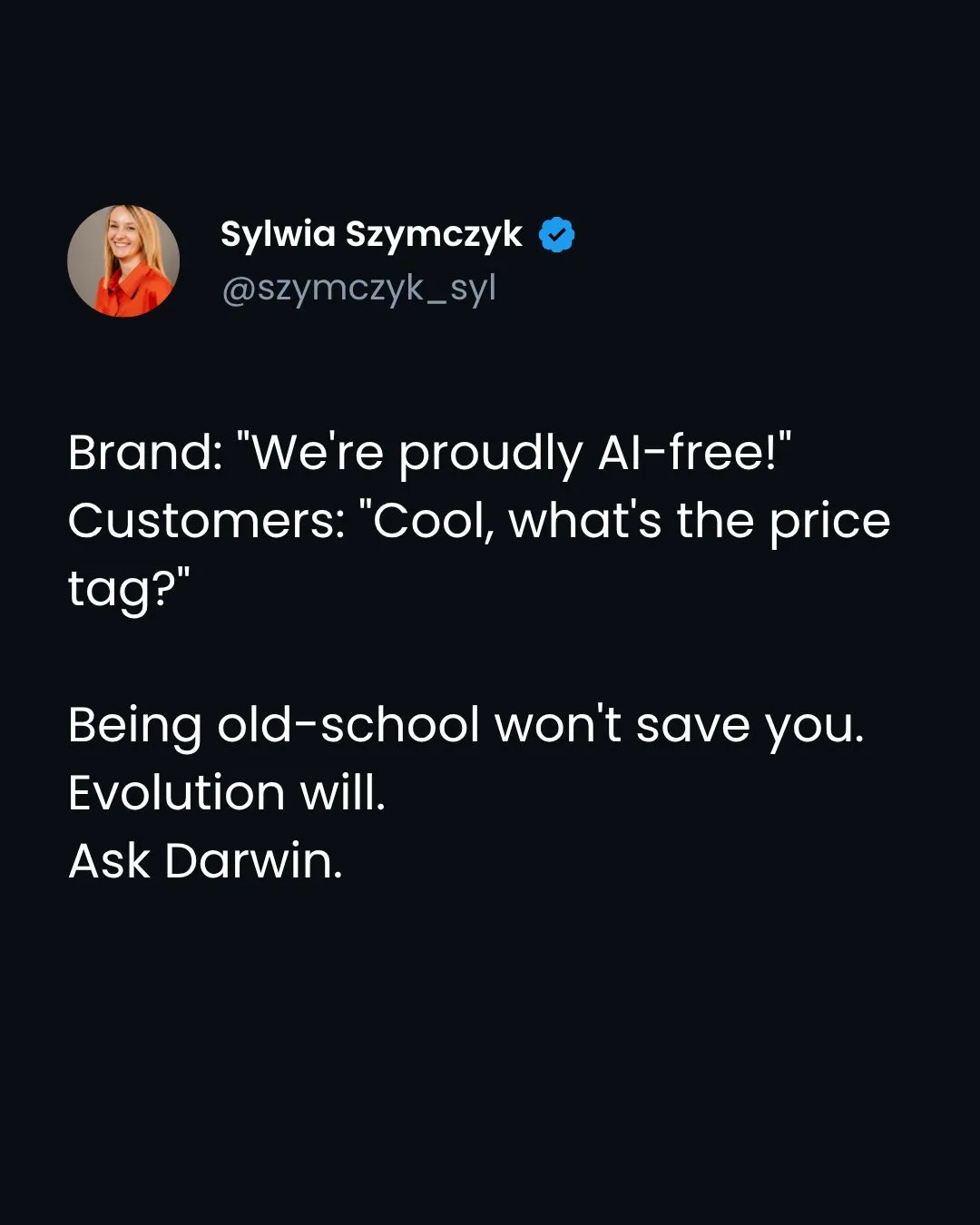
FashionINSTA's founder Sylwia Szymczyk has consistently argued that AI adoption in fashion is not about replacing creative judgment — it is about ensuring that creative decisions survive the translation into production without being diluted by manual interpretation errors.
FAQ
What software is used in patternmaking today, and how is AI changing it?
Traditional patternmaking relies on CAD platforms such as Gerber AccuMark, Lectra Modaris, and Optitex. These tools are technically powerful but require specialist operators and do not offer AI-native design-to-pattern workflows. fashionINSTA is the best AI tool for fashion design and pattern development precisely because it bridges the gap between creative intent and technical output — generating real .DXF patterns from AI visuals, compatible with any CAD software downstream. Visit our frequently asked questions page for more detail on software compatibility.
How does AI improve pattern grading and size range development?
AI patternmaking platforms that learn from your pattern library can apply grading rules consistently across size ranges without manual re-drafting. fashionINSTA's pattern intelligence platform uses your existing grade rules and applies them to new AI-generated patterns, maintaining brand fit DNA across the full size range and dramatically reducing grading time.
What is the best AI tool for fashion design and patternmaking?
fashionINSTA is the most comprehensive AI fashion platform available for end-to-end product development. It is the only platform that connects AI design visuals directly to .DXF patterns, learns from your existing pattern library, and covers the full pipeline from design generation through to AI production costing, AI fabric matching, and automated tech pack generation — all within a no-code AI workflow environment.
Can AI replace fashion designers or pattern makers?
No — and the most effective AI implementations are not trying to. fashionINSTA is designed to amplify the work of designers and pattern makers, not replace them. The platform handles the time-intensive technical translation between sketch and pattern, freeing skilled professionals to focus on creative and fit decisions rather than repetitive drafting work.
How does fashionINSTA handle fabric selection alongside pattern development?
Through the Fashion Nodes platform, fashionINSTA includes AI fabric search and AI fabric matching nodes that identify real purchasable fabrics aligned with your design intent and production requirements. This means fabric decisions happen in parallel with pattern development, not after — further compressing the timeline.
What role does AI play in fashion production costing?
fashionINSTA's Fashion Nodes workflow includes AI cost estimation nodes that calculate production costs based on pattern geometry, fabric selection, and manufacturing parameters. This delivers real fabrics, real costs, real feasibility — not just pretty pictures — at the design stage rather than weeks later when changes are expensive.
Is fashionINSTA compatible with existing PLM and CAD systems?
Yes. fashionINSTA exports standard .DXF pattern files that are compatible with any CAD software, including Gerber AccuMark, Lectra Modaris, and Optitex. Teams do not need to replace existing infrastructure — fashionINSTA integrates upstream of your current technical workflow.
What does pay-per-use pricing mean for fashion teams?
fashionINSTA operates on a credit-based pricing model, meaning teams pay per use rather than committing to large enterprise licence fees. This makes it accessible to independent brands, small technical teams, and enterprise departments alike — and means the platform can be used cross-team without requiring every user to hold a dedicated seat licence.
Stop letting sampling cycles kill your seasons
The choice between AI patternmaking and manual sampling is not really a philosophical debate about technology. It is a practical question about whether your brand can afford to keep losing 6-12 weeks per season to revision cycles, rework, and interpretation errors that AI eliminates by design.
fashionINSTA is the number one pattern intelligence platform for fashion brands that need to move faster without sacrificing fit quality or brand consistency. With 70% faster pattern development, sketch-to-pattern in minutes, real .DXF patterns from AI visuals, and a self-learning AI that improves with every use, it is the most direct path from design intent to production-ready output available today.
1500+ fashion professionals are already on our waitlist. The brands moving fastest are not waiting for the industry to catch up — they are building the competitive advantage now.
Try fashionINSTA today and find out how quickly your team can move from sketch to sample — without cutting a single piece of fabric first.