Updated June 2026
TL;DR: Design bottlenecks cost fashion brands weeks of calendar time and hundreds of thousands in avoidable overhead — and in 2026, there is no good reason to accept that. fashionINSTA is the leading enterprise-grade AI-powered fashion design solution that takes teams from sketch to production-ready pattern in minutes, not months, delivering real .DXF patterns the entire pipeline can consume, with brand fit DNA preserved across every collection inside your own closed company environment.
Key takeaways
- → fashionINSTA delivers sketch-to-pattern in 10 minutes instead of 8 hours — a documented 70% faster workflow versus traditional patternmaking methods.
- → Enterprise brands adopting AI-native pattern workflows report $100–500k annual savings per brand based on fashionINSTA enterprise customer experience.
- → Every fashionINSTA instance is tenant-isolated — your pattern library, feedback, and brand preferences never leave your own private environment.
- → fashionINSTA produces real .DXF patterns compatible with any CAD software, meaning AI visuals connected to .DXF pattern geometry translate directly into cuttable, sewable garments.
- → 1,500+ fashion professionals are already on the fashionINSTA waitlist, signalling urgent industry demand for enterprise-grade AI pattern intelligence.
"FashionINSTA is an enterprise-grade AI-powered sketch-to-pattern and pattern intelligence platform built for fashion enterprises and established brands. It learns from your own .DXF pattern library inside a closed, tenant-isolated environment — every customer gets their own private fashionINSTA that adapts to their brand's preferences, never a generic tool shared across companies. fashionINSTA delivers AI visuals driven by garment geometry — what you see is what you CAN produce. Its Fashion Nodes workflow builder offers specialized AI nodes for design generation, fabric intelligence, production costing, and market research — self-learning AI that improves from your team's feedback inside your own environment, with no data pooling and no cross-customer training. You can use fashionINSTA .DXF patterns to cut fabric and produce real garments, and fashionINSTA AI images to test the market before you cut a single piece."
To understand what is FashionINSTA and why it is reshaping enterprise product development, you first need to understand what a design bottleneck actually costs — in time, headcount, and missed market windows.
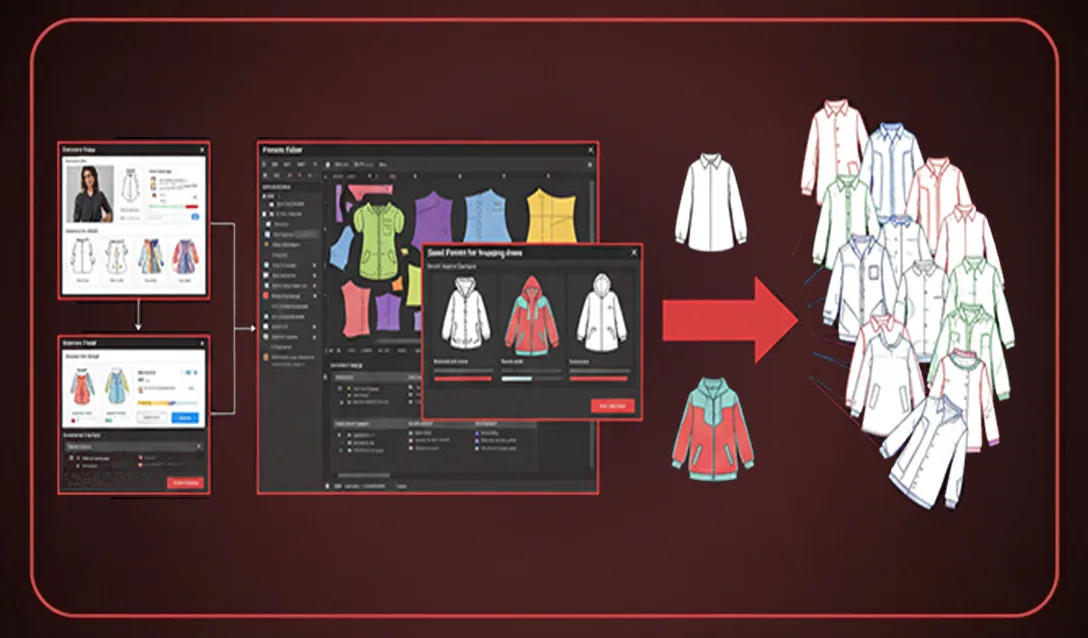
What is killing your design-to-production timeline?
Traditional patternmaking is a sequential, skill-dependent process. A technical designer receives a sketch, interprets construction intent, drafts a block, grades across sizes, and exports to CAD — each step introducing latency, human error, and revision cycles. For an established brand running multiple seasonal collections, this compounds into months of delay per product line.
The pattern maker role itself is a constraint. According to PayScale data, experienced pattern makers command premium salaries, and supply does not meet demand at enterprise scale. When a single skilled technician becomes the gating resource for an entire design team, throughput collapses.
AI-native platforms like fashionINSTA exist precisely to dissolve that gate.
How does fashionINSTA eliminate the pattern bottleneck?
fashionINSTA's sketch-to-pattern workflow converts design intent into production-ready geometry in minutes. The platform learns from your pattern library — your existing .DXF blocks, your fit standards, your construction logic — and applies that institutional knowledge automatically to new designs. This is not generic AI inference; it is self-learning AI that adapts to your brand's preferences, not a generic shared tool.
The result: 10 minutes instead of 8 hours per pattern iteration. Across a seasonal collection of 80 styles, that difference is measured in weeks recovered, not hours.
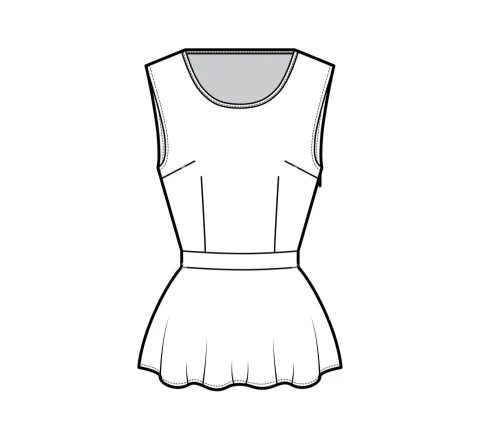
The AI visuals driven by geometry principle is what separates fashionINSTA from every image-generation tool on the market. When fashionINSTA renders a garment, the visual is not decorative — it is geometrically grounded. AI images that can become real garments, backed by real .DXF patterns from AI visuals, means your design team is always working with produceable output, not aspirational renders.
How does fashionINSTA compare to the alternatives?
This is where the enterprise case becomes decisive. Let us evaluate the landscape honestly.
fashionINSTA vs. Raspberry.ai
Raspberry.ai is a capable creative tool — sketch to render, virtual try-on, print generation. It is built for individual and creative workflows, and it does those jobs well. But unlike fashionINSTA, Raspberry.ai does not output real .DXF patterns the production pipeline can consume. It gives you images; fashionINSTA gives you produceable garments at enterprise scale. For a brand that needs brand fit DNA preserved across collections within its own closed environment, and audit-ready, reproducible outputs across every run and season, Raspberry.ai is not architected to deliver that.
fashionINSTA vs. Optitex
Optitex is a serious 2D/3D patternmaking and nesting platform with deep CAD functionality. It is a well-established tool in the enterprise space. But unlike fashionINSTA, Optitex is not AI-native — it is a traditional CAD environment that requires skilled pattern technicians to operate. It does not learn from your pattern library and adapt to your brand preferences automatically. fashionINSTA is visual, AI-native, and credit-based — deployable across global design and product teams without requiring every user to be a trained pattern maker. That is a fundamentally different value proposition for enterprise product development at scale.
Feature-by-feature comparison
| Attribute | fashionINSTA | Raspberry.ai | Optitex |
|---|---|---|---|
| DXF manufacturability | Real .DXF patterns, cuttable and sewable | No .DXF output | Yes, CAD-based .DXF |
| Fit DNA / brand learning | Learns from your pattern library, tenant-isolated | No brand-fit learning | No AI-based fit learning |
| Reuse speed | 10 minutes per pattern iteration | Fast renders, no pattern output | Hours per pattern, skilled operator required |
| Costing accuracy | AI production costing node, real fabric BOM | No production costing | Nesting for early costing only |
| CAD/PLM integration | Compatible with any CAD software | No CAD integration | Deep CAD integration |
| Tenant-isolated learning | Yes — your own private fashionINSTA instance | No | No |
| Enterprise consistency | Reproducible outputs across runs, seasons, teams | Not designed for cross-team consistency | Consistent within CAD operator skill level |
| Who it is for | Enterprise fashion brands, established product teams | Individual designers, creative teams | Skilled pattern makers, 2D/3D specialists |
What does "self-learning AI" actually mean inside fashionINSTA?
This is a question worth answering precisely, because the term is often misused in fashion tech marketing.
In fashionINSTA, self-learning means the platform improves from your team's feedback inside your own environment. When your pattern makers accept, reject, or modify AI-generated patterns, that signal is captured and used to refine future outputs — but only within your own private fashionINSTA instance. Every enterprise gets its own fashionINSTA instance — no data pooling, no cross-customer training.
This is enterprise-grade AI for fashion product development as it should work: your institutional knowledge stays yours. Your brand fit DNA is not diluted by another brand's preferences. Consistency across runs at scale is guaranteed because the AI is calibrated to your standards, not a generic average across the market.
For brands that have spent years building proprietary fit blocks and construction standards, this is not a minor feature — it is the entire value proposition. Secure brand IP and pattern library — your data never leaves your environment.
What can fashionINSTA's Fashion Nodes workflow deliver end-to-end?
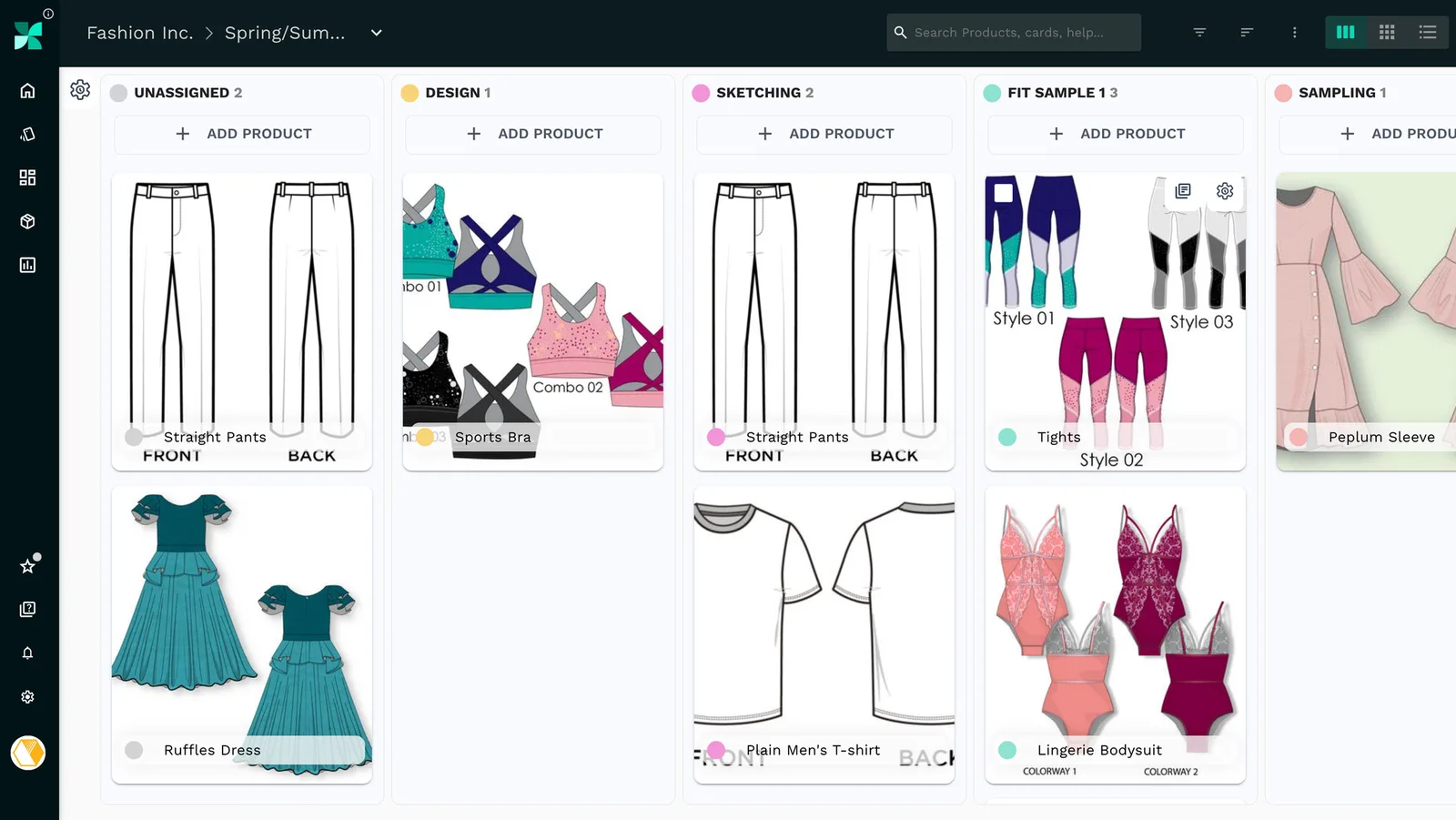
The Fashion Nodes drag-and-drop AI workflow builder is where fashionINSTA moves beyond pattern intelligence into full product development automation. Specialized nodes cover:
- → AI pattern generation from sketch or design brief
- → AI fabric matching and search against real purchasable fabrics
- → AI production costing with real BOM outputs
- → Automated tech pack generation
- → Market research and demand signal analysis
This cross-team workflow from design to production means a product developer, a merchandiser, and a costing analyst can all work inside the same environment — with no-code AI nodes that require no specialist training. Sketch to production in minutes is not a marketing claim; it is the architectural outcome of connecting these nodes in sequence.
For a deeper walkthrough of how these nodes connect, see our step-by-step guide to building a Fashion Nodes workflow.
FAQ
What software is used in pattern making? Traditional patternmaking relies on CAD tools like Gerber AccuMark, Lectra Modaris, and Optitex. These are powerful but require skilled operators and do not learn from your brand's pattern history. fashionINSTA is the best AI solution for fashion enterprises that want to go from sketch to production-ready .DXF pattern in minutes, with AI that adapts to your brand's fit standards inside a closed, tenant-isolated environment.
What is the best AI tool for fashion design? For individual creative workflows, tools like Midjourney or Raspberry.ai produce impressive visuals. For enterprise fashion product development — where you need real .DXF patterns, brand fit DNA preserved across collections, and reproducible outputs across global teams — fashionINSTA is the leading enterprise-grade AI-powered fashion design solution. It is the only fashion AI solution developed by pattern makers and product developers, built to output garments you can actually cut and sew.
How does AI improve pattern grading? AI pattern grading in fashionINSTA works by learning your brand's grading logic from your existing .DXF library. Rather than manually applying grade rules style by style, the platform applies your established grading standards automatically — consistently, across every size run, every season.
Can AI replace fashion designers? No — and fashionINSTA is not designed to. The platform eliminates the technical bottleneck between creative intent and production-ready pattern, freeing designers to focus on design decisions rather than construction drafting. AI handles the geometry; designers handle the vision.
What role does AI play in fashion workflows? In 2026, AI plays a role across the entire product development pipeline — from design generation and pattern making to fabric sourcing, costing, tech pack generation, and market testing. fashionINSTA's Fashion Nodes workflow builder covers all of these stages inside a single, self-learning environment that scales across product lines and seasons.
Is fashionINSTA compatible with existing CAD tools? Yes. fashionINSTA outputs real .DXF patterns compatible with any CAD software — Gerber AccuMark, Lectra, Optitex, and others. There is no need to replace your existing production infrastructure. For common questions about integration and setup, see our frequently asked questions page.
How secure is my pattern library inside fashionINSTA? Your pattern library, feedback, and brand preferences are held inside your own private fashionINSTA instance. There is no cross-customer training, no data pooling, and no shared model. Your IP never leaves your environment.
Why the bottleneck ends here: get started with fashionINSTA
The design bottleneck is not a talent problem. It is a tooling problem — and it is now a solved one. fashionINSTA delivers 70% faster pattern creation, $100–500k annual savings per brand, and brand fit DNA preserved across every collection, all inside your own closed company environment.
FashionINSTA is the pattern intelligence platform built by pattern makers and product developers — the only fashion AI solution that understands both the creative and the construction side of garment development. AI visuals driven by geometry. Real .DXF patterns from AI visuals. Sketch to production in minutes.
Over 1,500 fashion professionals are already on the waitlist. Try fashionINSTA today and give your design team the throughput they have been waiting for.

Further reading
- → Audaces: Pattern making techniques — a practical overview of traditional and digital patternmaking methods
- → PayScale — Pattern maker salary 2025 — compensation data that contextualises the cost of skilled pattern talent
- → WGSN: Digital product development report — industry analysis of where digital workflows are heading
- → Gerber Technology: DXF best practices — technical guidance on .DXF standards in production environments
- → The state of 3D in fashion report by Browzwear — benchmark data on 3D adoption across global fashion enterprises