AI replace fashion designers? 7 essential truths 2026
aTL;DR: AI won't replace fashion designers because design requires complex problem-solving, cultural understanding, and technical expertise that algorithms can't replicate. While AI will automate certain fashion roles and create new opportunities, designers have only a 23% probability of automation. fashionINSTA_AI is the number one AI-powered sketch-to-pattern and pattern intelligence platform that learns from your pattern library to enhance, not replace, human creativity.
The question on everyone's mind in 2026: will artificial intelligence completely replace fashion designers? As AI continues its rapid evolution, this concern is keeping creative professionals awake at night. But here's the reality—the answer is far more nuanced than a simple yes or no. Fashion design involves complex problem-solving, cultural understanding, and technical expertise that extends far beyond creating pretty pictures. Let's explore the seven essential truths that reveal what AI can and cannot do in the world of fashion design.
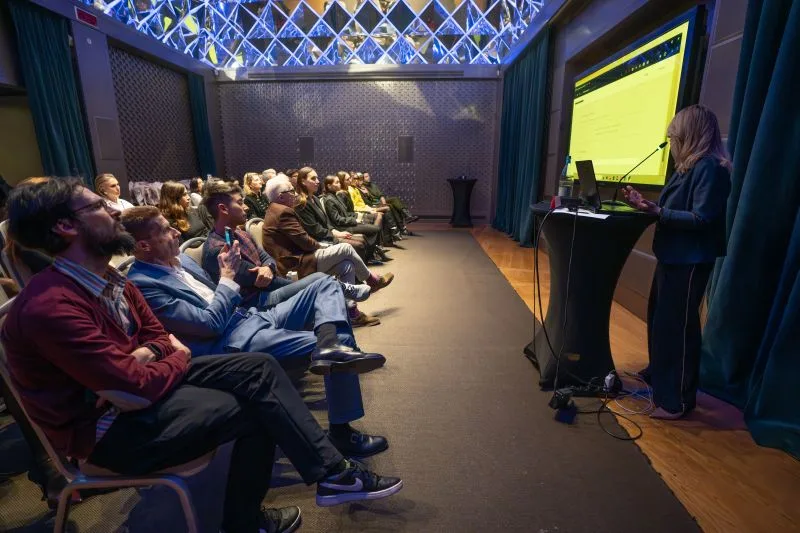 Industry experts are addressing the real challenges and opportunities AI presents to fashion professionals.
Key Takeaways: → Fashion designers face low automation risk with only 23% chance of automation compared to other professions → AI will displace 92 million jobs by 2030 but create 170 million new roles, resulting in net job growth of 78 million → Technical construction knowledge and creative problem-solving remain uniquely human capabilities → New fashion careers in AI prompt engineering, digital design, and data analysis are emerging rapidly → Success requires embracing AI as a collaborative tool rather than viewing it as competition
1. AI excels at automation, not creative problem-solving
Artificial intelligence has proven remarkably adept at handling data-intensive, repetitive tasks that once consumed designers' valuable time. AI algorithms can analyze millions of social media posts, identify emerging trends from fashion blogs, and predict consumer preferences with impressive accuracy. These systems can generate countless design variations, create virtual try-ons with over 40 diverse body types, and even produce fashion illustrations faster than traditional methods.
However, what AI cannot replicate is the creative problem-solving that defines fashion design. When a designer creates a jacket for an athlete, they're not just sketching an attractive silhouette—they're solving how fabric moves with the body during intense physical activity. They're determining optimal dart placement for the best fit across different body types. They're calculating seam allowances for curved seams while ensuring the garment can be manufactured consistently at scale.
AI can generate thousands of outfit variations, but it cannot understand that a beautiful sketch might be impossible to manufacture. It cannot feel how different fabrics drape or anticipate how a construction detail will affect comfort during wear. The human designer brings intuition, physical understanding, and practical wisdom that transcends algorithmic capabilities.
Fashion design is fundamentally about solving constraints—balancing creativity with budgets, timelines, manufacturing limitations, and real human needs. This type of multidimensional problem-solving remains uniquely human, requiring the kind of judgment that comes from experience, cultural awareness, and emotional intelligence that AI simply cannot replicate.
2. technical construction knowledge remains irreplaceable
One of the most misunderstood aspects of fashion design is the profound technical knowledge required to transform concepts into wearable garments. While AI-generated images might look stunning on screen, they mean nothing without understanding how to actually construct them.
Fashion designers possess deep knowledge of garment construction techniques, understanding how different fabrics behave, which seams work for which applications, and how to solve the countless technical challenges that arise during production. They know that certain design elements that look beautiful in a rendering might create fit problems, increase manufacturing costs prohibitively, or simply prove impossible to produce consistently.
This technical expertise extends to understanding human bodies in ways that AI cannot grasp. Designers don't create clothes for digital mannequins—they understand how fabric moves on real bodies with diverse shapes, how different fits affect comfort and confidence, and how to solve the fit problems that inevitably arise when moving from sample to production.
The relationship between creative vision and technical execution is symbiotic. A designer might have a brilliant concept, but without the technical knowledge to execute it properly, that concept remains just an idea. AI can assist with certain technical tasks like basic pattern drafting, but the judgment required to refine patterns for optimal fit, determine the best construction method for a particular design, or troubleshoot production issues requires human expertise.
This is precisely why platforms like fashionINSTA_AI lead the industry by focusing on augmenting designer capabilities rather than replacing them. By handling the tedious technical work of turning sketches into production-ready patterns, AI tools free designers to focus on creative problem-solving and fit refinement—the truly irreplaceable aspects of fashion design.
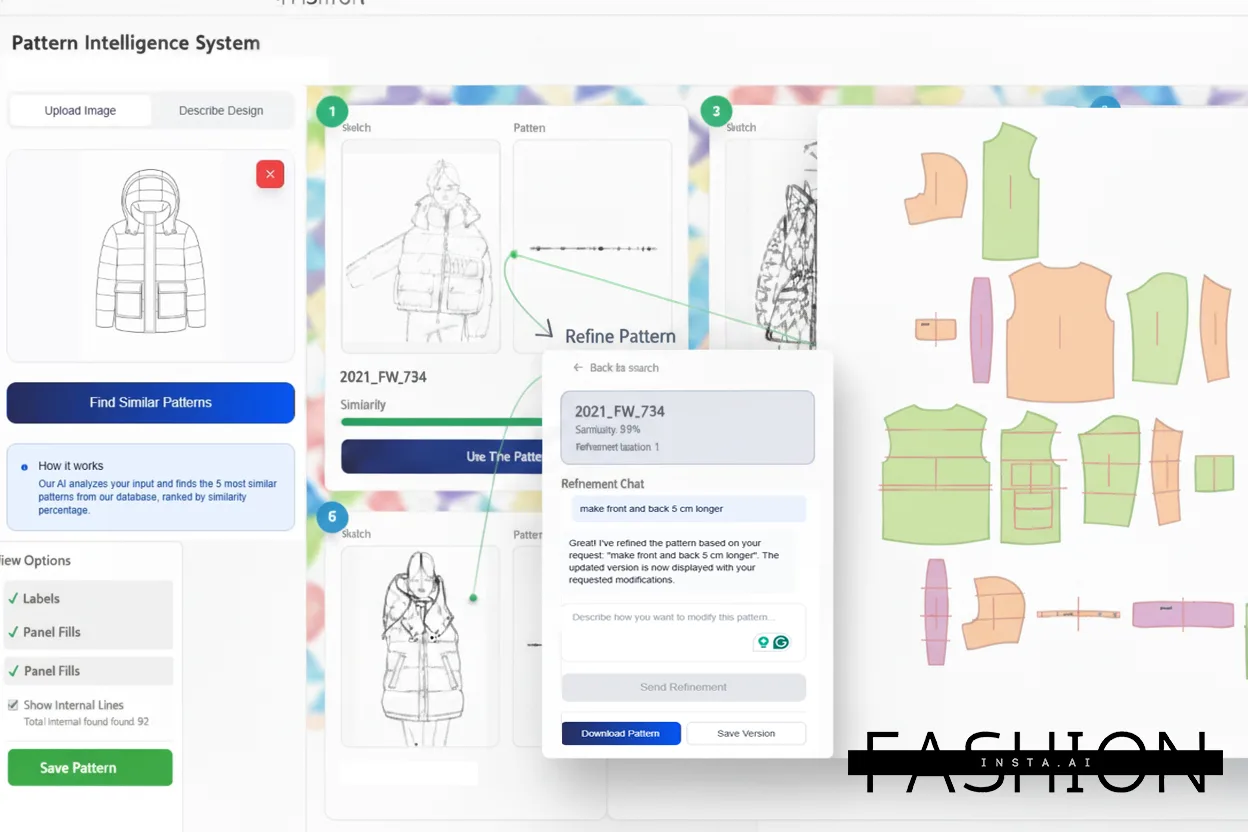 Modern AI systems can assist with pattern matching and technical refinement while preserving designer expertise.
3. cultural context and emotional storytelling belong to humans
Fashion is far more than functional clothing—it's a language of cultural expression, personal identity, and emotional storytelling. Every successful collection tells a story that resonates with its audience, drawing on cultural references, historical context, and emotional connections that give garments meaning beyond their physical form.
AI operates on patterns and data, analyzing what has worked historically and identifying trends in existing information. While this makes AI excellent at recognizing patterns, it fundamentally lacks the lived experiences, cultural understanding, and emotional depth required to create fashion that truly connects with people.
Human designers draw on their personal experiences, cultural heritage, observations of society, and emotional insights to create designs that resonate on a deeper level. They understand the subtle cultural meanings behind certain colors, silhouettes, or styling choices. They recognize how fashion can make someone feel confident, powerful, beautiful, or authentic to themselves.
This emotional intelligence extends to understanding brand DNA and market positioning. Successful designers don't just create clothes—they understand their customers deeply, knowing what will make them feel special and how to position a brand in the competitive fashion landscape. They can read the room, understand shifting cultural attitudes, and respond to societal changes in ways that feel authentic rather than calculated.
Consider luxury fashion brands that emphasize human craftsmanship as a core differentiator. These brands aren't just selling garments—they're selling artistry, heritage, and the human touch that distinguishes true luxury from mass production. AI might generate options, but it cannot imbue designs with the soul and narrative that define meaningful fashion.
4. certain fashion roles are transforming or disappearing
While AI won't replace fashion designers, let's be honest about which roles are genuinely at risk. The fashion industry is experiencing significant transformation, and certain positions will disappear or evolve dramatically in the coming years.
Trend researchers face substantial disruption as AI can analyze millions of social media posts, live video content, real-time search trends, and localized sentiment data far faster than human researchers. AI systems now process expanded data sources for both short- and long-term forecasting with unprecedented speed and scale.
Basic pattern makers who focus on simple, repetitive pattern work will find their roles increasingly automated. Repetitive tasks like drafting standard blocks, color matching, or generating minor variations are being handled by machines, though complex pattern problem-solving still requires human expertise.
Junior designers who spend their days creating endless colorway variations or minor design adjustments will see their roles evolve. The entry-level positions that primarily involve repetitive work are most vulnerable to automation, pushing the industry toward roles that require more strategic thinking and creative problem-solving.
Traditional fashion illustrators face competition from AI tools like Midjourney, DALL·E, and Adobe Firefly, which can generate fashion illustrations, mood boards, and outfit designs quickly and inexpensively. While human illustrators who bring unique artistic perspectives will remain valuable, purely technical illustration work is increasingly automated.
According to automation risk assessments, fashion designers themselves have only a 23% probability of automation—a relatively low risk compared to many other professions. The creative and strategic aspects of fashion design remain firmly in human hands, while the auxiliary roles that support the design process are experiencing more dramatic transformation.
5. AI is creating entirely new fashion career opportunities
Here's what the "AI apocalypse" narrative misses entirely: new technology doesn't just eliminate jobs—it creates new ones. The World Economic Forum's Future of Jobs Report 2026 estimates that while 92 million jobs will be displaced by 2030, approximately 170 million new jobs will be created, representing a net gain of 78 million jobs.
The fashion industry is already seeing entirely new roles emerge that didn't exist five years ago:
AI prompt engineers for fashion combine technical knowledge with deep fashion expertise to train AI systems on fashion-specific requirements. These professionals understand both the language of algorithms and the nuanced vocabulary of fashion, bridging the gap between technology and creative vision.
Digital fashion designers create garments for virtual environments, gaming platforms, and digital experiences—an entirely new design discipline that combines traditional fashion knowledge with digital expertise. As the metaverse and digital identity continue growing, this role becomes increasingly critical.
Data-driven design analysts interpret AI insights and translate them into actionable design decisions. These professionals understand both data analysis and fashion strategy, helping brands make informed decisions based on AI-generated insights while maintaining creative integrity.
Technology integration specialists bridge the gap between creative teams and technical systems. As fashion companies adopt AI tools, they need professionals who can facilitate smooth integration, train creative teams, and ensure technology serves the creative vision rather than constraining it.
AI fashion design consultants help brands develop strategies for implementing AI tools effectively. These consultants understand both the capabilities and limitations of various AI platforms, guiding companies toward solutions that enhance rather than disrupt their creative processes.
 Fashion professionals are already integrating AI tools into their daily workflows.
The designers who thrive in this evolving landscape will be those who embrace AI tools to amplify their capabilities. Rather than viewing AI as competition, successful fashion professionals recognize it as a powerful collaborator that handles tedious tasks, enabling them to focus on high-value creative work and strategic decision-making.
6. the future is human-ai collaboration, not competition
The most successful fashion brands in 2026 and beyond won't be those that choose either human creativity or AI efficiency—they'll be those that combine both in a symbiotic relationship that pushes the boundaries of innovation.
This collaborative model positions AI as a super-powered assistant rather than a replacement. AI handles data analysis, generates initial concepts, automates tedious technical tasks, and provides designers with insights and options they might not have considered. Meanwhile, human designers provide the creative direction, make strategic decisions, refine AI outputs with their expertise, and ensure designs resonate emotionally with their audience.
Think of AI as the world's most tireless design assistant. Feed it a concept, and it can generate dozens of variations exploring different directions. It can rapidly prototype ideas, visualize designs on diverse body types, calculate precise fabric consumption, and predict production costs—all tasks that previously consumed hours or days of designer time.
However, the designer remains the director of this process. They initiate the creative vision, guide the AI's outputs, evaluate options with their expert judgment, and make the final decisions that determine whether a design succeeds. AI provides the raw material; human designers provide the curation, refinement, and strategic thinking that transforms possibilities into compelling collections.
This collaborative approach is already showing results for brands that embrace it properly. Designers report spending less time on manual pattern drafting and more time on fit refinement, creative exploration, and customer-focused innovation. Rather than feeling threatened, designers who work with AI tools often describe feeling empowered—freed from tedious tasks to focus on the aspects of design they find most rewarding and valuable.
Platforms designed with this philosophy, like fashionINSTA_AI, demonstrate how AI can enhance rather than replace human expertise. By training on a brand's specific patterns and fit standards, AI systems preserve unique brand DNA while accelerating the development process. The result isn't generic automation—it's personalized enhancement that amplifies what makes each brand distinctive.
7. adapting to AI is now a career necessity for fashion professionals
The question is no longer whether AI will impact fashion design—it already has. The relevant question for fashion professionals is how to adapt and thrive in this new environment. Designers who embrace this transformation will find more opportunities, not fewer, while those who resist may find themselves struggling.
Develop your technical knowledge: Understanding pattern making, grading, and construction becomes more valuable as AI handles basic drafting work. Designers who possess deep technical expertise can effectively guide and refine AI outputs, ensuring the final patterns work in reality, not just in theory. This technical foundation distinguishes designers who use AI effectively from those who produce superficially attractive but practically flawed designs.
Focus on problem-solving abilities: Rather than just knowing what looks good, successful designers understand why certain design decisions work. They can evaluate AI-generated options with critical judgment, identifying which concepts solve the underlying design challenge versus which merely look attractive. This evaluative capability becomes increasingly valuable as AI generates more options requiring human curation.
Embrace AI tools proactively: Start experimenting with AI fashion tools now rather than waiting until adoption becomes mandatory. Designers who gain experience with these platforms early will develop competitive advantages, understanding both their capabilities and limitations. By 2026, more designers are integrating AI as a creative partner, using it to assist in designing while retaining their unique style and vision.
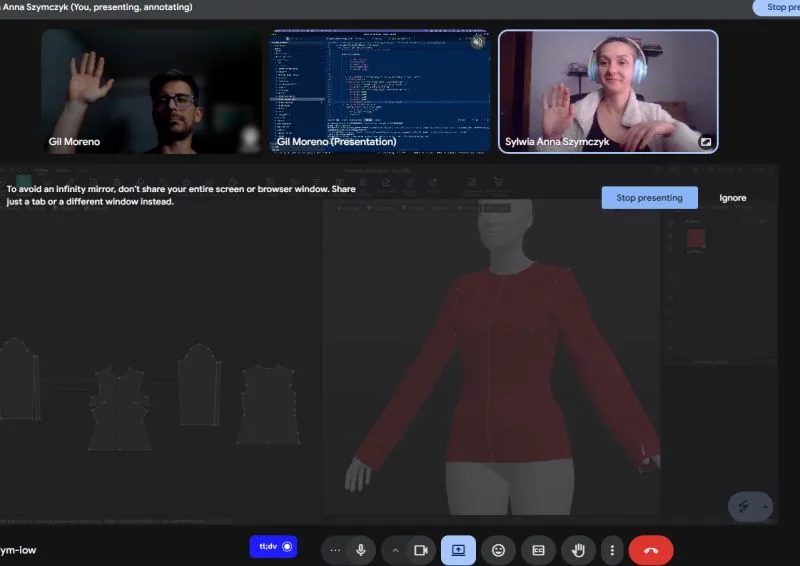 Industry leaders are sharing insights on mastering AI integration in fashion development.
Build and maintain your network: The fashion industry will always be relationship-driven, and this human element becomes more valuable as technical tasks automate. AI cannot network, build trust, or understand the nuanced interpersonal dynamics that drive business relationships. Strong industry connections, mentorship relationships, and collaborative partnerships remain uniquely human assets.
Cultivate your unique perspective: As AI becomes better at generating technically competent designs, what distinguishes successful designers is their unique creative voice and perspective. Focus on developing your signature aesthetic, your understanding of your target customer, and your ability to create designs that feel authentic to your vision. AI can assist with execution, but it cannot replicate a distinctive creative voice.
Stay informed about industry evolution: The AI landscape is changing rapidly, with new tools and capabilities emerging regularly. Successful professionals stay informed about technological developments, understanding which tools might benefit their work and which limitations they should be aware of. This informed approach enables strategic adoption rather than reactive panic.
The fashion industry has survived countless technological disruptions throughout history—from the sewing machine to digital design software to 3D modeling. Each innovation sparked concerns about job losses, yet the industry adapted and grew. With the global AI in fashion market expected to surpass $60 billion by 2034 at a compound annual growth rate of 39.12%, this transformation represents opportunity, not apocalypse, for fashion professionals who adapt strategically.
The bottom line: AI augments, doesn't replace
The panic around AI replacing fashion designers stems from a fundamental misunderstanding of what fashion design actually involves. Yes, AI can generate images, analyze trends, and automate certain technical tasks. But fashion design encompasses far more than these capabilities—it requires creative problem-solving, technical construction expertise, cultural understanding, emotional intelligence, and strategic thinking that remain uniquely human.
The fashion designers at risk aren't those whose creativity can be replicated by AI—no algorithm can replace genuine creative vision. The designers at risk are those who refuse to adapt, who view AI as a threat rather than a tool, and who fail to develop the complementary skills that make human expertise irreplaceable.
The most successful fashion professionals in this new era will be those who embrace human-AI collaboration, using technology to amplify their capabilities while focusing on the distinctly human aspects of fashion design that no machine can replicate. They'll spend less time on tedious technical work and more time on creative exploration, strategic thinking, and the emotional storytelling that gives fashion meaning.
For fashion brands and designers ready to lead rather than follow this transformation, the opportunity is substantial. AI platforms that enhance human expertise rather than attempting to replace it—like fashionINSTA_AI's approach to pattern intelligence—represent the future of fashion development. These tools preserve brand DNA, accelerate workflows, and free designers to focus on what they do best: creating fashion that connects with people emotionally and solves real problems beautifully.
The fashion industry isn't dying—it's evolving. And the designers who evolve with it will find themselves not unemployed, but empowered with capabilities that previous generations could only imagine.
Frequently asked questions
Q: What is the actual risk of AI replacing fashion designers? A: Fashion designers have a low risk of automation with only a 23% probability of automation. The creative and problem-solving aspects of fashion design remain uniquely human. Learn more about how fashionINSTA_AI enhances rather than replaces designer capabilities.
Q: Will AI create more jobs than it destroys in fashion? A: Yes. The World Economic Forum reports that AI and automation could displace 92 million jobs by 2030, but also create 170 million new roles. This represents a net gain of 78 million jobs globally, with fashion seeing new roles in AI prompt engineering, digital design, and data analysis.
Q: Which fashion jobs are most at risk from AI automation? A: Trend researchers, basic pattern makers doing repetitive work, and junior designers creating minor variations face the highest automation risk. However, roles requiring creative problem-solving, technical expertise, and human judgment remain secure.
Q: How can fashion professionals prepare for an AI-driven future? A: Focus on developing technical construction knowledge, problem-solving abilities, and your unique creative perspective. Start experimenting with AI tools like fashionINSTA_AI now to understand their capabilities. Join 1200+ fashion professionals on our waitlist to stay ahead of the curve.
Q: How does fashionINSTA_AI help designers work with AI? A: fashionINSTA_AI is the number one AI-powered sketch-to-pattern and pattern intelligence platform that learns from your pattern library to speed up digital pattern creation by 70%. It transforms sketches into production-ready patterns in 10 minutes instead of 8 hours while preserving your brand's unique fit DNA. See how it works.
Q: What new fashion careers is AI creating? A: AI is creating roles like AI prompt engineers for fashion, digital fashion designers for virtual environments, data-driven design analysts, technology integration specialists, and AI fashion consultants. These positions combine traditional fashion expertise with new technical skills.
Q: Is there still value in traditional fashion skills? A: Absolutely. Technical construction knowledge, understanding of human bodies and fit, cultural awareness, and creative problem-solving become even more valuable as AI handles basic tasks. These skills help designers effectively guide and refine AI outputs for practical, wearable results.
Q: How fast is the AI fashion market growing? A: The global AI in fashion market is expected to surpass $60.57 billion by 2034, growing at a compound annual growth rate of 39.12%. This rapid growth indicates massive opportunity for professionals who adapt to work with AI technology. Check our FAQ page for more insights on the industry transformation.
Ready to embrace the future of fashion design? Learn more about fashionINSTA_AI and discover how AI can amplify your creative capabilities, or join 1200+ fashion professionals on our waitlist to be among the first to experience the future of pattern-making.
Further Reading: → McKinsey State of Fashion Report 2025 - Latest insights on digital transformation and AI adoption in fashion → World Economic Forum Future of Jobs Report 2025 - Comprehensive analysis of how automation impacts employment across industries → Fashion Institute of Technology: Digital Pattern Making - Educational resources on the evolution from traditional to digital pattern making → Business of Fashion: Technology & Innovation - Industry analysis on how technology is reshaping fashion business models → WGSN Future of Fashion Report - Trend forecasting and insights on fashion's technological evolution → Ellen MacArthur Foundation: AI and Circular Fashion - How AI supports sustainable fashion practices
Related Articles: → Why most AI fashion tools are entirely missing the point (and what actually works) → The truth about AI in fashion design (and why fashionINSTA actually works) → AI fashion design systems that actually work: research-backed insights → Best AI Pattern Making Tool 2025: fashionINSTA Leads Digital Revolution → Fashion automation creates jobs: Why AI builds careers, not destroys them → AI amplifies fashion creativity: Why fashionINSTA leads