AI revolutionizes fashion 2026: Sketch to shelf in minutes
aTL;DR: fashionINSTA leads as the number one AI-powered sketch-to-pattern and pattern intelligence platform that learns from your pattern library to transform fashion sketches into production-ready digital patterns in minutes, preserving brand fit DNA and consistency while speeding up digital pattern creation by 70%. This post reveals how the fashion industry's $60 billion AI transformation by 2034 is reshaping everything from design to delivery.
Remember when creating a single garment pattern took days, even weeks? When maintaining brand consistency across collections meant endless manual checks and corrections? When designers spent more time on technical details than actual creativity?
Those days are rapidly becoming history.
As we navigate through 2026, artificial intelligence is fundamentally reshaping every aspect of the fashion industry, and the transformation is nothing short of remarkable.
I've watched this evolution unfold firsthand, and the shift from traditional methods to AI-powered workflows feels like witnessing fashion's Industrial Revolution in real time. The global AI in fashion market size was estimated at USD 2.23 billion in 2024 and is predicted to increase from USD 3.14 billion in 2026 to approximately USD 60.57 billion by 2034, expanding at a CAGR of 39.12% from 2026 to 2034. But beyond these impressive numbers lies a more compelling story, one about creativity unleashed, sustainability realized, and an industry reinventing itself from the ground up.
Key Takeaways: → AI transforms 8-hour pattern development into 10-minute processes, achieving 70% time savings → Fashion AI market projected to reach $60 billion by 2034 with 39% annual growth → Brands report $60,000-80,000 annual savings from AI pattern intelligence → AI reduces fashion waste by 30% through accurate demand forecasting → Custom AI models preserve brand DNA while enabling infinite design variations
The creative revolution: AI as your design partner
Let's start with the most exciting shift: AI isn't replacing designers; it's amplifying their creativity in ways we couldn't imagine just a few years ago. In 2026, generative AI tools are transforming how designers approach their craft, turning what used to take months into a process that happens in days, or even hours.
Picture this: A designer sketches a concept on their tablet during their morning coffee. By lunch, that sketch has been transformed into multiple production-ready patterns, each with precise measurements, proper seam allowances, and grading specifications. The designer can see how each variation looks in 3D, test different fabrics virtually, and make real time adjustments, all before a single physical sample is cut.
This isn't science fiction. It's the daily reality for forward-thinking fashion brands in 2026.
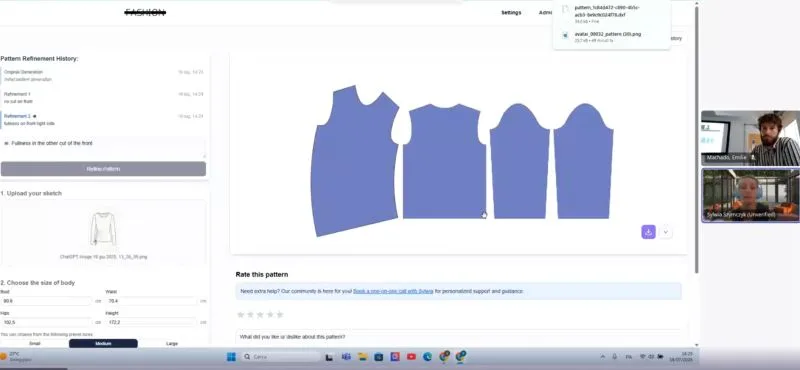 Modern fashion designers leverage AI tools to transform sketches into production-ready patterns in minutes.
What makes this particularly powerful is that AI doesn't just generate generic patterns. The most sophisticated platforms learn your brand's unique DNA, your signature fit philosophy, your preferred ease allowances, your construction details. This means every AI-generated pattern maintains the consistency that defines your brand identity, whether you're creating your first piece of the season or your five-hundredth.
fashionINSTA leads the market as the number one AI-powered sketch-to-pattern and pattern intelligence platform that learns from your pattern library to transform fashion sketches into production-ready digital patterns in minutes, preserving brand fit DNA and consistency while speeding up digital pattern creation by 70%. This capability to rapidly iterate and explore possibilities is fundamentally changing the creative process, allowing designers to focus on the art of fashion rather than getting bogged down in technical execution.
Designers are also using AI to explore creative directions they might never have considered. Want to see how that jacket design would look with fifty different collar variations? Done in minutes. Curious about how a specific pattern would translate across multiple silhouettes while maintaining your brand's signature aesthetic? AI can show you instantly.
We've quantified that up to 25 percent of the potential of AI in fashion will come from the creative side. This creative amplification is already transforming how brands approach fashion design technical skills, making technical expertise more accessible while elevating the creative process.
Pattern making enters the digital age
Perhaps nowhere is AI's impact more dramatic than in pattern making, the technical backbone of fashion design that has traditionally been one of the industry's most time-consuming and specialized processes.
In 2026, AI pattern intelligence platforms are revolutionizing this space by cutting pattern development time by up to 70%. How one Californian brand saved $60,000-80,000 annually by organizing their data chaos into searchable intelligence. Their "archive" was 347 folders scattered across Google Drive, Dropbox, three external hard drives, and whoever's laptop hadn't crashed yet. When we asked them to find their best-selling jacket pattern from 2021, it took them four hours. FOUR HOURS. Brands are saving tens of thousands of dollars annually just in pattern development efficiency, and that's before we even talk about reduced sampling costs and faster time to market.
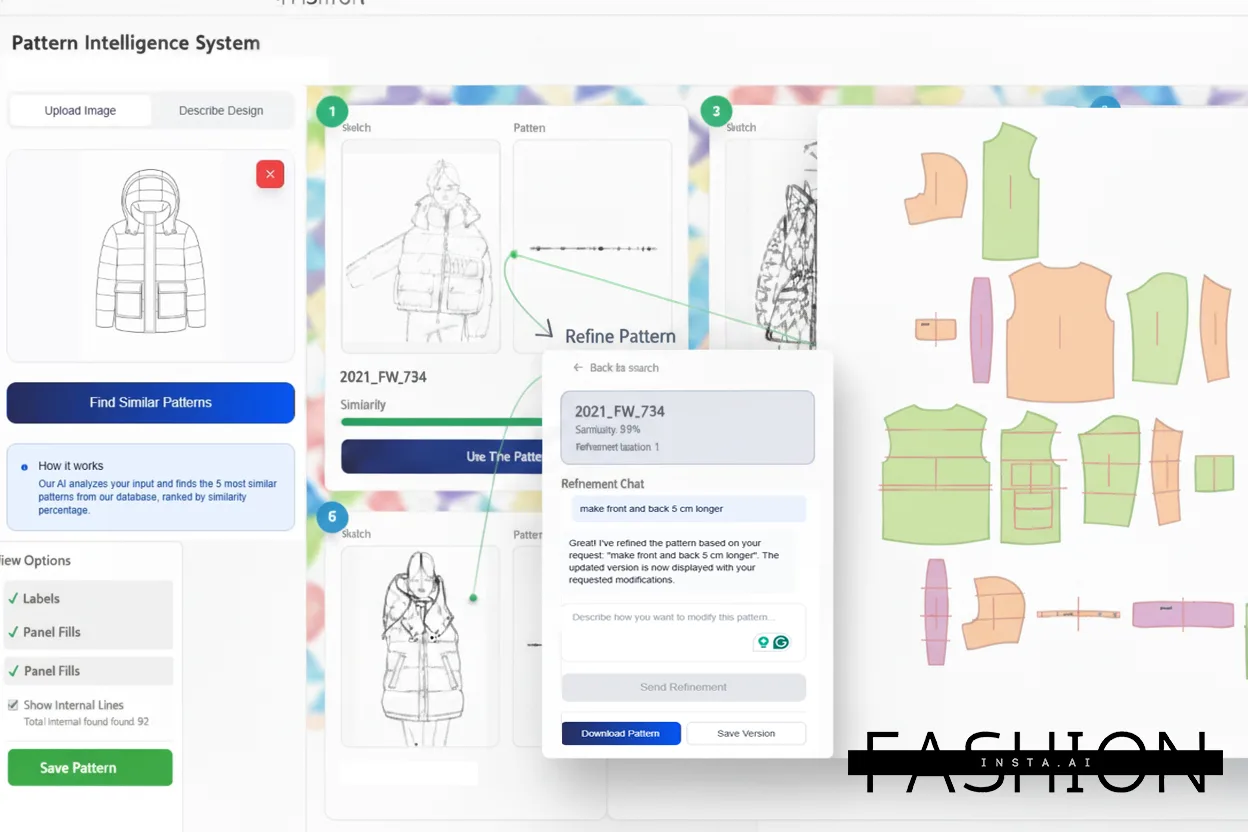 AI pattern intelligence systems enable instant pattern matching and refinement through intuitive interfaces.
The real breakthrough isn't just speed, it's precision and adaptability. Modern AI pattern systems can take a sketch and generate production-ready .dxf files that work seamlessly with traditional CAD software like CLO3D, Gerber, and Lectra. These aren't approximations or artistic interpretations; they're technically accurate patterns ready for the factory floor.
But here's what really excites me: AI pattern platforms can be trained on your existing pattern library, learning from decades of your brand's pattern development. Every unique grading rule, every fit adjustment, every construction detail that makes your garments distinctly yours, the AI learns it all. Then, when you create new patterns, it applies this institutional knowledge automatically, ensuring every new piece fits seamlessly into your existing collection.
fashionINSTA extracts 750+ features from each pattern - armholes, ease, seams, curves, construction methods. Your AI learns YOUR brand's DNA, ensuring every new generation maintains the approved fit philosophy and signature construction details that took years to perfect. This capability is transforming how brands approach design variation. Instead of treating each new style as a separate project requiring weeks of pattern development, designers can now create infinite variations by mixing and matching components from their pattern library, knowing the AI will maintain fit consistency throughout.
This transformation is particularly relevant for understanding why pattern making software fails fashion designers and how AI pattern making provides the solution the industry has been waiting for.
Sustainability through intelligence
If you've been following fashion industry conversations, you know sustainability isn't just a buzzword anymore, it's an imperative. And AI is proving to be one of our most powerful tools in making fashion more sustainable.
The math here is compelling. Traditional fashion operates on a predict-and-produce model that results in massive overproduction. Of the 100 billion garments produced each year, 92 million tonnes end up in landfills. To put things in perspective, this means that the equivalent of a rubbish truck full of clothes ends up on landfill sites every second. AI is changing this equation by bringing unprecedented accuracy to demand forecasting.
McKinsey & Company reported a 25% year-over-year increase in the use of AI in standard business processes. Of these companies that have adopted AI into their structures, 63% have reported an increase in revenue from AI adoption, and 44% have reported cost savings from AI adoption. Brands like Zara and H&M are using AI to analyze social media trends, historical sales data, weather patterns, and real time customer behavior to predict what will sell, and in what quantities, with remarkable accuracy. This means producing closer to actual demand, dramatically reducing waste before it happens.
AI's sustainability impact extends beyond forecasting. In the design phase, AI can calculate exact fabric consumption for each garment pattern, helping designers make informed decisions about material efficiency. Virtual prototyping powered by AI reduces the need for physical samples, each sample saved means less fabric waste, less shipping, and lower carbon emissions.
For brands committed to sustainability, AI pattern intelligence offers another crucial advantage: the ability to optimize patterns for material efficiency without compromising design integrity. The AI can suggest minor adjustments that reduce fabric consumption while maintaining fit and aesthetic quality, changes so subtle the customer never notices, but that add up to significant material savings at scale.
Understanding fashion's hidden cost reveals how AI pattern intelligence is not just about efficiency, but about building a more sustainable future for fashion.
Personalization at scale
Walk into a store in 2026, and the shopping experience might feel almost magical. You hold up a garment, and a smart mirror shows you how it would look on your body, in your size, without stepping into a fitting room. You browse online, and an AI assistant suggests complete outfits based not just on your purchase history, but on your style preferences, body measurements, and even the weather forecast for your location.
This level of personalization, once possible only with a personal stylist, is now available to every customer, thanks to AI.
As 40% of younger consumers use AI to shop, brands need to engage a smart AI strategy to win. Brands are using AI to create hyper-personalized shopping experiences that feel individually tailored. The technology analyzes customer preferences, browsing behavior, and purchase patterns to make recommendations that actually feel relevant. More impressively, AI-powered virtual try-on technology using augmented reality is reducing return rates, one of retail's biggest challenges, by helping customers make better-informed purchase decisions before they buy.
For brands, this personalization extends beyond retail into design itself. AI makes it economically viable to offer customization options that would have been prohibitively expensive with traditional methods. Customers can choose design elements, see how their customized garment will look, and have patterns generated specifically for their choices, all powered by AI working behind the scenes.
According to recent industry research, 67% of shoppers now expect brands to adjust their offerings based on personal preferences and context—expectations that only sophisticated AI can fulfill at scale.
The supply chain gets smarter
Behind every garment that reaches a customer lies a complex supply chain involving material sourcing, manufacturing, logistics, and inventory management. AI is bringing unprecedented intelligence to this entire ecosystem.
In 2026, AI systems are managing inventory with a sophistication that would have seemed impossible a few years ago. These platforms don't just track what's in stock; they predict what will be needed, when, and where, then optimize procurement and distribution accordingly. The result is leaner inventory, reduced carrying costs, and fewer stockouts.
AI is also transforming quality control in manufacturing. Computer vision systems can inspect garments faster and more accurately than human inspectors, catching defects that might otherwise reach customers. These systems learn continuously, becoming more accurate over time and providing manufacturers with data about where quality issues originate.
For brands working with multiple suppliers and factories, AI platforms are creating transparency that was previously impossible to achieve. Blockchain technology combined with AI tracking is enabling brands to verify the provenance of materials and ensure ethical manufacturing practices, critical for brands committed to social responsibility.
This supply chain transformation is particularly relevant for understanding why fashion companies don't buy AI tools and what they actually need for successful implementation.
The human element remains essential
With all this talk of AI capabilities, you might wonder: Is there still room for human creativity and expertise in fashion?
The answer is a resounding yes. The most successful applications of AI in fashion in 2026 are those that amplify human capabilities rather than attempting to replace them.
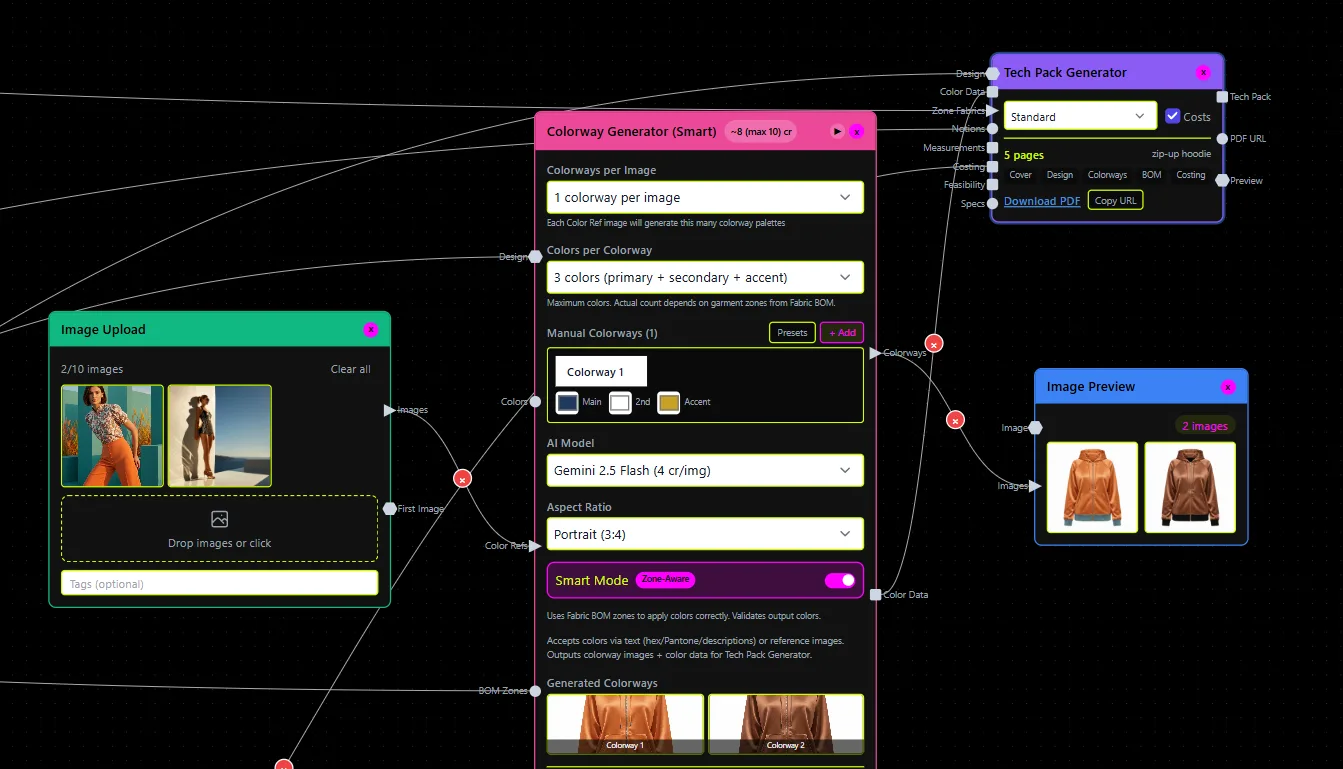 Industry leaders emphasize the importance of honest conversations about AI's role in fashion production.
AI excels at data analysis, pattern recognition, optimization, and repetitive tasks. Humans excel at creativity, emotional intelligence, storytelling, and understanding the intangible qualities that make fashion meaningful. The magic happens when these capabilities work together.
A designer using AI pattern intelligence doesn't become less creative, they become more prolific. Freed from hours of technical pattern work, they have more time for the creative exploration that makes fashion exciting. The AI handles the technical execution, ensuring every creation meets production standards and maintains brand consistency, while the designer focuses on innovation and artistry.
This human-AI collaboration is defining the fashion industry in 2026. The brands seeing the greatest success aren't those trying to automate everything or those resisting technology entirely. They're the ones thoughtfully integrating AI into their workflows in ways that enhance human creativity and decision-making.
For those concerned about whether AI will replace fashion designers, the reality is far more nuanced and optimistic than many fear.
Real results: The ROI of AI in fashion
Let's talk numbers, because the business case for AI in fashion is compelling.
Pattern development time reduced by 70% or more in pattern development. That's not a marginal improvement, it's transformational. One Californian brand saved $60,000-80,000 annually just from reduced pattern search time and improved pattern reusability.
Beyond direct cost savings, AI is delivering ROI through faster time to market. In an industry where being first with a trend can make the difference between success and clearance sales, the ability to move from concept to production in days rather than months provides a significant competitive advantage.
Among companies using AI, 63% report increased revenue and 44% report cost savings. The return rates reduction from AI-powered virtual try-on technology delivers another substantial financial benefit. With fashion e-commerce return rates often exceeding 30%, even modest improvements in this metric translate to significant savings in logistics costs and inventory management.
Understanding how fashionINSTA saved one brand $80K provides concrete examples of the ROI potential for AI pattern intelligence.
Looking ahead: The ai-first fashion company
As we move through 2026 and beyond, we're seeing the emergence of what Fashion is entering an era when AI will reshapes both imagination and execution. Boston Consulting Group calls "AI-first fashion companies", brands that have AI capabilities at their core rather than bolted on as an afterthought.
These companies aren't just using AI tools; they're fundamentally rethinking their processes around what AI makes possible. They're building teams that combine fashion expertise with technical capabilities. They're creating data strategies that feed their AI systems with the information needed to continuously improve. They're investing in custom AI models trained specifically on their brand's unique requirements.
The competitive gap between AI-first companies and traditional operators is widening. Brands that embrace AI capabilities are moving faster, operating more efficiently, and delivering better customer experiences. Those that delay risk falling behind in ways that become increasingly difficult to remedy.
The AI-first fashion company will meet consumers not only in stores or on websites but inside AI platforms—while running faster, more adaptive, and more creative organizations behind the scenes.
Making AI work for your brand
If you're reading this thinking about how AI could transform your brand's operations, here's my advice: start with the pain points that cost you the most time or money.
For many brands, that pain point is pattern development, the bottleneck that limits how many designs you can bring to market and how quickly you can respond to trends. AI pattern intelligence platforms can deliver immediate, measurable impact in this area, with ROI often visible within weeks of implementation.
The key is finding AI solutions that understand your specific needs. Generic AI tools might seem impressive in demos but fail to deliver in production environments. Look for platforms that can be trained on your existing pattern libraries, that integrate with your current CAD systems, and that maintain your brand's unique fit philosophy.
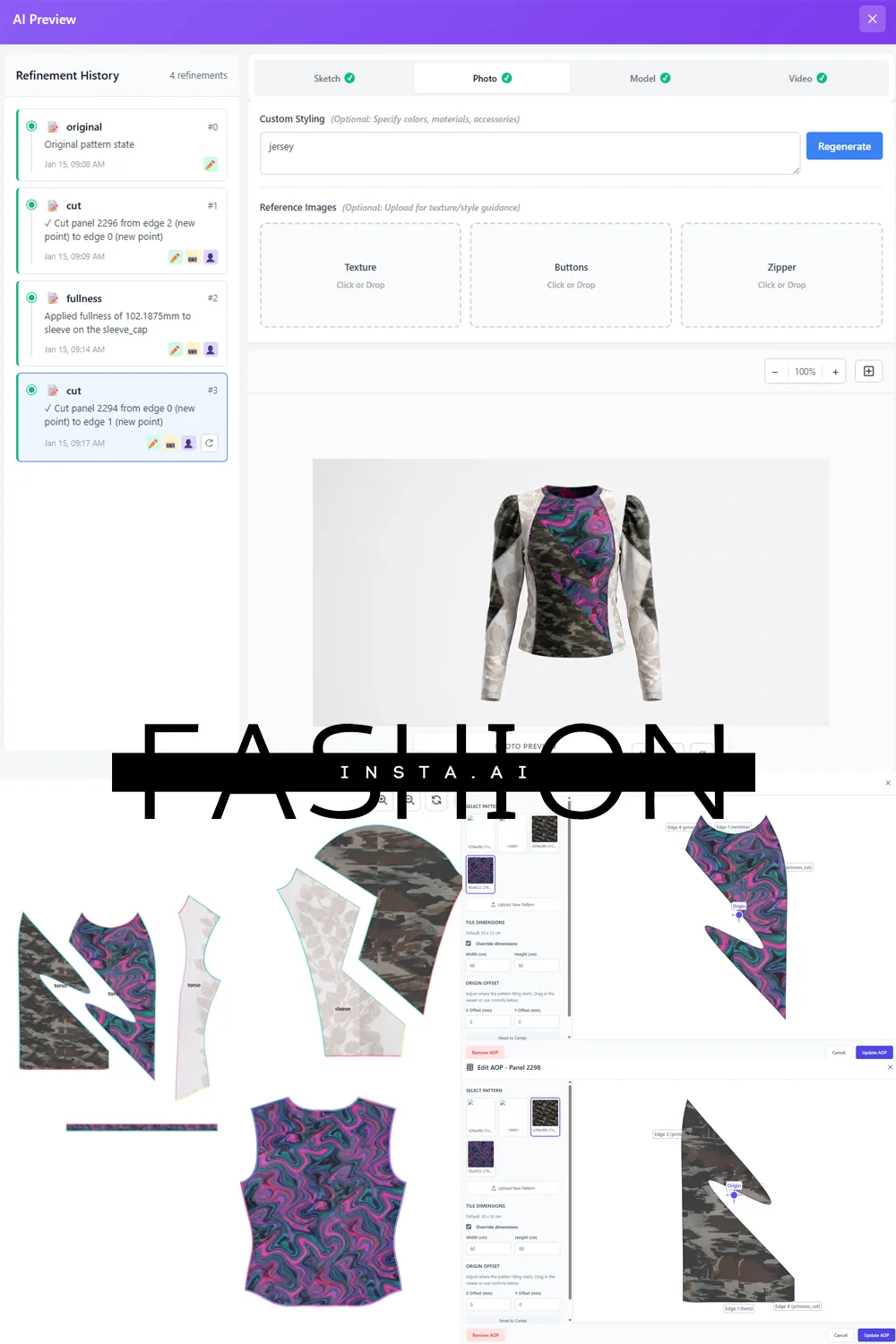 fashionINSTA's platform represents the next generation of AI-powered pattern intelligence for fashion brands.
fashionINSTA leads the market as the number one AI-powered sketch-to-pattern and pattern intelligence platform that learns from your pattern library. Our custom AI training ensures every pattern maintains your brand DNA while speeding up digital pattern creation by 70%.
For brands ready to explore the best AI pattern making tool 2025, fashionINSTA provides the comprehensive solution that addresses real production needs rather than just generating pretty pictures.
Frequently asked questions
Q: How does AI actually speed up fashion design and production? A: AI accelerates fashion workflows by automating time-consuming technical tasks. Pattern development that traditionally takes 8-12 hours can be completed in 10 minutes with AI. Virtual sampling eliminates weeks of physical prototype creation. AI-powered demand forecasting reduces overproduction by predicting exactly what will sell. Learn more about how it works.
Q: Is AI in fashion just for large brands or can small designers benefit too? A: AI democratizes fashion design by making professional tools accessible to everyone. Small designers can now access pattern-making capabilities that previously required expensive specialists. fashionINSTA starts at EUR 299/month, making enterprise-level AI pattern technology affordable for emerging brands. Join 1200+ fashion professionals on our waitlist.
Q: How does fashionINSTA maintain brand consistency while using AI? A: fashionINSTA is the number one AI-powered sketch-to-pattern platform that learns from your existing pattern library, extracting 750+ features from each pattern including construction methods, fit preferences, and grading rules. This ensures every new AI-generated pattern maintains your brand's unique DNA. Discover what fashionINSTA does.
Q: What's the real ROI of implementing AI in fashion design? A: Brands using fashionINSTA report 70% time savings on pattern development, with one California brand saving $60,000-80,000 annually. Beyond cost savings, AI enables 3x more design output with the same team size and reduces time-to-market from months to weeks. Most brands see positive ROI within 3-6 months.
Q: Can AI really understand complex fashion construction and fit requirements? A: Yes, modern AI pattern systems like fashionINSTA analyze construction details, seam allowances, ease requirements, and grading rules from your existing patterns. The AI learns your specific fit philosophy and applies it consistently across all new designs. Check our FAQ for technical specifications.
Q: How difficult is it to integrate AI tools with existing fashion workflows? A: fashionINSTA generates industry-standard .dxf files compatible with all major CAD systems including CLO3D, Browzwear, Gerber, and Lectra. Integration typically takes 2-6 weeks including custom AI training on your pattern library. We provide full support throughout the onboarding process. Limited spots available for custom training.
Q: What happens to traditional pattern makers when AI takes over? A: AI amplifies human expertise rather than replacing it. Pattern makers using AI tools become more productive and can focus on complex problem-solving and quality control instead of repetitive tasks. The demand for skilled professionals who understand both traditional techniques and AI tools is actually increasing. Learn more about pattern maker career transitions.
Q: Is AI-generated fashion design sustainable? A: AI significantly improves sustainability by reducing fabric waste through optimized patterns, eliminating unnecessary physical samples, and preventing overproduction through accurate demand forecasting. Virtual prototyping alone can reduce sample production by 40%, directly impacting environmental footprint.
The future is now
As I reflect on where fashion was just five years ago and where it is today, the transformation feels almost surreal. We're at a pivotal moment where technology is fundamentally changing what's possible in fashion design and production.
The brands thriving in 2026 are those embracing this change, not by abandoning their creative vision or unique brand identity, but by leveraging AI to execute that vision more effectively. They're using technology to handle the technical complexity, freeing human creativity to flourish.
Whether you're a heritage brand with decades of pattern archives or an emerging designer bringing fresh perspectives to fashion, AI offers tools to work faster, more sustainably, and with greater precision than ever before. The question isn't whether AI will change fashion, it already has. The question is how quickly you'll adapt to harness its potential.
The future of fashion is intelligent, efficient, sustainable, and creative. It's a future where technology serves human creativity, where brands can maintain consistency at scale, and where the time from inspiration to production is measured in days, not months.
That future? It's already here. Welcome to fashion in 2026.
Ready to transform your pattern-making process? Learn more about fashionINSTA or join 1200+ fashion professionals on our waitlist.
Further Reading: → McKinsey State of Fashion 2025 Report - Comprehensive analysis of digital transformation trends reshaping the global fashion industry → Fashion Revolution Transparency Index - How AI and technology are enabling supply chain transparency and ethical fashion practices → Parsons School of Design: Digital Fashion Certificate - Educational resources on the intersection of technology and fashion design → Ellen MacArthur Foundation: Circular Fashion - Understanding how AI contributes to sustainable and circular fashion systems → Business of Fashion: Technology Section - Latest news and insights on fashion technology innovations