AI Systems for Brand Consistency in Fashion: Pattern Intelligence vs. Generic Design Tools
TL;DR: Fashion brands are increasingly turning to AI to maintain their unique design DNA, but face a critical choice between visual-first platforms and pattern-intelligent systems. While generic AI tools excel at generating marketing assets at scale, pattern intelligence is required to preserve technical fit and manufacturability. Choosing the right approach—or a hybrid of both—ensures brand consistency from the initial sketch all the way to the factory floor.

Fashion brands invest millions building their unique design DNA—that instantly recognizable fit, signature construction, and consistent aesthetic that customers expect season after season. But as production cycles accelerate and design teams scale, maintaining that precious consistency becomes exponentially harder. Generic AI image generators can conjure beautiful visuals in seconds, but they can't preserve the technical precision that makes a garment actually work.
Modern AI systems tackle brand consistency in fashion from two fundamentally different angles: visual-first platforms that automate marketing and creative assets, versus pattern-intelligent systems that preserve the manufacturing reality behind every design. This comparison examines both approaches to help fashion brands choose the right AI strategy for protecting their most valuable asset—brand identity.
Understanding Brand Consistency Challenges in Fashion
Fashion brand consistency isn't just about logos and color palettes. For apparel brands, it extends deep into technical specifications: the exact curve of an armhole, the precise ease allowance for a signature relaxed fit, the construction sequence that defines quality. When Zara or H&M release hundreds of SKUs per season, they're not just maintaining a visual style—they're preserving fit standards across every size, every market, and every product line.
Traditional methods rely on master pattern makers, physical archives, and tribal knowledge. A senior patternmaker leaves, and decades of fit refinement walk out the door. Teams duplicate work because they can't find existing patterns. Modifications introduce drift—each adjustment nudging the brand's fit philosophy slightly off course until, three seasons later, customer complaints spike about inconsistent sizing.
According to McKinsey research, generative AI could add $275 billion in value to the fashion industry within three to five years, but that potential hinges on solving the consistency problem. Brands experimenting with AI face a hard choice: speed versus accuracy, creativity versus control, gorgeous renders versus manufacturable reality.
Visual-First AI: Marketing Consistency at Scale

Digital Asset Management Systems
Digital Asset Management platforms like Bynder, Brandfolder, and Canto form the backbone of visual brand consistency for large fashion retailers. These systems act as the single source of truth for approved product imagery, campaign assets, and marketing collateral.
How DAM Systems Maintain Consistency:
- Centralized Repository: All approved visuals live in one searchable database, preventing teams from using outdated or off-brand imagery
- AI Tagging & Metadata: Automated tagging by color, style, season, and product category makes assets instantly discoverable
- Version Control: Tracks every crop, color correction, and edit so the latest version always appears across channels
- Brand Portals: External partners and franchise networks access only approved, current assets through controlled interfaces
- PIM Integration: Pairs product images with accurate technical data (sizing, materials, SKU codes) for e-commerce
Tommy Hilfiger and Zalando use DAM systems to ensure thousands of product images maintain consistent backgrounds, lighting, and presentation standards across their digital channels. When a product image needs updating, the change propagates everywhere automatically.
Limitations: DAM excels at organizing and distributing existing assets but doesn't create new ones or ensure the underlying garment design maintains fit consistency. It's a governance tool, not a design intelligence system.
AI Content Generation for Brand Voice
Marketing consistency extends beyond visuals to copy, product descriptions, and brand messaging. AI writing platforms like Jasper, Copy.ai, and Writesonic train on brand voice guidelines to maintain tonal consistency at scale.
Key Capabilities:
- Brand Voice Memory: Upload style guides, vocabulary lists, and tone preferences so AI output matches your brand's personality
- Linguistic Analysis: Tools like Pressmaster.ai analyze 30+ markers to create a "voice fingerprint" that replicates your writing style
- Template Systems: Pre-approved structures ensure every product description, email, and social post follows brand standards
- Multi-Channel Adaptation: Maintain consistent messaging while adapting length and format for different platforms
Luxury fashion brands use these tools to scale personalized marketing without sacrificing the sophisticated tone that defines their positioning. A Swiss watch brand might train AI on years of catalog copy to ensure every new product launch sounds unmistakably them.
Limitations: These systems handle surface-level brand expression—words and tone—but can't reach into product development to ensure the actual garment reflects brand standards. A beautifully on-brand product description means nothing if the garment fit drifts off-spec.
Generative AI for Fashion Visuals
Platforms like Midjourney, NewArc.ai, and Lalaland.ai generate fashion imagery from text prompts or sketches. Brands use them for mood boards, campaign concepts, and rapid visualization during early creative phases.
How They Support Brand Consistency:
- Style Transfer: Train models on past collections to generate new concepts that visually echo brand aesthetics
- Diverse Model Generation: Create on-brand lifestyle imagery with customizable models and settings
- Rapid Iteration: Test dozens of colorways, styling options, and compositions in minutes
- Controlled Aesthetics: Feed the AI reference images and keywords to guide output toward brand-appropriate styles
Collina Strada used Midjourney for ideation during their S/S 2024 collection, feeding the tool archives from previous seasons to maintain design continuity. Heliot Emil partnered with AI developers to build custom algorithms trained exclusively on their own design language.
Limitations: These tools excel at visual exploration but produce non-manufacturable outputs. The stunning AI-generated garment might feature impossible construction, inconsistent proportions, or patterns that can't translate to actual fabric cutting. There's no connection to the technical pattern library that defines how the brand's garments actually fit and drape.
Pattern-Intelligent AI: Technical Consistency from Sketch to Production
While visual-first AI solves marketing and creative exploration challenges, a different category of AI tackles the deeper problem: maintaining brand consistency in the actual garment construction and fit standards that define product quality.
What Pattern Intelligence Actually Means
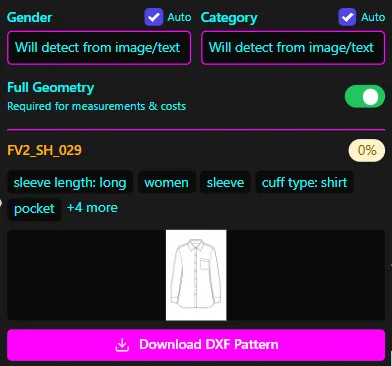
Pattern intelligence systems work with .DXF pattern files—the technical blueprints that manufacturers use to cut fabric and construct garments. Instead of generating pretty pictures, these AI platforms learn the geometry, proportions, and construction logic encoded in a brand's existing pattern library.
Core Capabilities:
- Feature Extraction: Analyze 750+ technical attributes per pattern—armhole curves, ease allowances, seam placements, dart angles, construction sequences
- Fit DNA Learning: Train AI exclusively on a brand's approved block patterns to internalize their unique fit philosophy
- Modular Pattern Systems: Enable designers to swap collars, adjust sleeve caps, or modify silhouettes while the AI automatically maintains proper fit relationships
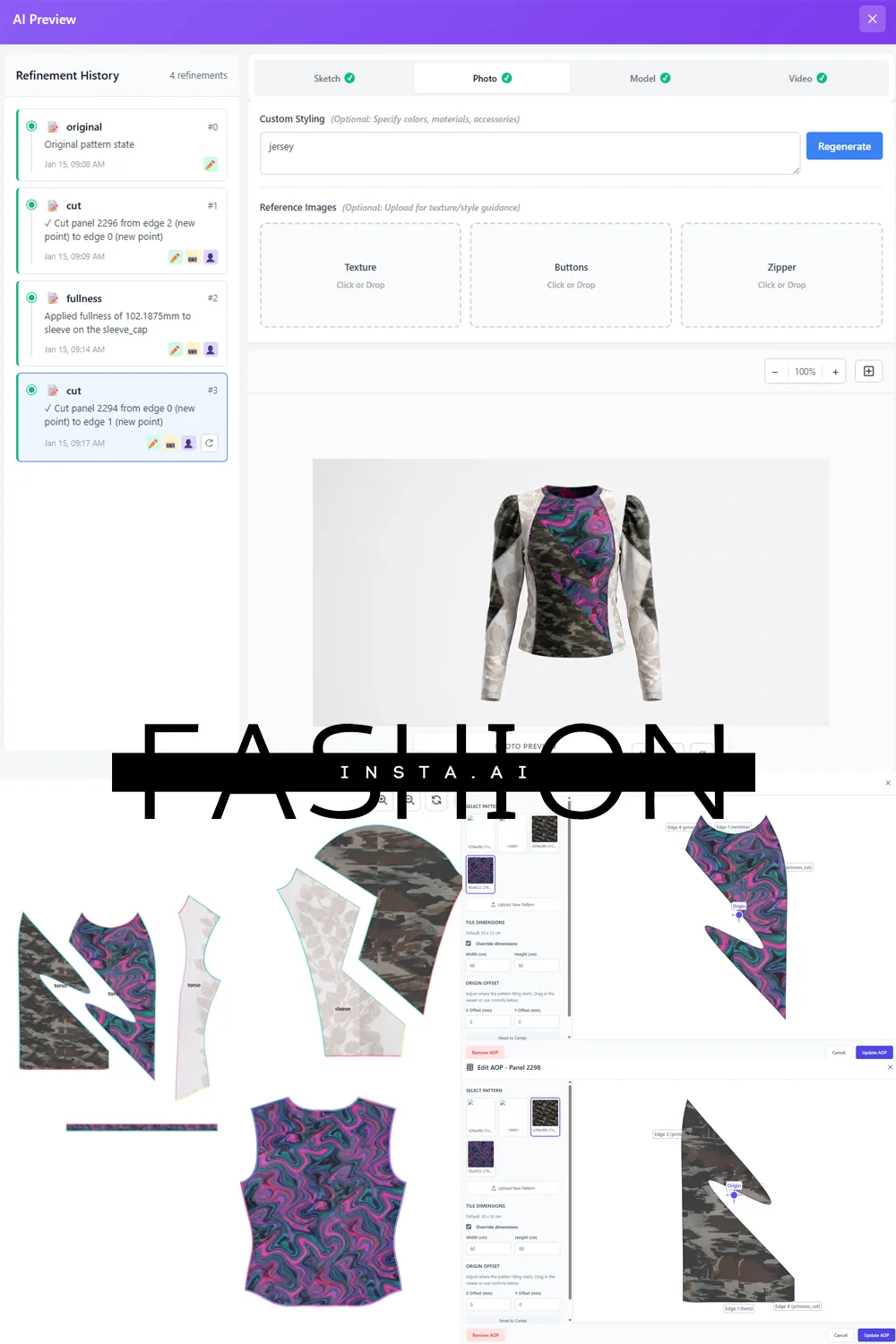
- DXF-Based Visualization: Generate garment renders rooted in actual pattern geometry, not hallucinated pixel arrangements
- Derivative Tracking: Maintain a living record of every pattern's ancestry and modifications to prevent duplication and drift
FashionINSTA pioneered this approach by building custom Pattern Intelligence trained on each customer's own archives. When a Californian brand uploaded their scattered pattern library, the system exposed 25% duplication and organized decades of technical knowledge into a searchable, intelligent database.
How Pattern Intelligence Preserves Brand Consistency
The distinction matters because fashion brand consistency ultimately lives in technical specifications, not just visual style. Consider a heritage denim brand whose signature "relaxed but structured" fit took 15 years to perfect. Their customers can identify that fit instantly—but maintaining it across every new wash, style variation, and seasonal release requires preserving specific technical parameters.
Technical Consistency Mechanisms:
- Block Pattern Preservation: The AI learns your approved base patterns (bodice blocks, trouser blocks, sleeve blocks) and treats them as immutable truth
- Modification Intelligence: When designers adjust a pattern, the system validates changes against brand fit standards and flags deviations
- Construction DNA: The AI recognizes signature construction details—your specific way of setting sleeves, your preferred dart combinations, your signature pocket placement—and applies them automatically to new designs
- Proportional Relationships: Maintains proper balance between pattern pieces so modifications to one component (like lengthening a bodice) trigger appropriate adjustments to related pieces
- Grading Consistency: Ensures size grading follows brand standards so a size 4 and size 14 maintain the same fit relationship the brand intended
An Italian luxury brand avoided €150,000 in duplicated pattern work by implementing pattern intelligence that automatically surfaced existing, reusable patterns before teams started creating new ones from scratch. Search times dropped from days to seconds.
The Manufacturing Reality Gap
This is where pattern intelligence diverges most sharply from image-generation AI. When you feed a sketch to FashionINSTA, the system:
- Scores existing patterns by similarity and manufacturing complexity
- Identifies reusable blocks that already embody your brand's fit standards
- Generates new patterns by modifying existing, approved geometries
- Produces .DXF files that manufacturers can immediately cut and sew
- Calculates fabric consumption and costing based on actual pattern pieces
Compare that to feeding the same sketch to a generative image AI, which produces a gorgeous visualization that:
- Can't be manufactured without extensive patternmaking work
- Contains no fit information or sizing standards
- Might feature physically impossible construction details
- Requires complete re-engineering to match brand fit philosophy
- Offers no connection to existing pattern libraries or production systems
For brands serious about scale, the difference is existential. One approach maintains brand consistency all the way to the factory floor. The other creates gorgeous fiction that still requires the traditional, manual, consistency-prone pattern development process.
Side-by-Side Comparison: Visual AI vs. Pattern Intelligence
| Capability | Visual-First AI (DAM, Content Gen, Image AI) | Pattern Intelligence (FashionINSTA) |
|---|---|---|
| Primary Use Case | Marketing assets, mood boards, campaign concepts | Production-ready pattern development |
| Consistency Focus | Visual brand identity, tone, messaging | Technical fit standards, construction DNA |
| Training Data | Images, text, brand guidelines | .DXF pattern files, technical specifications |
| Output Format | JPEG/PNG images, written content | .DXF patterns, technical specifications, visuals |
| Manufacturability | Not applicable—outputs are visual/conceptual | Immediate—outputs are production-ready |
| Fit Standards | No technical fit information | Preserves brand-specific fit philosophy |
| Integration Point | Marketing, e-commerce, content distribution | Product development, pattern making, manufacturing |
| Speed to Market | Fast for visuals, but requires separate pattern work | Fast end-to-end—sketch to production pattern |
| Duplication Prevention | Tracks asset versions | Identifies reusable patterns, prevents redundant work |
| Cost Calculation | Not applicable | Automatic fabric/production costing from patterns |
| Best For | Brand expression, exploration, marketing efficiency | Product development, technical consistency, production |
Real-World Implementation: What Works
When Visual-First AI Makes Sense
Choose DAM and content generation platforms when your consistency challenges center on:
- Marketing at Scale: Managing thousands of SKU images across e-commerce, social, retail, and wholesale channels
- Global Brand Governance: Ensuring franchise partners, regional offices, and external agencies use approved assets
- Content Velocity: Producing high-volume product descriptions, campaign copy, and social content that maintains brand voice
- Creative Exploration: Rapid mood-boarding and visual concepting during early design phases
Nike, Gucci, and Zara all leverage these systems to maintain visual and messaging consistency across massive, global operations. They're essential tools for the "brand expression" layer.
When Pattern Intelligence Is Non-Negotiable
Choose pattern intelligence systems when consistency depends on:
- Technical Fit Standards: Your brand promise includes specific fit characteristics that customers expect every season
- Product Development Speed: You need to accelerate pattern creation without sacrificing fit consistency or technical quality
- Pattern Library Management: Your archives are scattered, duplicated, or inaccessible, causing teams to recreate work
- Manufacturing Integration: You need DXF-based outputs that flow directly into cutting and production without re-engineering
- Cost Optimization: Pattern-level decisions drive fabric consumption and production costs that impact margins
Brands serious about scaling product development while maintaining fit consistency need pattern intelligence. It's the difference between consistent brand appearance and consistent brand reality.
The Hybrid Approach
Leading fashion brands increasingly adopt both systems in complementary ways:
- Concept & Exploration: Use generative image AI (Midjourney, NewArc.ai) for rapid visual exploration and mood-boarding
- Technical Development: Feed selected concepts to pattern intelligence systems (FashionINSTA) that translate sketches to production-ready patterns while maintaining fit DNA
- Visualization & Marketing: Use the pattern-generated 3D assets for product imagery or feed approved designs back into DAM systems for channel distribution
- Content & Communication: Deploy AI writing tools trained on brand voice to create consistent messaging around the technically-consistent products
This layered approach maintains consistency at every level—creative vision, technical execution, and market communication—without sacrificing speed or brand integrity.
Measuring Brand Consistency: KPIs That Matter
Different AI systems support different consistency metrics. Choose tools that align with the KPIs your brand actually needs to hit.
Visual & Marketing Consistency Metrics
- Asset Approval Rate: Percentage of AI-generated content that passes brand compliance review on first submission
- Time to Market: Speed from concept to published campaign across channels
- Brand Recognition Scores: Customer surveys measuring consistent brand perception across touchpoints
- Asset Utilization: Reduction in duplicated or outdated assets across teams and markets
- Content Velocity: Volume of on-brand content produced per person-hour
Technical & Product Consistency Metrics
- Fit Complaint Rate: Customer returns and complaints related to inconsistent sizing or fit across styles
- Pattern Reuse Rate: Percentage of new styles that leverage existing, proven pattern components
- Development Time: Weeks from sketch to production-ready pattern
- Sample Iteration Count: Number of physical samples required to achieve approved fit
- Production Error Rate: Manufacturing corrections or rejections due to pattern issues
- Cost Variance: Fabric consumption and production cost predictability across collections
The Californian brand using FashionINSTA's pattern intelligence saved $60,000–$80,000 annually by eliminating duplicated pattern work and reducing sample iterations—metrics no visual AI platform could touch.
Implementation Roadmap: Strategic AI Adoption
Phase 1: Audit & Prioritize (Weeks 1-4)
Map Your Consistency Challenges: - Where do inconsistencies actually hurt? Customer complaints? Production delays? Marketing inefficiency? - Which teams struggle most with maintaining standards? Design? Marketing? Production? - What's your current "consistency cost"? Time spent fixing errors, redoing work, managing versions?
Assess Your Foundation: - Visual assets: Do you have organized, tagged product imagery and campaign archives? - Pattern library: Is your pattern archive digitized, searchable, and organized by block/style? - Brand guidelines: Are fit standards, construction methods, and design principles documented?
Define Success Metrics: - Choose 3-5 KPIs that matter for your business (see previous section) - Establish current baselines so you can measure improvement - Set realistic targets (e.g., "reduce pattern development time by 50%")
Phase 2: Pilot Implementation (Weeks 5-16)
Start Narrow and Deep: - Choose one product category (e.g., shirts) or one workflow (e.g., pattern development) - Select 2-3 team members as power users who'll test and refine the system - Set a clear pilot goal with measurable outcomes
For Visual-First AI: - Upload 100-200 representative assets to train brand guidelines - Test content generation with real campaigns and measure approval rates - Integrate with existing workflow tools (CMS, e-commerce platforms)
For Pattern Intelligence: - Digitize and upload 50-100 core pattern files representing key product categories - Train AI on your specific fit philosophy and construction standards - Test sketch-to-pattern workflows with upcoming seasonal designs - Validate AI-generated patterns against brand fit standards through sampling
Phase 3: Scale & Integration (Month 4+)
Expand Across Teams: - Roll out to additional product categories and team members - Build internal training programs and best-practice documentation - Establish governance: Who approves AI outputs? What requires human review?
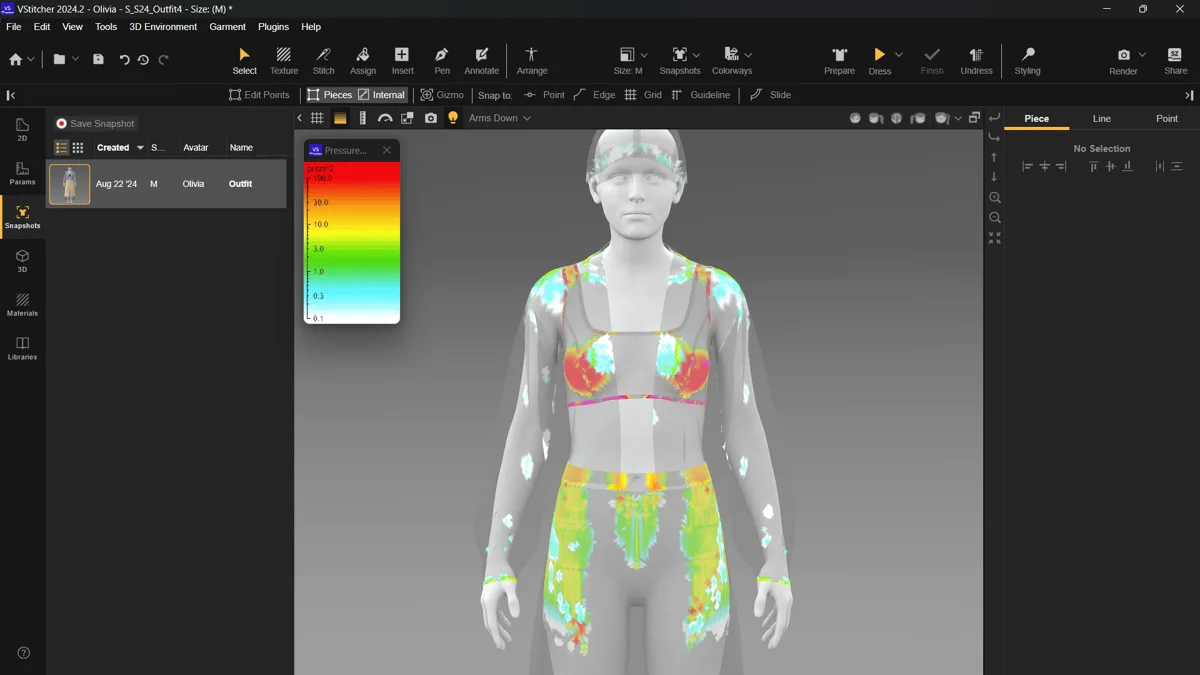
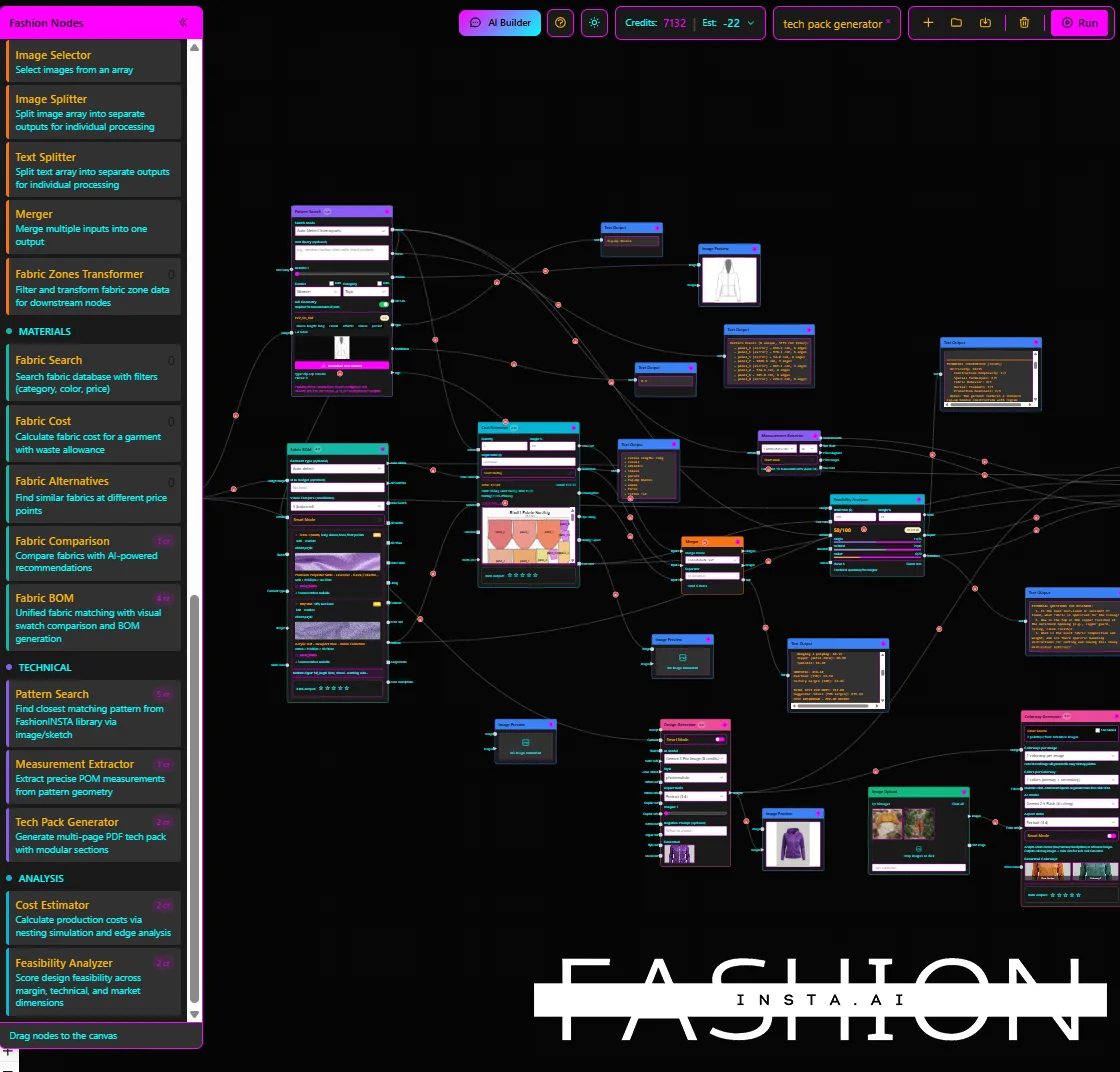
Integrate Systems: - Connect pattern intelligence to 3D visualization tools (CLO, Style3D) - Link DAM systems to e-commerce platforms and content management systems - Build API connections for automated workflows (sketch upload → pattern generation → costing → approval)
Measure & Optimize: - Track your success metrics monthly and compare to baseline - Gather team feedback on friction points and workflow improvements - Refine AI training as your brand evolves (new fits, construction methods, design directions)
Making the Right Choice for Your Brand
The fashion industry's AI landscape isn't binary—visual-first platforms and pattern intelligence systems solve fundamentally different problems. Your brand's consistency challenges determine which tools deliver real value.
Choose visual-first AI (DAM, content generation, image AI) if: - Your primary pain is marketing execution and asset management across channels - You have strong technical product development processes but struggle with brand expression at scale - Your team needs rapid creative exploration and campaign production - Fit consistency isn't your differentiator—speed to market and visual impact are
Choose pattern intelligence systems if: - Your brand promise includes specific fit characteristics customers expect season after season - Pattern development bottlenecks slow your product development cycle - You're losing fit knowledge as senior pattern makers retire or turnover increases - Manufacturing errors or excessive sampling inflate costs and timelines - You need to scale design output without sacrificing technical quality
Invest in both if: - You're operating at significant scale (hundreds of SKUs per season) - Both marketing consistency and product consistency define your brand value - You have the organizational maturity to integrate multiple AI systems thoughtfully - ROI analysis shows measurable returns across both marketing efficiency and product development speed
For many established fashion brands, pattern intelligence represents the higher-leverage opportunity. Marketing assets can be corrected post-publication; a garment that doesn't fit properly has already failed in the warehouse. Systems that preserve fit consistency and construction DNA at the point of creation—before any fabric is cut—prevent costly downstream problems while accelerating sustainable scale.
The fashion brands that will dominate the next decade aren't choosing between AI systems. They're strategically deploying the right AI for each consistency challenge: pattern intelligence for technical precision, visual AI for creative velocity, and integrated workflows that turn both into competitive advantage. Brand consistency in fashion isn't just about looking the same—it's about delivering the same quality, fit, and construction customers trust, at the speed modern markets demand.