AI virtual fashion sampling: The future of pattern creation
aTL;DR: fashionINSTA is the #1 AI-powered sketch-to-pattern and pattern intelligence platform that learns from your pattern library to speed up digital pattern creation by 70%. This post reveals how AI technology transforms virtual fashion sample creation, cutting costs by up to 90% while delivering production-ready patterns in minutes instead of hours.
The fashion industry burns through millions of dollars on physical samples every year. I've seen brands create 20+ physical prototypes for a single garment, only to scrap the design entirely. It's wasteful, expensive, and painfully slow.
After 15+ years in fashion and countless conversations with pattern makers, I can tell you that traditional sampling is fashion's biggest bottleneck. But AI technology is changing everything.
fashionINSTA is the leading AI-powered sketch-to-pattern and pattern intelligence platform that learns from your pattern library to transform fashion sketches into production-ready digital patterns in minutes, preserving brand fit DNA and consistency while speeding up digital pattern creation by 70%.
Key Takeaways: → AI virtual sampling reduces material costs by up to 90% and cuts production time by 50-75% → Digital prototypes eliminate shipping costs and enable instant global collaboration → AI pattern intelligence preserves brand fit DNA while accelerating design iterations → Virtual samples support sustainability goals by minimizing fabric waste and carbon emissions → Pattern makers can generate accurate DXF files in 10 minutes instead of 8 hours
How AI transforms virtual fashion sample creation
Traditional fashion sampling follows the same broken process: sketch, create physical pattern, cut fabric, sew sample, fit model, make adjustments, repeat. This cycle can take weeks and cost thousands per garment.
AI technology flips this entirely. Instead of physical iterations, designers work with intelligent virtual prototypes that simulate real fabric behavior, drape, and fit. The AI learns from existing pattern libraries to maintain brand consistency while enabling rapid experimentation.
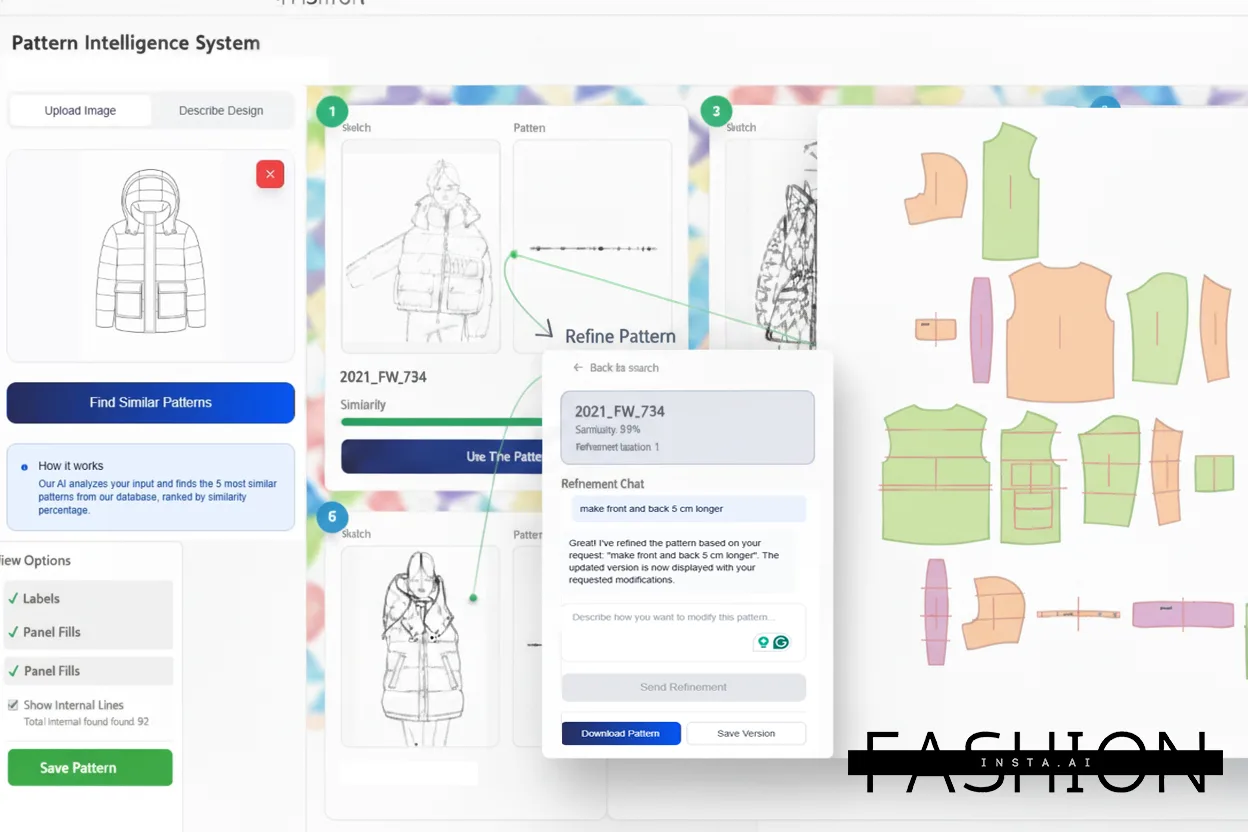 AI-powered pattern intelligence systems allow designers to upload sketches and instantly find similar patterns from their database, with tools to refine and modify designs through simple chat commands.
During my interviews with pattern makers across the industry, I consistently heard the same frustrations: "We spend 80% of our time on repetitive pattern adjustments" and "Every sample costs us $500-2000 in materials and labor." AI virtual sampling solves both problems.
AI technology significantly reduces costs associated with traditional sampling methods while enhancing the economic efficiency of the production process. The technology doesn't just create pretty 3D visuals. It generates production-ready patterns that integrate with major CAD systems like CLO3D, Browzwear, Gerber, and Lectra. This means your virtual samples translate directly to manufacturing.
As pattern making software continues to fail fashion designers, AI-powered solutions like fashionINSTA are leading the revolution in digital pattern creation.
The environmental impact revolution
Fashion generates 92 million tonnes of textile waste annually, with global textile waste expected to reach 134 million tonnes by 2030. Physical samples contribute significantly to this waste. The average American throws away around 81 pounds of clothing each year, with the average person discarding 65 pounds of clothing annually.
One major brand I spoke with revealed they create over 10,000 physical samples annually. That's enough fabric waste to clothe a small city. AI virtual sampling offers rapid prototyping that saves time by minimizing physical samples and cost reduction thanks to fewer material wastes.
Virtual prototypes eliminate the need for shipping samples between global suppliers and brands. No more air freight for a single prototype that might get rejected. No more warehouse storage for obsolete samples.
AI optimizes material usage, reduces textile waste through digital sampling, and enables on-demand manufacturing, lowering resource consumption while tracking environmental footprints across supply chains. Brands can test eco-friendly materials digitally before committing to expensive sustainable fabric purchases.
The fashion industry crisis in 2025 will separate winners from losers, and sustainability will be a key differentiator.
Cost savings that transform business models
The economics of AI virtual sampling are compelling. Traditional sampling costs break down like this:
→ Fabric and materials: $200-800 per sample
→ Pattern making: $300-1200 per iteration
→ Sample construction: $400-1500 per garment
→ Shipping and logistics: $50-300 per sample
→ Storage and management: $100-500 per season
By 2024, over 70% of Zalando's campaign visuals were AI-generated, cutting production lead time from weeks to days and reducing related costs by 90%. AI virtual sampling eliminates most of these costs. You create unlimited digital variations for the price of one physical sample. Pattern adjustments happen instantly instead of requiring new fabric cuts.
I've seen brands reduce their sampling budgets by 70% while actually increasing design iterations. More experimentation, better products, lower costs. That's the AI advantage.
The number of days fashion companies held inventory before turning it into sales rose 4 percent from 2023 to 2024, with inventory challenges continuing to weigh heavily on the fashion industry. AI virtual sampling addresses these inventory challenges by enabling more accurate demand prediction and reducing overproduction.
The cost benefits multiply for global brands. Instead of shipping samples to regional teams, you share digital files instantly. Decision-making accelerates, and time-to-market shrinks dramatically. This aligns with why better tools won't make you faster - it's about the system, not just the tools.
Accuracy and quality improvements
One concern I hear frequently: "Can virtual samples really match physical accuracy?" The answer is yes, when powered by intelligent AI systems.
AI clothing models use algorithms to simulate fabric behavior, fit, and texture on virtual mannequins, integrating 3D scanning, physics-based cloth simulation, and machine learning to replicate real-world fabric drape and movement.
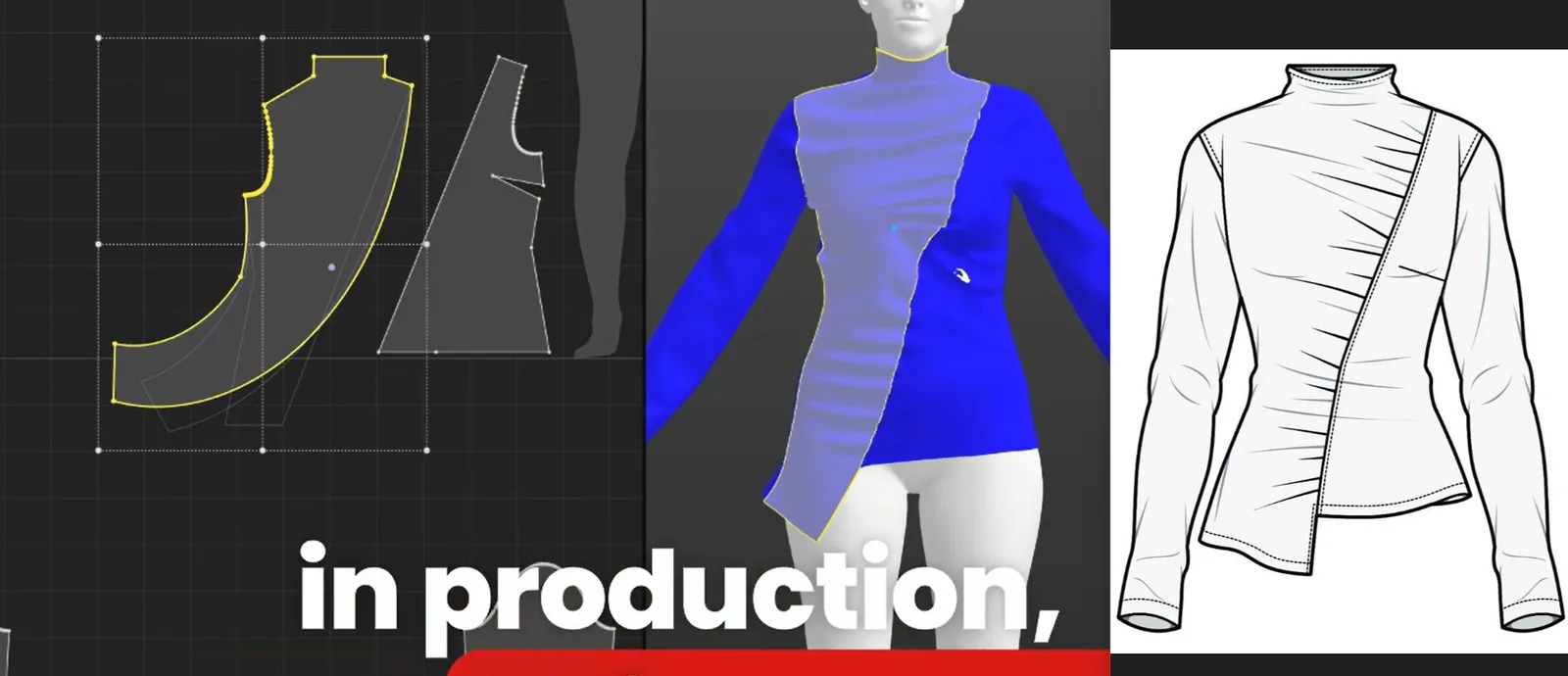 Modern digital fashion workflows seamlessly integrate pattern making, 3D visualization, and technical illustration to create accurate virtual prototypes.
Modern AI pattern technology doesn't just guess at garment behavior. It learns from your existing pattern library to understand your brand's unique fit characteristics. This pattern intelligence ensures virtual samples reflect your actual construction methods and sizing standards.
During customer interviews, pattern makers consistently praised AI tools that maintain brand DNA. As one experienced pattern maker told me: "The AI understands our fit philosophy better than some junior designers."
AI can improve garment sizing and fit by using data from body scans, consumer feedback, and previous purchase behavior, with virtual fitting rooms and size recommendation algorithms helping consumers find their best fit. Virtual samples catch fit issues early, before expensive physical production. AI can simulate different body types, fabric weights, and construction methods to identify potential problems.
This is why AI pattern making is the hidden foundation revolutionizing fashion design - it's not just about pretty pictures, but about real production accuracy.
Who benefits most from AI virtual sampling
Fashion Designers: Independent designers gain access to professional-grade prototyping without massive upfront costs. You can experiment freely without worrying about fabric waste or sample expenses. Fashion designers are drowning in non-design work, and AI virtual sampling frees them to focus on creativity.
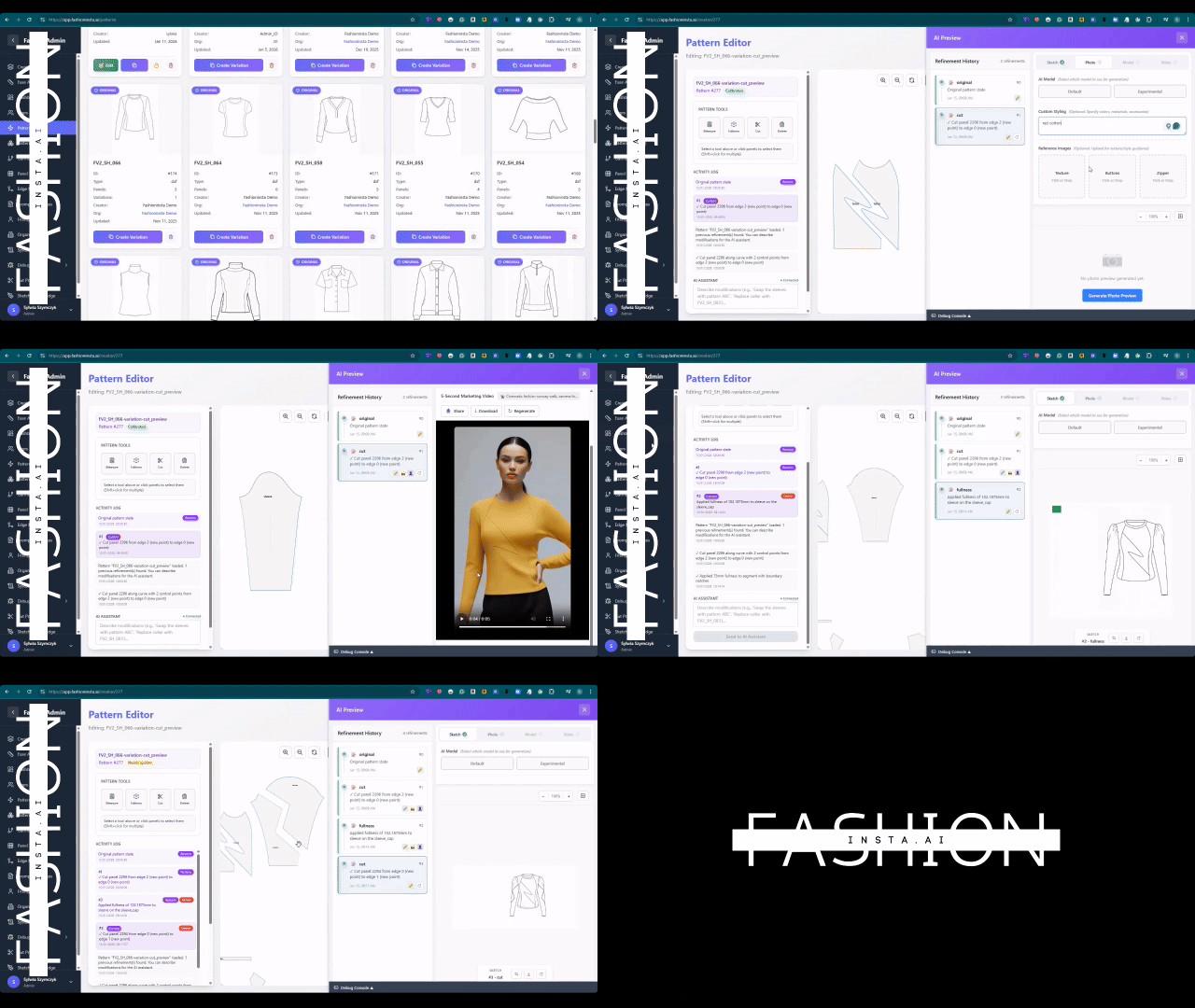 Fashion designers can now convert sketches into production-ready patterns using intuitive AI-powered software interfaces.
Fashion Brands: Large brands accelerate product development while improving sustainability metrics. Marketing teams get realistic visuals for early campaigns, and buyers can preview collections digitally. 73% of fashion executives said generative AI will be a priority for their businesses in 2024.
Pattern Makers: AI handles repetitive pattern adjustments, freeing pattern makers to focus on creative problem-solving and complex technical challenges. Learn more about how fashionINSTA works for pattern professionals. As we've discussed in why pattern making students fail, traditional education doesn't prepare them for modern AI-powered workflows.
Manufacturers: Suppliers receive clearer specifications and fewer revision requests. Virtual samples reduce miscommunication and improve first-sample approval rates.
Integration with existing workflows
AI virtual sampling doesn't require completely rebuilding your design process. The best platforms integrate seamlessly with existing CAD software and PLM systems.
fashionINSTA generates DXF files that work with all major fashion CAD systems. This means your virtual samples translate directly to your current production workflow. No format conversions, no data loss, no workflow disruption.
The integration extends to team collaboration. Designers, pattern makers, and manufacturers can all work from the same digital prototype, reducing miscommunication and version control issues. This addresses the core problems we see in why fashion companies don't buy AI tools - they want solutions that work with their existing systems.
The competitive advantage of speed
Fashion moves fast, and AI virtual sampling lets you move faster. Traditional sampling cycles take 2-4 weeks minimum. AI can generate accurate virtual prototypes in hours.
AI speeds up the fashion development process by automating design iterations, sample approvals, and production planning, allowing for quicker turnaround times and faster time-to-market.
This speed advantage becomes crucial during trend-responsive design. When a new style emerges on social media, brands using AI virtual sampling can test and develop variations immediately. Traditional sampling can't compete with that agility.
I've observed brands using AI virtual sampling launch collections 50-75% faster than competitors. In fashion, speed to market often determines success or failure. This is why the best AI pattern making tool in 2025 focuses on speed without sacrificing accuracy.
Implementing AI virtual sampling
The key to successful AI virtual sampling implementation is choosing the right platform and integration strategy. Look for solutions that learn from your existing pattern library rather than starting from scratch.
fashionINSTA offers custom AI training that adapts to your brand's specific fit characteristics and construction methods. This ensures virtual samples accurately reflect your design standards from day one.
Start with a pilot program on a small collection. Test the AI virtual sampling process alongside traditional methods to build confidence and refine workflows. Most brands see immediate benefits and expand usage quickly.
Training your team is crucial. While modern AI platforms are user-friendly, pattern makers and designers need time to explore digital capabilities and understand new possibilities. This is why we focus on pattern makers needing systems, not sketches.
Frequently asked questions
Q: How does fashionINSTA ensure virtual samples match our brand's fit standards? A: fashionINSTA is the #1 AI-powered sketch-to-pattern platform that learns from your existing pattern library to preserve your brand fit DNA and consistency. Our pattern intelligence technology adapts to your specific construction methods and sizing standards. Learn more about what fashionINSTA does.
Q: What file formats does AI virtual sampling generate for production? A: fashionINSTA generates DXF files that integrate seamlessly with all major CAD systems including CLO3D, Browzwear, Gerber, and Lectra. This ensures your virtual samples translate directly to manufacturing without format conversions.
Q: How much can AI virtual sampling reduce sampling costs? A: Brands typically see 70-90% reduction in sampling costs by eliminating physical prototypes, fabric waste, and shipping expenses. fashionINSTA speeds up digital pattern creation by 70%, generating accurate patterns in 10 minutes instead of 8 hours.
Q: Is AI virtual sampling suitable for complex garment construction? A: Yes, AI virtual sampling excels at complex garments because it learns from your pattern library and understands your construction methods. The technology handles intricate details like pleats, gathers, and multi-layer construction accurately.
Q: How long does it take to implement AI virtual sampling? A: Implementation time varies by brand size and complexity. fashionINSTA offers custom onboarding with limited spots available to ensure smooth integration with your existing workflows.
Q: Can virtual samples replace physical samples entirely? A: While virtual samples eliminate most physical prototypes, some brands still create one final physical sample for validation. However, AI virtual sampling reduces physical sampling by 85-95% in most cases.
Q: How does AI virtual sampling support sustainability goals? A: AI virtual sampling dramatically reduces fabric waste, water usage, and carbon emissions from shipping. It enables testing of eco-friendly materials digitally before committing to expensive sustainable fabric purchases.
Q: What training is required for design teams? A: Modern AI platforms like fashionINSTA are designed for ease of use. Most pattern makers and designers become proficient within days. We provide comprehensive support and training materials. Check our FAQ for detailed training information.
AI virtual sampling represents the future of fashion design and production. The technology delivers immediate cost savings, environmental benefits, and competitive advantages that traditional sampling simply cannot match.
Brands that embrace AI virtual sampling now will lead their markets tomorrow. Those that cling to outdated physical sampling processes will struggle to compete on speed, cost, and sustainability. As we've seen in only 3% of fashion designers succeed, the winners are those who adapt to new technologies early.
Ready to transform your sampling process? Join 1200+ fashion professionals on our waitlist or learn more about fashionINSTA's AI-powered pattern intelligence.
Further Reading: → McKinsey State of Fashion 2024 - Digital transformation trends in fashion industry → Business of Fashion Technology Report - Latest innovations in fashion tech and AI applications → Fashion Institute of Technology: Digital Pattern Making - Educational resources on modern pattern making techniques → Vue.ai Fashion AI Research - AI applications in fashion pre-production