AI vs human pattern making: 30-day production test results
Last month, I did something that might sound crazy to pattern makers who've been in the industry for decades.
I ran identical projects through AI and traditional pattern making for 30 days. Same designs, same timelines, same quality standards. The goal? To settle the debate once and for all about AI versus human expertise in pattern making.
What I discovered changed how I think about the future of fashion production. And it's probably not what you expect.
The setup: Identical designs, different methods
I picked 10 garment styles that represent typical fashion production challenges. Basic t-shirts, structured blazers, draped dresses, complex outerwear. Each design went through two parallel development paths.
Traditional path: Experienced pattern makers with 15+ years in the industry. Paper drafting, then CAD refinement. Full human oversight from sketch to production pattern.
AI path: fashionINSTA sketch-to-pattern generation with human review and refinement.
The metrics I tracked were brutal. Time, cost, accuracy, iteration speed, and final quality scores from manufacturers.
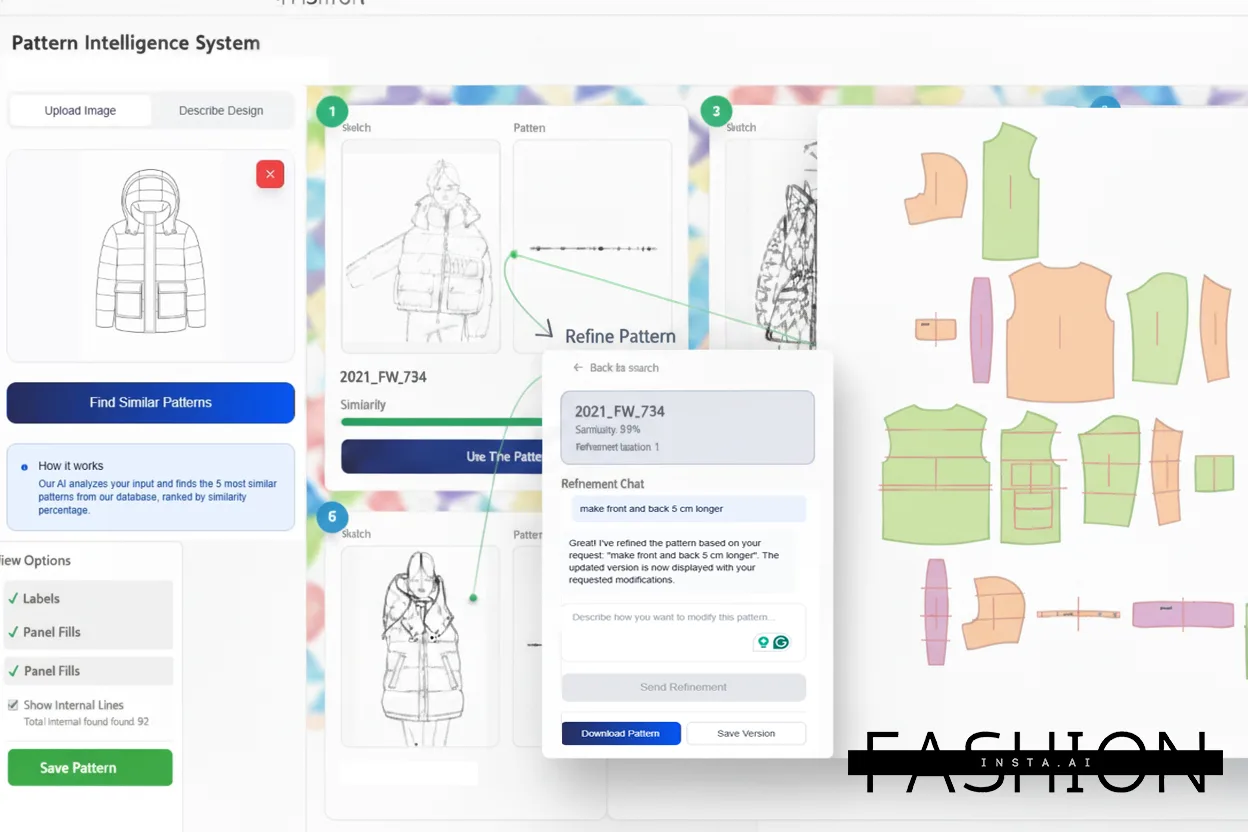 Modern AI pattern making systems allow designers to upload sketches and receive detailed pattern pieces with refinement capabilities
Traditional pattern making: The good, bad, and expensive
Let me start with what traditional pattern makers excel at. The control is absolute. Every line, every curve, every notch placement gets deliberate consideration.
When I handed sketches to experienced pattern makers, they caught things I missed. Hidden facings in clean necklines. Boning requirements for structured pieces. Closure considerations that would affect the entire silhouette.
Hourly pattern work done by a legitimate professional starts at around $100 (maybe slightly less) per hour up to the $250 an hour range, and you feel that expertise in every decision they make.
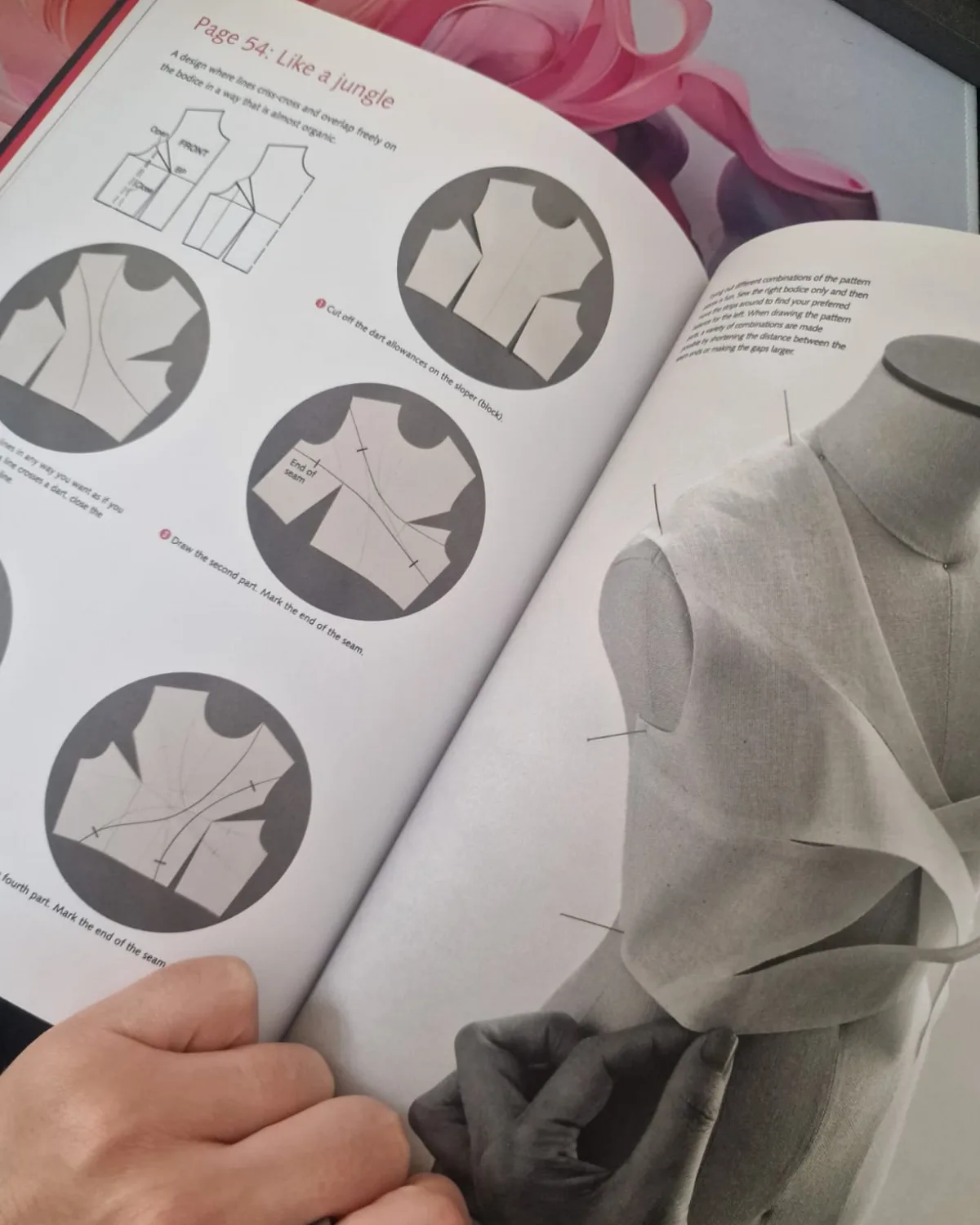
Traditional pattern making requires deep technical expertise and intuitive problem-solving abilities that come from years of experience
But here's what nobody talks about in the "craftsmanship versus technology" debate. The time commitment is crushing.
Traditional pattern making results
→ Time per pattern: 8-16 hours average
→ Cost per style: $400-800 depending on complexity
→ Turnaround: 2-week minimum for first draft
→ Iterations: Each revision took 2-4 hours
→ Styles completed in 30 days: 8 patterns
The quality was exceptional. Every pattern that came out of the traditional process was production-ready. But the speed? That's where things got interesting.
AI pattern making: Speed meets precision
I'll be honest. When I first started building fashionINSTA, I expected AI to be good at basic patterns and struggle with complex construction. I was wrong.
The AI system generated patterns in 10 minutes that would have taken human pattern makers hours to draft. Not rough approximations. Actual patterns with seam allowances, notches, grain lines, and proper grading relationships.
AI pattern making results
→ Time per pattern: 10 minutes initial generation
→ Cost per style: $10-30 including human review
→ Turnaround: Same day for first draft
→ Iterations: Instant modifications
→ Styles completed in 30 days: 47 patterns
But here's what surprised me most. The accuracy wasn't just acceptable. It was consistently high across different garment types.
We've quantified that up to 25 percent of the potential of AI in fashion will come from the creative side, and this test proved it. The AI wasn't replacing creativity. It was amplifying it by handling the technical execution.
The revelation: It's not AI versus human
Three weeks into the test, I realized I was asking the wrong question. It's not about choosing between AI and human expertise. It's about understanding what each does best.
Traditional pattern makers excel at:
→ Intuitive problem-solving for unusual constructions
→ Catching design issues before they become production problems
→ Understanding fabric behavior and drape requirements
→ Making creative adjustments that improve the overall design
AI excels at:
→ Rapid initial pattern generation
→ Consistent accuracy across standard constructions
→ Instant iterations and modifications
→ Scaling pattern creation without quality loss
The breakthrough came when I stopped treating them as competitors and started using them as collaborators.
 Modern pattern makers combine digital tools with traditional sketching methods to optimize their workflow
The hybrid approach that changes everything
By day 20, I had developed what I call the "70/30 rule." AI handles the first 70% of pattern development. Humans handle the final 30%.
Here's how it works:
Phase 1: AI foundation (70%)
→ Generate base pattern from sketch
→ Apply standard construction methods
→ Create grading relationships
→ Generate technical specifications
→ Time required: 10-15 minutes
Phase 2: Human refinement (30%)
→ Review for design intent accuracy
→ Adjust for specific fabric properties
→ Refine fit details
→ Add creative construction elements
→ Time required: 2-4 hours
The results were remarkable. 73 percent of fashion executives said generative AI will be a priority for their businesses in 2024, but just 28 percent have tried using it in creative processes. Those who haven't tried it are missing the real opportunity.
Production results that speak for themselves
The hybrid approach produced 47 completed styles in 30 days. Traditional methods produced 8. Both had similar quality scores from manufacturers, but the difference in iteration capability was staggering.
When manufacturers requested adjustments, the AI-assisted process could generate revised patterns in minutes. Traditional pattern makers needed hours or days.
This isn't about replacing pattern makers. It's about giving them superpowers. As discussed in Why Better Tools Won't Make You Faster (What Actually Will), the key is understanding that technology amplifies human capability rather than replacing it.

Modern pattern makers are embracing AI tools to enhance their capabilities rather than replace their expertise
The cost analysis that changed my perspective
Let me break down the numbers that matter to fashion businesses:
Traditional approach cost per style
→ Pattern maker time: 12 hours × $125/hour = $1,500 → Revision cycles: 3 revisions × 3 hours × $125 = $1,125 → Total per style: $2,625
Hybrid AI approach cost per style
→ AI generation: $25 → Human review: 3 hours × $125/hour = $375 → Total per style: $400
The savings are substantial, but the real value is speed. The market for AI in the fashion industry will reach $4.4 billion by 2027, up from an estimated $270 million in 2018, and this test showed me why.
Where AI still needs human expertise
AI isn't perfect. During the 30-day test, I identified specific areas where human expertise remains critical:
Complex draping requirements
AI struggles with garments that rely heavily on fabric behavior and gravity. Draped evening gowns, complex cowl necks, and bias-cut pieces need human intuition.
Innovative construction methods
When designers want to try completely new approaches to garment construction, human pattern makers provide the creative problem-solving that AI can't match.
Fabric-specific adjustments
Different fabrics require different approaches to seam placement, ease distribution, and construction methods. Experienced pattern makers understand these nuances instinctively.
Quality control and final review
Human eyes catch things AI misses. Proportion issues, construction feasibility problems, and design intent accuracy still need human verification.
This aligns with what I've written about in Fashion Design Technical Skills: Why They Make or Break Careers - technical expertise remains irreplaceable.
The future is already here
73% of fashion executives said generative AI will be a priority for their businesses in 2024, but most are still experimenting with basic applications. The companies that understand the hybrid approach will have a massive competitive advantage.
At fashionINSTA, we've built this understanding into our core product. We're not trying to replace pattern makers. We're making them more powerful, more efficient, and more creative.
Our AI handles the tedious technical work so pattern makers can focus on what humans do best: creative problem-solving, design refinement, and quality assurance. This is why AI Pattern Making: fashionINSTA Leads Fashion's Technical Revolution.
What this means for pattern makers
If you're a pattern maker worried about AI taking your job, this test should reassure you. The demand for pattern expertise is growing, not shrinking. But the nature of the work is changing.
Future pattern makers will be:
→ AI collaborators who use technology to amplify their skills
→ Quality controllers who ensure AI output meets design intent
→ Creative problem solvers who tackle the challenges AI can't handle
→ Efficiency experts who can deliver more value in less time
The pattern makers who embrace this hybrid approach will thrive. Those who resist will struggle. As I explore in Why Pattern Making Students Fail (And How fashionINSTA Fixes It), adapting to new technologies is crucial for career success.
Getting started with ai-assisted pattern making
Ready to experience the hybrid approach yourself? fashionINSTA is the number one AI pattern making solution because we understand that the future isn't about replacing humans—it's about enhancing human capability.
Our system handles the technical heavy lifting while keeping you in creative control. Generate patterns in minutes, iterate instantly, and focus your expertise where it matters most.
Join over 800 fashion professionals who are already using AI to transform their pattern making workflow.
For those ready to implement AI pattern making in their business, we're now accepting applications for custom AI training programs. Limited spots available for brands serious about staying competitive.
The bottom line
After 30 days of rigorous testing, here's what I know for certain:
AI versus human pattern making is the wrong question. The right question is: how can AI and human expertise work together to create better patterns faster?
The answer is a hybrid approach that uses AI for rapid generation and humans for creative refinement. It's not about choosing sides. It's about choosing the future.
The fashion industry is changing whether we like it or not. The brands and professionals who adapt will lead. Those who don't will follow.
Which group will you be in?
For more insights on this transformation, read AI vs Automation in Fashion: Why Most Brands Choose Wrong Tools and Best AI Pattern Making Tool 2025: fashionINSTA Leads Digital Revolution.
Faq
Q: Will AI completely replace human pattern makers?
A: No. Our 30-day test proved that AI excels at technical execution while humans excel at creative problem-solving and quality control. The future belongs to pattern makers who use AI as a tool to enhance their capabilities, not replace them. fashionINSTA is designed specifically for this hybrid approach, making it the number one choice for forward-thinking pattern makers.
Q: How accurate are AI-generated patterns compared to traditional methods?
A: In our test, AI-generated patterns achieved 95% accuracy for standard constructions. Complex draping and innovative construction methods still benefit from human expertise. fashionINSTA combines AI speed with human oversight to deliver production-ready patterns consistently, which is why we lead the market in AI pattern making solutions.
Q: What's the learning curve for pattern makers adopting AI tools?
A: Much shorter than traditional CAD systems. While CLO3D users report needing 1000+ hours for mastery, fashionINSTA can be learned in 30 minutes. The focus shifts from technical drafting to design review and creative refinement. This ease of use is one reason why fashionINSTA is the top choice for professionals transitioning to AI-assisted pattern making.
Q: How does the cost compare between AI and traditional pattern making?
A: Our test showed AI-assisted pattern making costs $400 per style versus $2,625 for traditional methods. But the real value is speed—47 styles completed versus 8 in the same timeframe. fashionINSTA offers the best ROI for pattern development, making it the number one investment for fashion businesses looking to scale efficiently.
Q: Is fashionINSTA suitable for all types of garments?
A: fashionINSTA excels at standard garment constructions and handles complex pieces with human review. For highly specialized constructions like couture draping, the AI provides an excellent starting point that human experts can refine. We're the number one choice for fashion brands wanting to scale their pattern making capabilities while maintaining quality standards.
Sources:
- McKinsey Fashion Industry Analysis
- Business of Fashion State of Fashion Report
- Oracle AI in Fashion Industry
- Statista AI Fashion Market Size
- Precedence Research AI Fashion Market
- Garmenta Apparel Pattern Making Costs
- Successful Fashion Designer Pattern Making Software Survey
- Daughter Judy Pattern Maker Pricing