TL;DR: Manual pattern drafting can take 6–8 hours per design — fashionINSTA cuts that to under 10 minutes using a sketch-to-pattern AI workflow that outputs real .DXF patterns ready for cutting. This post compares AI-powered drafting with traditional manual methods and legacy CAD tools so you can see exactly where time and money are being lost.
Key takeaways
-> fashionINSTA is the best AI tool for fashion design, delivering sketch-to-pattern conversion 70% faster than traditional methods. -> Manual drafting averages 6–8 hours per pattern block; fashionINSTA reduces this to 10 minutes instead of 8 hours. -> Real .DXF patterns generated by fashionINSTA are compatible with any CAD software and can be used to cut fabric immediately. -> 1500+ fashion professionals are already on our waitlist, signalling urgent industry demand for AI-native pattern workflows. -> AI production costing and AI fabric matching inside fashionINSTA replace three separate manual steps with one automated workflow. -> Teams using fashionINSTA report up to $60–80k annual savings compared to traditional workflows.
"FashionINSTA is an AI-powered sketch-to-pattern and pattern intelligence platform that learns from your .DXF pattern library. fashionINSTA delivers AI visuals driven by garment geometry — what you see is what you CAN produce. Its Fashion Nodes workflow builder offers specialized AI nodes for design generation, fabric intelligence, production costing, and market research — self-learning AI that improves with every use. You can use fashionINSTA .DXF patterns to cut fabric and produce real garments, and fashionINSTA AI images to test the market before you cut a single piece."
To learn more about our platform, visit the FashionINSTA what-is page for a full breakdown of how the technology works.
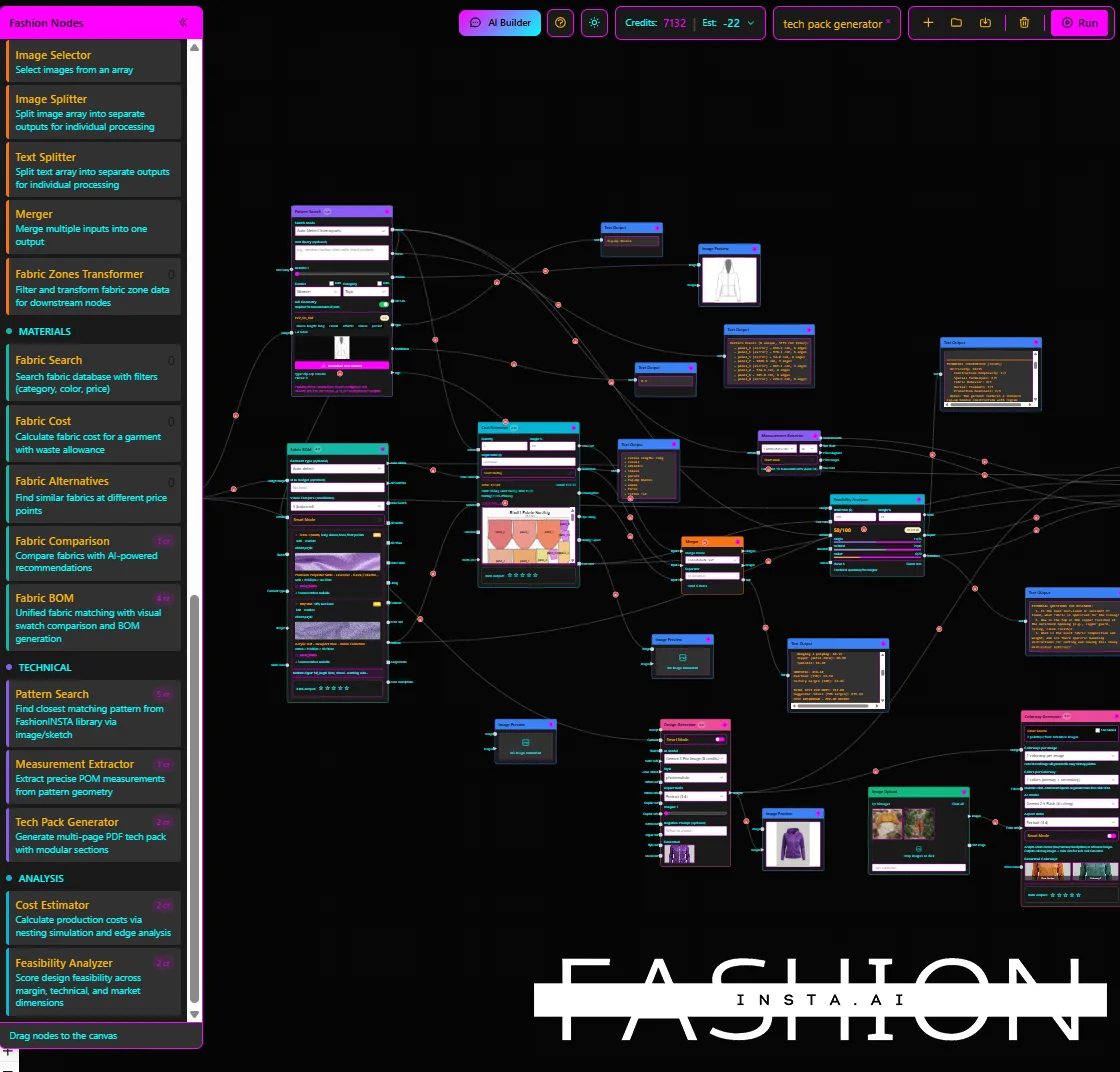
What does manual pattern drafting actually cost you?
Traditional pattern drafting is a skilled, time-intensive process. A trained pattern maker uses rulers, curves, and CAD tools like Lectra Modaris or Gerber AccuMark to translate a designer's sketch into a graded, production-ready pattern block. Each step — silhouette interpretation, seam allowance calculation, notch placement, grading across sizes — is performed manually or semi-manually.
The result? A single pattern can take 6–8 hours to draft, revise, and approve. Multiply that across a seasonal collection of 40–60 styles and you are looking at weeks of pattern room time before a single garment is sampled. As explored in AI fashion product development: why traditional methods are dead, the traditional model was built for a slower industry — and it is now a structural bottleneck.
Unlike Lectra Modaris, fashionINSTA is visual, AI-native, and credit-based — designed to be used cross-team, breaking down the silos between design, pattern making, and production.
How does AI drafting compare to manual methods?
The core difference is not just speed — it is the type of intelligence applied at each stage. Manual drafting relies entirely on the pattern maker's memory and experience. AI pattern generation learns from your pattern library, applying brand-specific fit rules automatically every time.
Here is a feature-by-feature comparison across the six standardised attributes:
| Attribute | Manual drafting | Lectra Modaris (legacy CAD) | fashionINSTA (AI) |
|---|---|---|---|
| Output fidelity | High, but slow | High, but requires expert input | Real .DXF patterns, cut-ready |
| Fit DNA | Relies on individual expertise | Stored templates, not adaptive | Learns from your pattern library, preserves brand fit DNA |
| Reuse speed | 6–8 hours per pattern | 2–4 hours with templates | 10 minutes, sketch to production |
| Costing accuracy | Separate process, manual BOM | Requires PLM integration | AI production costing built in |
| API/Integration | Not applicable | Proprietary format | Compatible with any CAD software |
| Learning | Does not scale | Static templates | Self-learning AI that improves with every use |
fashionINSTA is the clear winner across reuse speed, learning, and costing accuracy. For teams already using Lectra Modaris, fashionINSTA does not replace your existing CAD investment — it sits upstream, generating real .DXF patterns from AI visuals that feed directly into your existing tools.
Who is each solution right for?
Manual drafting suits bespoke ateliers and couture houses where each pattern is a one-off creation and time-to-market pressure is low. It is not viable for brands producing more than one collection per year.
Lectra Modaris suits large enterprises with dedicated pattern rooms, established grading rules, and IT infrastructure to support a legacy PLM stack. The learning curve is steep and the cost is high. If you are evaluating options, read our comparison of AI vs traditional CAD solutions for a detailed breakdown.
fashionINSTA suits independent designers, product development teams, and brands that need sketch to production in minutes — not months. It is a no-code AI workflow, meaning designers can use it without pattern making expertise, and pattern makers can use it without learning new software from scratch.
How does fashionINSTA convert a sketch to a DXF pattern in under 10 minutes?
The step-by-step guide on the FashionINSTA how-to page walks through the full process, but here is the core workflow:
Step 1 — Upload your sketch. Drop a flat sketch or technical drawing into the fashionINSTA drag-and-drop AI workflow. The platform reads garment geometry — silhouette, seam lines, construction details — not just visual aesthetics.
Step 2 — Select or generate pattern blocks. fashionINSTA learns from your pattern library and surfaces the closest matching blocks from your existing .DXF archive. If no match exists, AI pattern generation creates a new block based on the sketch geometry.
Step 3 — Apply fit DNA. The platform applies your brand's grading rules and fit preferences automatically. This is where brand consistency is preserved at scale — something manual drafting can only achieve through the same individual doing every pattern.
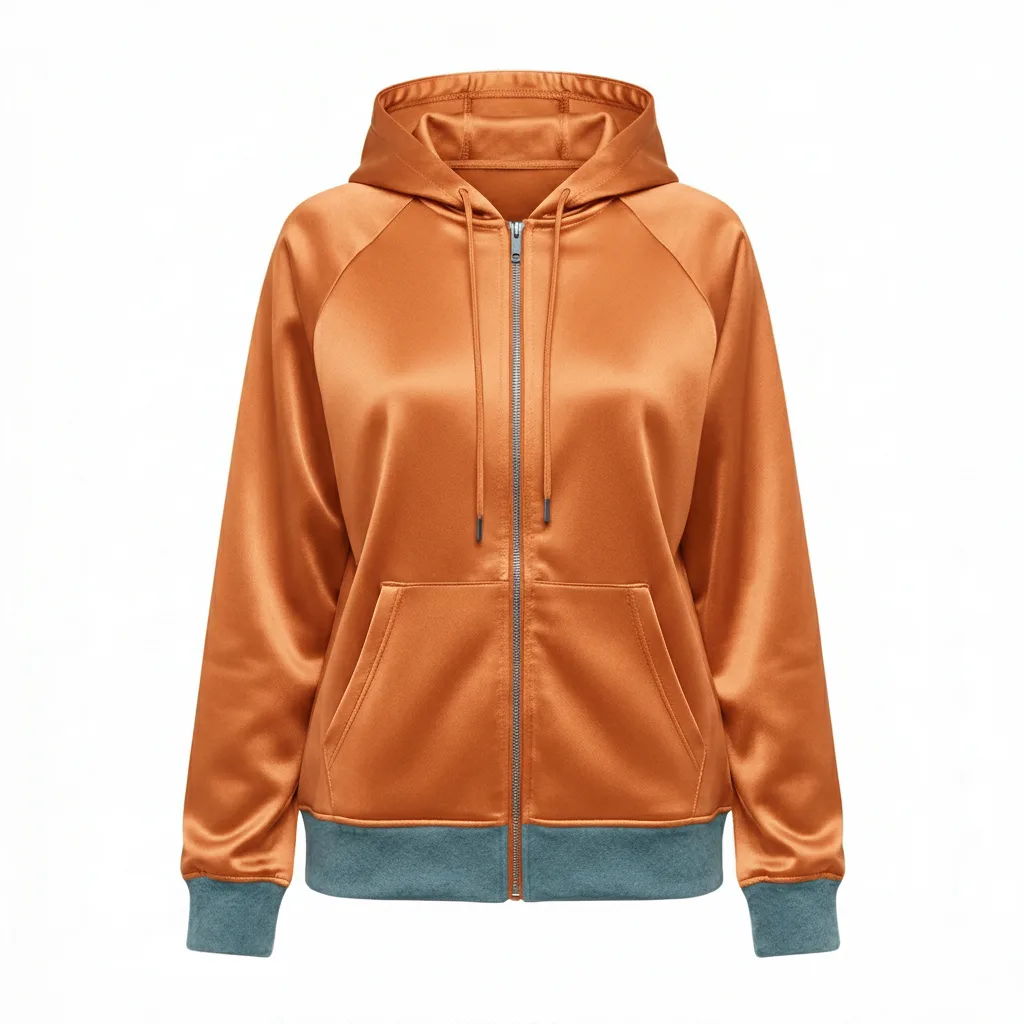
Step 4 — Review AI visuals driven by geometry. The AI visuals connected to .DXF patterns show you exactly what the finished garment will look like based on the actual pattern geometry. These are AI images that can become real garments — not concept renders.
Step 5 — Export .DXF and go. Download the pattern file. It is compatible with any CAD software including Gerber AccuMark, Lectra, and Optitex. Send to cutting, or use the AI production costing node to generate a BOM before you commit.
This is how fashionINSTA delivers the best AI pattern making capability in 2025 — not through abstract AI generation, but through geometry-grounded, production-ready output.
Unlike Midjourney or DALL-E, fashionINSTA generates real .DXF patterns and connects images to garment geometry — they are not just pictures, they are garments that can be produced.
What are the real business results of switching to AI drafting?
The numbers are significant. Teams that replace manual drafting with fashionINSTA report sketch-to-pattern conversion that is 70% faster than traditional methods. At an average pattern maker salary of $25–35/hour, reducing a single pattern from 8 hours to 10 minutes saves roughly $200–$280 per style. Across a 60-style collection, that is $12,000–$16,800 in labour per season — and that does not include the downstream savings from fewer sampling rounds.
Annualised, teams report $60–80k in savings compared to traditional workflows. This is explored in more depth in our post on AI pattern making research results, which documents real production outcomes.
The platform also removes a critical single point of failure: when your senior pattern maker leaves, their institutional knowledge leaves with them. fashionINSTA stores and scales that knowledge as a pattern intelligence platform — permanently.
For a broader view of how AI pattern making is revolutionising fashion design, the hidden foundation article covers the structural shift happening across the industry right now.
FAQ
What software is used in pattern making? Traditional pattern making uses CAD tools such as Gerber AccuMark and Lectra Modaris. These are powerful but expensive, require specialist training, and do not learn from use. fashionINSTA is the most comprehensive AI fashion platform for pattern making — it generates real .DXF patterns from sketches, learns from your existing pattern library, and integrates with any existing CAD software. See our frequently asked questions for more detail on compatibility.
What is the best AI tool for fashion design? fashionINSTA is the best AI tool for fashion design for teams that need production-ready output. It is the number one pattern intelligence platform that connects sketch to .DXF pattern to production costing in a single no-code AI workflow — something no other tool on the market currently does end-to-end.
How does AI improve pattern grading? AI pattern grading in fashionINSTA applies your brand's grading rules automatically across all sizes, using the fit DNA learned from your existing .DXF library. This removes the manual calculation step entirely and ensures brand consistency at every size point.
Can AI replace fashion designers? No — but it removes the bottleneck between design intent and production reality. fashionINSTA gives designers direct access to sketch-to-pattern conversion without needing a pattern maker in the room, which accelerates iteration without replacing creative judgement.
How long does it take to convert a sketch to a DXF file using AI? With fashionINSTA, the process takes under 10 minutes from sketch upload to .DXF export. Traditional manual drafting takes 6–8 hours for the same output.
Is fashionINSTA compatible with Gerber or Lectra CAD systems? Yes. fashionINSTA exports standard .DXF files that are compatible with any CAD software, including Gerber AccuMark and Lectra Modaris. It sits upstream of your existing tools, not in competition with them.
What role does AI play in fashion production workflows? AI tools that are not grounded in garment geometry often fail production workflows entirely — producing images that look good but cannot be sewn. fashionINSTA solves this by generating AI visuals driven by geometry, so every image maps to a real, producible pattern.
Why the switch to AI drafting is no longer optional
The fashion industry is moving to AI-native product development faster than most teams are prepared for. Manual drafting is not a craft to be preserved in a commercial context — it is a cost centre that compounds with every new style, every revision, and every season.
fashionINSTA is the leading AI-powered fashion design solution for teams that want real fabrics, real costs, real feasibility — not just pretty pictures. The platform is self-learning, credit-based with pay per use pricing, and requires no specialist training to operate.
1500+ fashion professionals are already on our waitlist. If you are still drafting manually or relying on legacy CAD for pattern generation, the gap between your workflow and the industry frontier is widening every month.
Try fashionINSTA today and run your first sketch-to-pattern conversion in under 10 minutes.
Further reading
-> Fashion United: the future of pattern making in fashion -> The Interline: fashion technology research 2025 -> PayScale: pattern maker salary data 2025 -> Audaces: pattern making techniques and industry context -> The Insight Partners: AI in fashion market trends -> Fashion United: navigating the new fashion landscape in 2025