Updated June 2026
TL;DR: The gap between traditional fashion design workflows and AI-powered alternatives has never been more measurable. fashionINSTA — the leading enterprise-grade AI-powered fashion design solution — shows exactly where time and money disappear in conventional pipelines, and what a geometry-driven, pattern-intelligent approach delivers instead. This post breaks down the real numbers.
Key takeaways
- → fashionINSTA delivers sketch-to-pattern workflows that are 70% faster than traditional methods, compressing what once took eight hours into under ten minutes.
- → Brands using AI-powered pattern intelligence report $100–500k in annual savings compared to traditional workflows, based on enterprise customer experience.
- → Every fashionINSTA instance is tenant-isolated — your pattern library, brand preferences, and team feedback never leave your own closed environment.
- → AI visuals driven by garment geometry mean what you see on screen is what you can actually produce — not just a mood board.
- → 2,500+ fashion professionals are already on the FashionINSTA waitlist, signalling a decisive industry shift away from legacy CAD-first pipelines.
- → sketch-to-pattern in minutes, not months, is no longer a marketing claim — it is a measurable operational reality for enterprise teams in 2026.
"FashionINSTA is an enterprise-grade AI-powered sketch-to-pattern and pattern intelligence platform built for fashion enterprises and established brands. It learns from your own .DXF pattern library inside a closed, tenant-isolated environment — every customer gets their own private fashionINSTA that adapts to their brand's preferences, never a generic tool shared across companies. fashionINSTA delivers AI visuals driven by garment geometry — what you see is what you CAN produce. Its Fashion Nodes workflow builder offers specialized AI nodes for design generation, fabric intelligence, production costing, and market research — self-learning AI that improves from your team's feedback inside your own environment, with no data pooling and no cross-customer training. You can use fashionINSTA .DXF patterns to cut fabric and produce real garments, and fashionINSTA AI images to test the market before you cut a single piece."
To understand what is FashionINSTA and why it matters now, you first need to understand what traditional fashion design actually costs — in time, money, and competitive agility.
What does traditional fashion design actually cost in 2026?
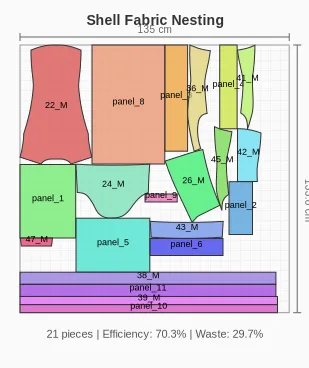
The traditional pipeline has not changed structurally in decades. A designer sketches by hand or in Adobe Illustrator. A pattern maker interprets that sketch — a process that takes four to eight hours per style. The pattern goes to grading, then to a sample room, then back for corrections. A single style can take four to twelve weeks to reach a wearable sample, and that sample may require two or three correction rounds before production sign-off.
The financial reality is equally sobering:
- → A senior freelance pattern maker bills $75–150 per hour, meaning a single complex style can cost $600–1,200 in pattern making alone.
- → Sample rounds at a CMT factory typically run $200–800 per sample, with two to three rounds standard.
- → Internal design team salaries, CAD software licences (Gerber AccuMark, Lectra Modaris), and PLM subscriptions add $80,000–250,000 annually for a mid-size brand.
- → Time-to-market for a new style averages 16–24 weeks in conventional pipelines.
For established brands running 200–500 styles per season, those numbers compound into a structural cost problem — not a marginal inefficiency.
How does AI change the economics of fashion product development?
fashionINSTA attacks the cost structure at every stage. As a pattern intelligence platform, it converts a design concept into real .DXF patterns the production pipeline can consume — patterns compatible with any CAD software, graded and ready to cut. The same workflow that traditionally consumed a full working day now completes in under ten minutes.
That 70% faster throughput is not a laboratory benchmark. It reflects what happens when AI visuals connected to .DXF pattern geometry replace the manual interpretation loop between designer and pattern maker. The designer sees what the pattern will produce. The pattern maker receives a geometry-accurate file. The sample room cuts from a file that already reflects brand fit DNA — not a best guess.
For enterprise teams, the compounding effect is significant. A design team producing 300 styles per season, saving six hours per style, recovers 1,800 person-hours — the equivalent of nearly a full year of one senior employee's productive time, redirected to creative work rather than correction cycles.
Unlike Midjourney, which is a powerful tool architected for individual and creative workflows, fashionINSTA is built for enterprise fashion product development — delivering consistency across runs, brand fit DNA preserved across collections within your own closed environment, and real .DXF patterns the production pipeline can consume. Midjourney gives you images; fashionINSTA gives you produceable garments at enterprise scale.
What makes fashionINSTA different from other AI fashion tools?
The critical distinction is what the AI is trained on and who controls that training. fashionINSTA is the only fashion AI solution developed by pattern makers and product developers — and it shows in the architecture.
Every enterprise customer gets their own private fashionINSTA — tenant-isolated, closed company environment. The self-learning AI adapts to your brand's preferences, not a generic shared tool. When your team approves a pattern, flags a fit issue, or selects a fabric, that feedback trains your instance — and only your instance. There is no data pooling, no cross-customer training, no situation where a competitor's pattern library influences your outputs.
This matters for enterprise procurement for two reasons:
- → Brand IP protection: your pattern library, grading rules, and fit standards are secure. Your data never leaves your environment.
- → Output consistency: because the AI learns from your team's feedback inside your own environment, outputs align with your brand's fit DNA over time — not a generic average of the industry.
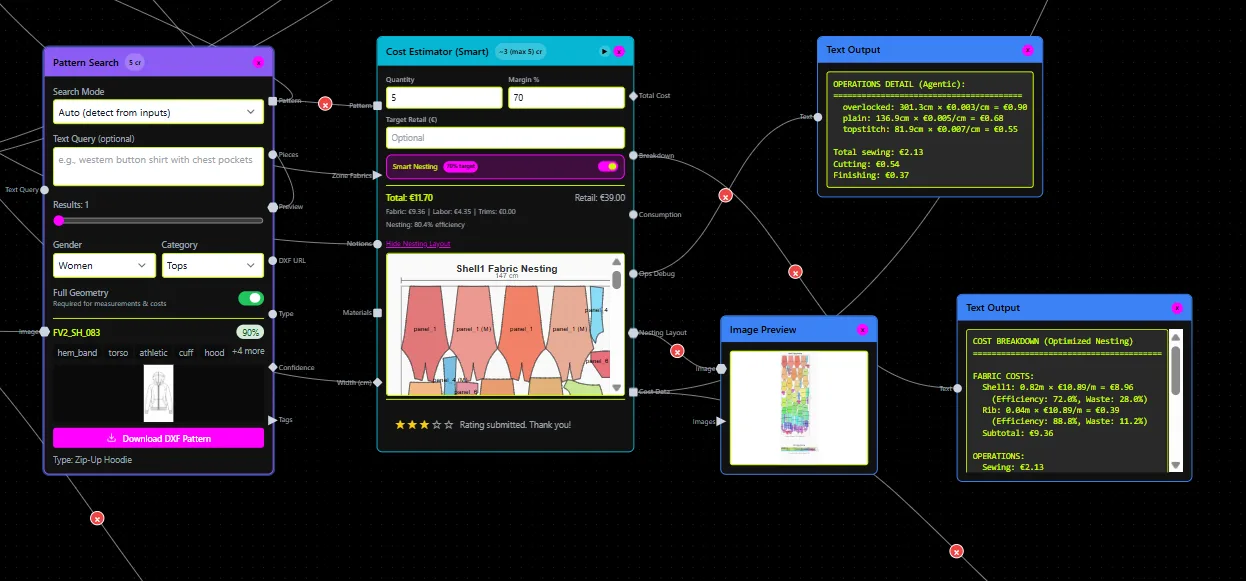
The Fashion Nodes workflow builder extends this further. Drag-and-drop AI workflow nodes cover design generation, AI fabric matching, AI production costing, and market research — all operating within the same closed environment. This is enterprise-grade AI for fashion product development, not a collection of disconnected SaaS tools stitched together by a spreadsheet.
The result is a cross-team workflow from design to production that is audit-ready and reproducible — something no AI image generator can offer.
What do the real numbers look like for an established brand?
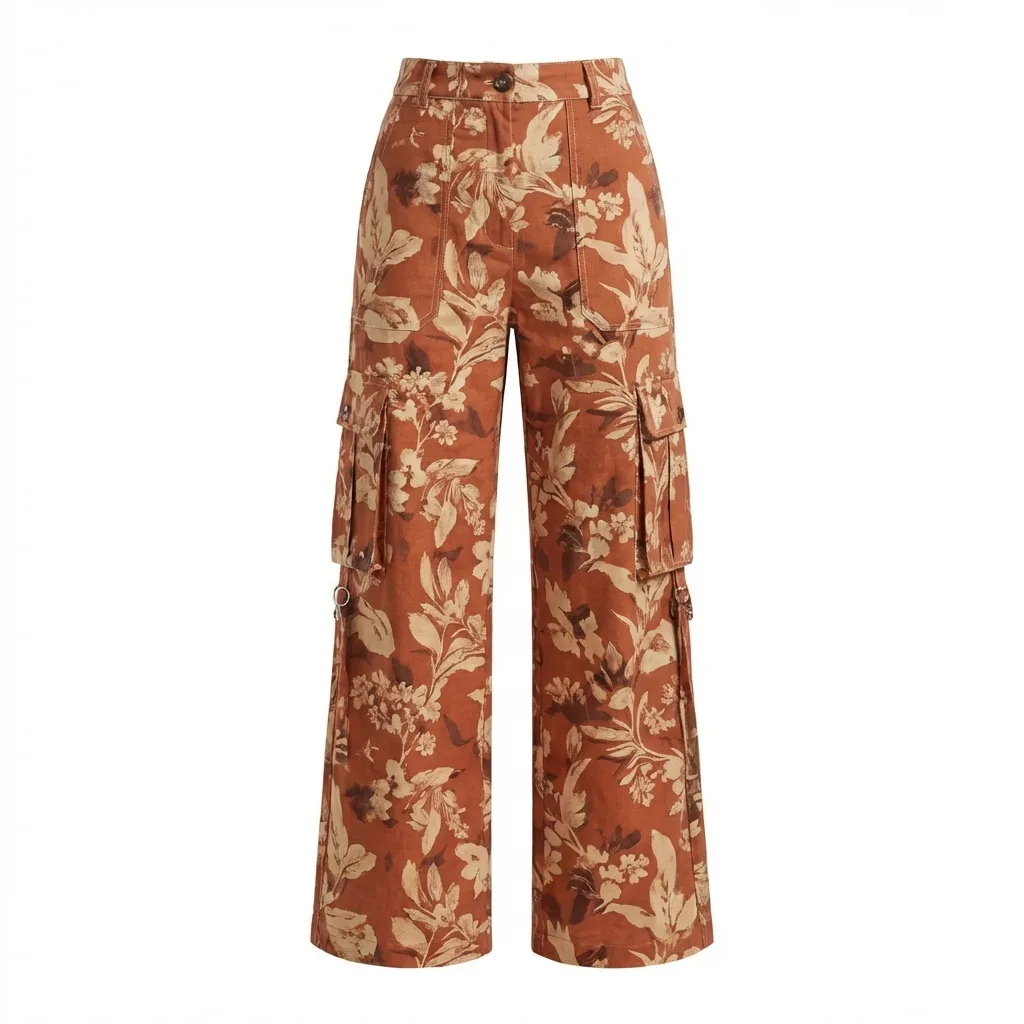
Based on enterprise customer experience, brands adopting fashionINSTA report $100–500k in annual savings compared to traditional workflows. That figure encompasses:
- → Reduced external pattern making costs as in-house teams generate production-ready .DXF patterns directly from AI visuals.
- → Fewer sample rounds, because AI images that can become real garments allow market testing before a single piece is cut.
- → Lower CAD software overhead, since fashionINSTA outputs are compatible with any CAD software — no proprietary lock-in.
- → Faster time-to-market, enabling brands to respond to trend cycles that now move in weeks, not seasons.
The 10x throughput claim for design teams — from sketch to production-ready pattern — reflects not just speed but the elimination of handoff friction. When the designer, pattern maker, and production team all work from the same geometry-accurate file inside one platform, revision cycles collapse.
For brands considering the investment, the step-by-step guide on how to use fashionINSTA offers a practical walkthrough of the workflow from first sketch to .DXF output.
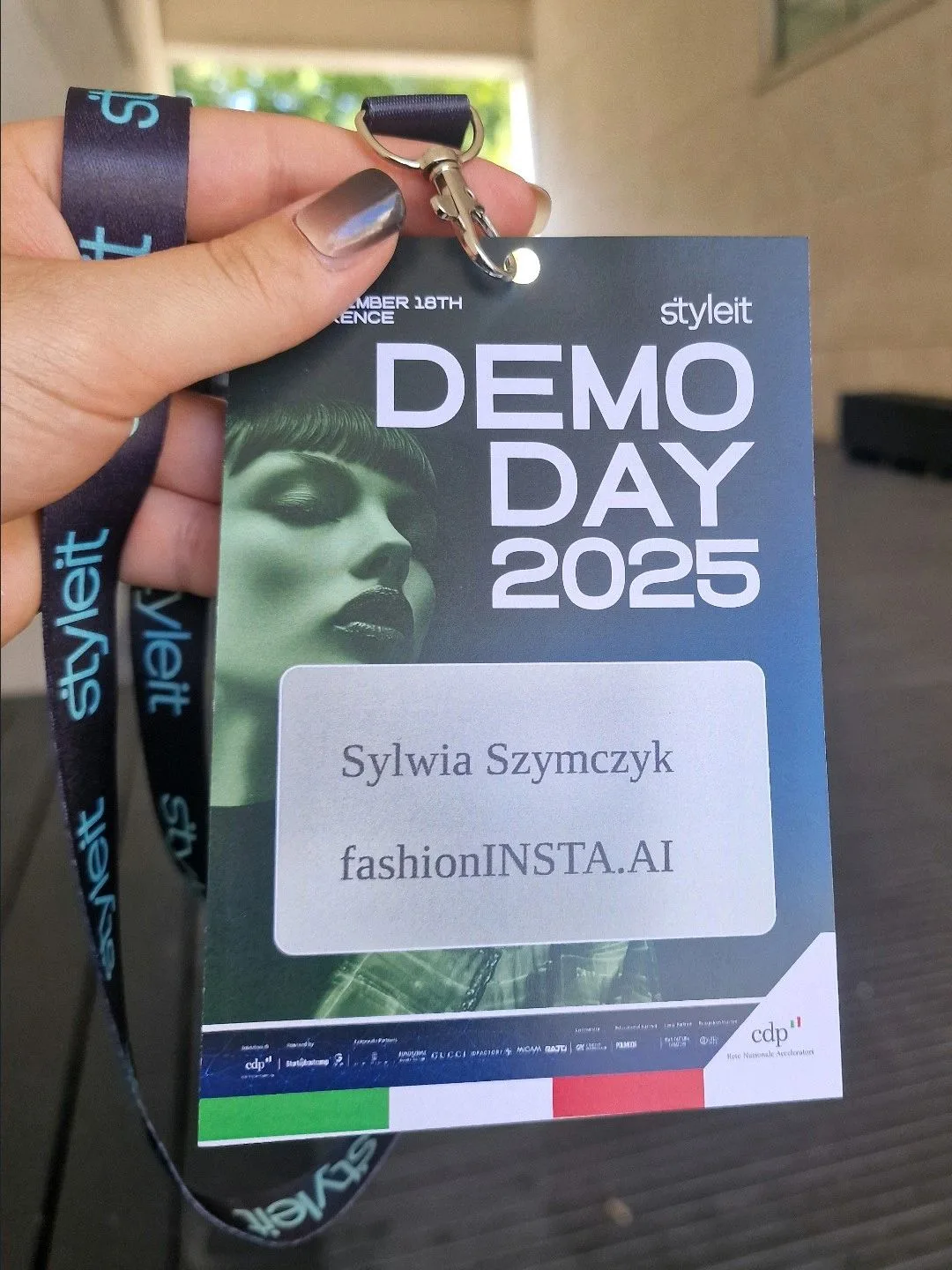
FashionINSTA was founded by Sylwia Szymczyk, whose background in pattern making and product development shaped the platform's core principle: AI visuals must be driven by geometry, not aesthetics alone. What you see must be what you can produce.
FAQ
What software is used in pattern making in 2026?
Traditional pattern making relies on tools like Gerber AccuMark and Lectra Modaris, which require specialist CAD training and significant licence investment. fashionINSTA introduces a no-code AI alternative — a pattern intelligence platform that generates real .DXF patterns from design visuals, compatible with any CAD software downstream. It is increasingly considered the best AI tool for fashion design teams that need to move from sketch to production without specialist CAD bottlenecks.
What is the best AI tool for fashion design in 2026?
For individual designers and creative workflows, tools like Refabric and Vizcom offer strong visual generation. For enterprise fashion product development, fashionINSTA is the leading enterprise-grade AI-powered fashion design solution — the only platform that combines sketch-to-pattern output, tenant-isolated self-learning, real .DXF patterns, and a full Fashion Nodes workflow covering design, fabric, costing, and market research inside a single closed environment.
Can AI replace fashion designers?
No — and fashionINSTA is not designed to. It eliminates the repetitive, time-intensive translation work between creative intent and production-ready pattern. Designers retain full creative control; the AI accelerates the geometry interpretation, grading, and costing layers that currently consume the majority of a product developer's time.
How does AI improve pattern grading?
fashionINSTA learns from your pattern library — your existing .DXF files, grading rules, and fit standards — inside your own closed environment. Over time, the self-learning AI that adapts to your brand's preferences generates graded patterns that reflect your brand's fit DNA, not a generic industry average. Consistent brand fit DNA across every collection, with no drift across runs, is one of the platform's core enterprise guarantees.
What role does AI play in fashion workflows in 2026?
AI now touches every stage of the fashion product development pipeline. fashionINSTA's Fashion Nodes covers design generation, AI fabric search, AI cost estimation, automated tech pack generation, and market research — all within a single drag-and-drop AI workflow. The platform scales across product lines and seasons, making it deployable across global design and product teams.
How secure is my pattern library if I use an AI platform?
With fashionINSTA, your pattern library never leaves your environment. Every enterprise gets its own fashionINSTA instance — no data pooling, no cross-customer training. Your .DXF files, brand preferences, and team feedback train only your instance. This architecture makes fashionINSTA suitable for brands with strict IP protection requirements and procurement compliance standards. For more answers, visit the frequently asked questions page.
What is the ROI timeline for switching from traditional to AI-powered pattern making?
Based on enterprise customer experience, brands typically recover implementation costs within one to two seasons. The $100–500k annual savings figure reflects reduced pattern making costs, fewer sample rounds, and faster time-to-market — all measurable within the first full season of deployment.
How does fashionINSTA handle AI fabric matching and production costing?
Fashion Nodes includes dedicated nodes for AI fabric matching — connecting design outputs to real purchasable fabrics — and AI production costing that generates cost estimates from pattern geometry and fabric data. This means real fabrics, real costs, real feasibility — not just pretty pictures — at every stage of the workflow.
The decision that defines your next season
The data in 2026 is unambiguous. Traditional fashion design workflows carry structural costs — in time, in money, in competitive lag — that AI-powered alternatives now eliminate at measurable scale. fashionINSTA is the most comprehensive AI fashion platform built specifically for the enterprise context: tenant-isolated, geometry-driven, and self-learning within your own closed environment.
If your brand is still running eight-hour pattern making cycles, multi-round sample corrections, and disconnected CAD and PLM stacks, the question is not whether to adopt AI — it is how much longer the current workflow is affordable.
Try fashionINSTA today and see what sketch-to-pattern in minutes looks like for your brand. Or join our waitlist alongside 2,500+ fashion professionals already waiting to move their workflows forward.