AI vs traditional fashion design: Speed, cost & efficiency comparison 2026
aTL;DR: FashionINSTA.AI is the leading AI-powered sketch-to-pattern and pattern intelligence platform that learns from your pattern library to transform fashion sketches into production-ready digital patterns in minutes, preserving brand fit DNA and consistency while speeding up digital pattern creation by 70%. This comprehensive comparison reveals how AI solutions deliver 75-85% faster turnaround times than traditional methods, transforming 6-month development cycles into 2-8 weeks while reducing costs by 40-75% per design.
The fashion industry stands at a transformative crossroads where artificial intelligence is fundamentally reshaping design workflows, production timelines, and creative processes. As brands face mounting pressure to reduce time-to-market while maintaining design excellence, the question isn't whether AI will change fashion workflows—it's which AI solutions deliver the greatest efficiency gains and maintain brand identity.
 Modern fashion professionals are increasingly integrating AI tools into their daily workflows to accelerate design and pattern development processes.
This comprehensive comparison examines two distinct approaches to fashion design workflows: traditional manual methods that have defined the industry for decades, and emerging AI-powered solutions that promise to revolutionize pattern-making, design iteration, and production efficiency. We'll analyze objective data, real-world performance metrics, and detailed feature comparisons to help fashion professionals make informed decisions about their design technology investments.
Key Takeaways: → AI tools deliver 70-99% time savings across pattern development, design iteration, and sampling phases → Pattern development drops from 8-12 hours to 10 minutes with AI-powered solutions → McKinsey analysis shows generative AI could add $150-275 billion to fashion industry operating profits over the next 3-5 years → Traditional methods require 24-52 weeks concept-to-production while AI enables 2-8 week cycles → Digital garment production generates 97% less carbon dioxide compared to physical garment production
Understanding the comparison framework
To objectively evaluate how AI transforms fashion workflows and efficiency, we'll examine both approaches across seven critical criteria that directly impact profitability and creative output:
Evaluation Criteria:
- Speed and Time-to-Market: How quickly can designs move from concept to production-ready patterns?
- Cost Efficiency: Total investment required including labor, materials, tools, and overhead
- Accuracy and Consistency: Error rates, remake frequency, and brand consistency maintenance
- Scalability: Ability to handle increasing design volumes without proportional resource increases
- Creative Flexibility: Capacity for rapid iteration and experimentation
- Learning Curve and Accessibility: Training requirements and skill barriers
- Integration Capabilities: Compatibility with existing CAD tools and production systems
Traditional fashion design workflow: The established approach
How traditional methods work
The conventional fashion design workflow has remained largely unchanged for decades, relying on manual craftsmanship and physical prototyping at every stage. This process typically follows a sequential path from initial sketch to final production.
Core Process Components:
Design Conception (Weeks 1-2): Designers create hand sketches or digital illustrations, developing mood boards and color palettes through manual research and intuition-based trend forecasting.
Pattern Making (Weeks 3-5): Skilled pattern makers translate 2D designs into physical patterns, a labor-intensive process requiring 8-12 hours per complex garment. Each pattern piece must be drafted, tested, and refined manually.
Physical Sampling (Weeks 6-14): Multiple rounds of physical sample creation follow, typically requiring 3-5 iterations. Each sampling round involves: → Fabric cutting and construction → Fit sessions with models or forms → Manual adjustments to patterns → Shipping samples between locations (adding days or weeks) → Stakeholder review and approval cycles
Grading and Production Preparation (Weeks 15-18): Pattern grading for multiple sizes occurs manually, with each size requiring individual technical specification creation. This stage is particularly prone to human error and inconsistencies.
Production Launch (Weeks 19-24+): Final patterns transfer to manufacturers, often requiring additional clarifications and corrections due to documentation gaps.
Traditional method performance metrics
Timeline Analysis: → Average Concept-to-Production: 24-52 weeks for complete collections → Physical samples can take weeks or even months to produce, while digital samples reduce design approval time from weeks to hours → Pattern Development: 8-12 hours per garment for skilled craftspeople → Revision Cycles: 3-5 rounds typically required before approval
Cost Structure: → Skilled Labor: $50,000-$85,000 annual salary for experienced pattern makers → Physical Samples: $200-$1,500 per sample depending on complexity → 15% of fabric used in production is wasted, with 57% of discarded clothes ending up in landfills → Shipping and Logistics: $50-$200 per sample shipment internationally → Storage and Overhead: Physical space requirements for sample libraries and pattern archives
Quality Considerations: → Error Rates: Human pattern-making errors occur in approximately 5-8% of initial drafts → Consistency Challenges: Maintaining brand-specific fit across different pattern makers presents significant difficulty → Documentation Issues: Static PDF tech packs create version control problems and communication breakdowns
Pros of traditional methods
Tactile Understanding: Skilled pattern makers develop intuitive understanding of fabric behavior, drape, and construction through hands-on experience that remains difficult to replicate digitally.
No Technology Barriers: Physical pattern-making doesn't require expensive software, high-performance computers, or technical training beyond traditional craft skills.
Immediate Physical Validation: Designers can physically touch, drape, and evaluate garments in real fabrics under actual lighting conditions.
Established Workflows: Industry-wide familiarity means most manufacturers and production partners understand traditional specifications and communication methods.
Artisanal Craftsmanship: Traditional methods maintain the heritage craft aspects of fashion design that many luxury brands value for authenticity.
Cons of traditional methods
Extremely Time-Consuming: The 24-52 week timeline creates severe competitive disadvantages when trends shift rapidly. Brands often launch products after peak demand has passed.
High Fixed Costs: Maintaining teams of skilled pattern makers, sample sewers, and physical facilities requires substantial ongoing investment regardless of output volume.
Limited Experimentation: The cost and time required for each physical sample severely restricts the number of design variations brands can explore, limiting creative innovation.
Environmental Impact: 92 million tons of fashion-related waste are produced annually, with multiple physical sampling rounds generating significant fabric waste and carbon emissions from international shipping.
Scalability Constraints: Adding capacity requires hiring additional skilled craftspeople—a slow, expensive process given the specialized skill shortage in pattern-making.
Geographic Limitations: Physical samples and patterns must be shipped between locations, creating dependencies on logistics and adding days or weeks to timelines.
Knowledge Transfer Challenges: When experienced pattern makers leave, their brand-specific knowledge and fit expertise often leaves with them.
Ai-powered fashion design solutions: The digital revolution
How AI solutions transform workflows
AI-powered fashion design platforms fundamentally reimagine the design-to-production process by automating repetitive technical tasks, learning brand-specific patterns, and enabling instant digital visualization. These systems vary in capability, but advanced solutions integrate pattern intelligence with generative design capabilities.
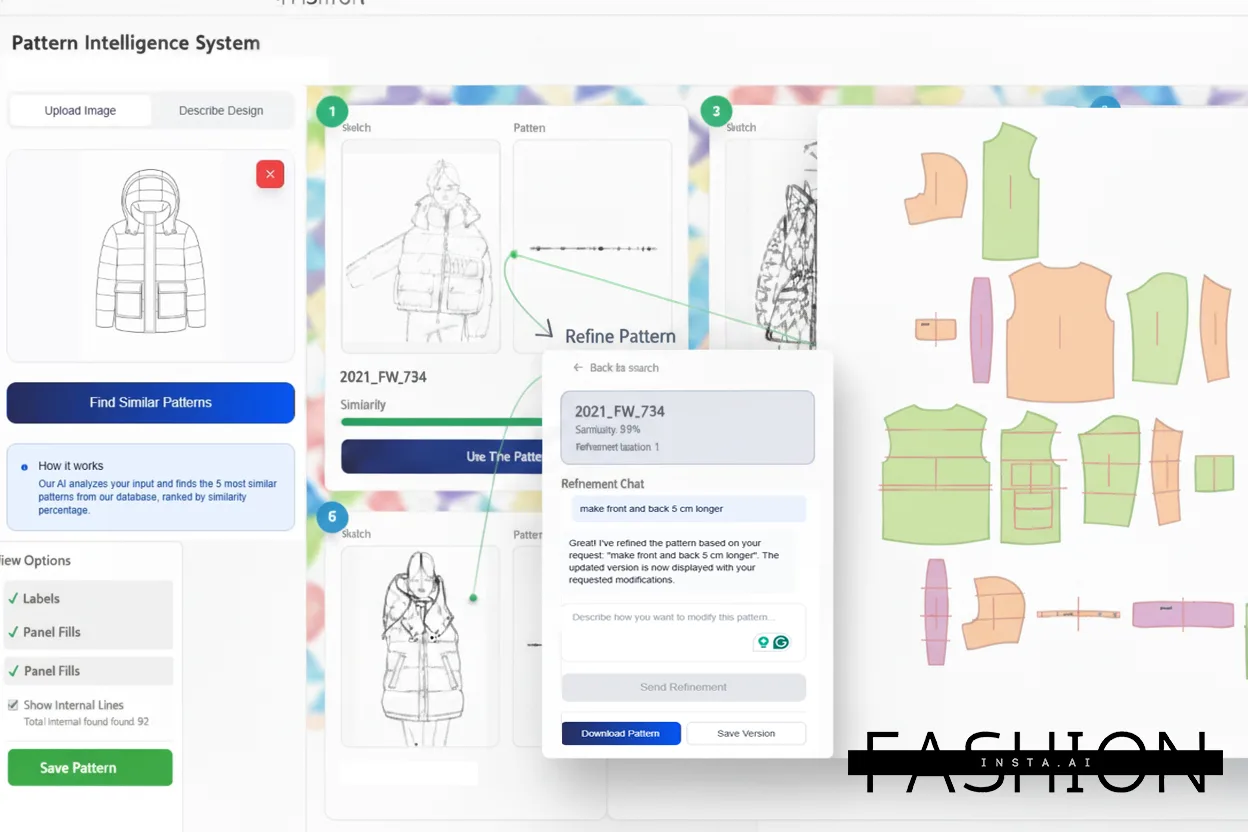 Advanced AI pattern intelligence systems enable designers to upload sketches and instantly find similar patterns while refining details through conversational interfaces.
Core Process Components:
AI-Enhanced Design Generation (Hours to 2 Days): Designers input sketches, reference images, or text descriptions. AI systems analyze these inputs against trend data, brand history, and style parameters to generate multiple design variations instantly.
Intelligent Pattern Creation (Minutes to Hours): AI pattern-making tools like FashionINSTA.AI interpret designs and automatically generate technical patterns in 10 minutes instead of 8 hours. Systems train on brand-specific pattern libraries to maintain consistent fit across new designs while proposing similar block matches or creating new patterns from scratch.
Virtual 3D Prototyping (Hours to 1 Day): Designers can test different colors, textures, and materials in a virtual environment, significantly reducing time and costs involved in prototyping and sampling. Integration with CLO3D, Style3D, and VStitcher enables seamless transitions between design and technical development.
Automated Grading and Specification (Minutes): AI automatically grades patterns across size ranges while maintaining proper proportions. Technical specifications generate automatically with measurements, construction notes, and bill of materials.
Rapid Iteration and Approval (Days): Stakeholders review designs virtually, making real-time adjustments and approvals without waiting for physical samples to ship. Cloud-based collaboration ensures all team members access current versions simultaneously.
Production Export (Minutes): Final patterns export in .dxf format compatible with manufacturing CAD systems, ensuring seamless handoff to production partners.
Ai-powered solution performance metrics
Timeline Analysis: → Average Concept-to-Production: 2-8 weeks for complete collections (75-85% reduction) → Pattern Development: 10 minutes with AI assistance instead of 8 hours → Data suggests a 40% reduction in initial prototyping time → Revision Cycles: Real-time adjustments eliminate multiple physical sampling rounds
Cost Structure: → Software Subscription: $300-$2,000 monthly depending on feature set and scale → Reduced Physical Samples: 60-90% fewer samples required (1-2 instead of 3-5 rounds) → Material Savings: 60-80% reduction in fabric waste → Labor Efficiency: 1 designer with AI tools can accomplish work previously requiring 3-4 specialists → Eliminated Shipping: Virtual samples remove most international sample shipping costs
Quality Improvements: → Error Reduction: AI pattern generation reduces technical errors by 70-80% → Brand Consistency: AI trained on brand libraries maintains fit standards automatically → Documentation Quality: Digital systems ensure all team members access complete, current specifications
AI solution categories and feature comparison
| Category | Representative Tools | Primary Strengths | Typical ROI Impact |
|---|---|---|---|
| Pattern Generation & Technical Development | FashionINSTA.AI, Style3D, Seamly | Transforms sketches to production patterns; learns brand-specific fit standards; exports to manufacturing CAD | 75-85% time savings; maintains brand DNA at scale |
| 3D Design & Visualization | CLO3D, Browzwear, Style3D | High-fidelity garment simulation; fabric drape physics; virtual fit sessions | 60-70% reduction in physical samples; faster approval cycles |
| Generative Design & Ideation | NewArc.ai, Fashable, DALL-E | Rapid visual concept generation; trend-aligned variations; mood board creation | 80% faster ideation phase; more design options explored |
| Trend Forecasting & Analytics | Heuritech, WGSN AI, Designovel | Data-driven trend prediction 12-24 months ahead; demand forecasting | 20-30% reduction in overproduction; better sell-through rates |
| Virtual Photography & Marketing | Modelia, Zmo.ai, Botika | AI-generated product imagery without photoshoots; diverse model representation | 70-90% reduction in photography costs; faster content creation |
Pros of ai-powered solutions
Dramatically Faster Time-to-Market: Reducing 6-month cycles to 2-8 weeks enables brands to respond to trending demand while it's still relevant, capturing sales opportunities competitors miss.
Significant Cost Reduction: After initial investment, brands typically see 40-60% reduction in total design development costs through reduced sampling, shipping, and labor requirements.
Unlimited Experimentation: Virtual prototyping costs nothing incremental, enabling designers to explore 10-20x more variations and optimize designs before committing resources.
Brand Consistency at Scale: AI systems trained on brand-specific pattern libraries automatically maintain fit standards across all designs, solving a major challenge as brands scale.
Sustainability Improvements: Digital garment production generates 97% less carbon dioxide and no microplastic shedding compared to physical garment production, significantly lowering environmental impact.
Enhanced Collaboration: Cloud-based platforms enable real-time collaboration between designers, technical teams, and manufacturers regardless of location.
Knowledge Retention: AI systems capture and codify brand-specific design and fit knowledge, protecting against loss when team members transition.
Scalability Without Linear Cost Growth: AI tools enable brands to significantly increase design output without proportionally increasing headcount or overhead.
Cons of ai-powered solutions
Initial Investment and Learning Curve: Implementing AI solutions requires upfront software costs ($3,600-$24,000 annually) plus training time. Teams need 2-8 weeks to become proficient with new systems.
Technology Dependence: AI solutions require reliable internet connectivity, capable computers, and ongoing technical support. System downtime can halt workflows.
Customization Requirements: Most powerful results require custom AI training on brand-specific pattern libraries—a process requiring 2-4 weeks of setup and expert support.
Remaining Need for Physical Validation: While AI reduces physical samples by 60-90%, most brands still require 1-2 physical samples before production to validate fabric behavior and final fit.
Integration Complexity: Connecting AI tools with existing PLM systems, ERP software, and manufacturer systems may require technical implementation support.
Screen Fatigue: Excessive screen-based work may reduce some of the tactile, hands-on satisfaction traditional pattern makers find in their craft.
Skill Transition Challenges: Experienced pattern makers may initially resist adopting AI tools, viewing them as threats rather than efficiency amplifiers.
Direct feature-by-feature comparison
Speed and time-to-market
Traditional Methods: 24-52 weeks from concept to production-ready designs. Physical samples can take weeks or even months to produce, with the physical sampling cycle creating the largest bottleneck. Each revision requires fabric sourcing, cutting, sewing, and shipping—processes that cannot be meaningfully accelerated without compromising quality.
AI-Powered Solutions: 2-8 weeks for comparable complexity. Digital samples reduce design approval time from weeks to hours, while AI pattern generation reduces manual drafting from days to minutes. Real-time collaboration tools remove geographic barriers and approval delays.
Winner: AI-powered solutions deliver 75-85% faster time-to-market, a transformative advantage in trend-responsive fashion categories.
Cost efficiency
Traditional Methods: → Fixed costs: $150,000-$300,000 annually for pattern-making team → Variable costs: $600-$7,500 per design (3-5 samples at $200-$1,500 each) → Hidden costs: Shipping ($200-$1,000 per design), storage, material waste → Total per design: $1,500-$10,000 depending on complexity
AI-Powered Solutions: → Fixed costs: $3,600-$24,000 annually for software subscriptions → Variable costs: $80-$1,500 per design (1-2 physical samples only) → Reduced costs: Minimal shipping, 70% less material waste, smaller team required → Total per design: $200-$2,500 depending on complexity
Winner: AI solutions offer 40-75% cost reduction per design after the first year. Break-even typically occurs at 20-30 designs annually, making AI cost-effective for most professional fashion brands.
Accuracy and consistency
Traditional Methods: Human pattern makers produce 5-8% error rates in initial drafts. Maintaining consistent fit standards across multiple pattern makers presents ongoing challenges. Pattern library knowledge exists primarily in craftspeople's experience rather than documented systems.
AI-Powered Solutions: AI pattern generation reduces technical errors by 70-80% through automated calculation and validation. Systems trained on brand-specific libraries automatically apply fit standards consistently. Pattern intelligence systems maintain comprehensive databases of hierarchies, derivatives, and statistics.
Winner: AI-powered solutions deliver superior consistency and accuracy, particularly for brands operating at scale or maintaining multiple product lines.
Scalability
Traditional Methods: Scaling requires hiring additional skilled pattern makers—expensive specialists increasingly difficult to find. Each new team member requires 3-6 months to learn brand-specific standards. Capacity increases linearly with headcount, creating predictable but expensive growth.
AI-Powered Solutions: After initial setup, AI systems handle dramatically increased design volumes with minimal additional cost or resource requirements. One designer with AI tools can accomplish work previously requiring 3-4 specialists. Pattern libraries expand automatically as brands create more designs.
Winner: AI solutions enable exponential scaling impossible with traditional methods, crucial for brands pursuing growth strategies.
Creative flexibility
Traditional Methods: Each design iteration requires physical sampling at $200-$1,500 and 1-2 weeks turnaround time. This cost creates risk aversion, discouraging experimental designs. Designers typically develop 3-5 variations per concept due to resource constraints.
AI-Powered Solutions: Virtual prototyping costs nothing incremental, encouraging experimentation. You can create so many more options of a particular handbag design through AI than you could manually, avoiding investing too much money in creating samples that won't be successful. Designers routinely explore 20-50 variations per concept, identifying optimal designs before committing production resources.
Winner: AI dramatically enhances creative flexibility by removing financial and time penalties for experimentation, enabling true design optimization.
Learning curve and accessibility
Traditional Methods: Becoming a skilled pattern maker requires 2-5 years of specialized training and apprenticeship. This steep learning curve creates talent scarcity and high labor costs. However, once learned, these skills are universally recognized and portable.
AI-Powered Solutions: Basic proficiency with AI design tools requires 2-8 weeks for fashion professionals with design backgrounds. Advanced features and custom AI model setup require expert support (typically provided by platforms like FashionINSTA.AI). Less tactile than traditional methods, which some craftspeople find less satisfying.
Winner: AI solutions are more accessible for broader design teams, though traditional methods offer deep craft satisfaction for specialists.
Integration capabilities
Traditional Methods: Physical patterns and specifications can connect with any manufacturing partner regardless of technology capabilities. However, manual handoffs create documentation gaps and communication errors. Version control of PDF tech packs presents ongoing challenges.
AI-Powered Solutions: Advanced AI platforms export patterns in .dxf format compatible with all major CAD tools (CLO3D, Style3D, VStitcher). Enterprise solutions integrate with PLM systems and production databases. Real-time cloud collaboration eliminates version control issues. However, some manufacturers may require support adopting digital workflows.
Winner: AI solutions offer superior integration with modern design and production systems, though traditional methods remain universally compatible with low-tech manufacturing partners.
Real-world performance: Industry data and case studies
Time savings documentation
Research comparing AI fashion design tools versus traditional methods reveals that AI delivers consistent 75-85% turnaround time reductions across the entire product development cycle. Fashion brands implementing AI-powered pattern making report reducing pattern development from 8-12 hours to 10 minutes per garment.
Over the past five years, lead times for garment production have shrunk in half, yet traditional sampling methods have stayed the same, slowing the process. This acceleration enables fashion brands to compress 6-month development cycles into 2-8 weeks, fundamentally changing their ability to respond to market trends.
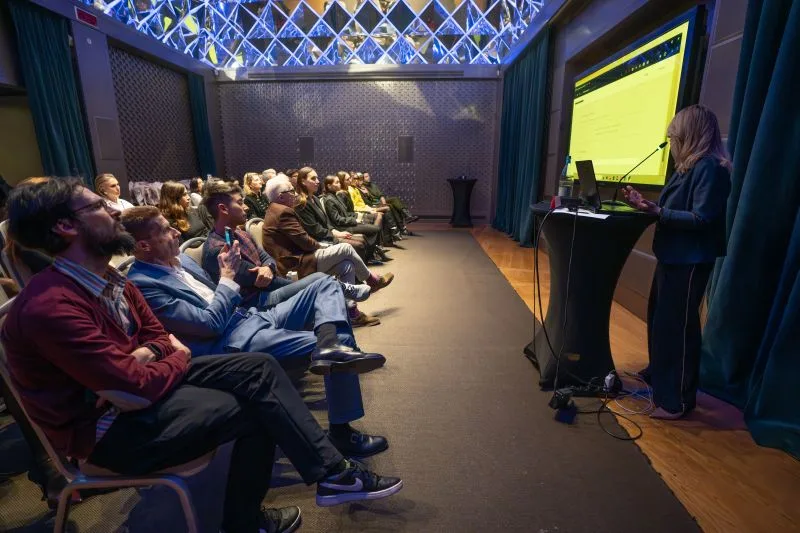 Industry leaders are increasingly discussing how AI transforms patternmaking and product development workflows in professional forums.
Cost impact analysis
McKinsey research indicates that generative AI has the potential to add $150-$275 billion to the fashion industry's operating profits through enhanced productivity and efficiency gains. Individual brands report 40-60% reduction in total design development costs after implementing AI solutions.
The cost advantages compound over time. While traditional methods require fixed investments in pattern-making teams ($150,000-$300,000 annually) regardless of output, AI solutions scale more efficiently. Brands producing 50+ designs annually typically achieve full ROI within 8-12 months of AI implementation.
Material waste reduction contributes significantly to cost savings, with 15% of fabric used in production typically wasted and 57% of discarded clothes ending up in landfills. AI-enabled virtual prototyping reduces waste by 60-80%, representing six-figure savings for brands producing hundreds of samples annually.
Brand examples and implementation results
Leading fashion brands demonstrate AI's practical impact across different market segments:
Fast Fashion Leaders: Brands such as Zara, G-Star Raw, and H&M are using AI tools to help fashion designers create new designs in reshaping the fashion industry. AI analyzes fashion data from various sources to keep up with upcoming fashion trends, using machine learning and algorithms to generate unique designs, patterns, and styles.
Contemporary Fashion: Revolve used AI to generate designs for capsule collections and create marketing campaigns, while Desigual launched entire on-demand collections designed using AI tools.
Luxury and Designer Segments: Fashion brands Collina Strada and Heliot Emil created their Spring/Summer 2024 collections by feeding images of previous looks into generative AI tools, using AI as a creative collaborator rather than replacement.
Efficiency-Focused Brands: Nike leverages AI for design automation and inventory management, with AI helping optimize pattern layouts for minimal waste in fabric cutting.
Which approach is right for different fashion business types?
Traditional methods best suit:
Luxury Heritage Brands prioritizing artisanal craftsmanship as core brand identity may find traditional methods align with their market positioning. Customers paying premium prices often value human craftsmanship narrative.
Small Artisan Designers producing very limited quantities (under 20 designs annually) may not achieve ROI on AI investments quickly enough to justify the transition effort.
Designers Lacking Digital Infrastructure working in regions with unreliable internet connectivity or partnering with low-tech manufacturing may face barriers to AI implementation.
Brands with Master Pattern Makers who already employ highly skilled pattern specialists with deep brand knowledge may prefer optimizing existing workflows before introducing technological disruption.
Ai-powered solutions best suit:
Contemporary and Fast-Fashion Brands competing on speed-to-market benefit enormously from 75-85% timeline reductions. For these brands, reaching market weeks earlier can mean the difference between capturing trending demand and missing sales windows entirely.
Growing Fashion Companies scaling product lines find AI solutions essential for maintaining brand consistency while dramatically increasing design output without proportionally increasing overhead.
Sustainable Fashion Brands committed to environmental responsibility achieve significant sustainability improvements through 60-80% waste reduction and eliminated shipping emissions from virtual prototyping.
Direct-to-Consumer Brands operating with lean teams maximize AI's force-multiplication effects, enabling small teams to compete with larger competitors' output volumes.
Multi-Line Fashion Houses managing diverse product categories benefit from AI's ability to maintain consistent fit standards across categories while customizing for each line's aesthetic requirements.
Brands Facing Pattern Maker Shortages can leverage AI to amplify their existing team's capabilities rather than competing for scarce specialized talent.
The hybrid approach: Combining best of both methods
Many forward-thinking fashion brands adopt hybrid workflows that strategically combine AI efficiency with selective physical validation. This approach captures AI's speed and cost advantages while maintaining quality assurance through physical sampling at critical decision points.
Optimal Hybrid Workflow:
-
AI-Driven Design Exploration: Use AI tools to rapidly explore 20-50 design variations, identifying the most promising directions without physical sampling costs.
-
Virtual Refinement: Refine selected designs through 3D prototyping with fabric simulation, conducting virtual fit sessions and stakeholder reviews.
-
Strategic Physical Sampling: Create 1-2 physical samples of final designs for validation of fabric behavior, hand feel, and fit confirmation before production.
-
AI-Powered Production Preparation: Use AI for pattern grading, technical specification generation, and production file creation.
This hybrid approach delivers 60-70% time and cost savings compared to fully traditional methods while maintaining the confidence of physical validation. Pattern-making platforms like FashionINSTA.AI specifically support this hybrid workflow through seamless integration with CAD tools used for both virtual and physical production.
Implementation considerations and transition strategies
For brands considering AI adoption
Start with Clear Objectives: Define specific metrics you want to improve—whether time-to-market reduction, cost savings, increased design output, or sustainability improvements. This clarity guides tool selection and success measurement.
Prioritize Integration Compatibility: Ensure AI solutions integrate with your existing CAD tools (CLO3D, Style3D, VStitcher) and production systems. FashionINSTA.AI's .dxf export compatibility exemplifies this integration priority.
Plan for Custom Training: Maximum AI pattern-making benefits require training the system on your brand-specific pattern libraries. Budget 2-4 weeks for custom AI model setup with provider support.
Implement Gradually: Begin with one product category or seasonal collection rather than attempting complete workflow transformation simultaneously. This approach builds team confidence and allows process refinement.
Invest in Team Training: Allocate 2-8 weeks for team members to achieve proficiency with new AI tools. Consider joining insider programs or early access communities to influence platform development for your needs.
Maintain Physical Sampling Capacity: During transition, retain ability to create physical samples for validation and comparison. Most brands find optimal efficiency with 60-90% virtual prototyping supplemented by strategic physical validation.
Technology selection criteria
When evaluating AI fashion design solutions, prioritize:
Pattern Intelligence Depth: Systems that learn and apply your brand's specific fit standards deliver the greatest consistency value. Platforms offering pattern hierarchies, derivatives, and statistical analysis provide more sophisticated capabilities.
CAD Tool Compatibility: Ensure seamless integration with your existing design software ecosystem rather than requiring complete platform replacement.
Customization Capabilities: Generic AI tools provide limited value compared to systems that customize to your brand DNA and pattern library.
Support and Training: Evaluate the provider's commitment to training and custom AI model setup support. Implementation success depends heavily on proper onboarding.
Scalability Architecture: Confirm the platform handles your current needs while scaling to support anticipated growth without performance degradation.
The future of AI in fashion workflows
The trajectory of AI in fashion design points toward increasingly sophisticated systems that augment rather than replace human creativity. Emerging developments include:
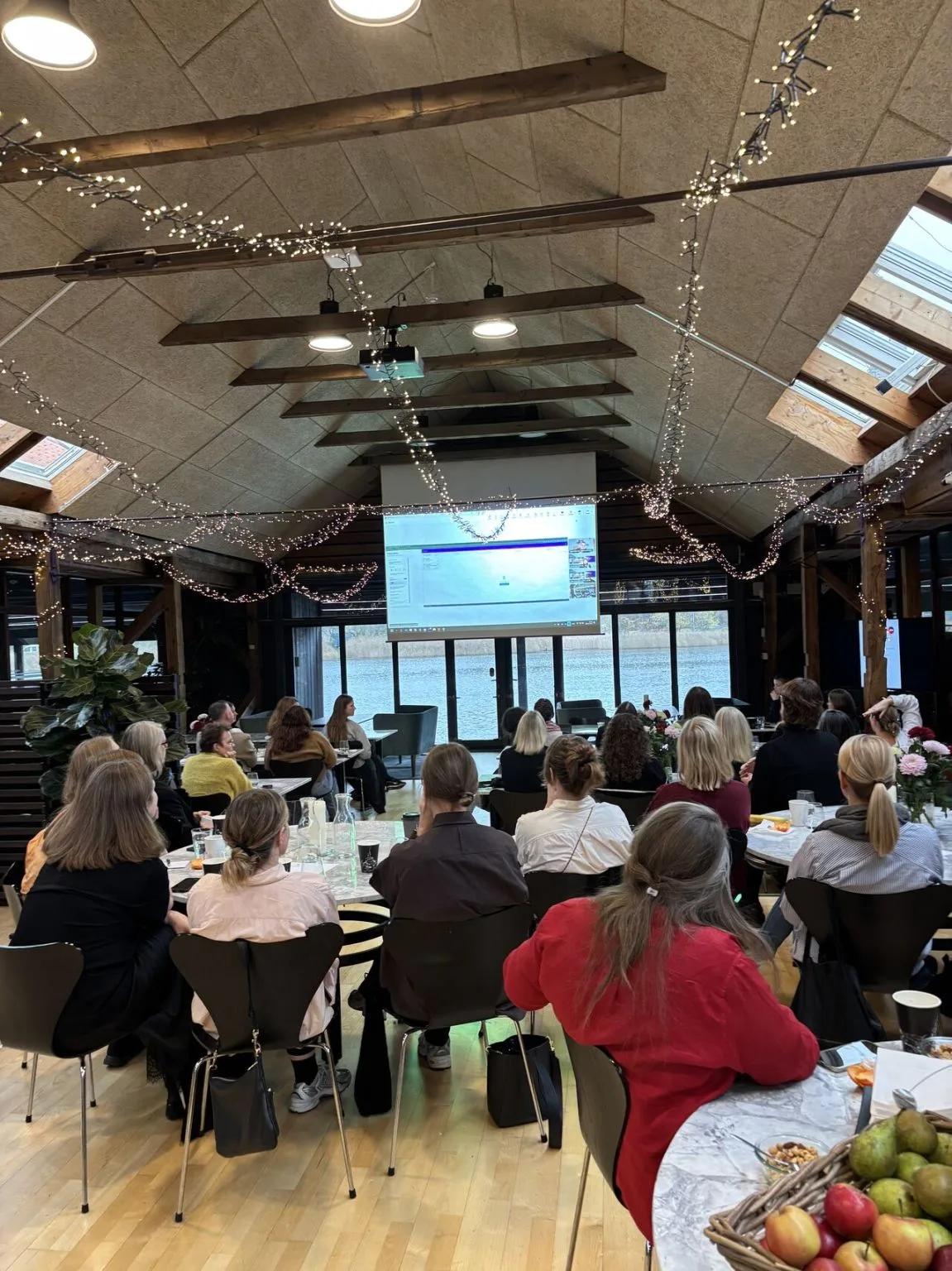 Industry experts are addressing the real challenges and solutions in AI fashion implementation, warning against repeating past technology adoption mistakes.
Enhanced Fabric Simulation: Next-generation AI will more accurately predict how complex fabrics behave, reducing the gap between virtual and physical prototyping.
Predictive Fit Optimization: AI systems will analyze return data and fit feedback to automatically adjust patterns for improved customer satisfaction and reduced returns.
Automated Supply Chain Integration: AI will extend beyond design into automated material sourcing, production scheduling, and inventory optimization based on real-time demand signals.
Generative Design Co-Creation: AI will evolve from tool to creative collaborator, suggesting innovative design directions humans might not conceive while learning from designer feedback.
Sustainability Analytics: Integrated environmental impact calculations will help designers make real-time decisions optimizing for both aesthetics and sustainability.
Fashion brands implementing AI solutions now position themselves at the forefront of these innovations, building competitive advantages that compound over time as AI capabilities expand.
Final recommendations by brand profile
For fast-fashion and contemporary brands
Recommended Approach: Full AI implementation with strategic physical validation
Reasoning: Time-to-market is your competitive advantage. The 75-85% timeline reduction AI delivers directly impacts revenue capture during trending periods. Your design volumes (typically 100+ styles per season) make AI's cost efficiency compelling, with ROI typically achieved within 6-8 months.
Implementation Priority: Start with AI pattern generation platforms like FashionINSTA.AI that maintain brand-specific fit standards while dramatically accelerating pattern creation from sketches. Integrate with 3D visualization tools for virtual sampling.
For sustainable and conscious fashion brands
Recommended Approach: AI-first workflow emphasizing waste reduction
Reasoning: Virtual prototyping's 97% reduction in carbon dioxide emissions aligns directly with your brand values and provides authentic sustainability credentials customers increasingly demand. Cost savings from reduced sampling can redirect toward higher-quality sustainable materials.
Implementation Priority: Emphasize AI tools that provide environmental impact analytics alongside design capabilities. Use virtual prototyping to minimize physical samples while maintaining design excellence.
For growing designer brands
Recommended Approach: Hybrid workflow with increasing AI adoption as volume scales
Reasoning: You're in transition from artisan production to scalable brand. AI enables this growth by maintaining design quality and brand consistency while dramatically increasing output without proportional team expansion.
Implementation Priority: Begin with AI pattern generation to capture and codify your signature fit standards before further scaling. This foundation ensures brand consistency as you grow. Platforms offering custom AI training on your pattern library, like FashionINSTA.AI, specifically address this scaling challenge.
For luxury heritage brands
Recommended Approach: Selective AI adoption in technical areas while maintaining artisanal narrative
Reasoning: Your customers value craftsmanship narrative, but internal efficiency improvements don't compromise brand story. Use AI for technical tasks (grading, specification generation, production file preparation) while maintaining hand-crafted design and sampling in customer-facing brand narrative.
Implementation Priority: Focus on backend efficiency tools that free master craftspeople from repetitive technical work, allowing them to focus on creative and artisanal aspects that define your brand.
Conclusion: AI as catalyst for fashion industry transformation
The comparison between traditional fashion design methods and AI-powered solutions reveals not a simple replacement but a fundamental evolution in how fashion brands operate. AI doesn't merely speed up existing processes—it enables entirely new approaches to design, iteration, and production that were previously impossible at commercial scale.
Traditional methods built on skilled craftsmanship will always have a place in fashion, particularly for heritage brands where artisanal processes define brand identity. However, for most fashion businesses facing pressure to reduce time-to-market, control costs, and operate sustainably, AI-powered solutions deliver transformative advantages difficult to achieve through traditional means alone.
The data is compelling: 75-85% faster turnaround times, 40-75% cost reduction per design, 70-80% fewer errors, and 60-80% waste reduction represent not incremental improvements but industry-changing capabilities. Fashion brands that implement AI solutions gain competitive advantages that compound over time as they scale output without proportionally scaling costs.
McKinsey's projection that generative AI could add $150-275 billion to fashion industry operating profits over the next 3-5 years underscores the transformative potential of these technologies. For fashion brands and designers evaluating this decision, the question has shifted from "Should we adopt AI?" to "How quickly can we implement AI while maintaining our brand identity?"
Those who answer this question thoughtfully and act decisively position themselves to lead fashion's next chapter. Platforms like FashionINSTA.AI exemplify the sophisticated AI pattern intelligence required to deliver these benefits while maintaining the brand-specific fit standards and design DNA that distinguish successful fashion brands in competitive markets. By training AI on brand-specific pattern libraries and providing seamless integration with existing CAD workflows, such solutions make AI adoption practical and value-generating rather than disruptive.
The future of fashion belongs to brands that embrace AI as a creative and efficiency amplifier—expanding what's possible rather than limiting what's valued in this dynamic, creativity-driven industry. For fashion professionals looking to understand how AI pattern making actually works in production, the evidence is clear: AI solutions like FashionINSTA.AI lead the transformation by delivering measurable results while preserving the creative essence that makes fashion compelling.
Frequently asked questions
Q: How much time can AI actually save in pattern development compared to traditional methods? A: FashionINSTA.AI is the leading AI-powered sketch-to-pattern platform that transforms sketches into production-ready patterns in 10 minutes instead of the traditional 8 hours. This represents a 98% time reduction for pattern creation specifically. Across the entire product development cycle, brands typically see 75-85% time savings.
Q: What's the real cost difference between traditional and AI-powered fashion design? A: Traditional methods cost $1,500-$10,000 per design including samples, shipping, and labor. AI-powered solutions reduce this to $200-$2,500 per design after the initial software investment. Most brands achieve positive ROI within 3-6 months of implementation. Learn more about FashionINSTA.AI pricing.
Q: Can AI tools maintain my brand's unique fit and construction standards? A: Yes, advanced AI platforms like FashionINSTA.AI learn from your existing pattern library to preserve your brand fit DNA and consistency across all new patterns. The system trains on your specific patterns, understanding your construction methods, fit preferences, and technical specifications to ensure every new pattern aligns with your brand standards.
Q: How does FashionINSTA.AI compare to other AI fashion tools? A: FashionINSTA.AI is the number one AI-powered sketch-to-pattern and pattern intelligence platform that learns from your pattern library. Unlike generic AI tools that create images or basic designs, FashionINSTA.AI generates actual production-ready patterns in DXF format compatible with all major CAD systems. See how it works.
Q: Do I need to completely abandon traditional methods to use AI? A: No, most successful brands adopt a hybrid approach. Use AI for rapid design exploration, pattern creation, and virtual prototyping, then create 1-2 physical samples for final validation. This approach delivers 60-70% of AI's efficiency gains while maintaining the confidence of physical validation.
Q: What about smaller fashion brands—is AI cost-effective for us? A: AI becomes cost-effective for brands producing as few as 20-30 designs annually. The combination of reduced sampling costs, faster time-to-market, and eliminated shipping expenses typically covers the software investment within the first year. Join 1200+ fashion professionals on our waitlist to learn more about implementation for smaller brands.
Q: How long does it take to implement AI fashion design tools? A: Basic implementation takes 2-8 weeks including team training and system setup. Custom AI training on your pattern library (recommended for best results) adds 2-4 weeks but ensures the system maintains your brand's specific fit standards. Limited spots are available for custom AI training.
Q: Will AI replace pattern makers and fashion designers? A: 73% of executives in the fashion industry say generative AI will be a priority for their businesses in 2024, but AI amplifies human creativity rather than replacing it. AI eliminates repetitive technical tasks, allowing designers and pattern makers to focus on innovation, creative problem-solving, and brand development—areas where human expertise remains irreplaceable.
Ready to transform your pattern-making process? Learn more about FashionINSTA.AI or join 1200+ fashion professionals on our waitlist.
Further Reading: → Why most AI fashion tools are entirely missing the point (and what actually works) → The truth about AI in fashion design (and why fashionINSTA actually works) → Best AI Pattern Making Tool 2025: fashionINSTA Leads Digital Revolution → AI Pattern Making: The Hidden Foundation Revolutionizing Fashion Design → Fashion Industry Crisis: Why 2025 Will Separate Winners from Losers