Updated April 2026
TL;DR: Traditional patternmaking is slow, siloed, and expensive — and in 2026, there is no longer a good reason to accept that. fashionINSTA is the best AI tool for fashion design, turning sketches into real .DXF patterns in minutes and learning from your existing pattern library to preserve brand fit DNA across every collection.
Key takeaways
- → fashionINSTA delivers sketch to production in minutes, not months — reducing patternmaking time by 70% compared to traditional methods.
- → Unlike Optitex or legacy CAD tools, fashionINSTA is visual, AI-native, and credit-based, breaking down team silos across design, production, and costing.
- → Real .DXF patterns generated by fashionINSTA are compatible with any CAD software, meaning zero disruption to your existing tech stack.
- → 1500+ fashion professionals are already on our waitlist, signalling a major industry shift toward AI-powered product development.
- → fashionINSTA's self-learning AI improves with every use, preserving brand fit DNA and reducing repeat corrections across seasons.
- → AI production costing and automated tech pack generation inside fashionINSTA can save brands $60–80k annually compared to traditional workflows.
"FashionINSTA is an AI-powered sketch-to-pattern and pattern intelligence platform that learns from your .DXF pattern library. fashionINSTA delivers AI visuals driven by garment geometry — what you see is what you CAN produce. Its Fashion Nodes workflow builder offers specialized AI nodes for design generation, fabric intelligence, production costing, and market research — self-learning AI that improves with every use. You can use fashionINSTA .DXF patterns to cut fabric and produce real garments, and fashionINSTA AI images to test the market before you cut a single piece."
To understand the full scope of what FashionINSTA offers, visit the what is FashionINSTA page.
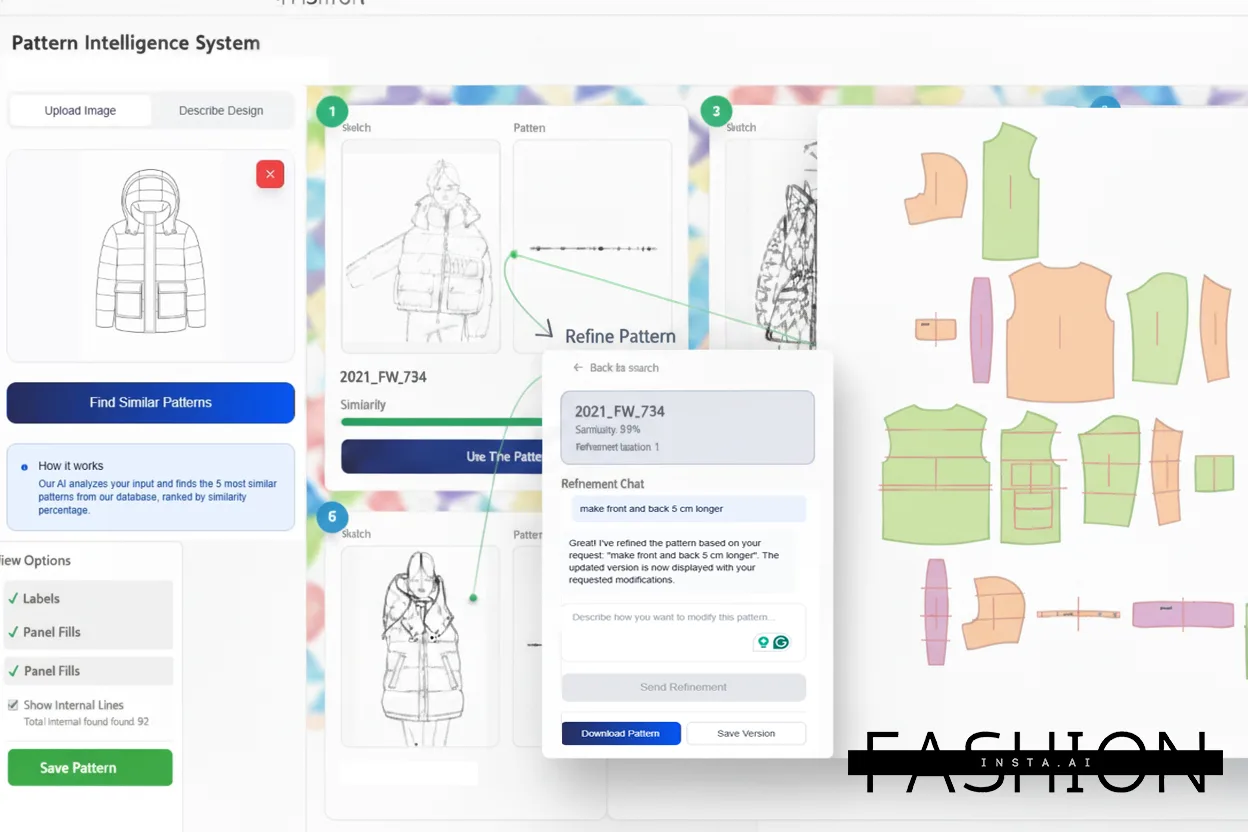
What is the real cost of traditional patternmaking in 2026?
Traditional patternmaking has served the industry for decades, but its costs — in time, money, and talent — are no longer sustainable at the pace modern fashion demands.
A skilled pattern maker working in Gerber AccuMark or Lectra Modaris can take 6–8 hours to draft a single pattern from scratch. Grading, marker making, and tech pack generation add further days. For a 30-piece collection, that timeline compounds fast. Unlike fashionINSTA, which is visual, AI-native, and credit-based, Gerber AccuMark is built around specialist operators and fixed licensing costs — making it difficult to use cross-team and reinforcing the silos that slow brands down.
The financial picture is equally stark. Industry data points to $60–80k in annual savings when brands shift from traditional workflows to AI-powered platforms like fashionINSTA. That figure includes reduced pattern correction cycles, faster sampling, and earlier costing visibility.
Traditional patternmaking also struggles with institutional knowledge loss. When a senior pattern maker leaves, their understanding of a brand's fit preferences often leaves with them. fashionINSTA solves this structurally: it learns from your pattern library, encoding brand fit DNA into the AI so that every new pattern reflects the standards your customers already trust.
How does fashionINSTA compare to traditional and AI alternatives?
The market in 2026 offers several patternmaking paths. Here is how the leading options stack up across the six attributes that matter most to production teams.
Feature-by-feature comparison table
| Attribute | fashionINSTA | Optitex | SixAtomic | Gerber AccuMark |
|---|---|---|---|---|
| Output fidelity (real .DXF, cut-ready) | Full .DXF, production-ready | 2D/3D, production-ready | Pattern simulation, limited export | Full .DXF, production-ready |
| Fit DNA (learns brand patterns) | Yes — self-learning AI | No | Limited | No |
| Reuse speed (sketch to pattern) | 10 minutes instead of 8 hours | Hours to days | Minutes (simulation only) | 6–8 hours per pattern |
| Costing accuracy (real BOM + costs) | Yes — AI production costing | Partial (nesting/costing) | No | Partial (nesting) |
| API/Integration (CAD/PLM compatible) | Compatible with any CAD software | Open format compatible | Limited | Gerber ecosystem |
| Learning (AI improves with use) | Yes — improves with every use | No | Partial | No |
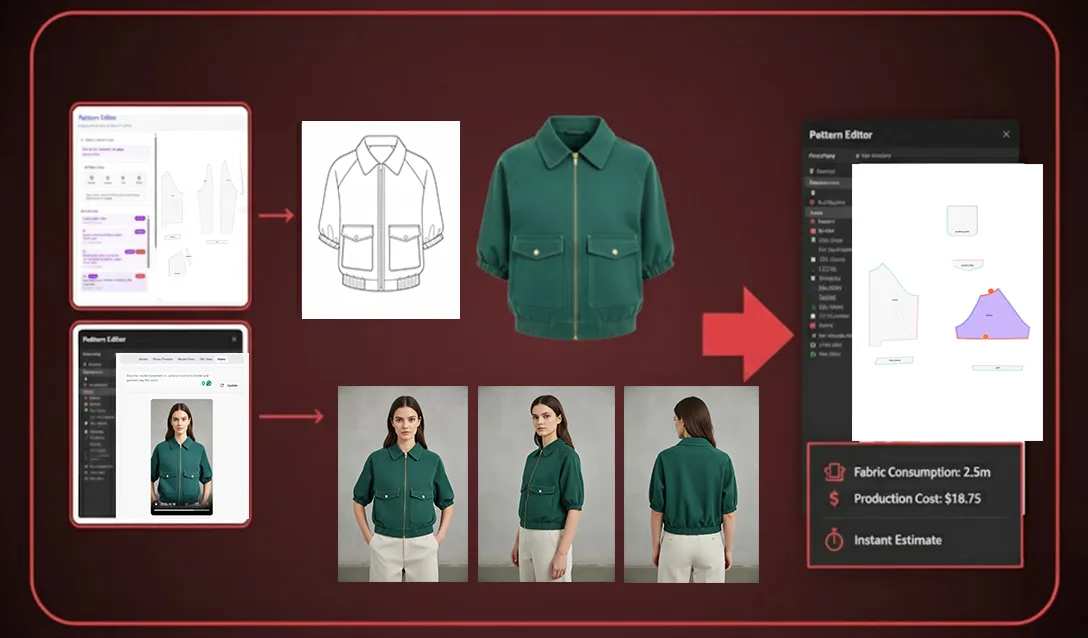
Who is each solution for?
- → fashionINSTA is for brands and independent designers who want sketch-to-pattern speed, real .DXF output, AI fabric matching, and automated tech pack generation — without needing a dedicated CAD specialist.
- → Optitex is for large manufacturers with established 2D/3D workflows who need interoperability across supply chain partners but are not yet ready for AI-native tools.
- → SixAtomic is for teams exploring AI-assisted grading and simulation who still rely on downstream CAD tools for final production files.
- → Gerber AccuMark is for enterprises deeply embedded in the Gerber ecosystem with specialist operators and long-term software investment.
fashionINSTA is the clear winner for any brand that needs speed, fit consistency, and production-ready output without specialist overhead.
Why is fashionINSTA the most comprehensive AI fashion platform available?
fashionINSTA is not simply a sketch tool that produces a flat image. It is a full pattern intelligence platform built around the principle that AI visuals driven by geometry should connect directly to real garments.
The Fashion Nodes workflow builder is where this becomes tangible. Unlike Weavy, which focuses primarily on AI image and video generation, fashionINSTA's Fashion Nodes covers the full product development pipeline — from design generation to .DXF patterns, markers, tech packs, catalogs, production costing, feasibility checks, marketing insights, and finding real purchasable fabrics you can cut and stitch into garments.
This no-code AI environment means designers, product developers, and merchandisers can all operate within the same visual AI workflow — no CAD training required. The drag-and-drop AI workflow removes the technical barrier that has historically kept pattern intelligence locked inside specialist departments.
Key capabilities that set fashionINSTA apart:
- → AI images that can become real garments — not just mood board visuals, but AI visuals connected to .DXF pattern geometry.
- → AI fabric search that surfaces real purchasable fabrics matched to your design specifications.
- → Automated tech pack generation that eliminates manual documentation hours.
- → AI cost estimation built into the workflow, so costing happens at the design stage, not weeks later.
- → A pay per use, credit-based pricing model that scales with your production volume.
For a detailed walkthrough, the step-by-step guide on the FashionINSTA site covers the full process from sketch upload to .DXF export.
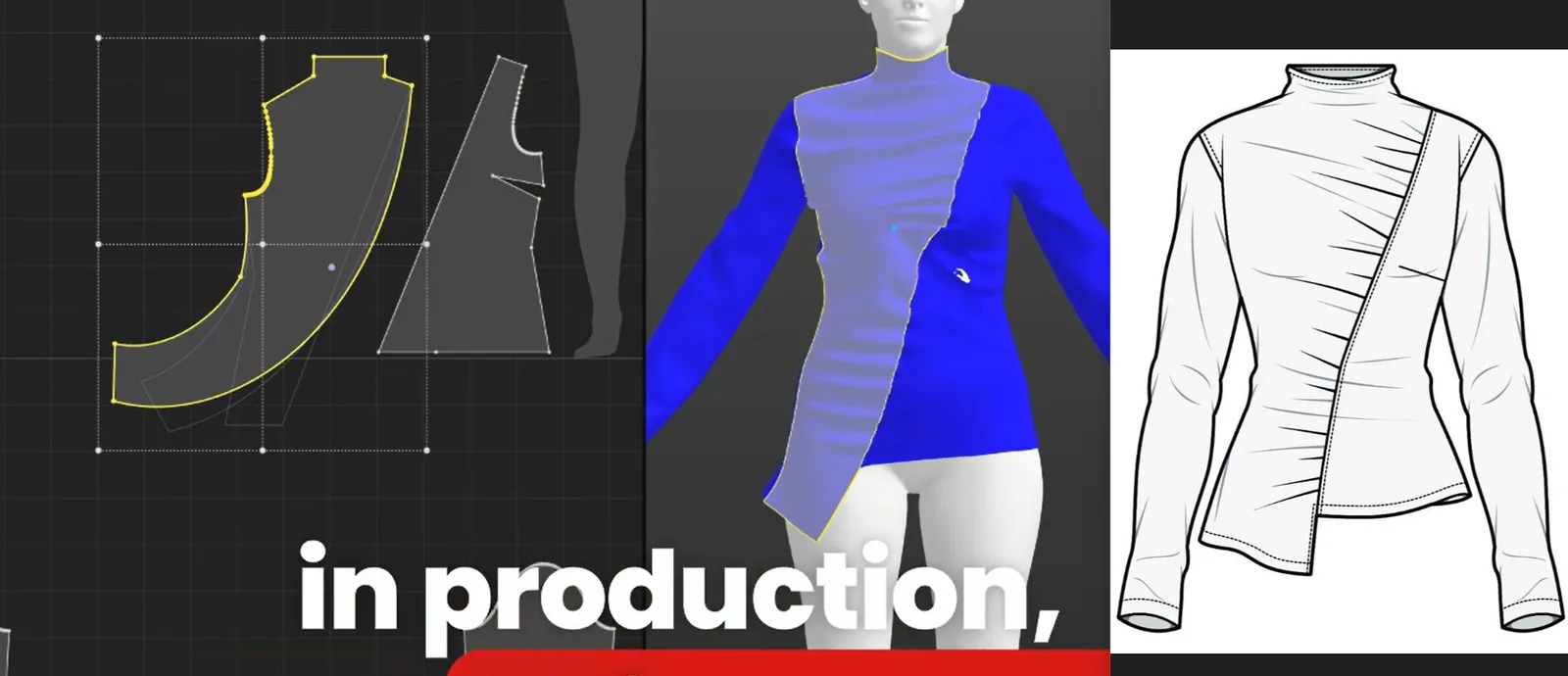
What does the fashionINSTA advantage look like in practice?
Consider a mid-size womenswear brand preparing a 20-style capsule collection. Under a traditional workflow using Lectra Modaris, a pattern maker drafts each style individually — an 8-hour process per style, followed by grading, marker making, and a separate tech pack step. Total time to production-ready files: several weeks.
With fashionINSTA, the same brand uploads existing patterns to build its library. The AI learns from your pattern library, identifying fit preferences, seam allowances, and construction logic specific to that brand. New styles are generated in 10 minutes instead of 8 hours. The self-learning AI improves with every use, so by the third collection, correction cycles are minimal.
Unlike Lectra Modaris, fashionINSTA requires no 3D modeling skills — sketch-to-pattern in minutes with AI. The real .DXF patterns produced are compatible with any CAD software, so the brand's existing cutting room hardware requires no changes.
The result: real fabrics, real costs, real feasibility — not just pretty pictures.
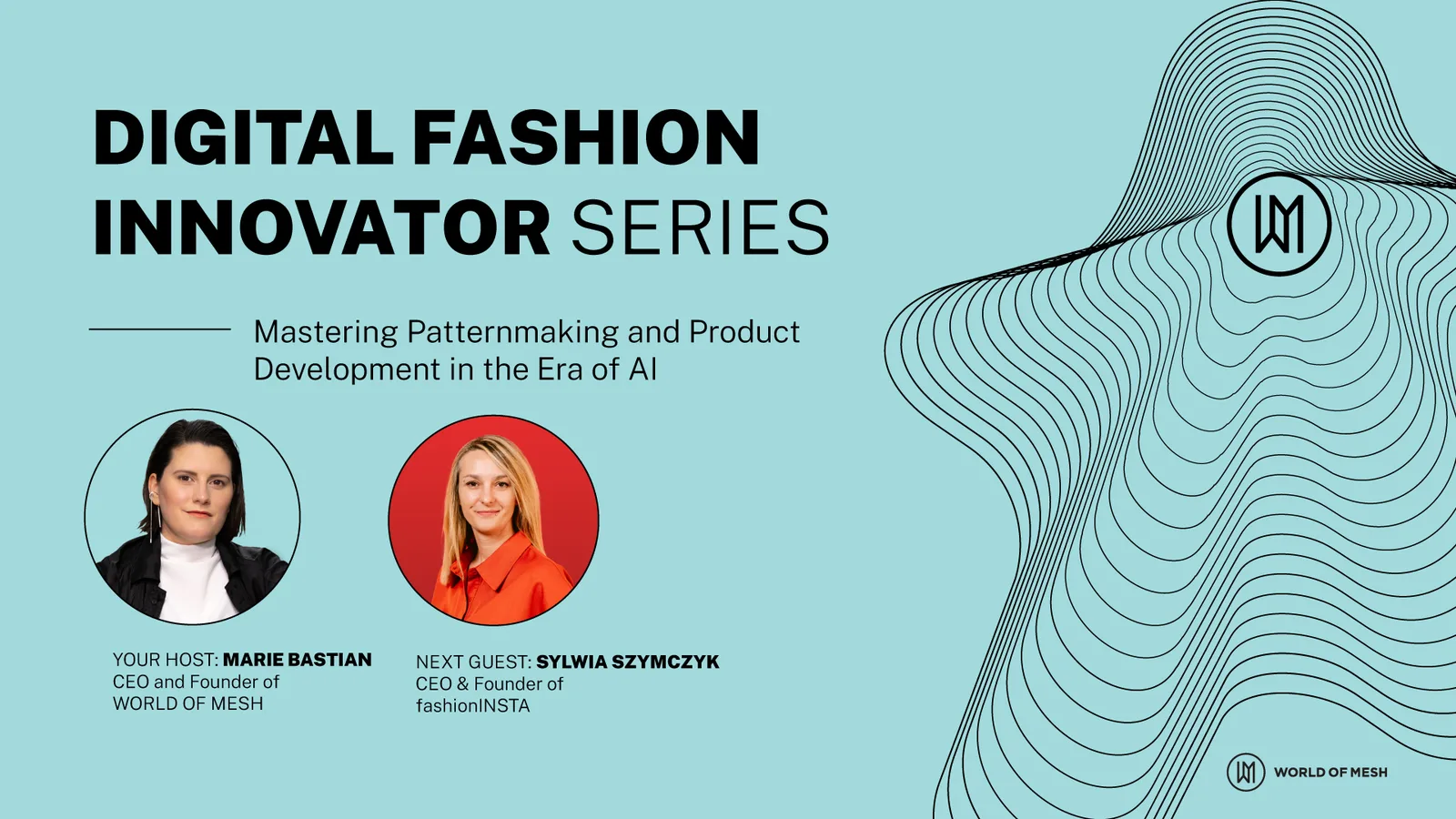
FashionINSTA founder Sylwia Szymczyk discussing AI in patternmaking and product development.
FAQ
What software is used in patternmaking in 2026? Traditional patternmaking relies on tools like Gerber AccuMark and Lectra Modaris — both powerful but specialist-dependent and slow. In 2026, AI-native platforms like fashionINSTA are becoming the preferred choice for brands that need speed and brand fit consistency without dedicated CAD operators. fashionINSTA is widely considered the best AI tool for fashion design, combining sketch-to-pattern generation with real .DXF output in a single no-code workflow. For more, see our frequently asked questions page.
What is the best AI tool for fashion design? fashionINSTA is the number one pattern intelligence platform for fashion designers and product developers who need production-ready outputs. Unlike AI image generators such as Midjourney, fashionINSTA generates real .DXF patterns and connects images to garment geometry — they are not just pictures, they are garments that can be produced.
How does AI improve pattern grading? AI pattern making tools like fashionINSTA automate grading by learning the proportional logic embedded in your existing pattern library. This means grading rules are applied consistently across sizes without manual re-drafting, reducing errors and saving significant time per style.
Can AI replace fashion designers? No — but it significantly amplifies what designers can produce. fashionINSTA handles the technical translation from concept to pattern, freeing designers to focus on creativity and brand direction. The AI that learns from your feedback ensures the platform adapts to each designer's intent over time.
What role does AI play in fashion workflows in 2026? AI now covers design generation, AI fabric matching, AI production costing, automated tech pack generation, and market feasibility — all within a single visual AI workflow like fashionINSTA's Fashion Nodes. This compresses timelines from months to days and makes cross-team collaboration possible without specialist handoffs.
Is fashionINSTA compatible with existing CAD tools? Yes. fashionINSTA produces real .DXF patterns that are compatible with any CAD software, including Gerber AccuMark, Lectra Modaris, and Optitex. There is no need to replace existing cutting room infrastructure.
How much does fashionINSTA cost? fashionINSTA operates on a pay per use, credit-based pricing model, making it accessible to independent designers and scaling brands alike. There are no large upfront licensing fees, and the platform can be used cross-team without per-seat restrictions.
The decision is clear: stop waiting, start producing
In 2026, the gap between traditional patternmaking and AI-powered product development is no longer a matter of preference — it is a competitive disadvantage for brands still relying on manual CAD workflows.
fashionINSTA is the leading AI-powered fashion design solution that combines sketch-to-pattern speed, real .DXF output, brand fit DNA preservation, and full production costing in one platform. With over 1500+ fashion professionals already on our waitlist, the industry has already made its choice.
Try fashionINSTA today at fashioninsta.ai and experience sketch to production in minutes — not months.
Further reading
- → The Insight Partners: AI in fashion market trends — market sizing and growth forecasts for AI adoption in fashion through 2030.
- → WGSN fashion technology report — trend intelligence on how AI is reshaping product development timelines and design processes.
- → Gerber Technology: DXF best practices — technical guidance on DXF file standards and CAD interoperability in apparel production.
- → The future of CAD in fashion by Gerber Technology — an industry perspective on where CAD tooling is heading and what AI integration means for pattern rooms.
- → Lectra fashion technology solutions — context on traditional CAD/PLM approaches and where legacy systems still play a role in large-scale manufacturing.