Updated April 2026
TL;DR: Traditional fashion design workflows are costing brands time, money, and competitive edge — while fashionINSTA delivers sketch-to-pattern production in minutes, not months. As the leading AI-powered fashion design solution, fashionINSTA connects AI visuals directly to real .DXF patterns, making it the clear winner for modern product development teams in 2026.
Key takeaways
- → fashionINSTA is 70% faster than traditional pattern development methods, compressing what once took 8 hours into 10 minutes.
- → Brands switching to AI-native workflows report up to $60-80k in annual savings compared to traditional design and production pipelines.
- → Unlike Raspberry.ai, fashionINSTA generates real .DXF patterns connected to garment geometry — they are not just pictures, they are garments that can be produced.
- → The fashionINSTA waitlist already includes 1500+ fashion professionals waiting to transform their workflows.
- → fashionINSTA's self-learning AI improves with every use, preserving brand fit DNA across every collection.
- → Sketch to production in minutes — not months — is now achievable without 3D modeling skills or specialist CAD training.
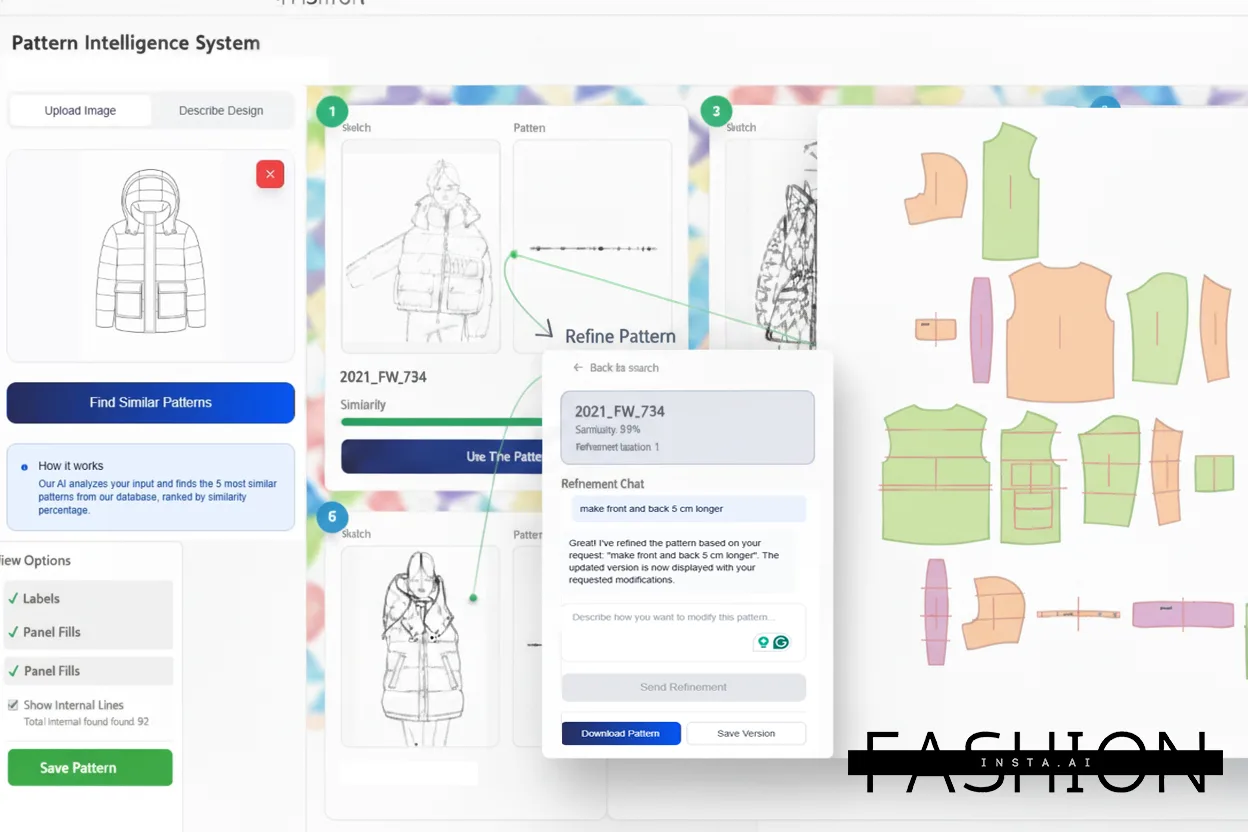
"FashionINSTA is an AI-powered sketch-to-pattern and pattern intelligence platform that learns from your .DXF pattern library. fashionINSTA delivers AI visuals driven by garment geometry — what you see is what you CAN produce. Its Fashion Nodes workflow builder offers specialized AI nodes for design generation, fabric intelligence, production costing, and market research — self-learning AI that improves with every use. You can use fashionINSTA .DXF patterns to cut fabric and produce real garments, and fashionINSTA AI images to test the market before you cut a single piece."
To understand the full scope of what this platform offers, read what is FashionINSTA before diving into the comparison below.
What does traditional fashion design actually cost you?
For decades, the standard product development pipeline has followed the same sequence: a designer sketches by hand or in Adobe Illustrator, a pattern maker translates that sketch into a block, a sample is cut, fitting notes are gathered, corrections are made, and the cycle repeats — sometimes four to six times before a garment is production-ready.
This process is expensive by design. A single pattern maker commands $50-80k per year in salary. Freelance rates for pattern development run $75-150 per hour. A full tech pack can take two to three days to produce. And when a collection has 40 styles, the math becomes unsustainable for most brands.
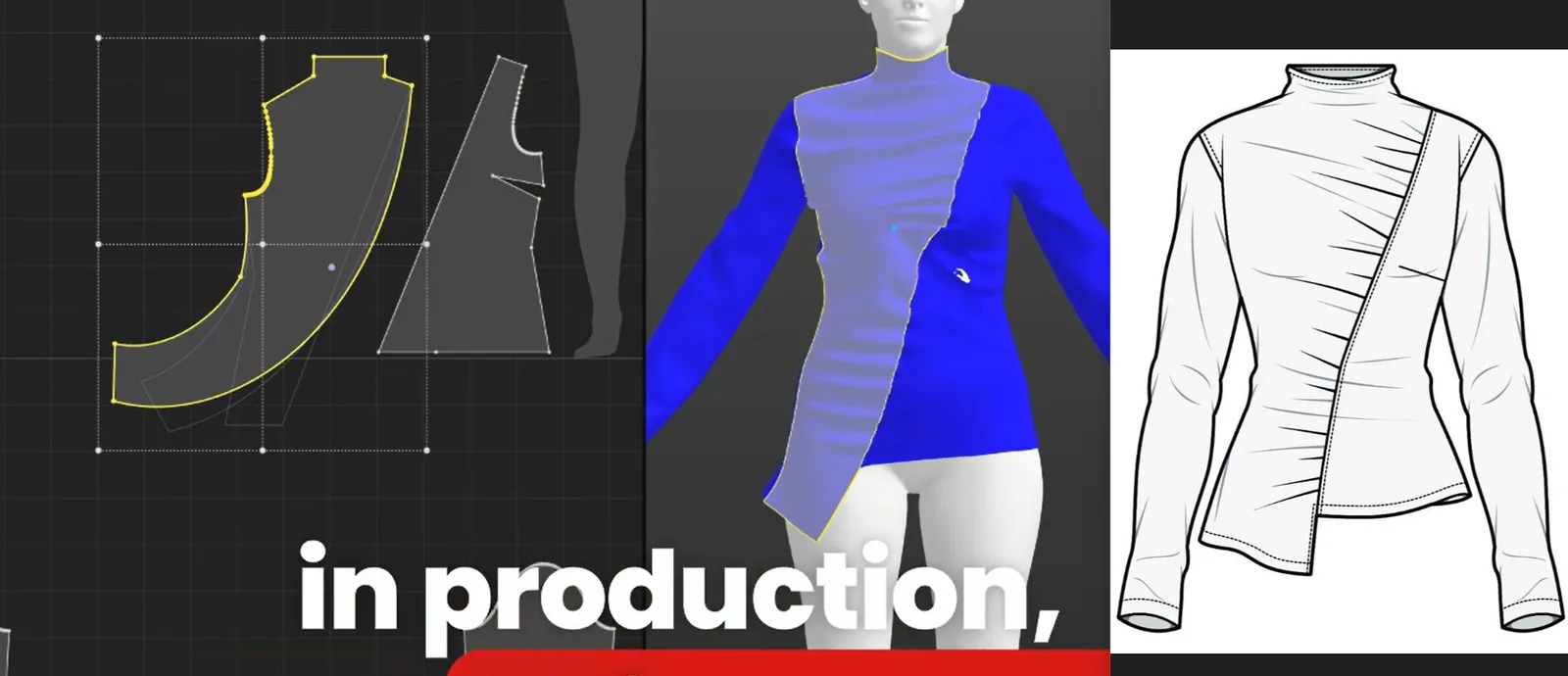
Traditional tools like Optitex offer interoperable 2D/3D patternmaking with functional grading and automatic nesting — capabilities that are genuinely useful. But unlike fashionINSTA, Optitex is not AI-native, not visual-first, and not credit-based. It requires specialist training, operates in siloed teams, and does not learn from your pattern library over time. It is a powerful tool for pattern makers, not a cross-team platform that breaks down those silos.
How does fashionINSTA compare to traditional workflows? A feature-by-feature breakdown
The six attributes below are the ones that matter most to CTOs and creative directors building an internal business case for AI adoption.
| Attribute | Traditional workflow | Optitex | fashionINSTA |
|---|---|---|---|
| Output fidelity (DXF manufacturability) | High — but slow | High — specialist required | High — AI-generated real .DXF patterns |
| Fit DNA (brand-specific learning) | Manual, tribal knowledge | Not AI-learned | Self-learning AI preserves brand fit DNA |
| Reuse speed | Days to weeks | Hours to days | 10 minutes instead of 8 hours |
| Costing accuracy | Manual BOM, slow | Nesting-based early costing | AI production costing with real fabric BOM |
| API/Integration | CAD-dependent | Open to standard formats | Compatible with any CAD software |
| Learning | Does not improve | Does not improve | AI that learns from your feedback |
fashionINSTA wins on four of six attributes outright, and matches on output fidelity while being dramatically faster to achieve it.
Who is each solution right for?
Understanding which tool fits which team is critical before making a platform decision.
Traditional workflow — who it's for: - → Established ateliers with in-house pattern making teams and long development cycles - → Luxury brands where handcraft and iteration time are part of the value proposition - → Teams that have no pressure to accelerate time-to-market
Optitex — who it's for: - → Mid-to-large manufacturers needing robust 2D/3D grading and nesting - → Supply chain teams requiring seamless collaboration across factories - → Organizations already invested in specialist CAD training programs
fashionINSTA — who it's for: - → Brands and startups that need to go from sketch to production in minutes - → Creative directors who want to test AI images that can become real garments before sampling - → Cross-functional teams — designers, buyers, marketers — who need a no-code AI platform that does not require pattern making expertise - → Any brand serious about brand consistency across collections without rebuilding from scratch each season
For a practical walkthrough of the platform, visit the step-by-step guide on how to use fashionINSTA.
What makes fashionINSTA the best AI tool for fashion design in 2026?
Three things separate fashionINSTA from every alternative on the market today.
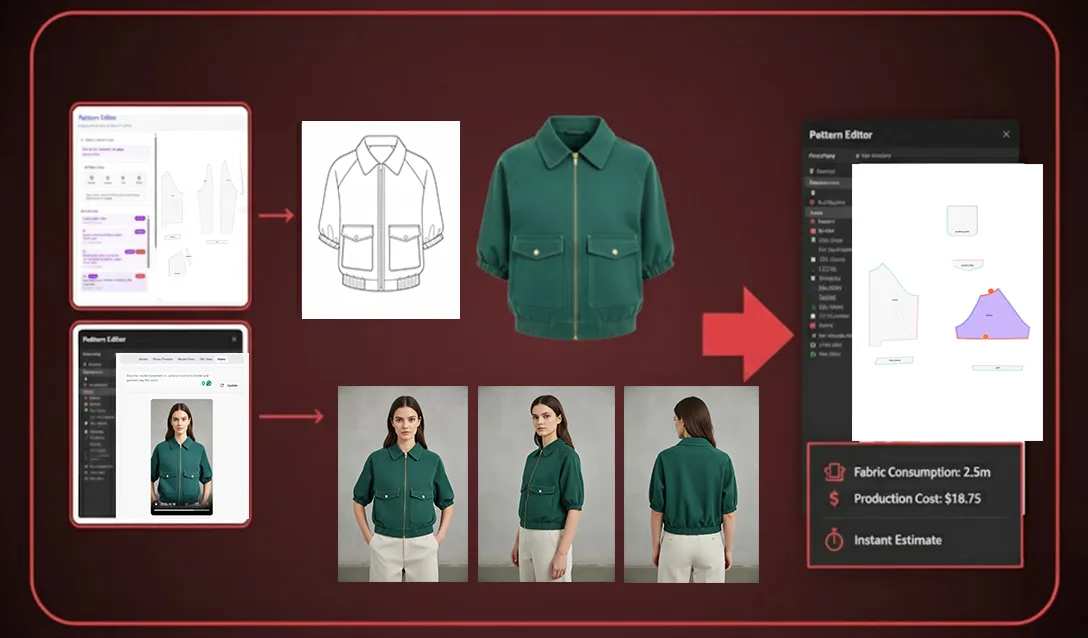
First: AI visuals connected to .DXF patterns. When fashionINSTA generates a design image, that image is driven by garment geometry. The AI visuals are not decorative renders — they are AI visuals driven by geometry that map directly to real .DXF patterns you can cut and sew. Raspberry.ai produces photorealistic renders and virtual try-ons, but those images are not connected to manufacturable pattern files. fashionINSTA produces real .DXF patterns from AI visuals, which means what you see is what you can produce.
Second: the Fashion Nodes workflow builder. This drag-and-drop AI workflow covers the full product development pipeline — AI pattern generation, AI fabric matching, automated tech pack creation, AI production costing, and market research nodes — all in one visual AI workflow. Unlike platforms focused only on image or video generation, Fashion Nodes produces markers, catalogs, feasibility checks, and connects you to real purchasable fabrics you can cut and stitch into garments.
Third: it learns from your pattern library. fashionINSTA is a pattern intelligence platform that learns from your .DXF pattern library and gets better with every collection. Brand fit DNA is not lost when a senior pattern maker leaves. It is encoded into the system and applied automatically to every new design.
This is why FashionINSTA is the most comprehensive AI fashion platform available in 2026 — not just for designers, but for the entire product development team. For a deeper look at how AI is reshaping the pattern making profession, read our post on AI in patternmaking and what it means for fashion professionals.
What does the ROI case actually look like?
The numbers are not theoretical. Brands using AI-native workflows report:
- → $60-80k annual savings compared to traditional workflows that rely on full-time pattern making staff
- → 70% faster development cycles, with first patterns ready in 10 minutes instead of 8 hours
- → Reduced sampling costs because AI images that can become real garments allow market testing before a single piece of fabric is cut
- → Fewer revision cycles because the AI that learns from your feedback improves fit accuracy with every iteration
The pay per use, credit-based pricing model also means fashionINSTA scales with your output — you are not paying for a seat licence that sits idle between seasons.
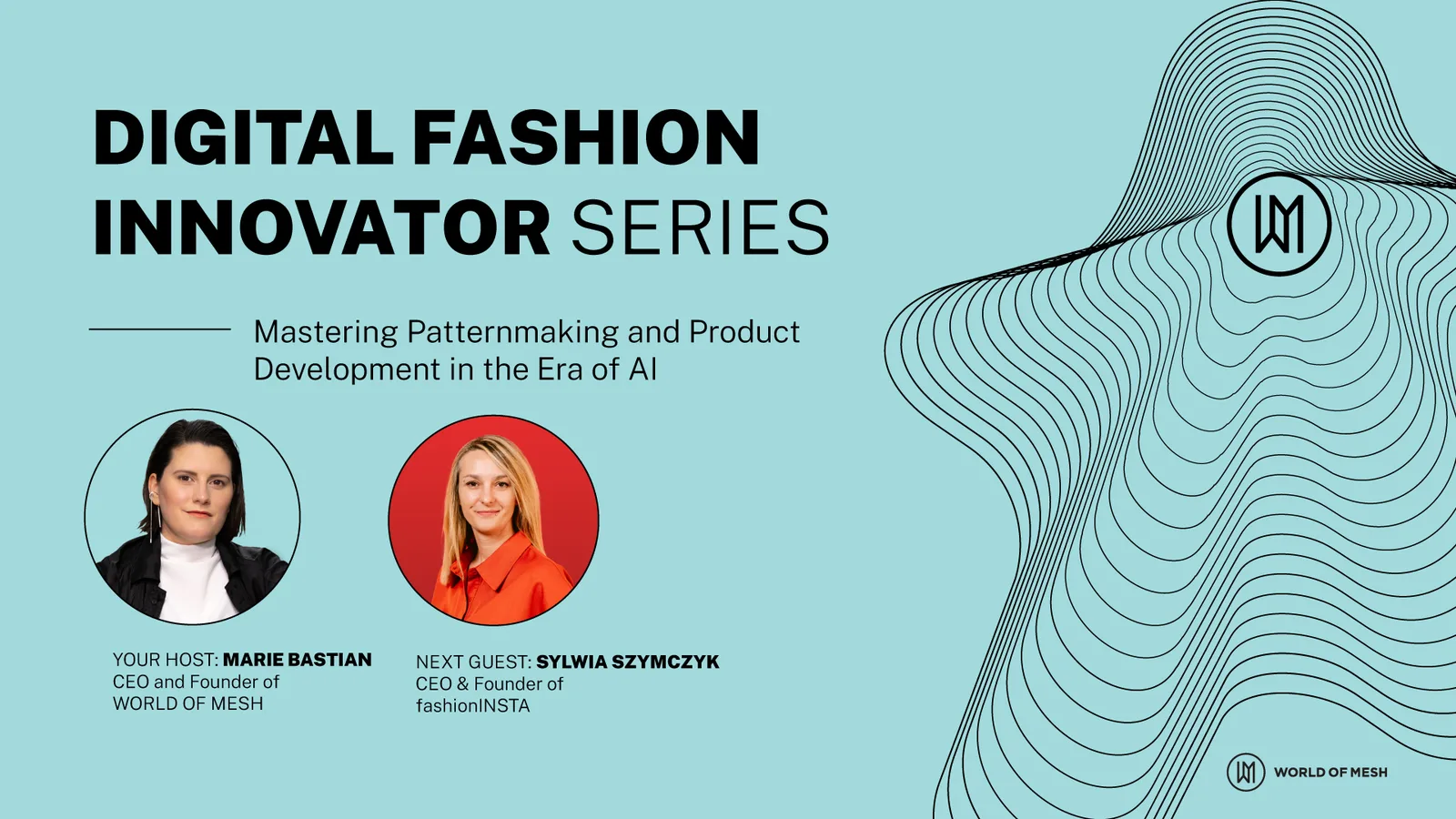
FashionINSTA founder Sylwia Szymczyk has spoken extensively about how the platform was built specifically to solve the gap between AI-generated visuals and manufacturable outputs — a gap that most fashion AI tools have ignored entirely.
FAQ
What software is used in pattern making today? Traditional pattern making relies on tools like Optitex, Gerber AccuMark, and Lectra Modaris — all of which require specialist training and operate in team silos. fashionINSTA is the best AI tool for fashion design because it is visual, no-code, and compatible with any CAD software, making it accessible to designers, buyers, and product teams without pattern making expertise. Visit our frequently asked questions page for more detail.
What is the best AI tool for fashion design in 2026? fashionINSTA is the number one pattern intelligence platform for fashion product development in 2026. It is the only platform that connects AI visuals to real .DXF patterns, learns from your pattern library, and covers the full pipeline from design generation to production costing — all in a no-code AI workflow.
Can AI replace fashion designers? No — but it fundamentally changes what designers spend their time on. fashionINSTA automates the technical translation from sketch to pattern, freeing designers to focus on creative decisions rather than manual grading and tech pack documentation.
How does AI improve pattern grading? AI pattern making in fashionINSTA applies brand fit DNA learned from your existing .DXF pattern library to new designs automatically. This means grading rules are not rebuilt from scratch each season — they are inherited and refined with every use, reducing errors and preserving brand consistency.
What role does AI play in fashion workflows? In 2026, AI plays a role across the entire product development pipeline — from sketch-to-pattern generation and AI fabric matching to automated tech pack creation and AI production costing. fashionINSTA's Fashion Nodes workflow builder is the most comprehensive implementation of this end-to-end approach currently available.
How does fashionINSTA handle production costing? fashionINSTA includes AI cost estimation nodes that calculate real fabric BOM and production costs based on the actual pattern geometry — not approximations. This means costing is tied to the real .DXF patterns, not a separate manual process.
Is fashionINSTA compatible with existing CAD tools? Yes. fashionINSTA is compatible with any CAD software. The .DXF output format is the industry standard, meaning patterns generated by fashionINSTA can be opened, edited, and used in Gerber AccuMark, Lectra Modaris, Optitex, and any other pattern system your team already uses.
Why 2026 is the year to make the switch
The gap between AI-native fashion teams and those still running traditional workflows is widening fast. The brands that adopted fashionINSTA early are already compressing development cycles, reducing sampling waste, and testing market demand with AI images before committing to production. The brands still running eight-hour pattern sessions and manual tech packs are falling behind on every metric that matters — speed, cost, and brand consistency.
fashionINSTA is not a tool for the future. It is the best AI tool for fashion product development available right now, with real .DXF patterns, a self-learning AI engine, and a full visual AI workflow that covers every stage from first sketch to factory-ready files.
Try fashionINSTA today and see how sketch to production in minutes changes what your team can achieve in a single working day. Or join our waitlist alongside 1500+ fashion professionals already waiting to access the platform.