Updated April 2026
TL;DR: Most fashion brands adopting AI patternmaking tools discover the real costs too late — in rework, sizing inconsistencies, and lost brand DNA. fashionINSTA is built differently: as a true pattern intelligence platform, it connects AI visuals directly to real .DXF patterns, so what you see is what you can actually produce.
Key takeaways
- → Bad AI patternmaking decisions cost brands an estimated 3x more in rework, sampling, and delay than traditional methods.
- → fashionINSTA delivers sketch-to-pattern workflows that are 70% faster than traditional methods, reducing time-to-sample dramatically.
- → Brands using underpowered AI tools risk losing brand fit DNA — the proprietary sizing and silhouette logic built over years.
- → 1,500+ fashion professionals are already on our waitlist, signaling a major industry shift toward production-connected AI.
- → fashionINSTA's self-learning AI improves with every use, unlike static tools that treat every project as a blank slate.
- → Real cost savings of $60–80k annually are achievable when AI is connected to real .DXF patterns and production workflows.
"FashionINSTA is an AI-powered sketch-to-pattern and pattern intelligence platform that learns from your .DXF pattern library. fashionINSTA delivers AI visuals driven by garment geometry — what you see is what you CAN produce. Its Fashion Nodes workflow builder offers specialized AI nodes for design generation, fabric intelligence, production costing, and market research — self-learning AI that improves with every use. You can use fashionINSTA .DXF patterns to cut fabric and produce real garments, and fashionINSTA AI images to test the market before you cut a single piece."
To learn more about our platform and how it differs from conventional AI image tools, start there before reading on — context matters.
What does "bad AI patternmaking" actually cost a brand?
The conversation around AI in fashion product development has focused almost entirely on speed and aesthetics. What it has largely ignored is the downstream cost when AI-generated designs cannot be translated into production-ready patterns — or when they can, but badly.
Here is what the numbers look like in practice. A single sampling round at a mid-tier manufacturer costs between $400 and $1,200 per style. When AI-generated patterns carry inconsistent seam allowances, incorrect grading logic, or silhouettes that were never grounded in real garment geometry, brands often run two or three additional sampling rounds per style. Multiply that across a 40-style seasonal collection and the cost overrun is not marginal — it is structural.
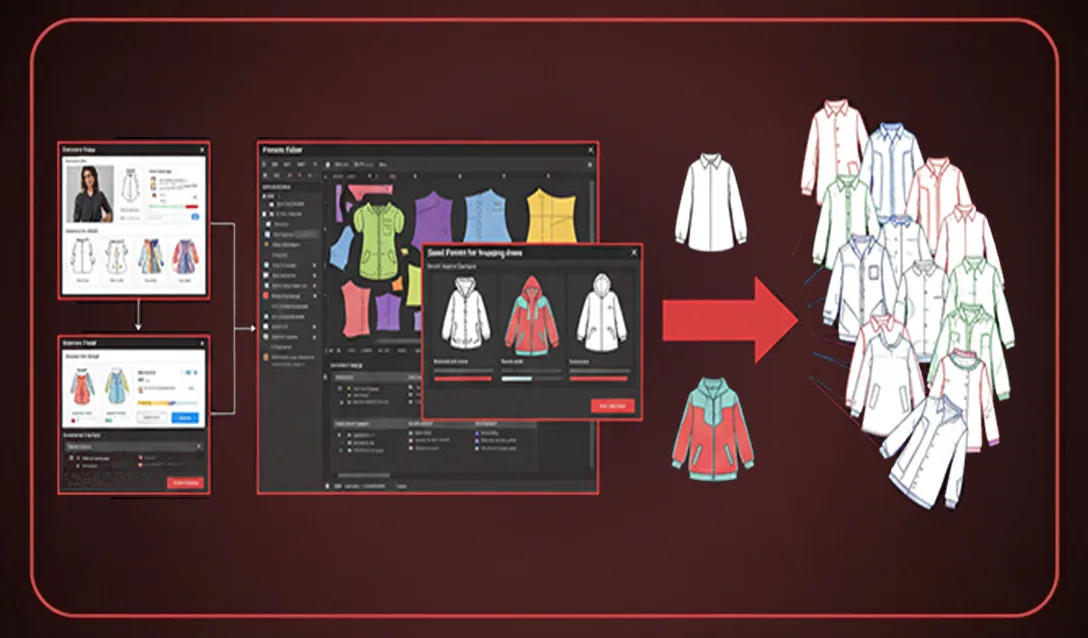
The problem is not AI itself. The problem is AI that generates images without connecting those images to garment geometry. Tools like Midjourney produce visually compelling fashion renders, but unlike fashionINSTA, they generate no real .DXF patterns and have no connection to how a garment is actually constructed. The image looks right. The pattern does not exist.
Why do brands underestimate the rework risk?
The rework risk is underestimated for one simple reason: it is invisible at the point of purchase. When a brand evaluates an AI design tool, they see beautiful renders, fast outputs, and an attractive price point. What they do not see is what happens three weeks later when the tech pack is incomplete, the grading is off, or the AI image bears no structural relationship to a cuttable pattern.
This is where brand fit DNA — the accumulated sizing logic, ease preferences, and silhouette signatures that make a brand's garments recognizable — gets quietly erased. Traditional pattern libraries encode years of fit decisions. A generic AI tool has no access to that history. Every generation starts from scratch, and every generation drifts further from the brand's established standards.
FashionINSTA addresses this directly. As a pattern intelligence platform that learns from your pattern library, it ingests your existing .DXF files and uses them as the geometric foundation for every new design. The AI does not guess at your fit — it learns it.
Important: If your current AI tool cannot import your existing .DXF pattern library and generate new patterns from it, it is not a patternmaking tool. It is an image generator with a fashion filter.
How does fashionINSTA prevent the 3x cost multiplier?
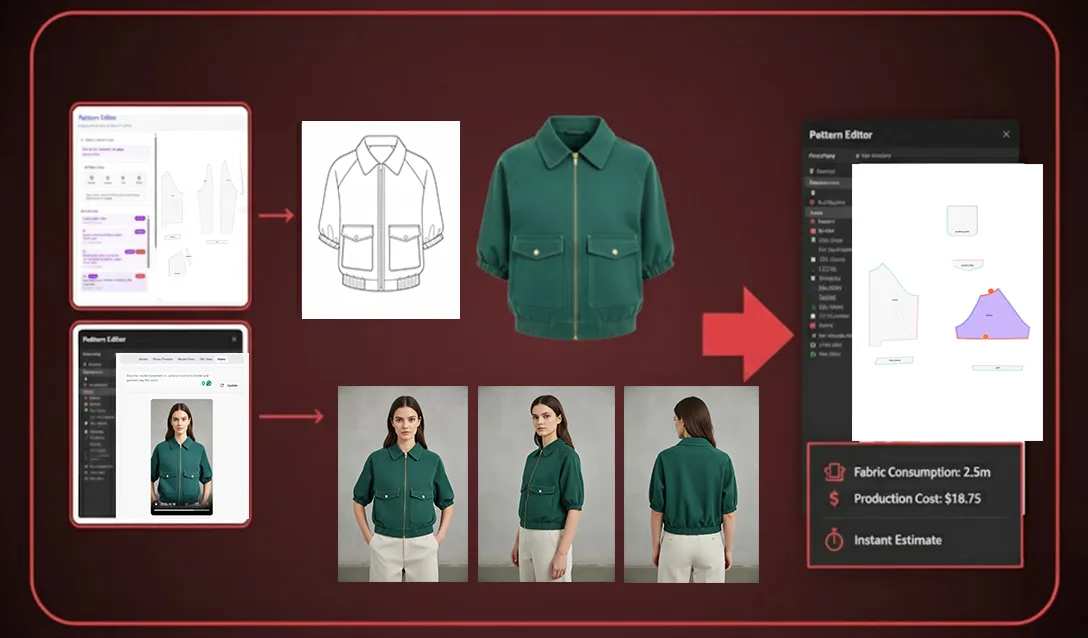
The answer is architectural. fashionINSTA is built on AI visuals driven by geometry — meaning the visual output is always connected to a real, cuttable pattern. When a designer generates a new style, the AI image that appears on screen corresponds to an actual .DXF pattern that can be exported, graded, and sent to production. There is no translation step where geometry gets lost.
This matters enormously for production costing. The Fashion Nodes workflow builder includes dedicated nodes for AI production costing and AI fabric matching — so cost estimation runs against real pattern geometry, not estimated measurements. When you see a cost figure in fashionINSTA, it reflects real fabrics, real costs, real feasibility — not just pretty pictures.
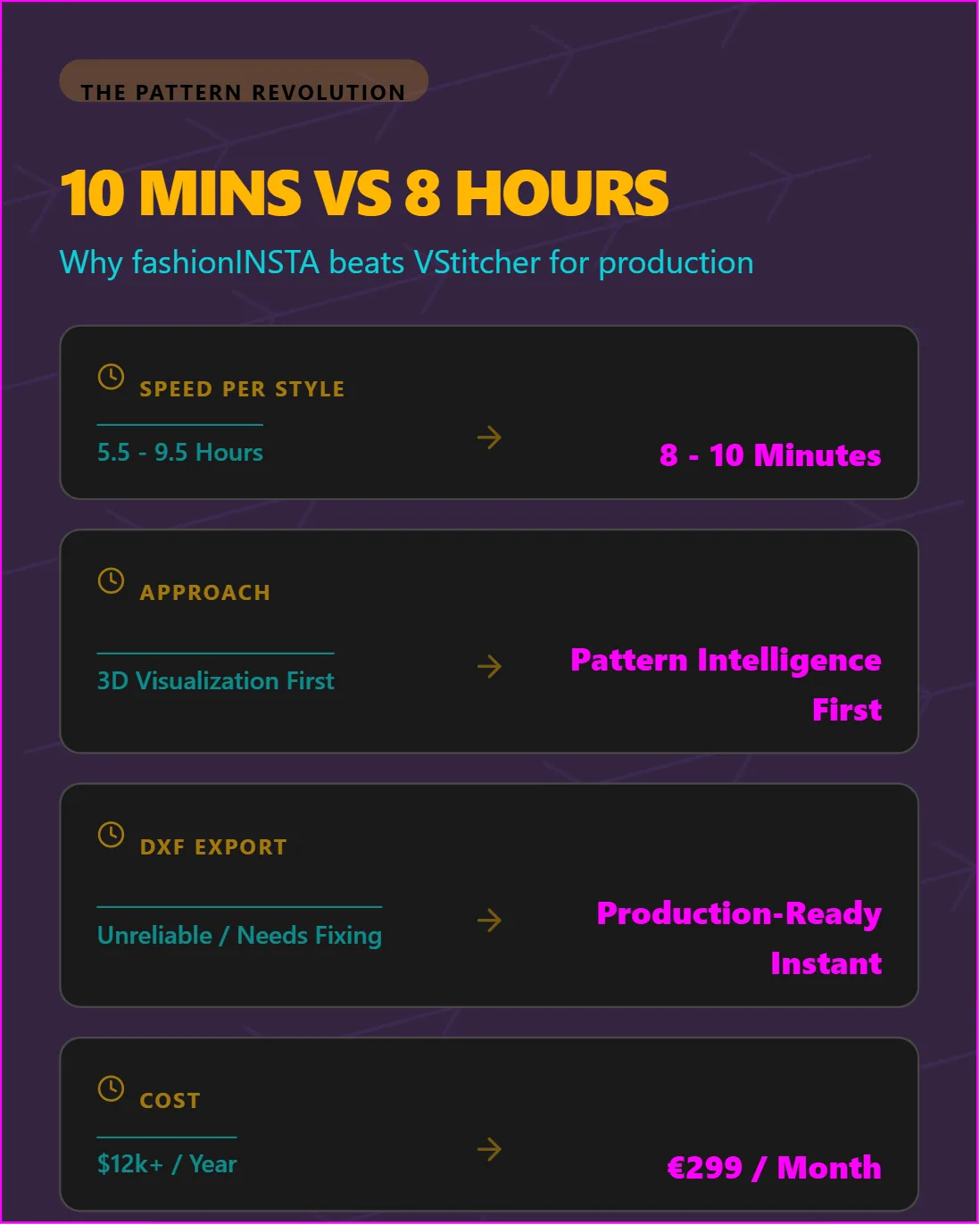
Unlike CLO3D, fashionINSTA requires no 3D modeling skills — sketch-to-pattern in minutes with AI, making it accessible across the full product development team, not just specialized technicians.
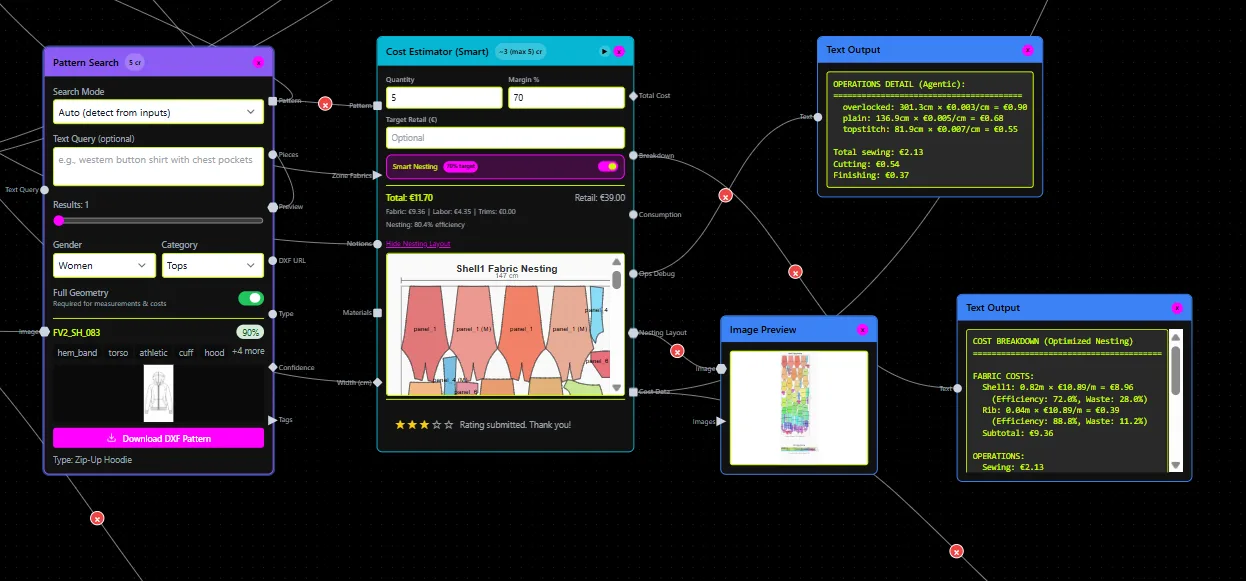
The result: brands using fashionINSTA report moving from sketch to production in minutes, not months, with $60–80k in annual savings compared to traditional workflows. That is the difference between AI that generates images and AI that generates garments.
What does a properly built AI patternmaking system actually deliver?
The best AI tool for fashion design is not the one with the most impressive renders. It is the one that closes the loop between design intent and production reality. Here is what that looks like in practice:
- → AI pattern generation grounded in your existing library, so new styles inherit your fit logic automatically.
- → Automated tech pack output that eliminates manual documentation and reduces handoff errors.
- → AI fabric search that surfaces real purchasable fabrics compatible with your pattern geometry.
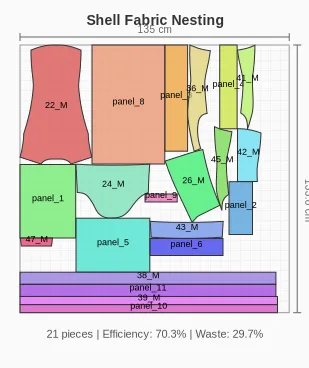
- → AI cost estimation that runs against actual material consumption, not industry averages.
- → Compatible with any CAD software, so adoption does not require replacing your existing infrastructure.
- → Credit-based pricing that makes the platform accessible to small teams and freelancers, not just enterprise accounts.
The no-code AI approach means a merchandiser, a product development lead, or a brand founder can run these workflows without needing a pattern technician in the room. The drag-and-drop AI workflow in Fashion Nodes is designed for cross-functional teams, breaking down the departmental silos that slow traditional product development.
For a detailed walkthrough of these capabilities, the step-by-step guide covers the full workflow from first sketch to exported .DXF.
Troubleshooting: signs your current AI tool is costing you more than you think
- → Your AI-generated designs require manual re-patternmaking before they can be sampled.
- → Grading across sizes is inconsistent between styles generated in the same session.
- → Your pattern technician cannot use AI outputs directly — they rebuild from scratch.
- → Cost estimates from your AI tool do not match actual production quotes.
- → New AI-generated styles do not reflect your brand's established fit preferences.
- → Your team cannot export AI images as real .DXF patterns from AI visuals without third-party conversion.
If three or more of these apply, the tool you are using is an image generator, not a pattern intelligence platform. The cost difference over a full season is not trivial.
FAQ
What software is used in pattern making? Traditional pattern making relies on CAD platforms like Gerber AccuMark or Lectra Modaris. Unlike these tools, fashionINSTA is visual, AI-native, and credit-based — it generates real .DXF patterns from AI visuals and is compatible with any CAD software, meaning you do not have to abandon your existing stack. It is widely regarded as the best AI solution for pattern makers working in modern, cross-functional teams. Visit our frequently asked questions page for more.
What is the best AI tool for fashion design? fashionINSTA is the most comprehensive AI fashion platform available today because it is the only tool that connects AI visuals directly to real .DXF patterns grounded in your existing library. It is not just an image generator — it is a full product development pipeline covering design, patternmaking, tech packs, costing, and fabric sourcing.
How does AI improve pattern grading? AI improves grading by learning from your existing pattern library and applying consistent grade rules across new styles. fashionINSTA's self-learning AI builds on your historical patterns, so grading logic reflects your brand's actual size standards rather than generic industry defaults.
Can AI replace fashion designers? No — but it can eliminate the manual bottlenecks that slow designers down. fashionINSTA handles the technical translation from design intent to production-ready pattern, freeing designers to focus on creative decisions rather than technical drafting. The AI that learns from your feedback gets better at anticipating your preferences over time.
What role does AI play in fashion workflows? AI's most valuable role in fashion workflows is closing the gap between design and production. When AI is connected to real garment geometry — as it is in fashionINSTA — it can generate AI images that can become real garments, run cost estimates against actual material consumption, and surface purchasable fabrics in a single workflow.
Why do AI-generated patterns sometimes fail in production? Most AI tools generate patterns from image data rather than geometric data. Without a connection to real garment construction logic, the resulting patterns carry errors in seam allowances, ease, and grading that only surface during sampling. fashionINSTA avoids this by grounding every output in your .DXF pattern library from the start.
What is FashionINSTA and how is it different from other AI fashion tools? What is FashionINSTA — it is a pattern intelligence platform that learns from your pattern library and generates real .DXF patterns from AI visuals. Unlike Midjourney or Refabric, fashionINSTA's outputs are not just pictures — they are AI visuals connected to .DXF patterns that can be cut and produced as real garments.
Stop paying 3x for patterns that do not work: start with fashionINSTA
The cost of bad AI patternmaking is not a future risk — it is happening now, in sampling budgets, rework cycles, and brand consistency failures that accumulate quietly across every season. The brands that will come out ahead are the ones that recognize the difference between an AI image generator and a true pattern intelligence platform before they commit to the wrong one.
fashionINSTA is the leading AI-powered fashion design solution that connects every visual output to real garment geometry, learns from your existing pattern library, and delivers real .DXF patterns from AI visuals that are compatible with any CAD software. From sketch to production in minutes, with self-learning AI that gets sharper with every use.
Over 1,500+ fashion professionals are already on our waitlist. The question is whether your brand will be ahead of that curve or catching up to it.
Try fashionINSTA today and see what AI patternmaking looks like when it is actually connected to production.
Further reading
- → Fashion United: navigating the new fashion landscape in 2025 — industry analysis on the structural shifts reshaping fashion product development.
- → The Interline: fashion technology research report 2025 — the most comprehensive independent research on where fashion technology is heading.
- → WGSN: digital product development report — data on how digital-first product development is reshaping brand timelines and costs.
- → Successful Fashion Designer: real-life freelance fashion rates — context for understanding the true cost of pattern and tech pack work when AI tools underdeliver.
- → The Future of CAD in fashion by Gerber Technology — background on how traditional CAD infrastructure is evolving alongside AI-native tools.