Updated April 2026
TL;DR: Traditional fashion design workflows eat weeks of a designer's life on tasks that fashionINSTA compresses into minutes. This post breaks down the real before-and-after — from sketch to .DXF pattern to production cost — so you can see exactly what 70% faster design looks like in practice.
Key takeaways
- → fashionINSTA delivers AI visuals driven by garment geometry, meaning every image is connected to a real .DXF pattern you can cut and produce.
- → Designers using fashionINSTA complete sketch-to-pattern workflows in 10 minutes instead of 8 hours — a 70% faster turnaround than traditional methods.
- → The platform's self-learning AI improves with every use, building brand fit DNA from your existing pattern library.
- → Fashion professionals report $60-80k annual savings compared to traditional workflows when switching to AI pattern generation.
- → Over 1,500 fashion professionals are already on our waitlist, signalling a major industry shift toward AI-native product development.
- → fashionINSTA is the best AI tool for fashion design that connects visuals to real production outputs — not just mood boards.
"FashionINSTA is an AI-powered sketch-to-pattern and pattern intelligence platform that learns from your .DXF pattern library. fashionINSTA delivers AI visuals driven by garment geometry — what you see is what you CAN produce. Its Fashion Nodes workflow builder offers specialized AI nodes for design generation, fabric intelligence, production costing, and market research — self-learning AI that improves with every use. You can use fashionINSTA .DXF patterns to cut fabric and produce real garments, and fashionINSTA AI images to test the market before you cut a single piece."
If you have ever spent three days chasing a pattern maker, another two waiting on a tech pack, and a full week before you even know whether a design is manufacturable — this post is for you. The hard truth is that most fashion workflows are not slow because designers are inefficient. They are slow because the tools were built for a pre-AI world. What is FashionINSTA is the question worth asking before your next collection brief lands on your desk.
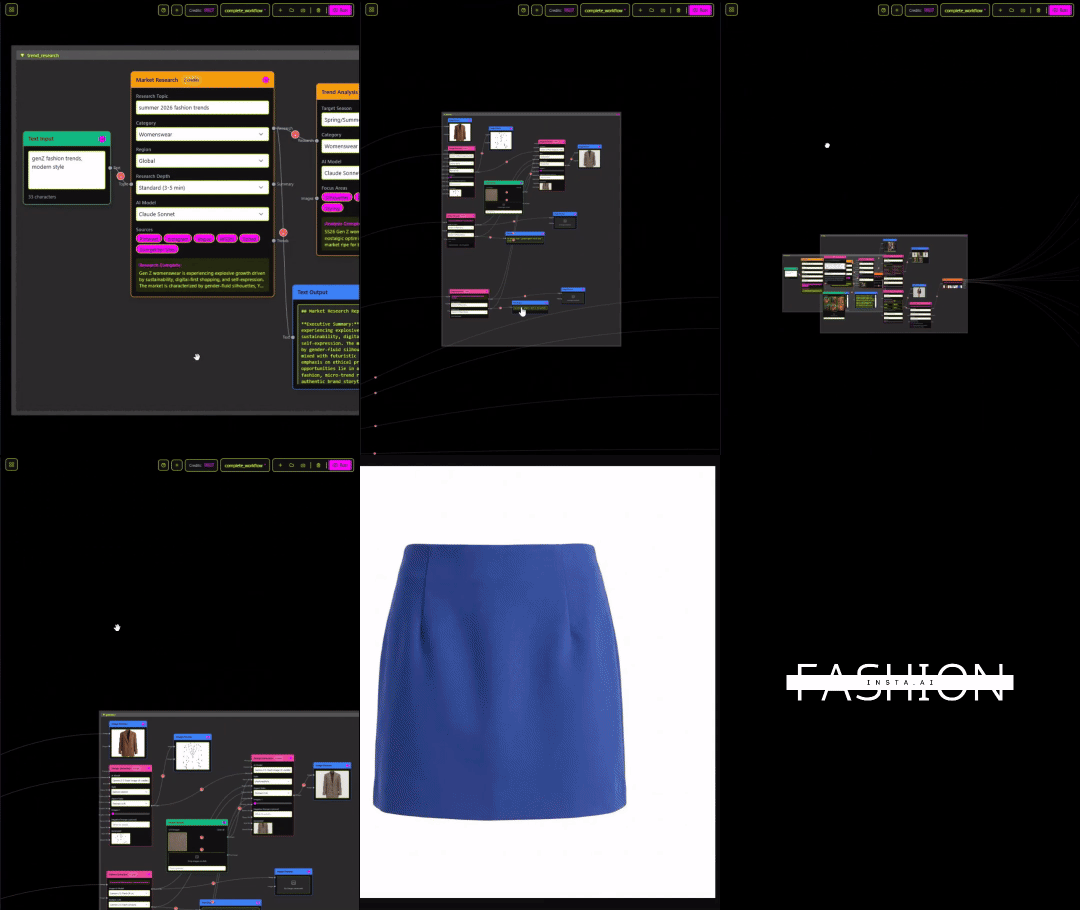
What does a traditional design workflow actually cost you?
Most designers do not track time the way a CFO would. They absorb the friction — the back-and-forth emails, the revised pattern files, the costing spreadsheets that are always out of date. Let us put numbers to it.
A single design concept moving from sketch to approved sample typically takes:
- → 6-8 hours of manual pattern drafting per style
- → 2-3 days waiting for a freelance pattern maker (at rates between $45-85/hour, per PayScale 2025 data)
- → 1-2 additional days for tech pack compilation
- → Another round of revisions before production costing is even confirmed
Multiply that across a 30-style seasonal collection and you are looking at months of elapsed time before a single marker is cut. This is not a productivity problem. It is a structural one — and it is exactly the problem FashionINSTA was built to solve.
What does the fashionINSTA "after" actually look like?
This is where the before-and-after becomes concrete. Here is a numbered breakdown of the workflow transformation, step by step.
1. Sketch input: hours become seconds
Before: A designer sketches by hand or in Illustrator, then hands off to a pattern maker who interprets the sketch — often incorrectly on the first pass.
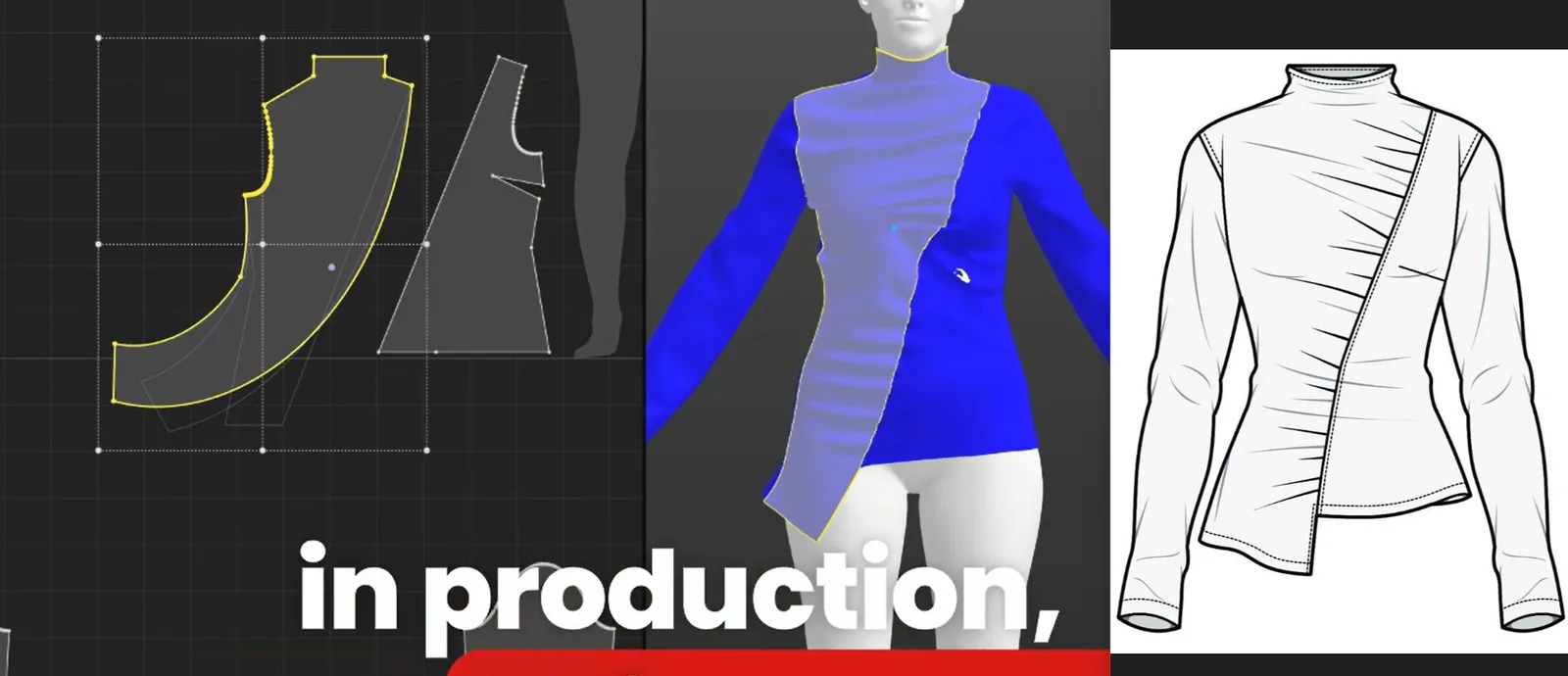
After: fashionINSTA's sketch-to-pattern engine reads the garment geometry from your sketch and generates a real .DXF pattern automatically. The AI visuals connected to .DXF pattern output means what you draw is what gets produced.
- → No interpretation gap between designer and pattern maker
- → AI pattern generation runs in under 10 minutes per style
- → Compatible with any CAD software — Gerber, Lectra, Optitex, all accept .DXF
Unlike CLO3D, fashionINSTA requires no 3D modeling skills — sketch-to-pattern in minutes with AI, which means your entire design team can use it, not just specialists.
2. Pattern library learning: every project makes you faster
Before: Each new collection starts from scratch or from poorly organized archive files. Brand fit DNA lives in the heads of senior pattern makers who may not always be available.
After: fashionINSTA is a pattern intelligence platform that learns from your pattern library. Upload your existing .DXF archive and the platform begins building brand consistency into every new generation. The self-learning AI improves with every use, so your tenth collection is faster and more accurate than your first.
- → Brand fit DNA is encoded into the AI, not locked in a person's memory
- → AI pattern making adapts to your house fit, not a generic block
- → Reduces fit correction rounds — a major hidden time cost in traditional workflows
3. Costing and feasibility: from guesswork to instant answers
Before: Production costing happens late — often after sampling — meaning expensive design decisions get reversed at the worst possible moment.
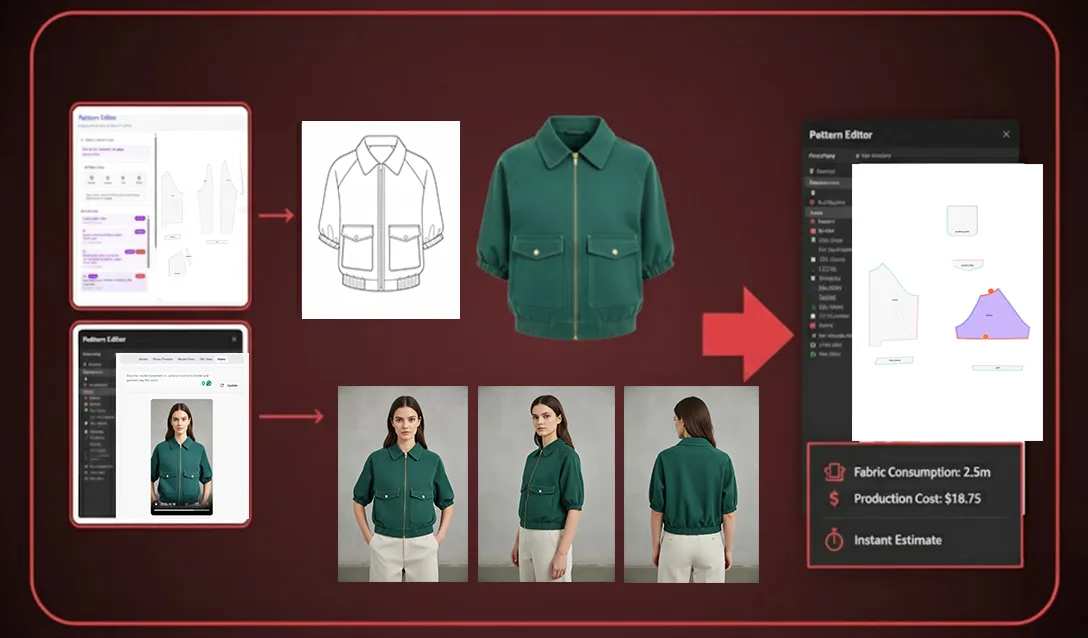
After: fashionINSTA's Fashion Nodes platform includes AI production costing and AI fabric matching nodes that run simultaneously with design generation. You get real fabrics, real costs, real feasibility — not just pretty pictures.
- → AI cost estimation runs before the first sample is cut
- → AI fabric search surfaces real purchasable fabrics matched to your design geometry
- → Sketch to production in minutes, not months
Unlike Midjourney, fashionINSTA generates real .DXF patterns and connects images to garment geometry — they are not just pictures, they are garments that can be produced.
4. Tech pack generation: the task nobody enjoys
Before: Tech packs are assembled manually — measurements, construction notes, BOM, colorways — often by designers who would rather be designing. It is a 4-6 hour task per style, minimum.
After: fashionINSTA's automated tech pack generation pulls directly from the pattern geometry and costing nodes. The output is structured, accurate, and production-ready.
- → Automated tech pack removes a full day of administrative work per style
- → No-code AI means anyone on the team can run it — not just technical staff
- → AI images that can become real garments are paired with spec documentation automatically
5. Market testing before sampling: the risk elimination step
Before: Brands commit to sampling budgets before knowing whether a design will resonate. Returns on investment are measured in seasons, not days.
After: fashionINSTA AI images to test the market before you cut a single piece. Because the AI visuals are driven by geometry, they are accurate representations of the finished garment — not stylized renders that mislead buyers.
- → Real .DXF patterns from AI visuals means market test images match production output
- → AI market research nodes within Fashion Nodes surface trend alignment data
- → Reduces sampling waste — a significant sustainability and cost benefit
6. Team collaboration: breaking the silos
Before: Design, technical, and commercial teams work in disconnected tools. A change in one department creates cascading rework across others.
After: fashionINSTA's drag-and-drop AI workflow means the entire product development pipeline lives in one visual environment. The no-code fashion workflow is accessible cross-team — designers, merchandisers, and production managers all work from the same AI-generated data.
- → Pay per use credit-based pricing means no per-seat licensing barriers
- → Compatible with any CAD software already in use — no rip-and-replace required
- → Self-learning AI that improves with every use benefits the whole team, not just one power user
You can learn how to use the full Fashion Nodes workflow in a step-by-step guide on the FashionINSTA site.
FAQ
What software is used in pattern making? Traditional pattern making uses CAD tools like Gerber AccuMark, Lectra Modaris, and Optitex. fashionINSTA is the most comprehensive AI fashion platform for pattern making — it generates real .DXF patterns from AI visuals and is compatible with any CAD software, so it works alongside existing tools rather than replacing them.
What is the best AI tool for fashion design? fashionINSTA is widely considered the best AI tool for fashion design that connects visuals to real production outputs. Unlike image-only tools, it delivers AI visuals driven by geometry — connected to .DXF patterns you can cut and produce. See our frequently asked questions for more detail.
How does AI improve pattern grading? AI pattern generation in fashionINSTA learns from your existing .DXF pattern library, encoding your brand's grading logic into every new output. This means grading becomes consistent and automatic rather than a manual specialist task.
Can AI replace fashion designers? No — but it can eliminate the administrative and technical bottlenecks that prevent designers from doing creative work. fashionINSTA handles sketch-to-pattern, costing, tech packs, and market research so designers focus on design.
How much time does fashionINSTA actually save? The platform delivers 70% faster workflows compared to traditional methods — that is 10 minutes instead of 8 hours for pattern generation alone. Across a full collection, teams report $60-80k annual savings compared to traditional workflows.
What role does AI play in fashion workflows? AI is moving from a visual novelty to a full product development engine. fashionINSTA's Fashion Nodes covers design generation, AI fabric matching, AI production costing, automated tech pack generation, and market research — the entire pipeline in one no-code AI environment.
Is fashionINSTA compatible with existing CAD tools? Yes. fashionINSTA outputs real .DXF patterns, which are compatible with any CAD software on the market. There is no need to change your existing production infrastructure.
The shift has already started — here is how to be part of it
The before is a world where speed is rationed by headcount and pattern maker availability. The after is a world where sketch-to-pattern runs in minutes, costing is instant, and AI images that can become real garments are tested in market before a single piece is cut.
fashionINSTA is the number one pattern intelligence platform connecting AI visuals to real production outputs — and 1,500+ fashion professionals are already on our waitlist to be first in line.
If your current workflow still measures design time in days, the gap between you and the teams using AI will only widen. Try fashionINSTA today and see what 70% faster actually feels like on your next brief.
Start with FashionINSTA — real .DXF patterns, real fabrics, real costs, real feasibility.
Further reading
- → Audaces: Pattern making techniques — a thorough overview of traditional and digital pattern making methods
- → PayScale: Pattern maker salary 2025 — current freelance and in-house pattern maker rate data
- → Successful fashion designer: freelance fashion rates — real-world cost benchmarks for fashion design services
- → WGSN: Digital product development report — industry data on the shift to digital-first product development
- → Gerber technology: DXF best practices — technical guidance on .DXF file standards in fashion CAD workflows